Thaden School in Bentonville, Arkansas, Wins 2025 Mies Crown Hall Americas Prize
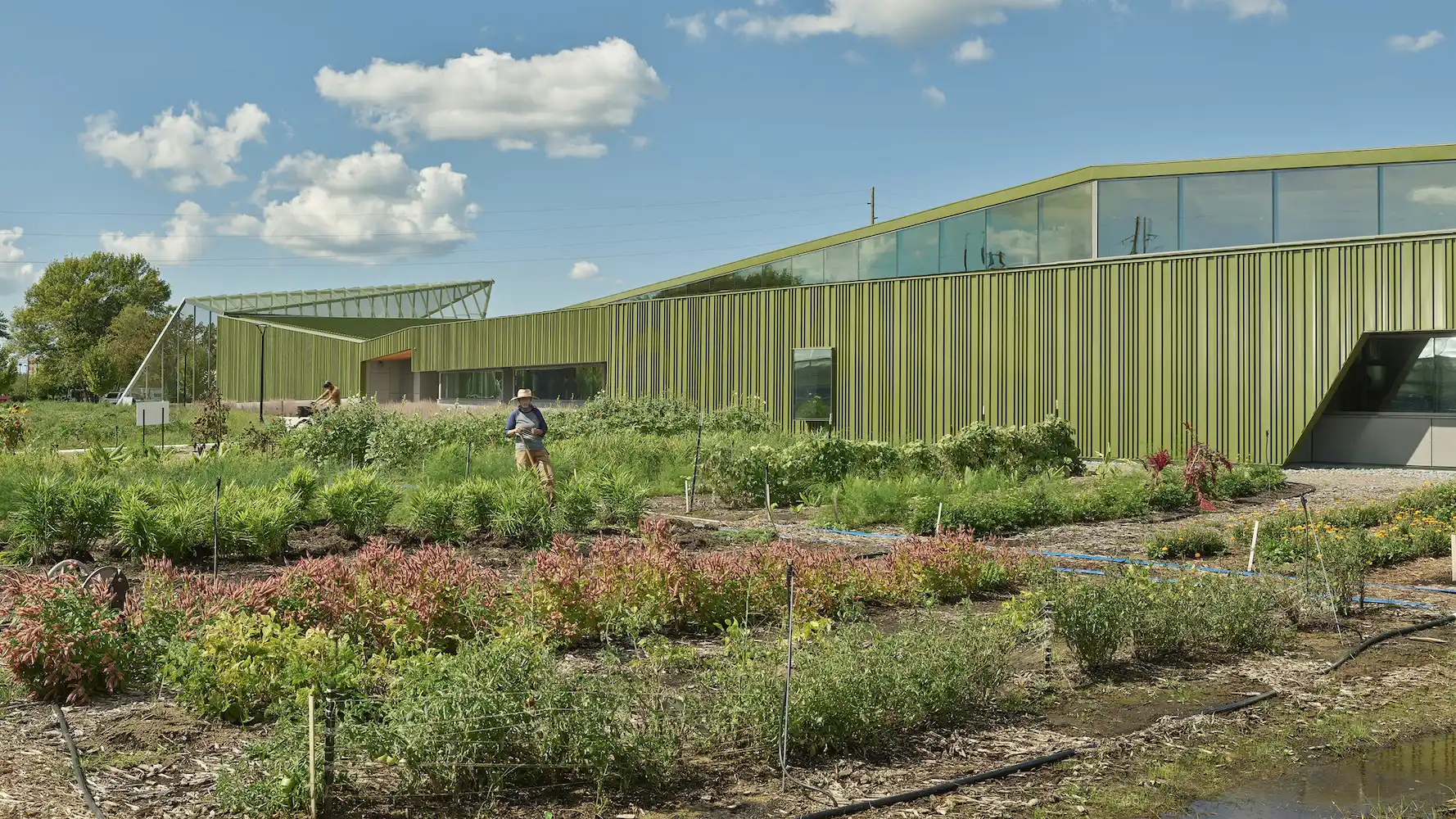
The 2025 Mies Crown Hall Americas Prize–winning Thaden School in Bentonville, Arkansas. Photo © Timothy Hursley
On Monday evening, May 5th, the winner of the 2025 Mies Crown Hall Americas Prize (MCHAP) was announced in Chicago. The ceremony took place, appropriately enough, in Crown Hall, Mies van der Rohe’s elegant essay in transparency, located on the campus he designed for the Illinois Institute of Technology (IIT). Jury chair Maurice Cox, the city’s former commissioner of planning and development, presented the award to the team of Marlon Blackwell Architects of Fayetteville, Arkansas; New Orleans-based EskewDumezRipple; and Philadelphia and Raleigh–based landscape architecture firm Andropogon Associates for their collaboration on Thaden School in Bentonville, Arkansas. The accolade includes the MCHAP Chair at IIT’s College of Architecture and a grant of $50,000 to fund research and a publication.
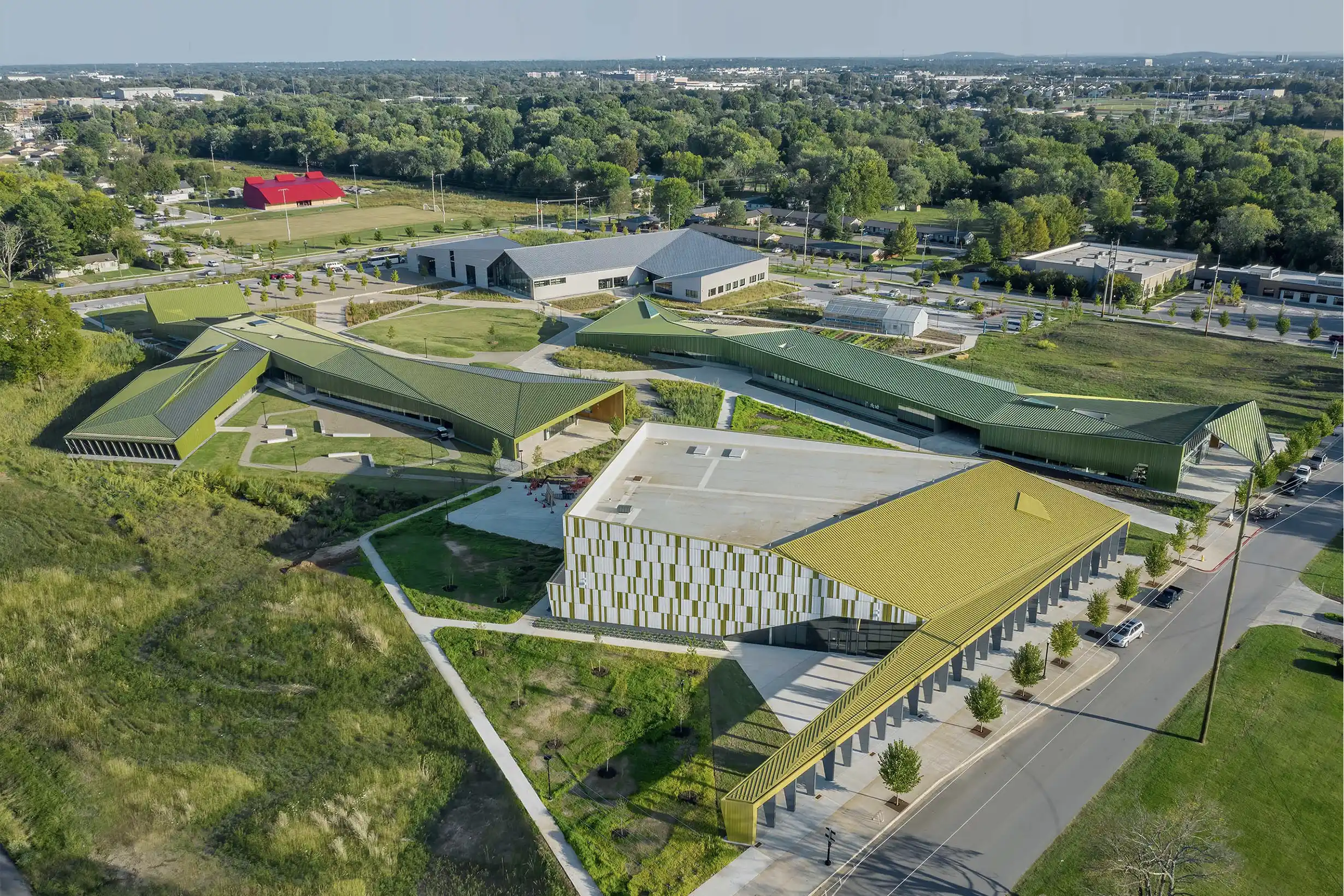
Photo © Timothy Hursley
The biennial award, established in 2013 under the leadership of director Dirk Denison, a prominent Chicago architect and IIT professor, honors architectural achievement throughout North and South America. “In just over ten years,” says Reed Kroloff, the school’s dean, “the program has highlighted an unprecedented record of achievement by architects, landscape architects and urban designers, demonstrating their remarkable creativity in addressing the challenges facing communities today.” “MCHAP is rooted in profound generosity and faith in the capacity of buildings to take care of the world we live in,” adds juror Sofía von Ellrichshausen, founding partner of Pezo von Ellrichshausen in Concepción, Chile, who won the Prize for Emerging Practice in 2014.
Monday’s announcement concluded a yearlong selection process, which included a hemisphere-spanning jury tour of five projects, winnowed from 219 nominated last spring. “From Winnipeg to Buenos Aires, we saw evidence of architecture activating and enriching the lives of those who study, work, and play in the settings created by these designs,” says Denison. In addition to Cox and von Ellrichshausen, the jury included Giovanna Borasi, director and chief curator of the Canadian Centre for Architecture in Montreal; Gregg Pasquarelli, founding principal of SHoP Architects in New York; and Mauricio Rocha, founder of Taller | Mauricio Rocha in Mexico City and 2023 MCHAP recipient for his expansion of the Museo Anahuacalli.

Photo © Timothy Hursley
The other finalists were Centro de Investigación Mar de Cortés in Mazatlán, Mexico, by Tatiana Bilbao ESTUDIO; Clínica Veterinaria Guayaquil in Buenos Aires by adamo-faiden; Ecoparque Bacalar in Bacalar, Mexico, by Colectivo C733; and Pumphouse in Winnipeg, Manitoba, by 5468796 Architecture. Cox, commenting on the 42 semifinalists selected last June, noted an uptick in projects serving the public interest. “The increase in publicly commissioned works clearly signals a renewed commitment to civic architecture and the power of design as demonstrated by a wide range of types, including community centers and cultural, arts, and educational institutions,” he said.

Photo © Timothy Hursley
Thaden School is a private, co-ed, nonsectarian college-prep academy, serving a socioeconomically diverse student body in grades 6–12. Its expansive new facility provides the setting for an innovative, hands-on, interdisciplinary curriculum focused on energy, environmentalism, and food production. The Walton Family Foundation’s Northwest Arkansas Design Excellence Program was involved in conceiving and developing the project.
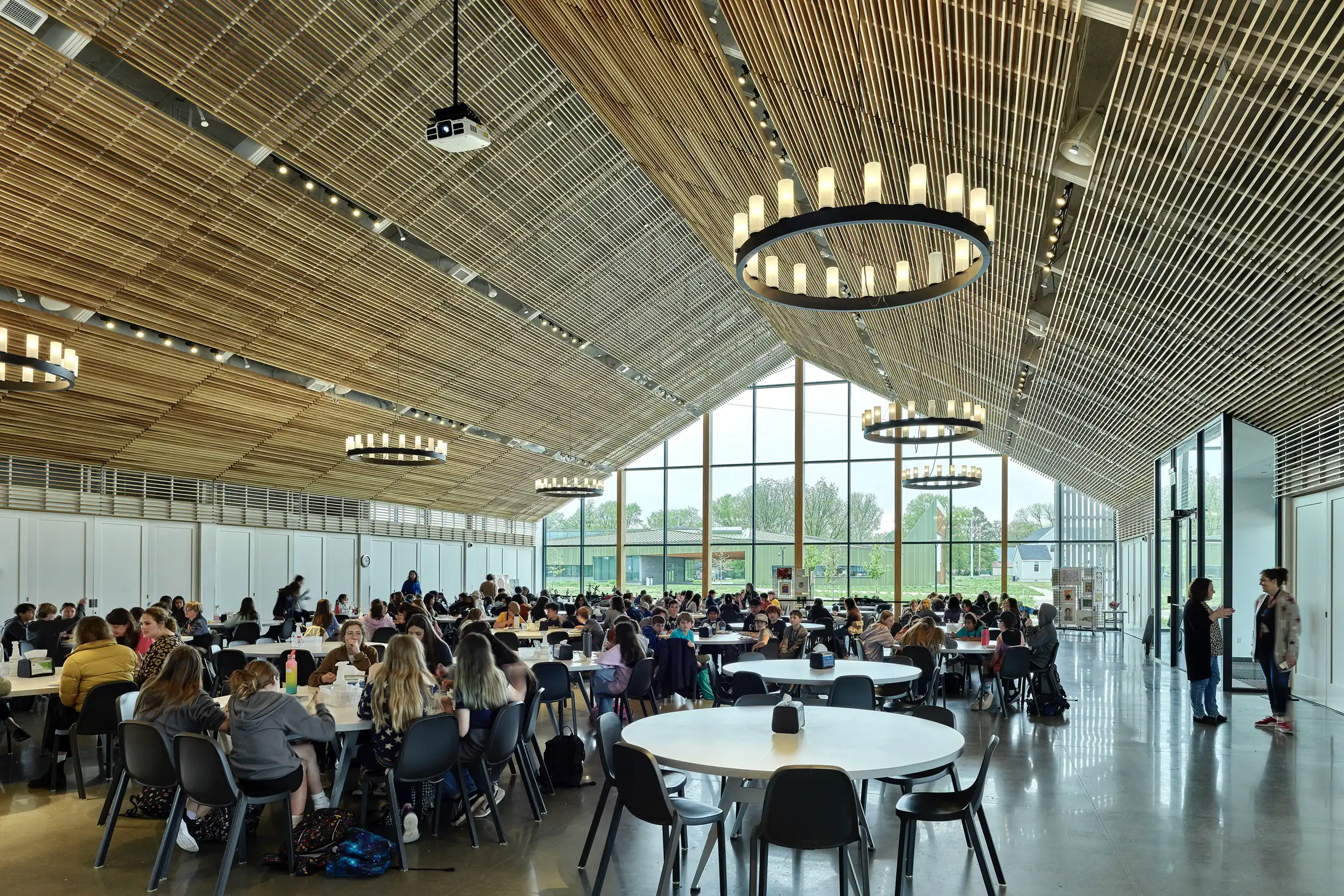
The 30-acre site is an open field, formerly a county fairground, bordered by single-family houses and light industry. The carefully composed campus is defined by four long, low, linear volumes reminiscent of vernacular barns, sheds and porches, arranged around an irregularly shaped quad. Materials are tough and basic in a vivid color palette dominated by green. Exterior walls framed in steel are clad in a box-ribbed metal panel system while fiber-cement board-and-batten wraps those framed in wood. Roofs, whose profiles vary to define interior spaces, are standing seam metal. Multiple openings connect the structures to each other and to meadows, lawns, water features, and winding paths.
“The rural context of Arkansas,” says Cox, “has inspired the design team to create a uniquely American spatial form that is simultaneously centered on the Thaden School academic community while remaining completely open to the surrounding community.” According to the jury’s comments, “no singular space dominates, but instead a series of distinctly public landscapes and gardens of different scales and characters invite pedestrians, cyclists and even wildlife and weather to meander through.”
Looking for quick answers on architecture and design topics?
Try Ask RECORD, our new smart AI search tool.
Ask RECORD →


Photos © Timothy Hursley
In both plan and section, the buildings emphasize daylight, outdoor access, and ventilation. Sustainability features include geothermal wells, stormwater management, native planting, and reclaimed materials. The facility operates with 70 percent greater energy efficiency than comparable institutions, sequestering over 1,400 metric tons of CO2 each year.
Completed in 2022, Thaden School has already become a lively center for the local community, hosting events and facilitating connections between town and gown. The collaborative efforts of three separate design practices have allowed educational goals, environmental stewardship, and civic engagement to coalesce in one cohesive architectural vision.
Looking for a reprint of this article?
From high-res PDFs to custom plaques, order your copy today!