Record Reveals
The Architect’s Guide to Boston
RECORD’s guide to visiting the AIA25 host city
The 2025 AIA Conference on Architecture & Design is set to kick off next week on June 4 at the Rafael Viñoly Architects–designed Boston Convention and Exhibition Center in the city’s Seaport district. AIA25 marks the first time since 2008 that the AIA’s big annual gathering has been hosted in Boston. With former U.S. Secretary of Transportation Pete Buttigieg headlining the slate of daily keynote speakers, the conference also offers a packed agenda of seminars and symposia, tours and open studios, and celebrations, including the AIA Awards Gala, honoring, among others, 2025 AIA Gold Medalist Deborah Berke and Firm of the Year awardee LPA Design Studios.
Like for AIA conferences past, RECORD has tapped locally based architects, landscape architects, academics, and others to provide recommendations for attendees who might be looking to peel off and explore the host city beyond the convention center floor (where you’ll find RECORD at booth 1547). While our guide includes noteworthy work of architecture in Boston and neighboring Cambridge, it also spotlights lesser-trafficked neighborhoods at a remove from the dense crowds of the Freedom Trail, daytrip-worthy New England destinations, unmissable parks and public art, and the obligatory Olmsted landscapes, oyster bars, and old-school Bostonian institutions.
Below, you’ll find our insider's suggestions for making the most of a trip to Beantown during AIA25. All addresses are in Boston, unless noted otherwise.
.webp)
Boston City Hall (1968) with Faneuil Hall (1742) in the background. Photo from Peter H. Dreyer slide collection, City of Boston Archives/Flickr via Wikimedia Commons
Modern Must-Sees
Designed by Kallmann McKinnell & Knowles, Boston City Hall (1 City Hall Square) is an icon of Brutalist architecture and a building that is both loved and hated by architects (love) and non-architects (hate). — Philip Chen, principal, Annum Architects
There are so many great modern works, from all the post-war Brutalism throughout the city and the many special buildings that dot the various academic campuses, including everything at MIT like Saarinen’s MIT Chapel (48 Massachusetts Ave., Cambridge) and Aalto’s Baker House dorm (362 Memorial Dr., Cambridge). But one of our favorites is a deep cut at Harvard: Larsen Hall (14 Appian Way, Cambridge). It’s a wonderful and strange Brutalist brick castle that you often stumble upon, rather than seek out from the canon list of buildings to see. — John Todd, principal, WOJR
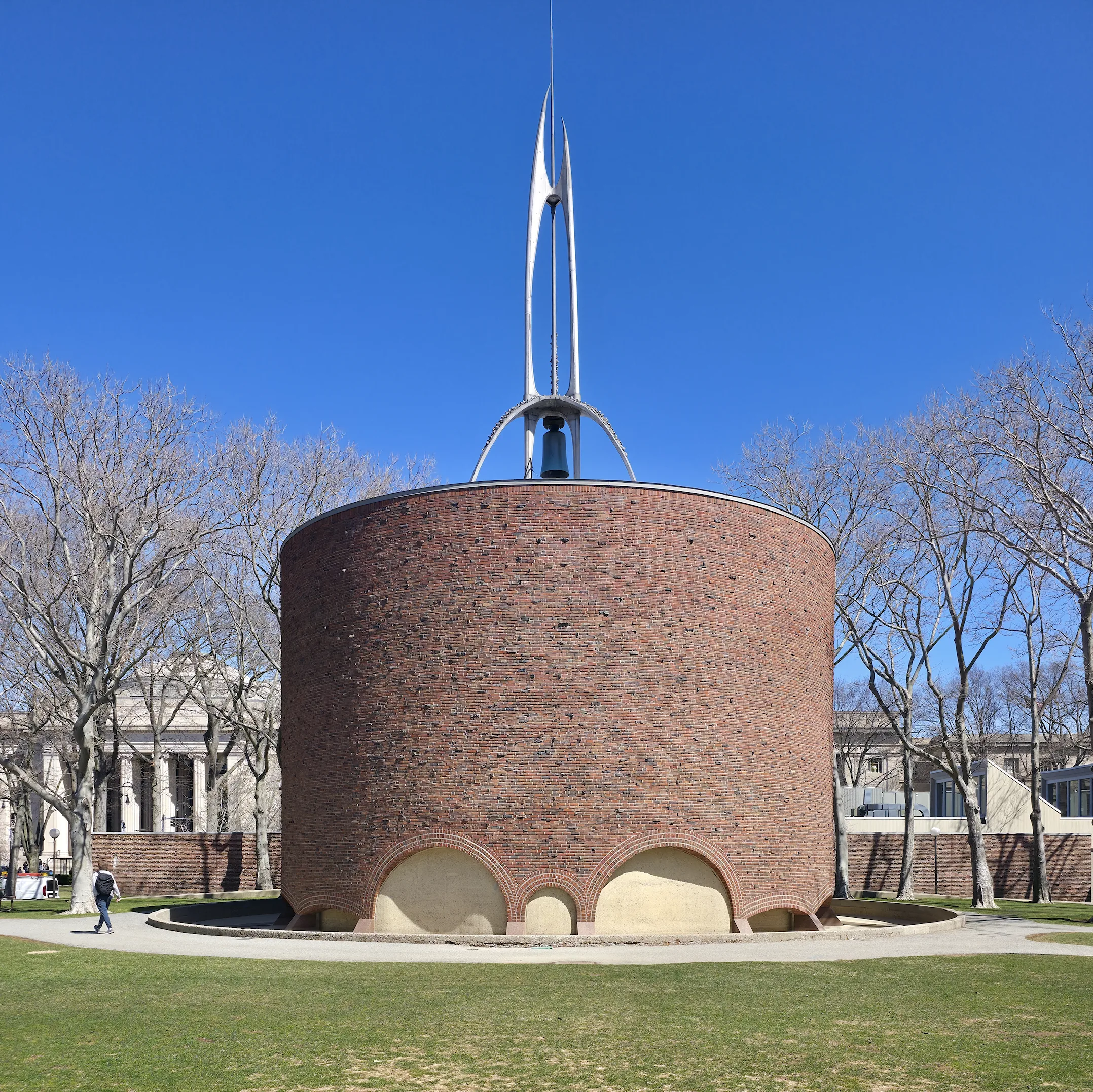
Eero Saarinen’s MIT Chapel (1956). Photo by Nate Bergin, Wikimedia Commons
A highlight of the Harvard campus is the Carpenter Center for the Visual Arts (24 Quincy St., Cambridge), Le Corbusier’s only North American Building. — David Croteau, president and principal, Flansburgh Architects
An easy favorite is the John Hancock Tower, now known as 200 Clarendon Street, designed by Henry Cobb. — Jeffry Burchard, managing partner and design principal, Machado Silvetti
Looking for quick answers on architecture and design topics?
Try Ask RECORD, our new smart AI search tool.
Ask RECORD →
Recent modern highlights are MIT’s Rotch Library (77 Massachusetts Ave. Cambridge) and Renzo Piano Building Workshop’s renovations and expansions of the Isabella Stewart Gardner Museum (25 Evans Way), and Harvard Art Museums (32 Quincy St., Cambridge). — Jason Forney, principal, Brunner/Cott Architects
Historic Draws
I keep looking at H.H. Richardson’s Sever Hall at Harvard (25 Harvard Yard, Cambridge) and its beautiful brickwork. — Eric Höweler, co-founding principal, Höweler + Yoon
Richardson and Olmsted’s Ames Gate Lodge (135 Elm St. North Easton, MA) is about a 20-minute drive outside of the city. — Nader Tehrani, principal, NADAAA
Boston Public Library’s Central Library (700 Boylston St.) designed by Charles Follen McKim. The main reading room is quite amazing. — Stephanie Randazzo Dwyer, partner and design principal, Machado Silvetti
.webp)
The Reading Room at Boston Public Library's 1895 McKim Building at Copley Square. Photo by Tony Webster/Flickr via Wikimedia Commons
The Great Outdoors: Superlative Green Spaces
The Arnold Arboretum (125 Arborway, Boston), a jewel of Frederick Law Olmsted’s Emerald Necklace, is a unique kind of public green space. A museum of plants maintained by Harvard University, it is laid out to tell stories about how we have historically categorized and understood plant relationships. And as a leading research institution, you can walk among priceless specimens from around the world and generations-long living experiments.— Eric Kramer, principal and partner, Reed Hilderbrand
Designed by Olmsted to casually meander around 34 acres, the Riverway features some of the most beautiful pedestrian bridges ever, many of them designed by H. H. Richardson’s firm. — Emily Paparella, principal, Elkus Manfredi Architects
Southwest Corridor Park is a leftover space between Back Bay and the South End turned into a wonderful linear park. — Stephanie Randazzo Dwyer
Boston Common and the Public Garden are hard to beat. — Jason Forney
_(11061404763).webp)
The lagoon at the 24-acre Public Garden, designed by George F. Meacham and opened in 1837. Photo by Robert Lindsell, Wikimedia Commons
Outside the Gallery Walls: Great Public Art
The Embrace, the Martin Luther King Jr. memorial in Boston Commons (139 Tremont St.) by Hank Willis Thomas, is remarkable. Our Sean Collier Memorial at MIT (32 Vassar St., Cambridge) is also noteworthy. — Eric Höweler
La Grande Voile by Alexander Calder at MIT — Nader Tehrani
Sol Lewitt’s Bars of Color within Squares is always a fun and surprising find just off the Infinite Corridor at MIT. — John Todd
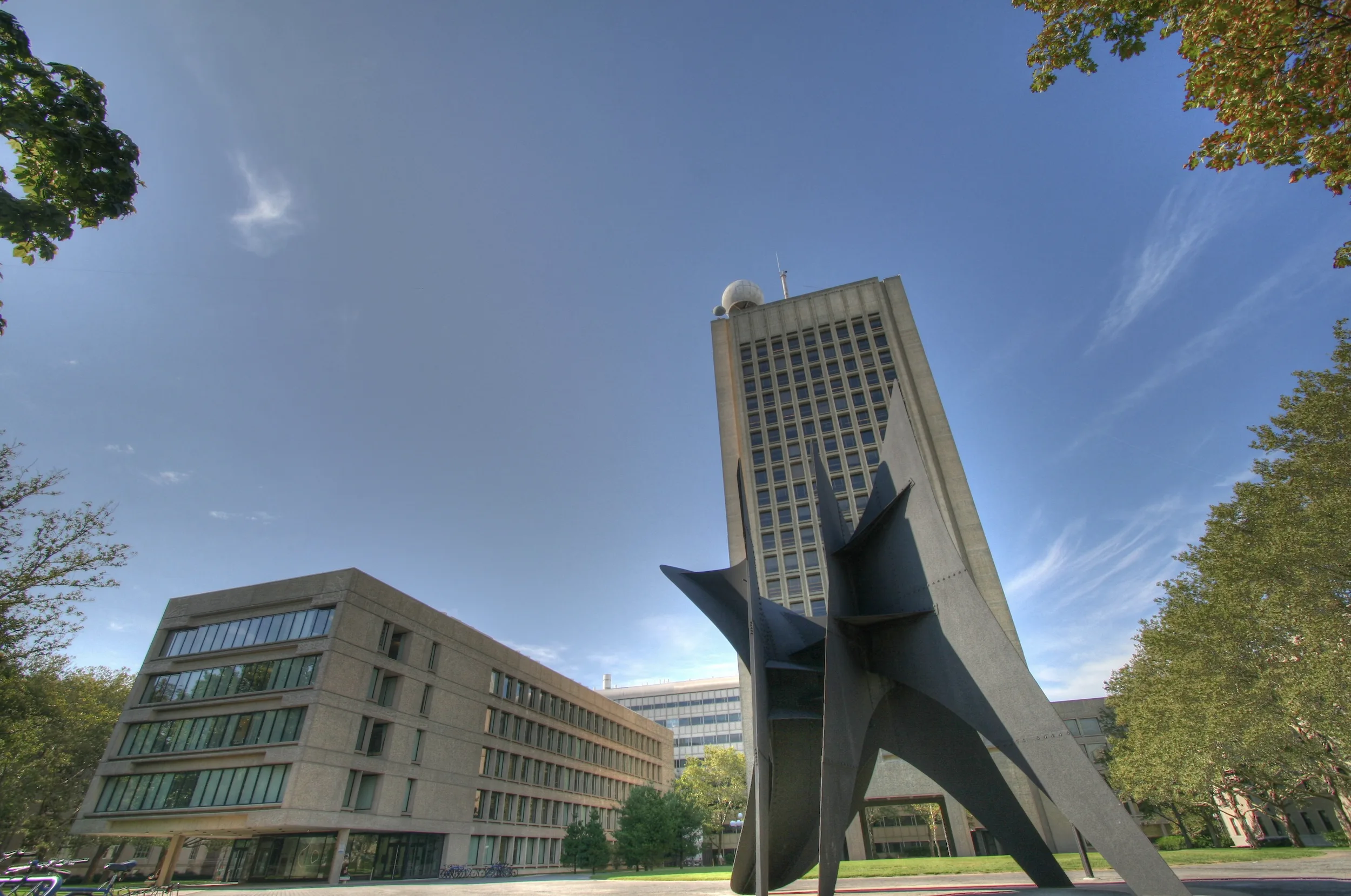
Alexander Calder's La Grande Voile at McDermott Court, MIT. Photo by Madcoverboy, Wikimedia Commons
Off the Freedom Trail: Hidden Gems that Most Visitors Might Not Know About
.webp)
The 52-story Prudential Tower (1964) as seen from the Christian Science Plaza. Photo by Luca Galuzzi, Wikimedia Commons
If you find yourself in the North End, don't miss the neighborhood’s Boston Public Library branch (25 Parmenter Street, Boston). Designed by Carl Koch in 1965, it's an uncanny mix of Arts and Craft masonry coupled with a beautiful, lightweight Felix Candela–like vault which scoops clerestory light inside. On the interior, you'll see the remains of a sunken reflecting pool where Sheila [Kennedy] and I enjoyed reading when we first moved here, surrounded by submerged tropical philodendrons and books. The denouement awaits in the back, an enormous model of the Pallazzo Ducale in Venice, lagoon and all. — Frano Violich, co-founding partner, Kennedy and Violich Architecture
Venture through the Prudential Center (800 Boylston St.) and Copley Place (100 Huntington Ave.). It's an interior urbanism that goes almost the entire length of Newbury Street. Super commercial, yes, but an urban phenomenon, nonetheless. — Jeffry Burchard
Designed by Peabody and Sterns, the Dorchester Heights monument in South Boston recognizes when George Washington fortified the location in March 1776 and succeeded in driving the British troops out of Boston. It’s on a tall hill with views of the water and the city. — Emily Paparella
Black Falcon Avenue in South Boston — Nader Tehrani
Obligatory Tourist Traps: Spots Worth Braving the Crowds to Visit
The Paul Revere House (19 N. Square). What a wall section (rammed earth, deep, and covered in lap siding). — J. Jih, principal, Studio J.Jih
With its narrow alleys, brick row houses, and gas street lamps, Beacon Hill has a historic Boston charm that, living here so long, you forget, is not readily found elsewhere in the U.S. — John Todd
Take a tour of the historic and iconic Fenway Park (4 Jersey St.) or visit Faneuil Hall and Quincy Market (4 S. Market St.) — David Croteau
The View observation deck at the Prudential Center — Jason Forney
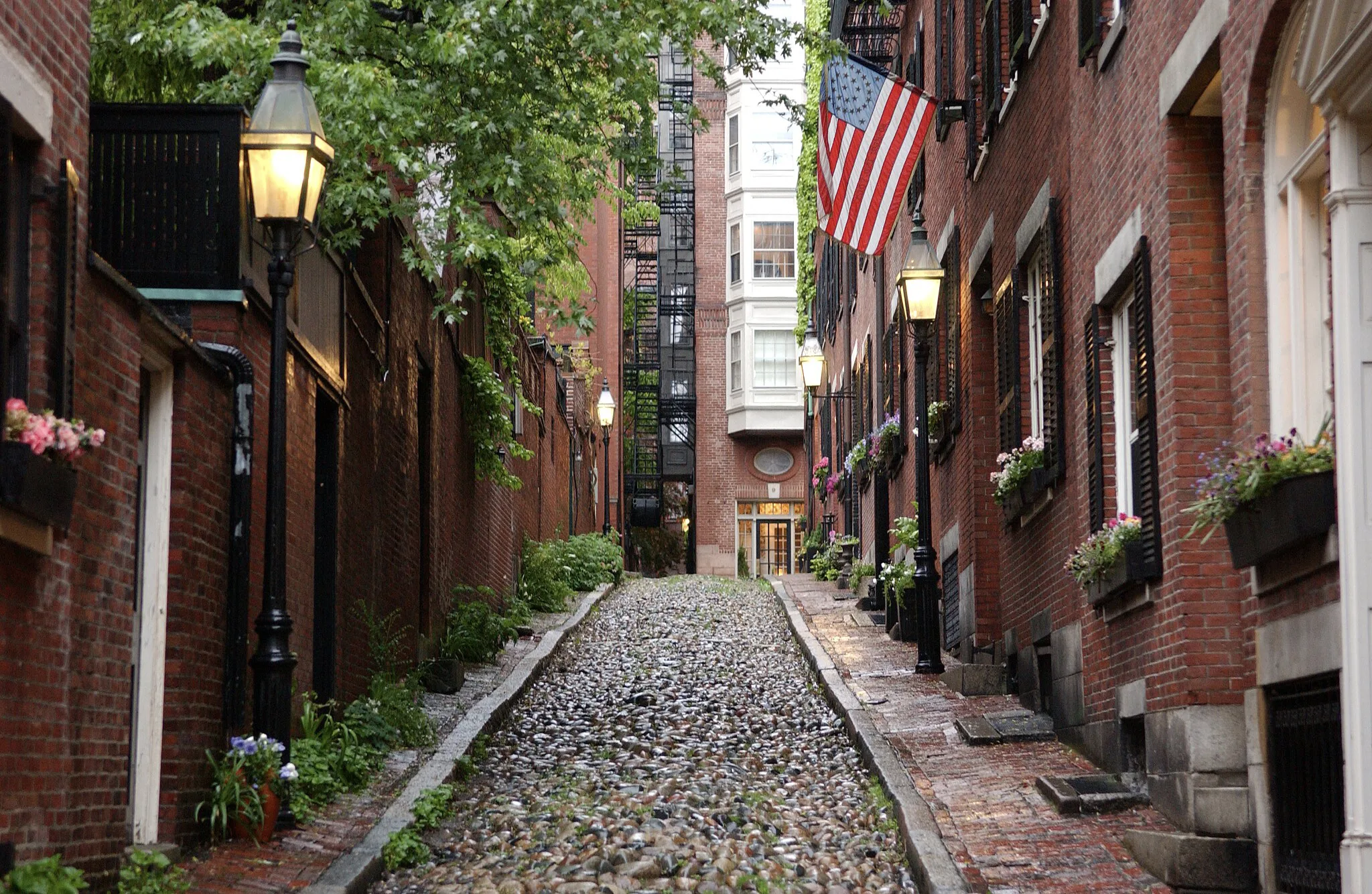
A street in the historic Beacon Hill neighborhood. Photo by Ian Howard, Wikimedia Commons
For Foodies: Top Dining and Drinking Destinations
Head to Sofra (1 Belmont, Cambridge), a casual bakery-café, here you can actually taste Ana Sortun's delicious Middle Eastern cuisine, because her restaurants are booked months ahead. Try the Turkish breakfast and then take a morning walk in Mount Auburn Cemetery (580 Mt. Auburn St., Cambridge) just across the street—it’s an architectural and landscape marvel of the mid-19th century rural cemetery movement and a mecca for urban birdwatchers.— Eric Kramer
Pammy’s (928 Massachusetts Ave., Cambridge), hands down. Nothing disappoints. Everything is elevated and impeccably executed but so cozy, friendly, and unpretentious. Our team always seems to find our way back there for an evening together. Start with the house Negroni, and make sure to try their Lumache. — John Todd
Kava Neo-Taverna (315 Shawmut Ave.) is an ideal, summery place in the South End. The authentic Italian charm is felt the moment you step inside of Ristorante Euno (119 Salem St.) in the North End—just imagine when you’re seated and handed a menu. At Peach Farm (4 Tyler St.) in Chinatown, try my favorite: the lobster with ginger and scallions. — Emily Paparella
.webp)
Delux Café in the South End. Photo by Chris Rycroft, Wikimedia Commons
Designed by Ken Faulk Contessa at the Newbury Hotel (3 Newbury St.) offers Italian rooftop dining with views of the Boston Public Garden in a glam, vintage setting. In the Seaport District, Nautilus Pier 4 (300 Pier 4 Blvd.) is a fusion of Asian, New England, and tapas-style dining in a lively space. Located in a renovated 1908 warehouse in Fort Point, Row 34 (383 Congress St.) is an industrial-chic space with a focus on seafood. — David Croteau
The Delux (100 Chandler St.) between Back Bay and the South End is a tiny neighborhood café— a little moody and fun, and great for a bite and beers with friends. — Jeffry Burchard
The Barking Crab (88 Sleeper St.) in summer. — J. Jih
The Somerville scene is excellent. Try Sarma (249 Pearl St., Somerville); Spoke Wine Bar (89 Holland St., Somerville); Field and Vine (9 Sanborn Ct., Somerville); and Celeste (21 Bow. St., Somerville). For seafood, try the Union Oyster House (41 Union St.), Neptune Oyster (63 Salem St.), and Mooncusser (304 Stuart St.) — Jason Forney
Daytime wandering: Best Neighborhoods to Explore
Jamaica Plain is easily accessible from the Orange line T. Stroll through the Arnold Arboretum or grab an ice cream at JP Licks (659 Centre St., Jamaica Plain). —Stephanie Randazzo Dwyer
Dorchester for the old school gay bars and amazing Vietnamese food. — J. Jih

Nighttime view of Back Bay buildings reflected in the Storrow Lagoon along the Charles River Esplanade. Photo by King of Hearts, Wikimedia Commons
Boston After Dark: Picks for the Perfect Night Out on the Town
I would try live music at Wally’s Café Jazz Club (427 Massachusetts Ave.) or The Beehive (541 Tremont St.) or maybe a cocktail at Lucky’s Lounge (355 Congress St.) — Stephanie Randazzo Dwyer
The Museum of Fine Arts’ MFA Late Nites event series. — J. Jih
Take a walk through Beacon Hill and along the Charles River Esplanade. — Jeffry Burchard
New England Road Trip: Out-of-Town Excursions

The atrium of Louis Kahn's Phillips Exeter Academy Library (1971). Photo from Carol M. Highsmith Archive collection at the Library of Congress, Prints & Photographs Division via Wikimedia Commons/Public Domain
An hour north of Boston in Manchester, New Hampshire, you can find two Frank Lloyd Wright houses on the same block! The Zimmerman House is an elegant model of his Usonian architecture while the Kalil House is a much more unique example of his Usonian Automatic in his experimentation with inexpensive concrete modular blocks—only one of seven surviving examples. Reservations are required and tours can be arranged with the Currier Museum of Art (150 Ash St., Manchester). Of course, if you have more time and plan well, you may also be able to stop by Louis Kahn’s famous, nearby Phillips Exeter Academy Library (200 Main St., Exeter) to make a day trip to see three works by two of America’s best architects. — Tom S. Chung, principal, Leers Weinzapfel Architects
Halibut Point State Park (Rockport, Mass.) is a former granite quarry that once supplied stone for Boston’s curbs and foundations, now transformed into a state park right on the ocean. The trails loop around the water-filled quarry, passing massive cuts of granite, remnants of old equipment, and views that stretch all the way to Maine on a clear day. In June, the paths are lined with wild blueberries, and you can scramble down the rocks to a small beach for a picnic or just sit and watch the waves crash against the shore. It’s a unique place to reflect on the history, provenance, and labor embedded in the materials that built our cities—and to consider what we’ve taken from the earth, and what it continues to give us in return. — Patricia Gruits, co-executive director, MASS Design Group
Just north of Boston and reachable by public transportation, Rockport and Gloucester are quintessential New England towns with coastal scenery and activities, local history, and great seafood. — Philip Chen
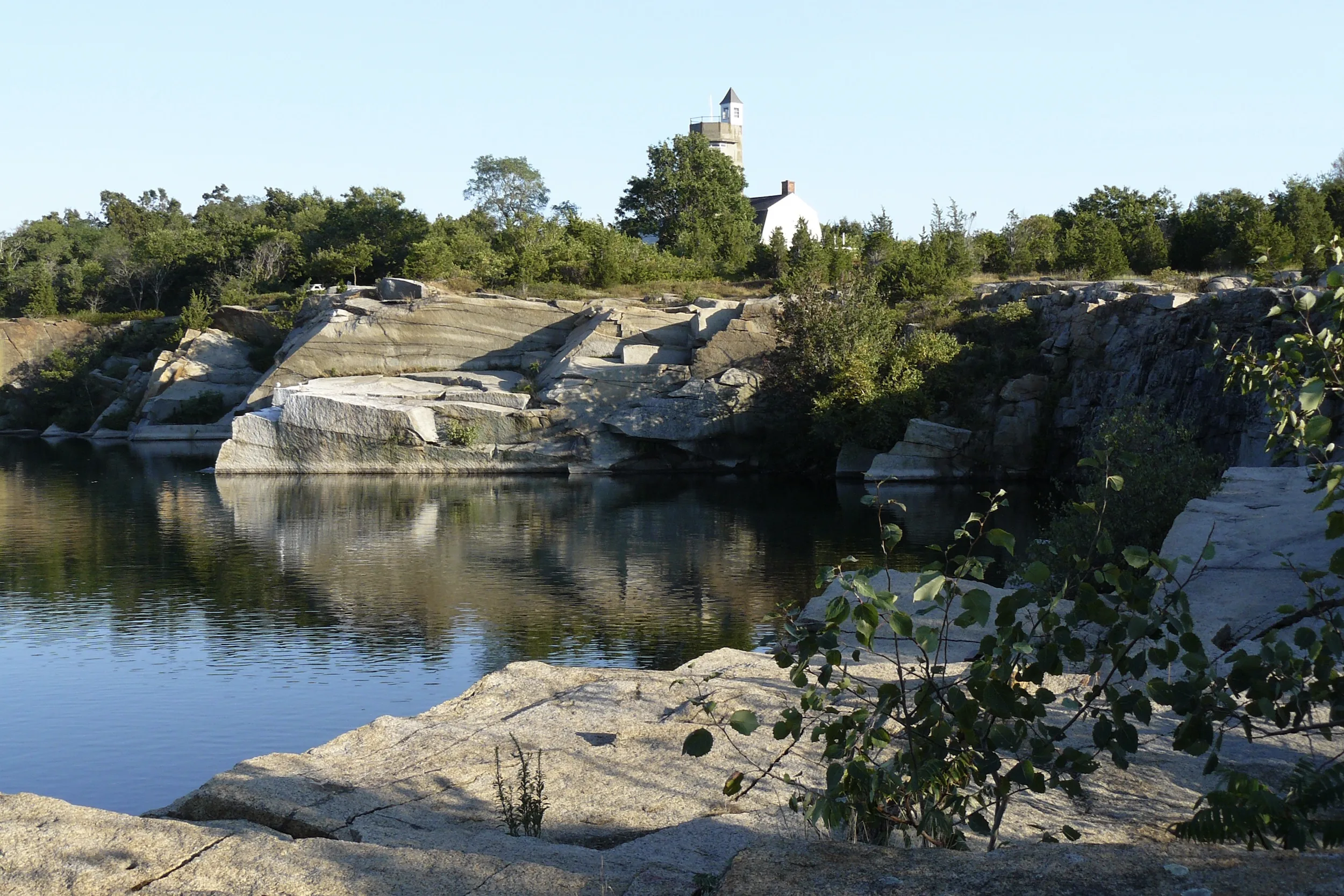
Halibut Point State Park, Rockport. Photo by Zandcee, Wikimedia Commons
Take a drive out to Lincoln to tour Walter and Ise Gropius’s own home, an integration of Modernism and the New England vernacular. And take a careful look at the landscape. While many discount the Modernist architect’s interest in landscape, the house was sited carefully on the hillside in alignment with historic stone walls running through the site, surrounding trees were planted even before the house was built and align with its structural grid. The screened porch is a gem of a space that creates a rich transparency between inside and out. — Eric Kramer
Drive out scenic Route 2 all the way to the Berkshires towns of North Adams and Williamstown. Spend a day at the Clark Art Institute (225 South St., Williamstown, MA.), not just in the impeccable galleries designed by Tadao Ando, Annabelle Selldorf, and Gensler—make sure you save time for a long walk in the landscape designed by Reed Hilderbrand as well. Hike up Stone Hill for the views and relax on the lawn by the tiered pools of water that reflect the surrounding forests and meadows. — Eric Kramer
Drive to Wellesley College to see the amazing campus. Admire Paul Rudolph’s Jewett Arts Center (206 Central St., Wellesley, MA) and Rafael Moneo’s Davis Museum (106 Central Ave.), as well as Mack Scogin Merrill Elam Architects’ Lulu Chow Wang Campus Center (21 Wellesley College Rd.) — Eric Höweler
The World’s End hiking trail (Martins Ln, Hingham, Mass) was the almost-location of the United Nations before Bob Moses wrangled it away. — J. Jih
.webp)
The ICA Boston (2006). Photo by Rhododendrites, Wikimedia Commons
Editors’ Picks

John F. Kennedy Federal Building (1966). Photo from Carol M. Highsmith Archive collection at the Library of Congress, Prints & Photographs Division via Wikimedia Commons/Public Domain
Armory of the First Corps of Cadets, William Gibbons Preston (101 Arlington St.)
Bruce C. Bolling Municipal Building, Mecanoo and Sasaki (2300 Washington St., Roxbury)
Christian Science Plaza, I.M. Pei & Partners, Sasaki (Massachusetts and Huntington Aves.)
Community Rowing Boathouse, Anmahian Winton Architects (20 Nonantum Rd., Brighton)
Custom House Tower, Ammi Burnham Young, Peabody & Stearns (4 McKinley Sq.)
The Cyclorama at Boston Center for the Arts, Cummings and Sears (539 Tremont St.)
Harvard Holyoke Center, José Luis Sert (1350 Massachusetts Ave., Cambridge)
Harvard Science & Engineering Complex, Behnisch Architekten (150 Western Ave., Allston)
Institute of Contemporary Art, Diller Scofidio + Renfro (25 Harbor Shore Dr.)
John F. Kennedy Federal Building, Walter Gropius and Norman C. Fletcher of The Architects Collaborative with Samuel Glaser (15 Sudbury St.)
John F. Kennedy Presidential Library and Museum, I.M. Pei & Partners (220 Morrissey Blvd.)
Lindemann Mental Health Center, Paul Rudolph (25 Staniford St.)

Steven Holl’s Simmons Hall at MIT. Photo by Daderot, Wikimedia Commons
Massachusetts State House, Charles Bulfinch (24 Beacon St.)
MIT Kresge Auditorium, Eero Saarinen (48 Massachusetts Ave., Cambridge)
MIT Media Lab, Maki and Associates (75 Amherst St., Cambridge)
MIT Simmons Hall, Steven Holl (229 Vassar St., Cambridge)
Museum of Fine Arts, Art of Americas Wing, Foster + Partners (465 Huntington Ave.)
Old South Meeting House, Robert Twelves (310 Washington St.)
One International Place, Johnson/Burgee Architects (100 Oliver St.)
Stata Center, Frank Gehry (32 Vassar St., Cambridge)
Symphony Hall, McKim, Mead, and White (301 Massachusetts Ave)
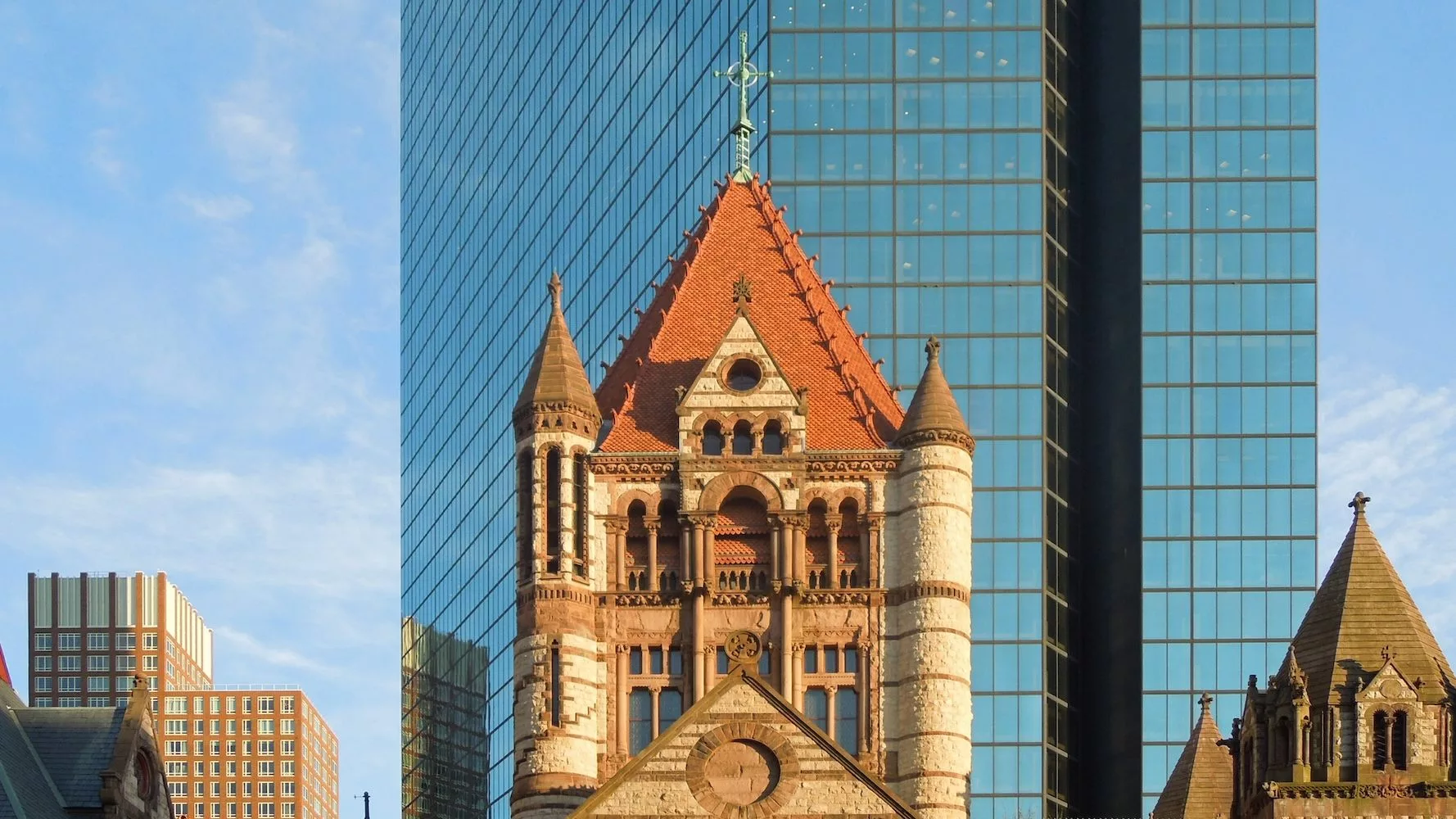
Trinity Church, H.H. Richardson (206 Clarendon St.)
Compiled by Matt Hickman, Dante Ciampaglia, and Matthew Marani
Looking for a reprint of this article?
From high-res PDFs to custom plaques, order your copy today!