Eero Saarinen’s U.S. Embassy in London Reopens as a Luxury Hotel Following Chipperfield–led Transformation
Architects & Firms
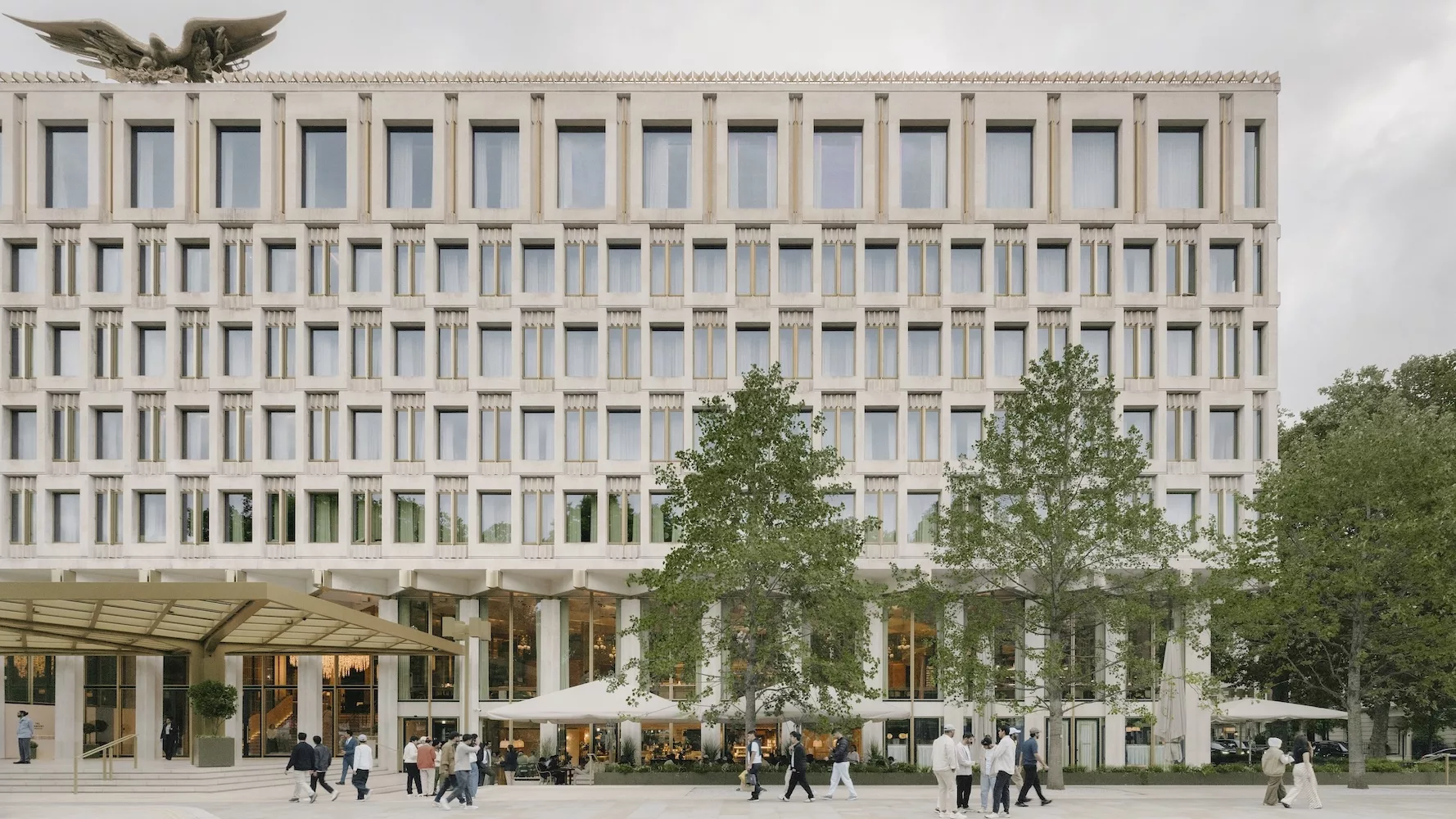
A decade after David Chipperfield Architects was selected over contenders such as KPF and Foster + Partners to helm the conversion of the old United States Embassy in London into a luxury hotel, the reborn building at 30 Grosvenor Square has opened to well-heeled guests as the 144-key Chancery Rosewood.
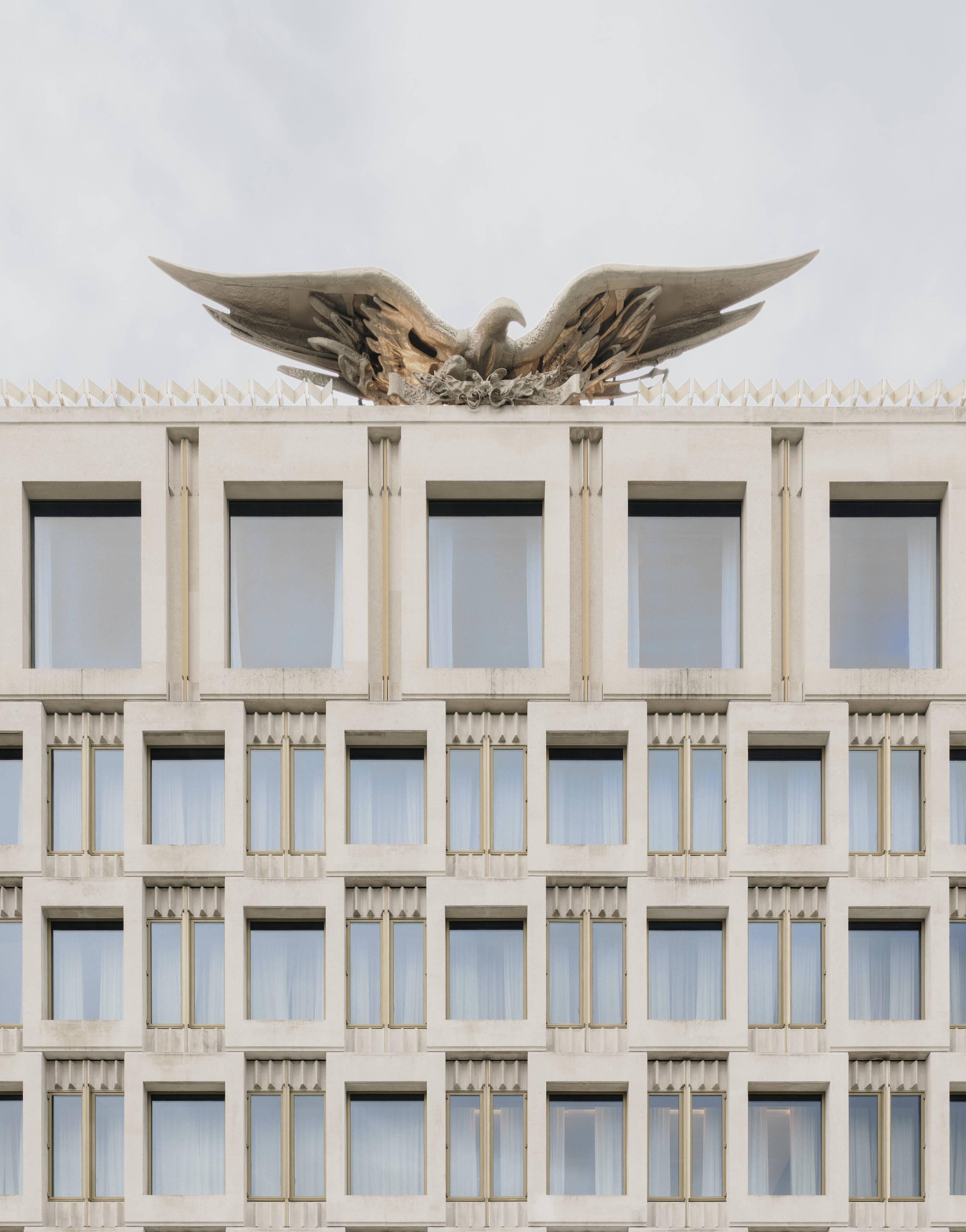
Photo © Simon Menges
The debut of the new hotel, featuring interiors by Joseph Dirand, marks the end chapter of the U.S.’s drawn-out ambassadorial real estate shuffle in the British capital. The maneuvering began in 2008 when the U.S. formally declared its intentions to decamp from its longtime diplomatic mission on Grosvenor Square in the Mayfair district—designed by Eero Saarinen and opened in 1960 as the Finnish American architect’s only U.K. project—to a new building in Nine Elms on the South Bank of the Thames. The move was prompted, in part, by ongoing security threats. The $1 billion U.S. Embassy in Nine Elms, designed by Philadelphia-based KieranTimberlake, opened in 2017. As for the Saarinen embassy, it was sold to Qatari real-estate development firm Qatari Diar for an undisclosed price in 2009—the same year the building was named a Grade II-listed landmark by Historic England.
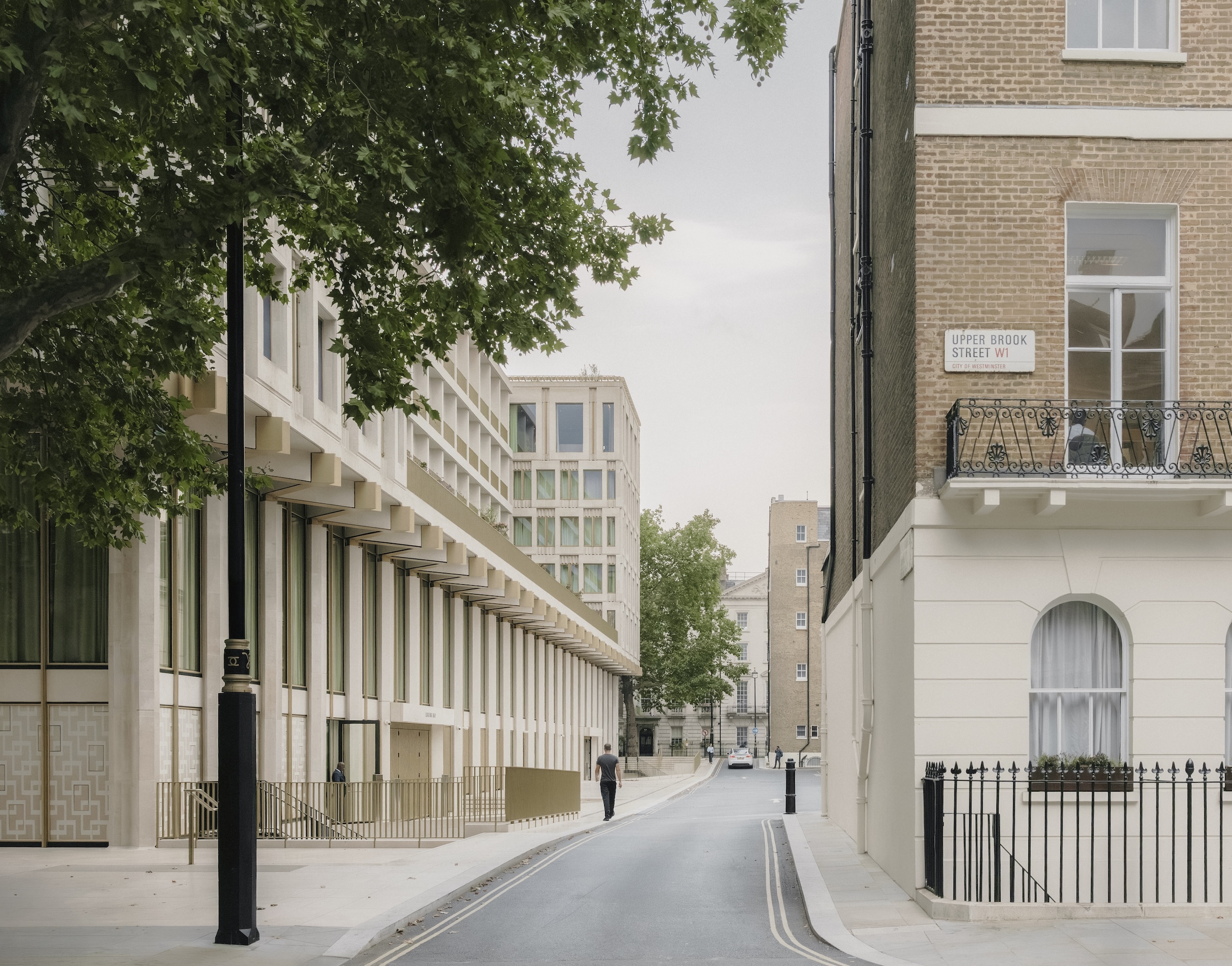
Photo © Simon Menges
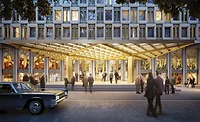
The Chipperfield-led transformation of the high-profile property—one that came with pushback in the early stages—takes great pains to retain the U-shaped structure’s formidable presence on Grosvenor Square by restoring the historic, Portland stone–clad facade and preserving the enormous, Theodore Roszak–designed eagle sculpture crowning the building. At street level, the former embassy has been softened by stripping it of the bollards, barricades, and other security features added over the years and connecting the hotel’s ground-floor amenities—including retail and restaurants—to a newly landscaped public realm. “Reconfirming the building as part of Grosvenor Square forms the basic premise of the design,” states Chipperfield Architects in a project narrative. “The concept is based around the preservation and enhancement of the Modernist qualities while responding to the ambitions and brief of the client to ensure the building’s long-term viability.”
Photos © Simon Menges
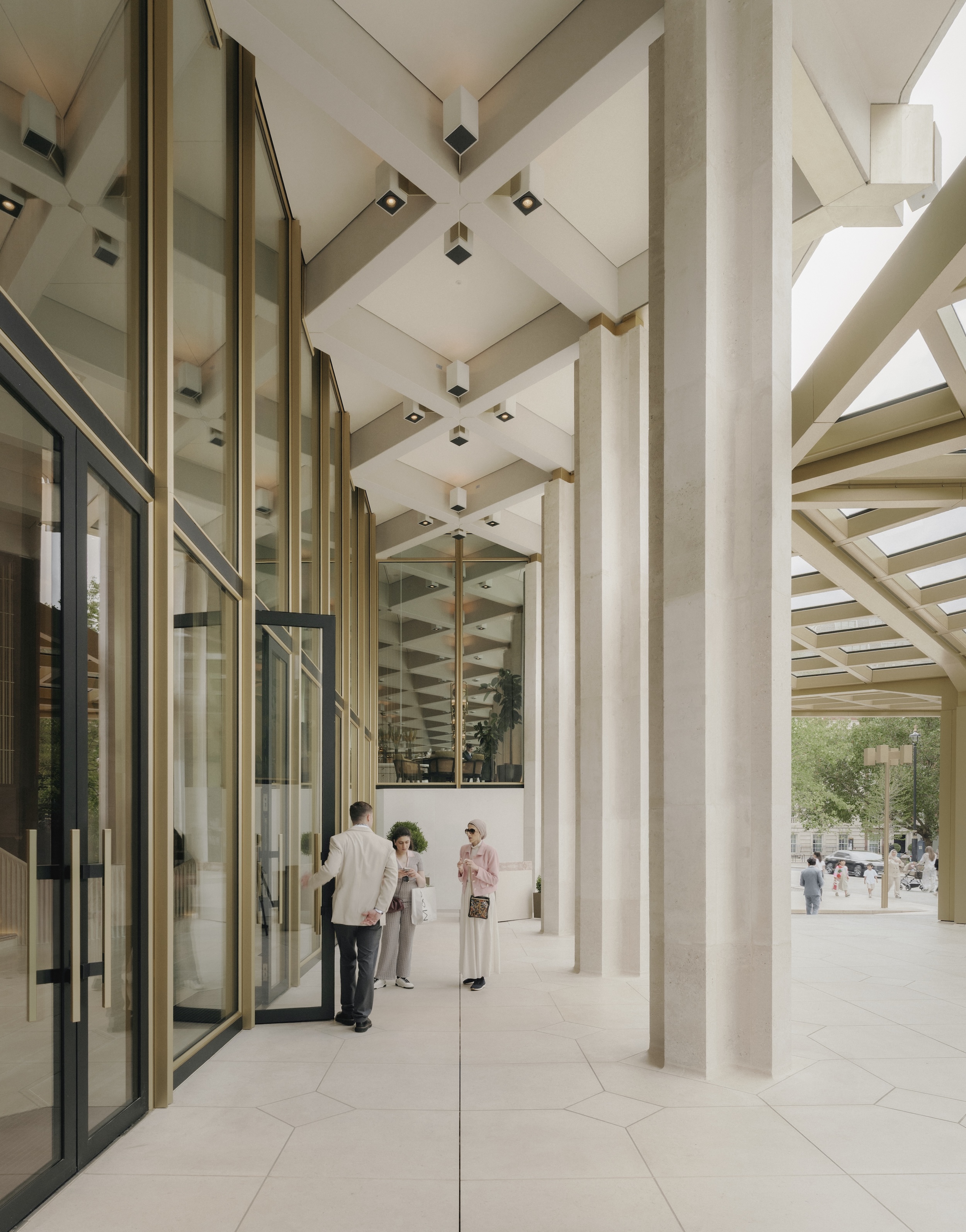
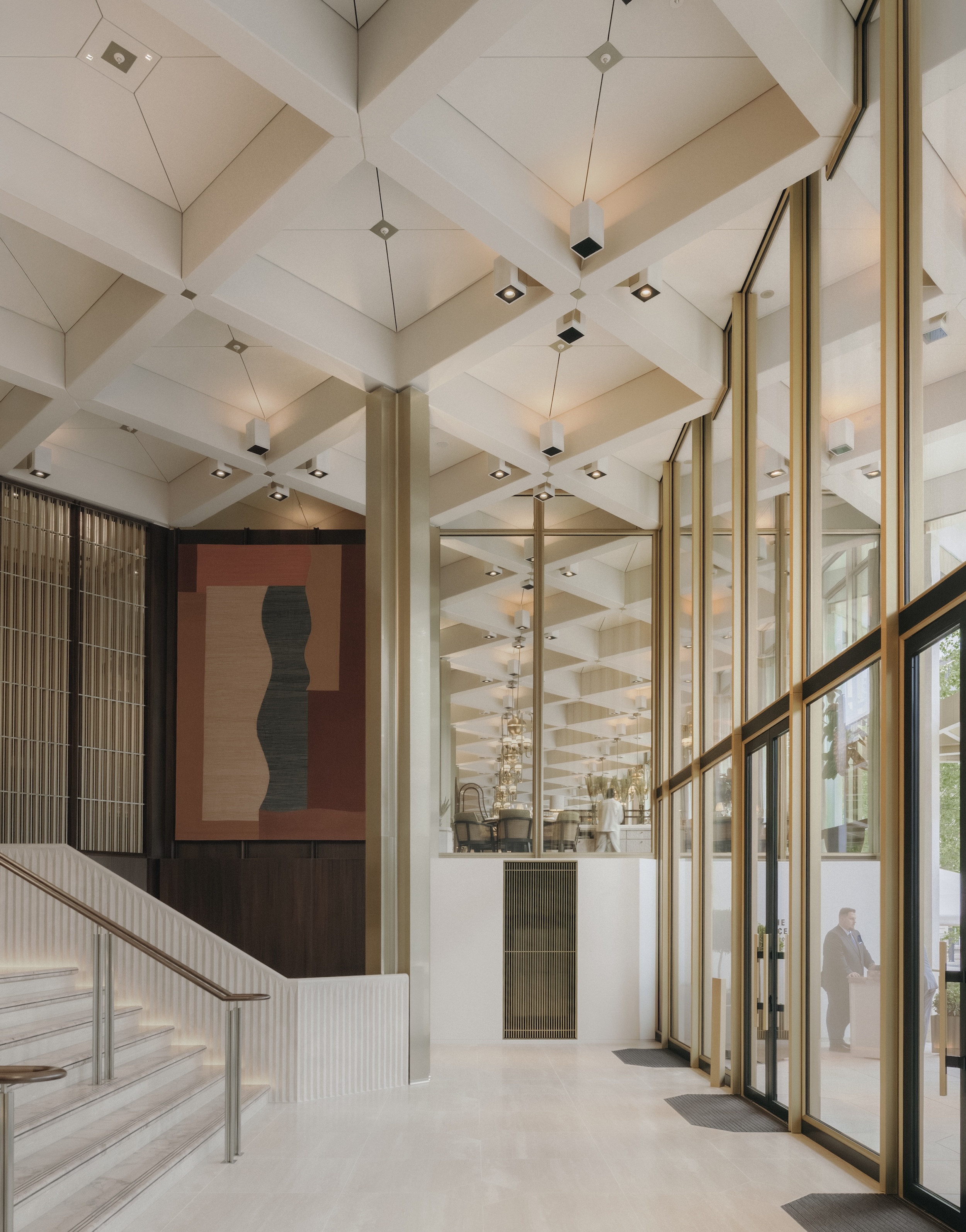
Also on the ground floor, the design team, with the aim of “enhancing Saarinen’s vision,” restored and expanded the signature concrete diagrid ceiling, removing any embassy-era office partitions that had long limited its continuous reading. The building’s upper floors were, according to the firm, largely rebuilt behind the existing facade; a new sixth floor and, above that, a set-back pavilion, which houses the hotel’s penthouse suites as well as public facilities, were also added atop the existing structure. Meanwhile, the basement levels now feature a grand ballroom, a spa, parking, and more. As the firm notes, more than 4,000 individual elements of the building were carefully disassembled for cleaning and refurbishment before being reinstalled.

Historic photo of the U.S. Embassy in London Photo courtesy Library of Congress, Prints & Photographs Division, Balthazar Korab Archive at the Library of Congress
The former U.S. Embassy in London isn’t the first Saarinen-designed building to be dramatically adapted for new use as a hotel. His swooping TWA Terminal at John F. Kennedy International Airport in New York was spared the wrecking ball and resuscitated as a hotel in 2019 following an extensive renovation by Beyer Blinder Belle. More recently, Saarinen’s former U.S. Embassy in Oslo was redeveloped as a mixed-use office complex, appearing on the April 2024 cover of RECORD.
Looking for quick answers on architecture and design topics?
Try Ask RECORD, our new smart AI search tool.
Ask RECORD →
Looking for a reprint of this article?
From high-res PDFs to custom plaques, order your copy today!