A Corporate Bank Headquarters by OBR Offers a Fresh Take on the Milanese Glass Box
Architects & Firms
“Yeah, this is going to be another big, ugly glass box. You want to make something out of it?” With that line, the artist Barney Tobey mocked the monotony of office buildings in a 1965 New Yorker cartoon. The scene could easily repeat itself today in Milan, where glass and concrete have reshaped the city.
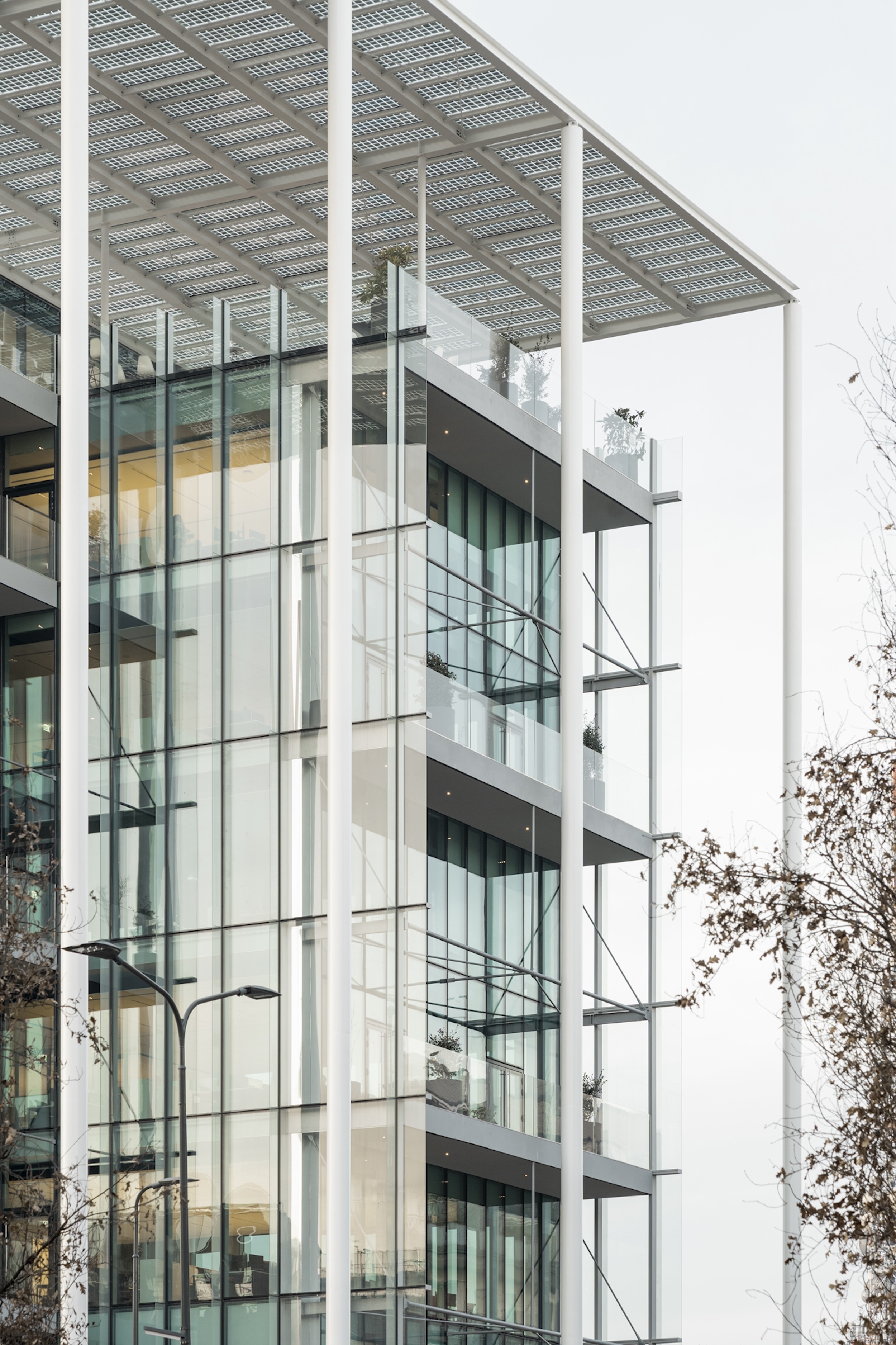
Photo © Nicola Colella
Take Viale Scarampo, a major artery leading in and out of town. Decades ago, it housed the Alfa Romeo headquarters and Milan’s former trade fair grounds, both later replaced by new buildings. Variety or cacophony—it depends on your taste: three leaning towers by Isozaki, Libeskind, and Hadid now rise above Mario Bellini’s long enfilade of 1990s fair pavilions, flanked by an oversized Postmodern pediment and a crumpled roof. Just beyond this monumental urban gateway, the city quickly shifts into the more intimate atmosphere of its 20th-century grid.
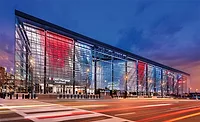
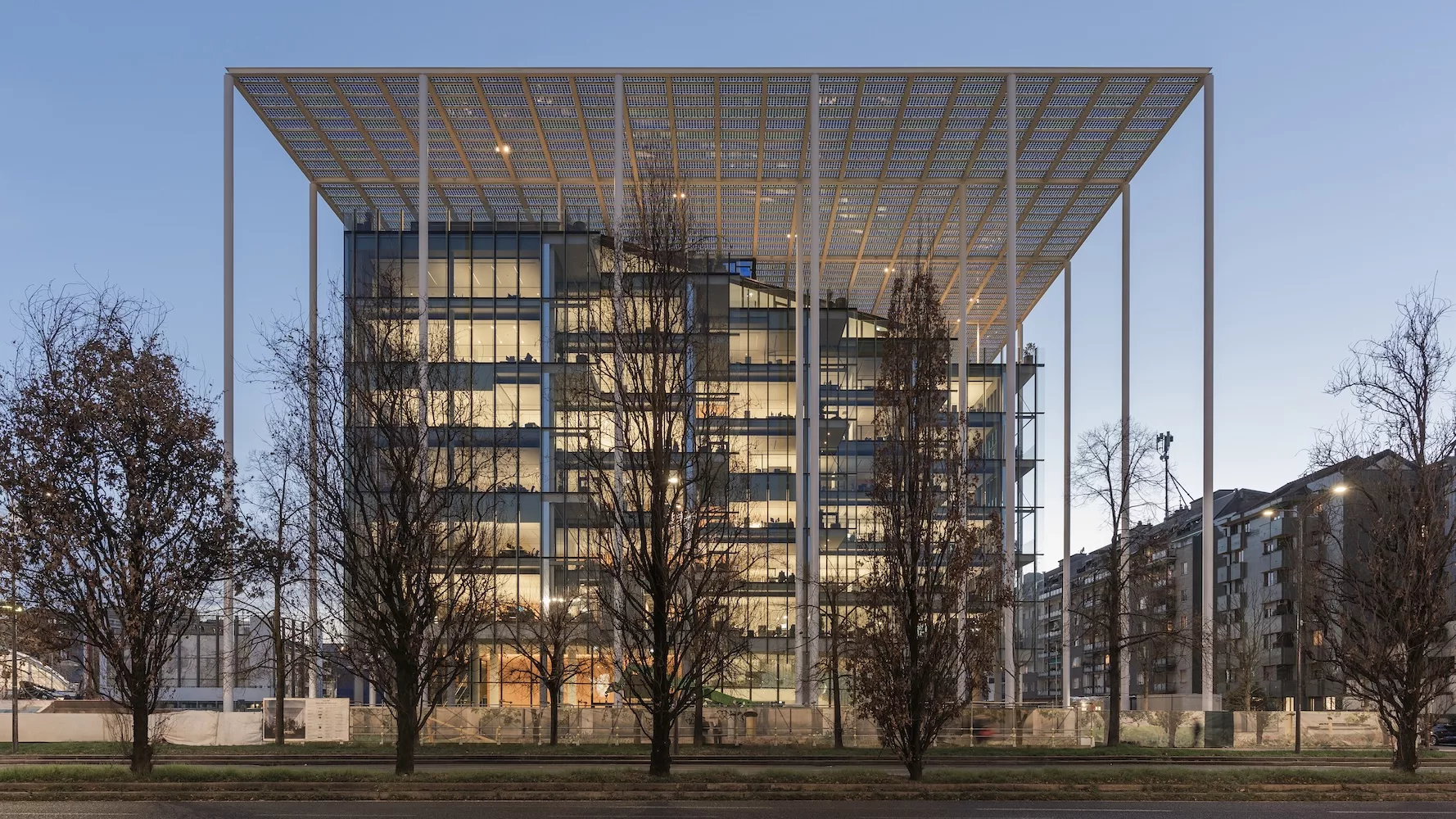
It is against this backdrop that local firm Open Building Research (OBR) designed the new headquarters for BFF Bank, tasked with avoiding “another big, ugly glass box” while dealing with such a fragmented setting. The competition-winning scheme began with the classic Italian obsession with street alignments—here challenged by the metro line underneath, slicing across the site at an almost 45-degree angle. The solution was to split the project into two related but independent parts: an 8-story office block and a vast canopy.
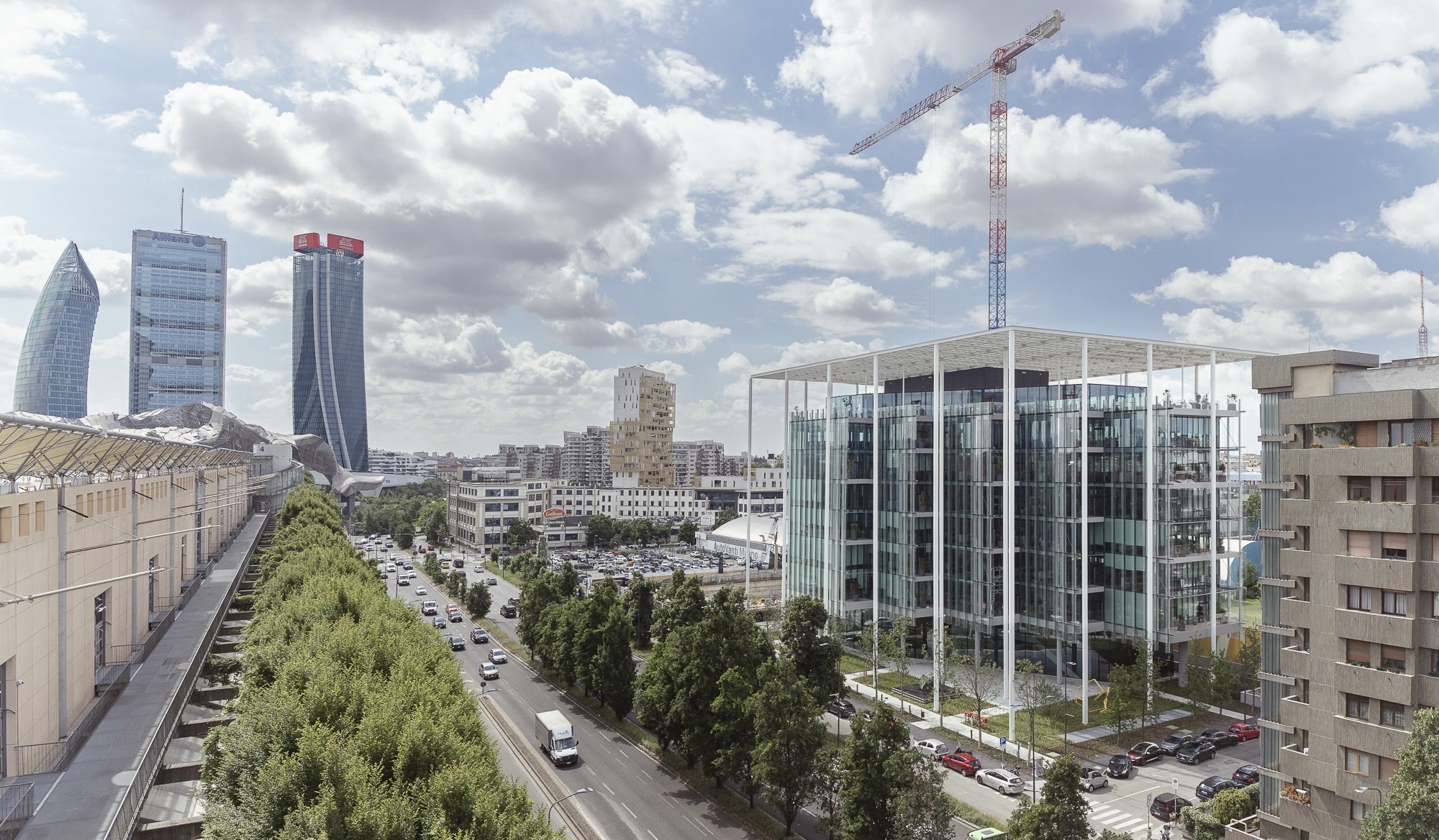
Nearby are glazed towers by (from left to right) Daniel Libeskind, Arata Isozaki, and Zaha Hadid Architects. Photo © Martina Simonato
The first, a fully glazed volume, undergoes geometric carving to accommodate the subway below, folding into a zigzag. The move is not only aesthetic but urban: the setbacks generate both a resting spot and a shortcut linking the metro station to the neighborhood behind. Milan saw a similar strategy at Grafton Architects’ Bocconi University building (2008), where a small shift turned a narrow sidewalk into a lively public square.
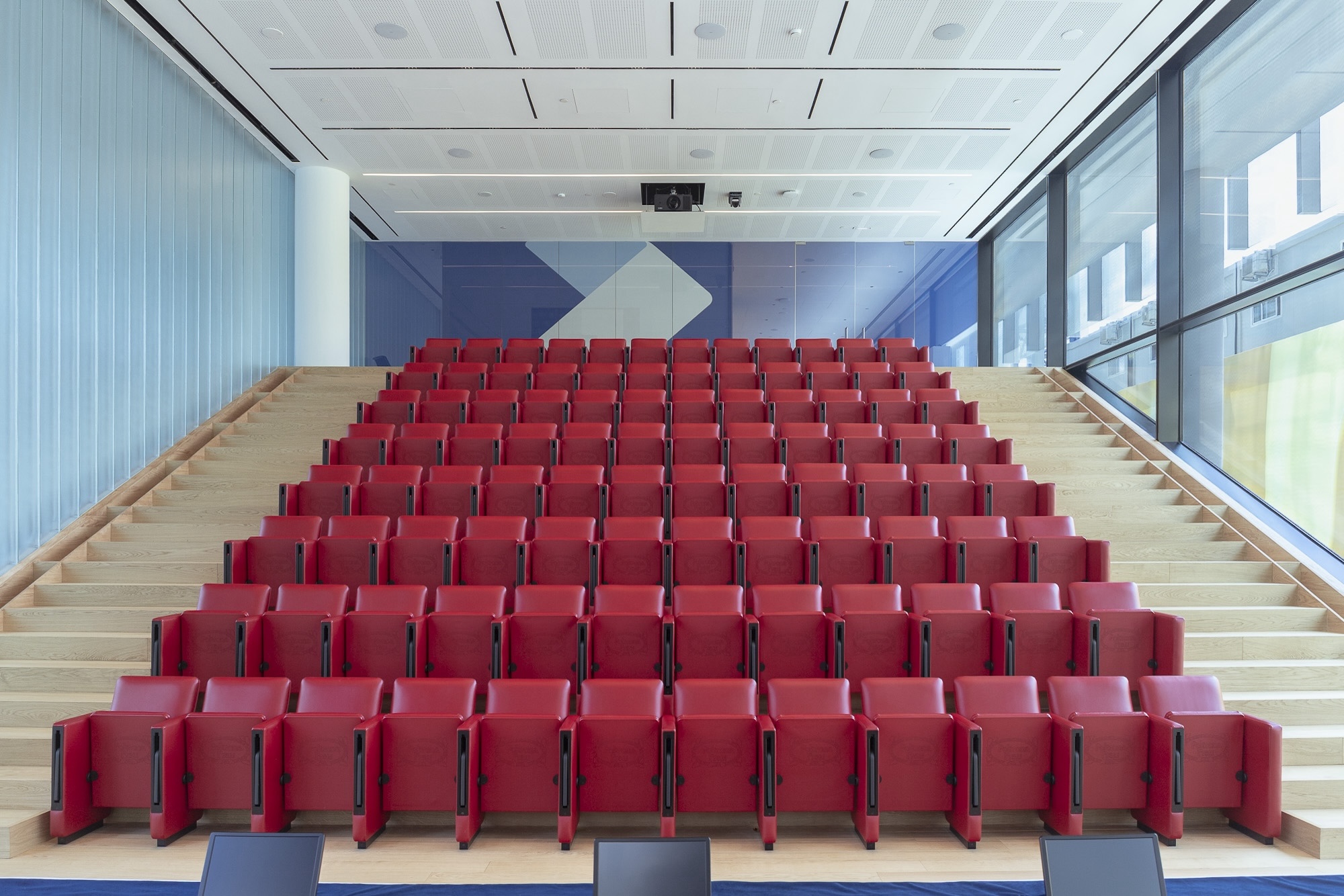
1
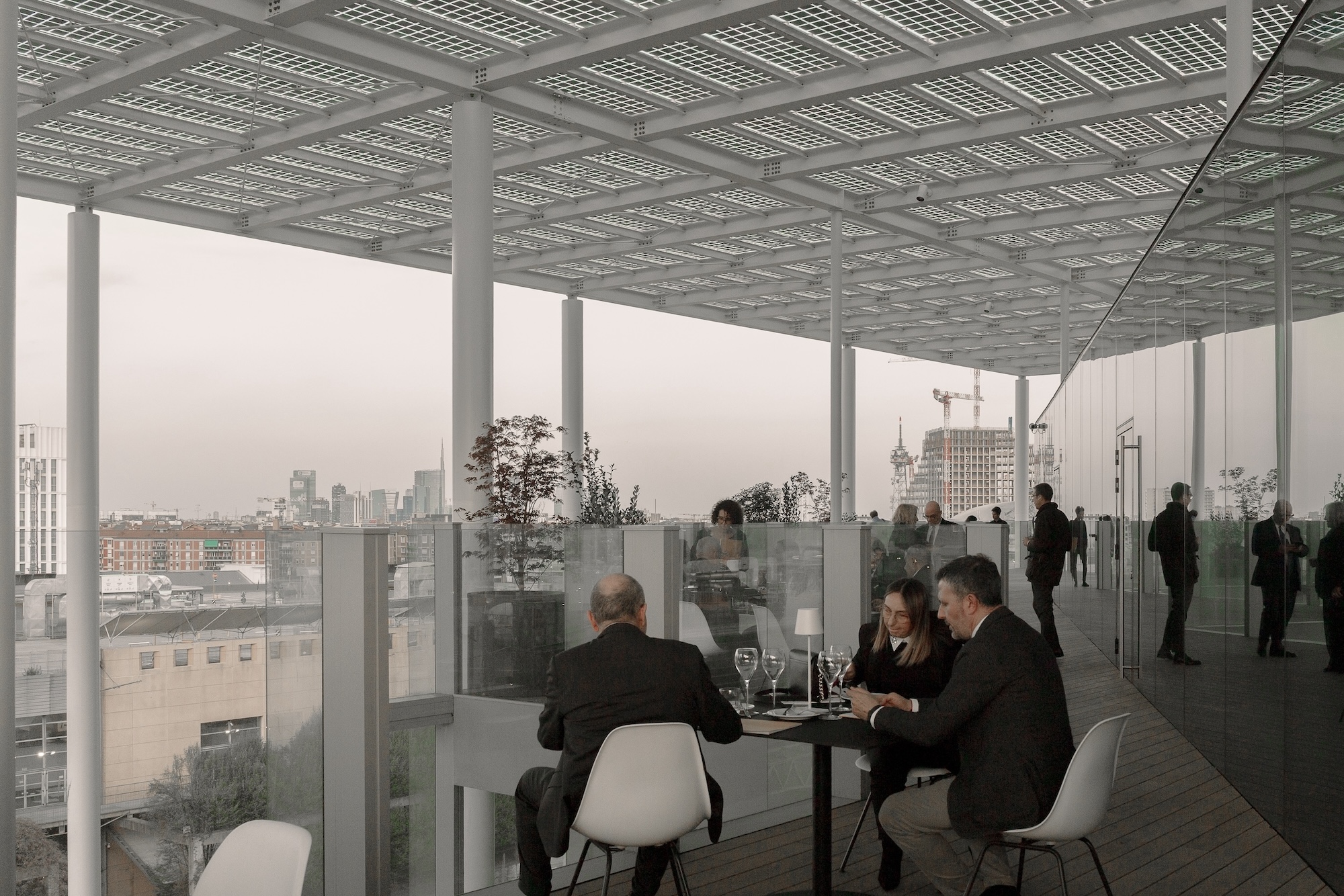
2
The building features a ground-level auditorium (1) and, on the top floor, a restaurant and roof terrace (2). Photos © Martina Simonato
The second element is the project’s true centerpiece: a giant canopy—roughly 26,000 square feet—parallel to the street, soaring 130 feet above the ground to provide shade. To hold it aloft, the architects created a kind of pronaos of slender steel columns, with an extreme ratio of 1:100 between diameter and height. The gesture recalls Norman Foster’s Carré d’Art Museum (1993) in Nîmes, France, and especially Herzog & de Meuron’s football stadium in Bordeaux (2015), both marked by pure-white skinny columns. In Milan, however, this candid portico may instead evoke the neoclassical side of Lombard Rationalism.
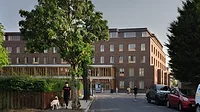
As luck would have it, from the street those columns also frame a nearby residential building of great design quality by Gian Paolo Valenti, a brilliant yet largely forgotten post-WWII architect.
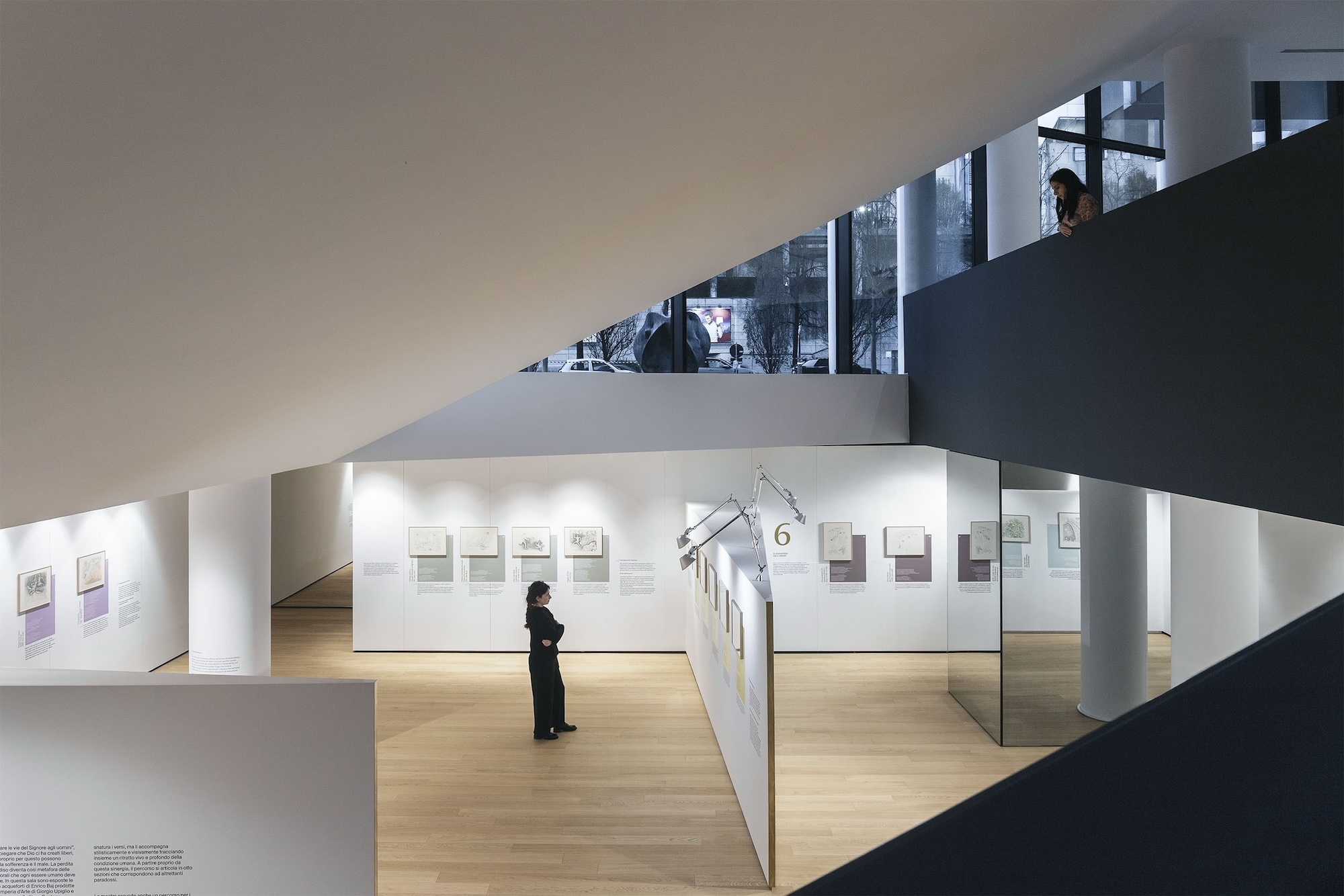
The public art gallery on ground level features rotating exhibitions. Photo © Martina Simonato
The ground floor is open to the public: visitors can step into an exhibition gallery showing the bank’s art collection. Currently on display is the Italian artist Enrico Baj with his marvelous portrayals of Moloch, Satan, and Beelzebub for Milton’s Paradise Lost. The gallery is topped by a tilted slab that breaks the box—it is the floor plate of the glass-walled auditorium above, also facing the street.
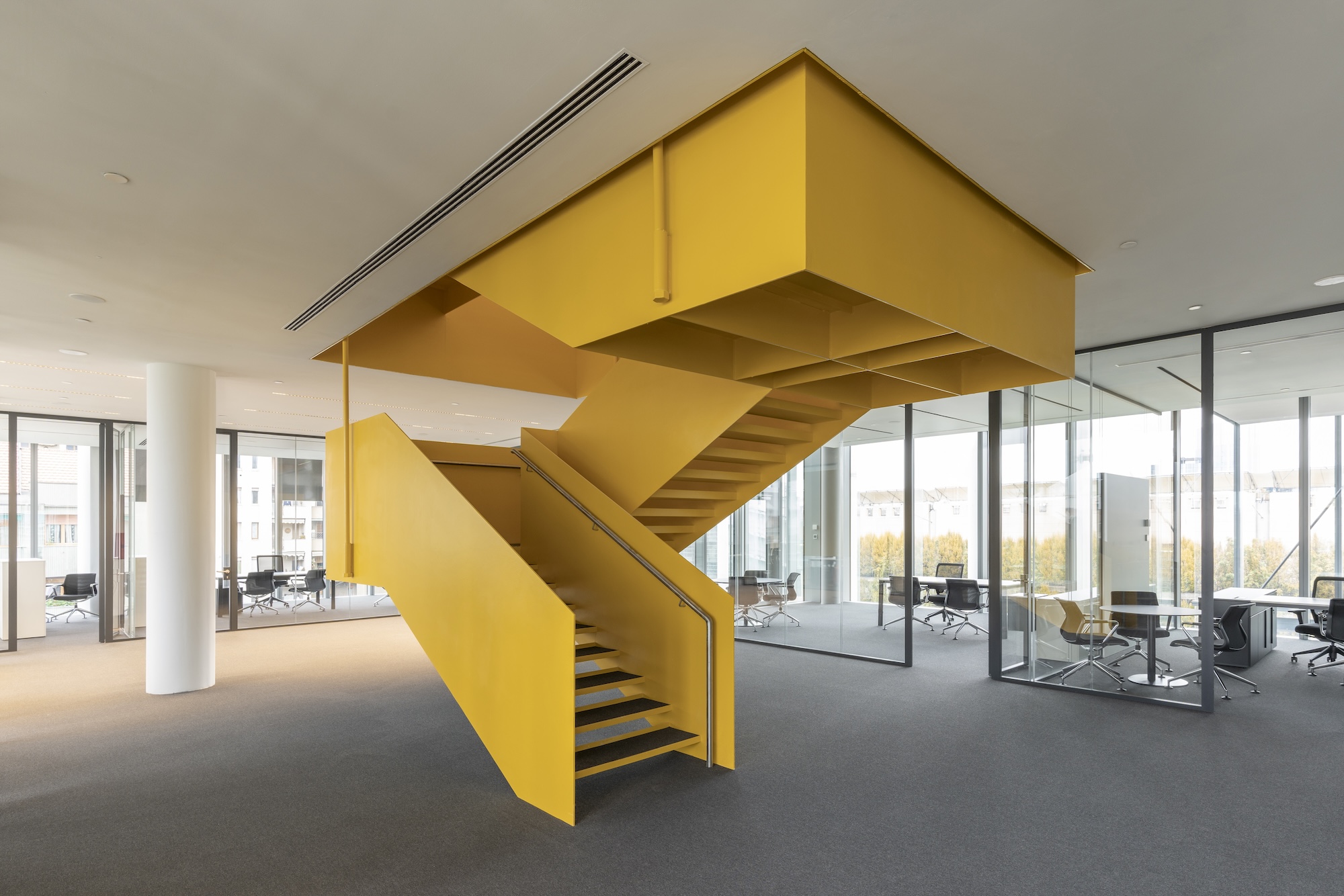
3
4
5
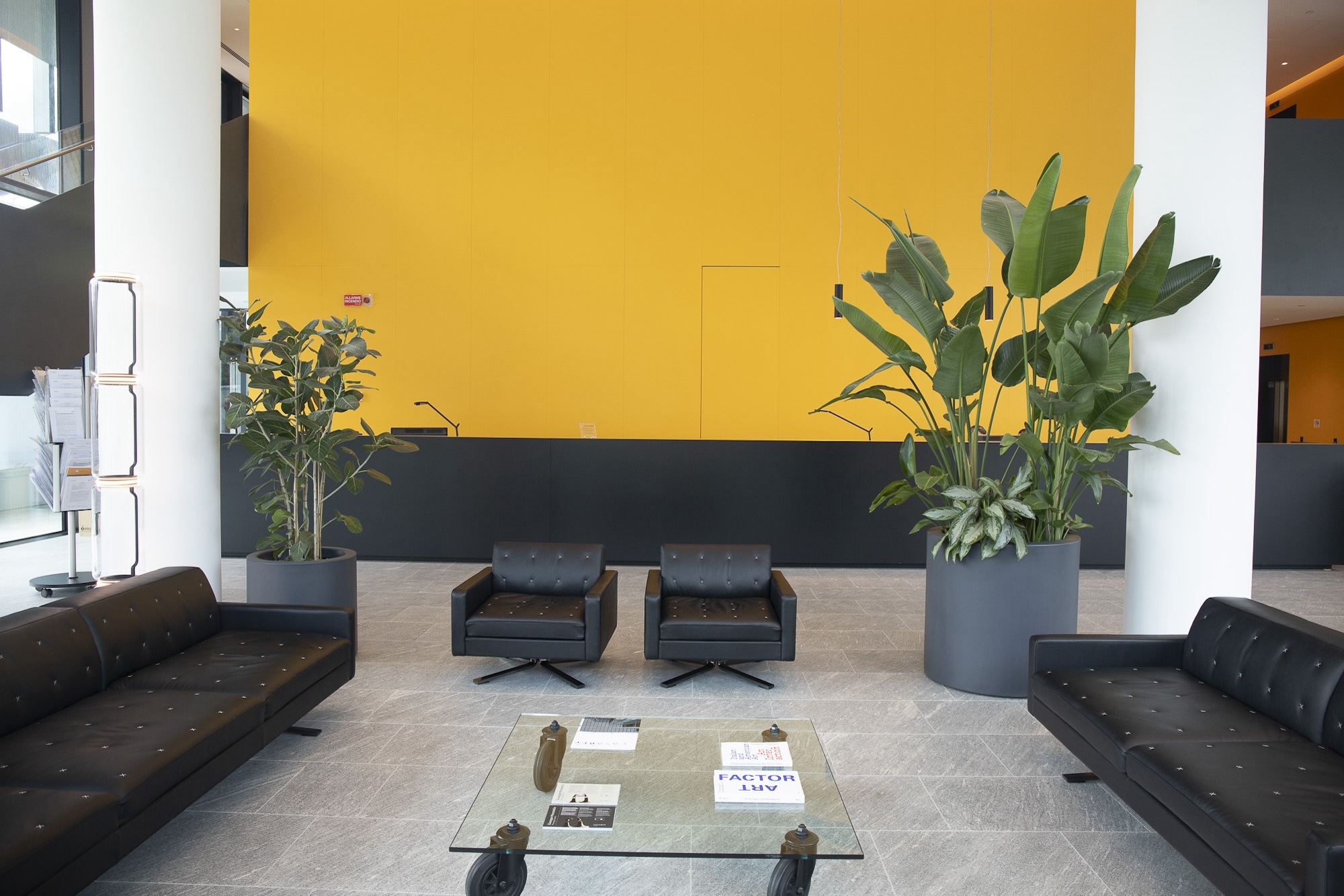
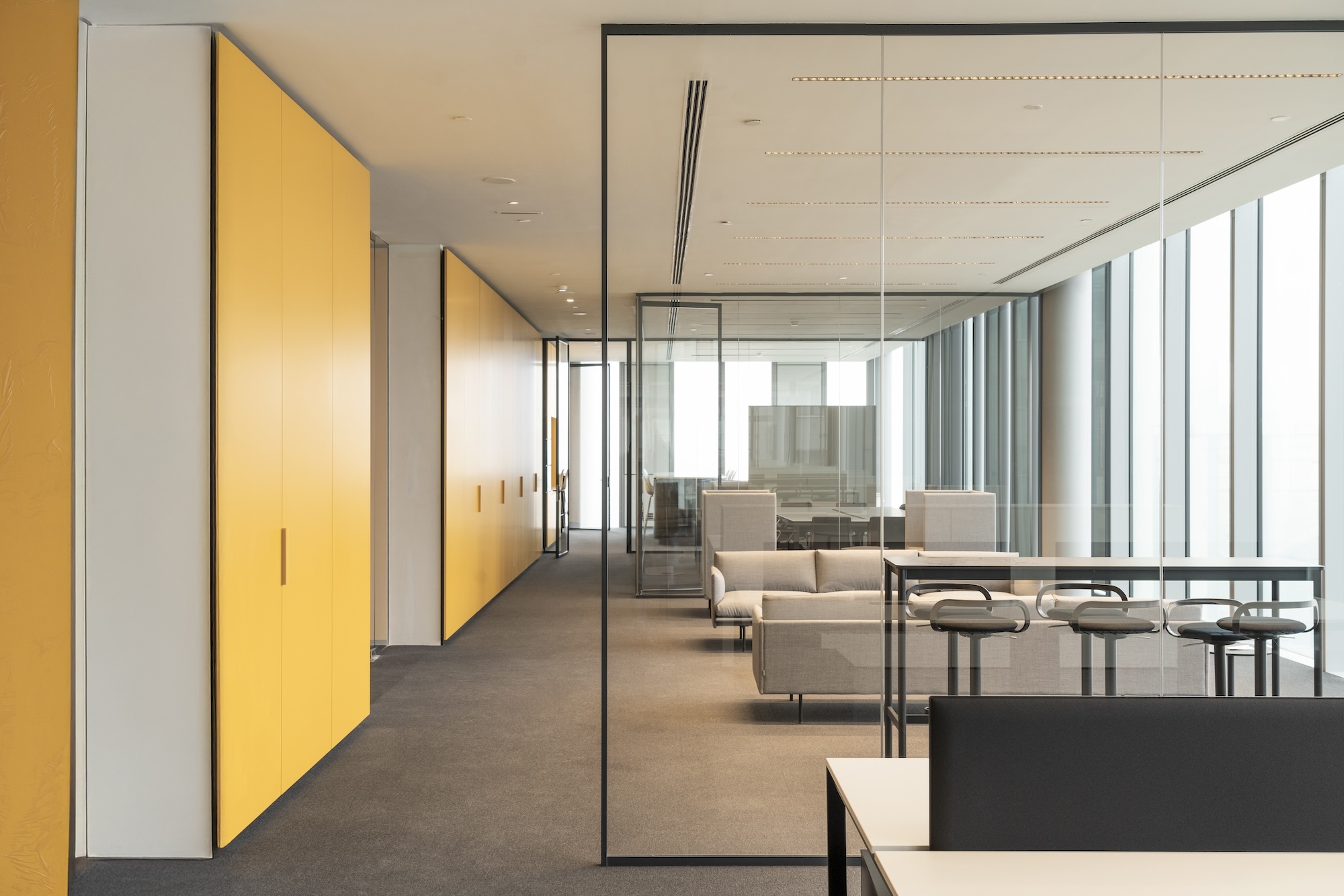
Bright yellow accents can be found in the main lobby (4) and on the office floors (3,5). Photos © Martina Simonato (3) Nicola Colella (3,5)
Upstairs, in the office realm (each floor spanning about 13,000 square feet), the atmosphere is corporate—open spaces, glass walls, meeting rooms, and the usual amenities. Yet the layouts have been wisely studied for visual permeability and spatial variety, while a vivid yellow stair disrupts the banal stacking of floors.
At the top, there is no CEO’s corner office but rather a restaurant, gym, and panoramic terrace for all employees. From here, one can catch the details of the almost 25,000 square feet of photovoltaic panels on the canopy, the glass fins shielding against solar glare, the double-height bioclimatic loggias, and more. Yet the gaze soon lifts toward the distant Alps, before returning to frame the cityscape below, where now a parish center with playing fields meets finance.
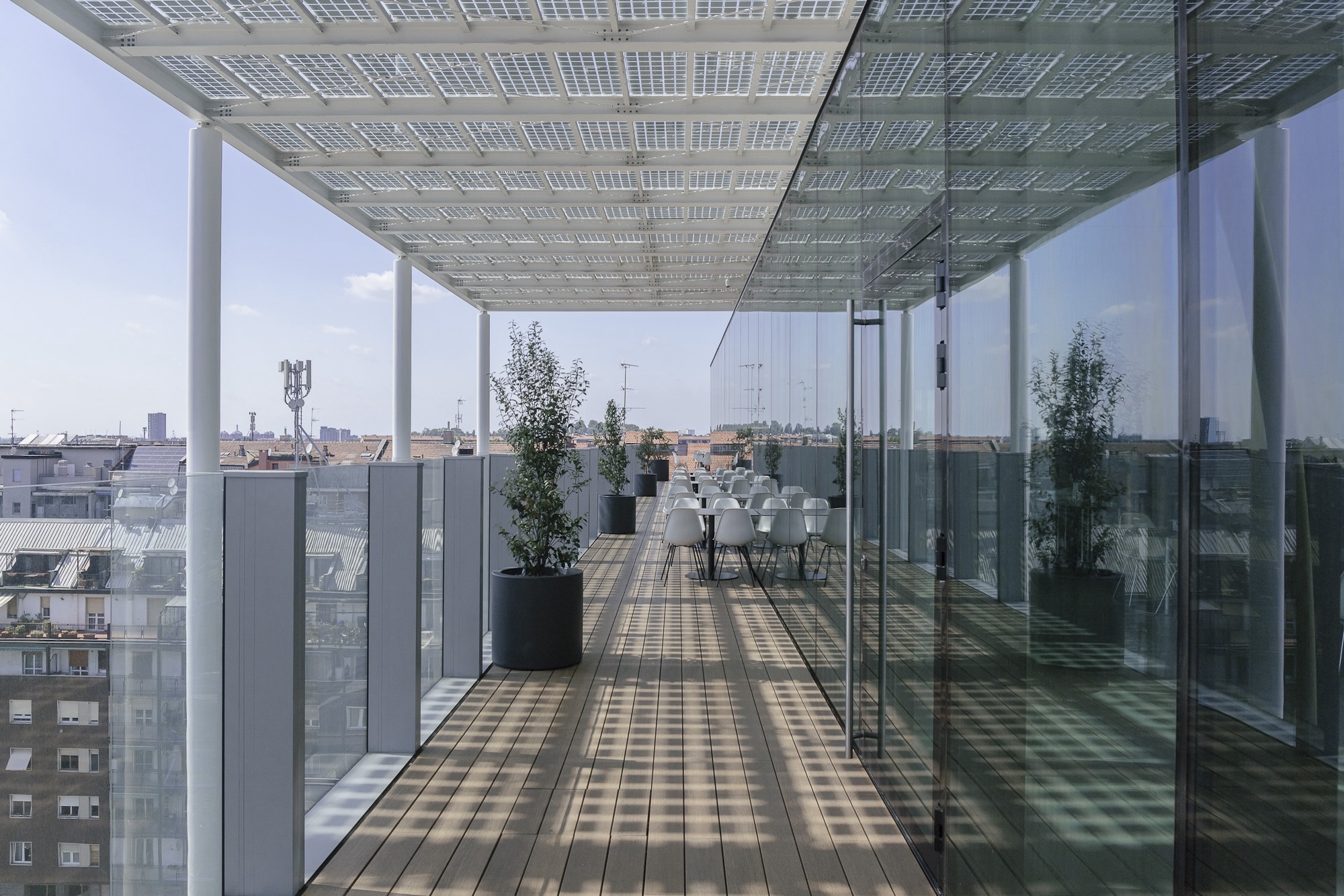
Photo © Marina Simonato
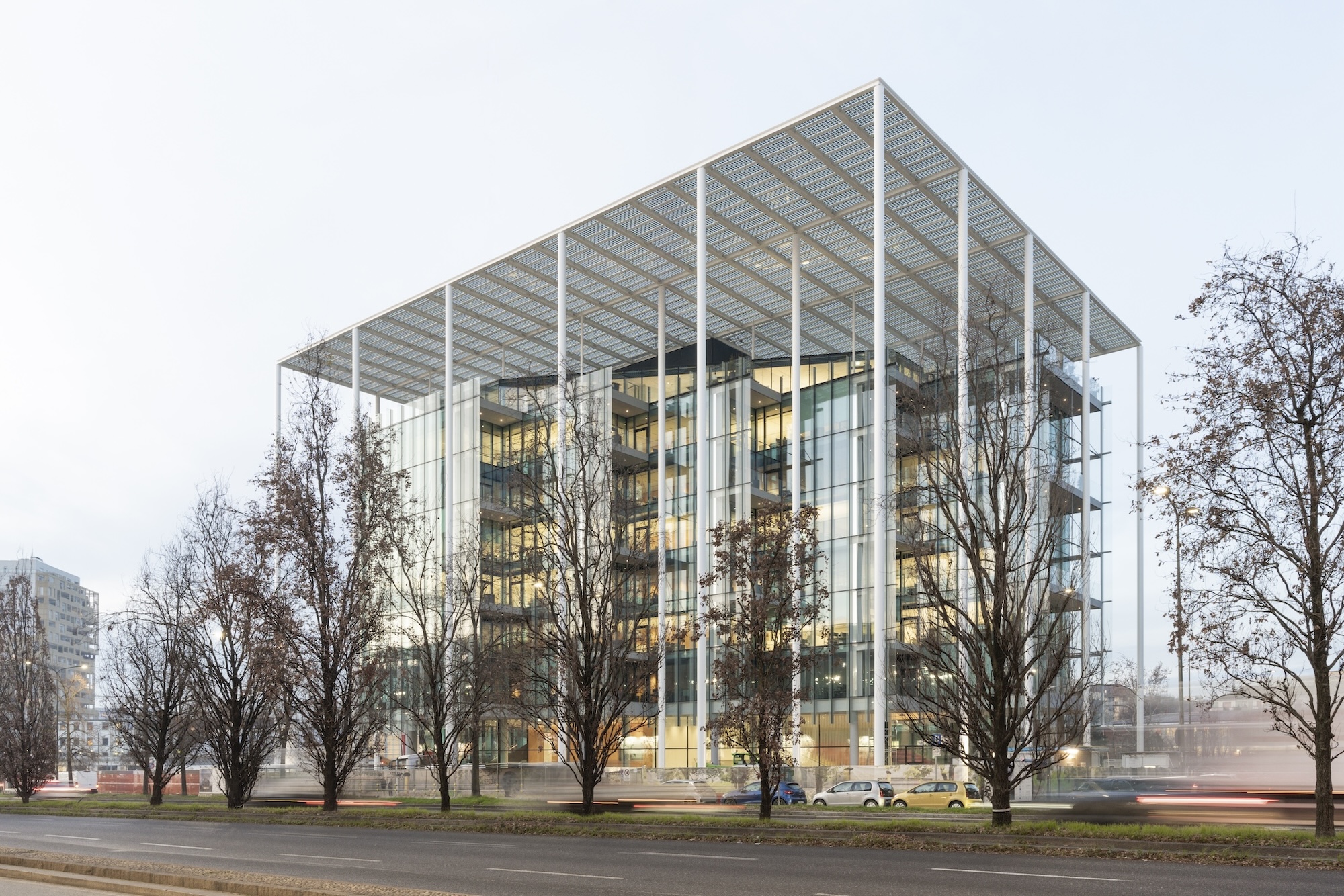
Photo © Nicola Colella
In a context dominated by self-referential architecture, OBR’s building seeks mediation. It does not reject the glass box, but bends it, hollows it, and sets it in dialogue with its surroundings—an attempt to refute Tobey’s bitter irony.
Looking for quick answers on architecture and design topics?
Try Ask RECORD, our new smart AI search tool.
Ask RECORD →
Looking for a reprint of this article?
From high-res PDFs to custom plaques, order your copy today!