Florida’s Vero Beach Museum of Art Reveals Design for Allied Works–Led Campus Transformation
Miami has the Pérez. West Palm Beach has the Norton. Miami Beach has the Bass. Further to the north—roughly halfway up the Atlantic shoreline to St. Augustine—Florida’s Treasure Coast can claim a lesser-known but no less vital artistic hub: the Vero Beach Museum of Art (VBMA).
Established in 1986 as a modest arts education center known as the Center for the Arts, the VBMA has grown considerably over the years, more than doubling its footprint—and rebranding—in the late 1990s and enlarging yet again in 2010–2011 with the addition of a new Exhibitions and Collections Wing. These patchwork-style expansions at the VBMA campus, however, lacked cohesion and many of the existing buildings are outdated and unable to facilitate future progress, including exhibition of the museum’s growing permanent collection of American Modernism and global Contemporary art. (The VBMA has experienced a spike in visitor numbers in recent years as well-heeled retirees flock to the Treasure Coast, and it recently ranked as one the best-attended small art museums in the U.S. in a report published by independent cultural think tank Remuseum.) Most critically, the VBMA, as it is now, is vulnerable to the impacts of climate change at its barrier island–bound location within the City of Vero Beach–owned Riverside Park.

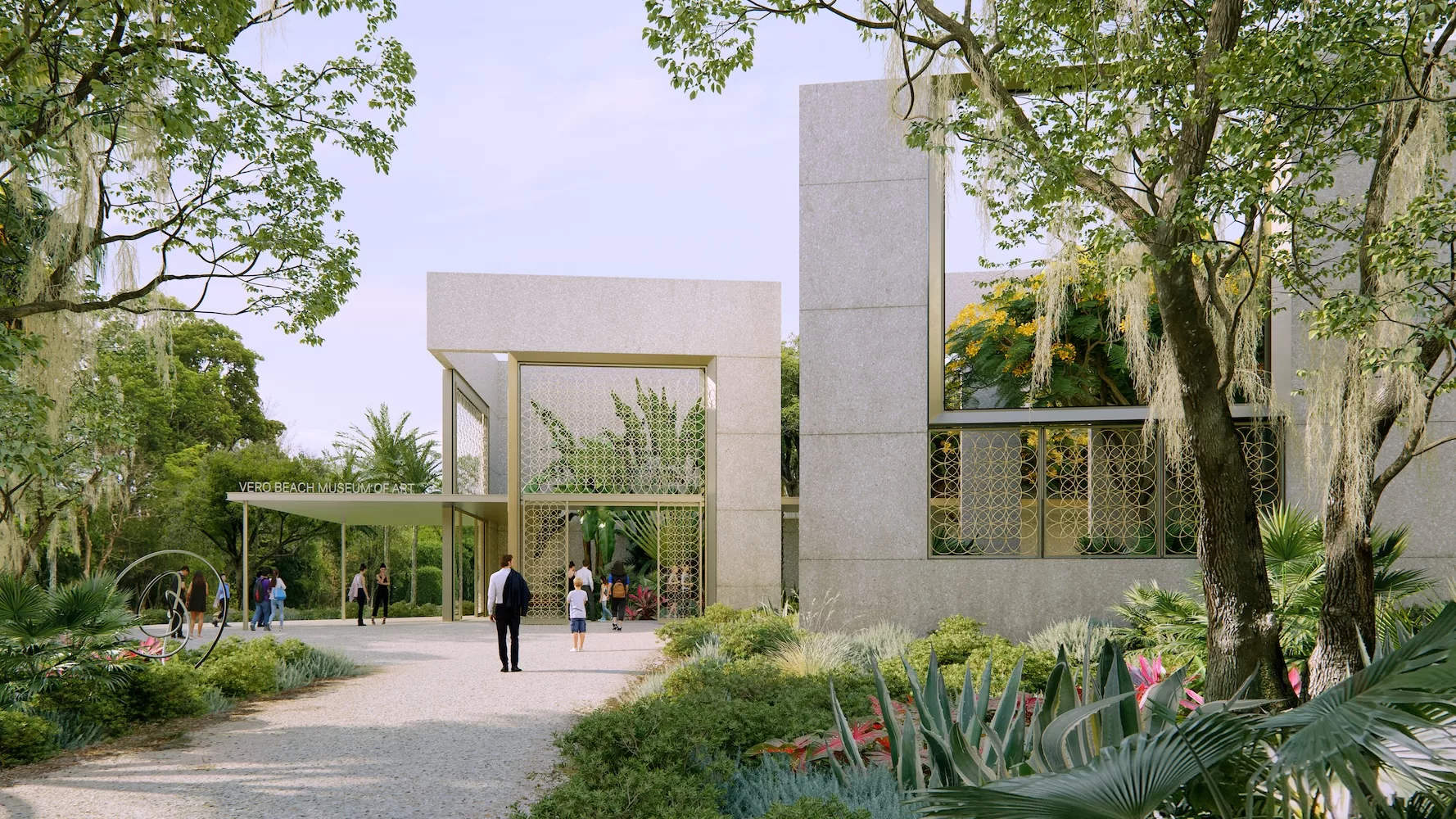
Because the future new museum at Riverside Park will be two stories, the total built space on the existing campus will be reduced, upping the amount of public gardens. Image courtesy Allied Works © KVANT
This all will change with an $85 million reimaging project set to break ground this November that will add 68,000 square feet of new construction to the campus, including 22,000 square feet of gallery space—more than double what exists now—for permanent and traveling exhibitions; 14,400 square feet of terraces and courtyards that better integrate the museum into its lush, parkland setting along the Indian River; an education wing with purpose-built studios for the museum’s popular, long-running art school; and dedicated public programming space for community events, including a flexible auditorium with retractable seating, café, and rooftop terrace that can be rented for private functions. Obsolete, single-story buildings with leaky roofs, aging HVAC systems, and facades ravaged by extreme coastal weather will be demolished while an existing structure will be retained for art storage, shipping, and receiving. The comprehensive campus overhaul is led by Portland, Oregon– and Brooklyn–based Allied Works, whose cultural project–heavy portfolio includes the Contemporary Art Museum St. Louis, New York’s Museum of Arts & Design, the Clyfford Still Museum in Denver, and, most recently, the Palmer Museum of Art at Pennsylvania State University. For the VBMA project, Allied Works is joined by Baltimore-based landscape architecture and urban design practice Unknown Studio.
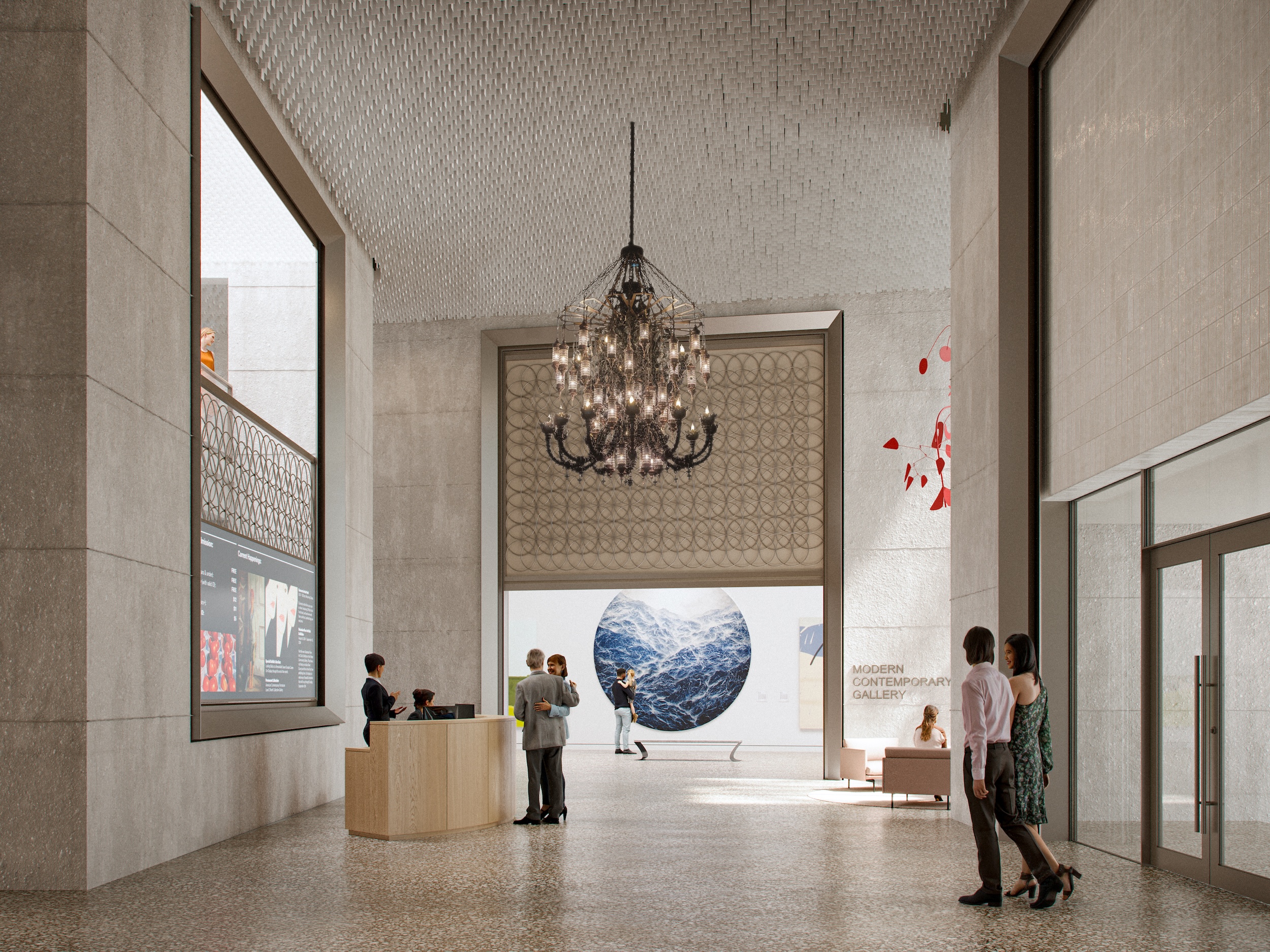
1

2
Interior renderings of the main lobby (1) and education galleries (2). With its series of planted concrete courtyards, intimate connection with the surrounding landscape, and second-level bridges that open up to vistas, Allied Works' Brad Cloepfil says there is a “sort of labyrinthian quality to the architecture” of the 90,000-square-foot museum building. Images courtesy Allied Works, © D - RENDER
The close collaboration between the two firms is evident in just-released design renderings depicting the new two-story museum building and larger campus transformation. Notably, terraced landscaping lifts the grounds above the Indian River flood zone as a resiliency measure, safeguarding it from sea level-rise while a series of concrete walled gardens—five in total—and spacious terraces create a seamless, immersive connection between interior and exterior spaces.
“We're going to build the earth up nine feet and build two stories on top of it, explains Brady Roberts, VBMA’s executive director. “It's a plateau building, very much like the Pérez Art Museum in Miami.”

Most of the exhibition areas are located on the second level of the museum, while community and education facilities are on the ground level. Image courtesy Allied Works © D - RENDER
“Initially we thought we could renovate what we have, but the elevation is too low, and there's really nothing good to work with,” he adds, noting that the Allied Works and Unknown Team, selected in 2022 from a shortlist of four finalists, best responded to the museum’s central problem: “How do you create a hurricane resilient bunker that's open and transparent to the park?”
As Allied Works founding principal Brad Cloepfil elaborates, the team’s general approach was to avoid having the new museum feel like it rested atop a plinth, instead opting for elevated earthen terraces. “We reconceived the earth and where your sense of ground is by raising it,” he says.
Looking for quick answers on architecture and design topics?
Try Ask RECORD, our new smart AI search tool.
Ask RECORD →

A sketch by Cloepfil of the museum building and the intersecting "vessels” that comprise it. Image courtesy Allied Works

Site plan of the reimagined VBMA campus. It will remain open to the public throughout much of the construction process, closing just in the months ahead of the new new building's debut. Image courtesy Unknown Studio Landscape Architecture & Urban Design
More than adding a layer of resiliency, the team’s reconfiguration of the landscape focused on making the campus more inviting and open to the public. “The idea of having the terraced landscape and series of gardens with sculptures was to have it be an experience leading up to the museum,” says Roberts. “If you visited today, it's very fortress-like and looks like a gated complex in a town of gated communities. We wanted the opposite, to extend a gracious invitation to anyone in the park.”
“We used landscape—both the topography and the plantings and the walled gardens—to create a sense of welcome to people where they don't even necessarily have to come to the museum,” adds Cloepfil.
The refreshed and more resilient VBMA campus is slated for completion in late 2027.
Looking for a reprint of this article?
From high-res PDFs to custom plaques, order your copy today!

.webp?height=200&t=1710272101&width=200 "01_South (1).jpg")