Outside of Frankfurt, a Childcare Center by 1100 Architect Emphasizes Self-Discovery
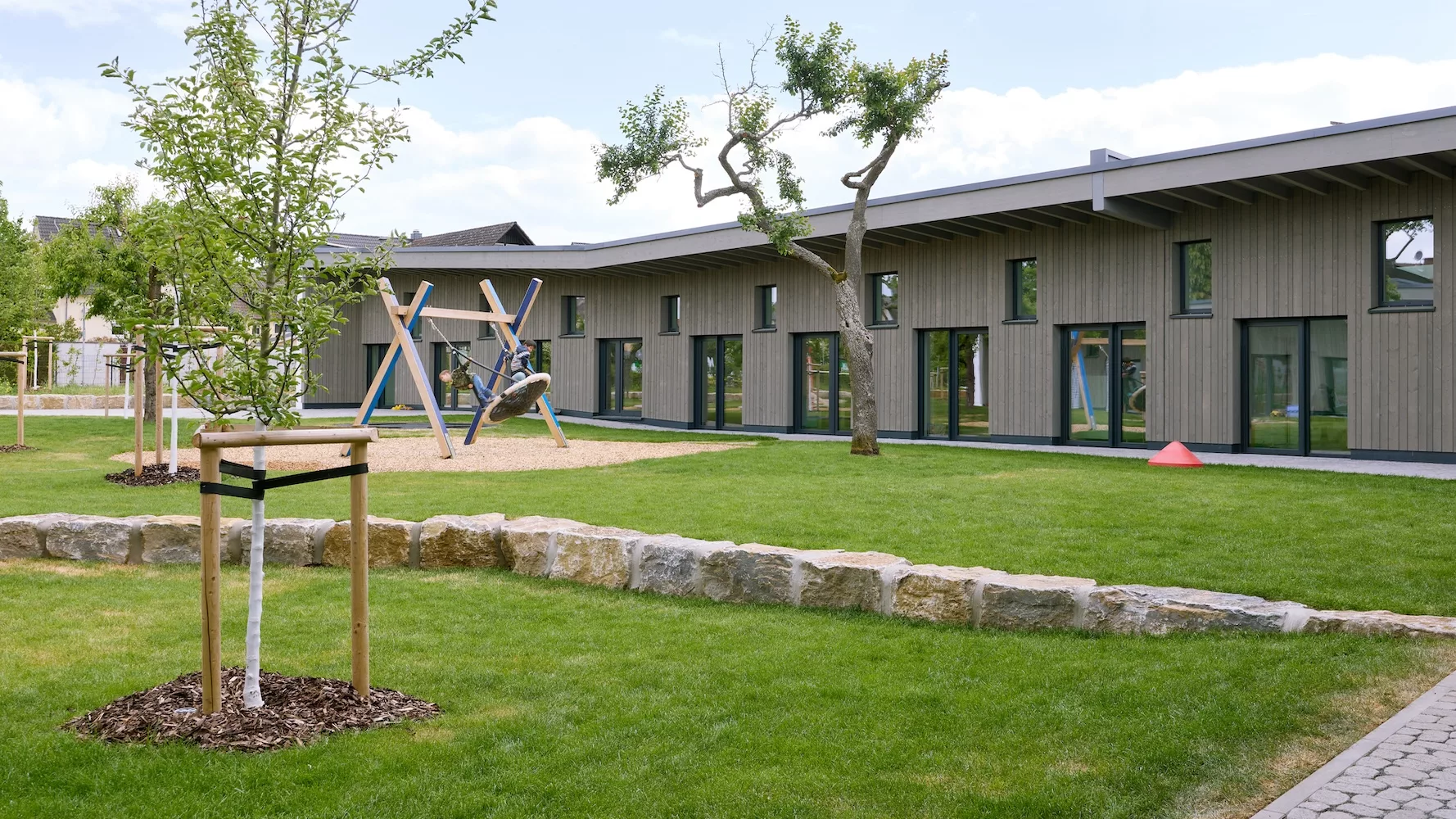
Kleine Weltendecke, a kindertagesstätte in Niddaatal, Germany, by 1100 Architect.
Architects & Firms
To reverse declining birthrates, in 2013 Germany enacted a law guaranteeing daycare for any child over 12 months old. If its impact on family planning is still under debate, the rule unquestionably produced a surge in the kindertagesstätte, or kitas, where state-subsidized childcare takes place. One recent example of the ongoing development wave is Kleine Weltendecker, an 1100 Architect–designed kita in Niddatal, Germany, that is now attended by 120 children up to six years old.
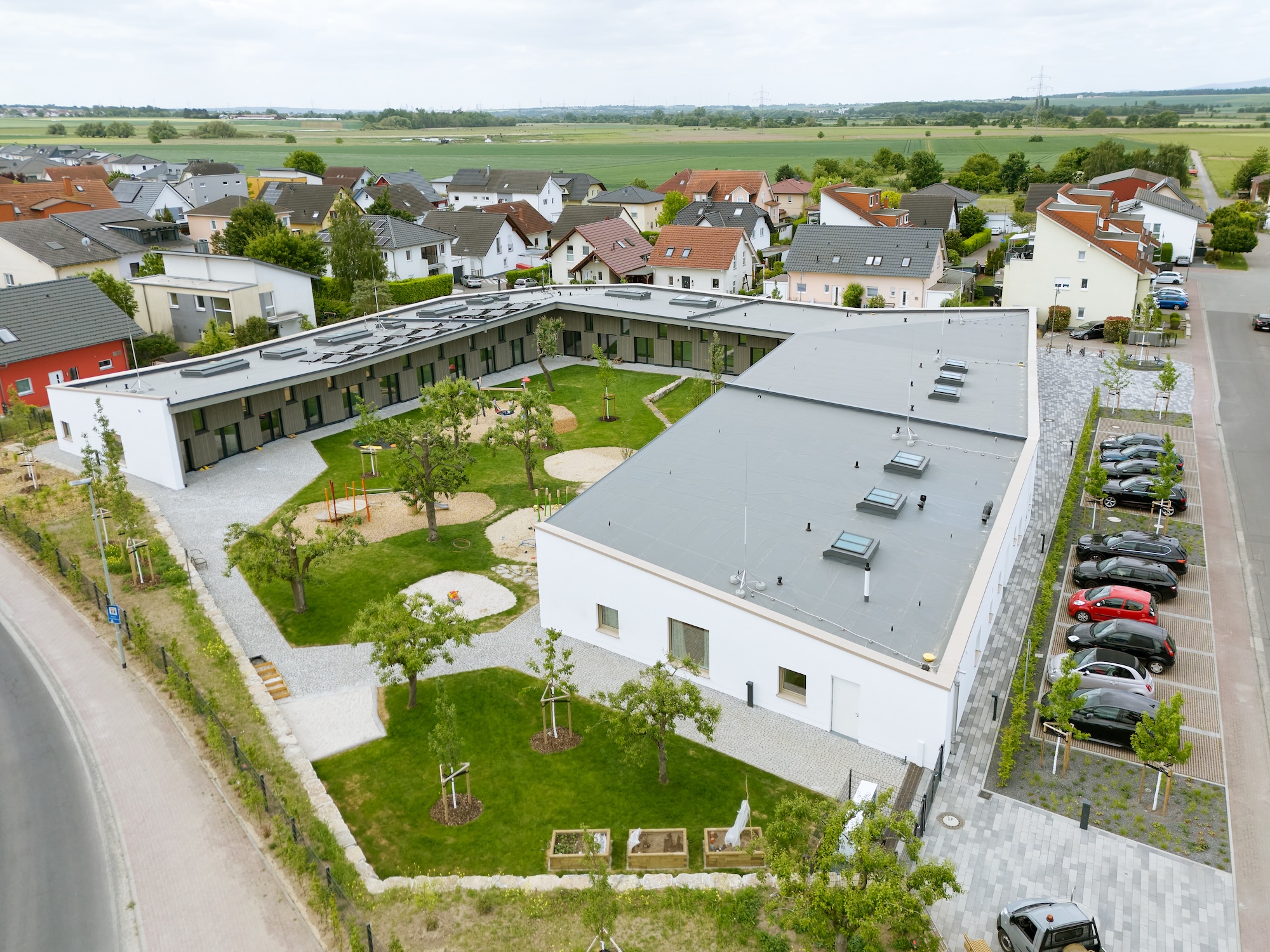
Photo © Jean-Luc Valentin
Thanks to its location within commuting distance of Frankfurt, Niddatal has a stable population of young families, which distinguishes the community from other rural towns in Germany. The municipality responded to the 2013 childcare legislation by authorizing the expansion of a kita in its Kaichen district and securing funding for an all-new facility in 2017. By 2020 it had selected the Frankfurt studio of 1100 Architect to conceive the ground-up kita in the city’s Ilbenstadt district at its namesake monastery, though later that year a new mayor moved the project to a 1.3-acre corner lot downhill from the medieval structure.
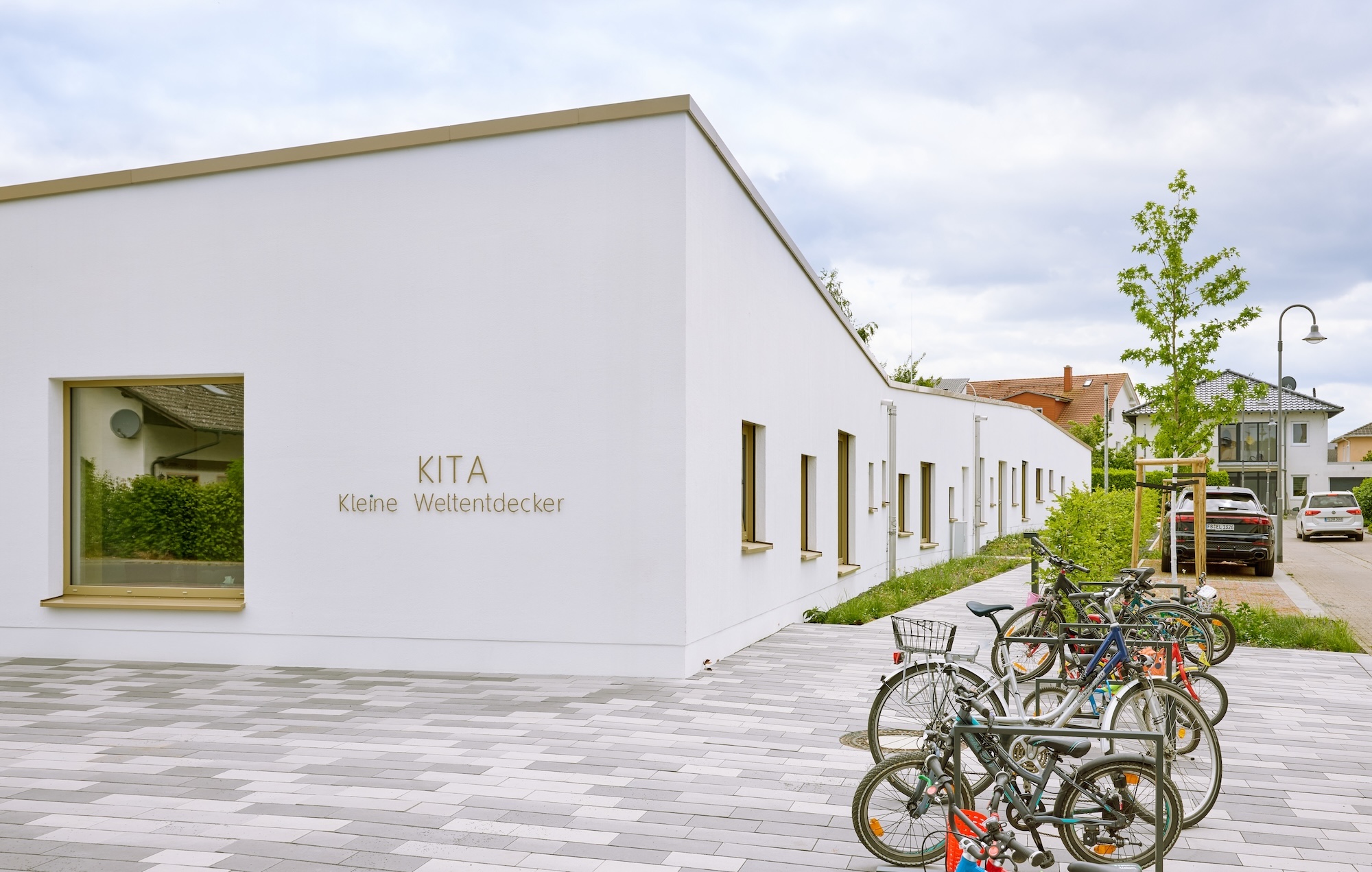
Photo © Jean-Luc Valentin
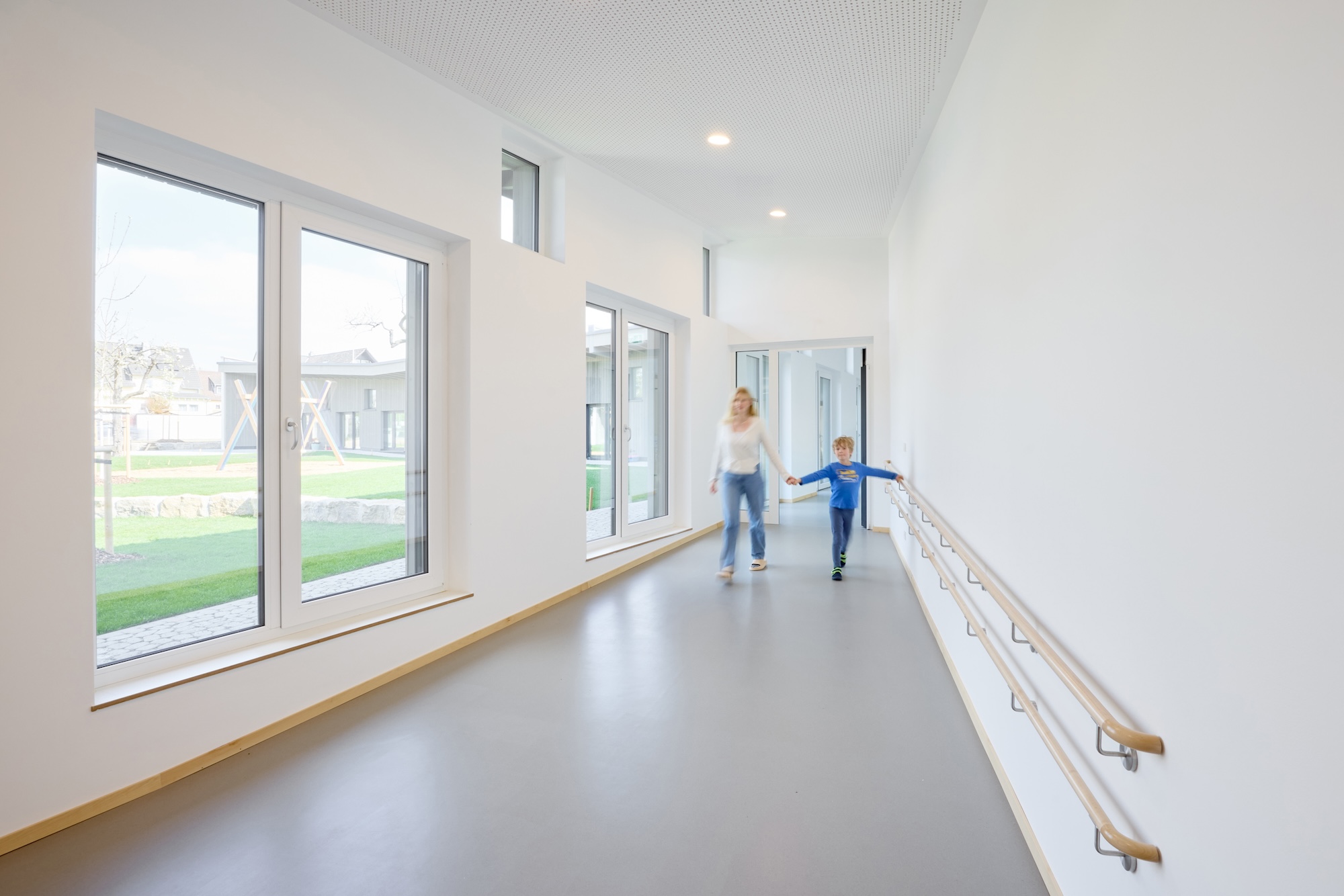
Photo © Jean-Luc Valentin
The change in location came with massing instructions. “The city council wanted a U-shaped building for a bit of protection for the kids and separation for the neighbors,” explains Karin Kohlhaas, principal at 1100 Architect. After distributing 20,000 square feet into three wings surrounding a courtyard garden, the building still felt out of place among the surrounding single-family houses, Kohlhaas says. So, she and her colleagues added subtle folds to the facades and roof, which are legible both outside and within the kita, to humanize the daycare center’s scale. The perimeter is finished in white stucco, to further blend the building into the streetscape, whereas grooved-wood walls facing the courtyard celebrate its extant and newly planted fruit trees.
Calling attention to the protected garden required no explicit directive to 1100 Architect. In Germany, kitas—and childrearing in general—are largely guided by the philosophy of Friedrich Fröbel. The acclaimed pedagogue believed that children should direct their own development, calling play “the highest expression of human development in childhood for it alone is the free expression of what is in the child’s soul.” Crucially, the concept is predicated on available outdoor space, where children can engage in self-discovery in contact with nature.
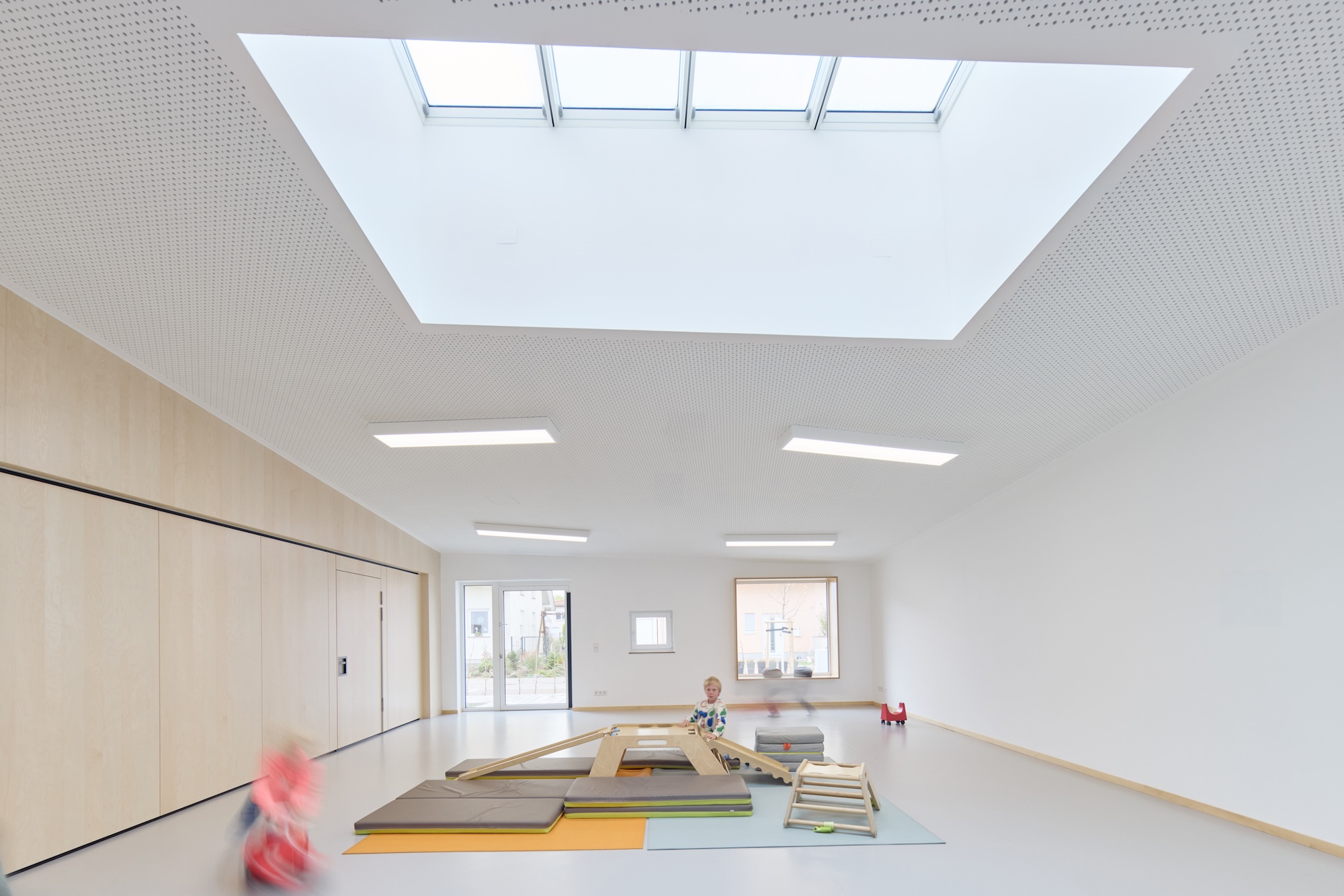
Photo © Jean-Luc Valentin
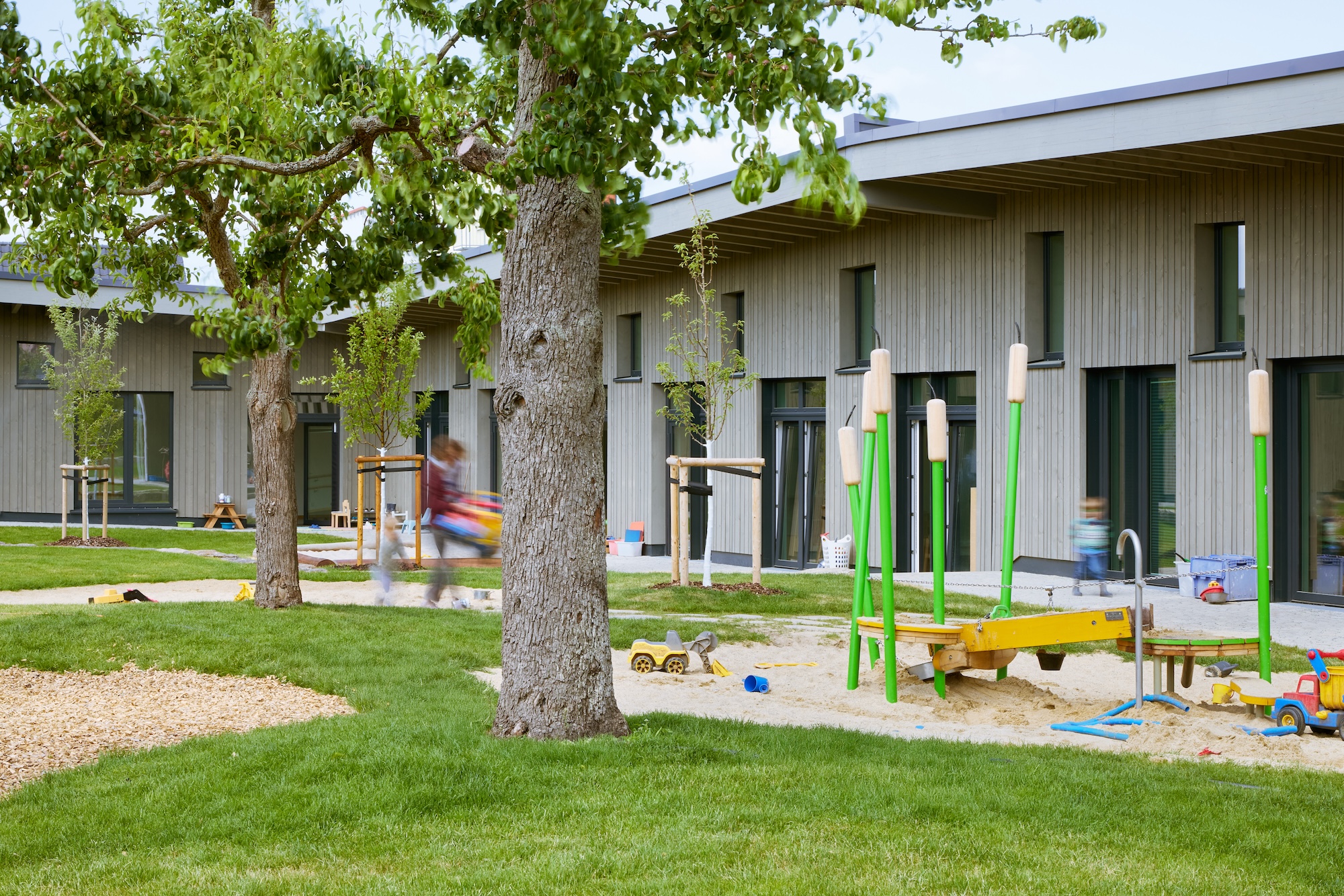
Photo © Jean-Luc Valentin
To support children’s independent pursuits, 1100 Architect fostered connections between Kleine Weltendecker and the landscape. The design team single-loaded the three volumes so that activity rooms in the north and south wings open directly to the courtyard garden. (The connecting wing includes collective spaces that can be easily reconfigured and made accessible to the public, say, for election polling.) The unifying corridor includes several ramped portions, to express how the building slab integrates with the gentle topography of its site.
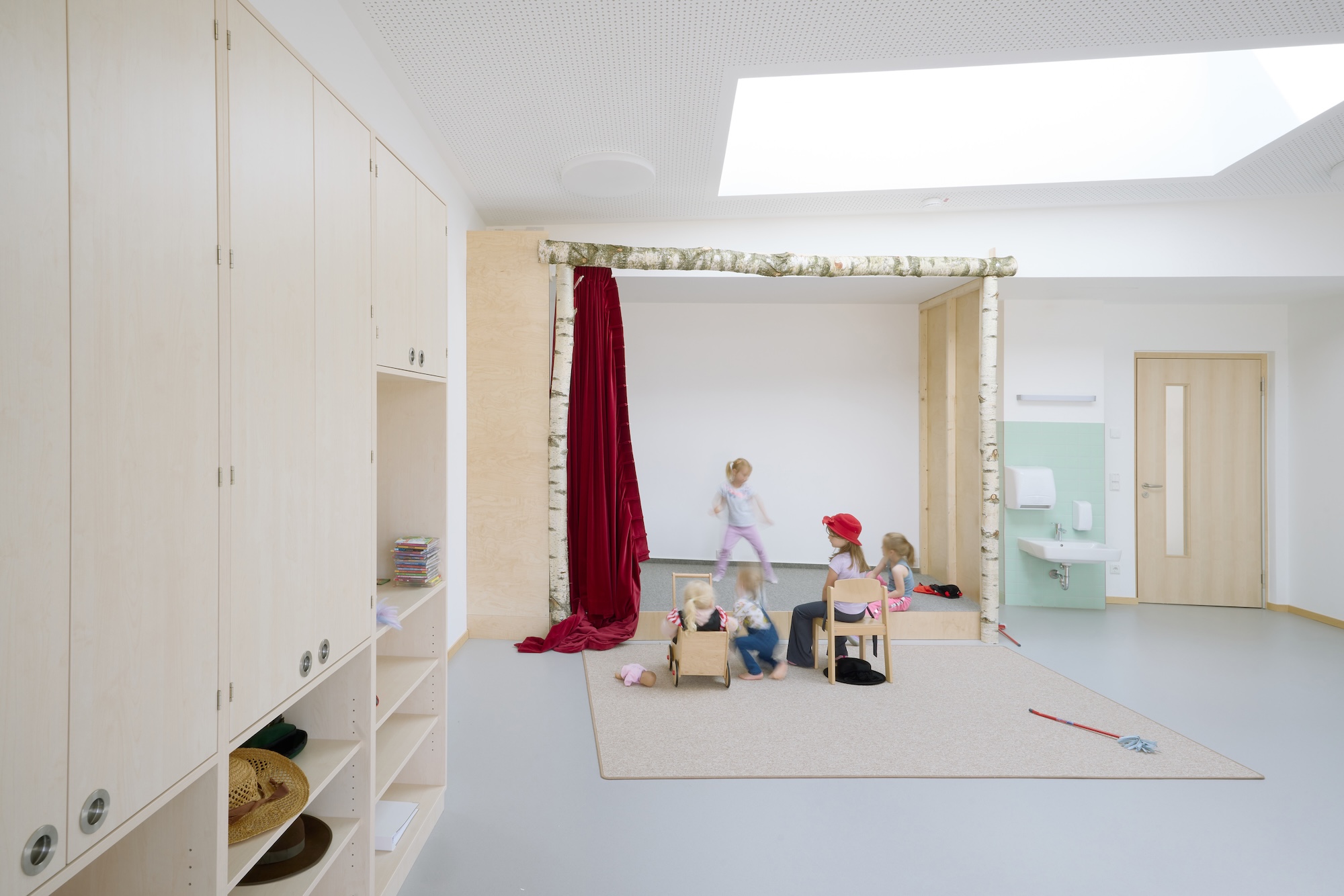
Fenestration exemplifies 1100 Architect’s effort: full-height, courtyard-facing glazing disappears barriers between interior and exterior; windows dotting the perimeter feature deep sills at children’s seating height, to suggest a cozy relationship with the landscape; generous skylights ensure children’s awareness of nature even when the weather keeps them inside.
Photos © Jean-Luc Valentin
1100 Architect created such an easy dialogue between the kita and its grounds that, Kohlhaas says, “kids ran onto the grass” the moment that staff gave their okay to do so. Within weeks of Kleine Weltendecker’s June opening, parents and teachers reported that their children had been impacted positively by the new home away from home. Will this kita cause a baby boom, in turn? While that verdict is still out, Kleine Weltendecker demonstrates Niddatal’s genuine commitment to the 2013 daycare policy. The kita goes beyond abiding law, modeling progressive education in a historical environment.
Looking for quick answers on architecture and design topics?
Try Ask RECORD, our new smart AI search tool.
Ask RECORD →
Looking for a reprint of this article?
From high-res PDFs to custom plaques, order your copy today!


