Architectural Record
search
cart
facebook twitter linkedin youtube
  • Sign In
  • Subscribe
  • Sign Out
  • My Account
Architectural Record
  • NEWS
    • Latest News
    • Awards
    • Interviews
    • Obituaries
    • Podcasts
      • Design:Ed Podcast
      • Sponsored Podcasts
  • OPINION
    • Book Reviews / Excerpts
    • Exhibition Reviews
    • Forum
  • EXCLUSIVES
    • Videos
    • Design Vanguard
    • Top 300 Firms
    • Sponsored Content
    • Sponsored eBooks
    • From the Archives
  • CONTINUING ED
    • Editorial Continuing Ed
    • CE Center
    • CE Academies
  • PROJECTS
    • Buildings By Type
    • Reuse & Renovation
    • Museums & Arts Centers
    • Colleges & Universities
    • Multifamily Housing
    • Interiors
    • Lighting
    • Kitchen & Bath
  • HOUSES
    • Record Houses
    • House of the Month
    • Featured Houses
  • PRODUCTS
    • Products by Category
    • Record Products of the Year
    • Latest Products
  • EVENTS
    • Dates & Events
    • Record on the Road
    • Innovation Conference
    • Sustainability in Practice
    • Women In Architecture
    • Webinars
    • Ad Excellence Awards
    • Submit an Event
  • CONNECT
    • Ask RECORD AI
    • Newsletters
    • Contact
    • Advertise
    • Editorial Calendar
    • Store
    • Customer Service
  • SUBMIT
    • Submission Guidelines
    • RECORD Competitions
  • MAGAZINE
    • Subscribe
    • My Account
    • Digital Edition
    • Current Issue
    • Firm Pass
    • Historic Archive
ProjectsBuildings by TypeAdaptive Reuse and RenovationMuseums & Art Centers

In Focus

The Fondation Cartier Moves Into its New Jean Nouvel–Designed Home in Paris

Paris

By Andrew Ayers
Fondation Cartier
Photo © Martin Argyroglo
Fondation Cartier.
December 16, 2025

Architects & Firms

Ateliers Jean Nouvel
✕
Image in modal.

“I would say we’ve left behind the humanist and artistic side of the architect’s role,” muses Jean Nouvel, when asked what has changed in the relationship between art and architecture these past 30 years. He is speaking inside the walls of his new Fondation Cartier, which replaces the celebrated boulevard Raspail building he completed for the contemporary-art incubator back in 1994. Offered the chance of five times the space in the heart of Paris, the foundation had no qualms about abandoning its out-of-the-way glass gazebo, however much Nouvel’s enigmatically diaphanous building had contributed to its avant-garde aura. Only a tenant in its tranquil Left Bank garden, the Fondation Cartier now joins a very select Right Bank club: directly opposite the Louvre, it is within walking distance of the Musée d’Orsay, the Collection Pinault, and the Centre Pompidou, to name just the biggest players.
Fondation Cartier
1

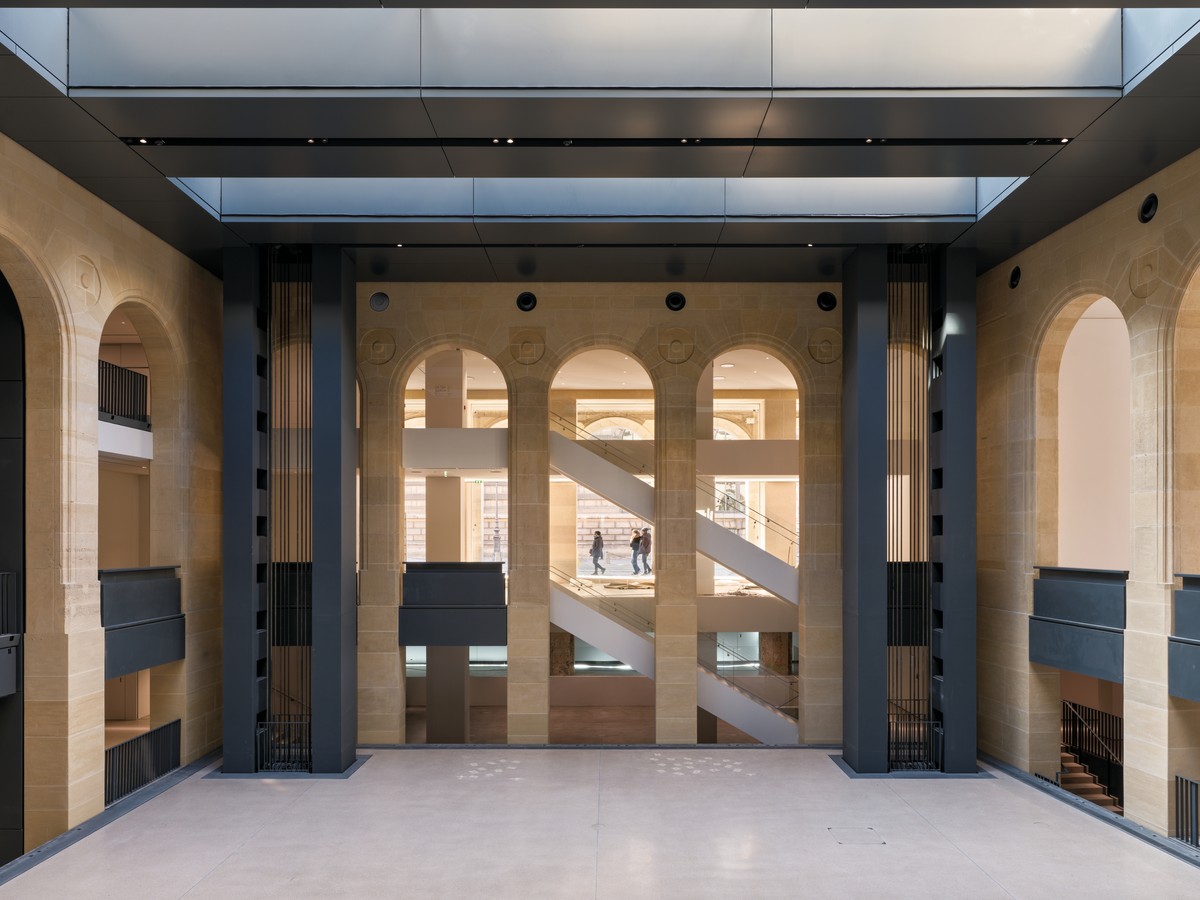
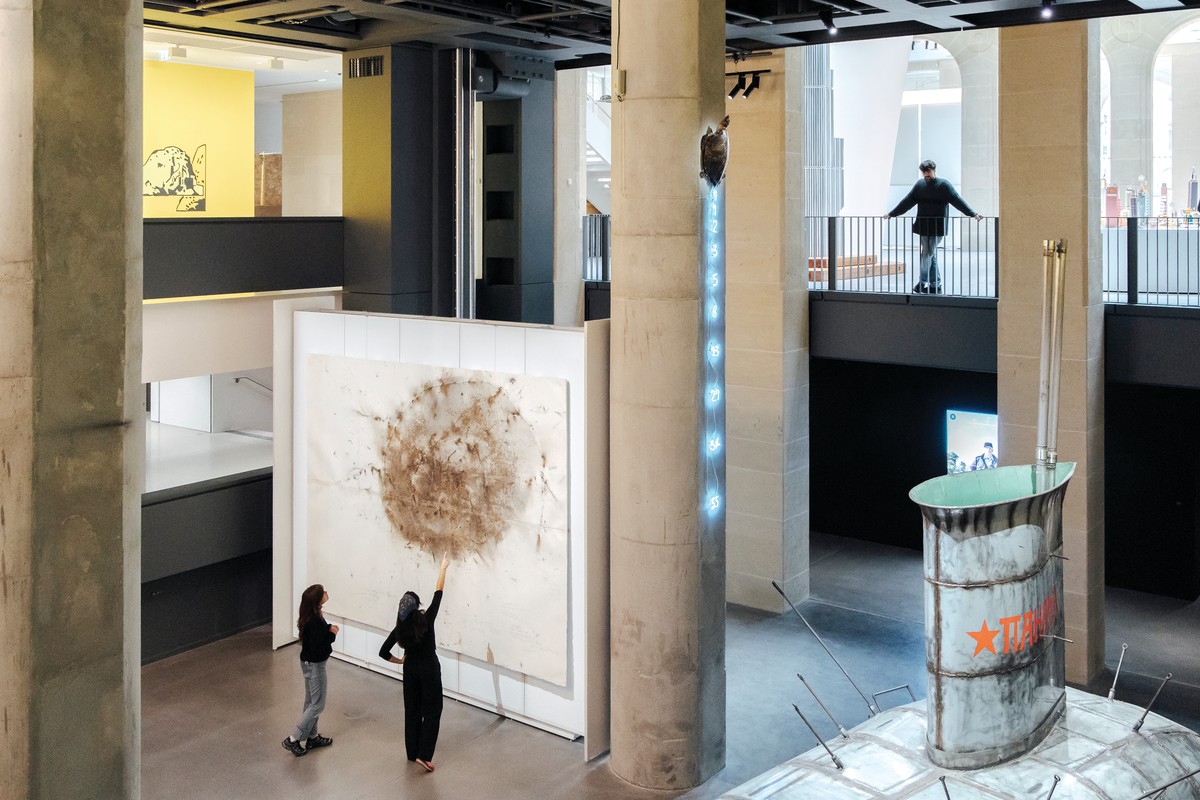
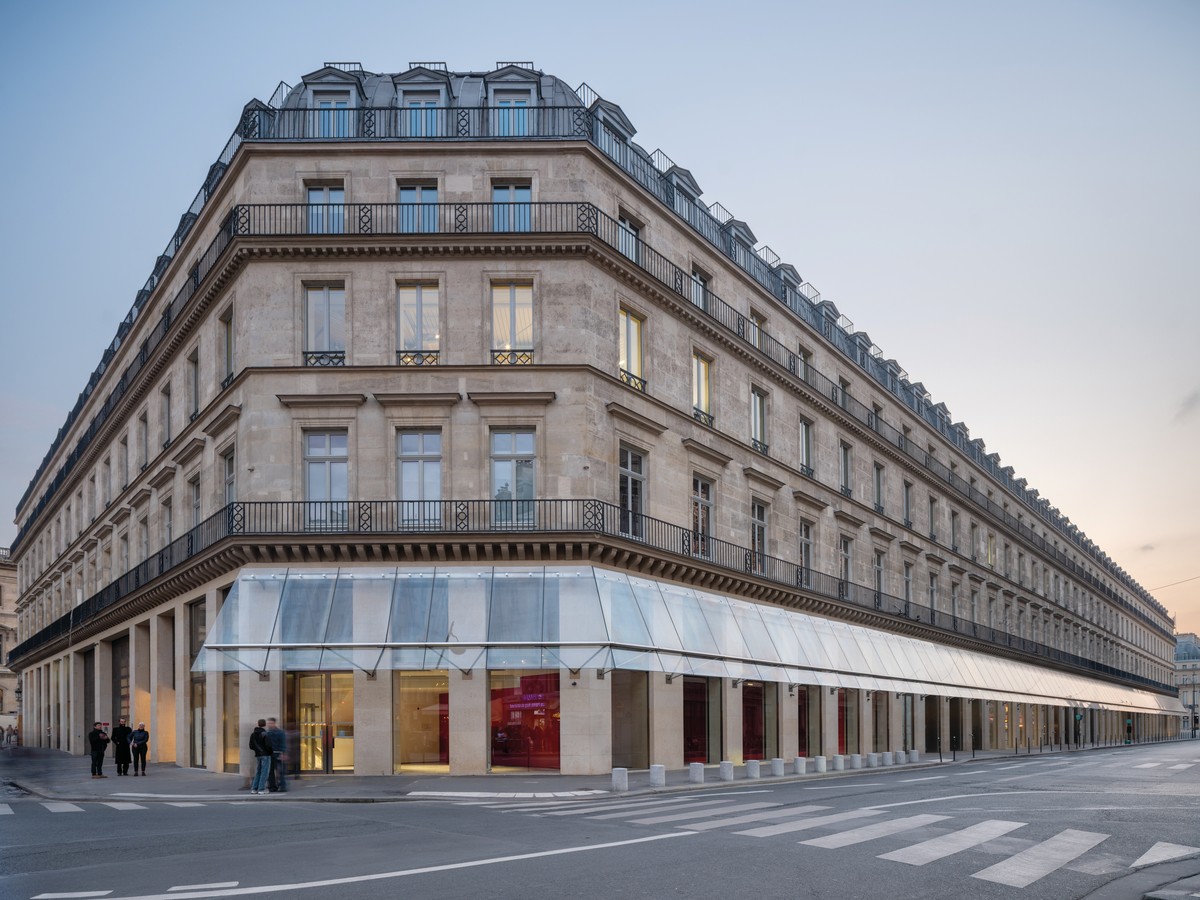
The arches of the stone building’s facade (top of page) are carried over to the interior (1), where countless configurations of display space are possible (2). Photos © Martin Argyroglo (1), Cyril Marcilhacy (2), click to enlarge.

Fondation Cartier
2

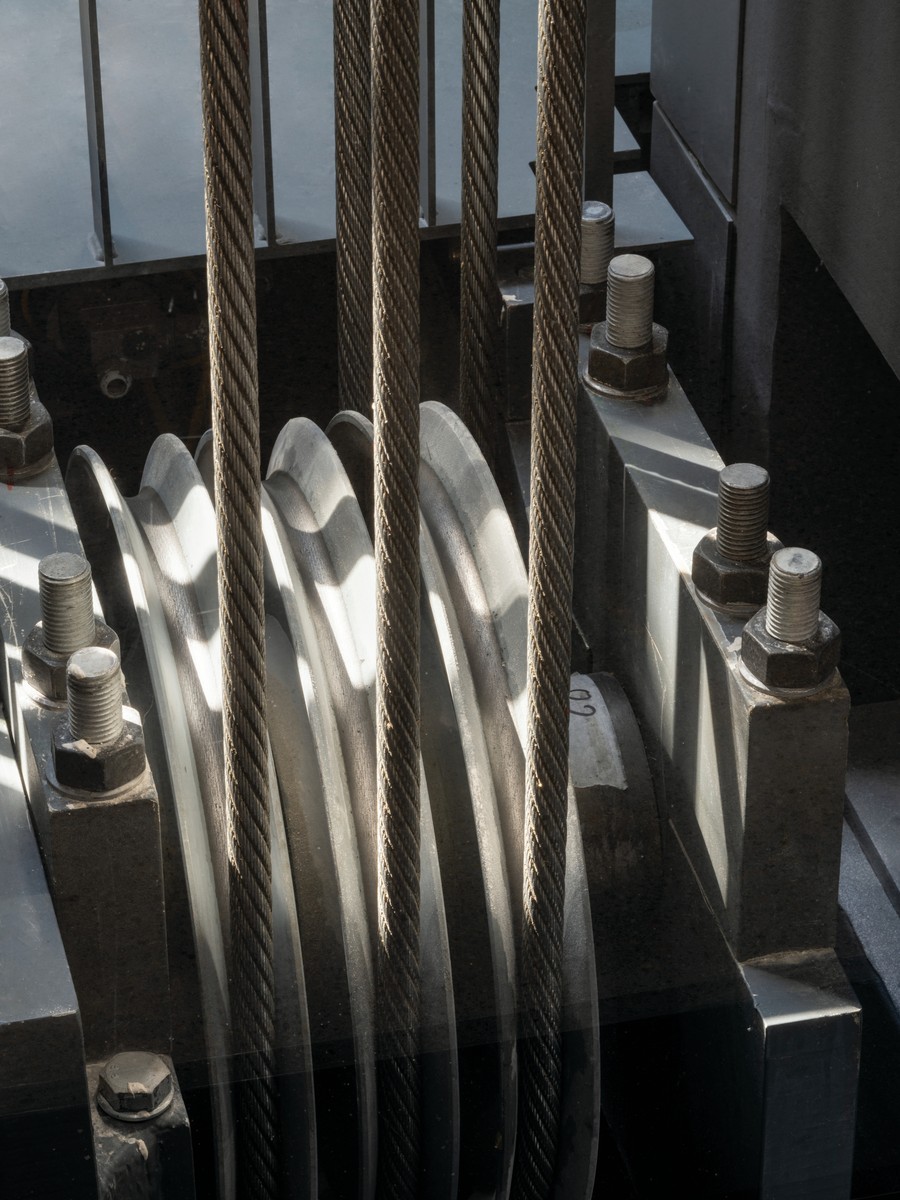
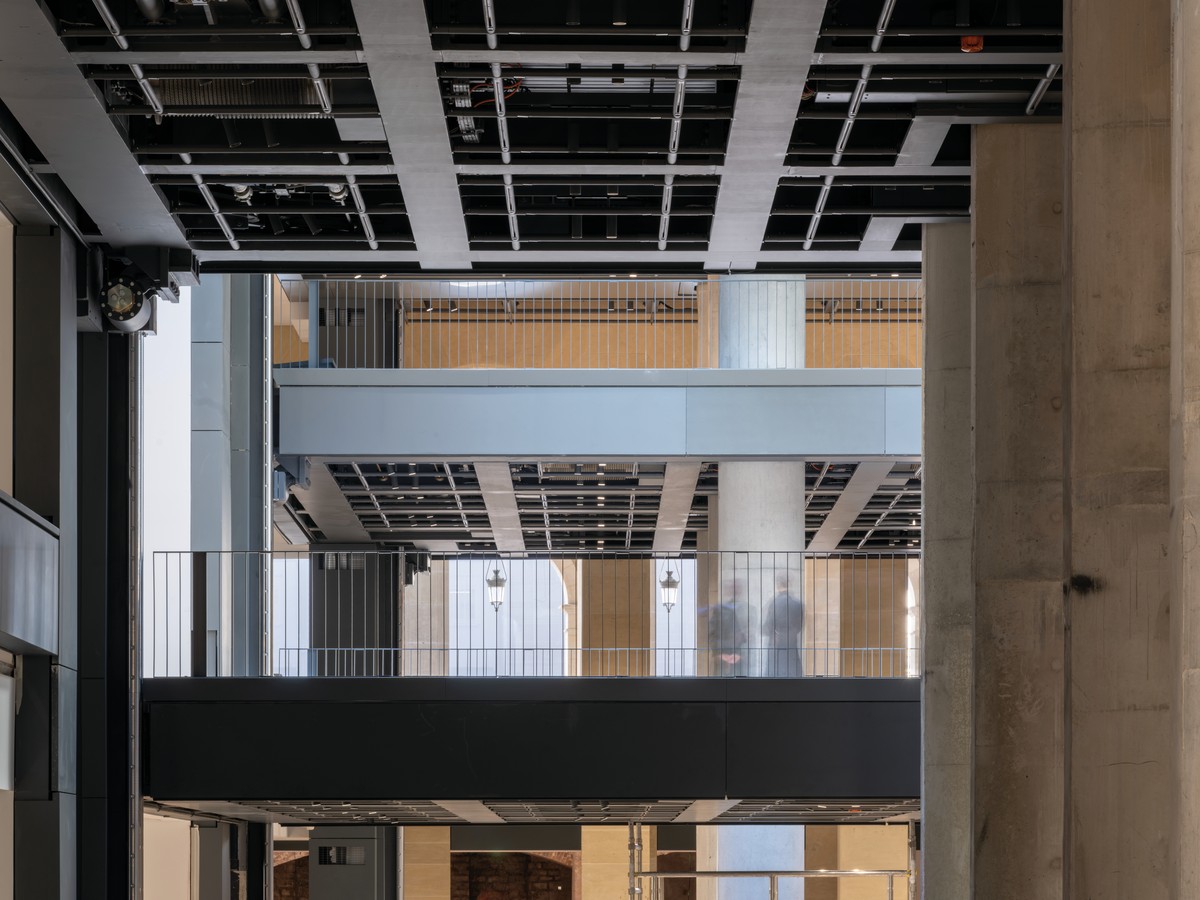
All in stone, on a busy treeless square, the foundation’s new home couldn’t contrast more with the old. Completed by Alfred Armand in 1855, and filling an entire city block on the rue de Rivoli, the building began life as a 700-bedroom hotel, housed a department store—the Grand Magasin du Louvre—for eight decades, then morphed into an antiques mall. With facades that mimic Percier and Fontaine’s design for the initial stretch of the street, it features ground-floor arcades all around its perimeter. The Fondation Cartier has leased the basement and first two floors, from which Nouvel has hollowed out a giant single volume offering 70,000 square feet of gallery space beneath three of the building’s four lightwells. Tree-planted glass roofs admit daylight—but can be shuttered if required—while five giant steel platforms (the largest 4,000 square feet, the smallest 2,100) rise and descend on pulley-mounted cables, allowing countless configurations. This is not, of course, the first time something like this has been attempted: OMA famously built an entire house around a moving platform—for the paraplegic Jean-François Lemoine in Bordeaux (1998)—and then repeated the feat at Paris’s Lafayette Anticipations (2018), another art foundation. But Nouvel has taken the idea and run with it, his multiple platforms, which are engineered to take very heavy works, stopping at 11 different levels and forming a 13,000-square-foot “aircraft carrier” (his metaphor) when aligned. This flexibility, which permits deep or shallow and tall or compressed spaces, will make every kind of art display possible, he claims.
Fondation Cartier
3

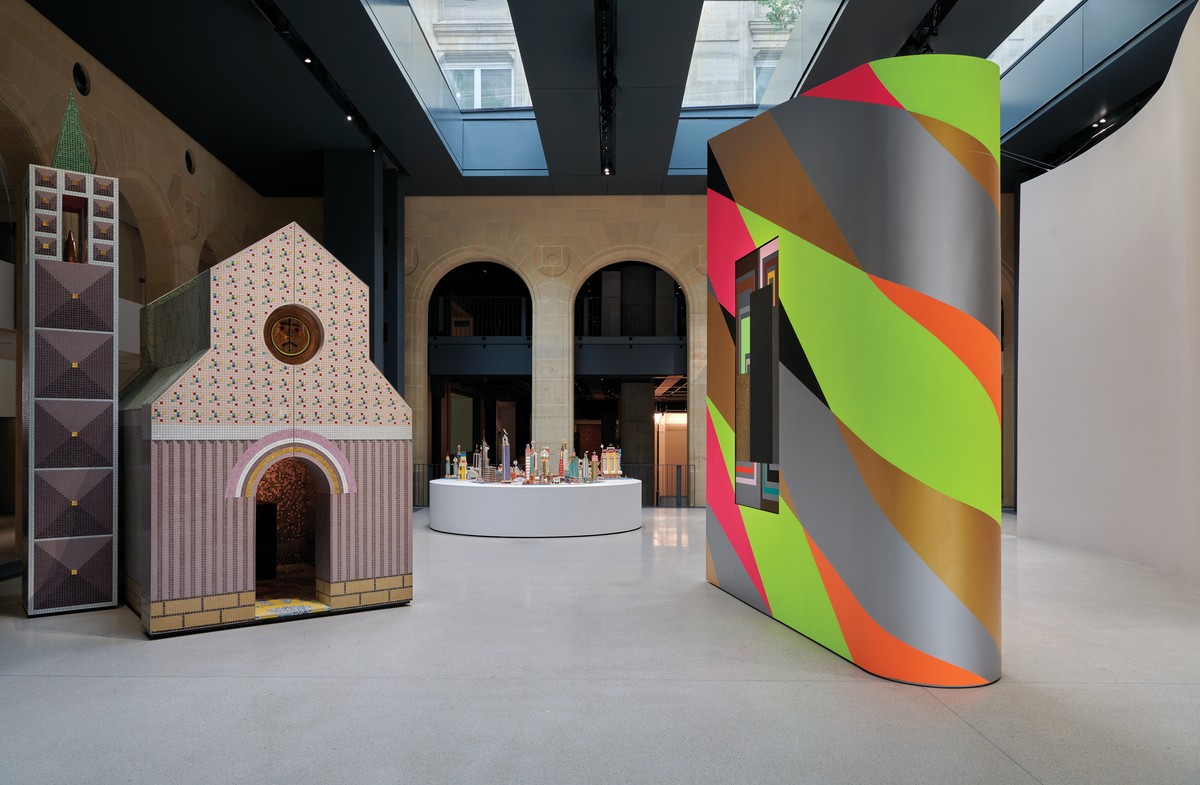
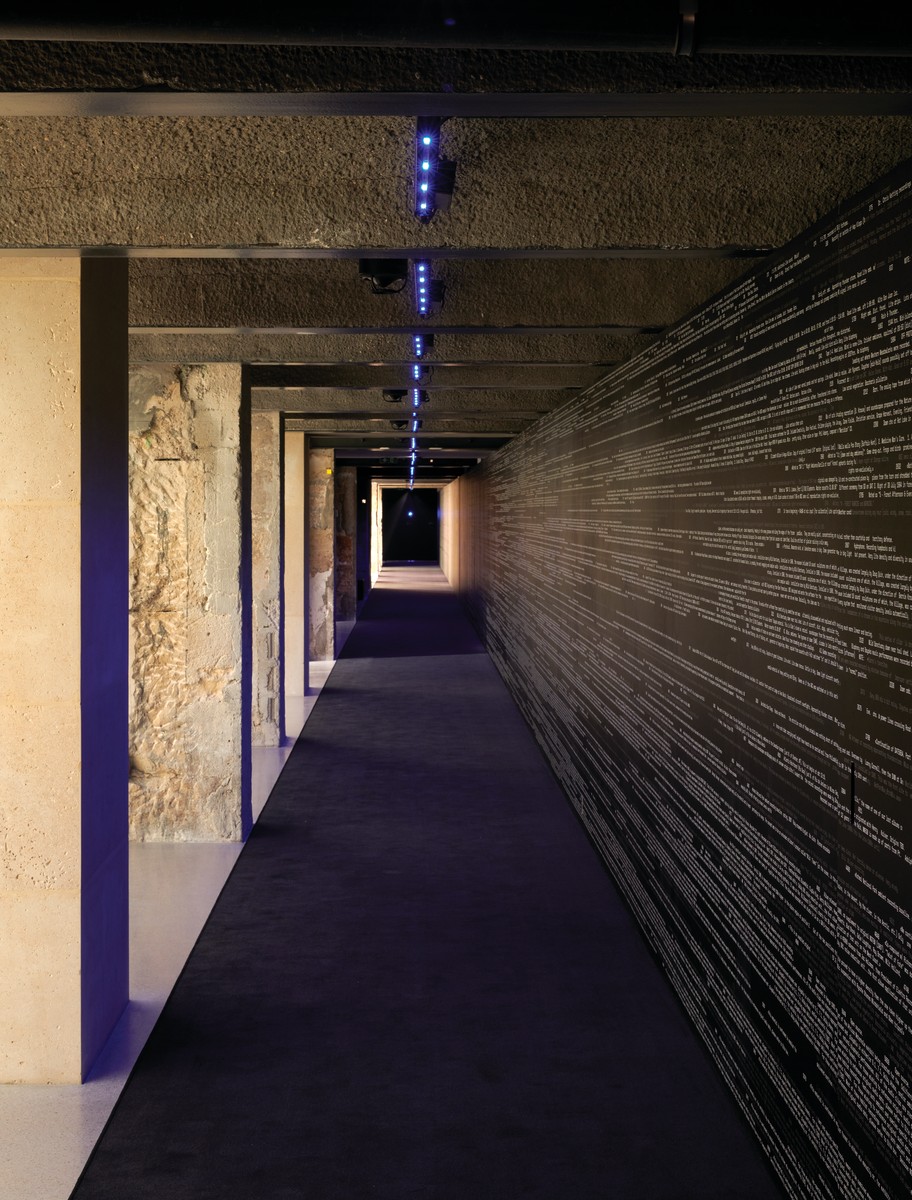
Glass roofs admit daylight into the main exhibition spaces for large-scale pieces (3), while peripheral areas feature smaller works (4) in the inaugural installation. Photos © Marc Domage
Fondation Cartier
4

For the foundation’s director, Chris Dercon, the inaugural exhibition—a “best of” featuring 300 works commissioned since the institution’s establishment in 1984—is an opportunity to show off the possibilities of this architectural viewing machine. Erratically configured, the platforms create a confusing jumble of different levels and plunging cross views, with some very low ceilings up top, while the glazed arcade facades pull the city’s bustle into the gallery space (although the relationship is not reciprocal—by day, all passersby can really see are their own reflections). If large-scale pieces like Junya Ishigami’s Sydney Cloud Arch (2015) and Chapel of Valley (2016), Freddy Mamani’s Salón de eventos (2018), and Alessandro Mendini’s Petite Cathédrale (2022) do relatively well in the main spaces, their poetics harden into monumentality in the cavernous setting. But it is the smaller-scale works that really suffer in this inaugural show, since they are displayed in the highly problematic peripheral areas. David Lynch is no longer here to bemoan his sidelining in a nasty basement corridor next to the fire exit, but how does 87-year-old Japanese photographer Daido Moriyama feel about his relegation to a far-flung low-ceilinged corner giving onto the toilets? For Simone Farresin—one half of the Italian design duo Formafantasma, who installed the opening show—the building “makes no concessions to displaying art,” which he finds a refreshing challenge after decades of the white cube. But surely the goal is to achieve a meaningful dialogue rather than a hierarchy of first-, second-, and third-class display spaces?
Fondation Cartier
5

Inside the 1855 structure (5), the moving platforms (6) rise and descend on pulley-mounted cables (7). Photos © Martin Argyroglo

Fondation Cartier
6
Fondation Cartier
7

Fortunately, the Fondation Cartier is not in the habit of staging encyclopedic retrospectives, since it commissions living artists to make new work. It remains to be seen how they will respond to the building’s opportunities and constraints, especially since the platforms are not exactly agile, requiring a whole day for reconfiguration. This is the second time Nouvel has thrown down the gauntlet of his humanistic artistry for the foundation, the glass box on boulevard Raspail having posed a significant challenge for exhibiting art. Here, where the glazing can all be screened off, he offers a theatrical black box of tricks in defiance of the white cube of lore.

Looking for quick answers on architecture and design topics?
Try Ask RECORD, our new smart AI search tool.
Ask RECORD →

KEYWORDS: Paris

Share This Story

Looking for a reprint of this article?
From high-res PDFs to custom plaques, order your copy today!


Andrew ayers

Andrew Ayers is a Paris-based writer, translator, and educator.

Post a comment to this article

Report Abusive Comment

Subscription Center
  • Create an Account
  • Start a Subscription
  • Manage My Account
  • Sign Up for Newsletters
  • Visit Customer Service
  • Update Preferences

More Videos

Sponsored Content

Sponsored Content is a special paid section where industry companies provide high quality, objective, non-commercial content around topics of interest to the Architectural Record audience. All Sponsored Content is supplied by the advertising company and any opinions expressed in this article are those of the author and not necessarily reflect the views of Architectural Record or its parent company, BNP Media. Interested in participating in our Sponsored Content section? Contact your local rep!

close
  • TAMLYN XtremeTrim Exterior Trim
    Sponsored byTamlyn

    Designing Cleaner Panel Facades: Why Exterior Trim Details Matter

  • Building with Vapor Barriers
    Sponsored byReef Industries, Inc.

    Vapor Barriers Help Control Moisture in Tighter Building Designs

  • Duct Interior with Prodeq System
    Sponsored byHenry, a Carlisle Company

    Designing Resilient Water Containment Systems

DESIGN:ED Podcast
Listen to Architectural Record’s DESIGN:ED Podcast

Events

June 10, 2026

Rethinking Stormwater – The Power of Porous Paving

Credits: 1 AIA LU/HSW; 1 AIBD P-CE; 0.1 ICC CEU

Learn how porous paving systems support stormwater management, reduce heat island effects, and enhance sustainable site design performance.

June 11, 2026

Very Early Warning Fire Detection for Mission-Critical Facilities

Credits: 1 AIA LU/HSW; 1 AIBD P-CE; 0.1 ICC CEU

Examine advanced fire detection strategies that support uptime and enhance safety in data centers and other mission-critical facilities.

View All Submit An Event

Products

2026 Architect's Square Foot Costbook

2026 Architect's Square Foot Costbook

See More Products

Popular Stories

Practice Matters illustration

What’s in a (Firm’s) Name? Thinking About Succession and Legacy

Practice Matters illustration

By the Numbers: Counting America's Architects

Riverdale House by Studio Lau

Riverdale House by Studio Lau

House on a Hill

Design Vanguard 2026: Forma

Crane Cove, ONO

Design Vanguard 2026 Winners

Broader Sustainability of CMU - Free Webinar - May 21, 2026

Related Articles

  • Studio Museum in Harlem

    After a Prolonged Closure, the Studio Museum in Harlem Moves Into Its New Home

    See More
  • Adimab lab building

    A Biotech Firm’s New Wood-Clad Lab Building Melds into Its Rural New Hampshire Site

    See More
  • V&A East Storehouse

    With a New Outpost Designed by Diller Scofidio + Renfro, London’s V&A Museum Invites the Public into Its Storage

    See More

Related Products

See More Products
  • Architectural Record - December 2025

    Architectural Record Decvember 2025 Issue

  • 3dthinking.jpg

    3D Thinking in Design and Architecture: From Antiquity to the Future

See More Products
×

The latest news and information

#1 Source for Architectural Design, News and Products

SUBSCRIBE
  • RESOURCES
    • Advertise
    • Contact Us
    • Submit
    • Store
  • ACCOUNT CENTER
    • Create an Account
    • Start a Subscription
    • Manage My Account
    • Sign Up for Newsletters
    • Visit Customer Service
    • Update Preferences
  • PRIVACY
    • PRIVACY POLICY
    • TERMS & CONDITIONS
    • DO NOT SELL MY PERSONAL INFORMATION
    • PRIVACY REQUEST
    • ACCESSIBILITY
  • SERVICES
    • Marketing Services
    • Reprints
    • Market Research
    • List Rental
    • Survey/Respondent Access
  • STAY CONNECTED
    • Linkedin
    • Facebook
    • Instagram
    • YouTube
    • X (Twitter)

Copyright ©2026. All Rights Reserved BNP Media, Inc. and BNP Media II, LLC.

Design, CMS, Hosting & Web Development :: ePublishing