Architectural Record
search
cart
facebook twitter linkedin youtube
  • Sign In
  • Subscribe
  • Sign Out
  • My Account
Architectural Record
  • NEWS
    • Latest News
    • Awards
    • Interviews
    • Obituaries
    • Podcasts
      • Design:Ed Podcast
      • Sponsored Podcasts
  • OPINION
    • Book Reviews / Excerpts
    • Exhibition Reviews
    • Forum
  • EXCLUSIVES
    • Videos
    • Design Vanguard
    • Top 300 Firms
    • Sponsored Content
    • Sponsored eBooks
    • From the Archives
  • CONTINUING ED
    • Editorial Continuing Ed
    • CE Center
    • CE Academies
  • PROJECTS
    • Buildings By Type
    • Reuse & Renovation
    • Museums & Arts Centers
    • Colleges & Universities
    • Multifamily Housing
    • Interiors
    • Lighting
    • Kitchen & Bath
  • HOUSES
    • Record Houses
    • House of the Month
    • Featured Houses
  • PRODUCTS
    • Products by Category
    • Record Products of the Year
    • Latest Products
  • EVENTS
    • Dates & Events
    • Record on the Road
    • Innovation Conference
    • Sustainability in Practice
    • Women In Architecture
    • Webinars
    • Ad Excellence Awards
    • Submit an Event
  • CONNECT
    • Ask RECORD AI
    • Newsletters
    • Contact
    • Advertise
    • Editorial Calendar
    • Store
    • Customer Service
  • SUBMIT
    • Submission Guidelines
    • RECORD Competitions
  • MAGAZINE
    • Subscribe
    • My Account
    • Digital Edition
    • Current Issue
    • Firm Pass
    • Historic Archive
Architecture NewsCommentary & CriticismOpinion

Books

‘Breathing Space’ Explores Respiratory Modernism as a Force That Shapes Buildings and How We Live With Them

Review: ‘Breathing Space: The Architecture of Pneumatic Beings’ by Tim Altenhof

By Russell Fortmeyer
Breathing Space
Image courtesy the publisher
Breathing Space: The Architecture of Pneumatic Beings, by Tim Altenhof. Zone Books, 256 pages, $38.
January 13, 2026
✕
Image in modal.

There was a moment around 2020 when it seemed that architecture, in the broad sense of the term, might pivot toward integrating natural ventilation, or at least the operable window, back into common commercial construction. Sealed curtain walls and deep floor plans may not have caused the Covid pandemic to run rampant, but they did not help, nor did they engender much confidence in returning to the office. Could giving people the ability to open windows or to work in semi-outdoor spaces allay the anxieties of an age when science—solid, consensus-based science—was viewed with skepticism, if not downright denial, by a good chunk of the population?

The oftentimes precarious relationship between architecture and science underpins Tim Altenhof’s new book, Breathing Space: The Architecture of Pneumatic Beings, in which he draws a line from the Enlightenment in Europe to Le Corbusier’s 1914 Maison Dom-Ino to reveal the physical and psychological constructs of our essential act of breathing in relationship to our surrounding environment.

The book’s lengthy discussion of the responses from architects to the scourge of tuberculosis in 19th-century Europe certainly evokes the Covid era in the way designers speculated in line with emerging medical understanding. In one chapter, Altenhof considers sanatorium design in Davos, Switzerland, which he marks as a fundamental shift in thinking in “the way it redefined architecture not as protective wrapper but as a facilitator of the atmosphere itself as the primary space of human habitation.”

The Queen Alexandra Sanatorium, designed by the architects Otto Wilhelm Pfleghard and Max Haefeli in 1909, placed patients in individual rooms with south-facing balconies and elaborate windows that were forever open, allowing for maximum air changes in each room (buttressed with radiators for thermal comfort, if not energy efficiency). Doctors theorized that dry, cold mountain air, sanitized by nearby pine trees, would speed recovery. Pfleghard and Haefeli’s design realized, in Altenhof’s view, a “seamless body of air throughout, creating a fluid environment” that contrasts architecture’s traditional role in moderating air intake and exhaust for environmental comfort and ventilation. The implications for how we treat the wider environment to which our buildings, and bodies, relate had never been clearer.

Breathing Space is a tight book that does not meander much beyond late 19th- and early 20th-century German-Swiss influences, like Heinrich Wölfflin or Sigfried Giedion, with occasional classics like Alberti or British provocateurs like Reyner Banham peppered throughout. Altenhof is an architect and senior scientist in architectural theory and history at the University of Innsbruck, and the book is based on his doctoral thesis from Yale University. His expansive mingling of art history, architecture, popular media, and scientific inquiry—spiced up with digressions into obscure 19th-century cults and the German penchant for nudism—reveals some startlingly fresh insights into a topic so common as to appear banal.

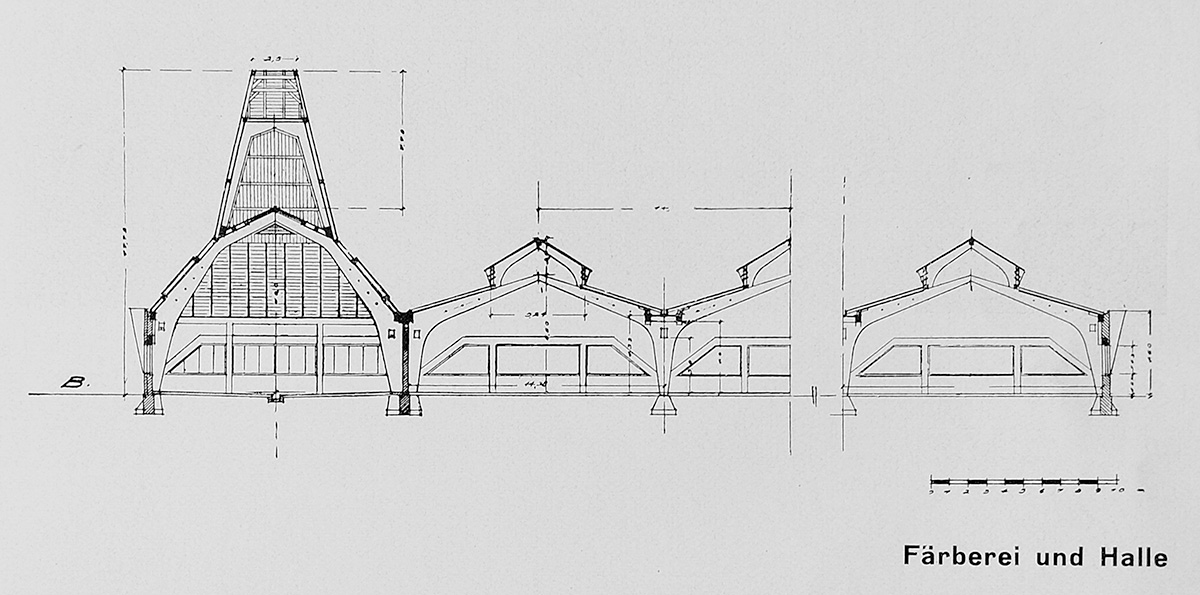
This mingling works well when Altenhof assesses the 1921 Steinberg, Herrmann & Co. Hat Factory, where the German architect Erich Mendelsohn created a dye-works building that solved chemical exhaust problems. Rather than reengineering the use of fans, which had not worked effectively to keep workers safe at other facilities, Mendelsohn designed the entire factory as a chimney, with an exaggerated structure that passively funneled exhaust up and out. Altenhof includes insights from Mendelsohn’s wife, Luise, as well as critics and contemporaries, to situate the building in what he formulates as the book’s primary contribution, the concept of “respiratory modernism.”
Mendelsohn Factory Drawing

Mendelsohn’s factory functions as a chimney. Image courtesy the publisher, click to enlarge.

In Altenhof’s view, respiratory modernism represents the emergence of a new architecture that centers on the breathing human not as a passive occupant but as a physiological actor within extensive atmospheric systems, at the urban or even planetary scale. He returns often to Le Corbusier’s fascination with representing human lungs in relation to buildings and cities to reinforce this view of our bodies as seamlessly connected to the natural world and the way architecture shapes exchange between the two.

While many recent books have functioned as correctives to modern architecture’s embrace of problematic technologies—for instance, air-conditioning as a cause of and solution to global warming—Altenhof has given us an excellent history lesson that carves out a small place for breathing. It is not a book specifically about technology or a comprehensive survey of ventilation and human health. Altenhof tells the origin story of this subject in Western thought, with language for describing what it means to breathe within architectural space. Sorry to put it this way, but it’s a breath of fresh air.

Looking for quick answers on architecture and design topics?
Try Ask RECORD, our new smart AI search tool.
Ask RECORD →

KEYWORDS: Book Reviews / Excerpts

Share This Story

Looking for a reprint of this article?
From high-res PDFs to custom plaques, order your copy today!


Russell fortmeyer
Russell Fortmeyer, a contributing editor to RECORD, is a Los Angeles-based sustainability principal at Arup and adjunct professor at the University of Southern California School of Architecture.

Post a comment to this article

Report Abusive Comment

Subscription Center
  • Create an Account
  • Start a Subscription
  • Manage My Account
  • Sign Up for Newsletters
  • Visit Customer Service
  • Update Preferences

More Videos

Sponsored Content

Sponsored Content is a special paid section where industry companies provide high quality, objective, non-commercial content around topics of interest to the Architectural Record audience. All Sponsored Content is supplied by the advertising company and any opinions expressed in this article are those of the author and not necessarily reflect the views of Architectural Record or its parent company, BNP Media. Interested in participating in our Sponsored Content section? Contact your local rep!

close
  • TAMLYN XtremeTrim Exterior Trim
    Sponsored byTamlyn

    Designing Cleaner Panel Facades: Why Exterior Trim Details Matter

  • Building with Vapor Barriers
    Sponsored byReef Industries, Inc.

    Vapor Barriers Help Control Moisture in Tighter Building Designs

  • Duct Interior with Prodeq System
    Sponsored byHenry, a Carlisle Company

    Designing Resilient Water Containment Systems

DESIGN:ED Podcast
Listen to Architectural Record’s DESIGN:ED Podcast

Events

June 16, 2026

Focus on the Façade: Exploring Steel, Timber & Fire-Rated Curtain Walls and Channel Glass Systems

Credits: 1 AIA LU/HSW; 1 AIBD P-CE; 0.1 ICC CEU

Explore modern façade and glazing systems that enhance daylighting, fire safety, and thermal performance while expanding architectural design possibilities.

June 18, 2026

Rebooting the Aging Office Building

Credits: 1 AIA LU/HSW; 1 AIBD P-CE; 0.1 ICC CEU; 1 PDH

Explore façade retrofit strategies and award-winning design concepts that can transform aging office buildings into healthier, higher-performing workplaces for today’s hybrid workforce.

View All Submit An Event

Products

2026 Architect's Square Foot Costbook

2026 Architect's Square Foot Costbook

See More Products

Popular Stories

SanDiegoAirport

Top 300 Architecture Firms of 2026

Coronado Bridge

The Architect’s Guide to San Diego

Dusk House

Design Vanguard 2026: ONO

West Village Penthouse

Design Vanguard 2026: Brent Buck Architects

Hikma Community Complex

Design Vanguard 2026: Mariam Issoufou Architects

Focus on the Facade - Free Webinar - June 16, 2026

Related Articles

  • Cathleen McGuigan

    April 2020 Editorial: The Pandemic Is Changing How We Practice and How We Live

    See More
  • How We Live, Now and in the Future

    See More
  • Cathleen McGuigan

    How We Live, from Top to Bottom

    See More

Related Products

See More Products
  • 0470126736.gif

    Modern Sustainable Residential Design: A Guide for Design Professionals

See More Products
×

The latest news and information

#1 Source for Architectural Design, News and Products

SUBSCRIBE
  • RESOURCES
    • Advertise
    • Contact Us
    • Submit
    • Store
  • ACCOUNT CENTER
    • Create an Account
    • Start a Subscription
    • Manage My Account
    • Sign Up for Newsletters
    • Visit Customer Service
    • Update Preferences
  • PRIVACY
    • PRIVACY POLICY
    • TERMS & CONDITIONS
    • DO NOT SELL MY PERSONAL INFORMATION
    • PRIVACY REQUEST
    • ACCESSIBILITY
  • SERVICES
    • Marketing Services
    • Reprints
    • Market Research
    • List Rental
    • Survey/Respondent Access
  • STAY CONNECTED
    • Linkedin
    • Facebook
    • Instagram
    • YouTube
    • X (Twitter)

Copyright ©2026. All Rights Reserved BNP Media, Inc. and BNP Media II, LLC.

Design, CMS, Hosting & Web Development :: ePublishing