In California’s Inland Empire, Perkins&Will Transforms a Defunct Call Center into a Community Health Hub
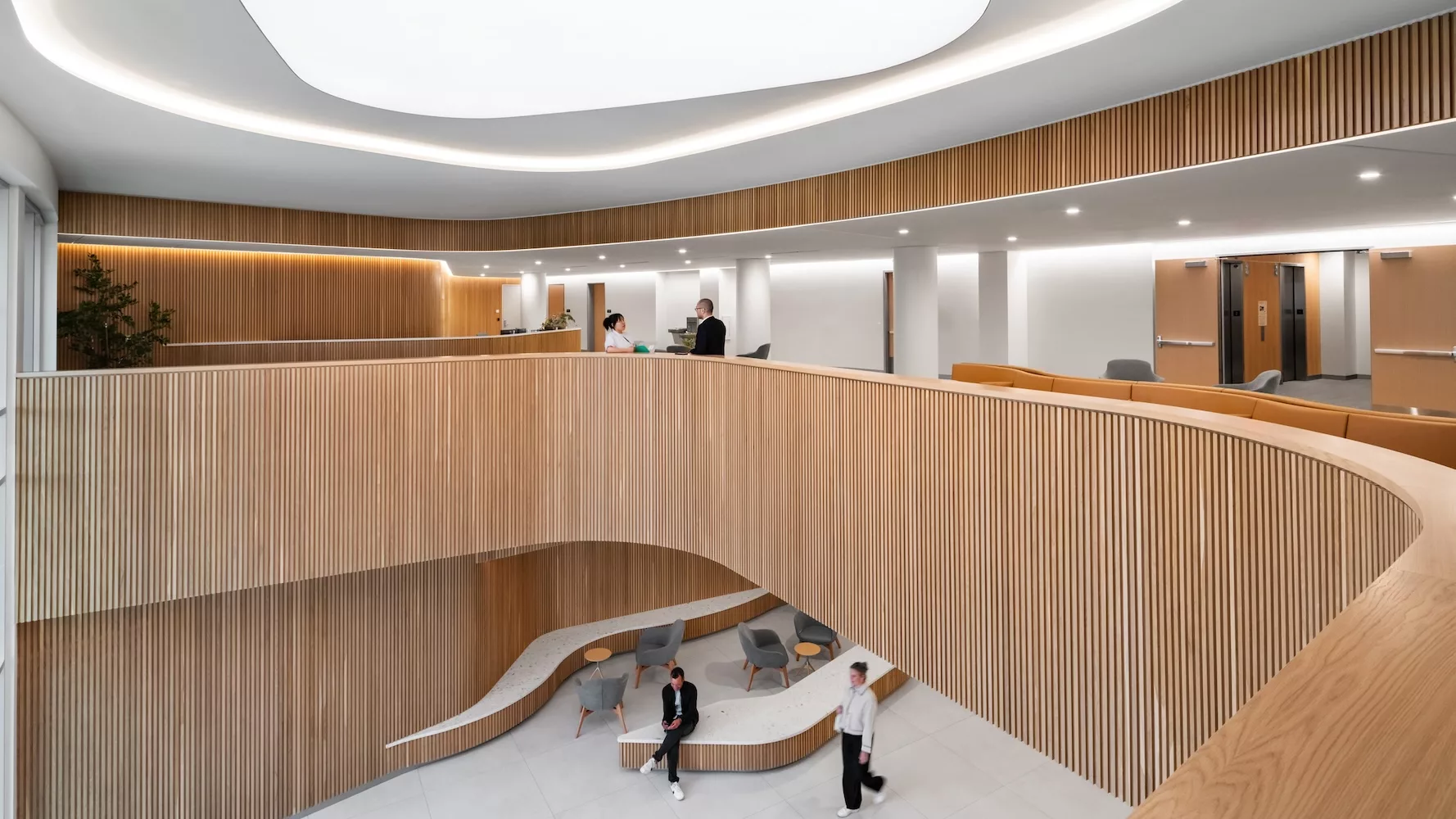
SAC Health Brier, San Bernardino, California.
Architects & Firms
Opened to patients in June 2025, the SAC Health Brier campus in San Bernardino, California, is in a curious geographic position.
Located near a cluster of big box stores and chain restaurants within the shell of a former banking call center, this 280,000-square-foot outpatient facility serves a city—the second largest in the Inland Empire region—suffering from significant income disparities, high levels of air pollution, and among the poorest health outcomes in the nation. Directly on the opposite side of Interstate 10 from SAC Health’s new flagship San Bernardino location is Loma Linda, a self-described “city focused on health and prosperity.” Home to large and deep-seated Seventh-day Adventist community, Loma Linda is America’s only recognized blue zone—an area with the longest-lived people and the highest life expectancies.
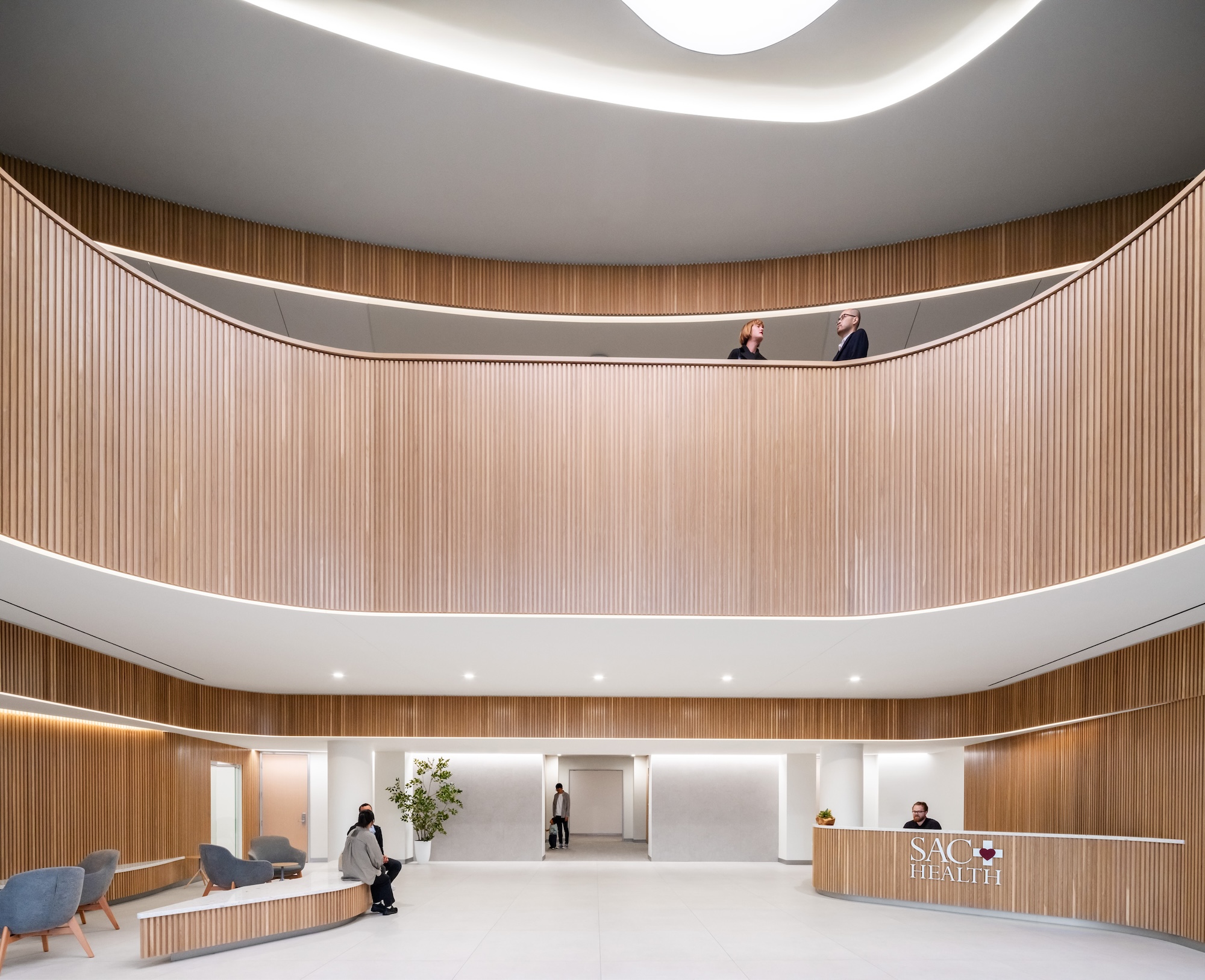
Main lobby view. Photo © Paul Vu / Here and Now Agency
“You have this interesting dichotomy of very healthy people and people struggling to find health care,” says architect Jeffrey Dreesman of the neighboring cities. Dreesman is principal and director of medical planning at the Los Angeles studio of Perkins&Will. The firm was tasked, alongside design-build partner BNBuilders, with transforming an unexceptional, nearly 20-year-old office building previously occupied by Wells Fargo as a vital health resource for a long-underserved population.

Second-level seating area. Photo © Paul Vu / Here and Now Agency

A meeting room with mountain views. Photo © Paul Vu / Here and Now Agency
Another smart example of health care–focused adaptive reuse by Perkins&Will, San Bernardino’s SAC Health Brier campus is a project defined by urgency. Responding to the critical need for health care services available to under- or uninsured patients, the project was completed within 16 months—eight months sooner than a project of similar scale, Dreesman notes. Overruns would have potentially impacted Medicare reimbursements provided to SAC Health, a faith-based Federally Qualified Health Center (FQHC) affiliated with Loma Linda University Health; the nonprofit operates several permanent facilities across the Inland Empire as well as mobile clinics. Says Dreesman of the tight deadline: “We had a client who was very committed. They said ‘give us dates when you need decisions, and we will have them’— and they usually gave us their decisions beforehand.”
Expected to accommodate 300,000 patient visits over the next five years, SAC Health has dedicated 158,000 square feet to clinical, dental, and behavioral health as well as primary and specialty care services at its new San Bernardino location. The public transit–centric facility also features consolidated administrative offices for the nonprofit and a 4,000-square-foot community resource center, which is accessible through a discrete entrance created at the rear of the building.
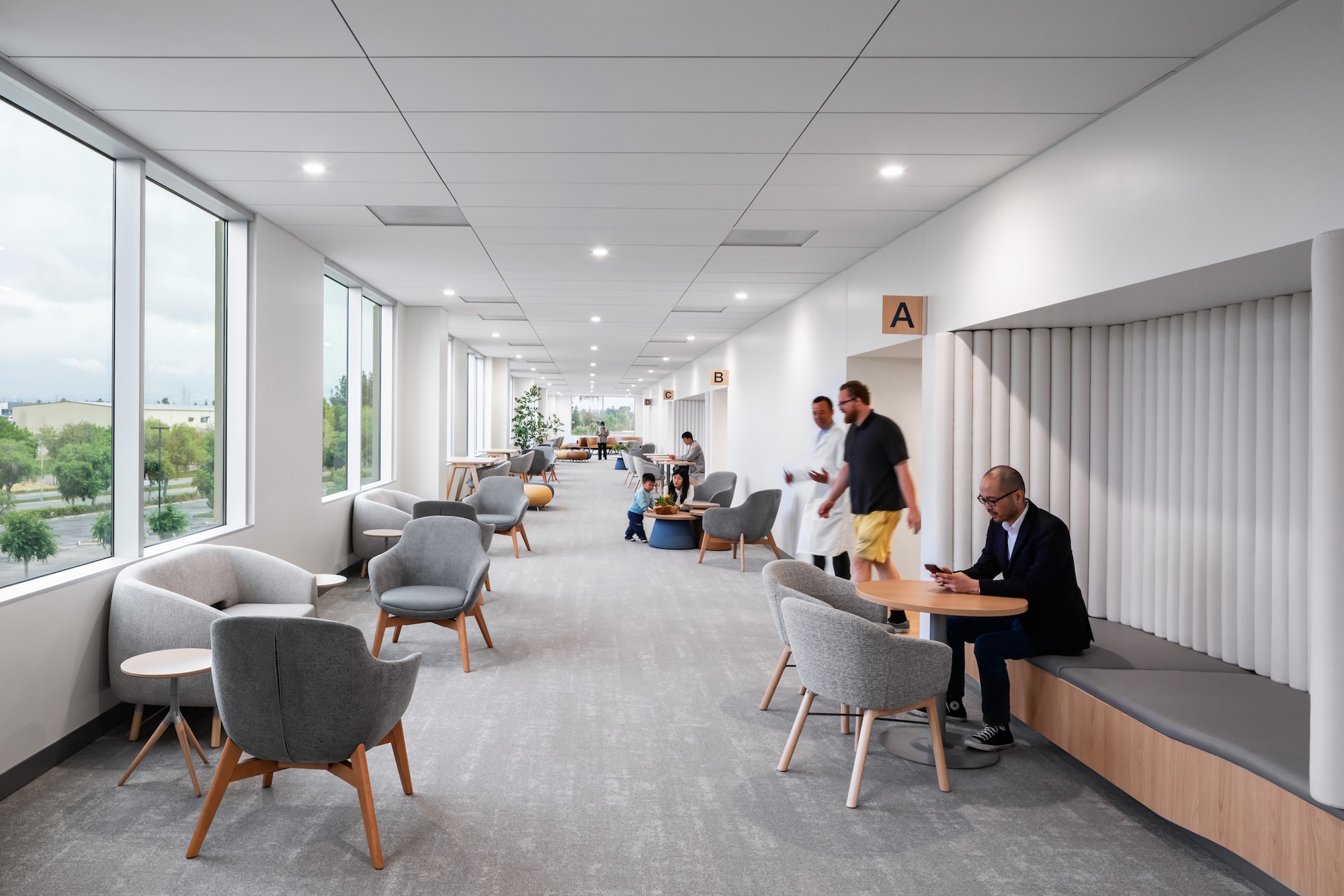
A patient waiting area. Photo © Paul Vu / Here and Now Agency
Aside from carving out a new rear entry, exterior interventions to the five-story building, which had sat empty since the Covid-19 pandemic, were minimal, with the team achieving 100-percent reuse of the core and shell.
The interior metamorphosis from cookie-cutter call center to community health hub poised both distinct benefits (a large open floor plan and manageable structural grid) and challenges (infilling a three-inch raised access floor stuffed with cabling). The project, which achieved 73-percent waste diversion from landfill while offering significant water and energy savings compared to the baseline building, embraced a modular design for the clinical spaces that enables the easy future growth or shuffling around. “It was very much universally designed to fit everyone,” says Perkins&Will design principal Tina Giorgadze of the modular approach.
Looking for quick answers on architecture and design topics?
Try Ask RECORD, our new smart AI search tool.
Ask RECORD →
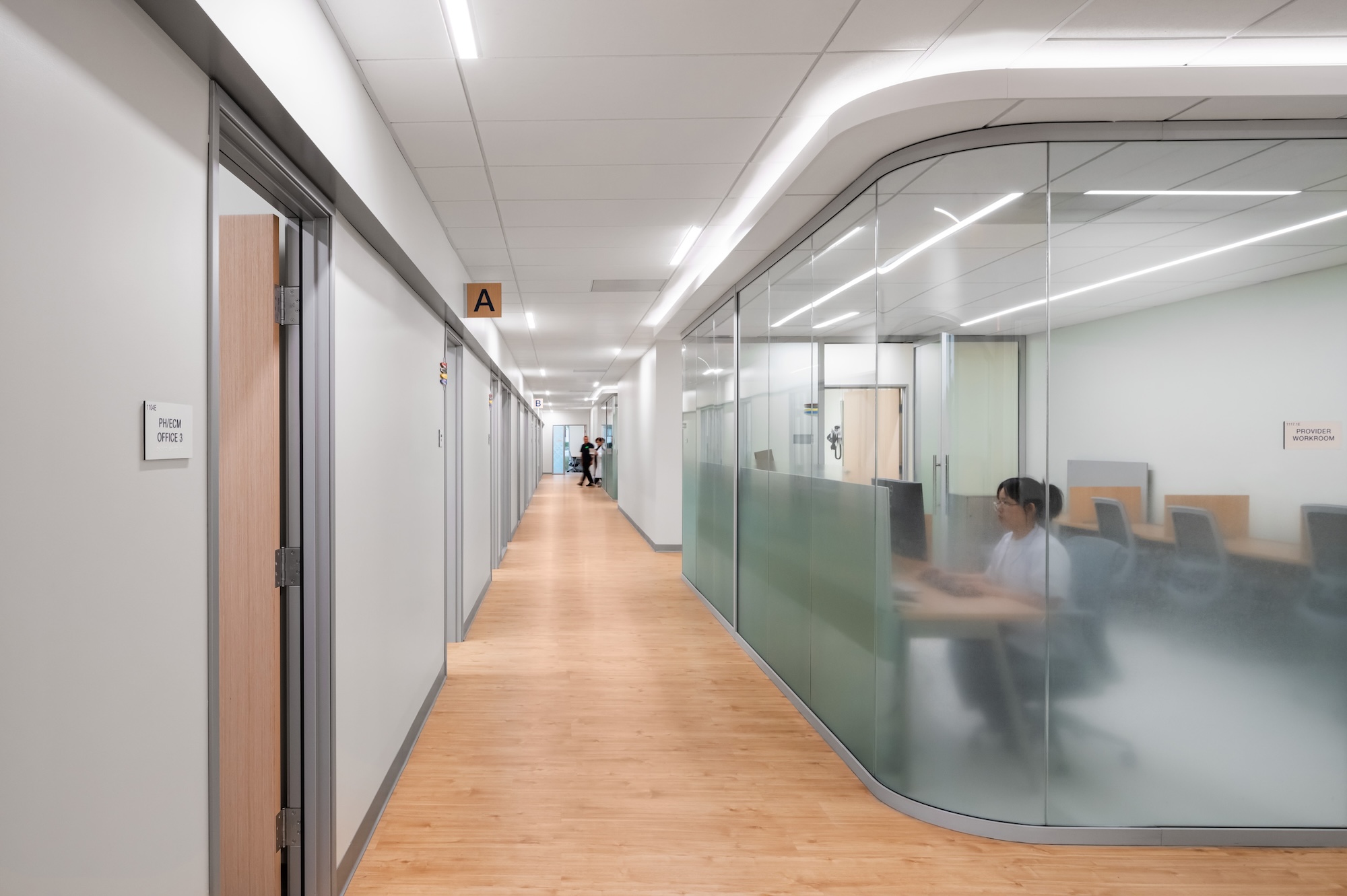
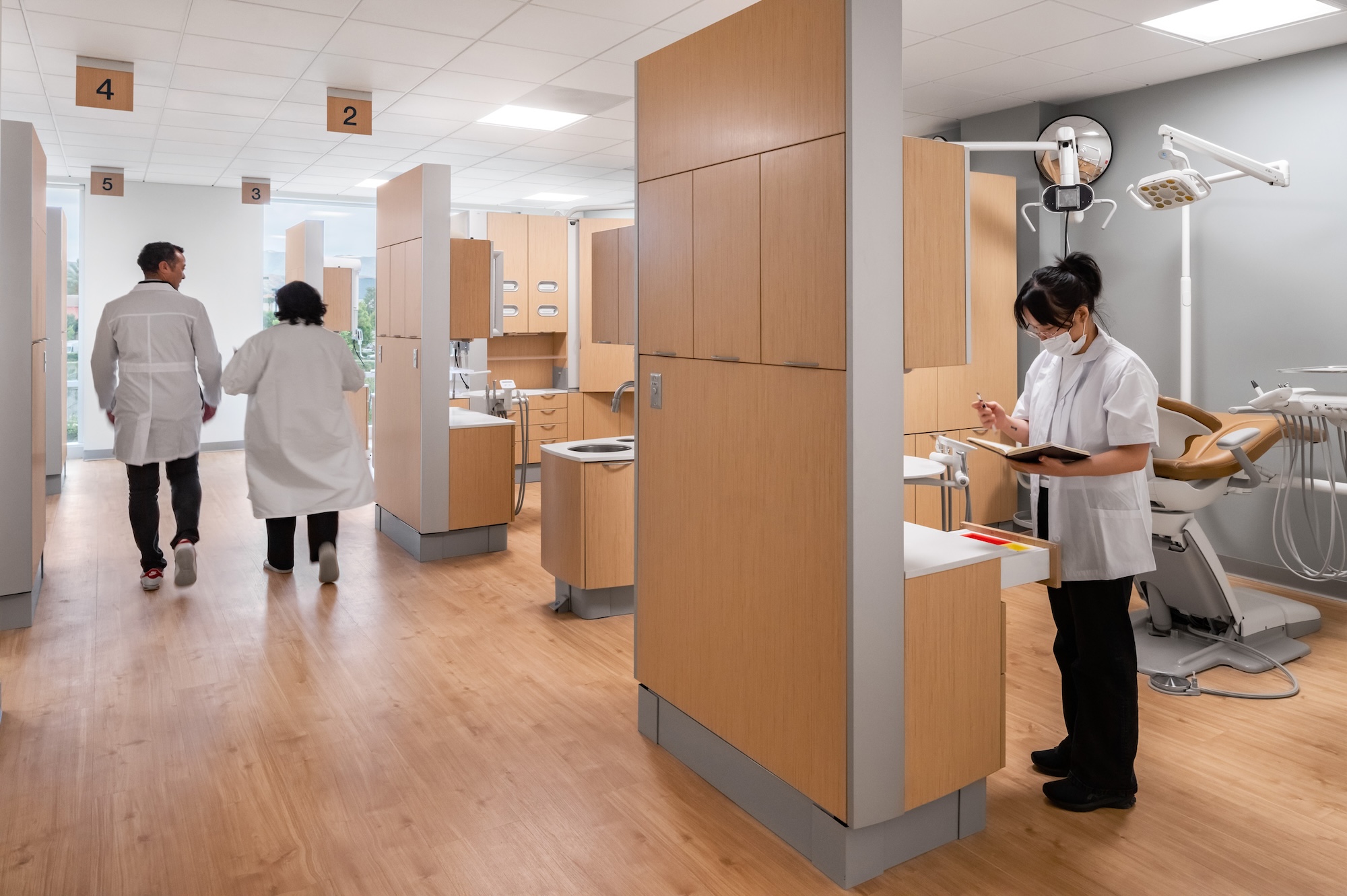
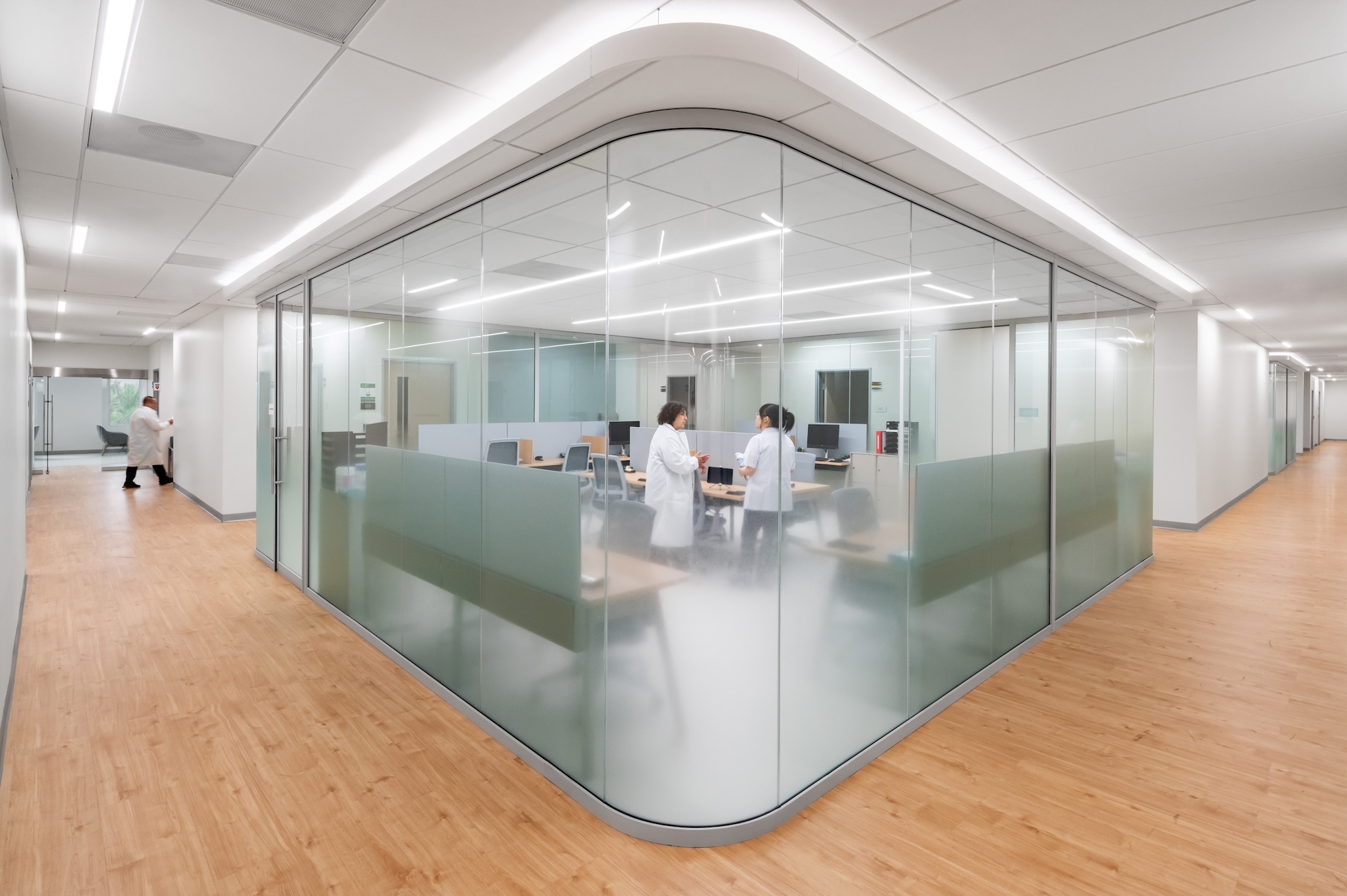
Clinical areas feature a flexible modular design. Photo © Paul Vu / Here and Now Agency
All public areas are oriented against exterior windows to provide mountain views and abundant daylight; offices and administrative areas are also situated to receive ample daylight. Organic forms, nature-inspired colors, refuge-like patient seating areas, and tactile finishes were implemented throughout the campus including in the double-height main lobby, which is wrapped in wood paneling from locally sourced oak-wood planks attached to a bendable plywood substrate. As Giorgadze notes, the handsome and highly tactile millwork refences naturally eroded rock formations that create a protected environment.
.jpeg "SAC Health Brier")
The exterior of the building, which was built in 2007 as a regional call center for Wells Fargo. Photo courtesy Perkins&Will
The lobby’s centerpiece, an expansive illuminated ceiling element, also takes its cues from the natural world with a concentric form meant to evoke ripples. This watery allusion ties into the project’s design concept of a “healing oasis.” Native American inhabitants viewed the nearby mineral hot springs as a sacred place with healing qualities. (The springs are famously “pointed to” by the Arrowhead, a geological landmark in the foothills of the San Bernardino Mountains visible from SAC Health Brier.) It was these springs that brought the Seventh-day Adventist Church to the area to establish a sanatorium—and later full-fledged medical center—in 1905. The healing traditions of these groups, the Indigenous population and Loma Linda’s Seventh-day Adventist community, inspired the architectural language of SAC Health Brier. (A local tribe, the Yuhaaviatam of San Manuel Nation, have also played a considerable role in supporting SAC Health’s mission, bestowing a $10 million gift to the nonprofit at the opening of the new facility.) “This is a free clinic, but SAC Health didn't want it to look like a free clinic,” says Dreesman.
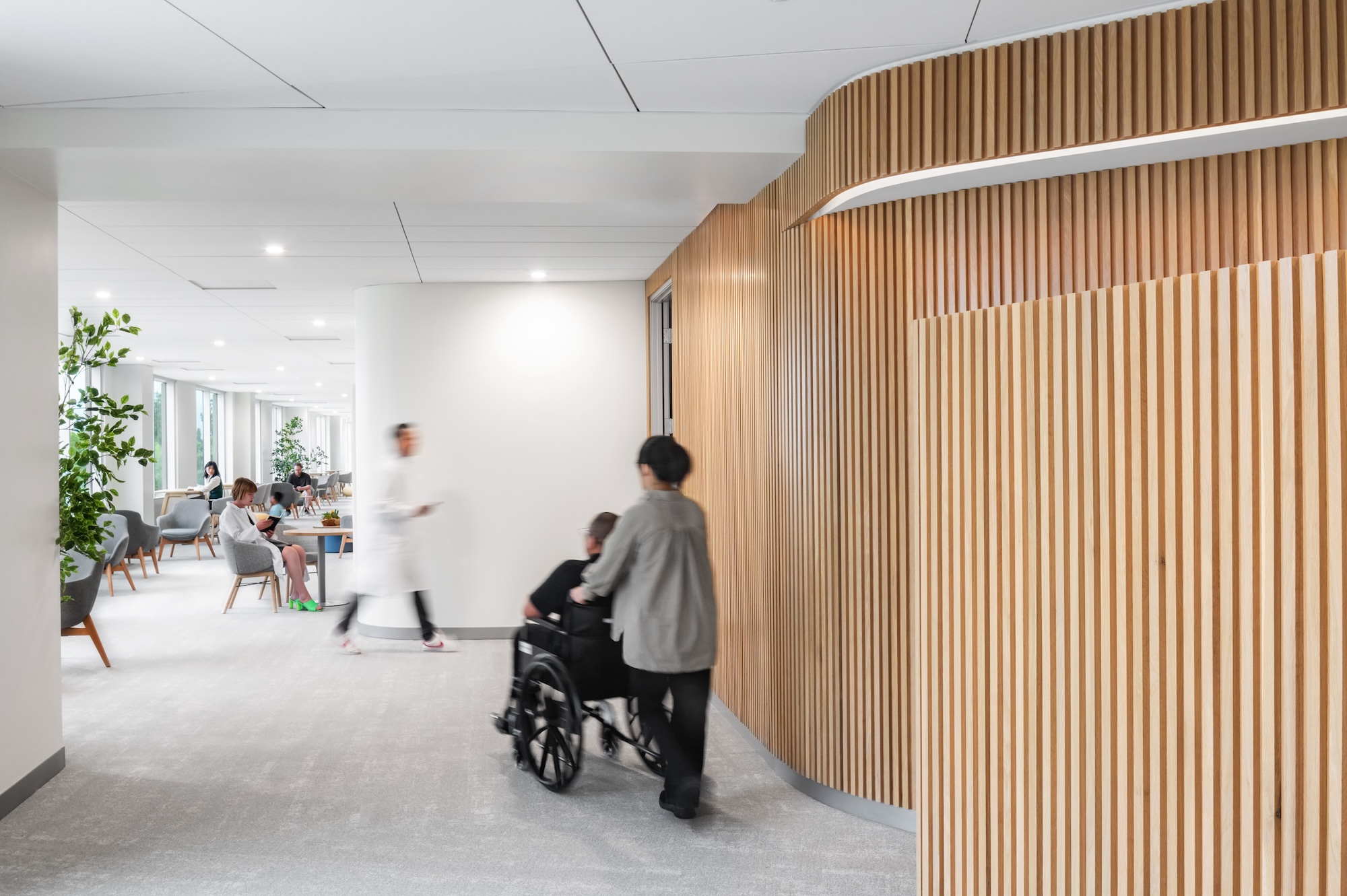
Wood and other natural materials bring warmth to the interior. Photo © Paul Vu / Here and Now Agency
As for the adaptive reuse approach to health care environments, Dreesman says that it should be a no-brainer, particularly when considering cost, speed, and sustainability. “Many clients think they need to custom build for specific programs, but there are buildings out there that you can convert into what you need and do it beautifully, cost-effectively, and fast.”
Looking for a reprint of this article?
From high-res PDFs to custom plaques, order your copy today!