A New High School in Malibu Turns the Tide on Learning

Malibu High School by Koning Eizenberg Architecture and NAC Architecture.
Situated just above the Pacific Coast Highway near Zuma Beach, Malibu High School first opened in 1992 as part of Los Angeles County’s Santa Monica-Malibu Unified District. Originally a relatively traditional combination of junior and high schools, it was replaced by a stand-alone high school building that opened last August on the same campus, designed through a collaboration between Santa Monica–based Koning Eizenberg Architecture and the L.A. office of NAC Architecture.
The design of the new school represents a dramatic departure from the standard approach of separate classrooms connected by hallways to instead connect less-hierarchical spaces around “project-based learning,” an academic model that asks students to develop responses to complex challenges rather than learn rote facts. “Instead of a science wing and an art wing, there are nested communities of teachers and teams working together distributed throughout the school,” says Nathan Bishop, a partner and lead designer for the project from Koning Eizenberg. “The question was how you take that desire for interdisciplinary learning and extend it to the space of the school.”
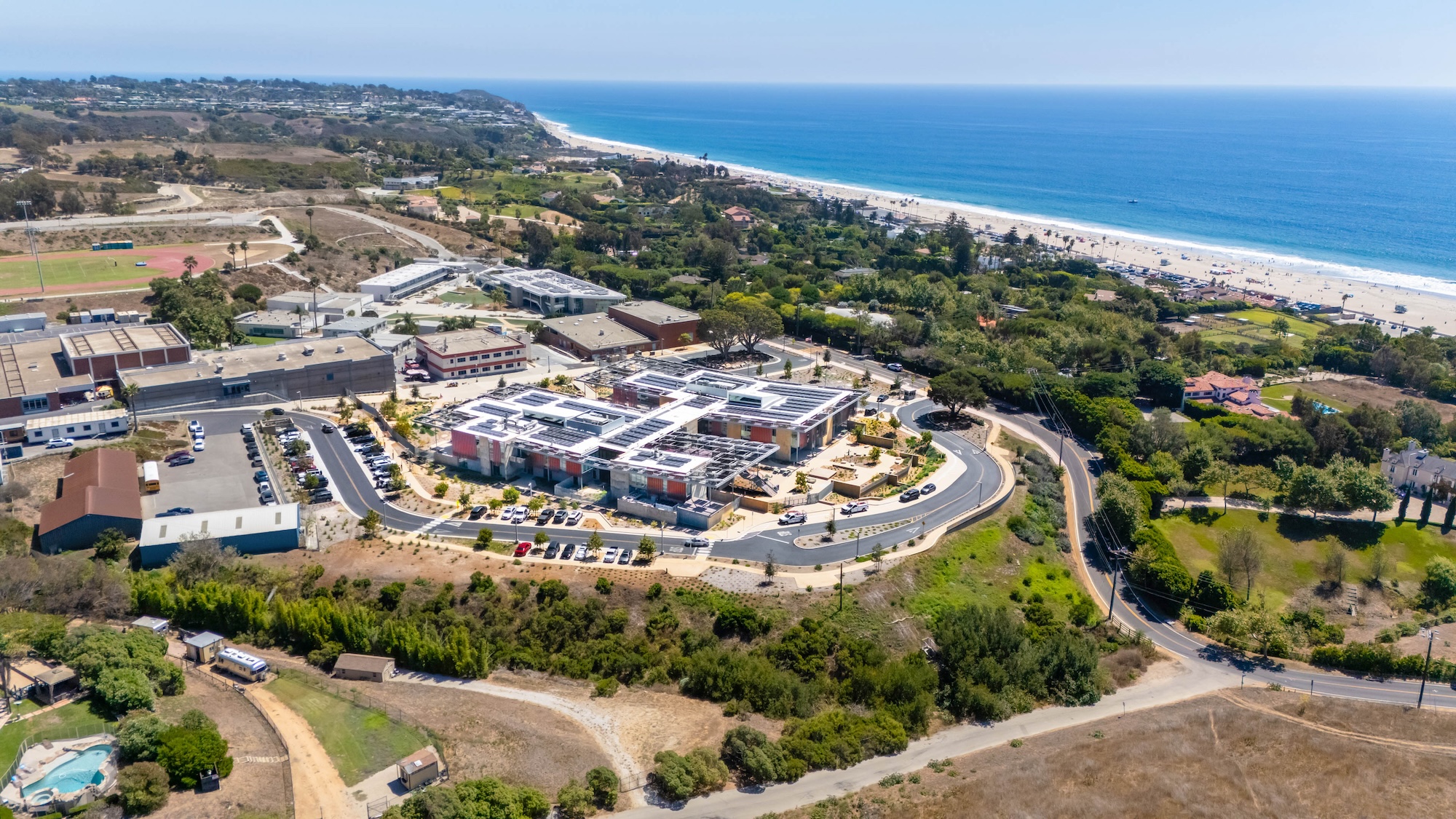
Photo © Here and Now Agency
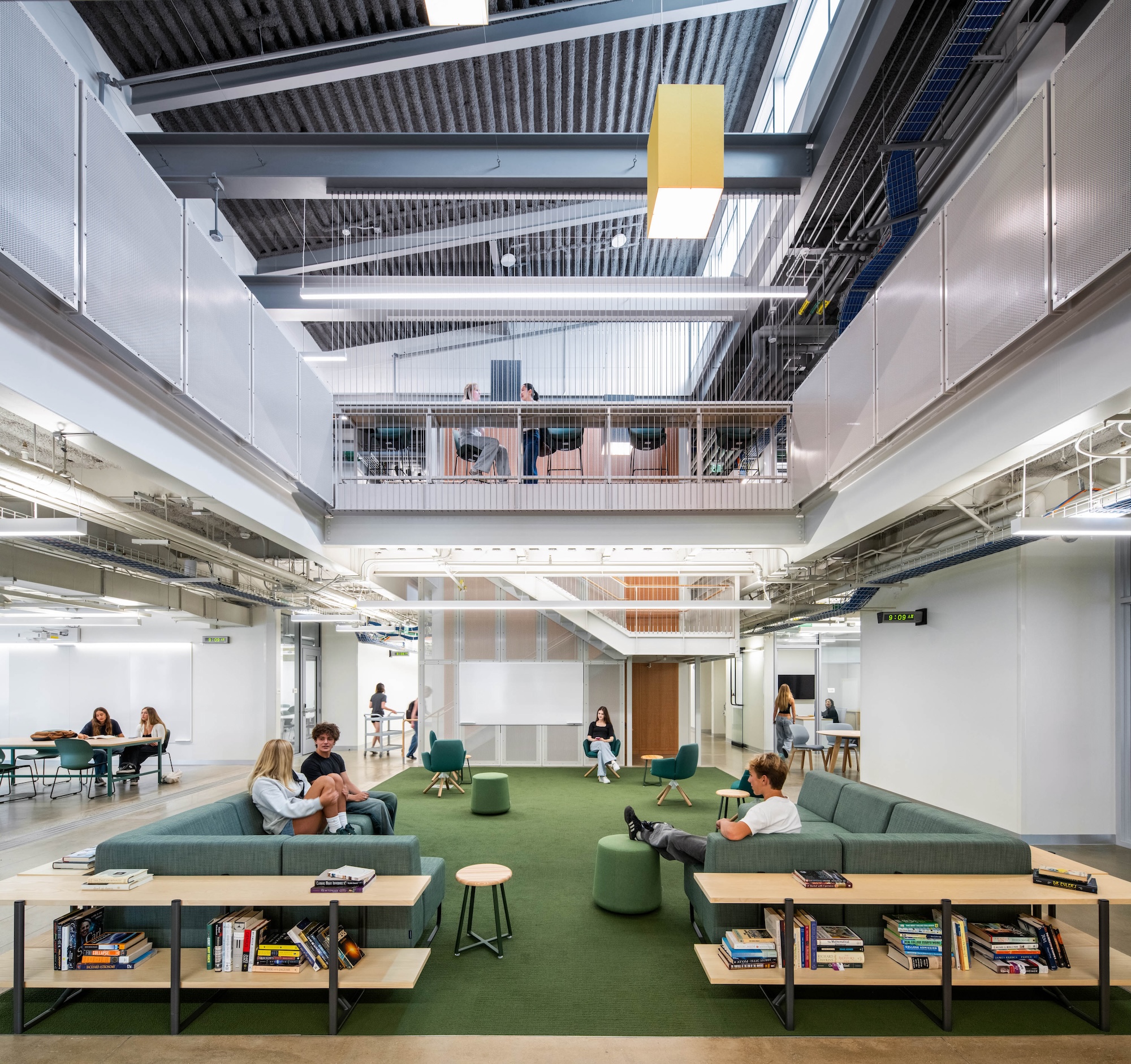
Photo © Here and Now Agency
Classrooms are split between two bars on the north and south of the two-story, 70,000-square-foot building. Michael Pinto, a partner and the educational designer for NAC, says the two volumes “de-bunkerized” the project from being a monolith in an otherwise residential neighborhood. The architects also worked with the district to relax prescriptive area requirements for classrooms to provide a diversity of sizes, such as smaller seminar-only rooms and larger laboratory classrooms for subjects like marine biology or ceramics and art. Bishop says the district envisioned the school as a “transition to college,” where varied learning environments are the rule.
Instead of providing dedicated hallways, the architects consolidated that program space into central double-height breakout areas that act as indoor, daylit courtyards connecting classrooms and teacher workrooms. “With the corridors and lunchrooms all jammed together as one space, it gets social groups colliding,” says Pinto. Open classrooms for collaborative student work, located directly off the central breakout areas, include moveable panels and secondary structural ceiling systems that allow for flexibility in use depending on the type of projects students may be assigned.

Photo © Here and Now Agency
Connecting the two bars is a north-south spine called the commons, which features indoor bench and table seating, open shelves for curated books that can be freely borrowed, casual seating for breakout areas, and grab-and-go snack counters to keep hungry students focused. The north wing includes a cafeteria, as well as a large kitchen that serves multiple schools in the district. Restrooms have open sink areas and individual rooms for each stall.
Several classrooms have outdoor patios and terraces, taking advantage of Malibu’s desirable climate to extend learning space. Extensive glazing, with sporadic operable windows, allows for views from almost any interior location. The interior has a relatively restrained material palette of polished concrete floors, which hide the radiant heating and cooling system, along with exposed steel structure and building systems, and basic white drywall. Douglas fir wood is used sparingly, such as in stair handrails and wall panels. Other details, like tensioned cables for some balustrades, introduce a playfully interactive touch.

Photo © Here and Now Agency
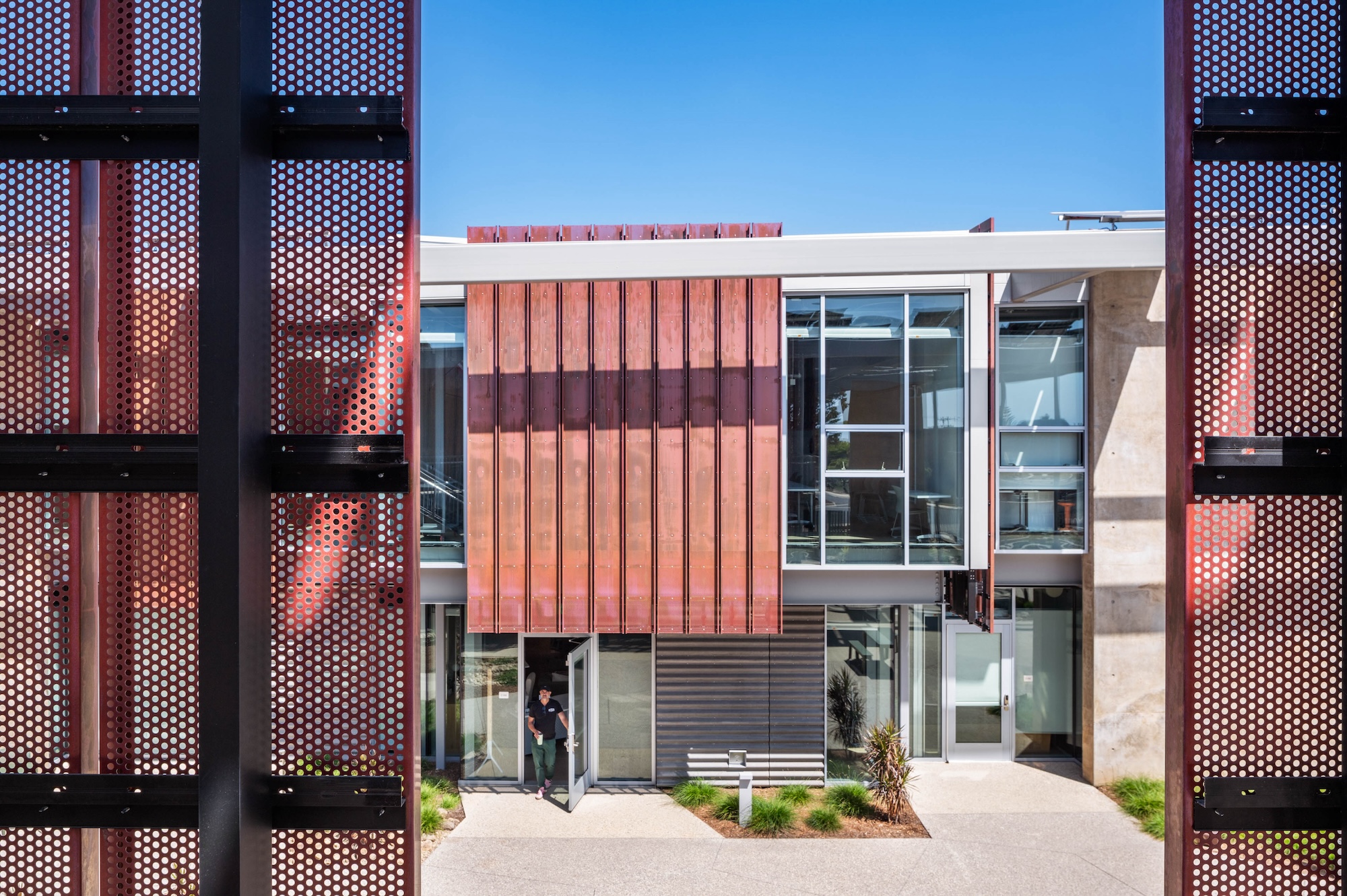
The school’s exterior materials are equally limited, with large, glazed sections framed by a corrugated concrete panel rainscreen, exposed cast-in-place concrete, copper cladding sections that extend below second-level overhangs, and an expansive grey steel roof canopy that supports a solar photovoltaic system that effectively makes the school net zero energy. The copper overhangs are perforated, which Bishop describes as a “fuzzy edge” that corresponds to the loose academic structure of the project-based learning model.
Looking for quick answers on architecture and design topics?
Try Ask RECORD, our new smart AI search tool.
Ask RECORD →
Bishop was inspired by the rustic nature of the neighborhood to adopt a more agrarian material palette for the exterior. “Everything was made to feel it was part of the hill, from the color and texture of the concrete to the way the copper panels would weather,” he says. Originally, the design team planned to sandblast the concrete to expose the aggregate but decided after the formwork was removed that the concrete’s textural variability spoke to the project’s ethos.
The 2018 Woolsey Fire, which burned thousands of acres and destroyed nearly 500 houses in Malibu, informed many design decisions, says Pinto. “There were burn scars right up to the edge of the campus, so it was very present to think of how the campus itself survives, but also the overall community,” he says. The 360-kilowatt solar array, with accompanying battery storage, ensures the school can function during a loss of utility power, while an on-site wastewater treatment facility recycles water for non-potable demands.

Photos © Here and Now Agency
Security is a primary concern for a school, so the surrounding landscape and outdoor areas are enclosed by a perimeter fence. On the west side of the site, a sunken fence, or ha-ha, provides the required security separation while providing unencumbered views toward the Pacific Ocean. The architects took advantage of this vista by providing expansive paved areas with seating and a permanent platform to enable all-school meetings and after-hours social events. San Diego–based Spurlock Landscape Architects made plant selections based not only on stormwater retention and a restorative approach to enhance the biodiversity of the site, but also to address wildfire risks with planting that reduces flammable vegetation and an extensive use of rocks.
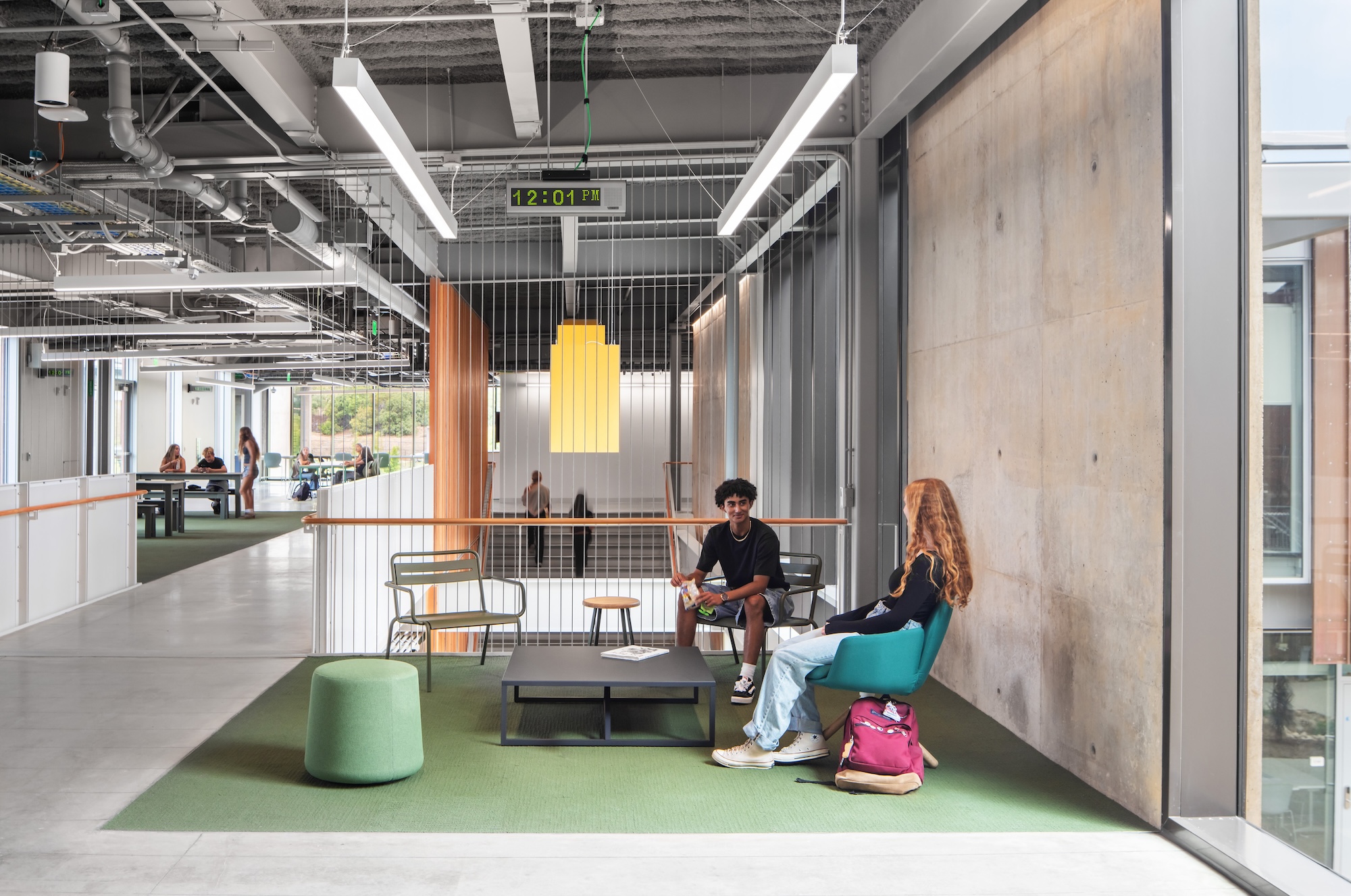
Photo © Here and Now Agency

Photo © Here and Now Agency
Koning Eizenberg often reframes a project’s program and site organization in ways that effortlessly reveal not only the natural beauty of a location, but also the social function of a place—two imperatives that do not always align. For example, the original campus plan involved a series of terraces and a central road that divided the junior high school and shared amenities from the new high school, which would have forced students to funnel through gates and cross a street as part of their daily activities. Instead, the architects re-envisioned the road as a central garden, which connects the east side of the school to the original campus within the secured perimeter. Road circulation was shifted to the perimeter.
The result is a bucolic school set within a landscape that not only restores a more natural condition to the hillside but establishes a dramatic collection point for the high school’s entrance and its link to the rest of the campus. These connections thread throughout the entire project, from the internal courtyards to open classrooms, a result of both NAC’s and Koning Eizenberg’s thorough reading of the site and their clear appreciation for how architectural space can support an educational mission.
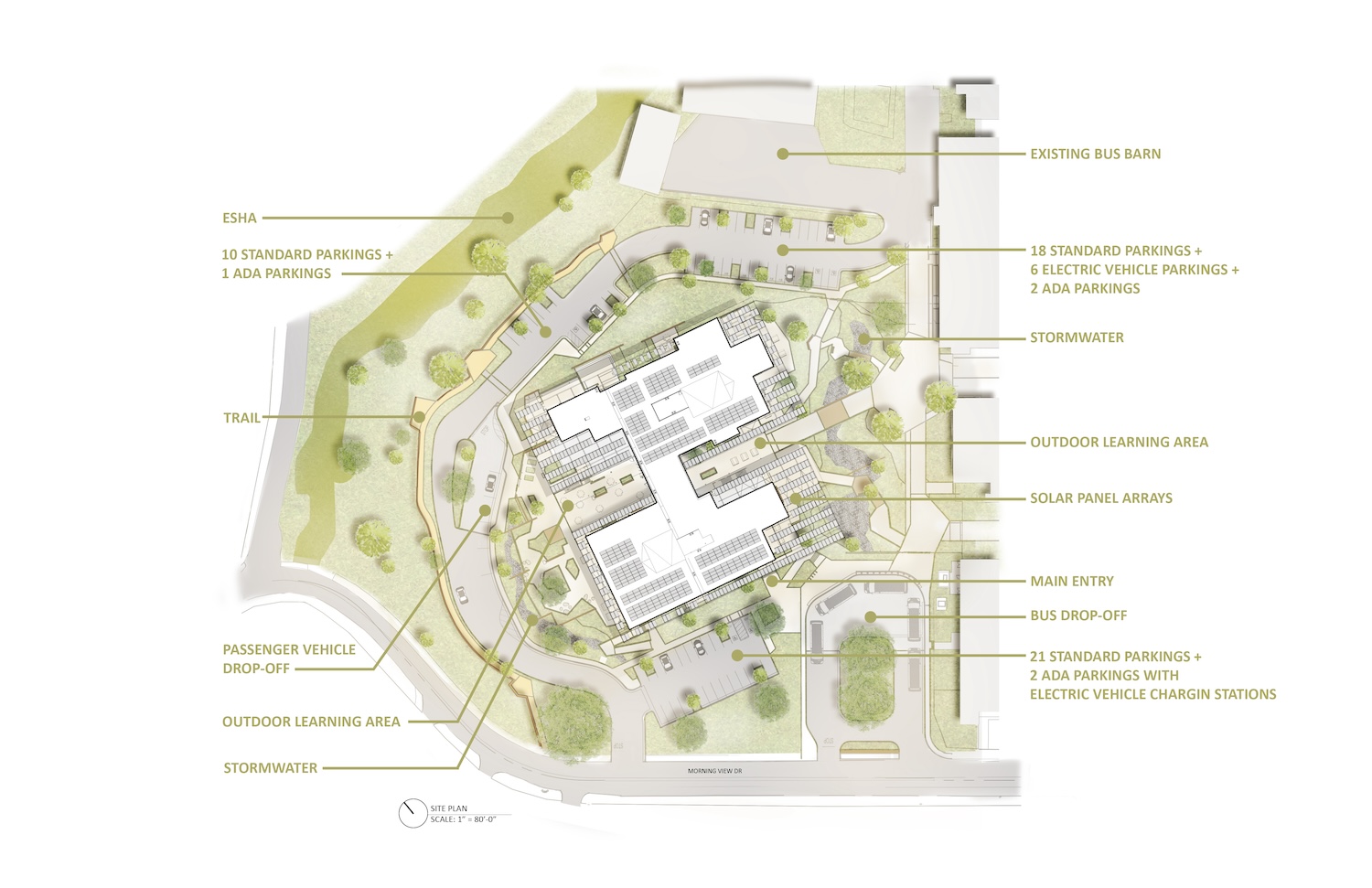
Image courtesy the architects; click site plan to enlarge
Looking for a reprint of this article?
From high-res PDFs to custom plaques, order your copy today!