Requiem for a Building: Romaldo Giurgola’s South End Branch Library

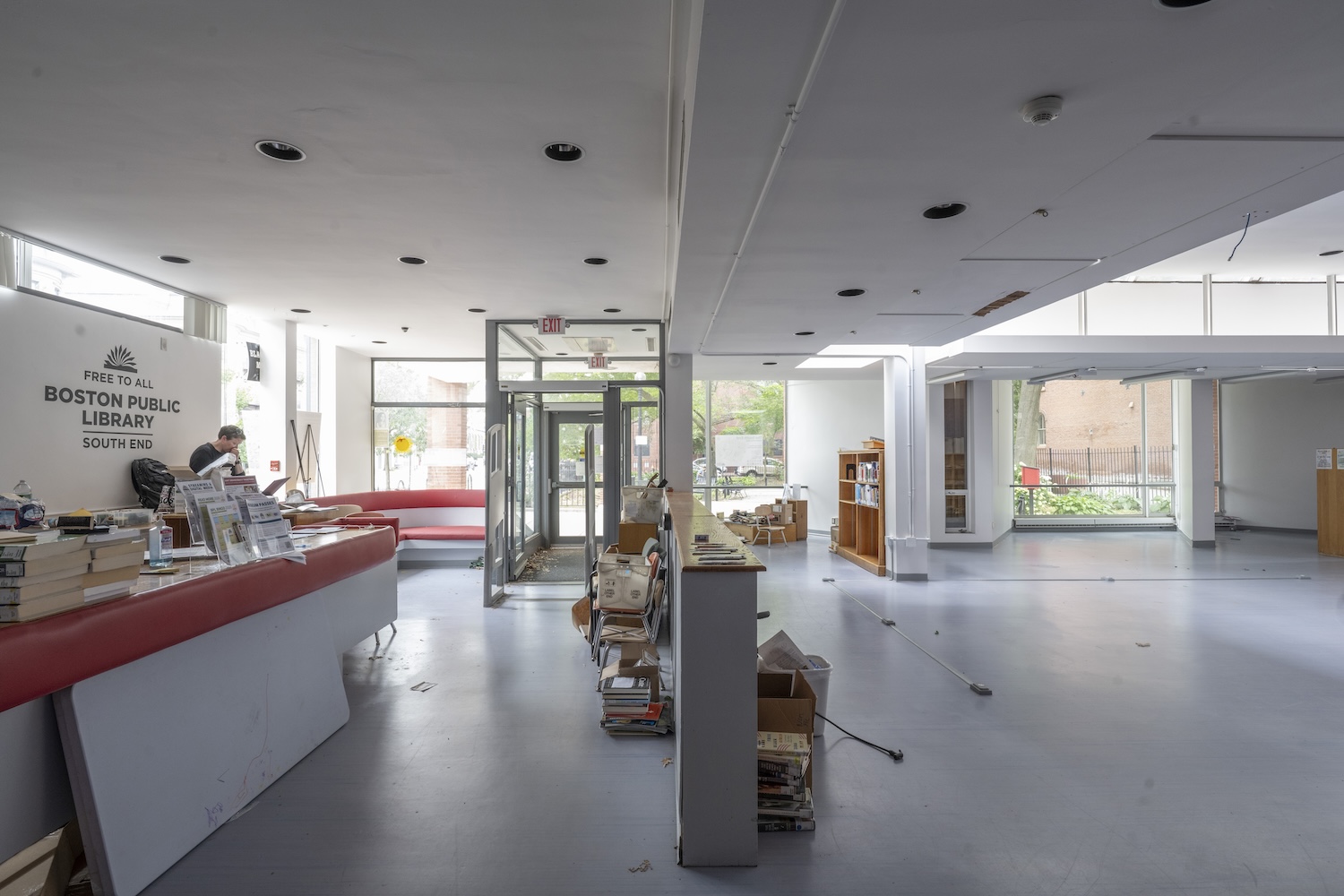
The small brick library in Boston’s South End has been closed since it flooded in April 2022, its books and tables still in place waiting for neighborhood residents and children to stop by. The adjacent garden by contrast, is full of life, with big shady trees, and seasonal flowers, a welcome respite along busy Tremont Street. The building is soon to be demolished to make way for a new larger library.
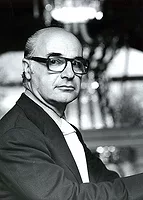
There is a big story behind this small library. The building was completed in 1971 by the renowned Roman architect Romaldo Giurgola, winner of the AIA Gold Medal, and his firm Mitchell Giurgola Associates. Giurgola was one of several leading international architects—including Robert Venturi, Denise Scott Brown, B.V. Doshi, and Mario Romanach—who were drawn to the University of Pennsylvania in the mid 1960’s to work and teach with Louis I. Kahn. He had been trained at the University of Rome, La Sapienza, under Gustavo Giovannoni, an influential proponent of working with and conserving the historic city, and he was interested in alternatives to tabula rasa modernism. He was my teacher at Penn, and inspiration. As students, we admired his work and his humanistic approach to integrated urban fabric and civic building.
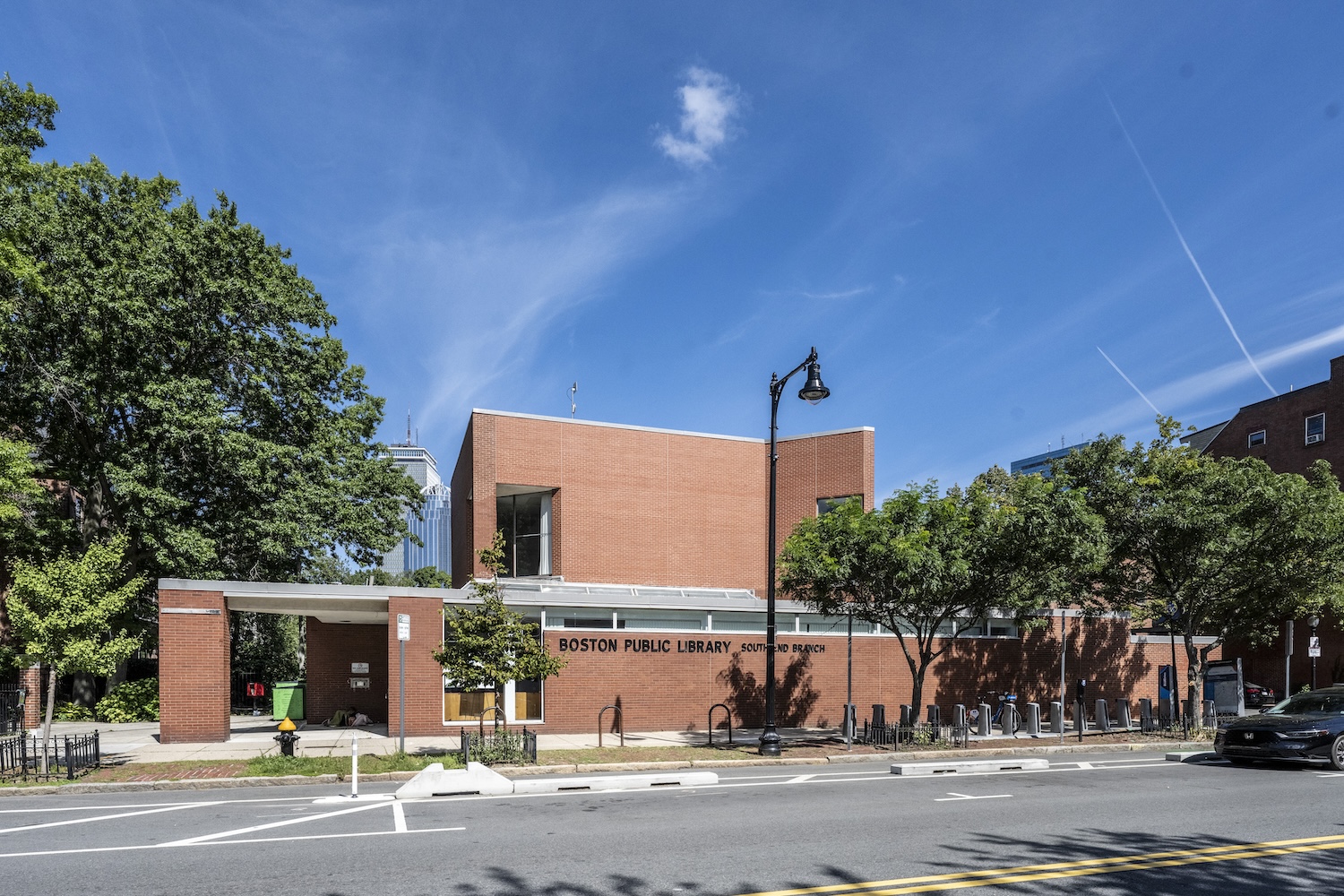
Photo © Peter Vanderwarker
We enthusiastically followed his several competitions, including the one for Boston City Hall in 1962, and were disappointed to learn he was not the winner but the unofficial runner-up. Many of the ideas generated in that competition found their echo in the subsequent small commission for the South End Branch Library. A signature street-level perspective shows an ensemble of a building shaping a public space in a welcoming embrace to the city. The site is porous with the ceremonial Council Hall raised above the ground. While the structure is concrete, walls facing the city are clad in brick.
In the same years that Giurgola was designing the South End Library, Kahn was creating the Phillips Exeter Library (1965–1972), a project widely known at Penn and beyond. Its brick exterior reflects a material continuity with the campus context, but walls are articulated as abstract planes revealing themselves at diagonal corners. On the interior, stacks define reading areas with a perimeter of study alcoves. These ideas have their correspondence with the South End Library.
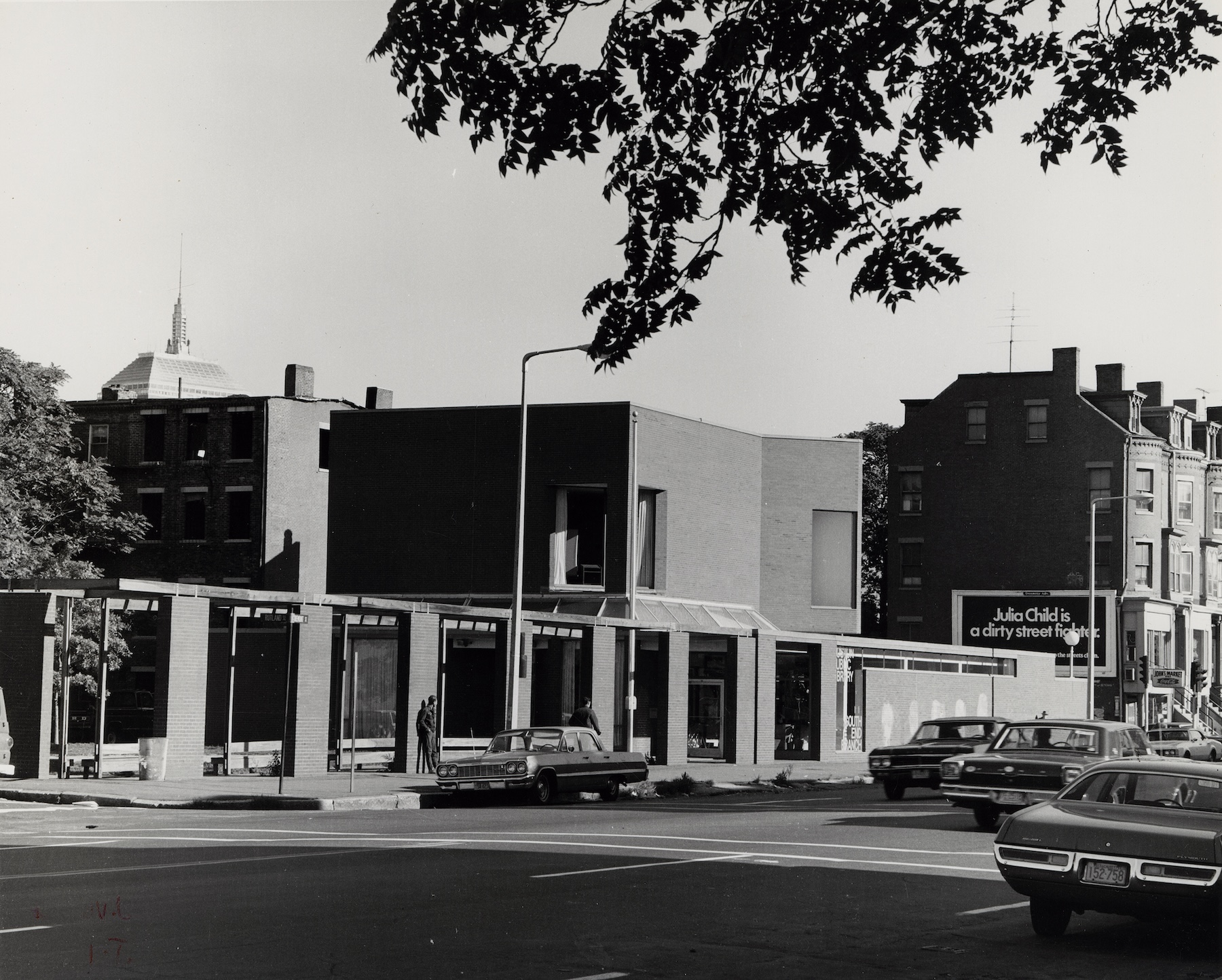
The South End Library on Tremont Street pictured in the early 1970s. Image courtesy the Architectural Archives, University of Pennsylvania
When Giurgola began work on the library, the neighborhood was undergoing intense reconstruction. The South End had been created as part of an ambitious land-making project in the 1840s–1880s to attract affluent citizens and encourage them to remain in the city. It was designed as an English-style residential district with brick row houses, small parks and squares, and shady streets. While initially successful, its promise was short-lived as residents moved on to the suburbs and waves of immigrants moved in. By the early 1960s, the neighborhood had deteriorated physically and socially to the point that it was a target for demolition. Instead of demolition, the city chose a modernization and community-based renewal plan. The South End Branch library was one of its first investments and a cornerstone of the revitalized neighborhood. Giurgola embraced the challenge of creating a “gregarious and active” public place respectful of the beautiful 19th-century building fabric surrounding it.
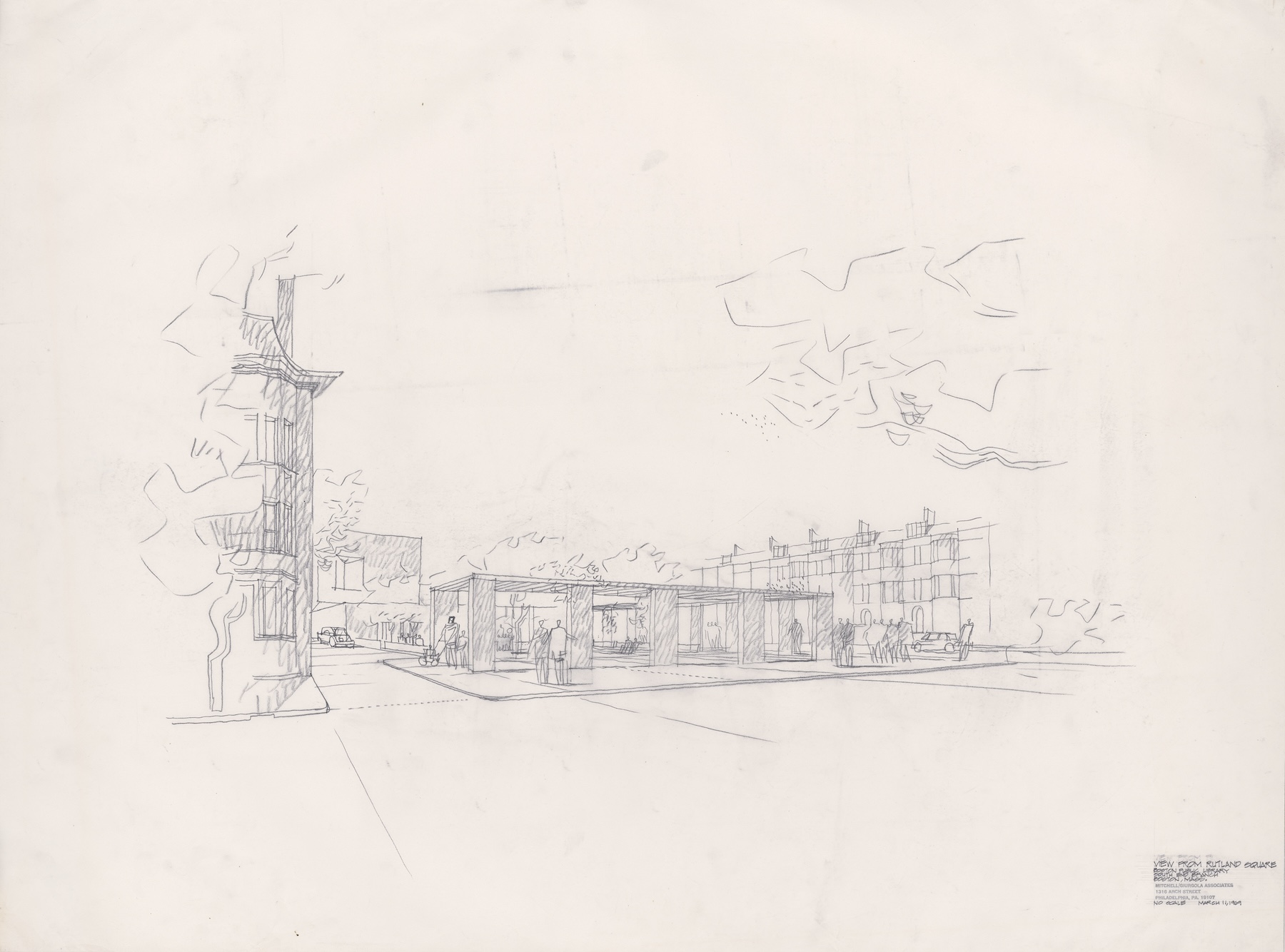
Drawing of the South End Library, view from Rutland Square. Image courtesy the Architectural Archives, University of Pennsylvania
The site was located at the end of two residential streets, West Newton and Rutland Square, with its long face to the busy commercial Tremont Street. Giurgola placed the library at one end of the long rectangular block occupying only 40 percent of its area leaving a generous open garden space for the public. The garden was conceived as a grass court surrounded by benches under a wood trellis which completely defined the block. Ground-level view shows intention for integrating building and garden and creating a welcoming and porous community space.
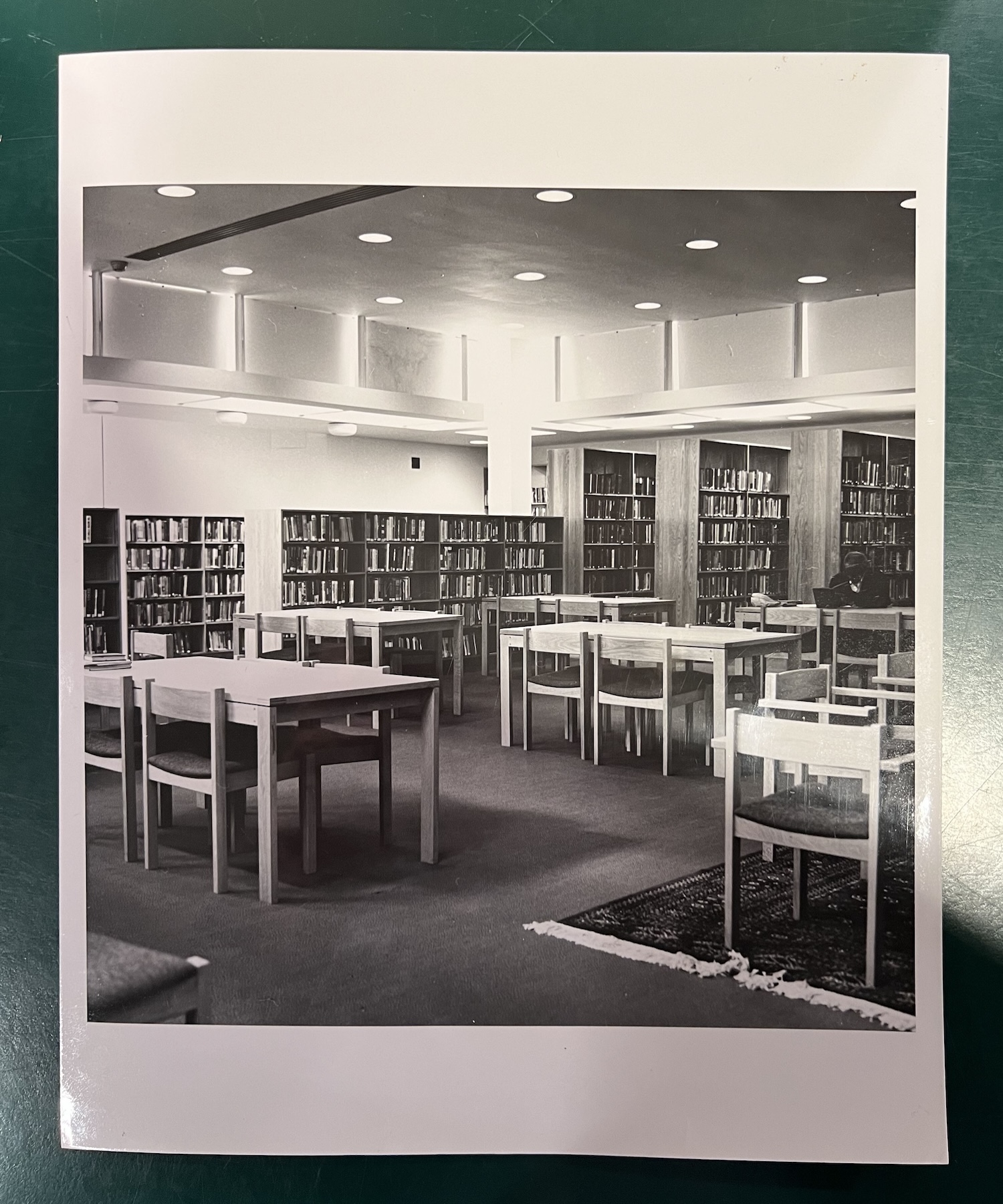
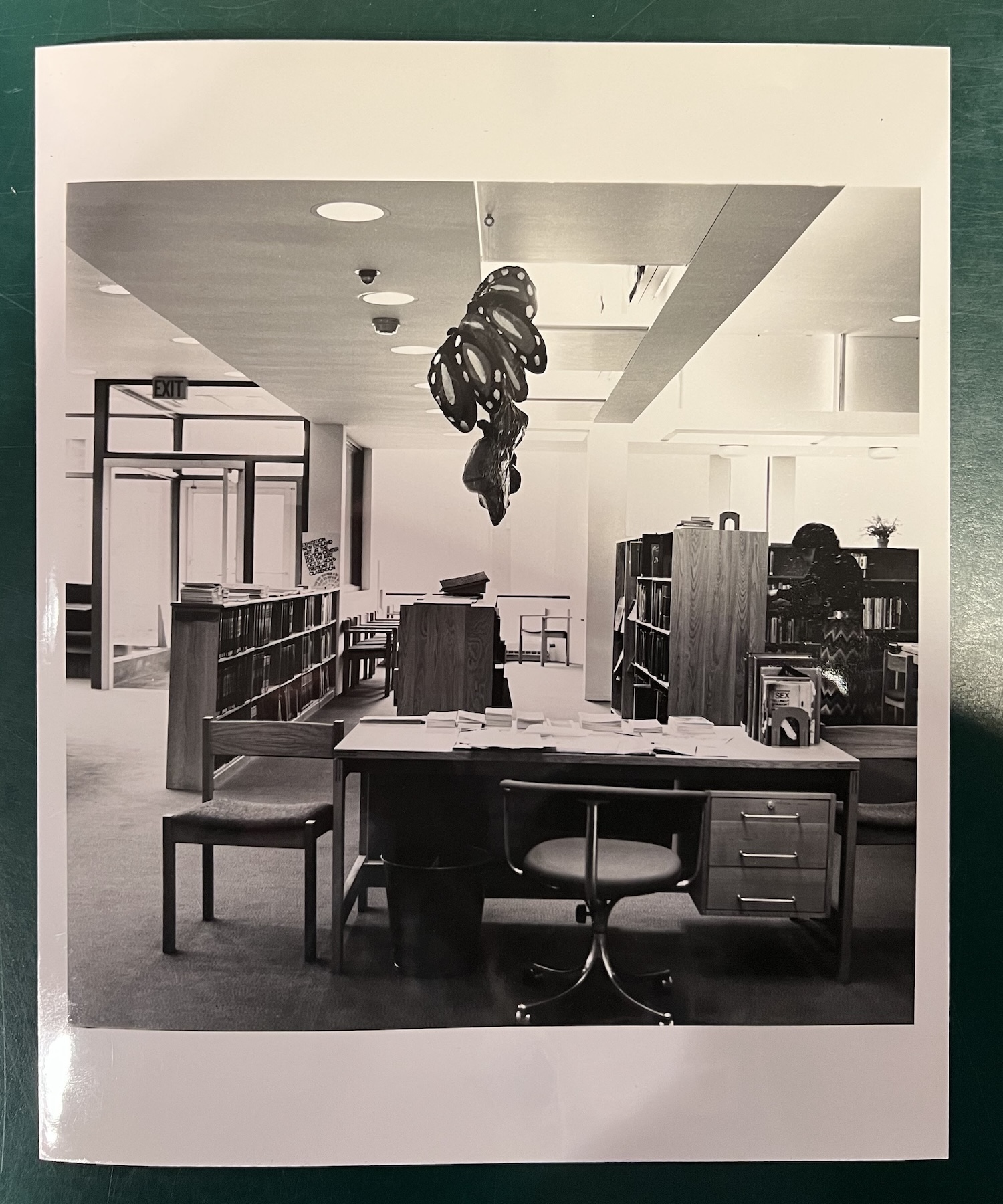
Archival interior views of the South End Library. Images courtesy the Architectural Archives, University of Pennsylvania
Although the library was far smaller than the City Hall complex, it was founded on some of the same ideas—creating an urban ensemble of building and open space, developing a sense of civic scale, and maintaining a continuity of material. From 1967 to 1969, Giurgola explored a series of ideas for the library, always built around the concept of reading rooms extending out into a defined garden. The final version proposed a tall central cube of space with reading room below and community room above, surrounded by a one-story base for entry, services, and children’s reading area. A pergola structure enclosed the remaining open space of the block as an extension of the library.
Looking for quick answers on architecture and design topics?
Try Ask RECORD, our new smart AI search tool.
Ask RECORD →
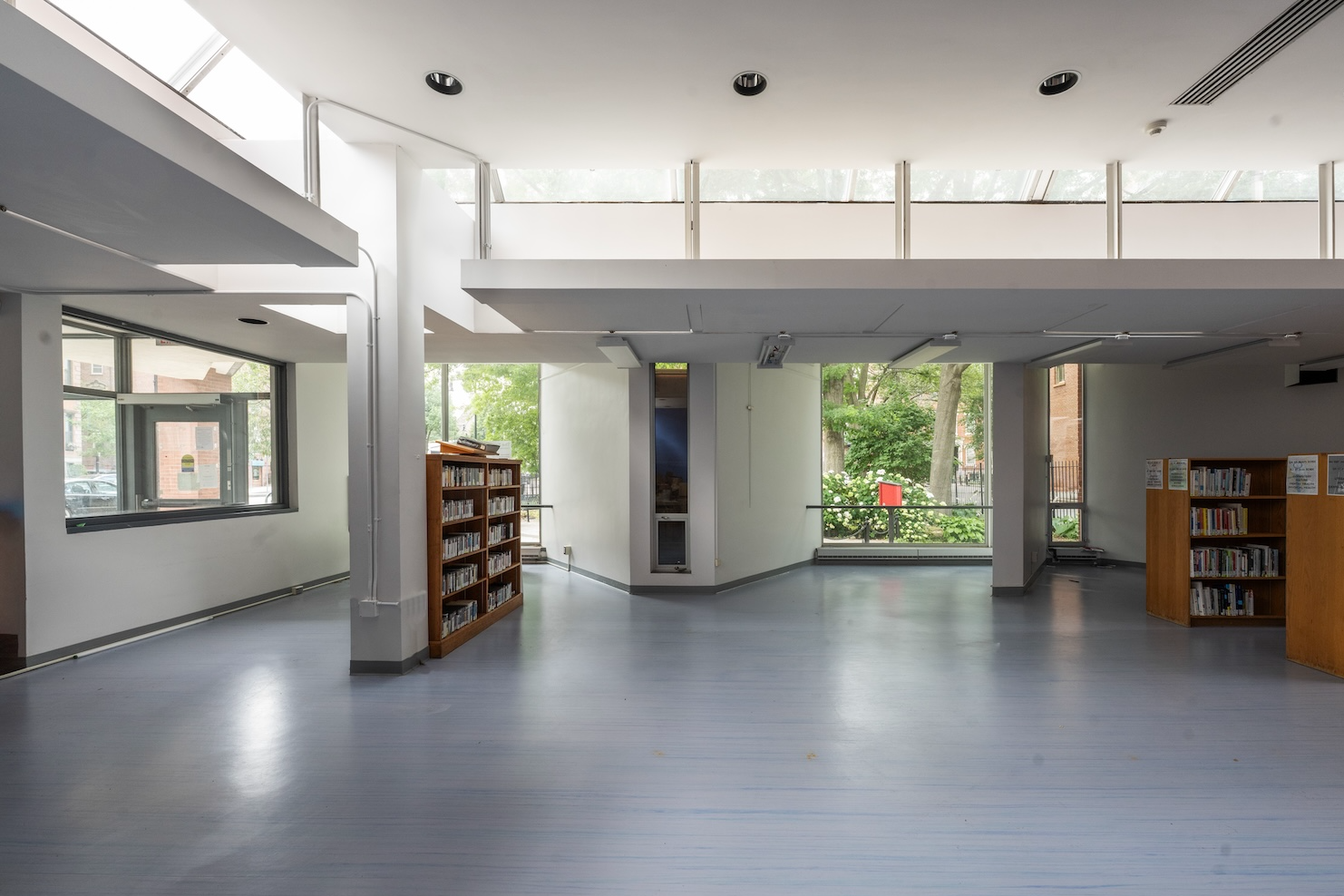
Inside, the main reading room was illuminated by clerestory windows at the perimeter of the volume above with inviting reading alcoves facing southwest onto the garden reminiscent of Exeter’s reading carrels. The circulation desk and administrative services provide a buffer zone for the readers from busy Tremont Street. The community room, raised to the upper level, recalling the City Hall council chamber, has a generous height and intriguing corner views into the neighborhood. It is a true civic space. The importance of the integrated concept of building and garden is underscored by the fact that the entry is from the garden, not the main street.
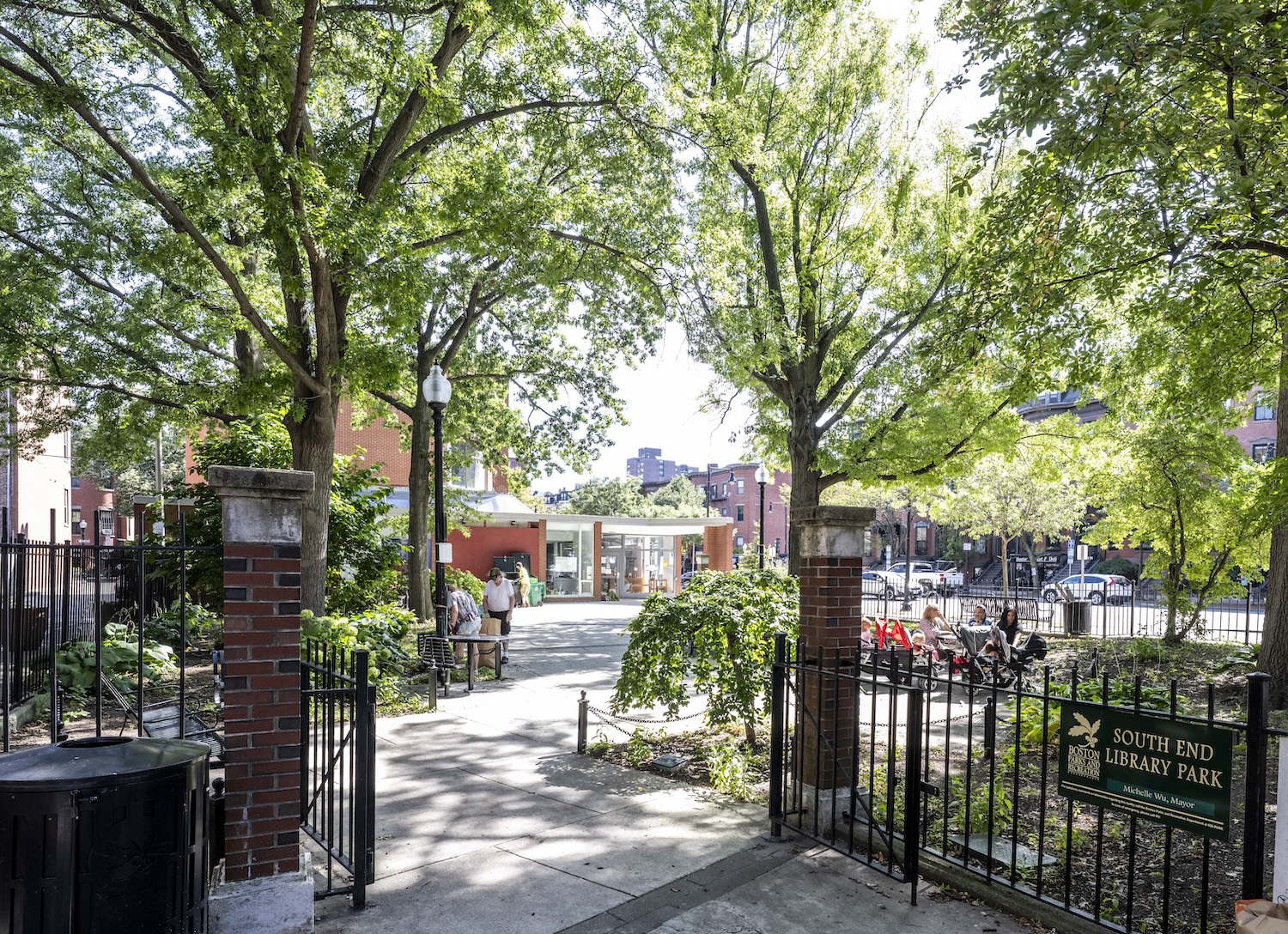
Photo © Peter Vanderwarker
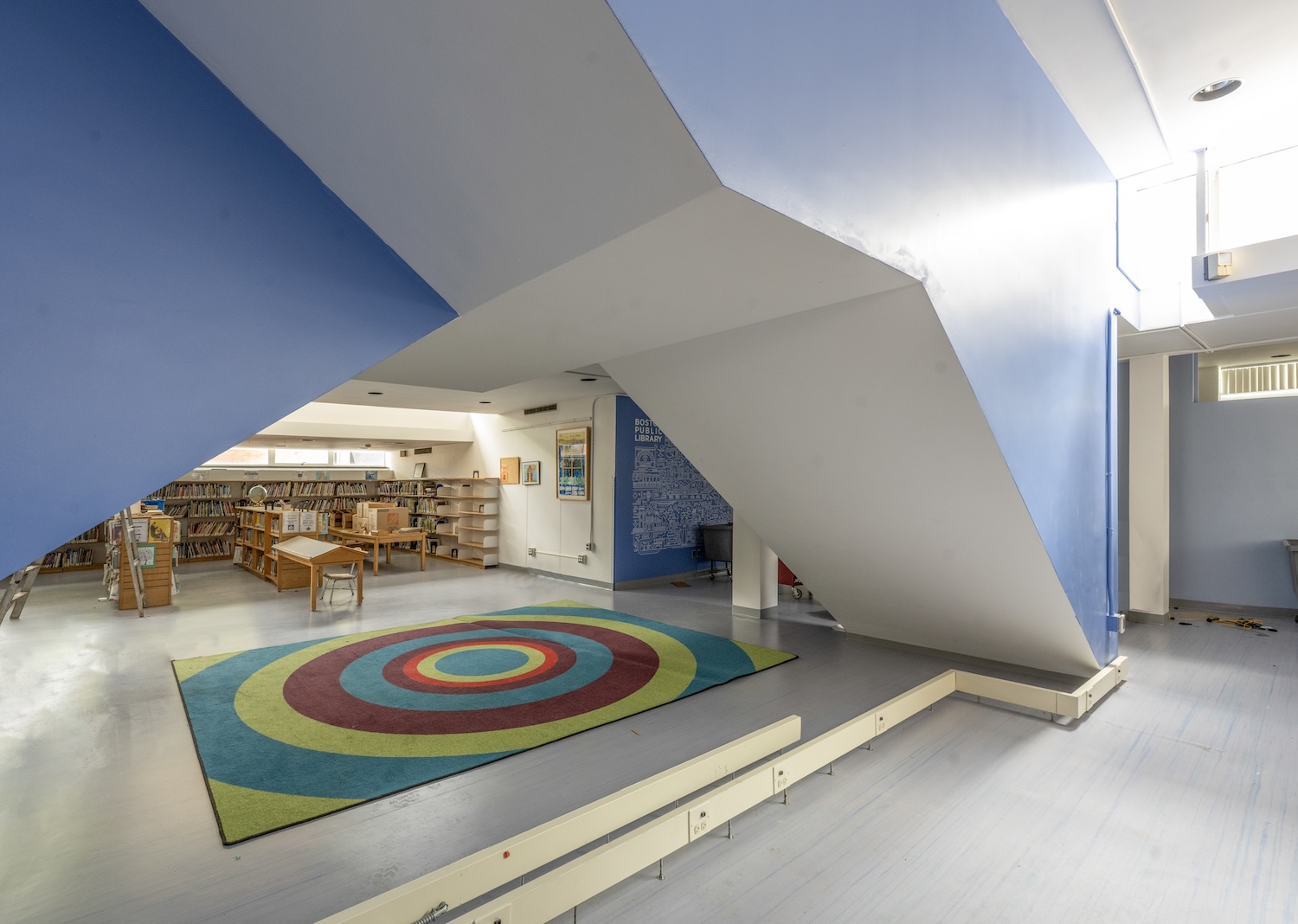
Photo © Peter Vanderwarker
The architecture of the library is proudly modern; it is based on simple geometries, abstract wall planes, and large expanses of glass. References to bow windows, cornice detailing, and decorative elements are nowhere to be found. At a time when renewal and reinvestment in community looking to the future were the top priorities, the city welcomed the library’s thoughtful adjustment of scale, material continuity, and a profound sense of fit without imitative forms and historic gestures.
Photos © Peter Vanderwarker
The pergola and enclosed garden have since disappeared, but the space is beloved as a public garden. Inside, the shuttered spaces still convey the warmth and welcome of a quiet place for reading and a spacious place for gathering. Romaldo Giurgola and his firm went on to design many distinguished projects in the United States and abroad, including the Parliament House in Canberra, Australia. The South End Library may have been one of his smallest projects, but one with big ambitions, and has become a modern landmark. The concept of integrated building and garden, the porosity and pedestrian sense of welcome of the building, the continuity of brick material, the intimate scale of the reading rooms, the grand scale of the community room, all make it clear this is a civic building responding to its place and role in the city.
According to the City of Boston, the opening of a new South End Branch Library was expected in 2027 at the earliest, although that timeline has likely been delayed as the building still awaits demolition. Utile is the architect of the proposed new building.
Looking for a reprint of this article?
From high-res PDFs to custom plaques, order your copy today!