Books
Graeme Brooker's Hefty New Book Analyzes the ‘DNA of the Interior’
‘The Story of the Interior: How We Have Shaped Rooms and How They Shape Us’ by Graeme Brooker
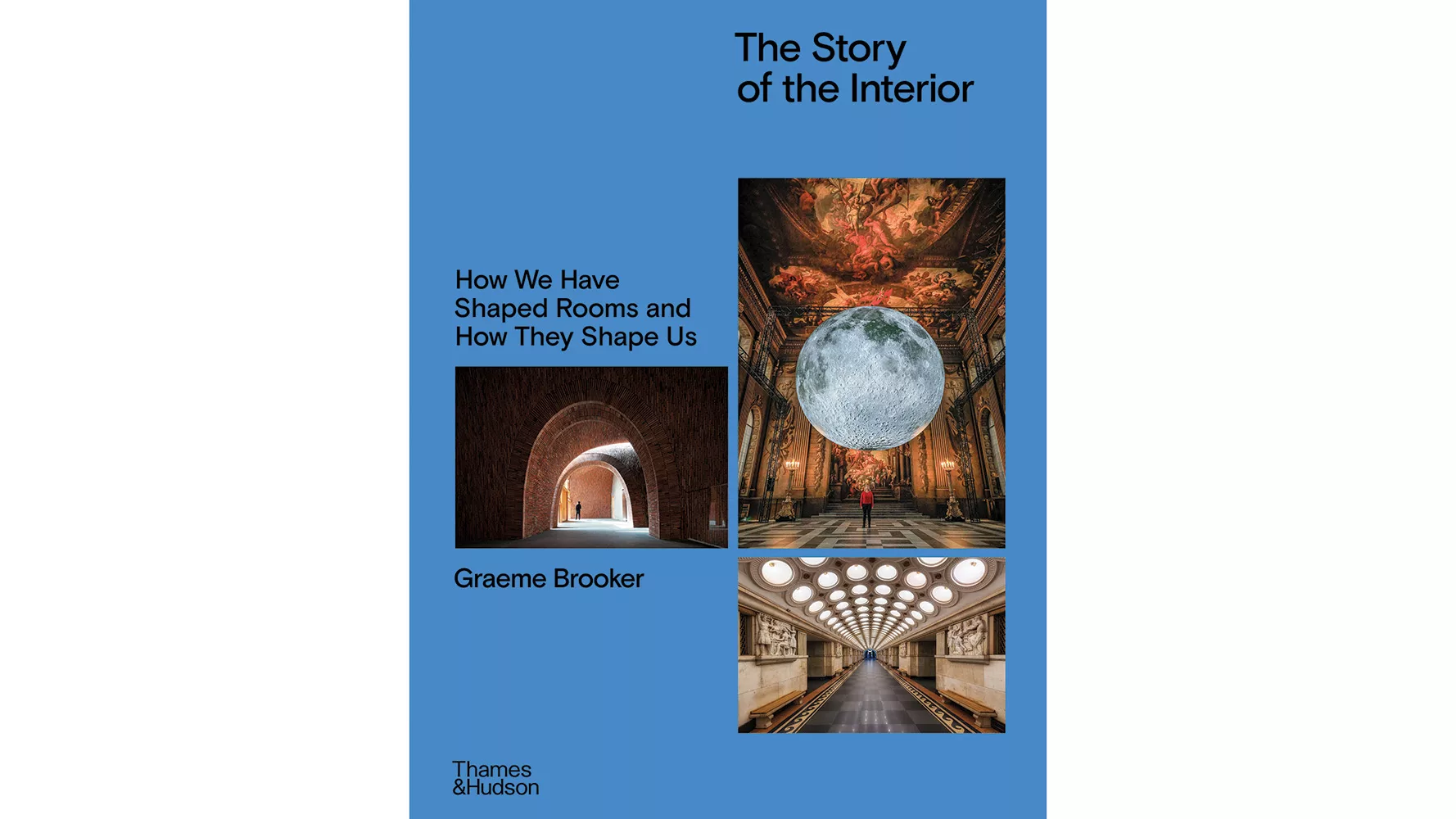
The subtitle of interior designer Graeme Brooker’s new book riffs on Winston Churchill’s famous quote about buildings. With more than 500 photographs and illustrations of projects packed onto 400 pages, and with examples ranging from Lascaux Cave in France (around 18,000 years BCE) to Kisho Kurokawa’s Nakagin Capsule Tower in Japan (1972), the ways we shape and are shaped by rooms are as varied as they are profound. Separated into three essays, each of which is subdivided into specific categories of spaces, Brooker analyzes the “DNA of the interior” and, as he puts it, its material “facts” and cultural “fictions.” To tell this story, he effortlessly jumps between the history of ancient architecture and contemporary art, modernist interiors and vernacular dwellings, medieval manuscripts and futuristic renderings. The following is an excerpt from a chapter in the first section, titled “Atmospheres.”
The unforgettable images of people luxuriating underneath the acclaimed The weather project by Olafur Eliasson, a five-month installation in the Turbine Hall of the Tate Modern in London, showed how atmospheres affect us all. The light, smoke, and mirrors drew over 2 million viewers into the space to sit and watch the misty sun piercing through the reflective plane of the ceiling, a transcendental interior experience. Once enclosed, the story of an interior can be told through its surfaces and their materials—the generators of atmospheres. The qualities of atmosphere are epitomized by the word’s etymological roots: the Greek atmos is a vapor, a breath of air, while sphaira is a sphere. The conjoining of both words is literally used to describe the ether surrounding a planet, but when used figuratively in relation to the built environment it illustrates the resultant ambience of a room. It is what the Italian art critic Mario Praz referred to as the Stimmung, the particular and unique ambience of a space. In essence, “atmospheres” describes the intoxicating effects of materials and surfaces blended with the intangible qualities of light, character, and mood.
In some moments of history, surfaces have been stereotyped as insubstantial and one-dimensional. European Modernism contested them, particularly in relation to their ornamentation. The tone was set by the Viennese architect Adolf Loos in 1910 when he determined that to ornament was to commit “a crime.” One of the most well-known architects of the 20th century, Le Corbusier, expressed a similar distaste for decoration, calling it an “abominable perversion.” Modernists’ eschewing of ornamentation merely masked their closeted desires to embrace and utilize surface embellishments. Loos’s Villa Müller and Villa Moller (Prague and Vienna, respectively) were exalted precisely because of their elaborately decorated interiors. Conceived via his spatial system known as the Raumplan, both were highly detailed concoctions of stairs, landings, and rooms decorated in rich surfaces of oak, polished lemonwood, lacquered mahogany, Persian rugs, leather upholstery, and numerous planes of highly veined cipollino marble. Le Corbusier’s fondness for unadorned exterior and interior whiteness was in itself arguably a highly decorated surface. Their absurd position with regard to ornament was detrimental to the idea and story of the interior not only because it led to the downgrading of surface as an important intellectual consideration but also because, when at its most pernicious (and often misogynistic), it denigrated the status and agency of the interior designers and decorators undertaking it.
The irrationality of being repulsed by surface decoration was laid bare by a project in 2018 by Anna and Eugeni Bach. They covered the surfaces of the iconic modernist classic Barcelona Pavilion by Mies van der Rohe in numerous sheets of white card. The resurfacing made a clever comment on the archetypal white modernist surfaces, and it also showed just how much the beautiful travertine, green Alpine marble, and golden onyx walls were missed when they disappeared. The real crime was the fact of ever considering that surface elaborations and the designers who undertook them were irrelevant.
Beyond a narrowly focused 20th-century Western modernist aversion to decoration, narrating lives through embellishing interior surfaces is a fundamental aspect of inhabiting space. The handprints stenciled with pigment onto the walls of the Cueva de las Manos (Cave of Hands) in Argentina have been carbon dated to being applied between 7300 BCE and 700 CE. Thousands of cave inhabitants painted people and the animals they hunted and relied upon for their existence. These were overlaid by 829 left and 31 right handprints, including ones with missing fingers, on the walls. Nobody knows why they left their handprints. Archaeologists have speculated that territorial marking, religious or shamanic ceremonies, or maybe even just graffiti to prove they were there were the reasons. In the Tsodilo Hills in Botswana, more than 4,500 images of animals and humans have been found. The hills of caves contain over 500 sites representing millennia of inhabitation. The cave paintings at Lascaux in France are believed to be around 17,000 to 20,000 years old. Embellished with over 600 paintings of flora and fauna, all were painstakingly copied and installed in an adjacent purpose-built museum. Decorating surfaces to reveal stories of an interior’s inhabitants—to pass on information in the way of territorial markings or ceremonial memories—is an enduring legacy of inhabitation.
Surfaces don’t have to be painted in order to tell stories. Everyone I Have Ever Slept With 1963–1995 documented the people artist Tracey Emin had slept with, in the literal sense, over 32 years. Like a prehistoric cave adorned with paintings, the insides of the tent were embellished with the names of 102 companions embroidered onto the walls. The suggestive title challenges our assumptions, in that Emin also named herself and her grandmother, whom she often napped with as a child. From the outside, the blue tent looked like a normal bit of camping equipment, but, inside, the thin fabric diffuses the light, making the walls appear to glow with the names of each person. Its brilliance lay in the fact that, crawling inside, visitors could not help but think of all the people that they too had ever slept with—including themselves.
Adorning walls with images—and maybe even the names of loved ones—is a way in which we make the interior not just comfortable but also comforting. Embellishing our interiors communicates and reflects our lives to others who might just venture inside them—even thousands of years after we are gone.
Looking for quick answers on architecture and design topics?
Try Ask RECORD, our new smart AI search tool.
Ask RECORD →
Looking for a reprint of this article?
From high-res PDFs to custom plaques, order your copy today!