Kawagebo Snow Mountain Hotel is a Sanctuary of Calm Amid a Bustling Tourist Zone in China’s Yunnan Province

Architects & Firms
On the edge of China’s Yunnan Province stands one of the most sacred sites in Tibetan Buddhism: the mountain peak Kawagebo, which soars more than 22,000 feet. Local shepherds refuse to ascend Kawagebo for fear of disturbing its namesake warrior god, while the Chinese government closed the avalanche-prone peak to foreign climbers in 2001. Yet people throng to the Meili Snow Mountain range more than ever, as Buddhists believe that trekking clockwise around its 13 peaks purges sin and facilitates enlightenment. For pilgrims and tourists who check into the Kawagebo Snow Mountain Hotel, designed by Shanghai-based Moguang Studio, they will find a meditative space inspired by Tibetan spirituality and culture.
1
2
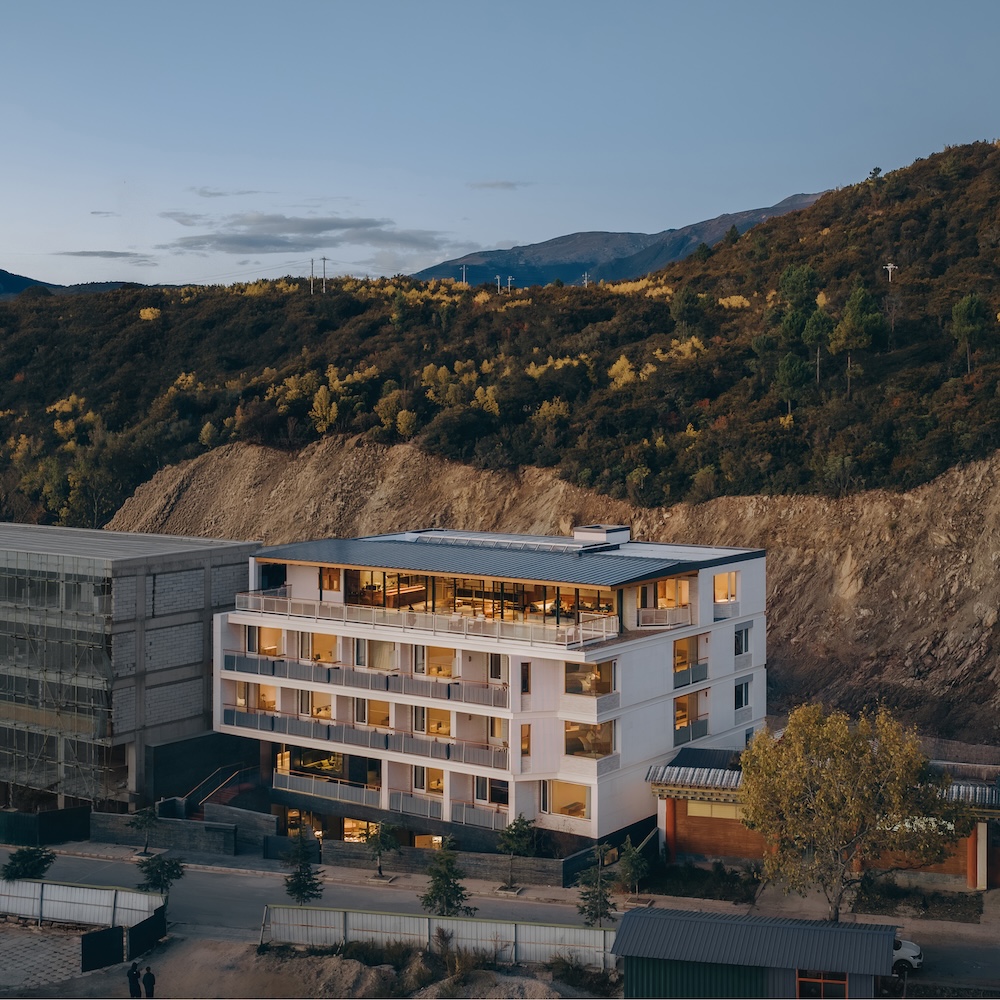
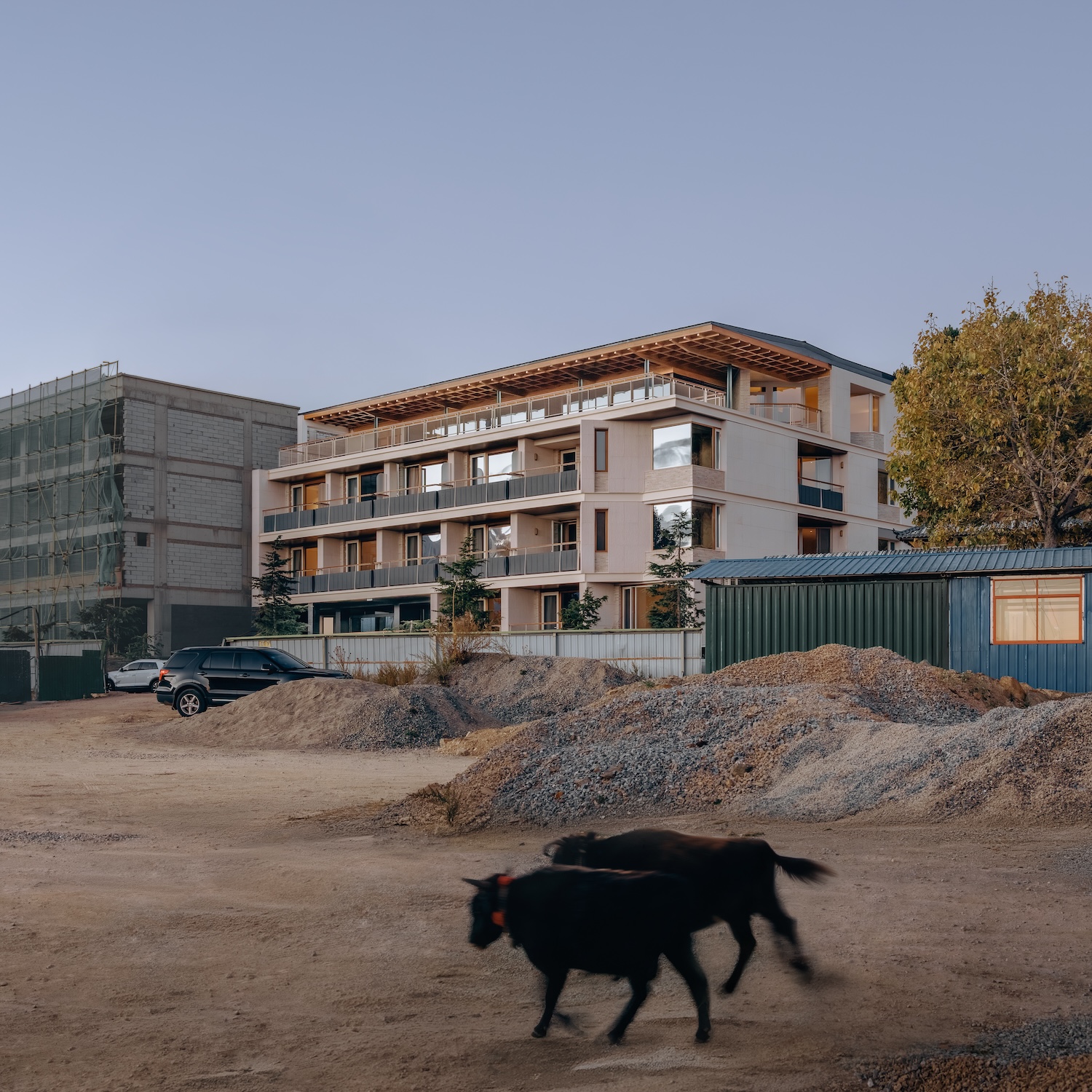
View of the hotel from above (1) and from ground-level within the village. Photos © Yumeng Zhu
Video credits: Ashu Wander, director/cinematography; Ajing, editing; Peng Zhang, time-lapse photography; Qing Cheng, producer
The atmosphere of the new, 27,000-square-foot hotel is a rebuttal of the Thirteen Pagodas Viewing Platform area in which it is located, according to Moguang cofounder Jiaying Li. Scenic streets are crowded with travelers and vendors, and municipalities are dense with hospitality structures claiming the best views to Kawagebo. That the 16-key hotel’s environs are calmly sacred “belongs more to an idealized imagination than to the realities on the ground,” the architect said in a statement, adding, “the site offered neither the possibility of effortlessly borrowing the landscape nor the chance to begin from a pristine setting.”
Responding to such conditions on-site—a village storage yard facing the 6,000-square-foot lot, for example, and an unattractive road cutting behind it—Moguang protected the hotel from the local tumult. Working within a 50-foot height envelope, it pulled the building’s public-facing south elevation away from the street and raised the entry floor approximately 6 feet above that datum. Service spaces are placed in the slightly sunken basement, as is a restaurant that is accessible from its adjacent courtyard. Li and her team subtracted a variety of beveled and chamfered wedges from the rectilinear volume as it rises another three stories to contain the arrival spaces and guest rooms. The building’s top floor is a setback volume enclosing a café that opens to an outdoor seating area.
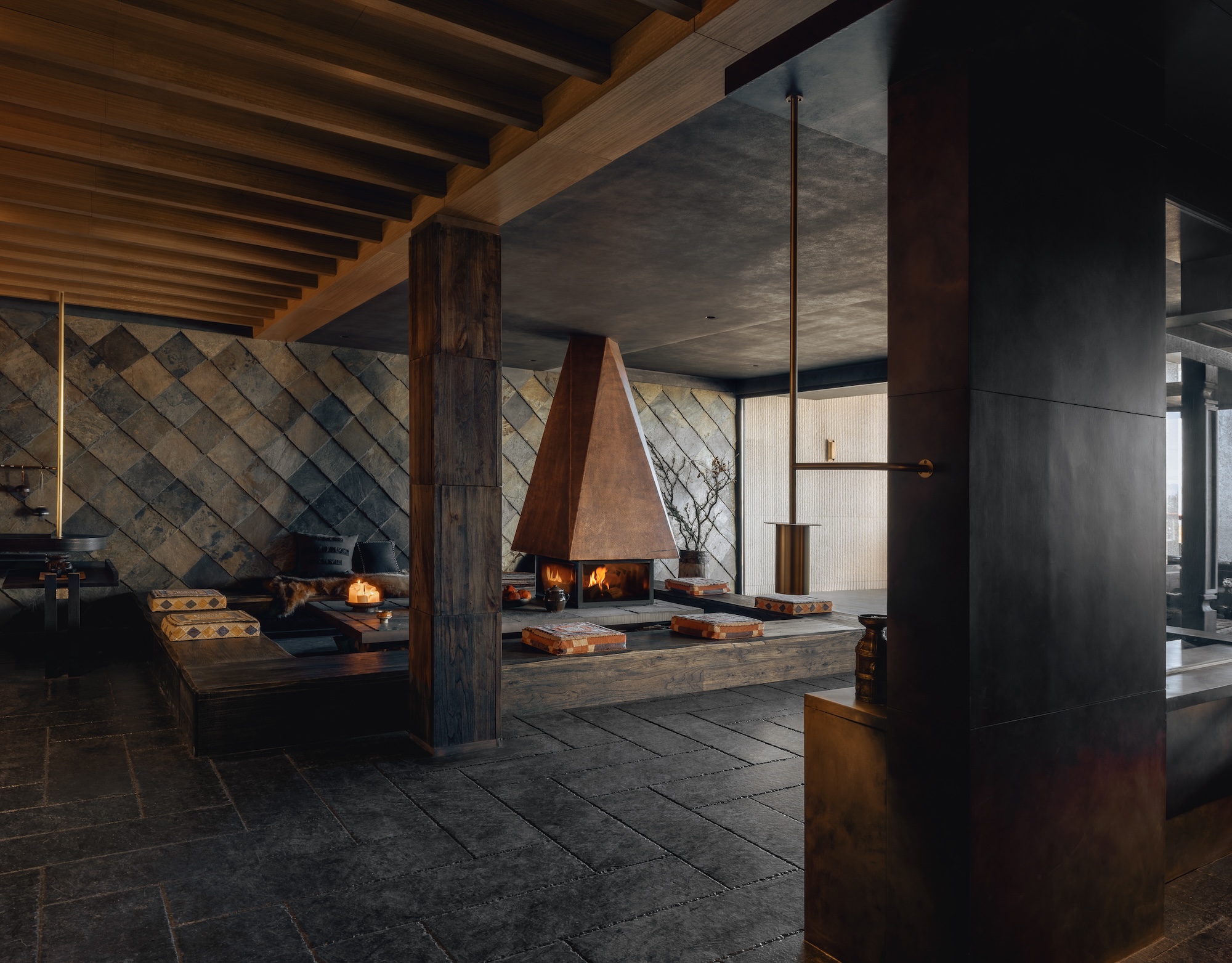
Lobby view, with hearth. Photo © Yumeng Zhu
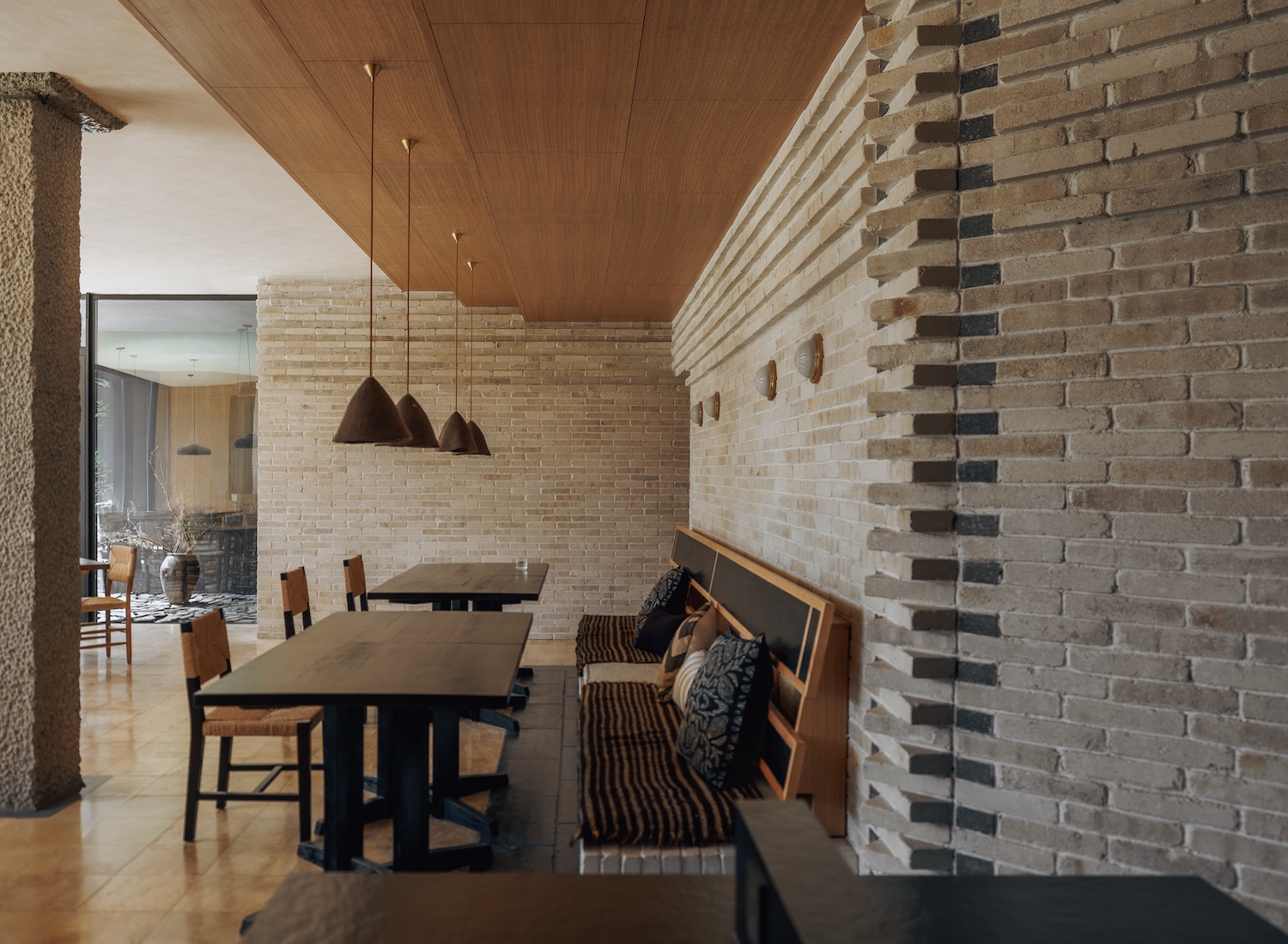
Lower-level restaurant. Photo © Yumeng Zhu
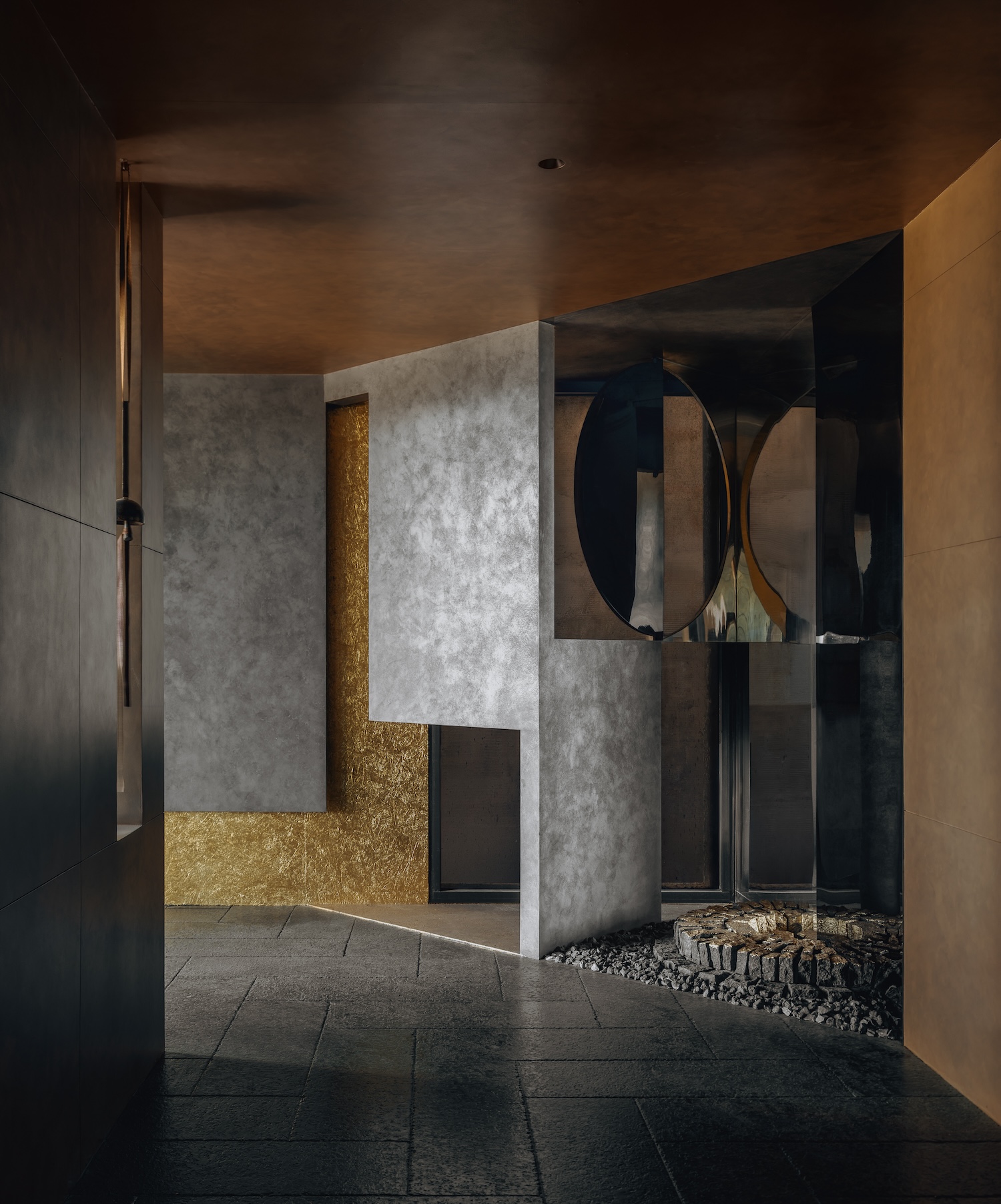
The main entrance vestibule. Photo © Yumeng Zhu
The arrival sequence reinforces feelings of seclusion. After traversing the courtyard via a short bridge, guests encounter a chamfered void as they enter a dim vestibule. Moguang refers to this space as a “water hall,” in reference to the transitional spaces found in Tibetan domestic architecture. The compressed pathway opens into an atrium anchored by a freestanding copper fireplace. This lobby is framed in walls of locally sourced slate that are mounted to the vertical surfaces in a scaled pattern.
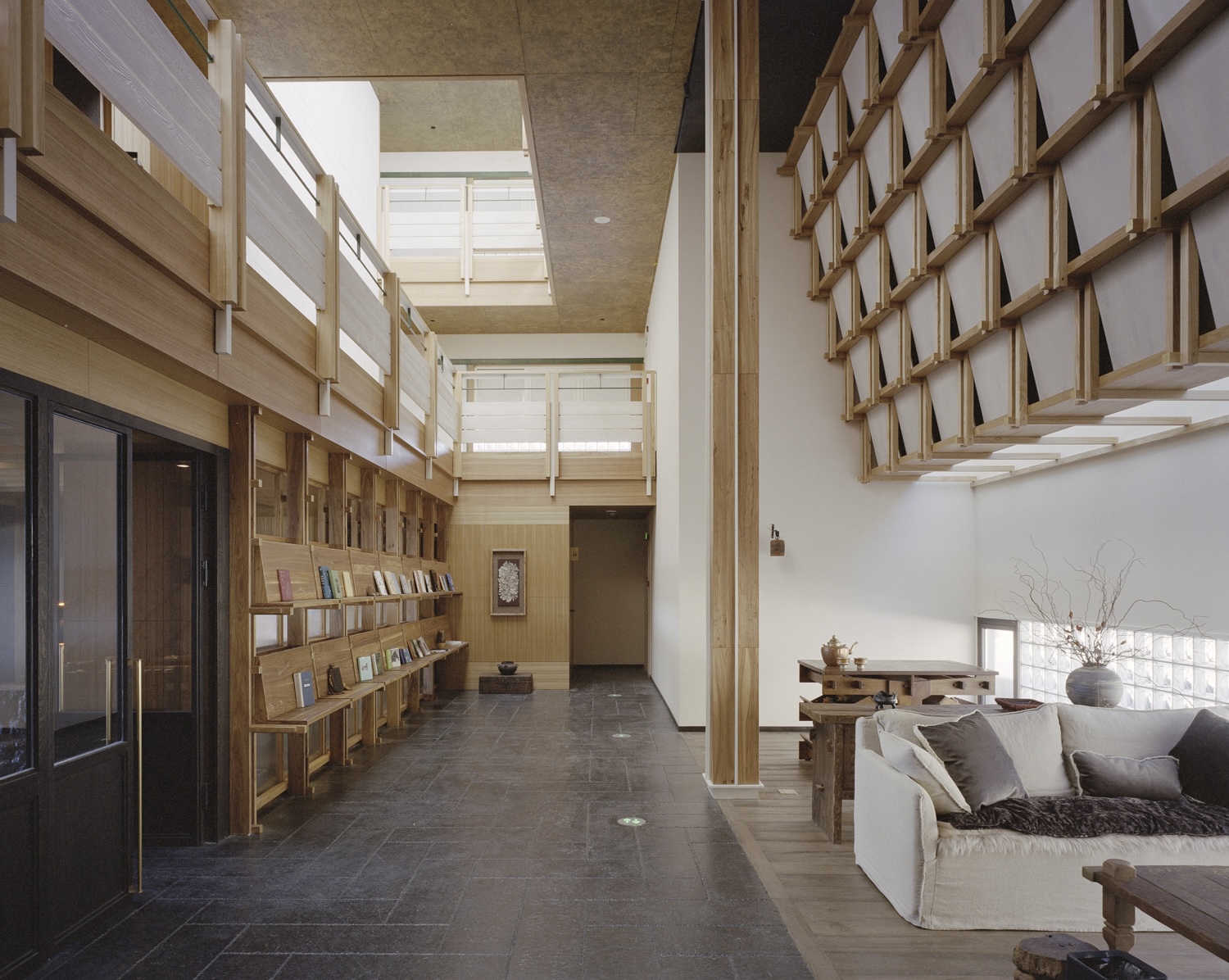
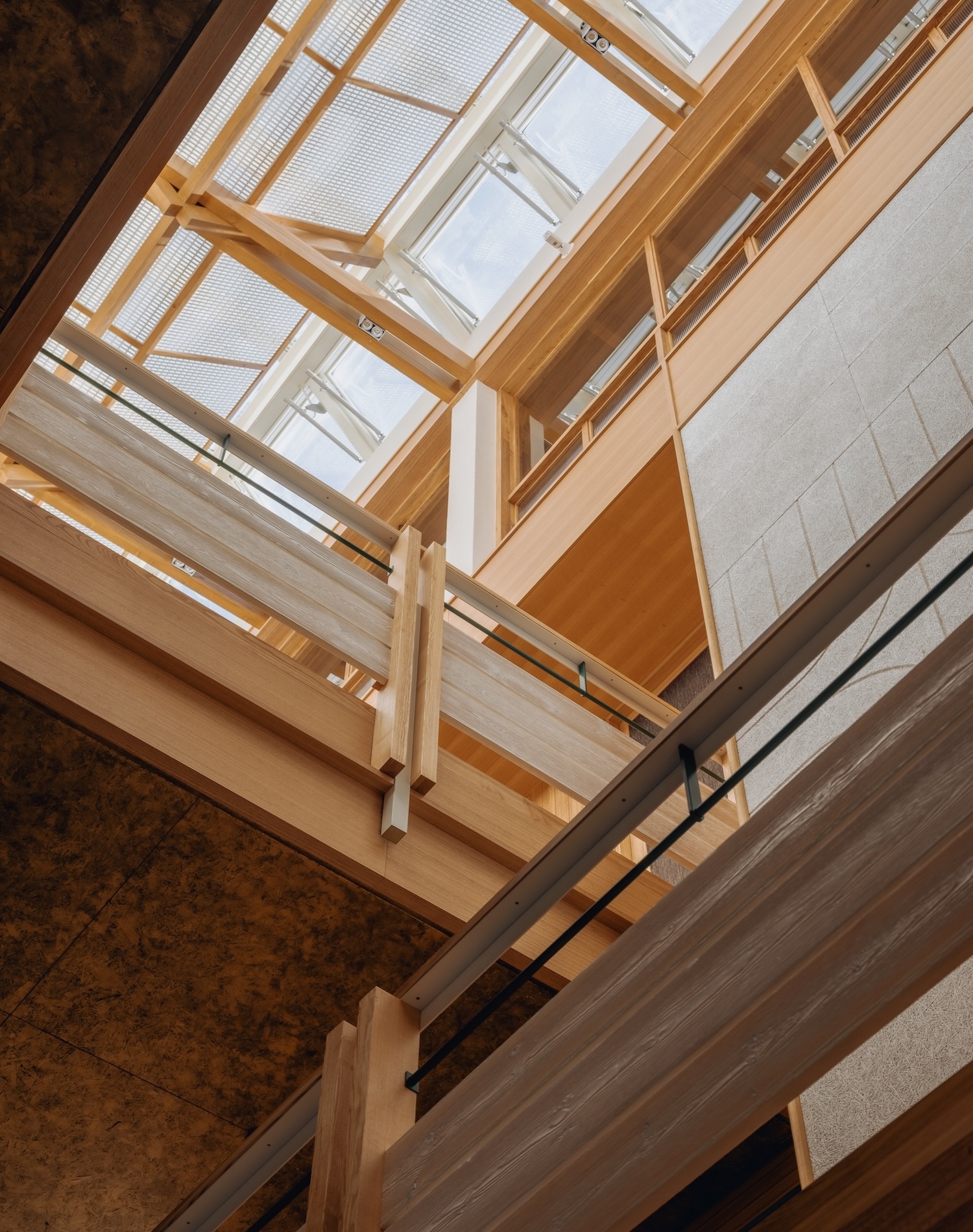
The off-center atrium, which hems to the building’s north elevation, is the project’s defining move. Rather than organizing the hotel into a stack of discrete floors, the architects stagger circulation around and across the light well. In addition to filtering harsh high-altitude daylight, treatment of the atrium as a vertical landscape transforms the hotel’s corridors into a continuous promenade. Movement around the atrium invites contemplation of architectural gestures like the skylight’s crisscrossing beams, the passage of time, or of other guests. It also delays guests’ direct visual confrontation with the mountain until they reach their rooms or the penthouse café.
3
4
5
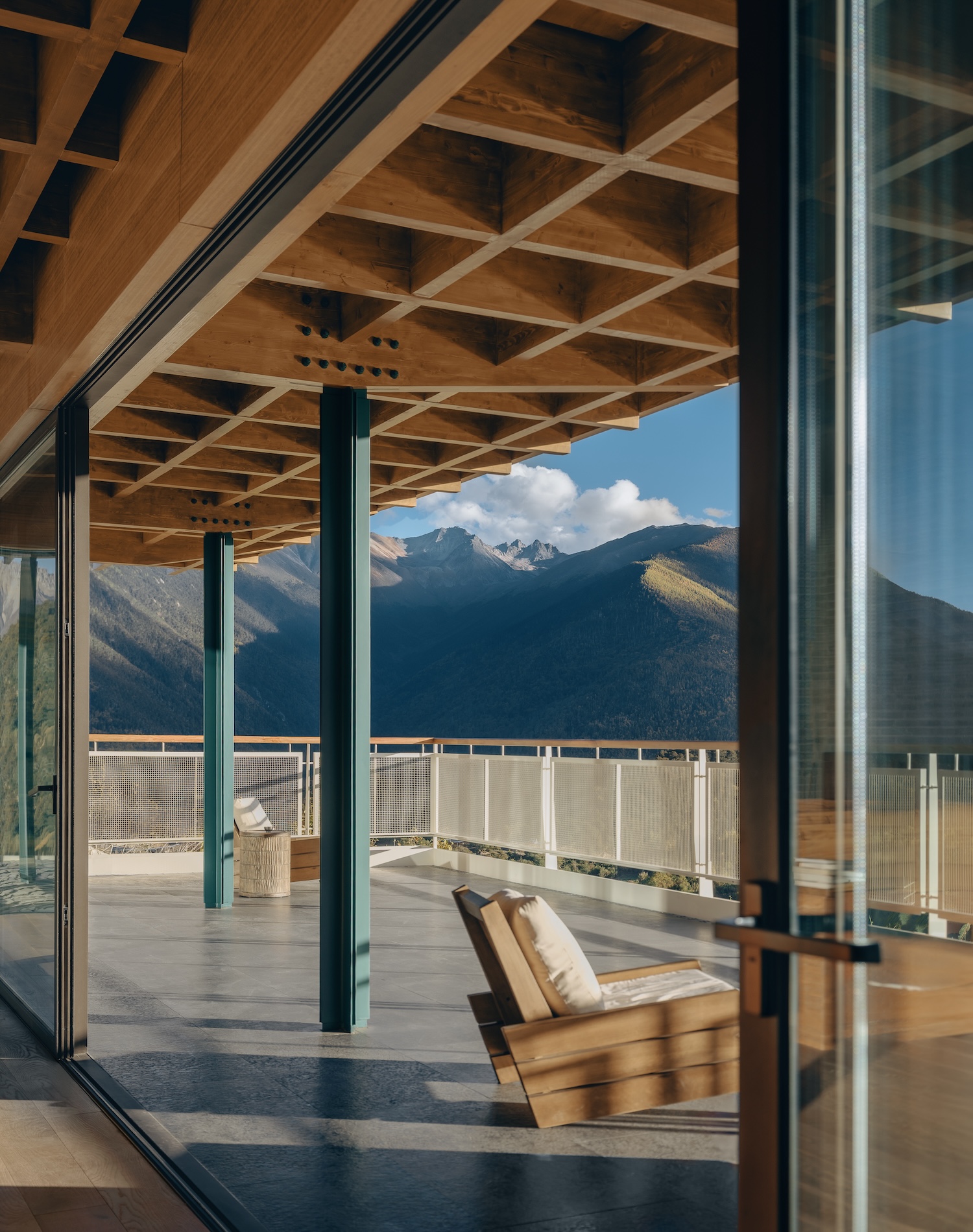
The atrium and lounge area (3) with timber framing detail (4); sheltered outdoor seating area (5). Photos © Haiting Sun (3), Yumeng Zhu (4,5)
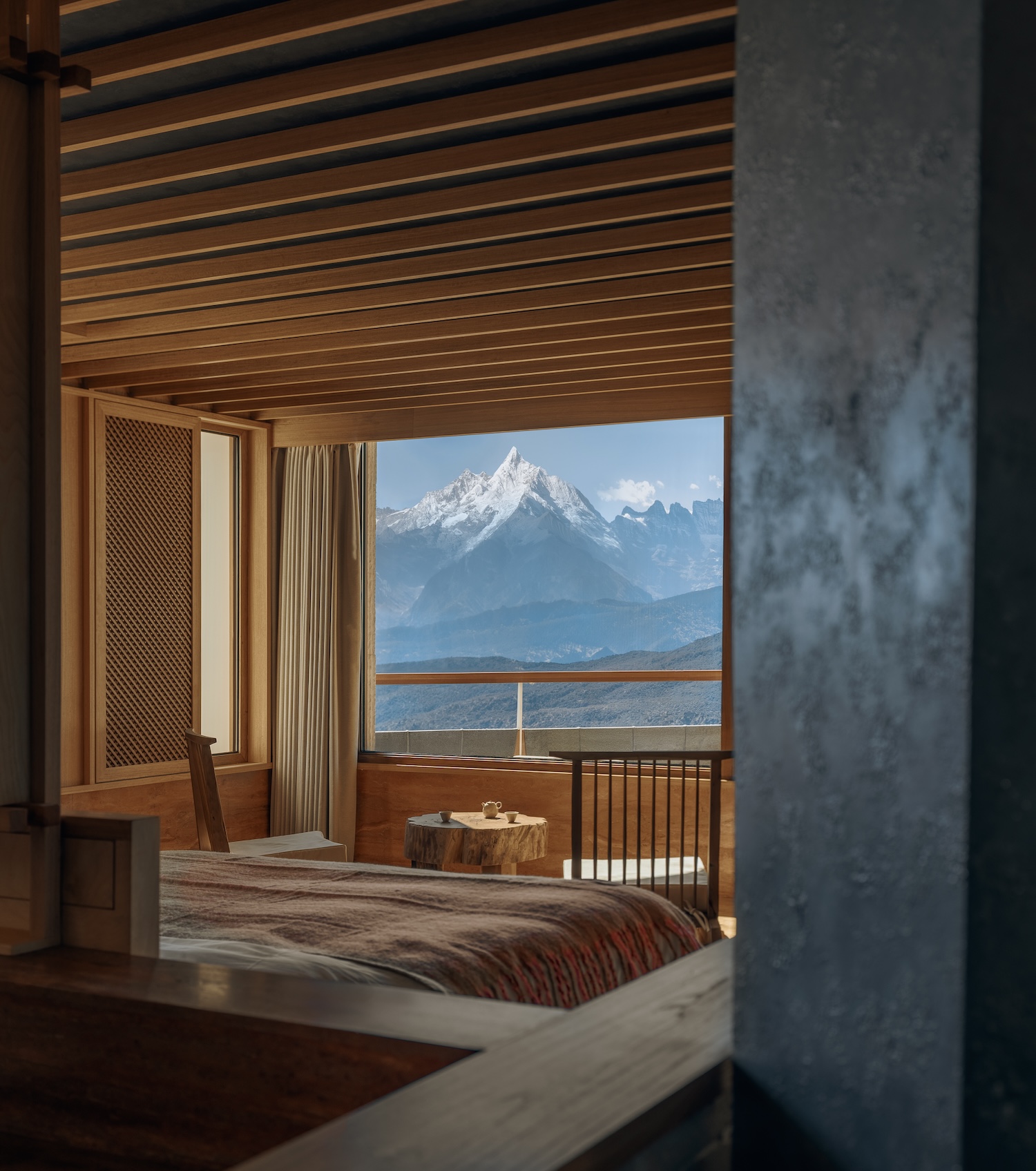
A guest room, with views of the Meili range. Photo © Yumeng Zhu
Gradual revelation of Kawagebo underlines the mountain’s sacredness in spite of chaos outside. It is also a nod to the ambulatories (also clockwise) that take place in nearby temples and houses. Alongside the water hall, it is part of a suite of strategies by which Moguang infuses the project with references to Tibetan culture. “What influenced us was not a specific building,” Li explains, “but the way space is revealed gradually—through walking, turning, and looking back.” A column piercing the atrium to signify the divide between everyday functions and spiritual observance is another example. Yet another is the public spaces’ adornment in yak-wool and -leather textiles produced by Tibetean pastoral communities.
Buddhists seeking atonement at Kawagebo often hope to glimpse the elusive “golden summit” at dawn, when sunlight briefly ignites the peak—an event said to bring a year of good fortune. Yet, Moguang Studio resists making that rare moment the culmination of its architecture. By being both part of and apart from its context, Kawagebo Snow Mountain Hotel remains meaningful even in the spectacle’s absence. Much like a pilgrimage around Meili, it is less about witnessing natural majesty than about learning how to truly see it.
6
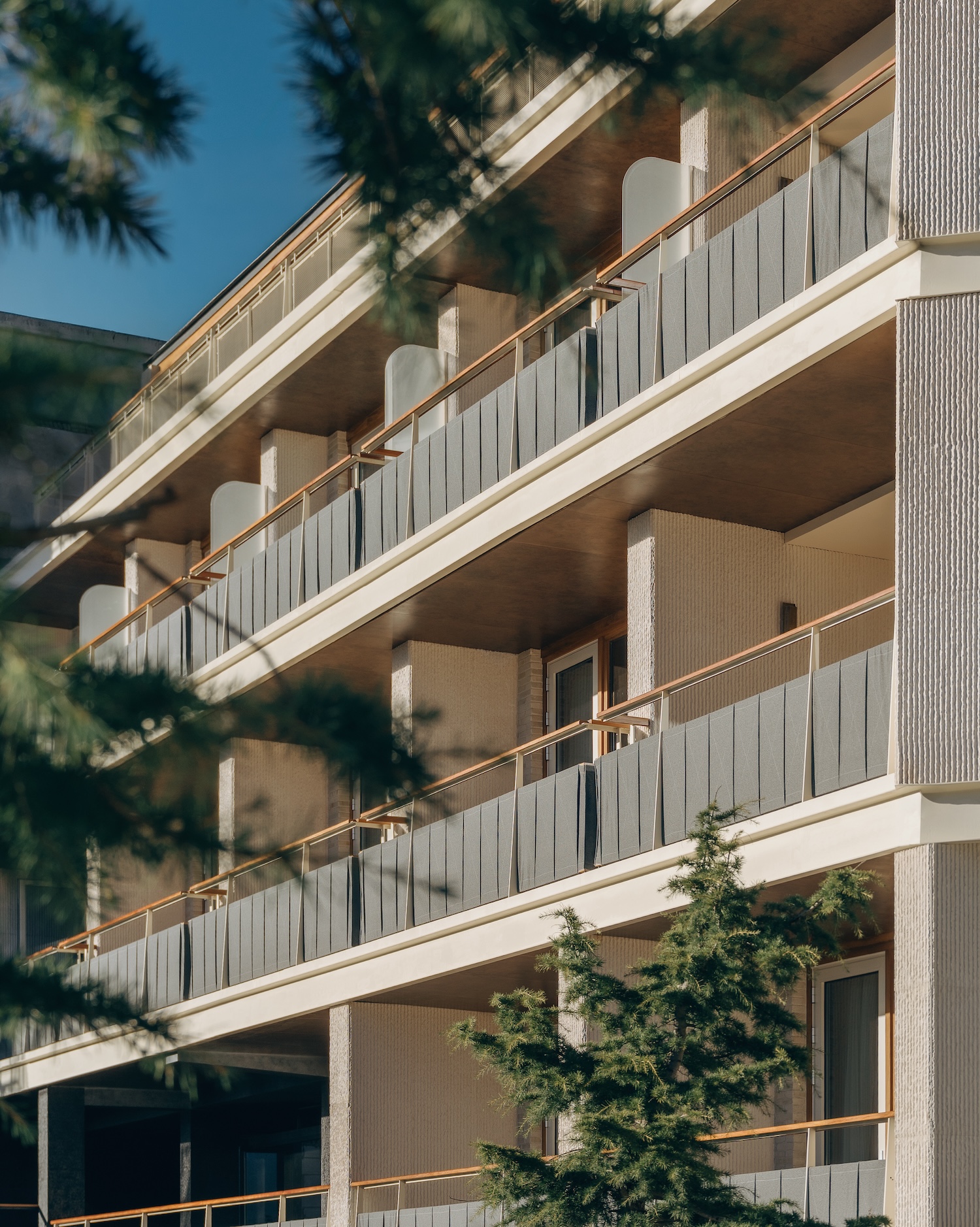
7
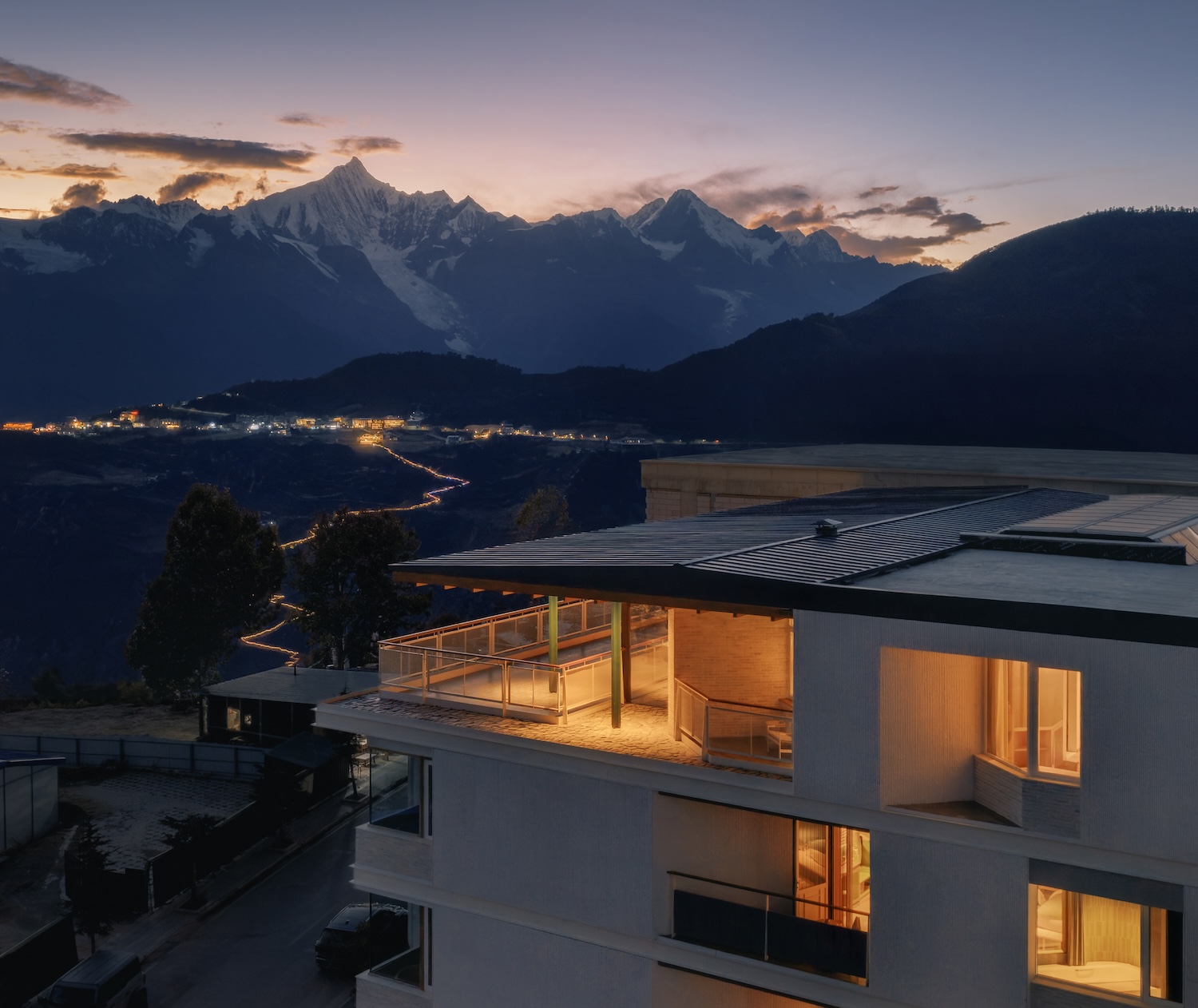
8
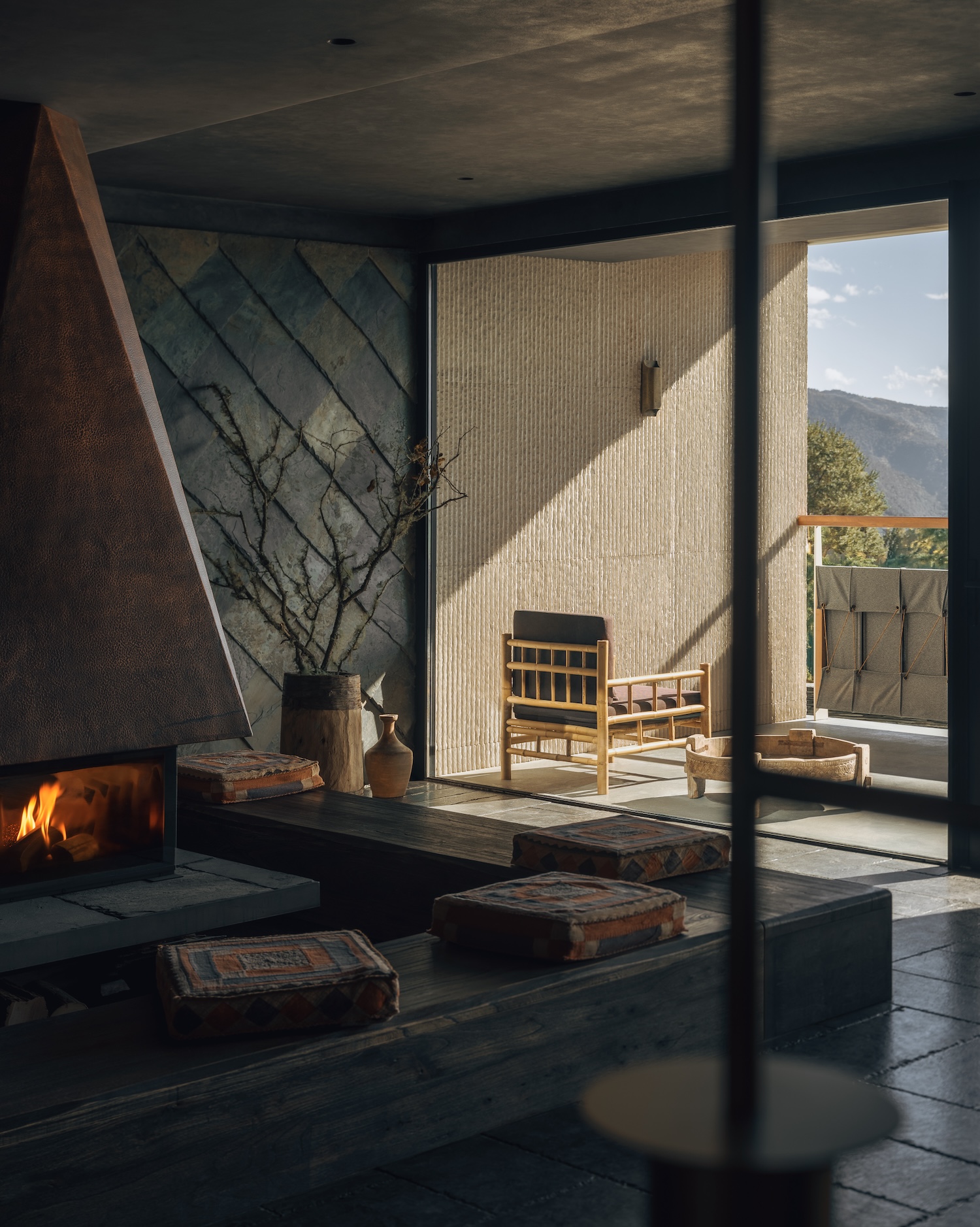
Fireplace and balcony in a guest room (6); guest room balcony deltail (7); the top floor of the hotel illuminated at night (8) Photos © Yumeng Zhu
Looking for quick answers on architecture and design topics?
Try Ask RECORD, our new smart AI search tool.
Ask RECORD →
Looking for a reprint of this article?
From high-res PDFs to custom plaques, order your copy today!