Lanza Atelier’s Curving Brick 2026 Serpentine Pavilion Opens in London
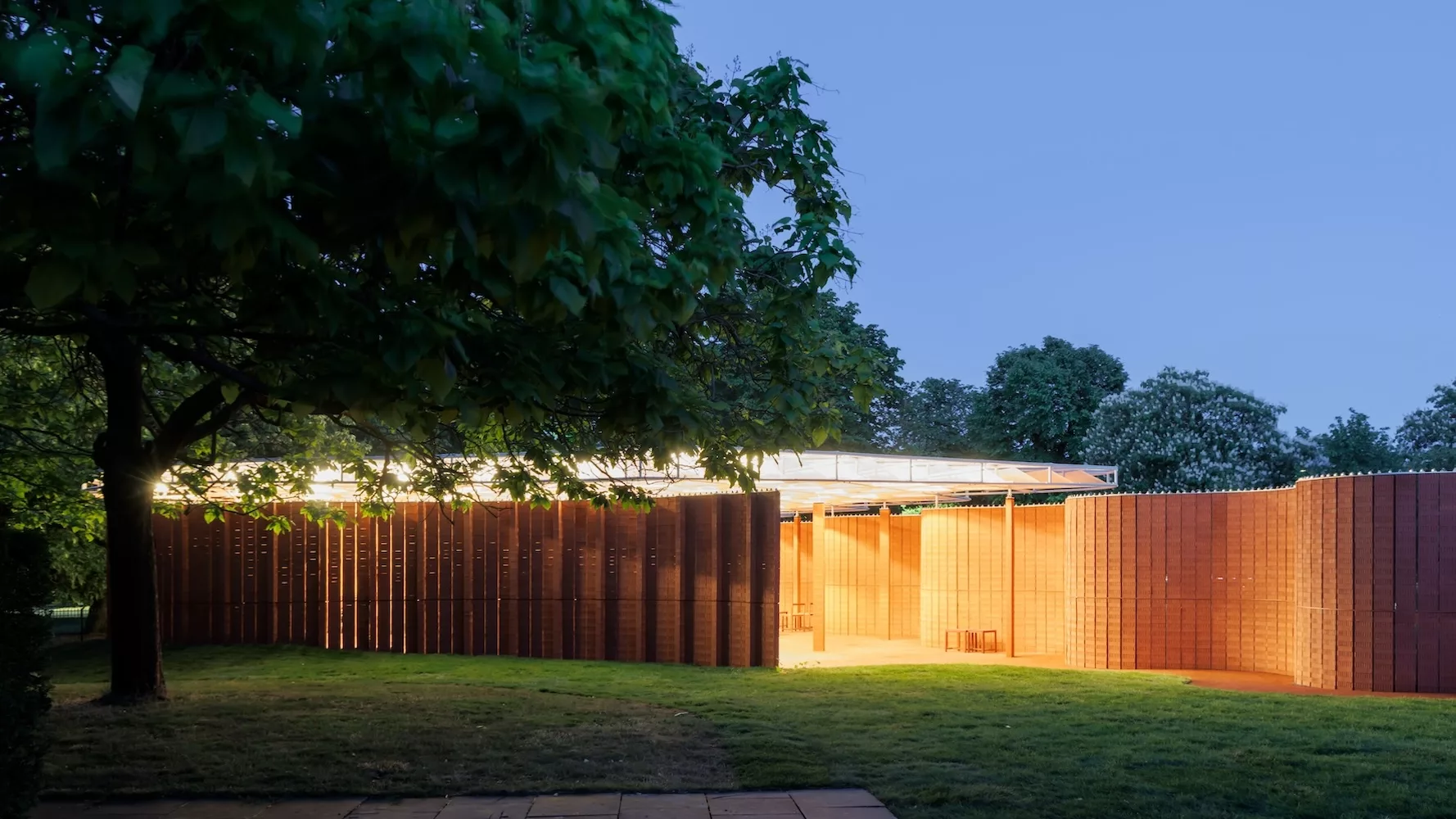
Exterior nighttime view of a serpentine, the 2026 Serpentine Pavilion by Lanza Atelier.
Architects & Firms
Serpentine season is once again upon us. Set to debut this weekend on June 6 at London’s Kensington Gardens is a serpentine, a fittingly snaking clay-brick structure realized by Mexico City–based studio Lanza Atelier as the 25th-annual Serpentine Pavilion. The ephemeral structure, inspired by the curving form of the traditional English garden feature known as the crinkle-crackle wall, will remain on view through October 25.
“We are deeply grateful for the opportunity to share our work with a wider public and to contribute to the Pavilion’s ongoing legacy of spatial experimentation and collective encounter,” said Lanza Atelier co-founders Isabel Abascal and Alessandro Arienzo in a statement. “Set within a garden, an evocation of the natural world, the project takes the form of a serpentine wall, conceived as a device that both reveals and withholds; shaping movement, modulating rhythm, and framing thresholds of proximity, orientation, and pause.”
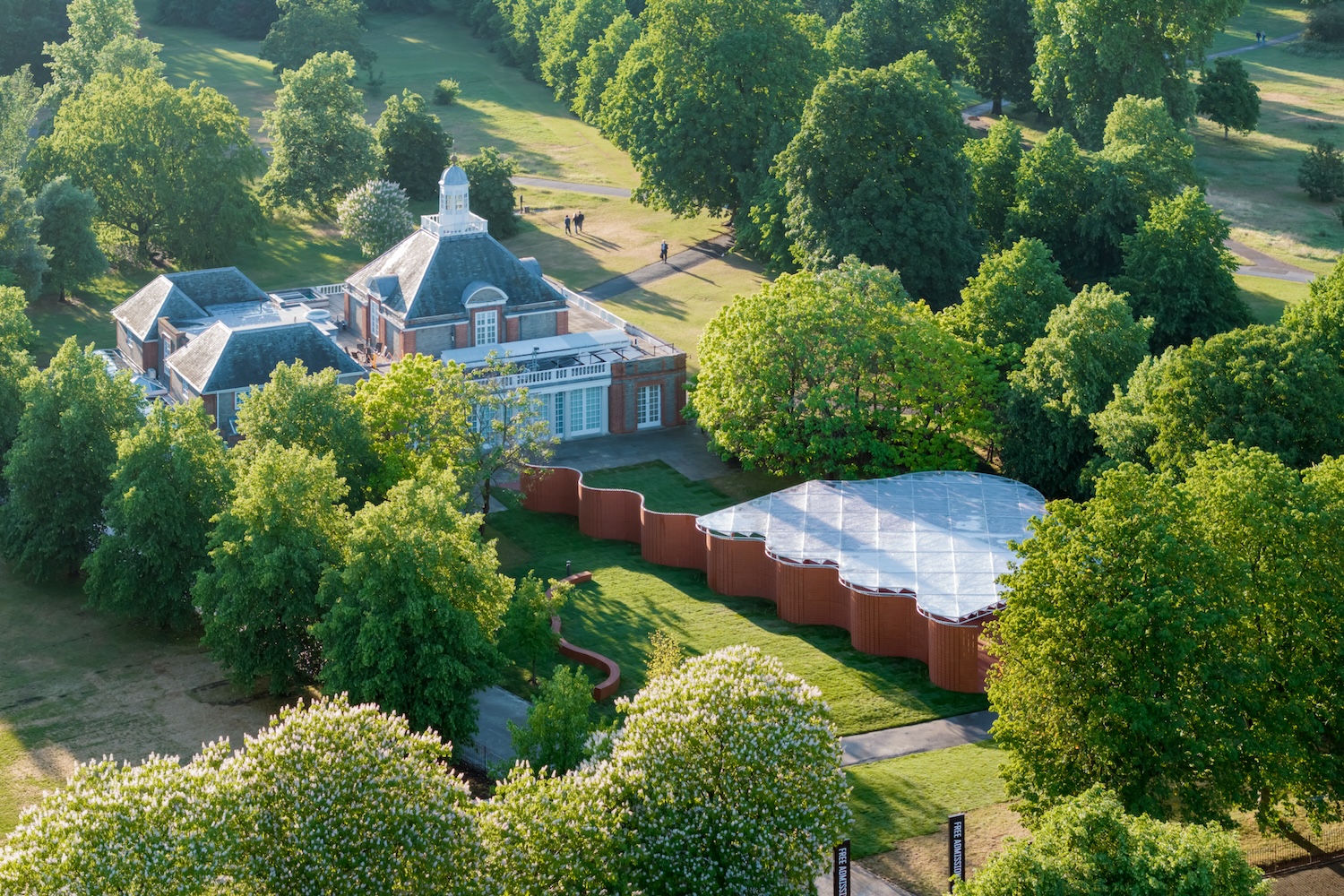
Aerial view of a serpentine at Kensington Gardens. © Lanza Atelier, photo by Iwan Baan, courtesy Serpentine
Established in 2015, Lanza Atelier joins an illustrious roster of international architects and designers to be tapped by the Serpentine for the art gallery’s high-profile annual pavilion commission. The firm is the second pavilion designer hailing from Mexico, following Frida Escobedo in 2018. Serpentine chief executive Bettina Korek says that the selection “deepens our cultural exchange with Mexico and reaffirms what the Pavilion has always been: a place of connection.”

Isabel Abascal and Alessandro Arienzo of Lanza Atelier. Photo: © Pia Riverola
The list of past Serpentine Pavilion designers includes several past Pritzker Prize winners, such as Oscar Niemeyer, Frank Gehry, Jean Nouvel, Peter Zumthor, Francis Kéré, and 2026 laureate Smiljan Radić Clarke, who designed the 2014 pavilion. Just four years before her watershed Pritzker win, Zaha Hadid, whose litigation-tinged legacy is discussed at length in the June cover story of RECORD, was appointed as designer of the inaugural Serpentine Pavilion in 2000. In recognition of the program’s 25th anniversary—and Hadid’s formidable role in its infancy—there will be a slate of special programming throughout the summer produced by the Serpentine in collaboration with the Zaha Hadid Foundation and the Architectural Association. Highlights include a two-day symposium commemorating Hadid’s life and a special exhibition on view at the Magazine at Serpentine North, a landmarked 1805 gunpowder storage facility converted into an art gallery in 2010 by Hadid. In addition to these Zaha-centric goings-on, Lanza Atelier’s 2026 pavilion itself will also serve as backdrop—or “content machine,” as Serpentine artistic director Hans Ulrich Obrist calls it— for a wide variety of live events including workshops, talks, tours, film screenings, performances, family-friendly offerings, and more.
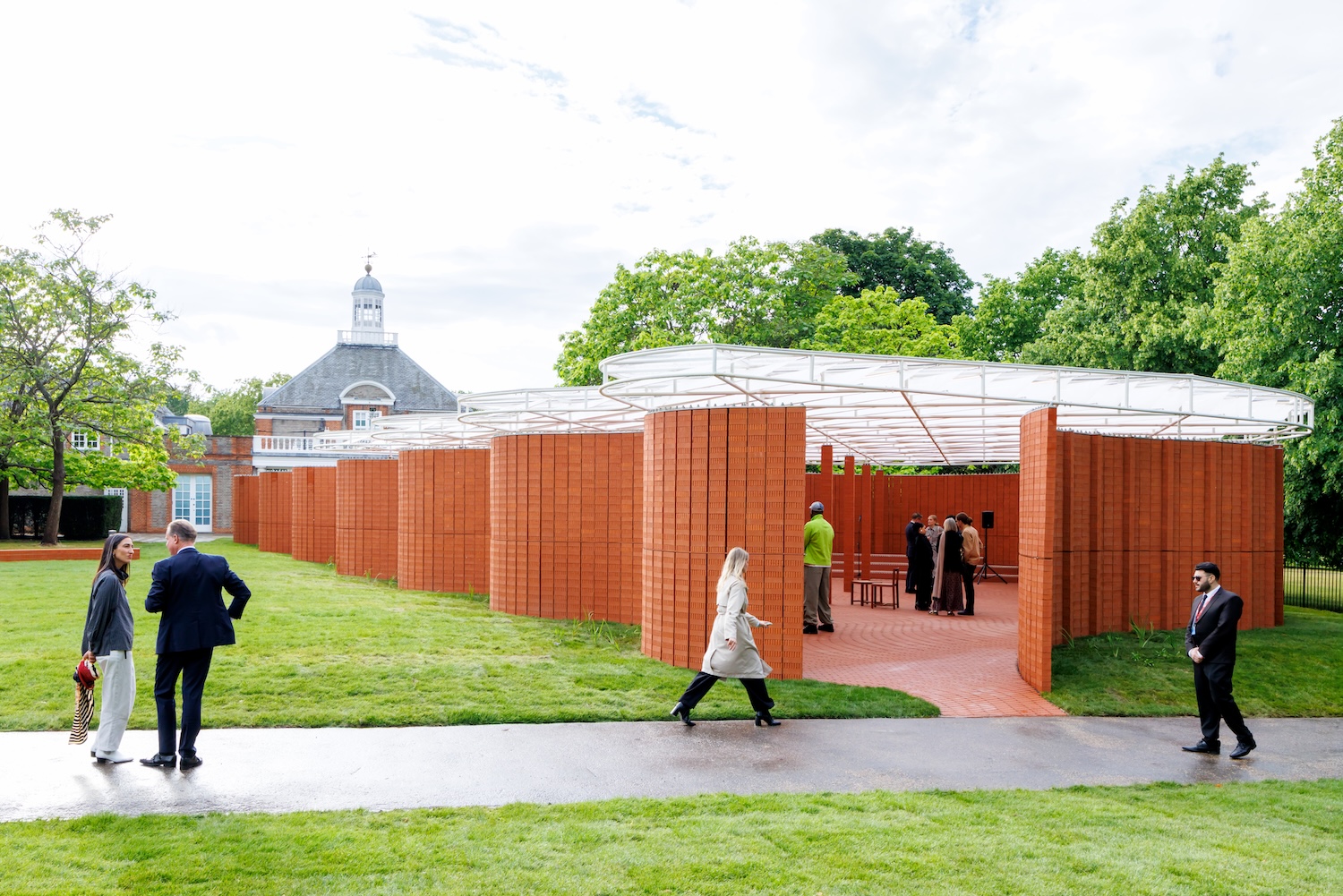
a serpentine, exterior view. © Lanza Atelier, photo by Iwan Baan, courtesy Serpentine
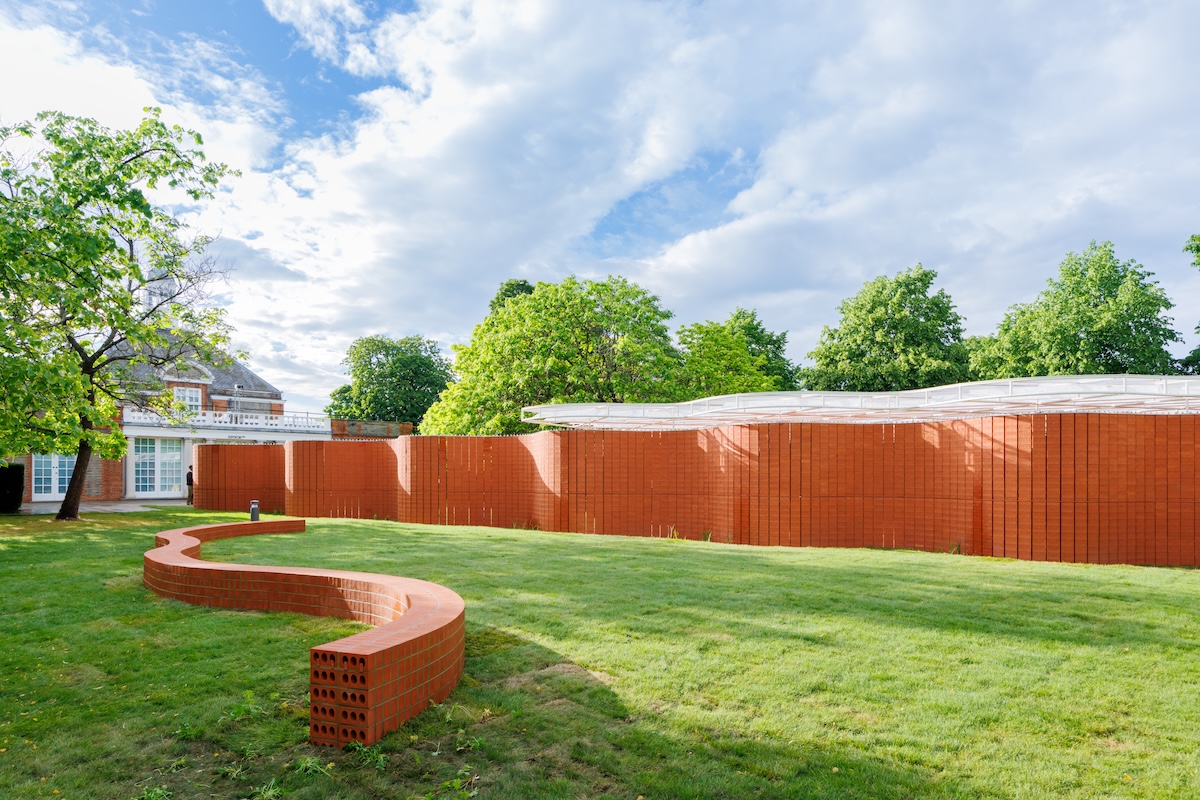
a serpentine, exterior view. © Lanza Atelier, photo by Iwan Baan, courtesy Serpentine
As noted by the Serpentine, the selection of Lanza Atelier for the 2026 edition marks the latest in a concerted effort to engage and give opportunities to what Obrist refers to as “younger” architectural practices. Indeed, the commission seems a natural next step for a studio that has already garnered several major accolades for early-career practitioners, including nominations for the Mies Crown Hall Americas Prize for emerging architects (MCHAP.emerge) in 2016 and 2022 as well as a Young Architects Prize (2017) and an Emerging Voices Award (2023) from the Architectural League of New York. “Lanza Atelier’s architecture always involves a deep engagement with the local context, materials, and lived experience, says Obrist. “In their own words, they create contemporary spaces whose energy can last.”
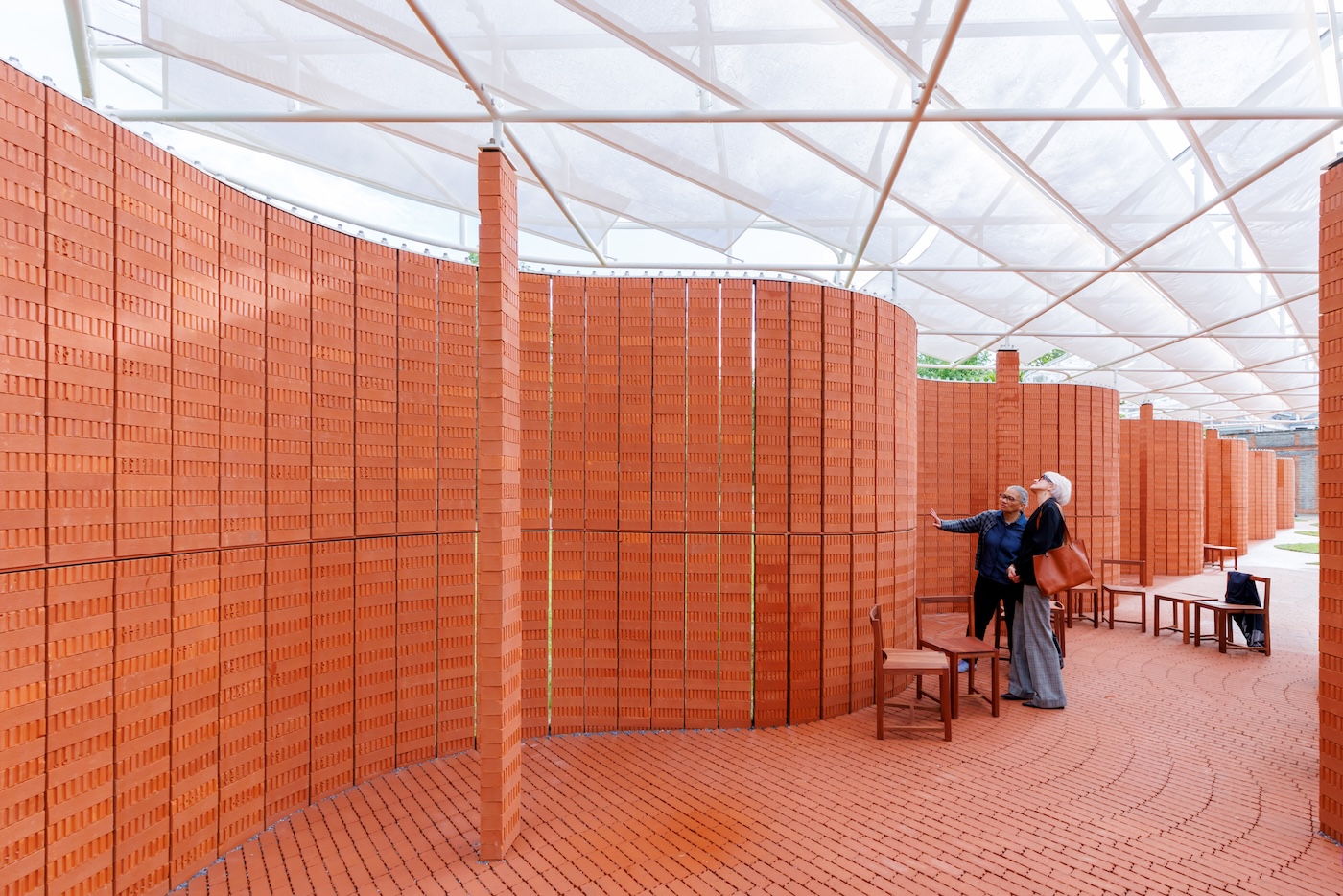
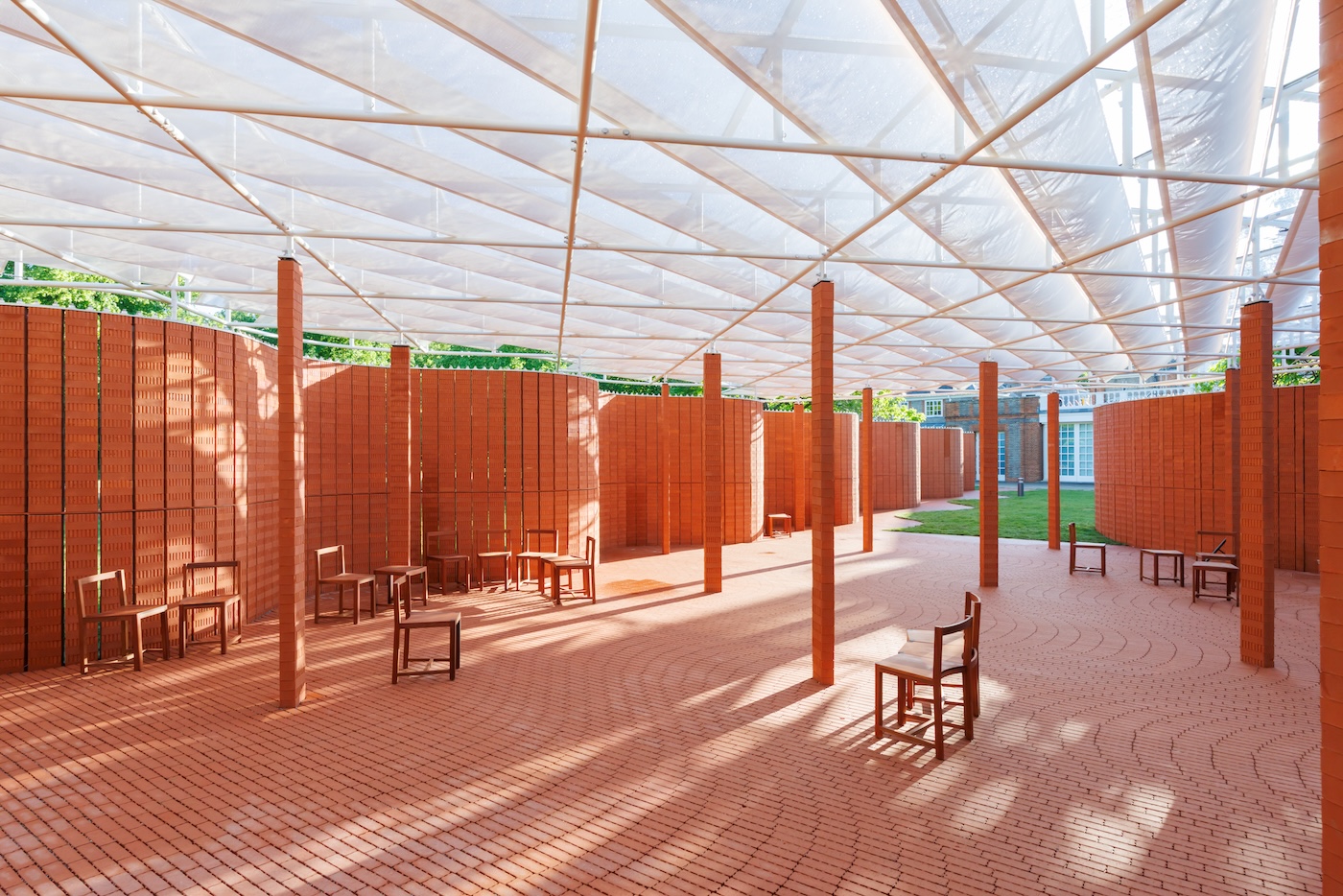
Interior view of a serpentine, designed by Lanza Atelier. © Lanza Atelier, photo by Iwan Baan, courtesy Serpentine
The studio is noted for its collaborative approach, focus on craftsmanship, and hands-on design methods, including model-making and drawing. In addition to the translucent roof–topped pavilion and the curving brick garden wall that forms one side of a serpentine, Lanza Atelier designed the chairs and stools that populate the structure. Made locally, the furnishings are constructed from sapele hardwood.
“Inspired by the figure of the serpent as a generative and protective force, we draw a parallel with England’s winding fruit walls, which are structures that temper climate, create shelter, and enable growth,” elaborate Abascal and Arienzo. “From this idea emerges a pavilion built of simple clay brick, foregrounding vernacular craft and the elemental capacity of architecture to bring people together. The 2026 Pavilion proposes built forms that are permeable, shaped and held by a gentle geometry, and continually responsive to those who move through it.”
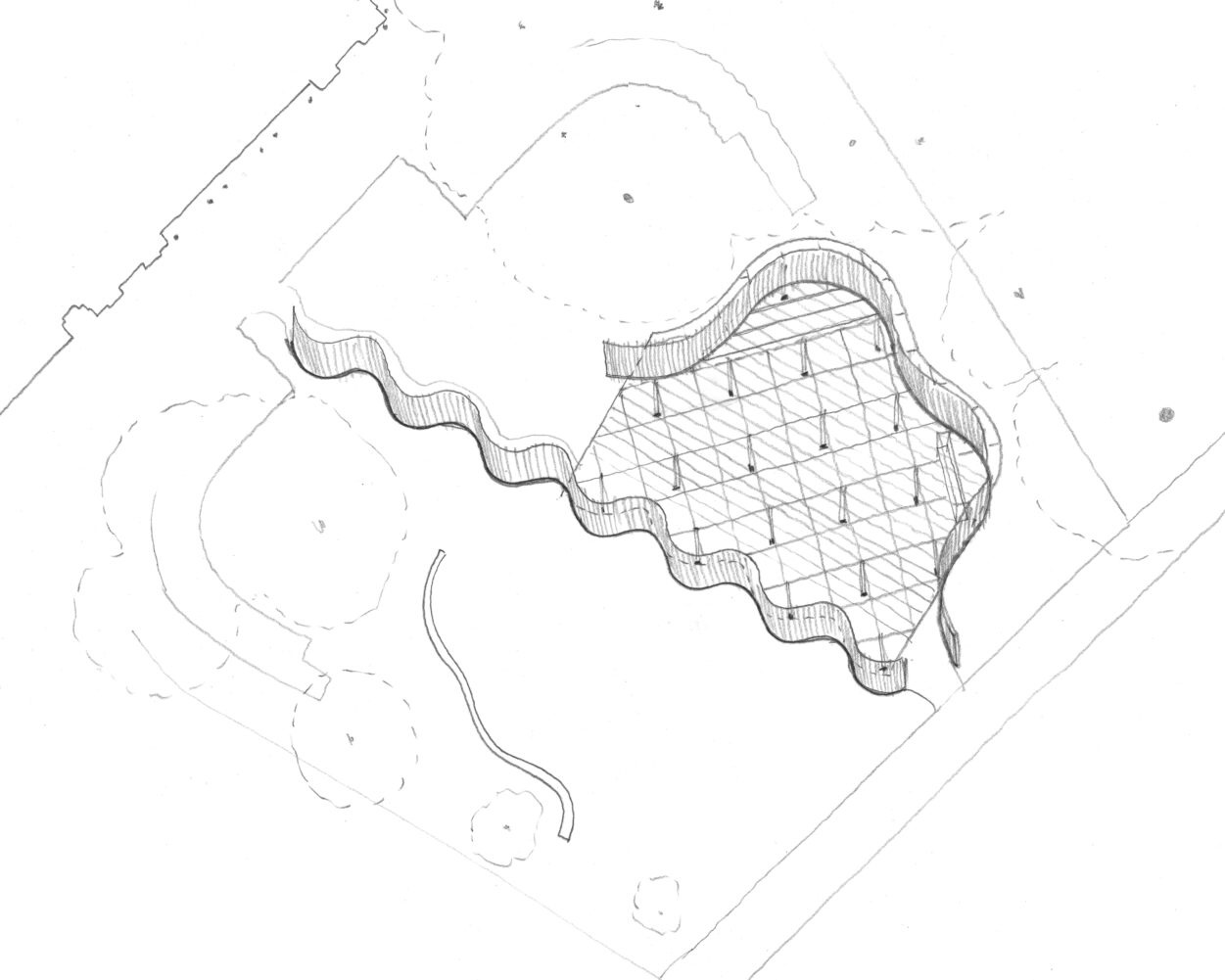
Conceptual sketch of a serpentine, worm's eye view. Image © Lanza Atelier, courtesy Serpentine
Looking for quick answers on architecture and design topics?
Try Ask RECORD, our new smart AI search tool.
Ask RECORD →
Looking for a reprint of this article?
From high-res PDFs to custom plaques, order your copy today!