A Sunny Setting and New Programming Elevate AIA26 in San Diego
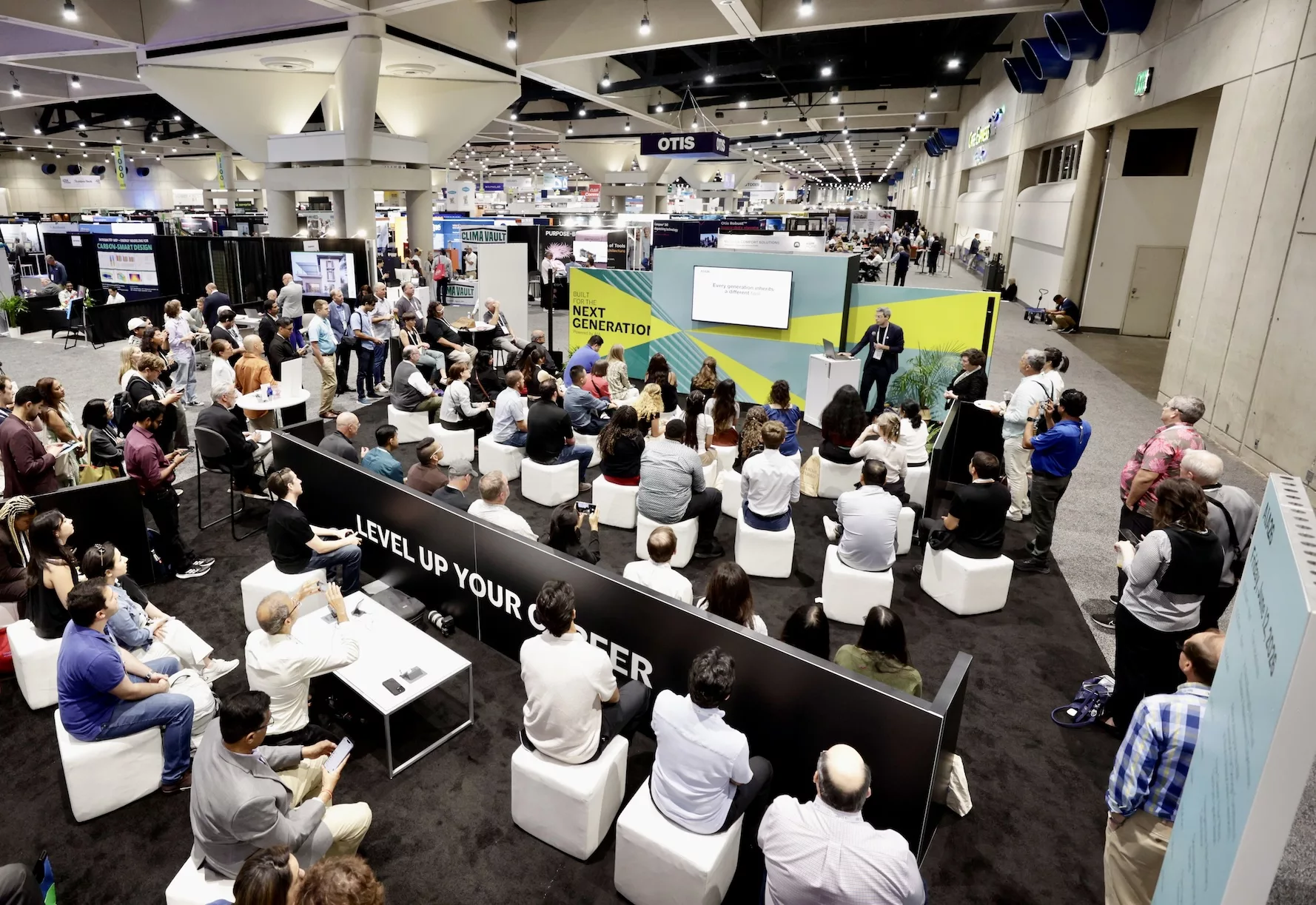
This year’s AIA Conference on Architecture & Design was somewhat torturous. Not that it was an unengaging failure by any means—in fact it was quite the opposite. Slickly produced, the conference was buoyed by a solid roster of educational sessions and workshops, a buzzing expo, and the welcome addition of a new Architalk series that juxtaposed an internationally heralded Pritzker Prize–winner from Japan (2026 AIA Gold Medalist Shigeru Ban) with a small, Jackson, Mississippi–based office that views practice as a form of servant leadership (Architecture Firm Award recipient Duvall Decker).
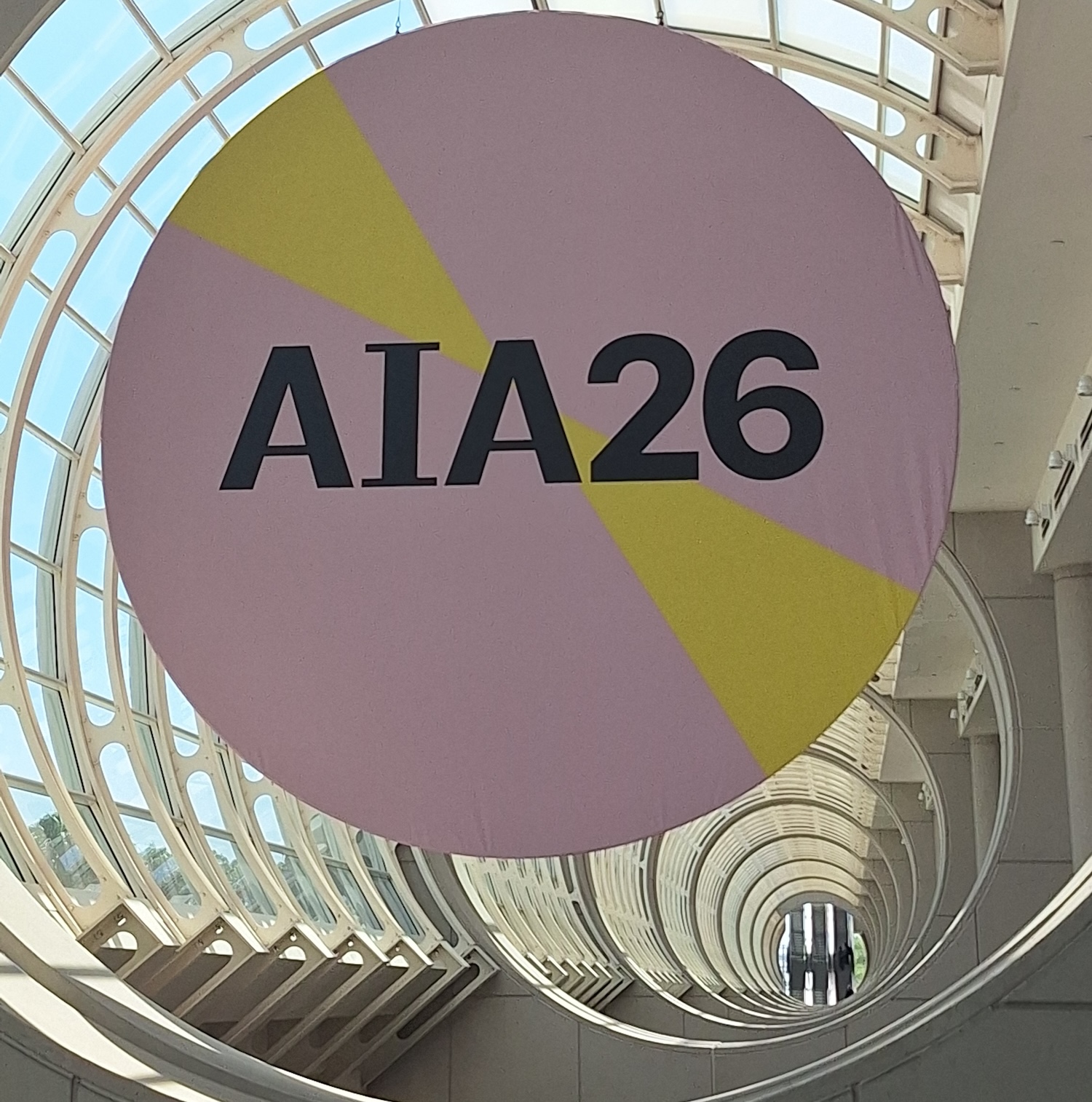
Photo by Matt Hickman, © Architectural Record
What was wrong with the AIA26 was the preternaturally beautiful host city of San Diego. Hosting a major, multiday conference in paradise—abundant sunshine, beaches, swaying palms, cool coastal breezes, relaxed Southern California vibes, the works—comes with drawbacks. And these drawbacks, chiefly the nagging urge to not want to be inside at a conference, were felt acutely within the walls of the San Diego Convention Center. (As an additional tease, the excellent Arthur Erickson–design complex, best known for hosting Comic-Con, anchors the city’s Marina district right on San Diego Bay.)
Lucky are those then who crafted their schedules (or extended their trips) to include plenty of time to explore, unwind, and hit the beach. Same for those who signed up for one of the conference’s many paid-upgrade tours, including a survey of modernist residential architecture in neighboring La Jolla, an excursion to Tijuana, a full afternoon at San Diego’s preeminent cultural asset, Balboa Park, and a hot-ticket visit to Louis Kahn’s Salk Institute for Biological Studies. Additional opportunities to escape came in the form of open studio events and evening parties held across the city, including at a smattering of rooftop venues with knockout waterfront views. Even stepping out briefly from the convention center to get some air and soak in the sun on one of its expansive bay-facing terraces or congregate in the sun-drenched Sails Pavilion was a treat.
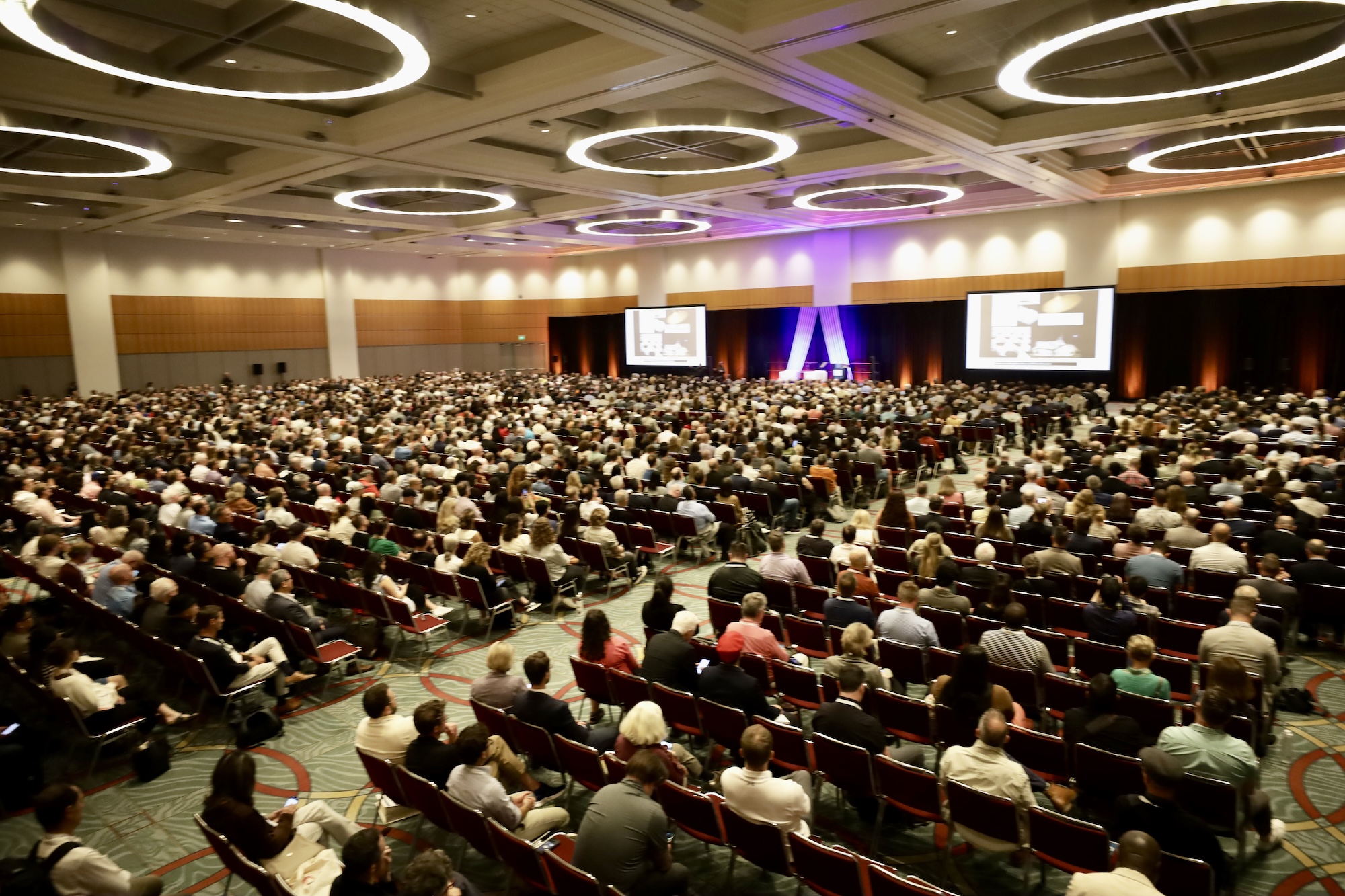
Photo by Stacy Moses, courtesy AIA

Keynote speaker Padma Lakshmi in conversation with 2026 AIA president-elect Yiselle Santos Rivera. Photo by Stacy Moses, courtesy AIA
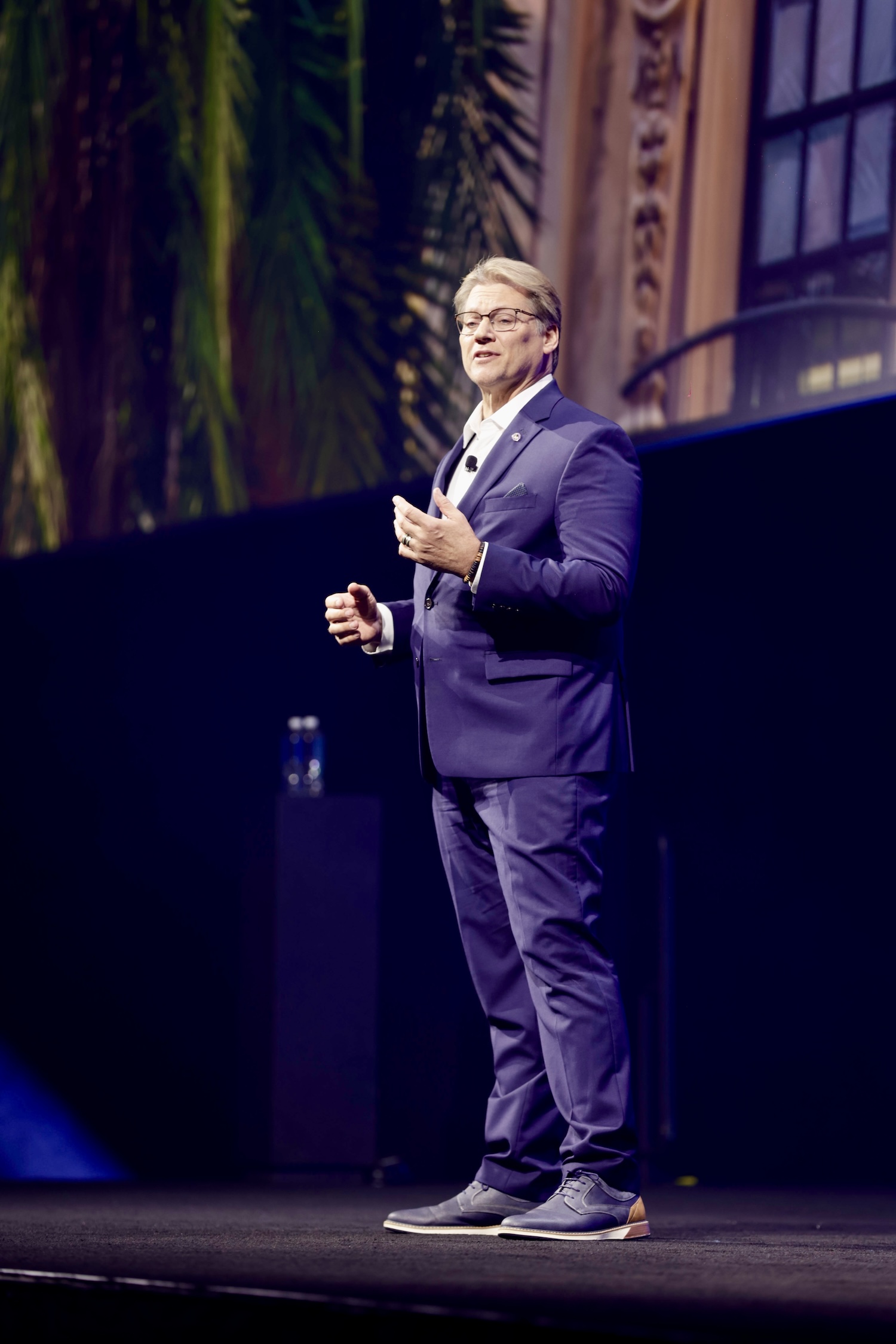
The presence of Boston-based architect Carole Wedge, who transitioned into the role of the AIA’s new chief executive/EVP late last year, marked a fresh start during AIA26 as she eases into the job with a renewed focus on issues such as bolstering the organization’s connections with local chapters, better coordinating advocacy work, championing climate resiliency, and making an architectural education more accessible to all. “It's about everyone belonging and securing a future for the profession—this is our collective responsibility,” said Wedge during a June 11 address to attendees. “We must build a real bridge from your academic career to your professional career and take our responsibility for the future of the profession very seriously.”
1
2
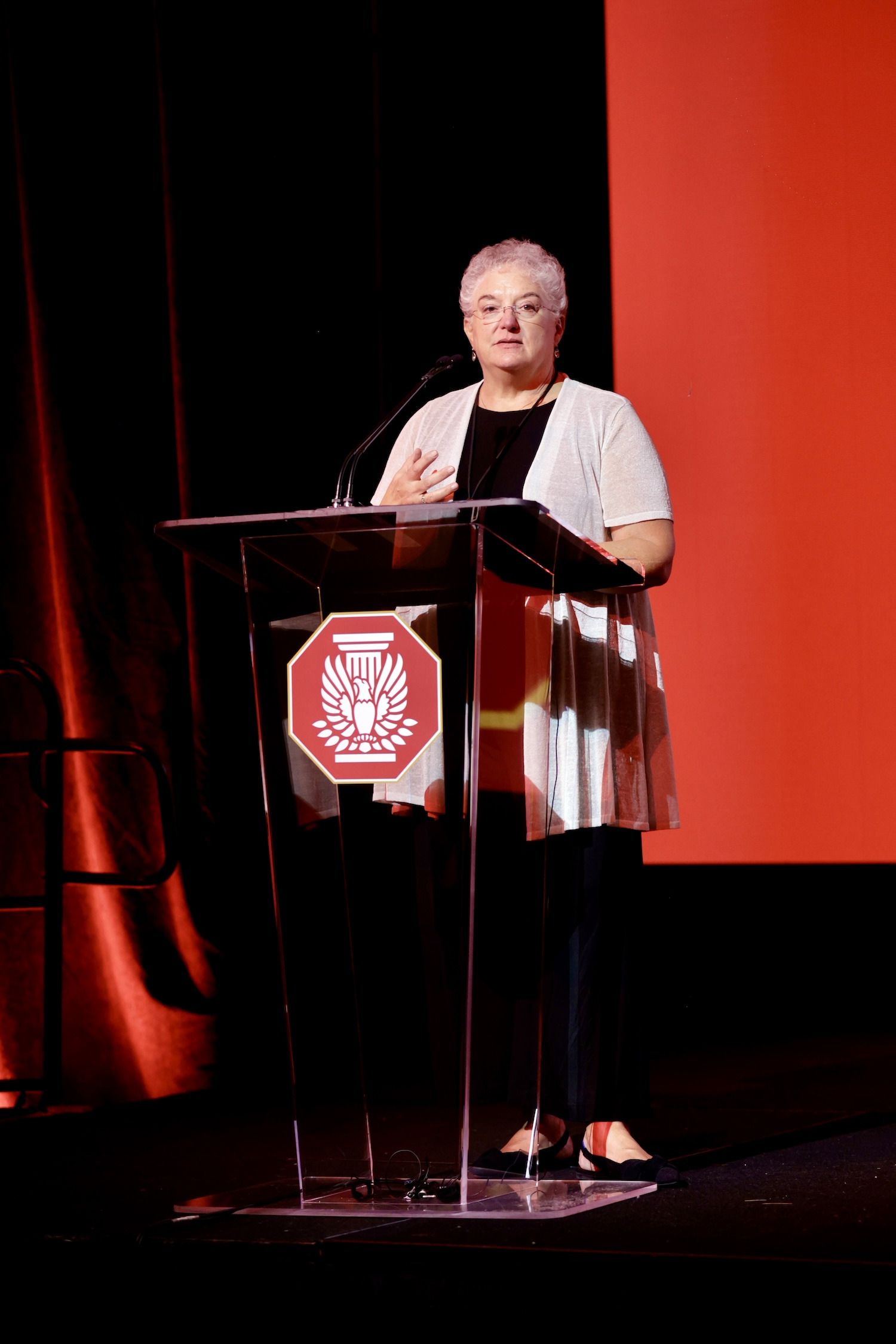
Carole Wedge (1) and Illya Azaroff (2) present at AIA26. Photos by Stacey Moses, courtesy AIA
There were plenty of moments of gravity at AIA26, including a special programming focus on navigating economic uncertainty (the AIA’s new chief economist Richard Branch maintained a ubiquitous presence during the run of the conference) and a sobering main-stage speech by 2026 AIA president Illya Azaroff on the point-of-no-return status of climate change (and the vital role architects have in mitigating its impact.)
The packed-house talks by Shigeru Ban and Duvall Decker’s Anne Marie Duvall Decker and Roy Decker, both moderated by MASS senior principal Katie Swensen, were deeply humanist, showcasing the power of architecture to impart good and improve the lives of communities that have been displaced, marginalized, and left behind. While Shigeru Ban’s eponymous Tokyo-, Paris-, and New York–based practice and Duvall Decker, a firm embedded in the Deep South, work across different scales, types, and budgets, their open embrace of architecture as a form of public good was inspiring.
Our firm is “built on the belief that we architects are more than service providers, and we can do more to help our communities— Duvall Decker is an experiment to explore what servant leadership really means in this sense,” said Roy Decker upon receiving the AIA 2026 Architecture Firm Award, joined on stage by Anne Marie and the entire firm. “We share this award with so many like-minded firms in small towns and cities around the country who are in ever more creative ways working to remake the profession and improve the social and environmental health of their communities.”
Looking for quick answers on architecture and design topics?
Try Ask RECORD, our new smart AI search tool.
Ask RECORD →
“Architects are well-trained and we envision a future better than the past,” added Decker. “We have the skills to realize it's making.”
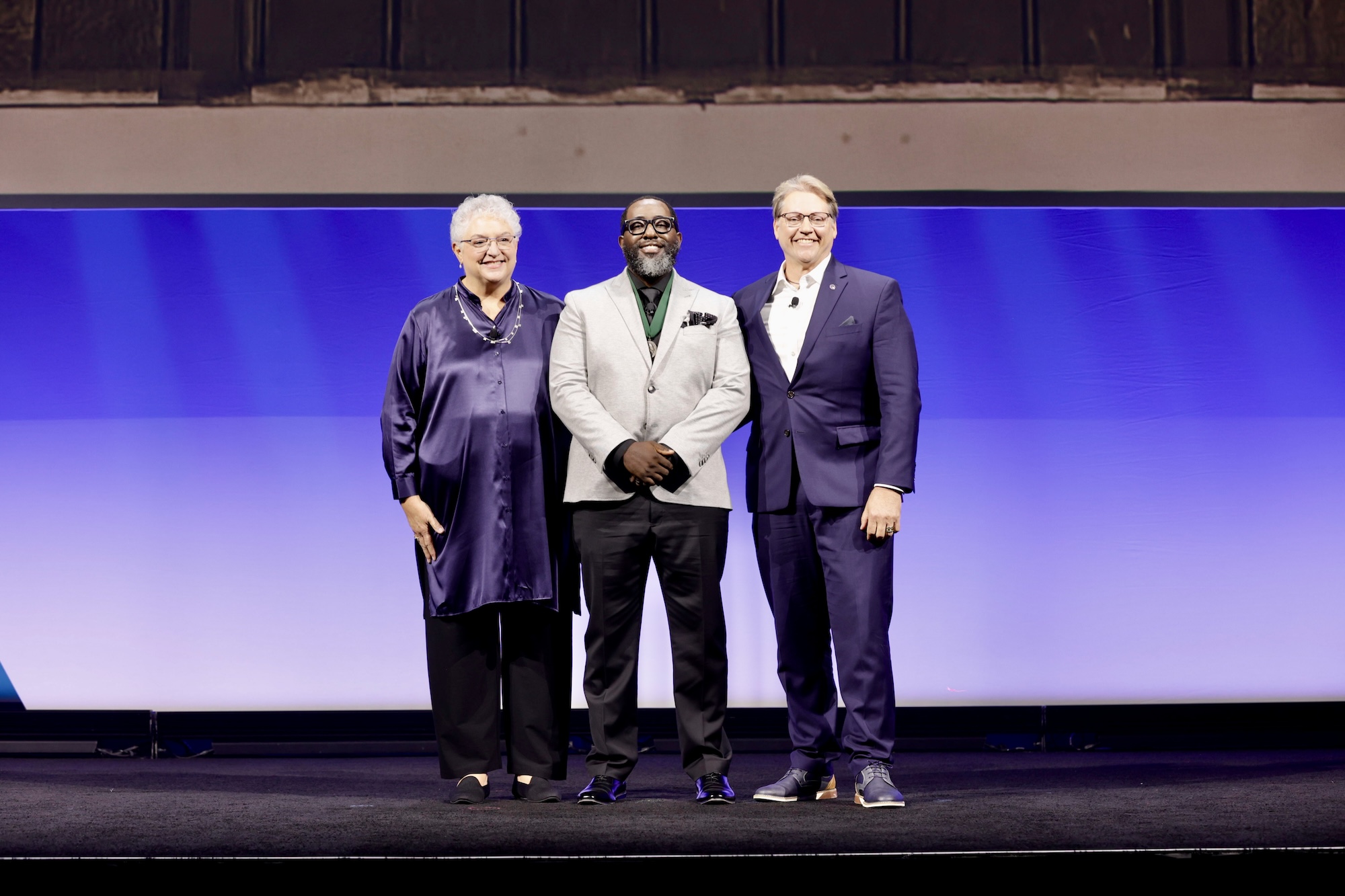
Wedge and Azaroff with Michael Ford, winner of the 2026 Whitney M. Young Jr. Award. Photo by Stacey Moses, courtesy AIA
Moments before Duvall Decker took the stage to recieve its award, Detroit-based architect and educator Michael Ford offered a similarly impassioned speech while accepting the 2026 Whitney M. Young Jr. Award.
“I will not lend my license, my talent, or time to make a human being disappear,” pledged Ford. “But I will spend the rest of my career building the opposite: places that say ‘you matter, you belong, and you are seen.’”
The next AIA Conference on Architecture & Design returns to the East Coast, and will be held May 19–22, 2027, in Philadelphia, a differently beautiful city than San Diego that won’t leave attendees yearning for sand between their toes.
Looking for a reprint of this article?
From high-res PDFs to custom plaques, order your copy today!

.webp?height=200&t=1728441521&width=200 "Jacobs Music Center-Lead (1).jpg")