Architectural Record
search
cart
facebook twitter linkedin youtube
  • Sign In
  • Subscribe
  • Sign Out
  • My Account
Architectural Record
  • NEWS
    • Latest News
    • Awards
    • Interviews
    • Obituaries
    • Podcasts
      • Design:Ed Podcast
      • Sponsored Podcasts
  • OPINION
    • Book Reviews / Excerpts
    • Exhibition Reviews
    • Forum
  • EXCLUSIVES
    • Videos
    • Design Vanguard
    • Top 300 Firms
    • Sponsored Content
    • Sponsored eBooks
    • From the Archives
  • CONTINUING ED
    • Editorial Continuing Ed
    • CE Center
    • CE Academies
  • PROJECTS
    • Buildings By Type
    • Reuse & Renovation
    • Museums & Arts Centers
    • Colleges & Universities
    • Multifamily Housing
    • Interiors
    • Lighting
    • Kitchen & Bath
  • HOUSES
    • Record Houses
    • House of the Month
    • Featured Houses
  • PRODUCTS
    • Products by Category
    • Record Products of the Year
    • Latest Products
  • EVENTS
    • Dates & Events
    • Record on the Road
    • Innovation Conference
    • Sustainability in Practice
    • Women In Architecture
    • Webinars
    • Ad Excellence Awards
    • Submit an Event
  • CONNECT
    • Ask RECORD AI
    • Newsletters
    • Contact
    • Advertise
    • Editorial Calendar
    • Store
    • Customer Service
  • SUBMIT
    • Submission Guidelines
    • RECORD Competitions
  • MAGAZINE
    • Subscribe
    • My Account
    • Digital Edition
    • Current Issue
    • Firm Pass
    • Historic Archive
Projects

CCTV Headquarters

Too Big To Fail?: Long awaited and much debated, the enormous headquarters for CCTV finally opens, already a symbol of the new Beijing. But what does it actually say about architecture and China today?
By Clifford A. Pearson
CCTV Headquarters
CCTV Headquarters
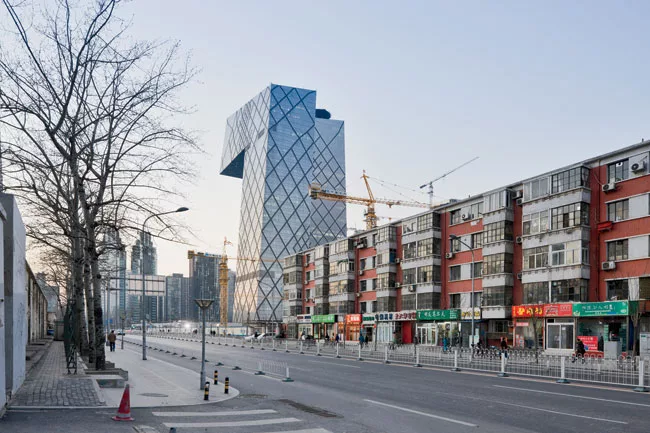
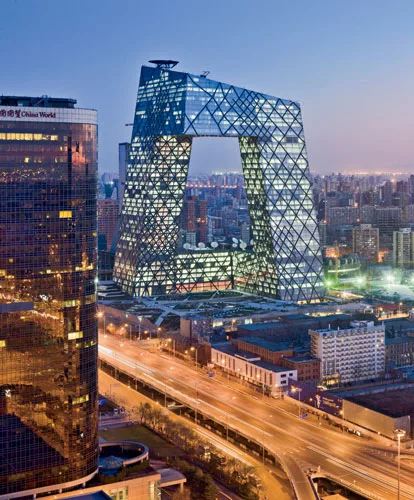
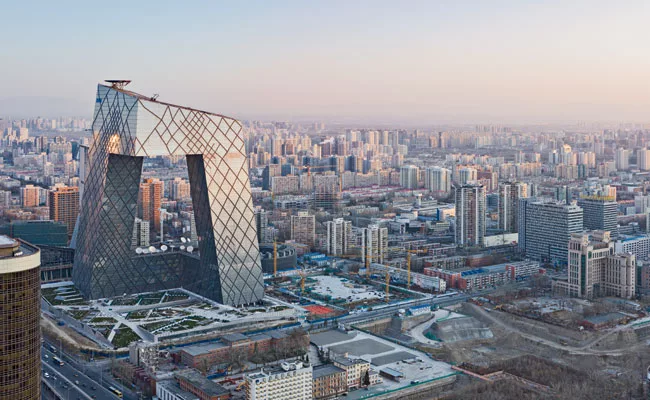
Although 'only' 768 feet tall, the 41-story CCTV building has 5.1 million square feet of space for production, broadcast, and administration functions.
 
Photo © Iwan Baan
CCTV Headquarters
CCTV Headquarters
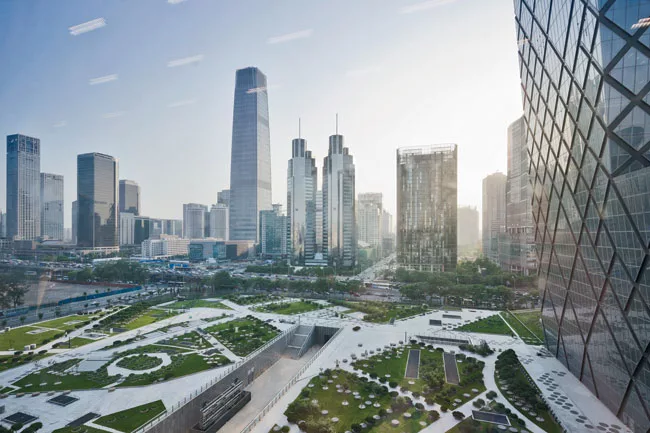
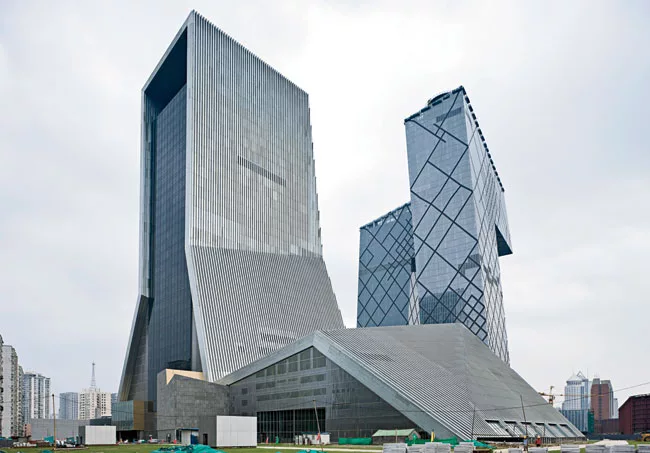
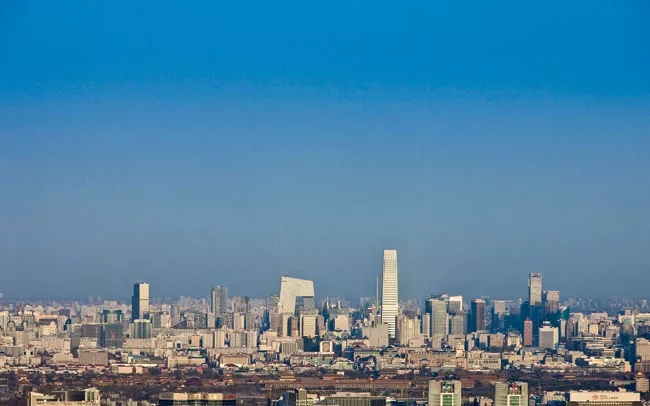
Set near the city's Third Ring Road, it has already become a landmark in a part of town that is changing from an industrial area to a new central business district. To its right is SOM's 74-story China World Trade Center.
 
Photo © Iwan Baan
CCTV Headquarters
CCTV Headquarters
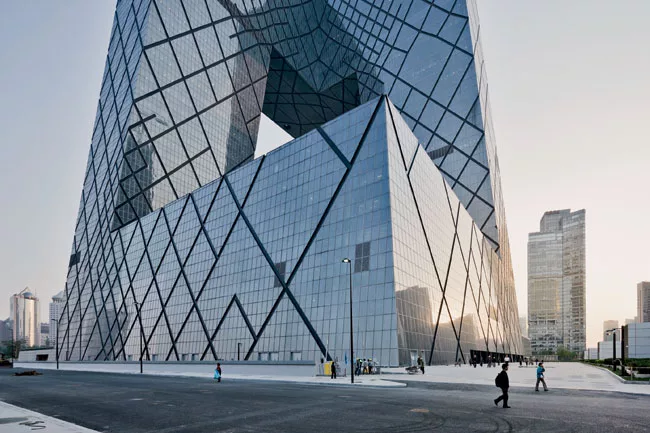
A web of diagonal steel bracing is visible on all facades and expresses the forces acting on the structure'dense where they are great and looser where they are less.
 
Photo © Iwan Baan
CCTV Headquarters
CCTV Headquarters
The glazing has a monolithic gray tone, which helps it blend in with the city's notoriously polluted skies and hide dirt.
 
Photo © Iwan Baan
CCTV Headquarters
CCTV Headquarters
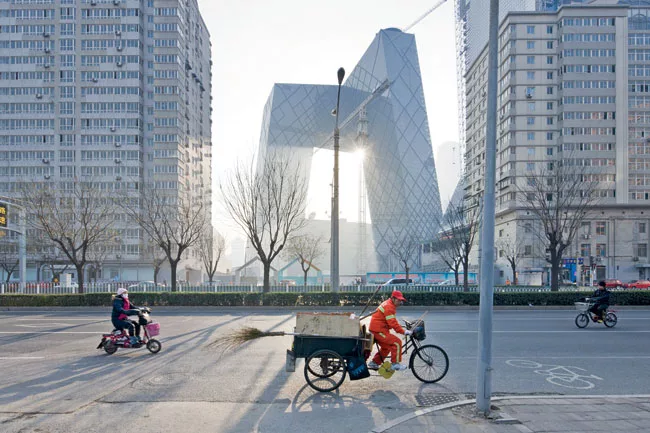
The building's unconventional form seems to change as you move around it, so its presence in the city shifts too.
 
Photo © Iwan Baan
CCTV Headquarters
CCTV Headquarters
Gardens open only to CCTV employees offer places to relax.
 
Photo © Iwan Baan
CCTV Headquarters
CCTV Headquarters
TVCC plays the more public sidekick to CCTV 's corporate headquarters.
 
Photo © Iwan Baan
CCTV Headquarters
CCTV Headquarters
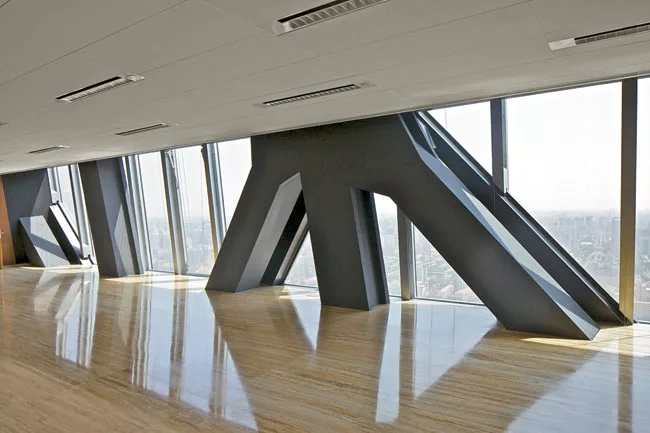
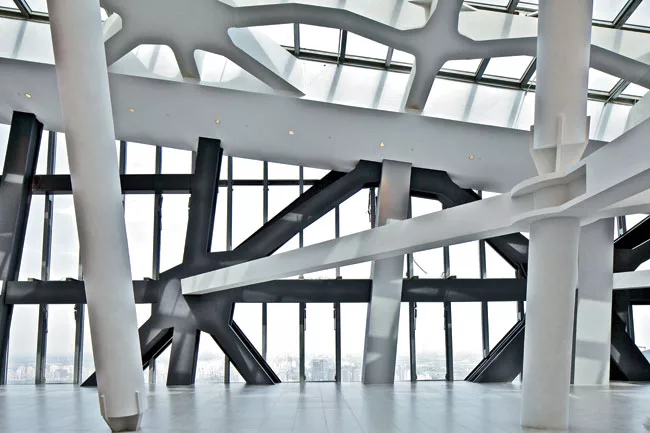
The architects let exposed structural elements such as bracing and columns animate the interiors'including this generic office area.
 
Photo © Iwan Baan
CCTV Headquarters
CCTV Headquarters
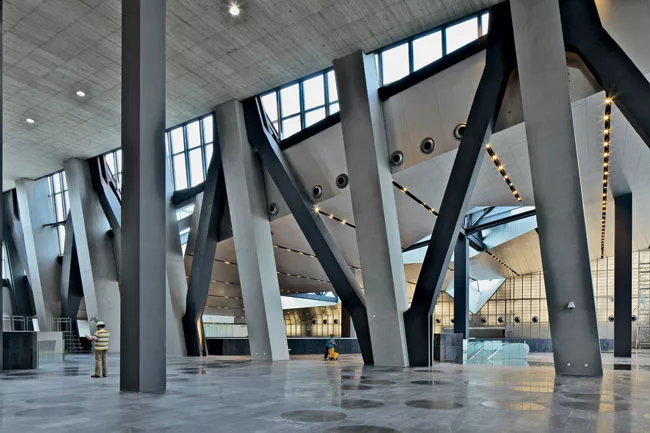
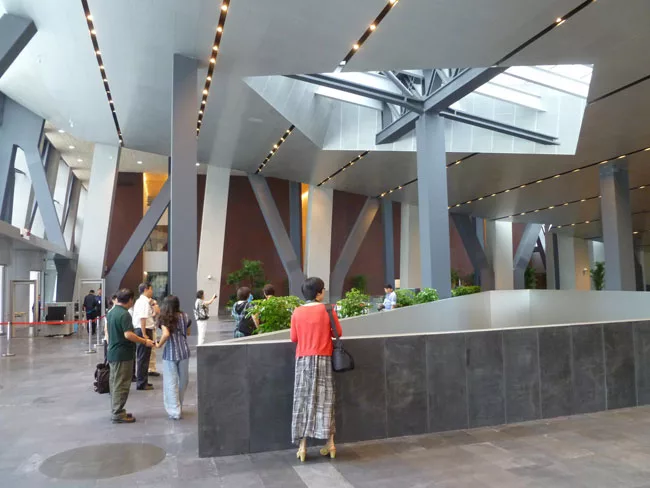
Large skylights and clerestory windows add drama to the entry pavilion.
 
Photo © Iwan Baan
CCTV Headquarters
CCTV Headquarters
On the plaza level, the circulation loop includes almost-Gothic arcaded perimeter hallways.
 
Photo © Iwan Baan
CCTV Headquarters
CCTV Headquarters
A canteen will occupy a dramatic light-filled space near the top of the building.
 
Photo © Iwan Baan
CCTV Headquarters
CCTV Headquarters
CCTV began moving into the building in the spring and broadcast the London Olympics from its new studios this summer, four years after it had hoped to cover the Beijing Games from there. About 10,000 people will work in the building, which had an official construction budget of $795 million but has been reported to have cost at least $900 million. The building now comes alive at night.
 
Photo © Iwan Baan
CCTV Headquarters
CCTV Headquarters
Rem Koolhaas leads a tour of the entry pavilion.
 
Image courtesy OMA
CCTV Headquarters
CCTV Headquarters
Rem Koolhaas leads a tour of the entry pavilion.
 
Image courtesy OMA
CCTV Headquarters
CCTV Headquarters
Rem Koolhaas leads a tour of the entry pavilion.
 
Image courtesy OMA
CCTV Headquarters
CCTV Headquarters
Rem Koolhaas leads a tour of the entry pavilion.
 
Image courtesy OMA
CCTV Headquarters
CCTV Headquarters
Rem Koolhaas leads a tour of the entry pavilion.
 
Image courtesy OMA
CCTV Headquarters
CCTV Headquarters
Rem Koolhaas leads a tour of the entry pavilion.
 
Image courtesy Arup
CCTV Headquarters
CCTV Headquarters
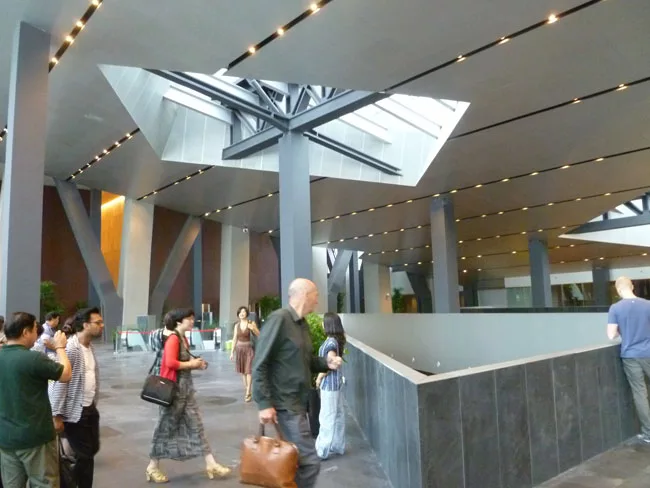
Rem Koolhaas leads a tour of the entry pavilion.
 
Photo by Clifford Pearson
CCTV Headquarters
CCTV Headquarters
The entry pavilion.
 
Photo by Clifford Pearson
cct
CCTV Headquarters
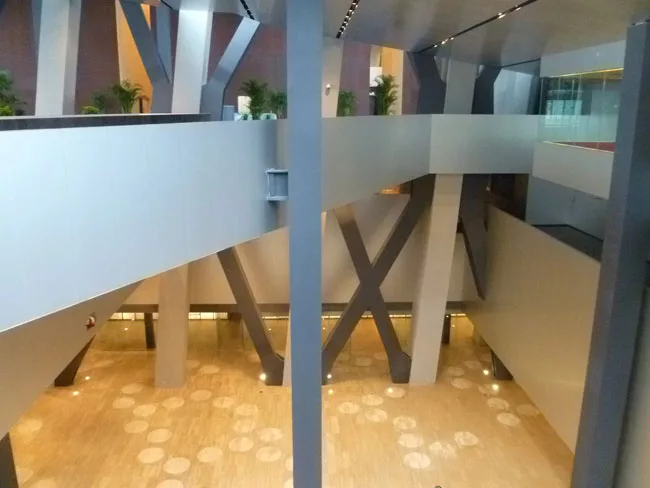
Looking from the entry pavilion to a lower level where commuters will arrive from the subway.
 
Photo by Clifford Pearson
CCTV Headquarters
CCTV Headquarters
The public area on the 37th floor.
 
Photo by Clifford Pearson
CCTV Headquarters
CCTV Headquarters
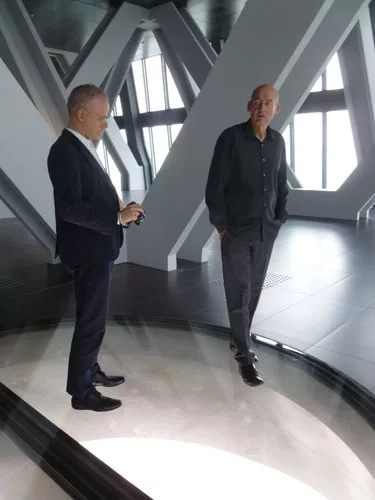
Koolhaas and Hans-Ulrich Obrist on the 37th floor.
 
Photo by Clifford Pearson
CCTV Headquarters
CCTV Headquarters
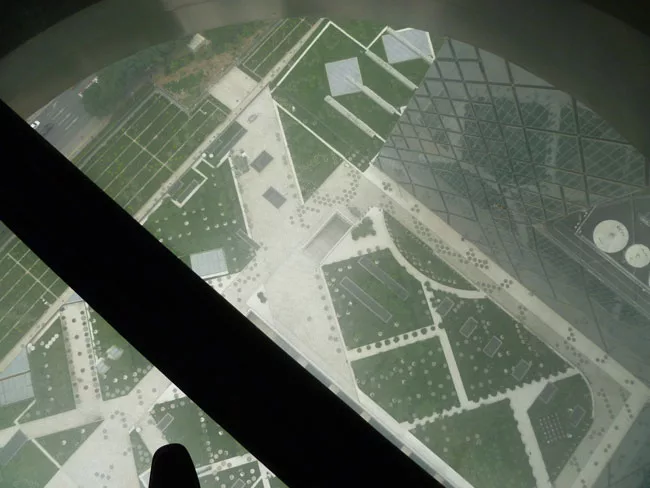
Looking down 37 stories.
 
Photo by Clifford Pearson
CCTV Headquarters
CCTV Headquarters
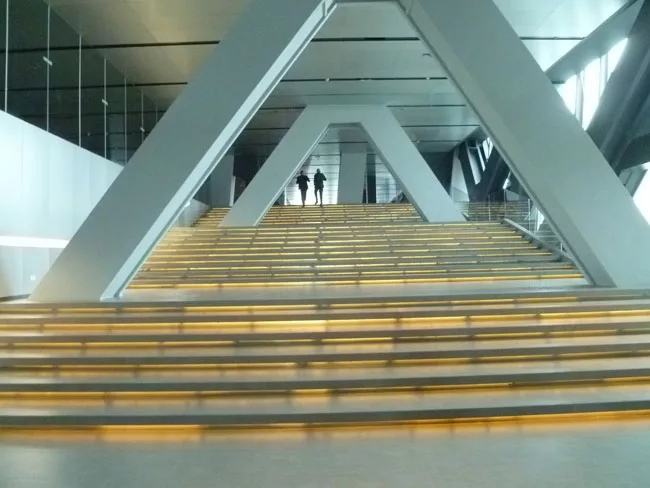
Stair leading to the 38th floor.
 
Photo by Clifford Pearson
CCTV Headquarters
CCTV Headquarters
CCTV Headquarters
CCTV Headquarters
CCTV Headquarters
CCTV Headquarters
CCTV Headquarters
CCTV Headquarters
CCTV Headquarters
CCTV Headquarters
CCTV Headquarters
CCTV Headquarters
CCTV Headquarters
CCTV Headquarters
CCTV Headquarters
CCTV Headquarters
CCTV Headquarters
CCTV Headquarters
CCTV Headquarters
CCTV Headquarters
cct
CCTV Headquarters
CCTV Headquarters
CCTV Headquarters
CCTV Headquarters
November 15, 2012

Architects & Firms

Office for Metropolitan Architecture

Beijing

People/Products

Promising to “kill the skyscraper,” Rem Koolhaas and his colleagues at Office for Metropolitan Architecture (OMA) grabbed international attention in 2002 when they won the competition to design a huge headquarters in Beijing for China Central Television (CCTV), the state-run news and entertainment network. Polemical and hyperbolic as usual, Koolhaas said the skyscraper had become “corrupted” by its proliferation around the world and “negated by repetitive banality.” So instead of joining the race to build ever taller, his scheme bent the high-rise into a loop of interconnected activities. Four years after it was originally scheduled to open—in time for the network to broadcast the Beijing Olympics from its new home—CCTV is finally moving employees into the controversial building, a 5.1 million-square-foot structure that even before it was completed had imprinted its swaggering form on the fabric of the city and the mental map of its citizens.

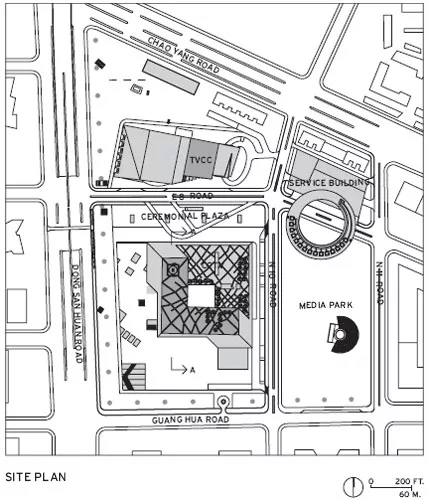
The building shares a 45-acre site with a low-rise, ring-shaped service structure and a 31-story tower called the Television Cultural Center (TVCC), both of which OMA also designed. The service building provides power to the entire complex and houses security personnel, while TVCC will have a Mandarin Oriental hotel, a public theater, restaurants, and shops. TVCC famously burned in February 2009 when fireworks celebrating the lunar New Year engulfed the building's skin in flames just months before the hotel was set to open. It is being repaired and should be complete in 2013.

The site anchors a new central business district emerging from an industrial area built during the Mao era. Plans call for about 300 high-rises there, which is one reason why OMA took a different approach with CCTV. According to Koolhaas, three of the four other firms competing for the job (KPF, SOM, and Dominique Perrault) proposed skyscrapers, while only Toyo Ito offered something different (a disc-shaped structure with a small tower). 'The form of our building was attractive to the client,' says Koolhaas. 'It set us apart.'

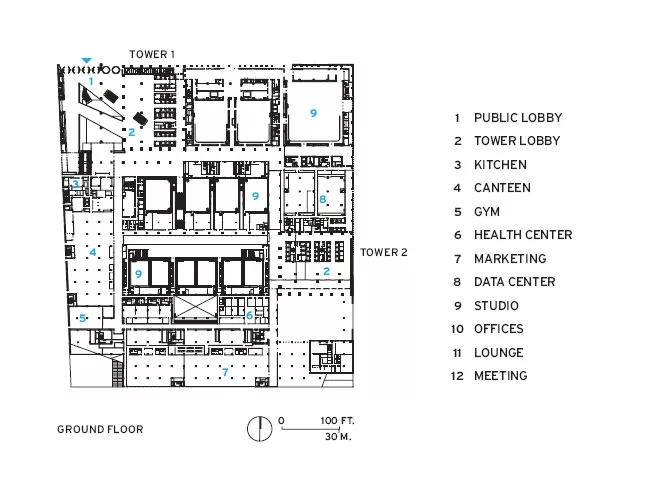
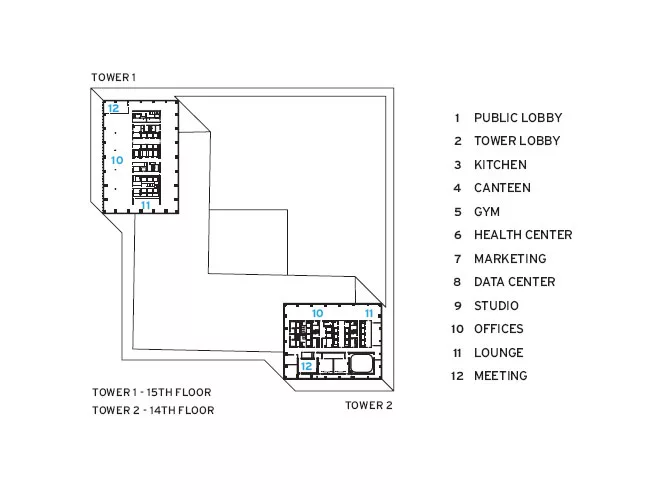
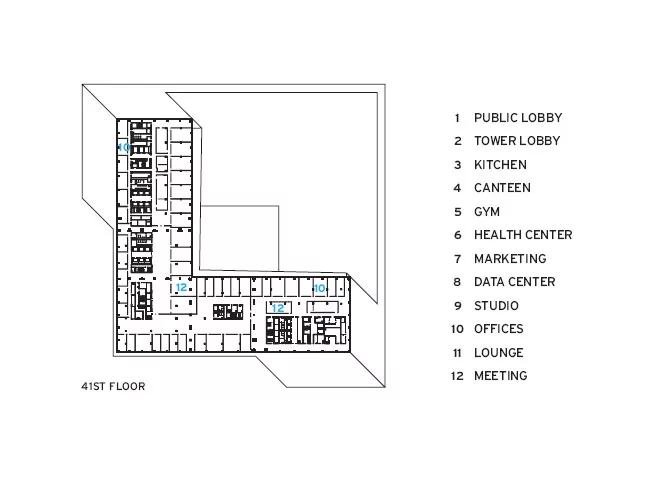
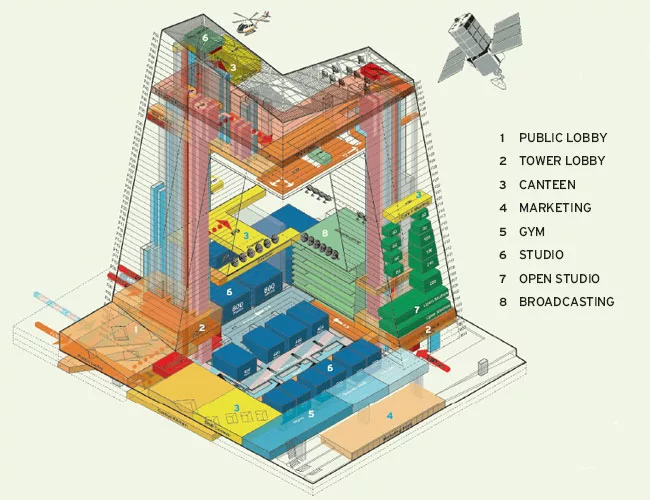
That form derived from OMA's program-driven approach to design. 'We presented the building as a diagram of all the company's components and made the argument that it was important that they confront each other,' says Koolhaas. Earlier, OMA had worked for Universal Studios on a headquarters in Los Angeles and learned that media companies often suffer from being fragmented. So the firm connected CCTV's operations'including broadcasting, production, and administration'along a circulation loop that moved from the building's base up a sloping tower, across a right-angled bridge (called the overhang), and down a second sloping tower. The underground podium and large, right-angled base provided much more contiguous space for studios and production facilities than a skyscraper would have, which appealed to the client's technology people, reports Koolhaas.

The OMA team was led by Koolhaas, Ole Scheeren (a partner until he left the firm in 2010), partner David Gianotten, and project manager Dongmei Yao. The firm worked closely with East China Architectural Design & Research Institute, which provided both architecture and engineering input.

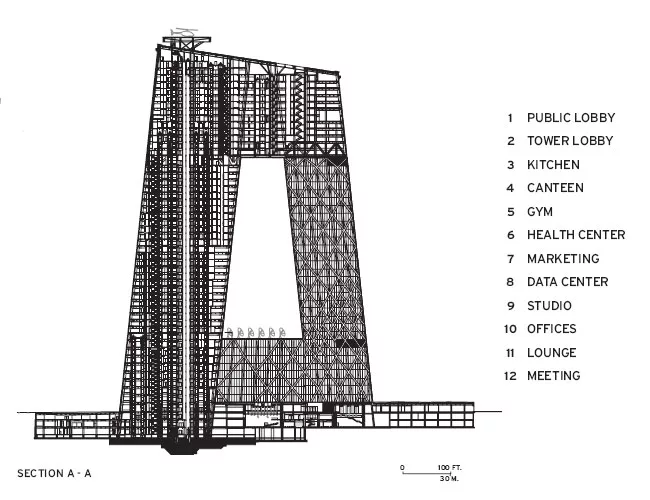
From the beginning of the design process, OMA collaborated with Cecil Balmond and a team of engineers at Arup. To resist the huge forces generated by two towers'each sloping six degrees in two directions'as well as significant potential seismic and wind events, Arup devised a scheme that turns the entire exterior into a continuous structural tube. This system is formed by a web of diagonal steel braces that expresses the pattern of forces acting on the building and serves as an important visual element on all of the facades. Where structural forces are greater, the web of braces is denser; where the forces are less intense, the web is looser. As a result, the exterior surfaces read as a kind of engineering map with a formal beauty of its own.

While the towers and exterior braces are angled, the interior cores' housing elevators, stairs, and risers are vertical. Arup and OMA had considered canting these elements as well, but the cost of angled elevators made it unfeasible. In addition to the cores, vertical columns support the towers' floor plates. Because the towers slant, these vertical columns can't rise the full height of the building. So two-story-deep trusses transfer loads at roughly halfway up the structure, and a two-story-deep transfer deck in the overhang carries loads from vertical columns to the external tube structure.

The architects clad the building in fritted glazing that reduces solar loads inside and creates a monolithic surface that mimics Beijing's notoriously gray skies. Most curtain-wall buildings in big Chinese cities look dirty almost immediately, but CCTV's glazing handles the pollution by blending in. Combined with the irregular pattern of the external bracing that obscures floor levels, the glass skin makes it hard to grasp the building's scale. In certain light and at certain distances, the 768-foot-tall structure seems almost to disappear. Yet seen from other angles and at other times of the day, it looms aggressively over apartment blocks. 'From wherever you look at it, it keeps changing in form,' says Scheeren. 'It escapes a singular definition.'

'In a city with a strong and permanent identity, it introduces a degree of uncertainty,' says Koolhaas. 'It changes from every angle'sometimes looking robust, sometimes fragile.' Although gigantic in square footage, it would have been almost three times as tall (about 2,300 feet) if it had been a single tower'nearly 700 feet taller than the Shanghai World Financial Tower, currently the tallest building in China. Its ambiguous scale informs even the nickname local residents have given it: da kucha, or 'big undershorts.' For many years, its radical design alienated the local architectural establishment, which complained that OMA and other foreign firms use China as a laboratory for alien experiments.

While big-name architects usually design only the shell and core on high-rise projects, OMA did the CCTV interiors too. Because of the complex's vast size, the firm approached the interiors as a combination of generic and specific spaces. Entering from a plaza between CCTV and TVCC, visitors are dwarfed by the unstable-looking forms, then get a visual jolt from the dynamic lobby with its angled ceilings and imposing skylights. People arriving by subway emerge here too, ascending an escalator into the dramatic space. A public loop takes visitors past broadcast studios identified by colored panels set behind glass, through halls made grand by steel arcades, and eventually to the spectacular overhang, where'if they dare'they can walk over clear glass discs set in the floor and look 37 stories down. Throughout, OMA used a simple palette of materials to help with navigation, wrapping one tower's core in Cor-Ten and the other in aluminum, and cladding floors in public spaces with creamy travertine.

Koolhaas has been attacked by some people for working for the mouthpiece of the Chinese Communist Party. But he says, 'We are part of a generation of architects that for the first time is able to work on a global scale, and that means engaging different kinds of regimes. Our work is based on a longer engagement, as these countries change.'

Has CCTV killed the skyscraper? Of course not'a fact made clear by the towers starting to crowd around it. But it offers an intriguing alternative, one that uses its odd geometry to provoke questions of architectural etiquette'such as how to fit into (and stand out from) a context in flux. Its awkward form, though, grows on you, like a geeky classmate who might seem strange at first but increasingly smart as you get to know him. The audacity of the building's structural gymnastics and its innovative approach to scale and expression could only happen right now in China, a country trying hard to convert its cash reserves into global prestige and one where clients are willing to assume high levels of risk. CCTV represents a remarkable moment in Beijing's history, one that may already be slipping away as China's radical transformation slows.

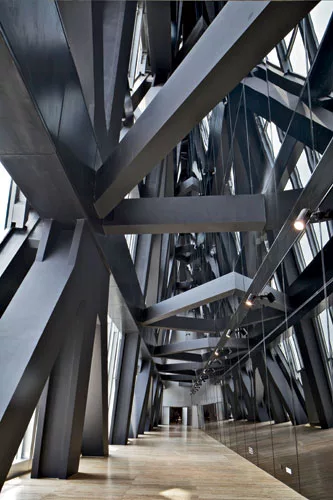
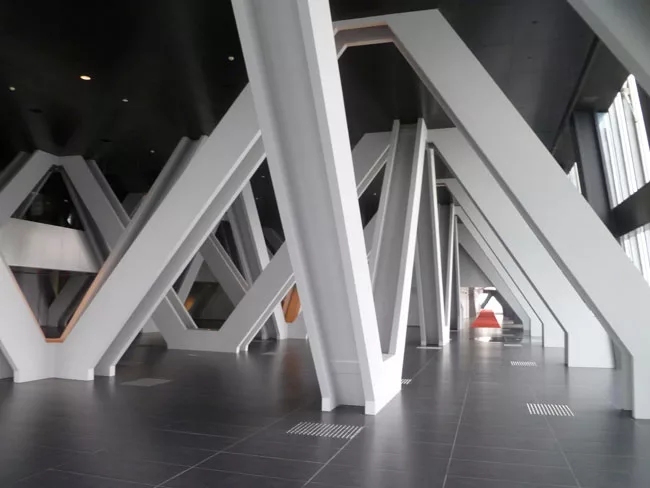
An engineering marvel, CCTV flaunts its technological prowess in its radical geometry and exposed steel bracing. And its most daring structural element is the 'overhang,' a nine-to-13-story bridge that makes a right turn in midair as it spans the gap between the two angled towers. Looming 37 stories above the ground, it juts out 245 feet from one tower and 220 feet from the other. During construction, the two arms of the overhang were cantilevered from the towers before being connected to form a more stable bridge and complete the building's continuous structural tube. Making that connection was a dramatic moment during construction and required a precise fit. Because the sun warms and expands the steel in each part of the building at a different time during the day, construction workers had to complete the task early in the morning when the arms are the same temperature. Visitors today who take the public tour through CCTV get a visceral understanding of the engineering feat when they arrive at the overhang and walk over three clear glass discs set in the deck of the 37th floor. A veritable forest of exposed steel bracing here also helps bring the construction story alive for anyone visiting the space. —C.A.P.


Photo ' Philipp e Ruault (left); Photo ' Iwan Baan (right)
On the 37th floor in the overhang, visitors can walk over glass portals and look down to the plaza (left). Exposed steel bracing forms a continuous tube structure that resists the huge forces generated by the building’s cranked and leaning forms. (right)

People

Owner: China Central Television

Architect:
Office for Metropolitan Architecture (OMA)
Heer Bokelweg 149
3032 AD Rotterdam
Netherlands
T: +31 10 243 82 00
F: +31 10 243 82 02

Personnel in architect's firm who should receive special credit:
The CCTV project was led by OMA / Rem Koolhaas, former OMA partner Ole Scheeren (until 2010), partner David Gianotten and project manager Dongmei Yao in close collaboration with partners Shohei Shigematsu, Ellen van Loon and Victor van der Chijs.

The design team consisted of project architects Anu Leinonen, Charles Berman and Adrianne Fisher together with Design team(A-Z): Alain Fouraux, Arianna Spaccasassi, Antonio Teles Branco, Beatrice Schiavina,  Beatriz Ramo Lopez, Catarina Canas, Charles Gosrisirikul, Chris James, Christina Murphy, Chris van Duijn, Daan Ooievaar, Dan Cheong, Dirk Zschunke, Dorthee Dietz, Erez Ella, Fang Tieying, Faustina Tsai, Feng Pei, Fernando Donis; Florian Pucher, Gabriela Bojalil, Gaspard Estourgie, Georg Bucher, Gonzalo Laurentiu Coceanga, Hendrik Gruss, Guillaume Colboc, Hiromasa Shirai, Holly Chacon,  James Harper, Jasmine Tsoi, Jeffrey Bolhuis, Joao Bravo Da Costa, Joao Gomes Branco Teodosio, Johannes Buchholz,  Joris Fach, Joseph Monteleone, Keren Engelman, Kam Fai Tai, Laurent Troost,  Lawrence Leung, Li Guilin, Liu Xiaodong, Lodewijk van Eeghen, Loy Tsao, Mamen Escorihueles, L. E. Tsao, Manuel Shvartzberg, Max Burianek, Max Rink, Max Schwitalla, Melissa Dowler, Menno van der Meer, Michel van der Kar, Paul Burgstaller , Paul Kroese,  Pedro Costa Gama, Peter Lee ,Roberto Otero, Rodrigo Nunez Carrasco, Rodney Eggleston, Sarah Gibson, Shi Wenchian, Shiro Ogata, Steffen Ell, Steffie Wedde, Steven Smith, Stuard Maddox,  Suse Koch, Tammo Prinz, Ted Lin, Tim Callaghan, Torsten Schroeder, Victoria Willocks, Wang Xinyuan, Wang Yunzhu, Wu You, Xu Tian Tian, Yimin Zhu, Yiannis Kanakakis, Yu Long, Zhaohui Wu; and Support team (A-Z): Lisa Aalders, May Yan Fan, Li Dan, Liu Aoshuang, Liu Yonghong, Sun Yongzhen, Ou Qiang, Wang Yimeng, Wang Yu, Wu Xinghua, Xu Yi, Zhang Yajuan, Zhao Xiaoyue

Architect of record : OMA/ECADI

Interior designer: OMA/ECADI

Engineer(s): ARUP/ECADI—Cecil Balmond, Chris Carroll, Michael Kwok, Rory McGowan, Paul Cross, Xiaonian Duan, Craig Gibbons, Goman Ho, Richard Lawson, Alexis Lee, Andrew Luong, Chas Pope, design team

Local design institute:
East China Architectural Design & Research Institute Co. Ltd.  (ECADI)
No.151 Hankou Rd. Shanghai, 200002
Tel: 0086-21-63217420
Fax:0086-21-63214301

Consultant(s):
Structure, Services, Fire, Security Engineering: Arup, London/Hong Kong/Beijing 
Facade Engineering and Design Consultancy: Front Inc, New York
Lighting: Lighting Planners Associates, Tokyo
Acoustical: DHV Building and Industry, Eindhoven
Landscape: Inside/Outside, Amsterdam

Others:
Broadcast Consultancy: Sandy Brown Associates LLP, London
Theatre Consultancy: Ducks Scéno, France 
Vertical Transportation Consultants: Lerch, Bates & Associates, London
High Rise Consultant: DMJMH+N, Los Angeles 
Foodservice Consulting and Planning: Romano Gatland, New York
Signage / Graphics: 2x4 Inc, NY
Strategic Advisor: Qingyun Ma, Shanghai

General contractor: China State Construction Engineering Corporation

Photographer(s):
Iwan Baan, Jim Gourley, Phillippe Ruault

Renderer(s):
Crystal CG

CAD system, project management, or other software used:
AutoCAD, 3Dmax, Rhinoceros, SketchUp, Very, Microsoft office, Adobe design

Size:

5.1 million square feet

Cost:

$795 million'$900 million

Completion date:

May 2012


Products

Structural system
Steel Fabricator:
BAOSTEEL
Address: Baosteel Tower, Pu Dian Road 370, Pudong New District, Shanghai, 200122, P.R.C
Telephone:86 21 58350000 / 58358888
FAX:86 21 68404832
Sales Hotline:400-820-8590
Website: www.baosteel.com
Email: webmaster@baosteel.com
Sales Email:customer@baosteel.com
Purchase Email:baobuy@baosteel.com

Jiang Su Huning Steel Mechanism CO. Ltd.
Address: 605-1, Building No. 76, East 4th ring road, Chaoyang District, Beijing, 100124, P.R.C
Telephone: 010-59626325 010-59626137 010-59626136
FAX: 010-59626325
Sales Hotline:400-820-8590
Website:www.jshngj.com/
Email: jshngj-bjoffice@vip.163.com , jshngj-shfirm@vip.163.com

Exterior cladding at plinth: BROWN TRAVERTINE

MANUFACTURER:Yingliang Stone Co., Ltd.
Address: R-12# Baoshui Market Building Xiangyu Road Huli Area Xiamen China
Telephone: 0086-592-6024097
FAX:0086-592-6024087
E-mail:yingliangstone@yingliang.com
WEB:www.yingliang.com

Metal/glass curtain wall system: Beijing Jangho Curtain Wall CO., LTD
Jangho Beijing (Headquarters)
Address:No. 5, Niuhui North 5th Street, Shunyi District, Beijing 101300
Toll Free: 400-650-1166
Tel: (86)010-60411166
Fax: (86)010-60411666/555/888
Email: jangho@janghogroup.com

Glazing:
Manufacturer:CSG HOLD CO, LTD
CSG Headquarters
Address: CSG Building, No. 1, 6th Industrial Road, Shekou, Shenzhen, P.R.C. 518067
Telephone: 0755-26860666
FAX: 0755-26692755

Stone paving and stone laminated Ceiling in lobbies: Yellow travertine
Manufacturer: Yingliang Stone Co., Ltd.
Address: R-12# Baoshui Market Building Xiangyu Road Huli Area Xiamen China
Telephone: 0086-592-6024097
FAX:0086-592-6024087
E-mail: yingliangstone@yingliang.com
WEB: www.yingliang.com

Stone laminated ceiling fabricator:
Beijing Ispert lamination material corporation
Address: 6 Street, Guoxing, Guoxian Industrial Development Zone, Tongzhou District, Beijing
Telephone: 010-80587099, 13901360204/13301226280
FAX:010-80587195/010-80587099-8005
E-mail: ispert@ispert.com
WEB: www.ispert.com/cn

Tower 1 core cladding: Corten: 3mm thick corten
Material provider: Shanghai Gate Construction Consulting Co. Ltd
Address:RM1503£¬No.1 MingHua Building£¬No.525 FangXie Road
Tel:86-21-63451685
Fax:86-21-63452690
Email: info@gatech.cn
Post: 200011

Lighting (major brand used)
ERCO 
iGuzzini
Phillips
Panasonic
Thorn

Elevators/Escalators: SHANGHAI MITSUBISHI ELEVATOR
Address: 811 Jiang Chuan Road, Minhang, Shanghai, China (Mainland)
Tel:86-21-24083482
Fax: 86-21-24083488
Website: www.smec-cn.com/en/index.asp

 
KEYWORDS: Beijing

Share This Story

Looking for a reprint of this article?
From high-res PDFs to custom plaques, order your copy today!

Cliff portrait 2 0t5a1761 0031

Contributing editor Clifford Pearson is the co-author, with A. Eugene Kohn, of The World By Design, and writes about architecture and urbanism.

Post a comment to this article

Report Abusive Comment

Subscription Center
  • Create an Account
  • Start a Subscription
  • Manage My Account
  • Sign Up for Newsletters
  • Visit Customer Service
  • Update Preferences

More Videos

Sponsored Content

Sponsored Content is a special paid section where industry companies provide high quality, objective, non-commercial content around topics of interest to the Architectural Record audience. All Sponsored Content is supplied by the advertising company and any opinions expressed in this article are those of the author and not necessarily reflect the views of Architectural Record or its parent company, BNP Media. Interested in participating in our Sponsored Content section? Contact your local rep!

close
  • TAMLYN XtremeTrim Exterior Trim
    Sponsored byTamlyn

    Designing Cleaner Panel Facades: Why Exterior Trim Details Matter

  • Building with Vapor Barriers
    Sponsored byReef Industries, Inc.

    Vapor Barriers Help Control Moisture in Tighter Building Designs

  • Duct Interior with Prodeq System
    Sponsored byHenry, a Carlisle Company

    Designing Resilient Water Containment Systems

DESIGN:ED Podcast
Listen to Architectural Record’s DESIGN:ED Podcast

Events

June 10, 2026

Rethinking Stormwater – The Power of Porous Paving

Credits: 1 AIA LU/HSW; 1 AIBD P-CE; 0.1 ICC CEU

Learn how porous paving systems support stormwater management, reduce heat island effects, and enhance sustainable site design performance.

June 11, 2026

Very Early Warning Fire Detection for Mission-Critical Facilities

Credits: 1 AIA LU/HSW; 1 AIBD P-CE; 0.1 ICC CEU

Examine advanced fire detection strategies that support uptime and enhance safety in data centers and other mission-critical facilities.

View All Submit An Event

Products

2026 Architect's Square Foot Costbook

2026 Architect's Square Foot Costbook

See More Products

Popular Stories

Practice Matters illustration

What’s in a (Firm’s) Name? Thinking About Succession and Legacy

Coronado Bridge

The Architect’s Guide to San Diego

Practice Matters illustration

By the Numbers: Counting America's Architects

Riverdale House by Studio Lau

Riverdale House by Studio Lau

House on a Hill

Design Vanguard 2026: Forma

Broader Sustainability of CMU - Free Webinar - May 21, 2026

Related Articles

  • OMA's Fire-Ravaged TVCC Will Be Repaired

    See More
  • The Interlace

    The Interlace

    See More
  • What Might Have Been

    See More
×

The latest news and information

#1 Source for Architectural Design, News and Products

SUBSCRIBE
  • RESOURCES
    • Advertise
    • Contact Us
    • Submit
    • Store
  • ACCOUNT CENTER
    • Create an Account
    • Start a Subscription
    • Manage My Account
    • Sign Up for Newsletters
    • Visit Customer Service
    • Update Preferences
  • PRIVACY
    • PRIVACY POLICY
    • TERMS & CONDITIONS
    • DO NOT SELL MY PERSONAL INFORMATION
    • PRIVACY REQUEST
    • ACCESSIBILITY
  • SERVICES
    • Marketing Services
    • Reprints
    • Market Research
    • List Rental
    • Survey/Respondent Access
  • STAY CONNECTED
    • Linkedin
    • Facebook
    • Instagram
    • YouTube
    • X (Twitter)

Copyright ©2026. All Rights Reserved BNP Media, Inc. and BNP Media II, LLC.

Design, CMS, Hosting & Web Development :: ePublishing