This website requires certain cookies to work and uses other cookies to help you have the best experience. By visiting this website, certain cookies have already been set, which you may delete and block. By closing this message or continuing to use our site, you agree to the use of cookies. Visit our updated privacy and cookie policy to learn more.
This Website Uses Cookies By closing this message or continuing to use our site, you agree to our cookie policy. Learn MoreThis website requires certain cookies to work and uses other cookies to help you have the best experience. By visiting this website, certain cookies have already been set, which you may delete and block. By closing this message or continuing to use our site, you agree to the use of cookies. Visit our updated privacy and cookie policy to learn more.
An eccentric show at the Museum of Modern Art, on view through October 1, uncovers little-known corners and crevices of the architect's staggering body of work.
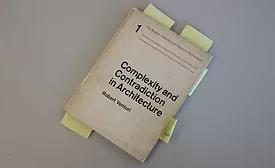
“It’s like a gathering to decipher the Talmud,” architectural historian Jean-Louis Cohen observed at a three-day symposium of scholars, architects, and students discussing Robert Venturi’s famous opus, Complexity and Contradiction in Architecture, published 50 years ago.
For more than 60 million refugees, asylum seekers, and internally displaced people around the world, “shelter” has been experienced through relentless movement and escape.
The New York architecture community has been in a swivet since the posting of an article titled “MoMA to Abolish Architecture and Design Galleries” in Architects Newspaper on April 12.