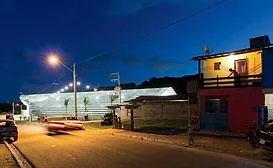
A proposal for the headquarters of nonprofit organization Jongo Da Serrinha will transform a warehouse into an education and cultural center in the Morro da Serrinha favela.
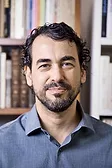
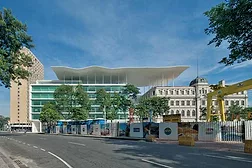
Rodrigo Mindlin Loeb, with his former professor Eduardo Riesenkampf de Almeida, designed the Brasiliana Library at the University of São Paulo, which houses the collection of rare books on Brazilian history and culture donated by Loeb's grandparents Guita and José Mindlin.
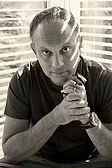
Angelo Bucci has run the SPBR office in S'o Paulo since 2003. He became one of the most prominent members of the young generation of architects to emerge following the end of Brazil's military dictatorship after he won, along with lvaro Puntoni and Jos Oswaldo Vilela's public competition to design the Brazil pavilion at the 1992 Seville Expo, one of the first major civic projects following the return of democracy. For political reasons, the pavilion was not built.
Arthur Casas is a graduate of the renowned architectural program at Mackenzie University in São Paulo and an heir to the city's Modernist traditions. While he is one of Brazil's most sought-after residential designers, his work also includes larger multi'family, commercial, and institutional projects.
Tucked between lushly vegetated sand dunes and the Atlantic Ocean, the Mãe Luiza favela spills out from the fringes of Natal, a city of 800,000 people in northeastern Brazil.
After winning a competition to revitalize Pedras Salgadas Park, a 1920s-era hot springs resort in northern Portugal, architect Tiago Rebelo de Andrade and his father, Luis, decided to create a grown-up take on a typical father-son structure: the tree house.
By George H. Marcus and William Whitaker. Yale University Press, 2013, 269 pages, $65. A Prism for Viewing a Master While reading this outstanding book, I kept remembering the Bill Clinton 1992 election campaign that was defined by the phrase “It's the economy, stupid.” I had to keep myself from shouting, “It's the houses, stupid!” Marcus and Whitaker have not only directed superb scholarship to the study of Kahn's houses—both built and unbuilt—but have shown that the houses can be a lens on a broader understanding of Kahn's philosophy, his interpretation of Modernism, and his appreciation of the vernacular. They
 RSS
RSS