This website requires certain cookies to work and uses other cookies to help you have the best experience. By visiting this website, certain cookies have already been set, which you may delete and block. By closing this message or continuing to use our site, you agree to the use of cookies. Visit our updated privacy and cookie policy to learn more.
This Website Uses Cookies By closing this message or continuing to use our site, you agree to our cookie policy. Learn MoreThis website requires certain cookies to work and uses other cookies to help you have the best experience. By visiting this website, certain cookies have already been set, which you may delete and block. By closing this message or continuing to use our site, you agree to the use of cookies. Visit our updated privacy and cookie policy to learn more.
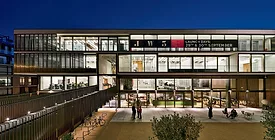
Two teams of architects employ very different strategies to reinvigorate a pair of ambitious 1960s apartment projects, one in the north of England and the other in Paris. The enthusiasm with which Britain and France took to the construction of Mid-Century Modern social housing is equaled only by their present appetite for its demolition. In 2003, the French government announced a 10-year urban-renewal plan in which 200,000 dwellings would be replaced; in Britain, Alison and Peter Smithson's Robin Hood Gardens, completed in London in 1972, is one of many projects that once enjoyed international prestige and are now facing the
Barn Again: Mixing materials and methods from the vernacular and the modern, a Japanese architect creates a timeless retreat for the sculpture of two German artists.
Mixing materials and methods from the vernacular and the modern, a Japanese architect creates a timeless retreat for the sculpture of two German artists.
The tumult of Kiev's postwar history is evident in its architecture: The bombast of Stalin's elephantine classicism was abruptly superseded by swaths of grimly utilitarian housing after Khrushchev's turn against “unnecessary excess.”
The innovation unit of 3XN Architects rises to the challenge of turning a historic warehouse in Denmark into a state-of-the-art test kitchen for a culinary superstar.
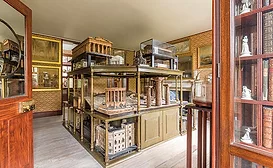
Thomas Heatherwick’s unconventional approach flouts design orthodoxy. A visit to Thomas Heatherwick’s London studio is like stepping into a Renaissance cabinet of curiosities—one of those idiosyncratic efforts to capture the wondrous variety of the natural and man-made worlds. Strange objects crowd the shelves and floor, indeterminate forms that might be product prototypes, scale models, or sculpture, hinting at the fertile imagination of a designer who transcends any narrow job description. For a New York City Longchamp store, Heatherwick created a series of curving, thermoplastic balustrades. Heatherwick set up his studio in 1994 fresh out of college, and he employs 80