Architectural Record
search
cart
facebook twitter linkedin youtube
  • Sign In
  • Subscribe
  • Sign Out
  • My Account
Architectural Record
  • NEWS
    • Latest News
    • Awards
    • Interviews
    • Obituaries
    • Podcasts
      • Design:Ed Podcast
      • Sponsored Podcasts
  • OPINION
    • Book Reviews / Excerpts
    • Exhibition Reviews
    • Forum
  • EXCLUSIVES
    • Videos
    • Design Vanguard
    • Top 300 Firms
    • Sponsored Content
    • Sponsored eBooks
    • From the Archives
  • CONTINUING ED
    • Editorial Continuing Ed
    • CE Center
    • CE Academies
  • PROJECTS
    • Buildings By Type
    • Reuse & Renovation
    • Museums & Arts Centers
    • Colleges & Universities
    • Multifamily Housing
    • Interiors
    • Lighting
    • Kitchen & Bath
  • HOUSES
    • Record Houses
    • House of the Month
    • Featured Houses
  • PRODUCTS
    • Products by Category
    • Record Products of the Year
    • Latest Products
  • EVENTS
    • Dates & Events
    • Record on the Road
    • Innovation Conference
    • Sustainability in Practice
    • Women In Architecture
    • Webinars
    • Ad Excellence Awards
    • Submit an Event
  • CONNECT
    • Ask RECORD AI
    • Newsletters
    • Contact
    • Advertise
    • Editorial Calendar
    • Store
    • Customer Service
  • SUBMIT
    • Submission Guidelines
    • RECORD Competitions
  • MAGAZINE
    • Subscribe
    • My Account
    • Digital Edition
    • Current Issue
    • Firm Pass
    • Historic Archive
Design Vanguard

Doepel Strijkers Architects

Duzan Doepel and Eline Strijkers transform sustainable into desirable with, among other projects, a garage-turned house and a green tequila distillery. Salud!
By Tracy Metz
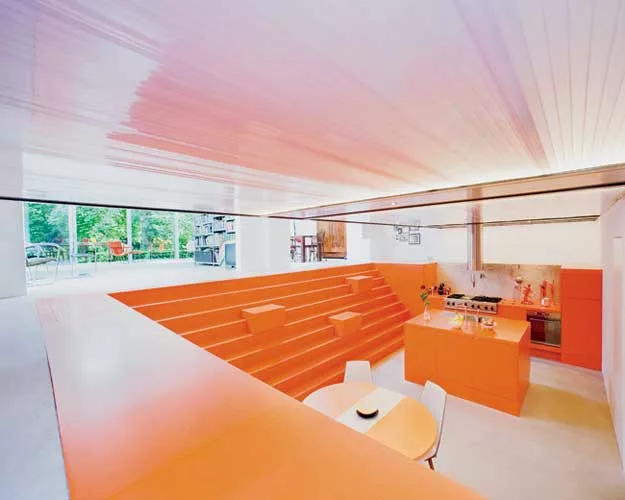
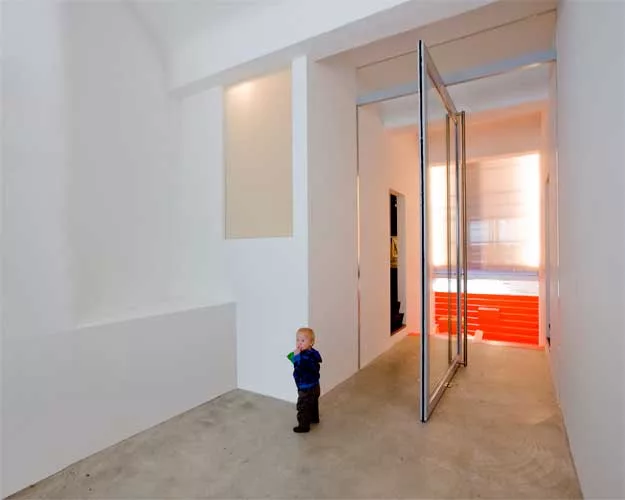
Doepel Strijkers transformed a former ambulance garage into a single-family home. By replacing the back wall with sliding-glass doors, they brought in both daylight and a view of the secluded park, he
Parksite
Rotterdam, The Netherlands
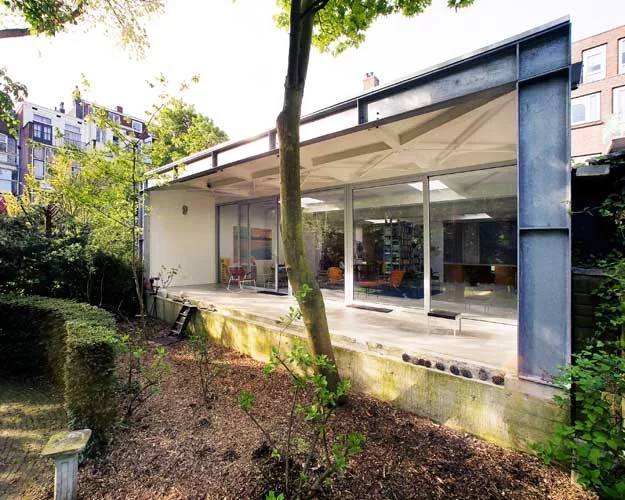
Doepel Strijkers transformed a former ambulance garage into a single-family home. By replacing the back wall with sliding-glass doors, they brought in both daylight and a view of the secluded park, hence the name.
Photo courtesy Doepel Strijkers Architects
Doepel Strijkers transformed a former ambulance garage into a single-family home. By replacing the back wall with sliding-glass doors, they brought in both daylight and a view of the secluded park, he
Parksite
Rotterdam, The Netherlands
Doepel Strijkers transformed a former ambulance garage into a single-family home. By replacing the back wall with sliding-glass doors, they brought in both daylight and a view of the secluded park, hence the name.
Photo courtesy Doepel Strijkers Architects
Doepel Strijkers transformed a former ambulance garage into a single-family home. By replacing the back wall with sliding-glass doors, they brought in both daylight and a view of the secluded park, he
Parksite
Rotterdam, The Netherlands
Doepel Strijkers transformed a former ambulance garage into a single-family home. By replacing the back wall with sliding-glass doors, they brought in both daylight and a view of the secluded park, hence the name.
Photo courtesy Doepel Strijkers Architects
This office is on the ground floor of a 1930s harbor storage and distribution facility in Rotterdam, which stood empty for decades. The facility is now being repurposed as an incubator for startups de
HAKA Recycle Office
Rotterdam, The Netherlands
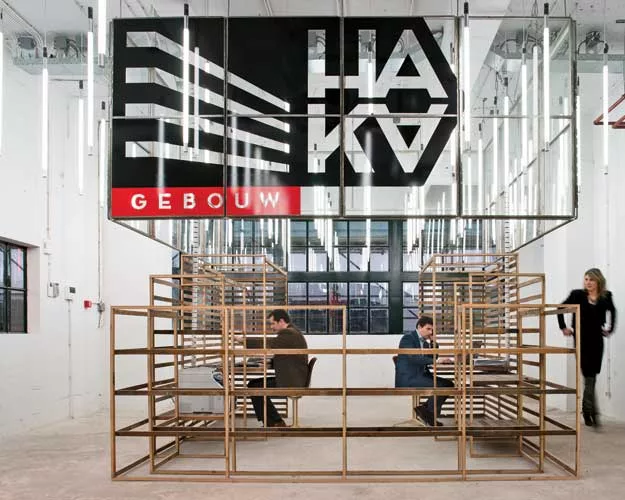
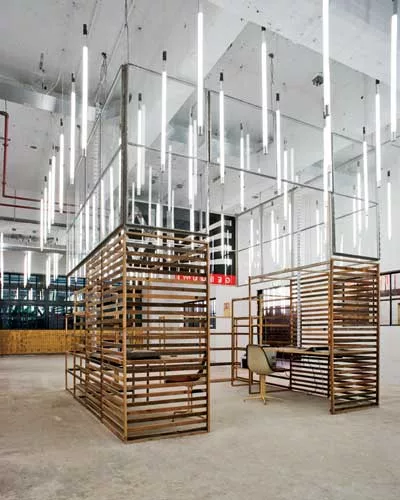
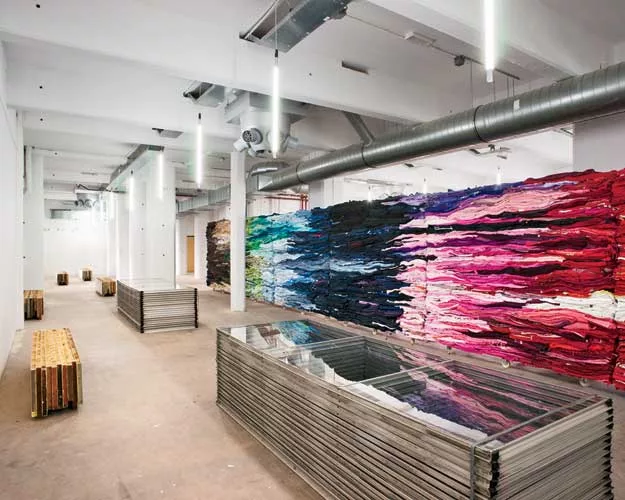
This office is on the ground floor of a 1930s harbor storage and distribution facility in Rotterdam, which stood empty for decades. The facility is now being repurposed as an incubator for startups dealing with climate, water, and energy. The architects used existing materials to furnish the office, caf', and auditorium, including old doors and greenhouse frames. The acoustic panels are made of rags sorted by color by ex-convicts on parole. 'Working with unskilled labor made it necessary to streamline and simplify the production process,' says Strijkers. 'There was one thing we hadn't taken into account: Some of the guys sorting the rags were color-blind.'
Photo courtesy Doepel Strijkers Architects
This office is on the ground floor of a 1930s harbor storage and distribution facility in Rotterdam, which stood empty for decades. The facility is now being repurposed as an incubator for startups de
HAKA Recycle Office
Rotterdam, The Netherlands
This office is on the ground floor of a 1930s harbor storage and distribution facility in Rotterdam, which stood empty for decades. The facility is now being repurposed as an incubator for startups dealing with climate, water, and energy. The architects used existing materials to furnish the office, caf', and auditorium, including old doors and greenhouse frames. The acoustic panels are made of rags sorted by color by ex-convicts on parole. 'Working with unskilled labor made it necessary to streamline and simplify the production process,' says Strijkers. 'There was one thing we hadn't taken into account: Some of the guys sorting the rags were color-blind.'
Photo courtesy Doepel Strijkers Architects
This office is on the ground floor of a 1930s harbor storage and distribution facility in Rotterdam, which stood empty for decades. The facility is now being repurposed as an incubator for startups de
HAKA Recycle Office
Rotterdam, The Netherlands
This office is on the ground floor of a 1930s harbor storage and distribution facility in Rotterdam, which stood empty for decades. The facility is now being repurposed as an incubator for startups dealing with climate, water, and energy. The architects used existing materials to furnish the office, caf', and auditorium, including old doors and greenhouse frames. The acoustic panels are made of rags sorted by color by ex-convicts on parole. 'Working with unskilled labor made it necessary to streamline and simplify the production process,' says Strijkers. 'There was one thing we hadn't taken into account: Some of the guys sorting the rags were color-blind.'
Photo courtesy Doepel Strijkers Architects
This office is on the ground floor of a 1930s harbor storage and distribution facility in Rotterdam, which stood empty for decades. The facility is now being repurposed as an incubator for startups de
HAKA Recycle Office
Rotterdam, The Netherlands
This office is on the ground floor of a 1930s harbor storage and distribution facility in Rotterdam, which stood empty for decades. The facility is now being repurposed as an incubator for startups dealing with climate, water, and energy. The architects used existing materials to furnish the office, caf', and auditorium, including old doors and greenhouse frames. The acoustic panels are made of rags sorted by color by ex-convicts on parole. 'Working with unskilled labor made it necessary to streamline and simplify the production process,' says Strijkers. 'There was one thing we hadn't taken into account: Some of the guys sorting the rags were color-blind.'
Photo courtesy Doepel Strijkers Architects
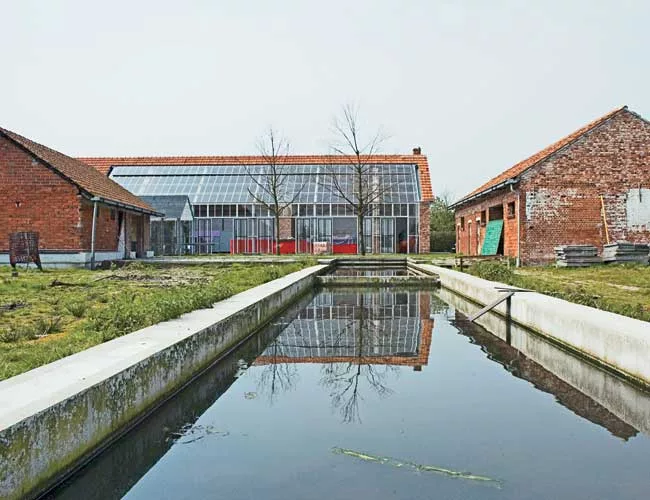
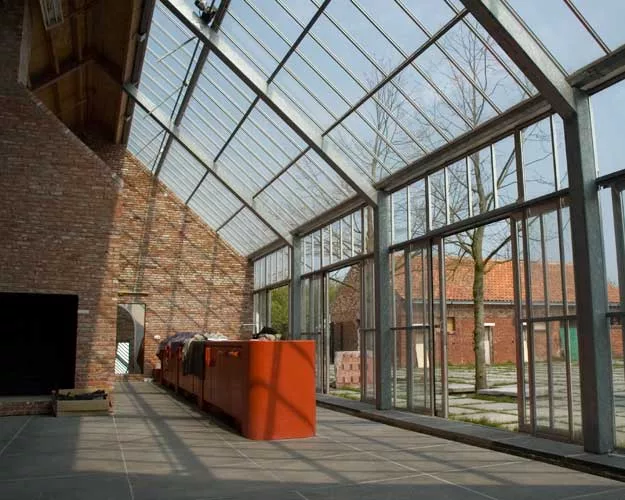
Doepel Strijkers converted former farm buildings in Meer, Belgium, into a compound for a furniture designer and artist. The new complex includes a residence, showroom, theater, guest lodging, and a ba
Lensvelt Expo Farm
Meer, Belgium
Doepel Strijkers converted former farm buildings in Meer, Belgium, into a compound for a furniture designer and artist. The new complex includes a residence, showroom, theater, guest lodging, and a bathhouse. The architects removed floors to create open spaces and used extensive glass on the main building's eastern facade to take advantage of views. This building is not only the client's residence, but also can be used as a theater or showroom.
Photo courtesy Doepel Strijkers Architects
Doepel Strijkers converted former farm buildings in Meer, Belgium, into a compound for a furniture designer and artist. The new complex includes a residence, showroom, theater, guest lodging, and a ba
Lensvelt Expo Farm
Meer, Belgium
Doepel Strijkers converted former farm buildings in Meer, Belgium, into a compound for a furniture designer and artist. The new complex includes a residence, showroom, theater, guest lodging, and a bathhouse. The architects removed floors to create open spaces and used extensive glass on the main building's eastern facade to take advantage of views. This building is not only the client's residence, but also can be used as a theater or showroom.
Photo courtesy Doepel Strijkers Architects
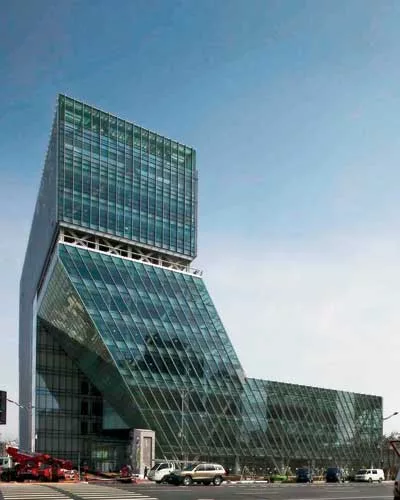
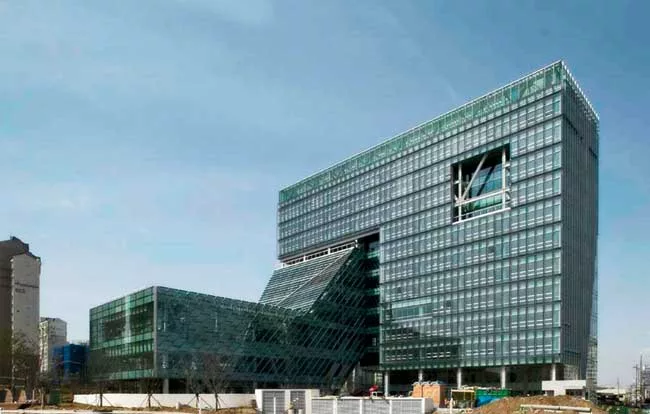
A building for the Korea National Housing Corporation in Jeonju, South Korea, consists of offices (220,000 square feet) and a cultural center (80,000 square feet). Rather than restricting the cultural
Korea National Housing Office
Jeonju, South Korea
A building for the Korea National Housing Corporation in Jeonju, South Korea, consists of offices (220,000 square feet) and a cultural center (80,000 square feet). Rather than restricting the cultural area to the ground floor, as is common, it flows up and into the office building. By turning the cultural leg of the building in the direction of an adjacent park, two public spaces are connected.
Photo courtesy Doepel Strijkers Architects
A building for the Korea National Housing Corporation in Jeonju, South Korea, consists of offices (220,000 square feet) and a cultural center (80,000 square feet). Rather than restricting the cultural
Korea National Housing Office
Jeonju, South Korea
A building for the Korea National Housing Corporation in Jeonju, South Korea, consists of offices (220,000 square feet) and a cultural center (80,000 square feet). Rather than restricting the cultural area to the ground floor, as is common, it flows up and into the office building. By turning the cultural leg of the building in the direction of an adjacent park, two public spaces are connected.
Photo courtesy Doepel Strijkers Architects
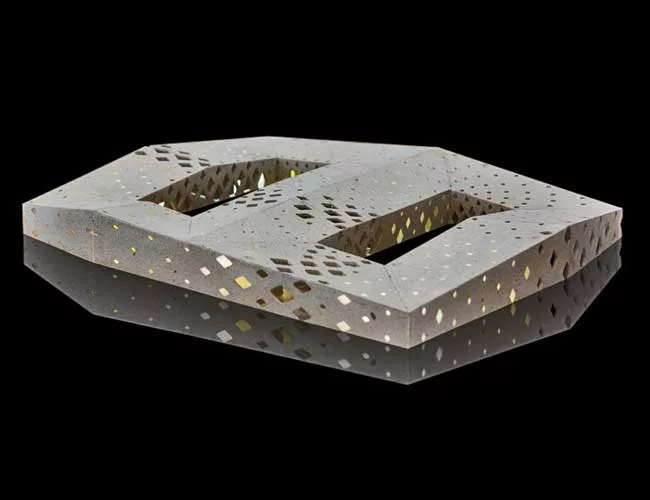
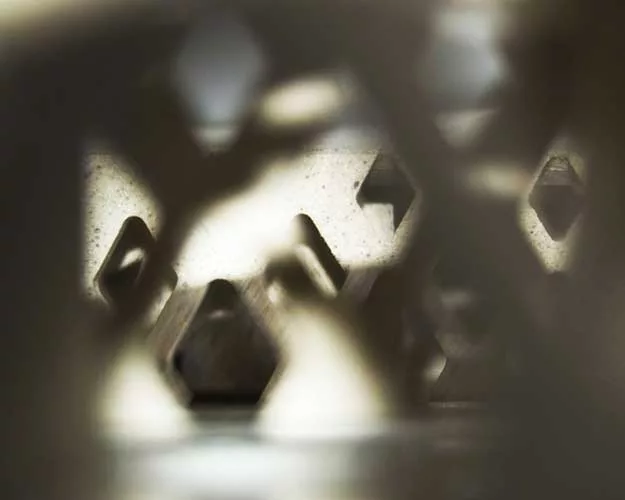
The architects created this scheme for an organic tequila distillery in Jalisco, Mexico, as a modern-day interpretation of the hacienda. The plan includes using waste from the production process to ge
Macuil Tochtli Hacienda
Jalisco, Mexico
The architects created this scheme for an organic tequila distillery in Jalisco, Mexico, as a modern-day interpretation of the hacienda. The plan includes using waste from the production process to generate energy for the factory. One of the two halves of the building will be dedicated to a chapel, a library, artists' studios, and housing for the workers and their families.
Photo courtesy Doepel Strijkers Architects
The architects created this scheme for an organic tequila distillery in Jalisco, Mexico, as a modern-day interpretation of the hacienda. The plan includes using waste from the production process to ge
Macuil Tochtli Hacienda
Jalisco, Mexico
The architects created this scheme for an organic tequila distillery in Jalisco, Mexico, as a modern-day interpretation of the hacienda. The plan includes using waste from the production process to generate energy for the factory. One of the two halves of the building will be dedicated to a chapel, a library, artists' studios, and housing for the workers and their families.
Photo courtesy Doepel Strijkers Architects
The architects created this scheme for an organic tequila distillery in Jalisco, Mexico, as a modern-day interpretation of the hacienda. The plan includes using waste from the production process to ge
Macuil Tochtli Hacienda
Jalisco, Mexico
The architects created this scheme for an organic tequila distillery in Jalisco, Mexico, as a modern-day interpretation of the hacienda. The plan includes using waste from the production process to generate energy for the factory. One of the two halves of the building will be dedicated to a chapel, a library, artists' studios, and housing for the workers and their families.
Photo courtesy Doepel Strijkers Architects
The architects created this scheme for an organic tequila distillery in Jalisco, Mexico, as a modern-day interpretation of the hacienda. The plan includes using waste from the production process to ge
Macuil Tochtli Hacienda
Jalisco, Mexico
The architects created this scheme for an organic tequila distillery in Jalisco, Mexico, as a modern-day interpretation of the hacienda. The plan includes using waste from the production process to generate energy for the factory. One of the two halves of the building will be dedicated to a chapel, a library, artists' studios, and housing for the workers and their families.
Photo courtesy Doepel Strijkers Architects
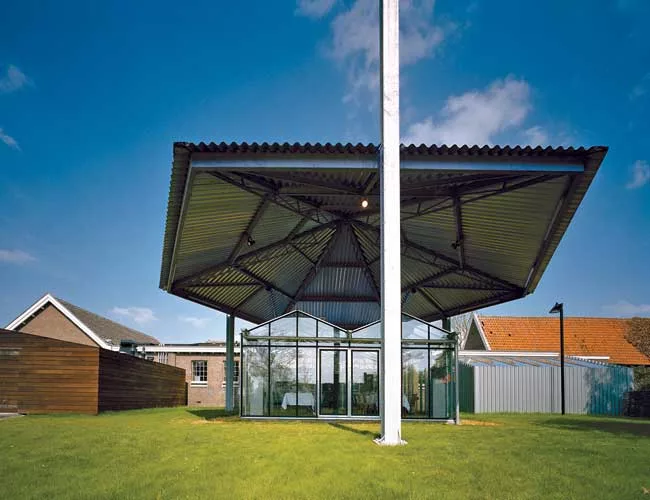
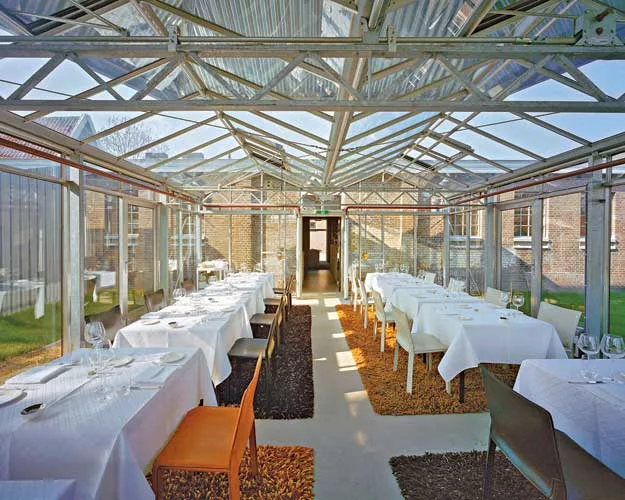
The restaurant is located in what was once a dairy stall on land owned by the former Royal Dutch Gunpowder  Factory in Ouderkerk on the Amstel, the Netherlands. The current owner gained permission to
Lute Restaurant
Amstel, the Netherlands
The restaurant is located in what was once a dairy stall on land owned by the former Royal Dutch Gunpowder Factory in Ouderkerk on the Amstel, the Netherlands. The current owner gained permission to build an additional 2,000 square feet, leaving the main space entirely available for the restaurant. The expansion consists of a corrugated metal building for the bathrooms, a wooden building for the dishwashers, and a greenhouse for private parties.
Photo © Teo Krijgsman
Doepel Strijkers transformed a former ambulance garage into a single-family home. By replacing the back wall with sliding-glass doors, they brought in both daylight and a view of the secluded park, he
This office is on the ground floor of a 1930s harbor storage and distribution facility in Rotterdam, which stood empty for decades. The facility is now being repurposed as an incubator for startups de
Doepel Strijkers converted former farm buildings in Meer, Belgium, into a compound for a furniture designer and artist. The new complex includes a residence, showroom, theater, guest lodging, and a ba
A building for the Korea National Housing Corporation in Jeonju, South Korea, consists of offices (220,000 square feet) and a cultural center (80,000 square feet). Rather than restricting the cultural
The architects created this scheme for an organic tequila distillery in Jalisco, Mexico, as a modern-day interpretation of the hacienda. The plan includes using waste from the production process to ge
The restaurant is located in what was once a dairy stall on land owned by the former Royal Dutch Gunpowder  Factory in Ouderkerk on the Amstel, the Netherlands. The current owner gained permission to
December 16, 2011

Rotterdam, The Netherlands

Doepel Strijkers Architects is revving up to conquer the world, starting with the first-ever sustainable, socially minded, zero-waste tequila factory. Organic tequila, mind you. Doepel Strijkers is the Rotterdam-based firm of architect Duzan Doepel (born in South Africa in 1971) and interior architect Eline Strijkers (born in the Netherlands in 1969). They met while working at MVRDV in the 1990s, and in 2007 joined forces. They now employ nine people. Both have won the AM NAI Public Prize for young talent and a Dutch Design Award. Both also teach, he as a lecturer on sustainable architecture and urbanism at the Research Institute for Sustainable Solutions and she at the Academy of Architecture.

So what is their take on the generic term “sustainability”? “We want to make sustainability into business as usual, but also link it to top design. In order to get mass culture behind you, you have to create an element of desire. It has to look good,” says Doepel. “In light of the resource and energy crises we are facing, sustainability has to be about reconfiguring and repurposing the buildings we already have.”

For the 2012 International Architecture Biennale Rotterdam, Doepel Strijkers is exploring how to double the inhabitants in the city’s center. “In a vibrant city, about 10 percent of the inhabitants live in the center,” says Doepel. “In Rotterdam it’s 5 percent.” The firm is looking at densification strategies such as converting empty offices into housing, building on water, adding floors to existing buildings, and infilling.

An example of the latter is their project Parksite, the conversion of a former ambulance garage on the edge of a secluded park into a single-family home. Another is the 1930s Haka building in the old Rotterdam harbor area, which is being resuscitated as an incubator for start-ups dealing with climate, energy, and water. “It was only logical,” says Strijkers, “that the interior be made of waste materials harvested from demolition sites.”

And then there is the tequila factory in the Mexican state of Jalisco. Everything Doepel Strijkers stands for comes together in this design. A closed production cycle, for example: The fibers from the agave cactus will be turned into clothes and furniture, and waste from the production process will be used to generate energy. “The building has a circular metabolism; that means that all waste streams are put to use. In addition to tequila, honey and furniture are made from the agave fibers. And as part of the energy strategy, the organic waste is fermented to make bio-gas,” says Doepel. In addition to the factory, the complex is designed to house a hacienda with a school, a library, offices, a museum, a chapel, studios for artists in residence, and housing.

The design is bioclimatic: The movement of the sun determines the massing, orientation, and the shape and size of the windows. “This is an aesthetic that is derived from the climate, the location, and the local vernacular,” Doepel says. As if to prove their dedication to this philosophy, they are (small) project shareholders. No wonder Doepel and Strijkers are called “design activists.” 

Doepel Strijkers Architects

LOCATION: Rotterdam, The Netherlands

FOUNDED: 2007

DESIGN STAFF: 10

PRINCIPALS: Duzan Doepel, Eline Strijkers

EDUCATION: Doepel – Rotterdam Academy of Architecture, M. Arch., 1999; University of the Witwatersrand, B. Arch, 1995. Strijkers – Willem de Kooning Academy, B.A.A, 1995; Ichthus Hogeschool, Design and Communication, B.Comm,  1992

WORK HISTORY: Doepel – MVRDV, 1996–2002. Strijkers – MVRDV, 1994–99

KEY COMPLETED PROJECTS: Korea National Housing Corporation Office, South Korea, 2010; HAKA Recycle Office, Rotterdam, 2011

KEY CURRENT PROJECTS: NAI Climate Square, Rotterdam, 2012

WEB SITE: www.dsarotterdam.com


Share This Story

Looking for a reprint of this article?
From high-res PDFs to custom plaques, order your copy today!

Post a comment to this article

Report Abusive Comment

Subscription Center
  • Create an Account
  • Start a Subscription
  • Manage My Account
  • Sign Up for Newsletters
  • Visit Customer Service
  • Update Preferences

More Videos

Sponsored Content

Sponsored Content is a special paid section where industry companies provide high quality, objective, non-commercial content around topics of interest to the Architectural Record audience. All Sponsored Content is supplied by the advertising company and any opinions expressed in this article are those of the author and not necessarily reflect the views of Architectural Record or its parent company, BNP Media. Interested in participating in our Sponsored Content section? Contact your local rep!

close
  • TAMLYN XtremeTrim Exterior Trim
    Sponsored byTamlyn

    Designing Cleaner Panel Facades: Why Exterior Trim Details Matter

  • Building with Vapor Barriers
    Sponsored byReef Industries, Inc.

    Vapor Barriers Help Control Moisture in Tighter Building Designs

  • Duct Interior with Prodeq System
    Sponsored byHenry, a Carlisle Company

    Designing Resilient Water Containment Systems

DESIGN:ED Podcast
Listen to Architectural Record’s DESIGN:ED Podcast

Events

June 16, 2026

Focus on the Façade: Exploring Steel, Timber & Fire-Rated Curtain Walls and Channel Glass Systems

Credits: 1 AIA LU/HSW; 1 AIBD P-CE; 0.1 ICC CEU

Explore modern façade and glazing systems that enhance daylighting, fire safety, and thermal performance while expanding architectural design possibilities.

June 18, 2026

Rebooting the Aging Office Building

Credits: 1 AIA LU/HSW; 1 AIBD P-CE; 0.1 ICC CEU; 1 PDH

Explore façade retrofit strategies and award-winning design concepts that can transform aging office buildings into healthier, higher-performing workplaces for today’s hybrid workforce.

View All Submit An Event

Products

2026 Architect's Square Foot Costbook

2026 Architect's Square Foot Costbook

See More Products

Popular Stories

SanDiegoAirport

Top 300 Architecture Firms of 2026

Coronado Bridge

The Architect’s Guide to San Diego

Dusk House

Design Vanguard 2026: ONO

Crystal Bridges Museum of American Art expansion

Safdie Architects Returns to the Crystal Bridges Museum of American Art for Major Expansion

Hikma Community Complex

Design Vanguard 2026: Mariam Issoufou Architects

Focus on the Facade - Free Webinar - June 16, 2026

Related Articles

  • BROISSIN Architects Blazes a Trail for the Next Generation of Mexican Architects

    See More
  • Royal Institute of Dutch Architects

    B N A ( Bond van Nederlandse Architecten) / Royal Institute of Dutch Architects

    See More
  • Johnsen Schmaling Architects

    See More
×

The latest news and information

#1 Source for Architectural Design, News and Products

SUBSCRIBE
  • RESOURCES
    • Advertise
    • Contact Us
    • Submit
    • Store
  • ACCOUNT CENTER
    • Create an Account
    • Start a Subscription
    • Manage My Account
    • Sign Up for Newsletters
    • Visit Customer Service
    • Update Preferences
  • PRIVACY
    • PRIVACY POLICY
    • TERMS & CONDITIONS
    • DO NOT SELL MY PERSONAL INFORMATION
    • PRIVACY REQUEST
    • ACCESSIBILITY
  • SERVICES
    • Marketing Services
    • Reprints
    • Market Research
    • List Rental
    • Survey/Respondent Access
  • STAY CONNECTED
    • Linkedin
    • Facebook
    • Instagram
    • YouTube
    • X (Twitter)

Copyright ©2026. All Rights Reserved BNP Media, Inc. and BNP Media II, LLC.

Design, CMS, Hosting & Web Development :: ePublishing