Architectural Record
search
cart
facebook twitter linkedin youtube
  • Sign In
  • Subscribe
  • Sign Out
  • My Account
Architectural Record
  • NEWS
    • Latest News
    • Awards
    • Interviews
    • Obituaries
    • Podcasts
      • Design:Ed Podcast
      • Sponsored Podcasts
  • OPINION
    • Book Reviews / Excerpts
    • Exhibition Reviews
    • Forum
  • EXCLUSIVES
    • Videos
    • Design Vanguard
    • Top 300 Firms
    • Sponsored Content
    • Sponsored eBooks
    • From the Archives
  • CONTINUING ED
    • Editorial Continuing Ed
    • CE Center
    • CE Academies
  • PROJECTS
    • Buildings By Type
    • Reuse & Renovation
    • Museums & Arts Centers
    • Colleges & Universities
    • Multifamily Housing
    • Interiors
    • Lighting
    • Kitchen & Bath
  • HOUSES
    • Record Houses
    • House of the Month
    • Featured Houses
  • PRODUCTS
    • Products by Category
    • Record Products of the Year
    • Latest Products
  • EVENTS
    • Dates & Events
    • Record on the Road
    • Innovation Conference
    • Sustainability in Practice
    • Women In Architecture
    • Webinars
    • Ad Excellence Awards
    • Submit an Event
  • CONNECT
    • Ask RECORD AI
    • Newsletters
    • Contact
    • Advertise
    • Editorial Calendar
    • Store
    • Customer Service
  • SUBMIT
    • Submission Guidelines
    • RECORD Competitions
  • MAGAZINE
    • Subscribe
    • My Account
    • Digital Edition
    • Current Issue
    • Firm Pass
    • Historic Archive
Design Vanguard

I'aqui Carnicero Architecture

With rough, sensuous materials and simple geometries, a team charts new courses while employing the basic principles of Modernism.
By David Cohn
The building comprises two residences, one for Carnicero himself and the other for a friend, as well as the architect's studio. The house, outside of Madrid in Torrelodones, is raised on an ample podi
House 1+1=1
I'aqui Carnicero Architecture
Madrid, Spain
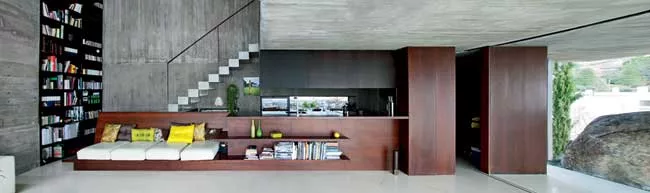
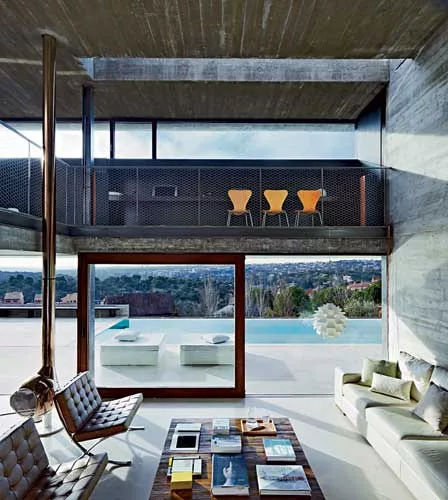
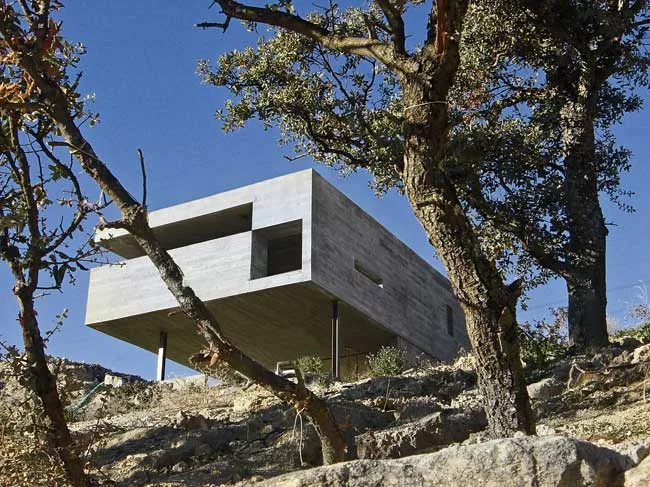
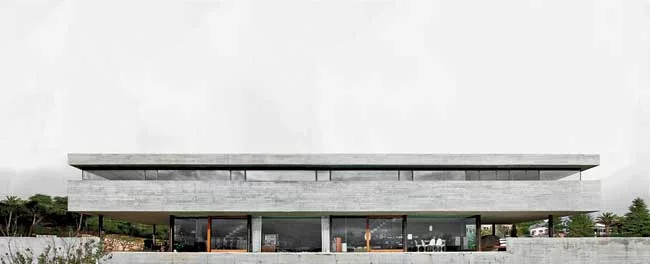
The building comprises two residences, one for Carnicero himself and the other for a friend, as well as the architect's studio. The house, outside of Madrid in Torrelodones, is raised on an ample podium over a steep slope to take in sweeping views to the south, across the Pardo Nature Reserve to the city skyline beyond. The upper volume of board-formed concrete shades the glazed living areas in the summer. Inside, the double-height living space includes a single piece of built-in furniture incorporating a sofa, bookcase, and kitchen countertop.
Photo courtesy I'aqui Carnicero
The building comprises two residences, one for Carnicero himself and the other for a friend, as well as the architect's studio. The house, outside of Madrid in Torrelodones, is raised on an ample podi
House 1+1=1
I'aqui Carnicero Architecture
Madrid, Spain
The building comprises two residences, one for Carnicero himself and the other for a friend, as well as the architect's studio. The house, outside of Madrid in Torrelodones, is raised on an ample podium over a steep slope to take in sweeping views to the south, across the Pardo Nature Reserve to the city skyline beyond. The upper volume of board-formed concrete shades the glazed living areas in the summer. Inside, the double-height living space includes a single piece of built-in furniture incorporating a sofa, bookcase, and kitchen countertop.
Photo courtesy I'aqui Carnicero
The building comprises two residences, one for Carnicero himself and the other for a friend, as well as the architect's studio. The house, outside of Madrid in Torrelodones, is raised on an ample podi
House 1+1=1
I'aqui Carnicero Architecture
Madrid, Spain
The building comprises two residences, one for Carnicero himself and the other for a friend, as well as the architect's studio. The house, outside of Madrid in Torrelodones, is raised on an ample podium over a steep slope to take in sweeping views to the south, across the Pardo Nature Reserve to the city skyline beyond. The upper volume of board-formed concrete shades the glazed living areas in the summer. Inside, the double-height living space includes a single piece of built-in furniture incorporating a sofa, bookcase, and kitchen countertop.
Photo courtesy I'aqui Carnicero
The building comprises two residences, one for Carnicero himself and the other for a friend, as well as the architect's studio. The house, outside of Madrid in Torrelodones, is raised on an ample podi
House 1+1=1
I'aqui Carnicero Architecture
Madrid, Spain
The building comprises two residences, one for Carnicero himself and the other for a friend, as well as the architect's studio. The house, outside of Madrid in Torrelodones, is raised on an ample podium over a steep slope to take in sweeping views to the south, across the Pardo Nature Reserve to the city skyline beyond. The upper volume of board-formed concrete shades the glazed living areas in the summer. Inside, the double-height living space includes a single piece of built-in furniture incorporating a sofa, bookcase, and kitchen countertop.
Photo courtesy I'aqui Carnicero
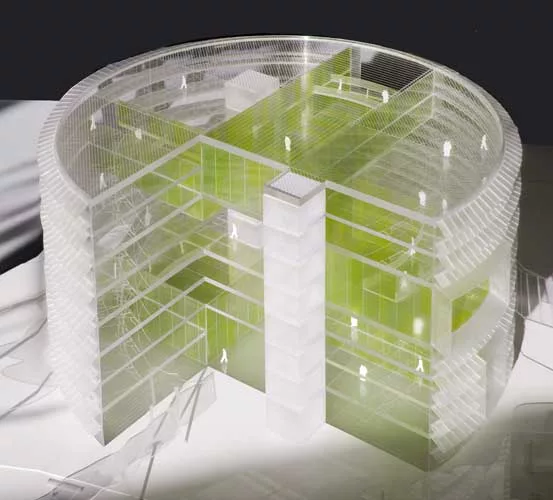
This competition-winning project in Madrid forms part of a campus of 18 round buildings (now on hold), which include designs by Foster + Partners, Zaha Hadid, and Richard Rogers. Working with his form
Office of the District Attorney
I'aqui Carnicero Architecture
Madrid, Spain
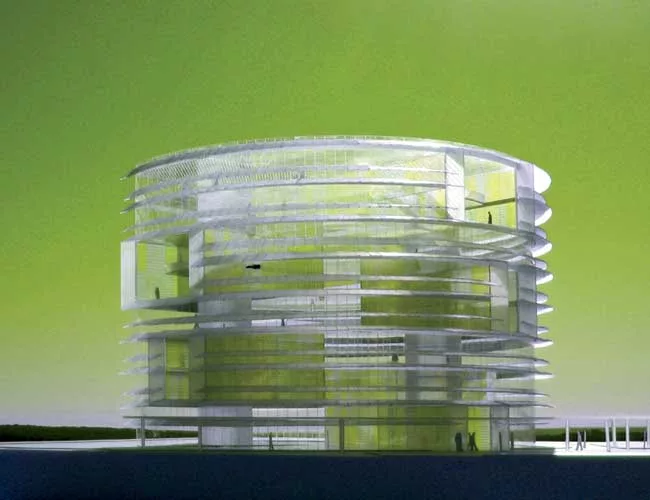
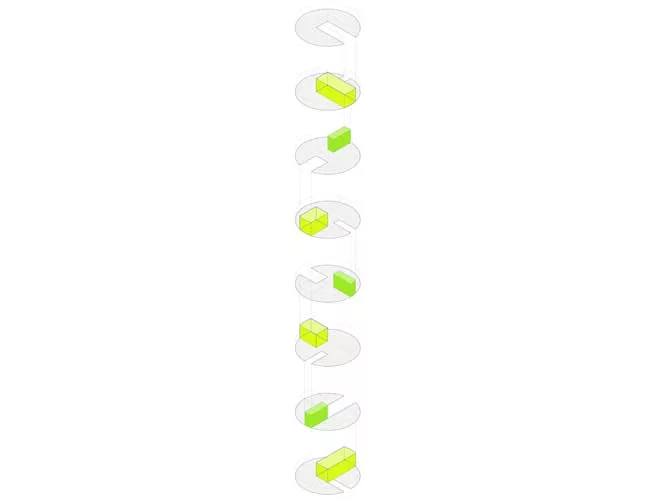
This competition-winning project in Madrid forms part of a campus of 18 round buildings (now on hold), which include designs by Foster + Partners, Zaha Hadid, and Richard Rogers. Working with his former associates, Ignacio Vila and Alejandro V'rseda, Carnicero fit the different elements of the complex program together like 'pieces of a puzzle.'
Photo courtesy I'aqui Carnicero
This competition-winning project in Madrid forms part of a campus of 18 round buildings (now on hold), which include designs by Foster + Partners, Zaha Hadid, and Richard Rogers. Working with his form
Office of the District Attorney
I'aqui Carnicero Architecture
Madrid, Spain
This competition-winning project in Madrid forms part of a campus of 18 round buildings (now on hold), which include designs by Foster + Partners, Zaha Hadid, and Richard Rogers. Working with his former associates, Ignacio Vila and Alejandro V'rseda, Carnicero fit the different elements of the complex program together like 'pieces of a puzzle.'
Photo courtesy I'aqui Carnicero
This competition-winning project in Madrid forms part of a campus of 18 round buildings (now on hold), which include designs by Foster + Partners, Zaha Hadid, and Richard Rogers. Working with his form
Office of the District Attorney
I'aqui Carnicero Architecture
Madrid, Spain
This competition-winning project in Madrid forms part of a campus of 18 round buildings (now on hold), which include designs by Foster + Partners, Zaha Hadid, and Richard Rogers. Working with his former associates, Ignacio Vila and Alejandro V'rseda, Carnicero fit the different elements of the complex program together like 'pieces of a puzzle.'
Photo courtesy I'aqui Carnicero
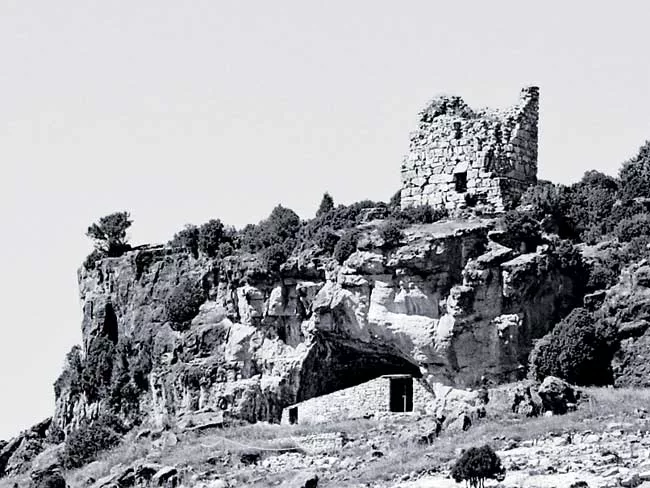
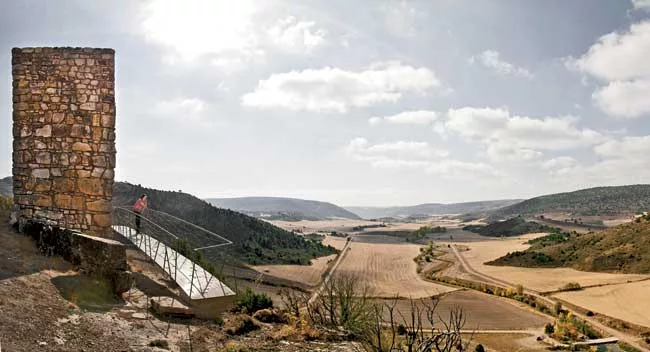
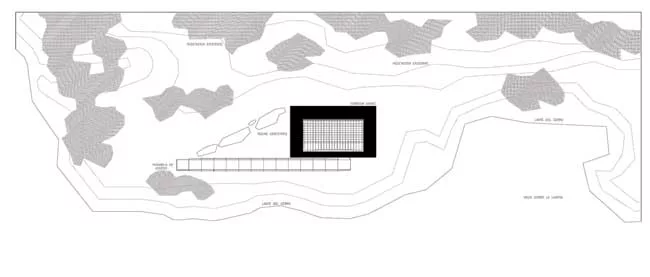
For over 1,000 years, this tower in Guadalajara has guarded a strategic mountain pass. Carnicero rebuilt ruined sections of the walls using stone from the site and traditional techniques, separating h
Watchtower Restoration
I'aqui Carnicero Architecture
Madrid, Spain
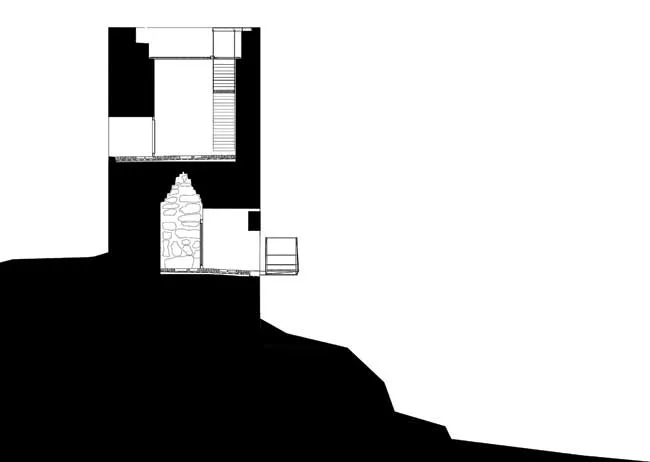
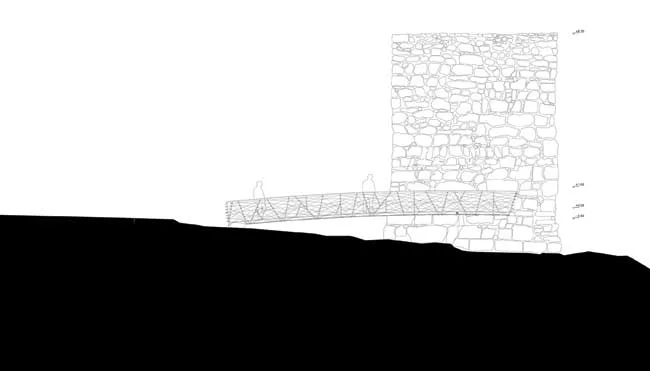
For over 1,000 years, this tower in Guadalajara has guarded a strategic mountain pass. Carnicero rebuilt ruined sections of the walls using stone from the site and traditional techniques, separating his intervention with a line of tile markers. Working with the sculptor Eduardo Cajal (creator of the aluminum stair in his own house), he designed a light aluminum footbridge as part of a new approach path that captures the best views over the valley. The railings and arched deck work together to increase the stiffness and strength of the span.
Photo courtesy I'aqui Carnicero
For over 1,000 years, this tower in Guadalajara has guarded a strategic mountain pass. Carnicero rebuilt ruined sections of the walls using stone from the site and traditional techniques, separating h
Watchtower Restoration
I'aqui Carnicero Architecture
Madrid, Spain
For over 1,000 years, this tower in Guadalajara has guarded a strategic mountain pass. Carnicero rebuilt ruined sections of the walls using stone from the site and traditional techniques, separating his intervention with a line of tile markers. Working with the sculptor Eduardo Cajal (creator of the aluminum stair in his own house), he designed a light aluminum footbridge as part of a new approach path that captures the best views over the valley. The railings and arched deck work together to increase the stiffness and strength of the span.
Photo courtesy I'aqui Carnicero
For over 1,000 years, this tower in Guadalajara has guarded a strategic mountain pass. Carnicero rebuilt ruined sections of the walls using stone from the site and traditional techniques, separating h
Watchtower Restoration
I'aqui Carnicero Architecture
Madrid, Spain
For over 1,000 years, this tower in Guadalajara has guarded a strategic mountain pass. Carnicero rebuilt ruined sections of the walls using stone from the site and traditional techniques, separating his intervention with a line of tile markers. Working with the sculptor Eduardo Cajal (creator of the aluminum stair in his own house), he designed a light aluminum footbridge as part of a new approach path that captures the best views over the valley. The railings and arched deck work together to increase the stiffness and strength of the span.
Photo courtesy I'aqui Carnicero
For over 1,000 years, this tower in Guadalajara has guarded a strategic mountain pass. Carnicero rebuilt ruined sections of the walls using stone from the site and traditional techniques, separating h
Watchtower Restoration
I'aqui Carnicero Architecture
Madrid, Spain
For over 1,000 years, this tower in Guadalajara has guarded a strategic mountain pass. Carnicero rebuilt ruined sections of the walls using stone from the site and traditional techniques, separating his intervention with a line of tile markers. Working with the sculptor Eduardo Cajal (creator of the aluminum stair in his own house), he designed a light aluminum footbridge as part of a new approach path that captures the best views over the valley. The railings and arched deck work together to increase the stiffness and strength of the span.
Photo courtesy I'aqui Carnicero
For over 1,000 years, this tower in Guadalajara has guarded a strategic mountain pass. Carnicero rebuilt ruined sections of the walls using stone from the site and traditional techniques, separating h
Watchtower Restoration
I'aqui Carnicero Architecture
Madrid, Spain
For over 1,000 years, this tower in Guadalajara has guarded a strategic mountain pass. Carnicero rebuilt ruined sections of the walls using stone from the site and traditional techniques, separating his intervention with a line of tile markers. Working with the sculptor Eduardo Cajal (creator of the aluminum stair in his own house), he designed a light aluminum footbridge as part of a new approach path that captures the best views over the valley. The railings and arched deck work together to increase the stiffness and strength of the span.
Photo courtesy I'aqui Carnicero
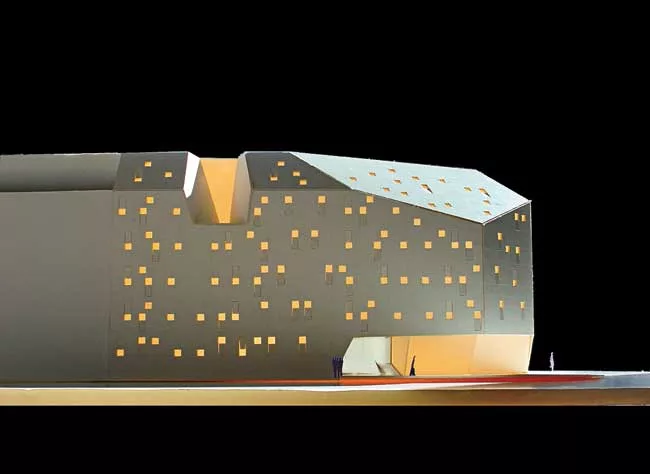
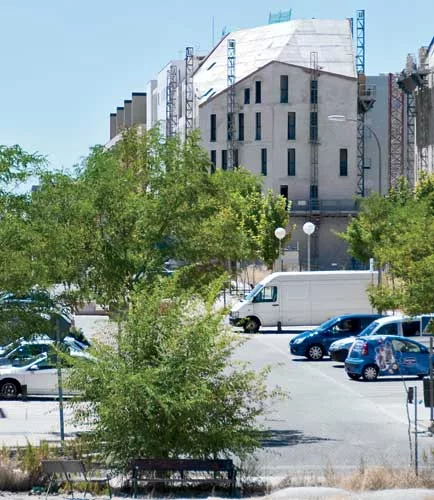
Starting with urban design guidelines that called for a chamfered corner and top-floor setbacks, Carnicero and his associates Alejandro V'rseda and Ignacio Vila decided to transform the beveled edge i
Public Housing
I'aqui Carnicero Architecture
Madrid, Spain
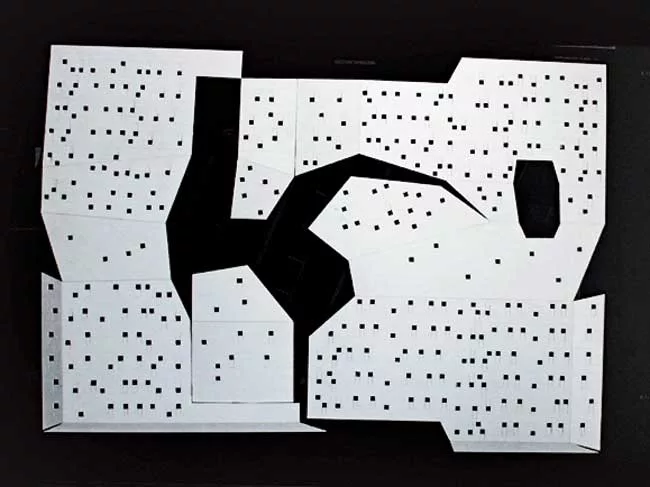
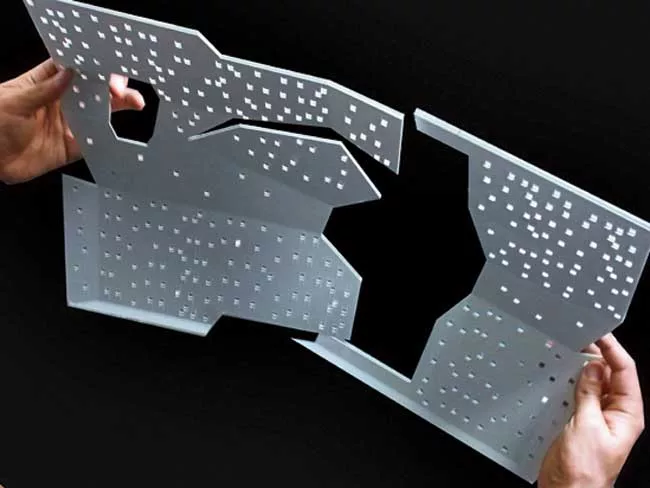
Starting with urban design guidelines that called for a chamfered corner and top-floor setbacks, Carnicero and his associates Alejandro V'rseda and Ignacio Vila decided to transform the beveled edge into a general sculptural strategy. Their aim was to give the small, 29-unit building, which is under construction in Vallecas, Madrid, greater scale and presence. To increase its resemblance to a monolithic crystalline volume, they divided glazed areas into multiple small openings, although the built project incorporates more traditional windows, as demanded by the city housing authority.
Photo courtesy I'aqui Carnicero
Starting with urban design guidelines that called for a chamfered corner and top-floor setbacks, Carnicero and his associates Alejandro V'rseda and Ignacio Vila decided to transform the beveled edge i
Public Housing
I'aqui Carnicero Architecture
Madrid, Spain
Starting with urban design guidelines that called for a chamfered corner and top-floor setbacks, Carnicero and his associates Alejandro V'rseda and Ignacio Vila decided to transform the beveled edge into a general sculptural strategy. Their aim was to give the small, 29-unit building, which is under construction in Vallecas, Madrid, greater scale and presence. To increase its resemblance to a monolithic crystalline volume, they divided glazed areas into multiple small openings, although the built project incorporates more traditional windows, as demanded by the city housing authority.
Photo courtesy I'aqui Carnicero
Starting with urban design guidelines that called for a chamfered corner and top-floor setbacks, Carnicero and his associates Alejandro V'rseda and Ignacio Vila decided to transform the beveled edge i
Public Housing
I'aqui Carnicero Architecture
Madrid, Spain
Starting with urban design guidelines that called for a chamfered corner and top-floor setbacks, Carnicero and his associates Alejandro V'rseda and Ignacio Vila decided to transform the beveled edge into a general sculptural strategy. Their aim was to give the small, 29-unit building, which is under construction in Vallecas, Madrid, greater scale and presence. To increase its resemblance to a monolithic crystalline volume, they divided glazed areas into multiple small openings, although the built project incorporates more traditional windows, as demanded by the city housing authority.
Photo courtesy I'aqui Carnicero
Starting with urban design guidelines that called for a chamfered corner and top-floor setbacks, Carnicero and his associates Alejandro V'rseda and Ignacio Vila decided to transform the beveled edge i
Public Housing
I'aqui Carnicero Architecture
Madrid, Spain
Starting with urban design guidelines that called for a chamfered corner and top-floor setbacks, Carnicero and his associates Alejandro V'rseda and Ignacio Vila decided to transform the beveled edge into a general sculptural strategy. Their aim was to give the small, 29-unit building, which is under construction in Vallecas, Madrid, greater scale and presence. To increase its resemblance to a monolithic crystalline volume, they divided glazed areas into multiple small openings, although the built project incorporates more traditional windows, as demanded by the city housing authority.
Photo courtesy I'aqui Carnicero
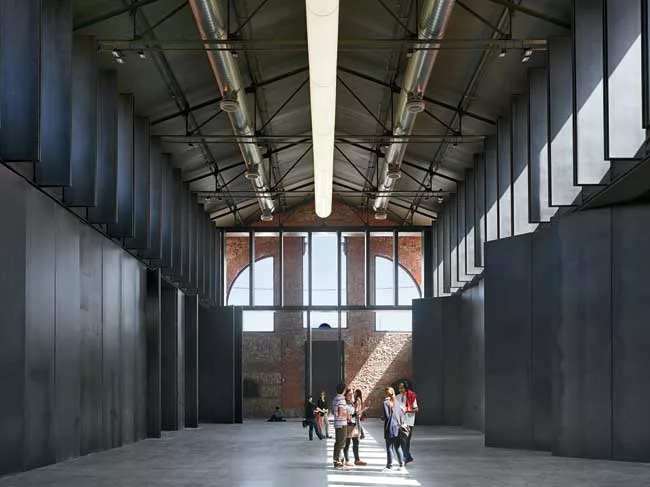
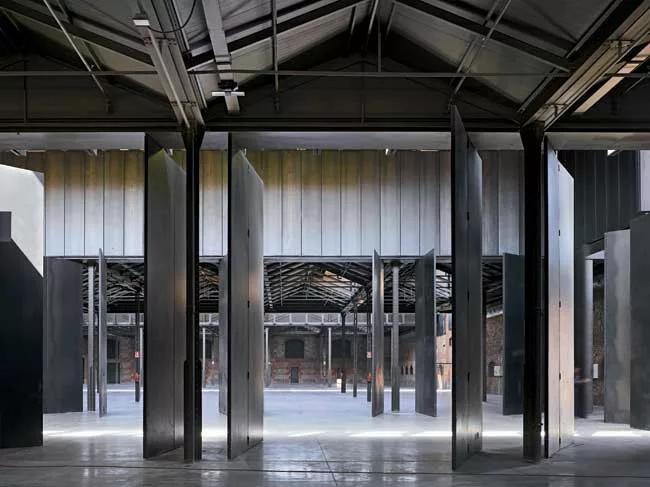
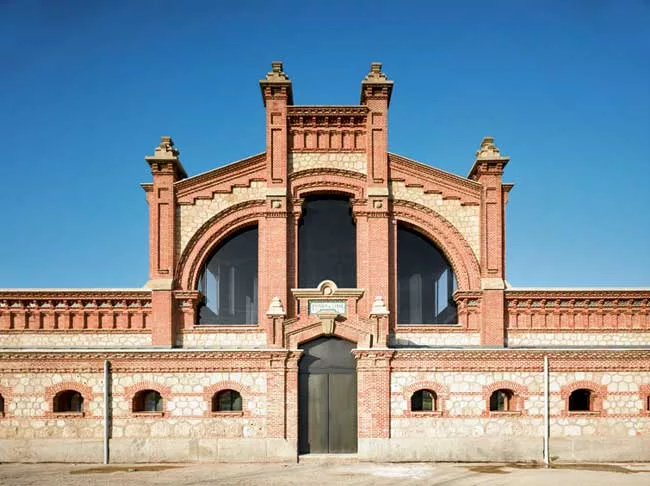
Carnicero's most recently completed project is a renovation of a 50,000-square-foot pavilion in a cultural center being created out of a complex of former slaughterhouses in Madrid. To subdivide the i
Pavilion 16, Old Slaughter Houses
I'aqui Carnicero Architecture
Madrid, Spain
Carnicero's most recently completed project is a renovation of a 50,000-square-foot pavilion in a cultural center being created out of a complex of former slaughterhouses in Madrid. To subdivide the immense space without compromising its flexibility, and to control the entry of daylight from its upper level, the architect inserted continuous rows of steel doors, which hinge and pivot in pairs to create different spatial arrangements. The pavilion is used for exhibition and artists' studios, and can be converted into a theater or an auditorium.
Photo courtesy I'aqui Carnicero
Carnicero's most recently completed project is a renovation of a 50,000-square-foot pavilion in a cultural center being created out of a complex of former slaughterhouses in Madrid. To subdivide the i
Pavilion 16, Old Slaughter Houses
I'aqui Carnicero Architecture
Madrid, Spain
Carnicero's most recently completed project is a renovation of a 50,000-square-foot pavilion in a cultural center being created out of a complex of former slaughterhouses in Madrid. To subdivide the immense space without compromising its flexibility, and to control the entry of daylight from its upper level, the architect inserted continuous rows of steel doors, which hinge and pivot in pairs to create different spatial arrangements. The pavilion is used for exhibition and artists' studios, and can be converted into a theater or an auditorium.
Photo courtesy I'aqui Carnicero
Carnicero's most recently completed project is a renovation of a 50,000-square-foot pavilion in a cultural center being created out of a complex of former slaughterhouses in Madrid. To subdivide the i
Pavilion 16, Old Slaughter Houses
I'aqui Carnicero Architecture
Madrid, Spain
Carnicero's most recently completed project is a renovation of a 50,000-square-foot pavilion in a cultural center being created out of a complex of former slaughterhouses in Madrid. To subdivide the immense space without compromising its flexibility, and to control the entry of daylight from its upper level, the architect inserted continuous rows of steel doors, which hinge and pivot in pairs to create different spatial arrangements. The pavilion is used for exhibition and artists' studios, and can be converted into a theater or an auditorium.
Photo courtesy I'aqui Carnicero
The building comprises two residences, one for Carnicero himself and the other for a friend, as well as the architect's studio. The house, outside of Madrid in Torrelodones, is raised on an ample podi
This competition-winning project in Madrid forms part of a campus of 18 round buildings (now on hold), which include designs by Foster + Partners, Zaha Hadid, and Richard Rogers. Working with his form
For over 1,000 years, this tower in Guadalajara has guarded a strategic mountain pass. Carnicero rebuilt ruined sections of the walls using stone from the site and traditional techniques, separating h
Starting with urban design guidelines that called for a chamfered corner and top-floor setbacks, Carnicero and his associates Alejandro V'rseda and Ignacio Vila decided to transform the beveled edge i
Carnicero's most recently completed project is a renovation of a 50,000-square-foot pavilion in a cultural center being created out of a complex of former slaughterhouses in Madrid. To subdivide the i
December 16, 2011

Madrid, Spain

In the house that Iñaqui Carnicero has built for himself in Madrid’s rolling northern suburbs, the architect declares allegiance to a classic Modernist discipline, following a Madrid tradition that leads back to one of his influential teachers, Alberto Campo Baeza, and to Alejandro de la Sota and other pioneers of a renewed Spanish Modernism in the 1950s. Carnicero’s design reinterprets Corbusian prototypes—the strip window, the crisp rectangular volume raised on pilotis, the double-height interior living space overlooked by balconies and a sculptural stair (made of aluminum and crafted by artist Eduardo Cajal). But he also addresses contemporary concerns, including principles such as thermal inertia and passive airflow.

“It’s very simple in section,” he explains. “A podium resolves the problem of the steep terrain. The living area opens to the landscape to the south, and the overhanging upper floor keeps out the sun in the summer but not in the winter.” The long structure actually comprises two dwellings, with a shared swimming pool on the southern terrace. The architect pooled his savings with a friend, and, with a budget that could have bought only a couple small studios in Madrid, built this elegant formalist statement in board-formed concrete.

Carnicero, 38, recently moved his studio into the house, where he works with three or four collaborators in an ample glazed space under the podium. A large, gentle man and Madrid native, he graduated from the Higher Technical School of Architecture at Madrid’s Polytechnic University in 1998, and has taught design there since 2000, working first under Campo Baeza. He won a scholarship to the Spanish Academy in Rome in 2008, where he studied the Roman sojourns of Louis Kahn and Robert Venturi. The influence of Rome on his own work can be found in his interest in rough, sensuous materials and simple, direct geometries. At the same time, he takes a stand against an overly assertive formalism, favoring, in his own words, “works in which the hand of the architect isn’t too much in evidence. Instead of the grand statement, architects today must look to more limited interventions, using what’s readily available.”

Nevertheless, his designs often feature an intriguing complexity, like a three-dimensional puzzle, developed through combinations of simple elements. For an addition to a high school on a tight site in the small southern city of Albacete, for example, each of the three floors has a strikingly different layout, creating a complex weave of open and closed spaces around a central courtyard. And for the competition-winning building for the district attorney’s office in Madrid’s City of Justice (designed with Ignacio Vila and Alejandro Vírseda before Carnicero established his independent practice), the facade of a round volume is pierced by a series of garden patios that are staggered in position and level to create dynamic diagonal cross-views through the interiors.

In other projects, concepts from Carnicero’s house design reappear, as in the proposal for a library and day center for senior citizens in the town of Torrelavega in northern Spain, where the architect raised the pentagonal library volume on columns to create a shaded public plaza below. The elongated, elevated form of the house echoes, at a completely different scale, one of his first commissions for the CEU San Pablo University in Madrid (with Vírseda and Miguel Ángel Cámara): a miniature city of classrooms, offices, laboratories, and public spaces where the linear organization has allowed for the building’s expansion in phases over time.

Despite Carnicero’s declarations of formal modesty, his work is by no means without a strong architectonic character. Though he has returned to the basic principles of Modernism, he discovers rich new territories to explore using the familiar formulas of structural logic and functional form. 

I'aqui Carnicero Architecture

LOCATION: Madrid

FOUNDED: 2006

DESIGN STAFF: 6

PRINCIPALS: Iñaqui Carnicero

EDUCATION: Higher Technical School of Architecture, Polytechnic University of Madrid, M.Arch., 1998

WORK HISTORY: ICA Arquitectura, with Ignacio Vila and Alejandro Vírseda, 2002–06

KEY COMPLETED PROJECTS: Pavilion 16, Old Slaughter Houses, Madrid, 2011; Social Housing, Vallecas, Madrid, 2011; House 1+1=1, Madrid, 2009; Arab Tower Restoration, Guadalajara, 2004; Don Bosco High School, Albacete, 2003; Polytechnic School, CEU, San Pablo University, Madrid, 2002

KEY CURRENT PROJECTS: Office of the District Attorney, Madrid (suspended); 300 Units of Experimental Housing for VIVA, Madrid (suspended); Garment Museum, Madrid (suspended)

WEB SITE: WWW.INAQUICARNICERO.COM


Share This Story

Looking for a reprint of this article?
From high-res PDFs to custom plaques, order your copy today!

David Cohn is a Madrid-based architecture critic and international correspondent for Architectural Record. His latest book, Spain: Modern Architectures in History, was released in 2025.

Post a comment to this article

Report Abusive Comment

Subscription Center
  • Create an Account
  • Start a Subscription
  • Manage My Account
  • Sign Up for Newsletters
  • Visit Customer Service
  • Update Preferences

More Videos

Sponsored Content

Sponsored Content is a special paid section where industry companies provide high quality, objective, non-commercial content around topics of interest to the Architectural Record audience. All Sponsored Content is supplied by the advertising company and any opinions expressed in this article are those of the author and not necessarily reflect the views of Architectural Record or its parent company, BNP Media. Interested in participating in our Sponsored Content section? Contact your local rep!

close
  • cold storage facility
    Sponsored byCarlisle SynTec Systems

    How Architects Can Design More Continuous Cold Storage Envelopes

  • TAMLYN XtremeTrim Exterior Trim
    Sponsored byTamlyn

    Designing Cleaner Panel Facades: Why Exterior Trim Details Matter

  • Building with Vapor Barriers
    Sponsored byReef Industries, Inc.

    Vapor Barriers Help Control Moisture in Tighter Building Designs

DESIGN:ED Podcast
Listen to Architectural Record’s DESIGN:ED Podcast

Events

June 18, 2026

Rebooting the Aging Office Building

Credits: 1 AIA LU/HSW; 1 AIBD P-CE; 0.1 ICC CEU; 1 PDH

Explore façade retrofit strategies and award-winning design concepts that can transform aging office buildings into healthier, higher-performing workplaces for today’s hybrid workforce.

June 23, 2026

Enhancing Fire Resistance with Advanced PVC Solutions

Credits: 1 AIA LU/HSW; 1 AIBD P-CE; 0.1 ICC CEU; 1 IIBEC CEH

Evaluate advanced PVC solutions that improve fire resistance, support WUI compliance, and enhance resilience in residential and commercial building design.

View All Submit An Event

Products

2026 Architect's Square Foot Costbook

2026 Architect's Square Foot Costbook

See More Products

Popular Stories

SanDiegoAirport

Top 300 Architecture Firms of 2026

Lorcan O' Herilhy

California Architect Lorcan O’Herlihy Has Died, Age 66

Coronado Bridge

The Architect’s Guide to San Diego

CCA, Studio Gang

The Winners of the AIA’s 2026 Architecture Award Range from Collegiate Rowing Hubs to Housing for the Homeless

Dusk House

Design Vanguard 2026: ONO

Rebooting the Aging Office Building - Free Webinar - June 18, 2026

Related Articles

  • Illa Glòries

    Design Vanguard 2026: Cierto Estudio

    See More
  • 1+1=1 House

    See More
  • 5468796 Architecture

    See More

Related Products

See More Products
  • ribbonarch.jpg

    Ribbon Architecture: Light, Shadow, and Reflection in Architecture

  • freeing arch.jpg

    Freeing Architecture

See More Products
×

The latest news and information

#1 Source for Architectural Design, News and Products

SUBSCRIBE
  • RESOURCES
    • Advertise
    • Contact Us
    • Submit
    • Store
  • ACCOUNT CENTER
    • Create an Account
    • Start a Subscription
    • Manage My Account
    • Sign Up for Newsletters
    • Visit Customer Service
    • Update Preferences
  • PRIVACY
    • PRIVACY POLICY
    • TERMS & CONDITIONS
    • DO NOT SELL MY PERSONAL INFORMATION
    • PRIVACY REQUEST
    • ACCESSIBILITY
  • SERVICES
    • Marketing Services
    • Reprints
    • Market Research
    • List Rental
    • Survey/Respondent Access
  • STAY CONNECTED
    • Linkedin
    • Facebook
    • Instagram
    • YouTube
    • X (Twitter)

Copyright ©2026. All Rights Reserved BNP Media, Inc. and BNP Media II, LLC.

Design, CMS, Hosting & Web Development :: ePublishing