Architectural Record
search
cart
facebook twitter linkedin youtube
  • Sign In
  • Subscribe
  • Sign Out
  • My Account
Architectural Record
  • NEWS
    • Latest News
    • Awards
    • Interviews
    • Obituaries
    • Podcasts
      • Design:Ed Podcast
      • Sponsored Podcasts
  • OPINION
    • Book Reviews / Excerpts
    • Exhibition Reviews
    • Forum
  • EXCLUSIVES
    • Videos
    • Design Vanguard
    • Top 300 Firms
    • Sponsored Content
    • Sponsored eBooks
    • From the Archives
  • CONTINUING ED
    • Editorial Continuing Ed
    • CE Center
    • CE Academies
  • PROJECTS
    • Buildings By Type
    • Reuse & Renovation
    • Museums & Arts Centers
    • Colleges & Universities
    • Multifamily Housing
    • Interiors
    • Lighting
    • Kitchen & Bath
  • HOUSES
    • Record Houses
    • House of the Month
    • Featured Houses
  • PRODUCTS
    • Products by Category
    • Record Products of the Year
    • Latest Products
  • EVENTS
    • Dates & Events
    • Record on the Road
    • Innovation Conference
    • Sustainability in Practice
    • Women In Architecture
    • Webinars
    • Ad Excellence Awards
    • Submit an Event
  • CONNECT
    • Ask RECORD AI
    • Newsletters
    • Contact
    • Advertise
    • Editorial Calendar
    • Store
    • Customer Service
  • SUBMIT
    • Submission Guidelines
    • RECORD Competitions
  • MAGAZINE
    • Subscribe
    • My Account
    • Digital Edition
    • Current Issue
    • Firm Pass
    • Historic Archive

In the Cause of Architecture

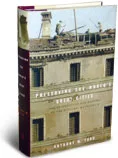
Preserving the World's Great Cities

The author collected tales of cities known for their historic beauty, contrasting their thoughtless destruction with the story of those who fought to save them.
By Kevin Lemer
Preserving the World's Great Cities
April 1, 2002

Excerpt [pp. 427-429]

THE CITY BECOMES A LIVING MUSEUM

The rebuilding of the old Jewish Quarter would be guided by an advisory council of distinguished philosophers, historians, artists, architects, planners, theologians, and philanthropists called the Jerusalem Committee, established by the mayor immediately upon entering office. While several intrusive oversize modern buildings were constructed on the edge of the area, facing the Wailing Wall, inside the neighborhood a remarkable urban environment was constructed.

Retaining the architectural character of the quarter was a priority, so that the milieu of the greater historic city would not be disrupted. Initial surveys showed that about 50 percent of the sector's damaged historic structures could be rehabilitated. The other half would have to be built anew. In an area subject to earthquakes, proper foundations were a necessity-an extremely complicated procedure in old Jerusalem, which sits on the rubble and ruins accumulated over thousands of years of recurring destruction. Thus, a major portion of the site would first become a painstaking archaeological dig.

Several significant finds were made 20, 30, 40 feet below the surface: a wall from the first temple period of David and Solomon; remnants of a cluster of patrician dwellings from the period of Herod the Great; the architectural remains and furnishings of a Jewish house partially burned down during the Roman conquest of the city in A.D. 70; substantial elements of the Roman-Byzantine settlement; and parts of a Byzantine church constructed during the reign of the emperor Justinian.

In order to provide access to this material and to preserve it in place, it was decided to build the new houses of the Jewish Quarter on platforms suspended above the layers of history that until recently had been invisible. Aboveground, modern dwellings would be constructed of contextual design that knit together surviving fragments of the traditional vernacular townscape. Belowground, and sometimes open to the sky, the city would become a museum. As it had been for centuries, the old Jewish Quarter, with new and old courtyard houses, would continue as a place of secluded residential life, while also becoming an unrestricted civic space dedicated to public education. A three-dimensional network of passageways, stairs, and ramps connected the quarter's different parts.

Having taken two decades to accomplish, the final result is a startling redefinition of the function of the historic city. The modern housing, designed by a number of different architects and all made of Jerusalern stone, is intimate and various in its interpretation of multicultural building traditions. Winding medieval passageways open up to public plazas, where ancient remains are juxtaposed with the structures of contemporary life. From out of a large depression, decoratively carved capitals of the columns of the old Roman marketplace (the cardo) suddenly rise up into view. At their base, one sees the ground plane of the Roman era, which then extends beneath the city into subterranean spaces where the vaulted Byzantine emporium has been restored, with modern shops inserted into centuries-old archways.

Around the corner and up a flight of stone stairs, the visitor arrives at a later era of history: the remnants of the Byzantine Church of Saint Mary. Discreet informative labeling and signage abounds, informing the viewer in several languages of the interwoven incarnations of Jerusalem's past. Ruins of the great Hurvah Synagogue stand near a tall minaret of Mamluk configuration. In the underground space beneath a modern yeshiva, a museum of archaeology houses the exterior and interior remnants of Herodian mansions. The cool dim spaces offer respite from the sun. Time and the terrible differences that have divided Jerusalem for most of its history have been suspended.

Distinct architectural elements of different eras are melded together by the commonality of stone. In an era of continuing conflict, the essence of the Holy City has been reaffirmed: it is a place of unending search for self-knowledge. If ever the holiest city on earth achieves peace among its people, the restored Jewish Quarter provides a model for what the metropolis might become.
 

Looking for quick answers on architecture and design topics?
Try Ask RECORD, our new smart AI search tool.
Ask RECORD →

KEYWORDS: Book Reviews / Excerpts historic preservation

Share This Story

Looking for a reprint of this article?
From high-res PDFs to custom plaques, order your copy today!
Previous 1 2 3 4 Next

Post a comment to this article

Report Abusive Comment

Subscription Center
  • Create an Account
  • Start a Subscription
  • Manage My Account
  • Sign Up for Newsletters
  • Visit Customer Service
  • Update Preferences

More Videos

Sponsored Content

Sponsored Content is a special paid section where industry companies provide high quality, objective, non-commercial content around topics of interest to the Architectural Record audience. All Sponsored Content is supplied by the advertising company and any opinions expressed in this article are those of the author and not necessarily reflect the views of Architectural Record or its parent company, BNP Media. Interested in participating in our Sponsored Content section? Contact your local rep!

close
  • TAMLYN XtremeTrim Exterior Trim
    Sponsored byTamlyn

    Designing Cleaner Panel Facades: Why Exterior Trim Details Matter

  • Building with Vapor Barriers
    Sponsored byReef Industries, Inc.

    Vapor Barriers Help Control Moisture in Tighter Building Designs

  • Duct Interior with Prodeq System
    Sponsored byHenry, a Carlisle Company

    Designing Resilient Water Containment Systems

DESIGN:ED Podcast
Listen to Architectural Record’s DESIGN:ED Podcast

Events

June 10, 2026

Rethinking Stormwater – The Power of Porous Paving

Credits: 1 AIA LU/HSW; 1 AIBD P-CE; 0.1 ICC CEU

Learn how porous paving systems support stormwater management, reduce heat island effects, and enhance sustainable site design performance.

June 11, 2026

Very Early Warning Fire Detection for Mission-Critical Facilities

Credits: 1 AIA LU/HSW; 1 AIBD P-CE; 0.1 ICC CEU

Examine advanced fire detection strategies that support uptime and enhance safety in data centers and other mission-critical facilities.

View All Submit An Event

Products

2026 Architect's Square Foot Costbook

2026 Architect's Square Foot Costbook

See More Products

Popular Stories

Practice Matters illustration

What’s in a (Firm’s) Name? Thinking About Succession and Legacy

Coronado Bridge

The Architect’s Guide to San Diego

Practice Matters illustration

By the Numbers: Counting America's Architects

Riverdale House by Studio Lau

Riverdale House by Studio Lau

House on a Hill

Design Vanguard 2026: Forma

Broader Sustainability of CMU - Free Webinar - May 21, 2026

Related Articles

  • Eames Institute Museum

    Two Nonprofits Preserving the Legacy of Charles and Ray Eames Announce Major News

    See More
  • The Most Beautiful Office Building in the World

    See More
  • Design Roulette: Architects Set Loose in the World

    See More

Related Products

See More Products
  • WC_-SCA.png

    Building Great Schools for a Great City

  • superlux.jpg

    SuperLux: Smart Light Art, Design & Architecture for Cities

See More Products
×

The latest news and information

#1 Source for Architectural Design, News and Products

SUBSCRIBE
  • RESOURCES
    • Advertise
    • Contact Us
    • Submit
    • Store
  • ACCOUNT CENTER
    • Create an Account
    • Start a Subscription
    • Manage My Account
    • Sign Up for Newsletters
    • Visit Customer Service
    • Update Preferences
  • PRIVACY
    • PRIVACY POLICY
    • TERMS & CONDITIONS
    • DO NOT SELL MY PERSONAL INFORMATION
    • PRIVACY REQUEST
    • ACCESSIBILITY
  • SERVICES
    • Marketing Services
    • Reprints
    • Market Research
    • List Rental
    • Survey/Respondent Access
  • STAY CONNECTED
    • Linkedin
    • Facebook
    • Instagram
    • YouTube
    • X (Twitter)

Copyright ©2026. All Rights Reserved BNP Media, Inc. and BNP Media II, LLC.

Design, CMS, Hosting & Web Development :: ePublishing