Architectural Record
search
cart
facebook twitter linkedin youtube
  • Sign In
  • Subscribe
  • Sign Out
  • My Account
Architectural Record
  • NEWS
    • Latest News
    • Awards
    • Interviews
    • Obituaries
    • Podcasts
      • Design:Ed Podcast
      • Sponsored Podcasts
  • OPINION
    • Book Reviews / Excerpts
    • Exhibition Reviews
    • Forum
  • EXCLUSIVES
    • Videos
    • Design Vanguard
    • Top 300 Firms
    • Sponsored Content
    • Sponsored eBooks
    • From the Archives
  • CONTINUING ED
    • Editorial Continuing Ed
    • CE Center
    • CE Academies
  • PROJECTS
    • Buildings By Type
    • Reuse & Renovation
    • Museums & Arts Centers
    • Colleges & Universities
    • Multifamily Housing
    • Interiors
    • Lighting
    • Kitchen & Bath
  • HOUSES
    • Record Houses
    • House of the Month
    • Featured Houses
  • PRODUCTS
    • Products by Category
    • Record Products of the Year
    • Latest Products
  • EVENTS
    • Dates & Events
    • Record on the Road
    • Innovation Conference
    • Sustainability in Practice
    • Women In Architecture
    • Webinars
    • Ad Excellence Awards
    • Submit an Event
  • CONNECT
    • Ask RECORD AI
    • Newsletters
    • Contact
    • Advertise
    • Editorial Calendar
    • Store
    • Customer Service
  • SUBMIT
    • Submission Guidelines
    • RECORD Competitions
  • MAGAZINE
    • Subscribe
    • My Account
    • Digital Edition
    • Current Issue
    • Firm Pass
    • Historic Archive
Climate Change & SustainabilityArchitect Continuing Education

Think Global, Act Local: New York's Carbon Policy
By Joann Gonchar, FAIA
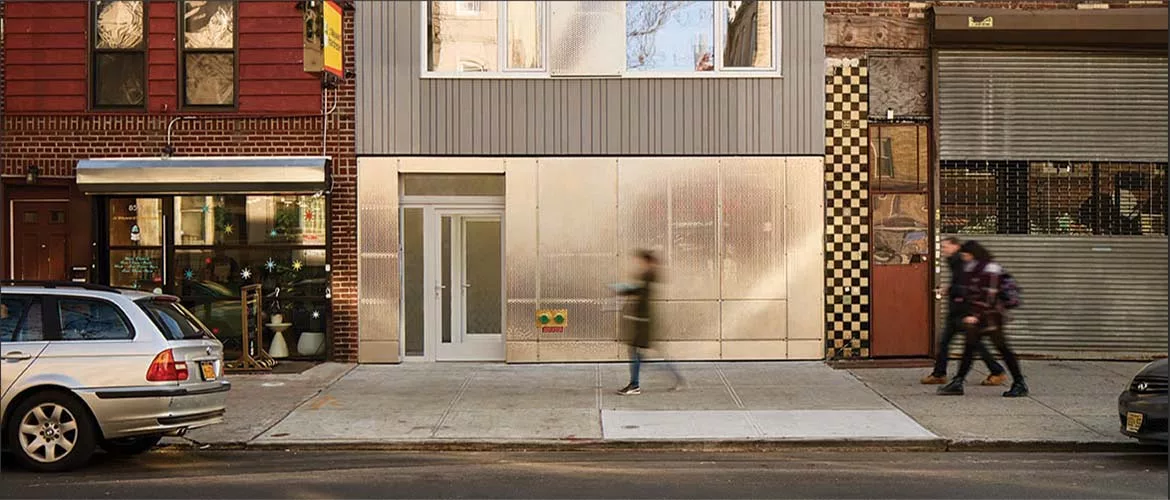
A five-story condo building in Brooklyn by ZH Architects.

A five-story condo building in Brooklyn by ZH Architects. Photo © Edward Caruso

May 1, 2020

Advocates of New York’s Local Law 97 refer to it as the most ambitious climate legislation for buildings enacted by any city in the world. The claim might sound like hyperbole, but John Mandyck, CEO of the Urban Green Council, a nonprofit that helped shape the regulation, points to its scope and scale. It applies to 50,000 existing buildings—any that are 25,000 square feet or larger. These structures amount to 60 percent of the city’s floor area and are responsible for 40 percent of total greenhouse-gas emissions. By 2030, the law is expected to reduce emissions from large buildings by at least 40 percent compared to a 2005 baseline, which means cutting 5.3 million metric tons of carbon dioxide from current levels, the equivalent of San Francis­co’s citywide emissions.

The most consequential piece in a package of bills known as the Climate Mobilization Act, the law was passed by the City Council in April last year. It sets increasingly stringent limits for the amount of CO2 facilities can emit based on building type. The first set of regulations go into effect in 2024, targeting the most carbon-intensive 20 percent of buildings, while the 2030 limits target the most carbon-intensive 75 percent. (Subsequent limits will be set by the Department of Buildings to achieve an 80 percent reduction in emissions citywide by 2050.) These thresholds are not aspirational but statutory, points out Mandyck: owners who fail to meet the limits face steep fines.

READ MORE ABOUT

• Climate Change

• Sustainable Architecture

• Green Building

How can owners bring underperforming buildings into compliance? They can put new operating strategies in place, implement energy-saving retrofits, or buy green power. Work can be financed through a special low-interest loan program. Some building types—income-restricted housing or places of worship—can opt instead to complete a prescribed set of low-cost energy-saving measures, including insulating pipes, installing boiler sensors and controls, and fixing heating-system leaks.

Although the measure is aimed at upgrading existing structures, a year after a new building is completed, it is subject to the law’s stringent reporting requirements and emissions limits. Some proponents maintain Local Law 97 isn’t strict enough for new construction or projects that involve significant renovation or expansion. “New buildings should have different requirements,” says Stas Za­krzewski, principal of ZH Architects, who sits on an advisory board helping guide the law’s implementation. He points to two of his firm’s recent projects: a five-story condo building in Brooklyn that incorporates a three-story existing structure and an all-new 55-unit rental residential tower in Manhat­tan. The smaller building, at only 7,000 square feet, is not subject to Local Law 97. Nevertheless, it is expected to meet the anticipated 2050 emissions limits for residential construction—offering an example that other projects could emulate, with its highly insulated, airtight building envelope, triple-glazed windows, and minimized thermal bridges. Many of these strategies have been deployed on the tower, which has projected emissions far below the 2050 limits.
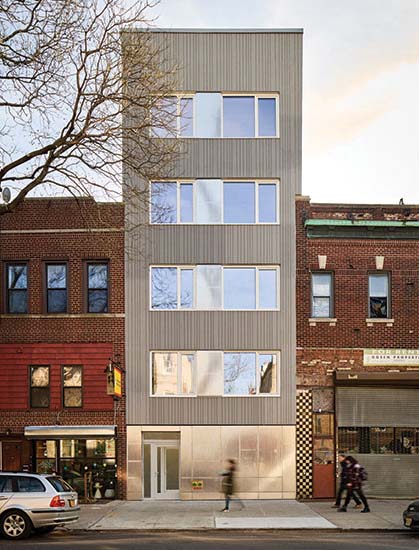
A five-story condo building in Brooklyn.
1
A 55-unit rental apartment tower in Manhattan.
2

A five-story condo building in Brooklyn (1) and a 55-unit rental apartment tower in Manhattan (2), both recently completed and designed by ZH Architects, deploy such features as highly insulated and airtight facades, triple-glazed windows, and minimized thermal bridges. Both are expected to meet Local Law 97’s anticipated emissions limits for 2050. Photo (1) © Edward Caruso, (2) courtesy ZH Architects click to enlarge.

Some advocates of the law worry that it does not deal well with carbon-intensive uses, ­including those of trading floors and data centers. “This is a legitimate concern,” says Mandyck. “The carbon metric is straightforward, but it is a blunt instrument.” He suggests that a cap-and-trade scheme like Tokyo’s could be a remedy; his organization is involved in developing the carbon-­trading implementation plan that the law requires. It would allow a building with justified high-energy uses to buy credits from another building with emissions below its target.

It is too early to know how many out-of-­compliance owners will perform retrofits, buy offsets, or simply pay the fine, notes Richard Yancey, executive director of the nonprofit Build­ing Energy Exchange. But he is optimistic about the language of Local Law 97, which includes placeholders for programs like carbon trading and allows for other future adjustments in order to meet its reduction targets. It’s “critically important” to get these modifications right, says Yancey: “Cities all over the world are looking to New York.”

Back to Continuing Education: Cities' Carbon Policy

Looking for quick answers on architecture and design topics?
Try Ask RECORD, our new smart AI search tool.
Ask RECORD →

KEYWORDS: embodied energy New York City

Share This Story

Looking for a reprint of this article?
From high-res PDFs to custom plaques, order your copy today!


Joann gonchar

Joann Gonchar, FAIA, LEED AP, is deputy editor at Architectural Record. She joined RECORD in 2006, after working for eight years at its sister publication, Engineering News-Record. Before starting her career as a journalist, Joann worked for several architecture firms and spent three years in Kobe, Japan, with the firm Team Zoo, Atelier Iruka. She earned a Master of Architecture degree from the University of Pennsylvania and a Bachelor of Arts from Brown University. She is licensed to practice architecture in New York State.

Post a comment to this article

Report Abusive Comment

Subscription Center
  • Create an Account
  • Start a Subscription
  • Manage My Account
  • Sign Up for Newsletters
  • Visit Customer Service
  • Update Preferences

More Videos

Sponsored Content

Sponsored Content is a special paid section where industry companies provide high quality, objective, non-commercial content around topics of interest to the Architectural Record audience. All Sponsored Content is supplied by the advertising company and any opinions expressed in this article are those of the author and not necessarily reflect the views of Architectural Record or its parent company, BNP Media. Interested in participating in our Sponsored Content section? Contact your local rep!

close
  • TAMLYN XtremeTrim Exterior Trim
    Sponsored byTamlyn

    Designing Cleaner Panel Facades: Why Exterior Trim Details Matter

  • Building with Vapor Barriers
    Sponsored byReef Industries, Inc.

    Vapor Barriers Help Control Moisture in Tighter Building Designs

  • Duct Interior with Prodeq System
    Sponsored byHenry, a Carlisle Company

    Designing Resilient Water Containment Systems

DESIGN:ED Podcast
Listen to Architectural Record’s DESIGN:ED Podcast

Events

June 10, 2026

Rethinking Stormwater – The Power of Porous Paving

Credits: 1 AIA LU/HSW; 1 AIBD P-CE; 0.1 ICC CEU

Learn how porous paving systems support stormwater management, reduce heat island effects, and enhance sustainable site design performance.

June 11, 2026

Very Early Warning Fire Detection for Mission-Critical Facilities

Credits: 1 AIA LU/HSW; 1 AIBD P-CE; 0.1 ICC CEU

Examine advanced fire detection strategies that support uptime and enhance safety in data centers and other mission-critical facilities.

View All Submit An Event

Products

2026 Architect's Square Foot Costbook

2026 Architect's Square Foot Costbook

See More Products

Popular Stories

Coronado Bridge

The Architect’s Guide to San Diego

Practice Matters illustration

What’s in a (Firm’s) Name? Thinking About Succession and Legacy

Practice Matters illustration

By the Numbers: Counting America's Architects

Inward House

Inward House by VeeV Design Studio

Riverdale House by Studio Lau

Riverdale House by Studio Lau

Broader Sustainability of CMU - Free Webinar - May 21, 2026

Related Articles

  • San Francisco

    Think Global, Act Local: San Francisco's Carbon Policy

    See More
  • Canada’s Earth Tower

    Think Global, Act Local: Vancouver's Carbon Policy

    See More
  • Stockholm.

    Think Global, Act Local: Stockholm's Carbon Policy

    See More
×

The latest news and information

#1 Source for Architectural Design, News and Products

SUBSCRIBE
  • RESOURCES
    • Advertise
    • Contact Us
    • Submit
    • Store
  • ACCOUNT CENTER
    • Create an Account
    • Start a Subscription
    • Manage My Account
    • Sign Up for Newsletters
    • Visit Customer Service
    • Update Preferences
  • PRIVACY
    • PRIVACY POLICY
    • TERMS & CONDITIONS
    • DO NOT SELL MY PERSONAL INFORMATION
    • PRIVACY REQUEST
    • ACCESSIBILITY
  • SERVICES
    • Marketing Services
    • Reprints
    • Market Research
    • List Rental
    • Survey/Respondent Access
  • STAY CONNECTED
    • Linkedin
    • Facebook
    • Instagram
    • YouTube
    • X (Twitter)

Copyright ©2026. All Rights Reserved BNP Media, Inc. and BNP Media II, LLC.

Design, CMS, Hosting & Web Development :: ePublishing