Continuing Education: Climate Adaptation
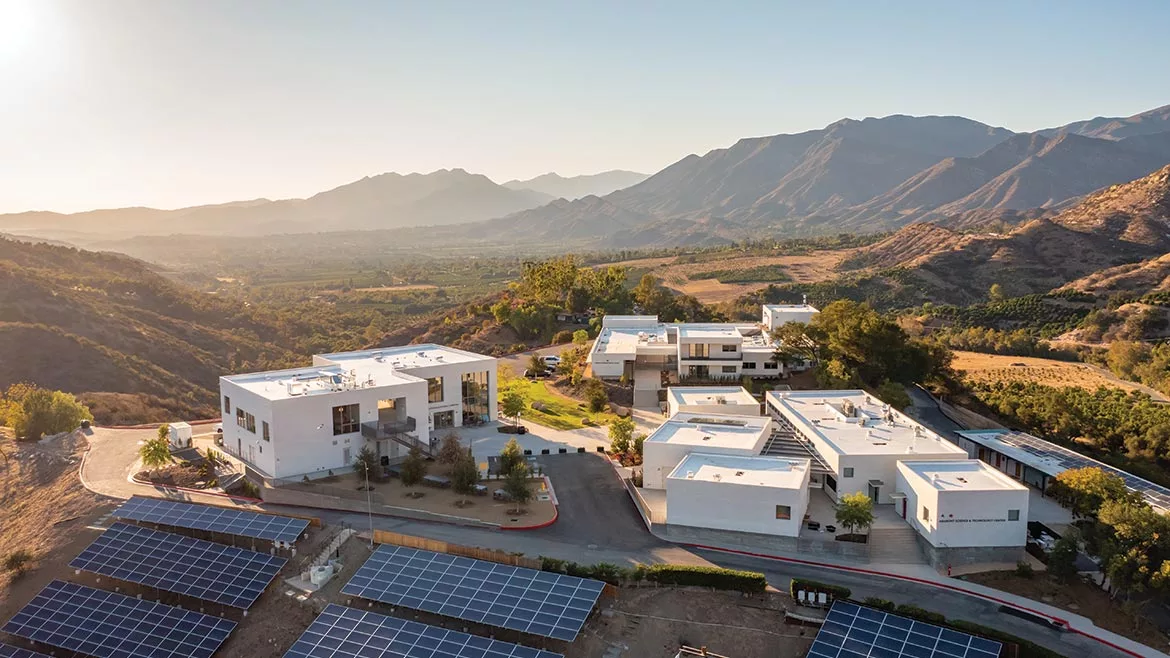
Ojai Valley School’s new Upper Campus, in Ventura County, California. Photo © Logan Hall
If simple observation hasn’t made it clear, the report released by the Intergovernmental Panel on Climate Change (IPCC) this past August left little doubt: the earth is warming at an alarming rate. Even if mankind sharply cuts greenhouse emissions immediately—and quick action seems unlikely, given the outcome of the international climate summit in Glasgow in November—a hotter future is essentially assured, says the IPCC’s panel of scientists, convened by the United Nations. As the planet continues to warm, the report says, changes that are already happening to our climate—from more intense rainfall in some regions, to drought in others, to extreme heat in many—will escalate, further endangering ecosystems and human health.
The takeaway for architects is that they must do more than design buildings that mitigate climate change through measures to reduce the greenhouse-gas emissions—they need to create buildings adapted to the impacts of global warming that will come or are already here.
Arguably, no typology is more important in this regard than schools, since they safeguard society’s most vulnerable. And when schools aren’t up to the climate and severe weather challenge, the continuity of education suffers—as it did after the 2017 hurricanes Irma and Maria, when some K-12 schools in Puerto Rico were closed for up to 70 days. Then there is California, where school closures affected nearly 1.3 million students due to wildfires during the 2018–19 academic year.
Architects might not be able to anticipate exactly how a particular climate event or weather disaster might unfold, but they can design so that the impact is minimized and the likelihood that their buildings bounce back quickly is improved. Here, record looks at three educational environments—a private school campus near the Southern California coast, a public high school in the Pacific Northwest, and a series of schoolyards in Paris. All are designed not only with resilience in mind, but also to enhance students’ everyday experience.
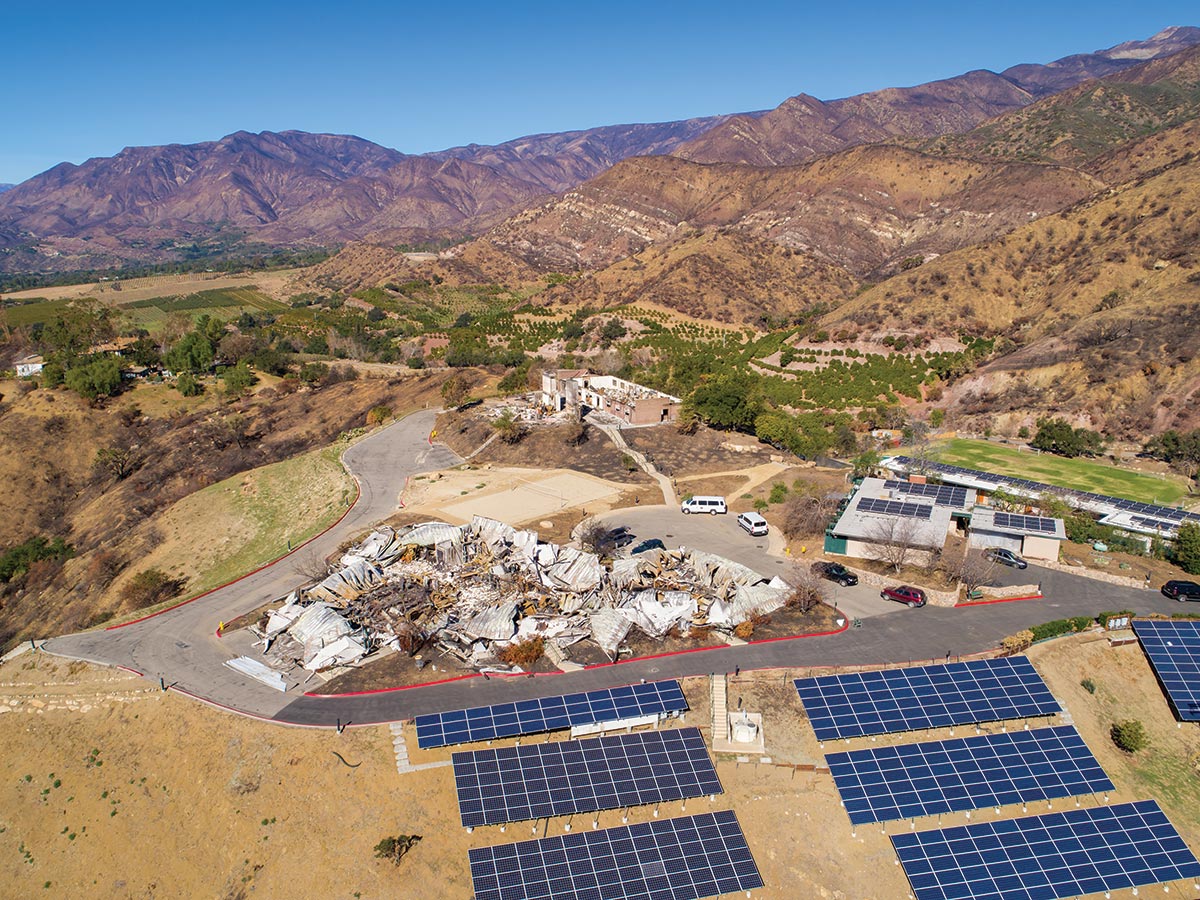
A hilltop village of simple volumes (top) replaces buildings on the Ojai Valley School’s Upper Campus, in Ventura County, California, destroyed in 2017 by the Thomas Fire (above). Photo © Logan Hall, click to enlarge.
The threat of wildfire is more than academic for students at the Ojai Valley School (OVS), in Ventura County, California. One night in early December 2017, a blaze sparked by a fallen power line a day earlier ripped through the private K-12 school’s 195-acre Upper Campus, which is dramatically placed on a hillside, about seven miles away from the original, Lower Campus in the valley below. The conflagration would eventually spread to neighboring Santa Barbara County and scorch 280,000 acres before being contained several weeks later, making it then the largest wildfire in the state’s history. (Soberingly, a mere four years later, the fire has fallen to No. 8.) In just a few hours, it reduced two OVS midcentury timber structures—the girls’ dorm and a science center—to charred rubble. Luckily no one was injured.
The boarding school was able to get back up and running for the start of the January term with trailers on a soccer field. And because Los Angeles–based Frederick Fisher and Partners (FF&P) had already been working with OVS on a master plan for the Upper Campus, the school could move immediately into schematic design for permanent structures, finishing construction in time for the 2021–22 school year. The new $16.5 million complex includes a combined library and dining commons that had emerged as a priority during the planning process, as well as the replacements for the dormitory and the science center. The 37,000-square-foot assemblage reimagines the upper campus as a hilltop village, with clustered white boxes around courtyards and a central plaza, which in turn frame views of the valley and the mountains.
Notably, OVS never considered rebuilding elsewhere, even though the Upper Campus sits in the wildland-urban interface (WUI)—the zone where wilderness and human development meet and there is plentiful vegetation that could serve as fuel for wildfires. “Nature is part of the school’s ethos and is central to the curriculum,” explains FF&P founder Frederick Fisher, whose son is a student at OVS. “Staying in that location was never in question.”
Looking for quick answers on architecture and design topics?
Try Ask RECORD, our new smart AI search tool.
Ask RECORD →
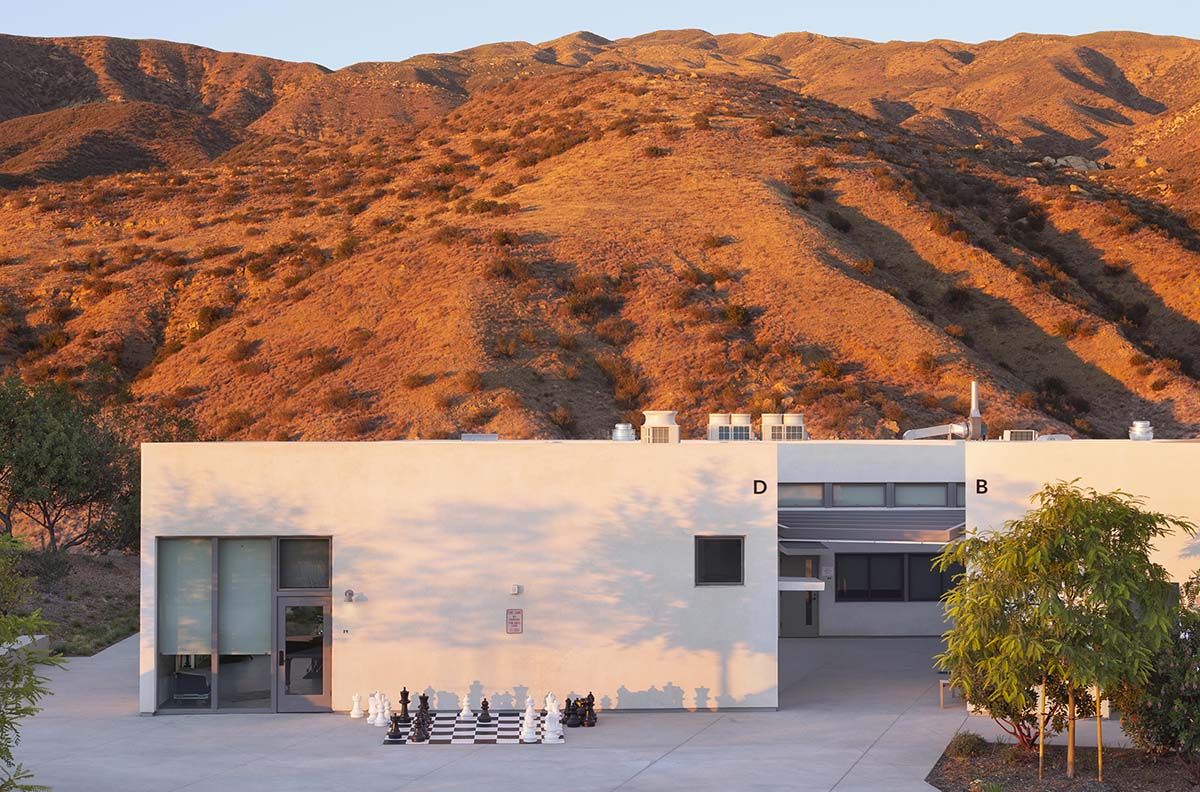
The Ojai Valley School’s new buildings have only small parapets, and no attics, overhangs, or eaves, in order to eliminate spaces for embers to hide. Photo © Tim Street-Porter
The new campus, however, takes the risks into account. The outdoor plaza, for instance, is designed to double as fire-fighting access. The new structures, framed in wood and steel (materials chosen for their construction speed and flexibility), are finished in stucco. And they are protected with an enhanced sprinkler system. But, most significantly, the buildings’ roofs have only small parapets, without attics, overhangs, or eaves, while their ground floors are built as slabs on grade. “There are no cavities or crawl spaces for embers to hide,” says FF&P partner Takashige Ikawa, noting that the old science center was at first thought to have been spared, but windborne embers had penetrated the attic and smoldered undiscovered for several hours before igniting the entire building.
The architectural fire-resistive strategies work hand in hand with the landscape design, which combines native species, including yarrows, heuchera, and sedges, with other low-growing but non-native plants to create defensible space in the first 20 feet closest to the structures. “The resinous nature and high oil content of many native chaparral plants make them too flammable for areas near buildings,” explains Mary Sager McFadden, a principal at Pamela Burton & Company in Santa Monica, the project’s landscape architect. Farther from the structures, shade is provided with coast live oaks, which have small waxy leaves and thick trunks, making them naturally resistant to fire, says McFadden. Even so, the oaks have been placed so that at maturity their canopies will be 10 feet apart and 10 feet from the buildings.
Also augmenting the complex’s resilience is a pre-existing photovoltaic (PV) array, which now includes battery storage. This system should allow the campus to operate without power from the grid about 90 percent of the year, and provides a backup should wildfire, extreme weather, or some other event, cause a grid failure. The generation and storage capabilities are two of several features that have put the buildings on track for LEED Gold.
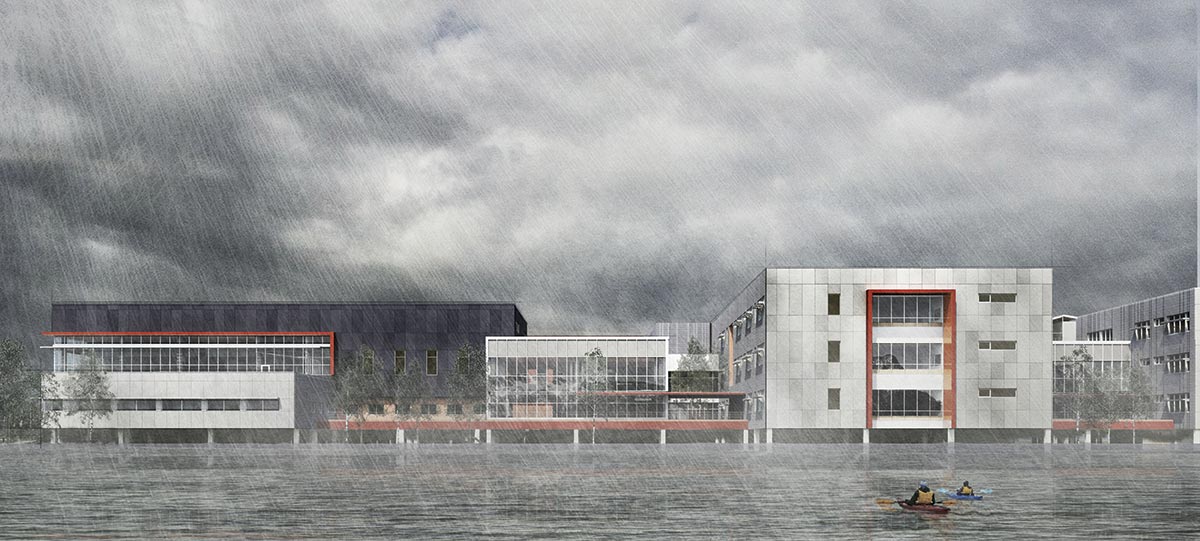
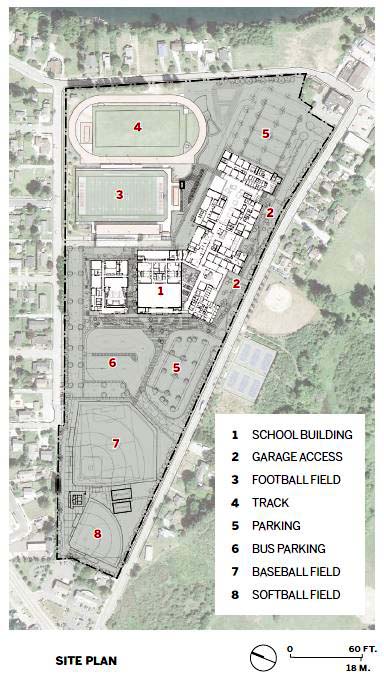
In the case of Snoqualmie, Washington’s new Mount Si High School, which opened in 2019, water, not fire, was the chief concern. The residents of this small city, about 30 miles east of Seattle, have been living with seasonal flooding for generations. So when it came time to replace its aging and too-small high school on the same flood-prone river-valley site, its designers, NAC Architecture, elevated the 350,000-square-foot building above about half of the suburban school’s 700 parking spaces.
1
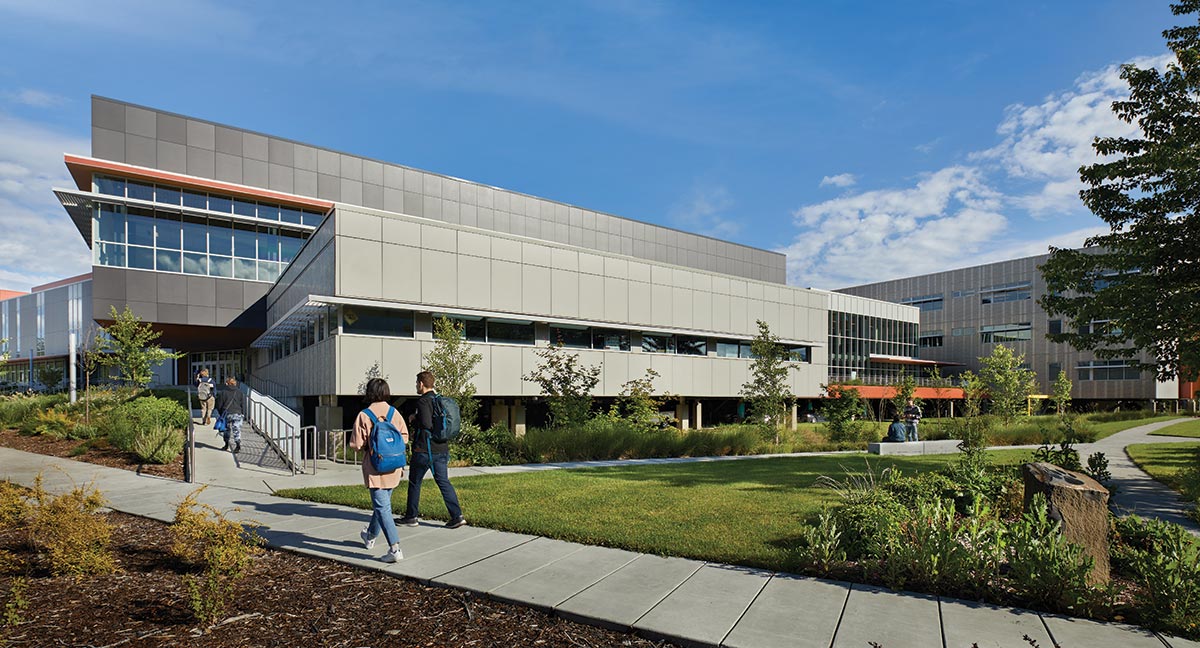
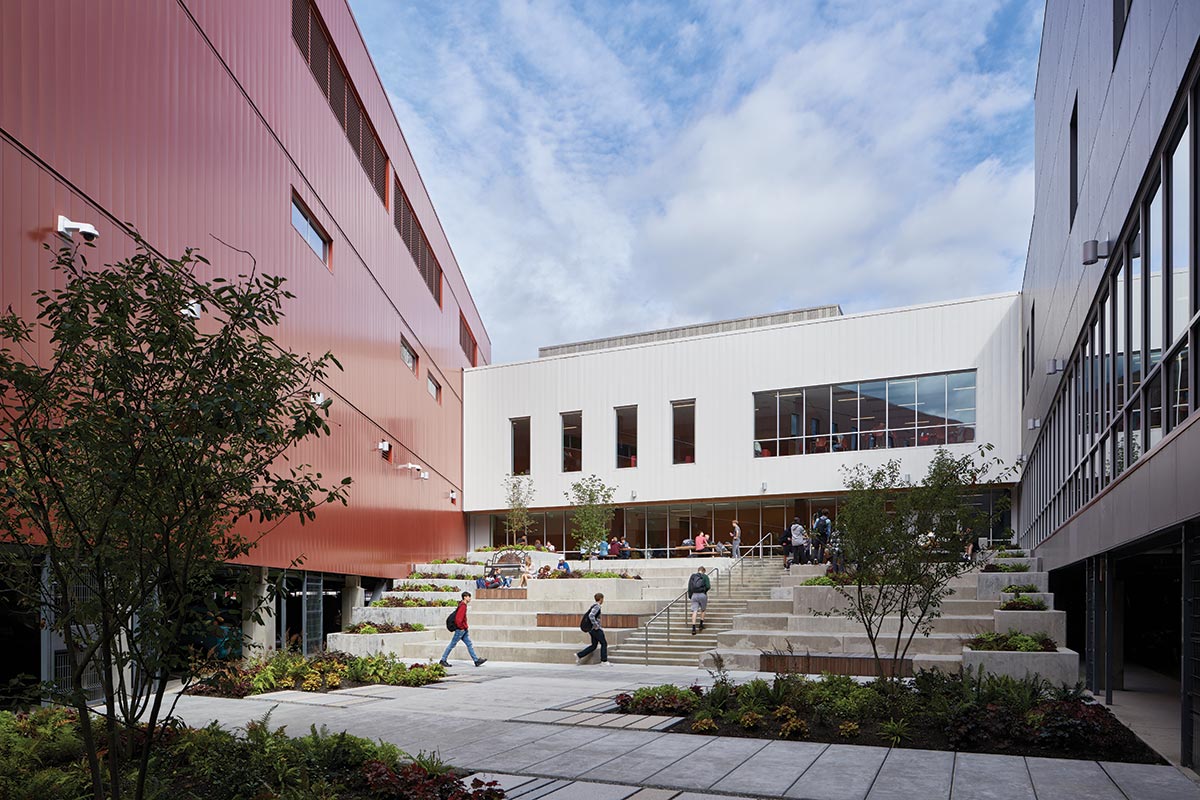
Elevating the Mount Si High School in Washington State over a garage (1) protects it from floods (rendering, 2). Photo © Benjamin Benschneider (1)
2
Stacking the school over parking establishes what Matt Rumbaugh, NAC principal, refers to as a “new ground plane”—one that is 5 feet above the 100-year-flood level and 2 feet above what code requires. On top of this plinth, the 2,300-student school—one of the largest high schools in the state—has been organized as small learning academies in seven interconnected three-story buildings. Social and informal learning spaces, both indoors and out, are woven among them to create human-scaled environments.
3
4
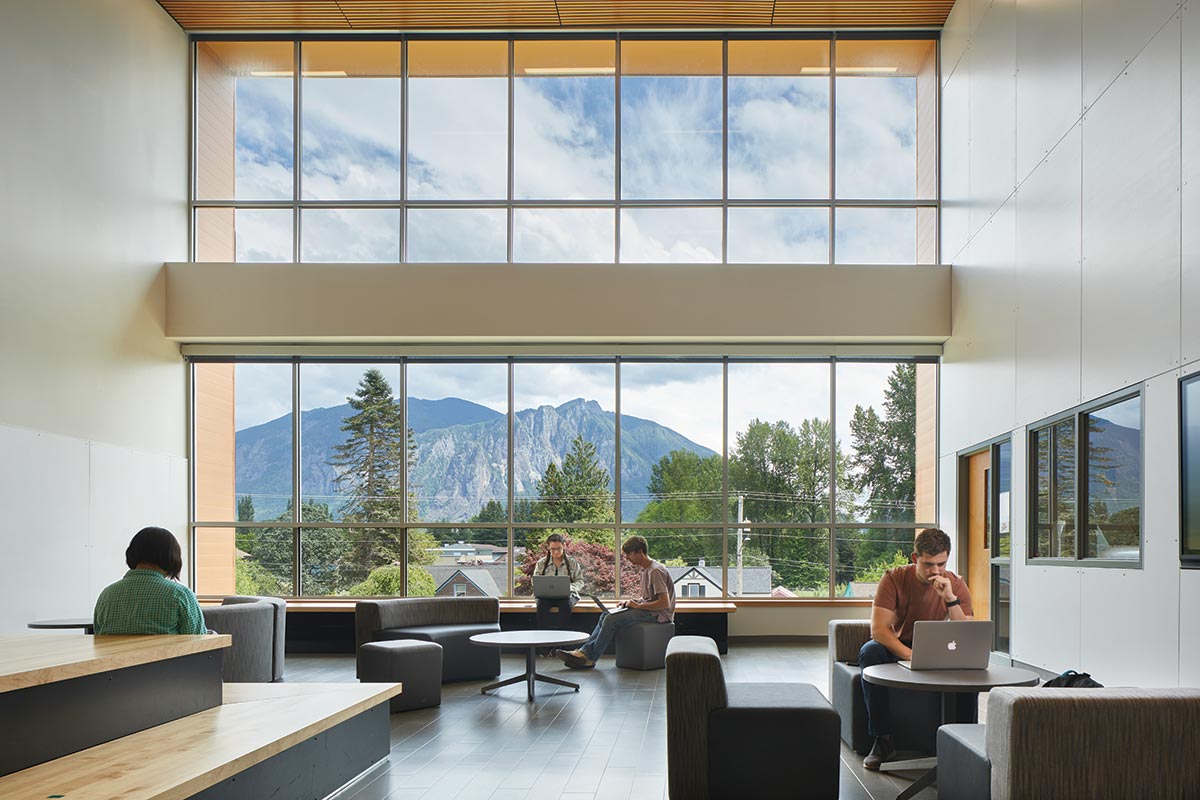
Outdoor (3) and indoor (4) social spaces are interspersed throughout the 350,000-square foot Mount Si High School, creating human-scaled environments. Photos © Benjamin Benschneider (3 & 4)
The obvious advantage of this configuration is improved flood resilience. But there are others as well. By placing the building on top of parking, more of the 32-acre site is left available for uses such as sports and recreation. Another benefit, notes Boris Srdar, NAC design principal, is that, by lifting the school up one story, the views of the nearby mountains are “amplified and made more powerful.”
Floods and wildfires present obvious dangers. A more insidious hazard is extreme heat, no less disruptive or potentially deadly. Cities are especially vulnerable, due to the concentration of impervious materials and surfaces that absorb and retain heat. Paris has a particular problem: despite its capacious tree-lined boulevards, it has only 62 square feet of green space per person, well below the World Health Organization’s recommendation of 97. Western Europe’s scorching temperatures in July and August 2003 killed more than 1,000 Parisians. A heatwave in early summer 2017 prompted a three-day closure of the city’s schools. And prolonged periods of sweltering temperatures are expected to become more common: according to Météo-France, the country’s meteorological service, by the end of the century, Paris will experience heatwaves 10 to 25 days a year, compared to one day on average currently.
One effort that aims to provide some relief is the OASIS Schools initiative. Supported by Urban Innovative Actions (UIA), a program of the European Union, and begun in 2017, OASIS has transformed 10 of Paris’s typical schoolyards from areas that are almost entirely paved and nearly devoid of anything that grows, into green open spaces. The pilot is part of an ongoing and larger undertaking, with the goal of revamping all of the city’s 760 schoolyards by 2040 to create “cool islands,” says Raphaëlle Thiollier, OASIS schoolyards project manager for the city’s department of education.
5
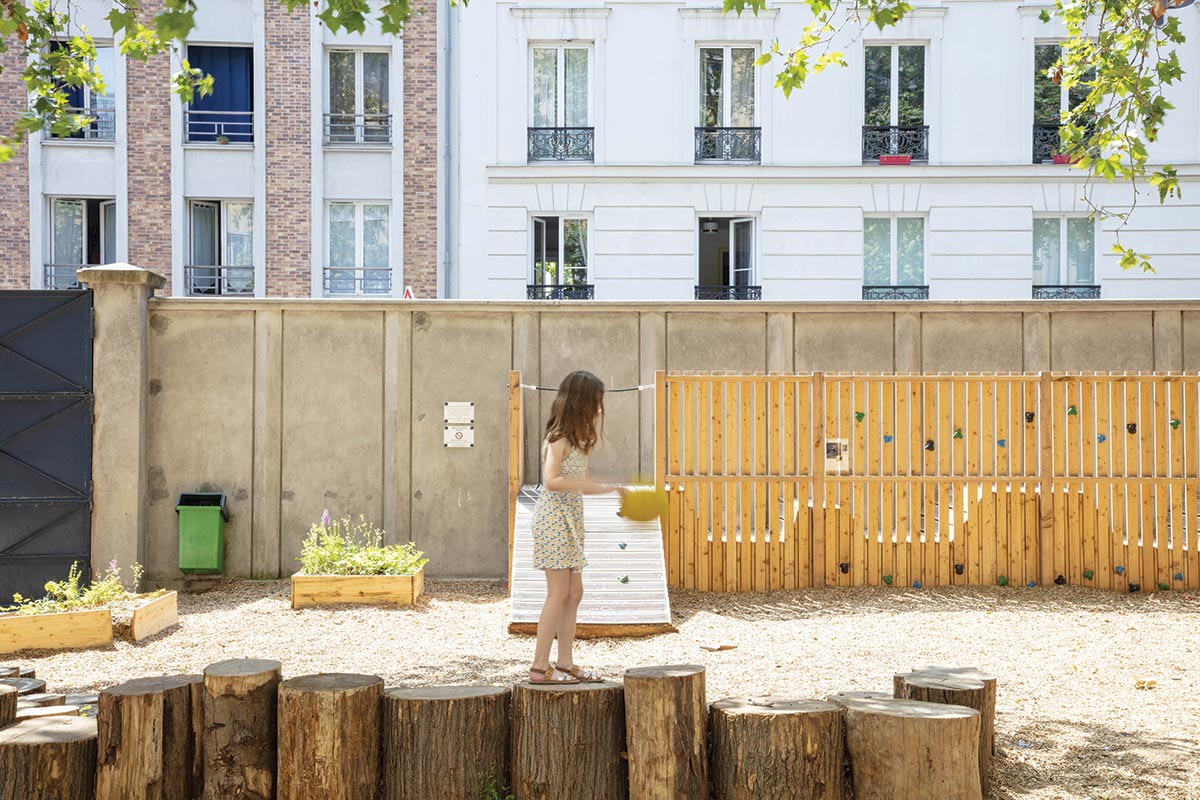
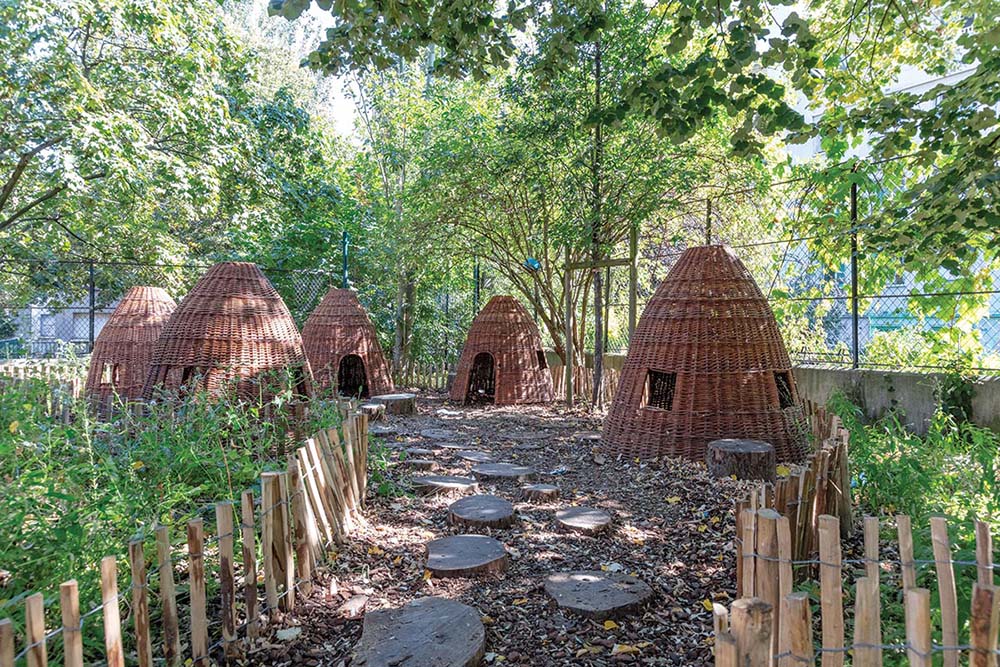
Encouraging adventurous and imaginative play is one of the goals of the Parisian schoolyards revamped as part of the OASIS program, including the schoolyards at the Ecole Élementaire Keller (5) and the Écoles Maternelle et Élémentaire Maryse Hilsz (6). Photos © Théo Ménivard/Caue de Paris
6
In addition to climate adaptation, OASIS has other objectives, including teaching children about the environment, explains Maria Sitzoglou, an architect who oversaw the pilot for UIA. The project should also help create social cohesion through a “co-design” process in which architects from the public service association, Conseil d’Architecture d’Urbanisme et de l’Environnement, collaborated with students and faculty. The finished schoolyards themselves should also help establish a sense of community within the surrounding neighborhood, since the spaces are open to nearby residents when school is not in session. Greening all of Paris’s schoolyards would put every city resident within 700 feet of a small park.
The 350-student Écoles Maternelle et Élémentaire Maryse Hilsz—a kindergarten and elementary school sharing the same site in the 20th arrondissement, at the eastern edge of Paris—is representative of the OASIS projects. The schools’ separate but adjacent recreation areas have been transformed from 30,000 square feet of pancake-flat asphalt, with just a few scattered trees, to surfaces of crushed stone, sand, pervious pavers, soil, and plants (materials selected, in part, to help manage stormwater).
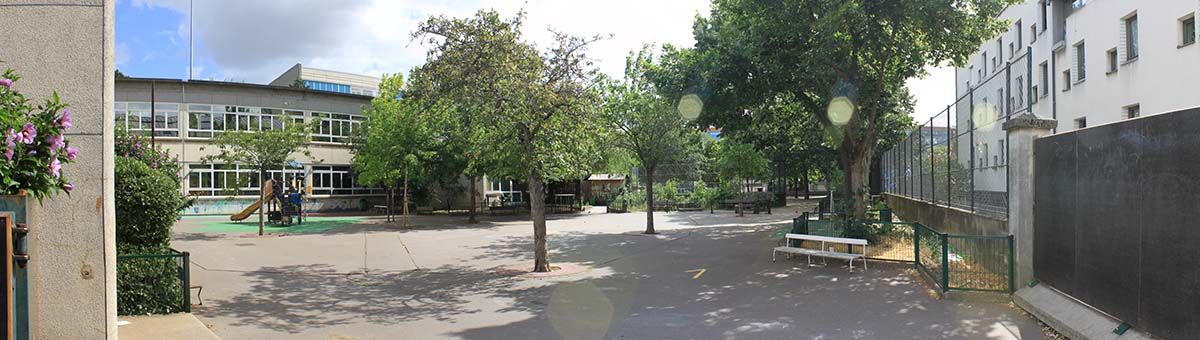
Before its OAIS transformation, the schoolyard at the Écoles Maternelle et Élémentaire Maryse Hilsz consisted primarily of pancake-flat asphalt with just a few scattered trees. Photo © CAUE de Paris
Completed in March, the new landscape at Maryse Hilsz includes mounds and hills that children can scamper over, a small amphitheater where they can gather, wickerwork huts for hide-and-seek, and a vegetable garden where they can grow their own food. In place of the fence that previously divided the younger students from the older ones, a stream fed with rainwater collected from the roof creates an implied boundary.
Academic partners of OASIS are currently evaluating Maryse Hilsz and the other completed schoolyard projects for both their social and climatological aspects, using such tools as sensors, observation, and interviews, with the first results expected later this year, says Thiollier. But whatever the data indicate, it is clear that the program has brought nature to places where previously there was next to none. Despite their very different settings, the approach is not dissimilar to that at OVS and Mount Si—to bring students into closer touch with nature, thereby enriching the learning environment and better preparing them for the climate challenges ahead.
Continuing Education

To earn one AIA learning unit (LU), including one hour of health, safety, and welfare (HSW) credit, read the article above and watch the videos below.
Then complete the quiz. Upon passing the test, you will receive a certificate of completion, and your credit will be automatically reported to the AIA. Additional information regarding credit-reporting and continuing-education requirements can be found at continuingeducation.bnpmedia.com.
Learning Objectives
- Explain the difference between climate mitigation and climate adaptation.
- Discuss changing weather patterns linked to global warming.
- Describe construction and landscape strategies for making buildings more resistive to wildfires.
- Discuss the social and climate-adaptation goals of greening Parisian schoolyards.
AIA/CES Course #K2201A
Looking for a reprint of this article?
From high-res PDFs to custom plaques, order your copy today!