Design Vanguard 2025: Fondamenta
Milan

Architects & Firms
Through the five storefront windows of Fondamenta’s studio, Milanese life unfolds in full view, each passerby a fleeting character against the geometric backdrop of a vast residential development amid old-fashioned buildings. Outside eyes return the gaze, drawn to the quiet theater of a small crew of architects, working among long, red velvet curtains, gray carpeting, and a large travertine table. The windows—and the rooms behind them—were claimed one by one as the firm grew, thanks not to Milan’s recent construction boom but to the success that the practice found in two regions at opposite ends of Italy (both known, coincidentally, for their excellent wine).
1
Sant’Erasmo Renovation (1 - 3)
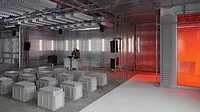
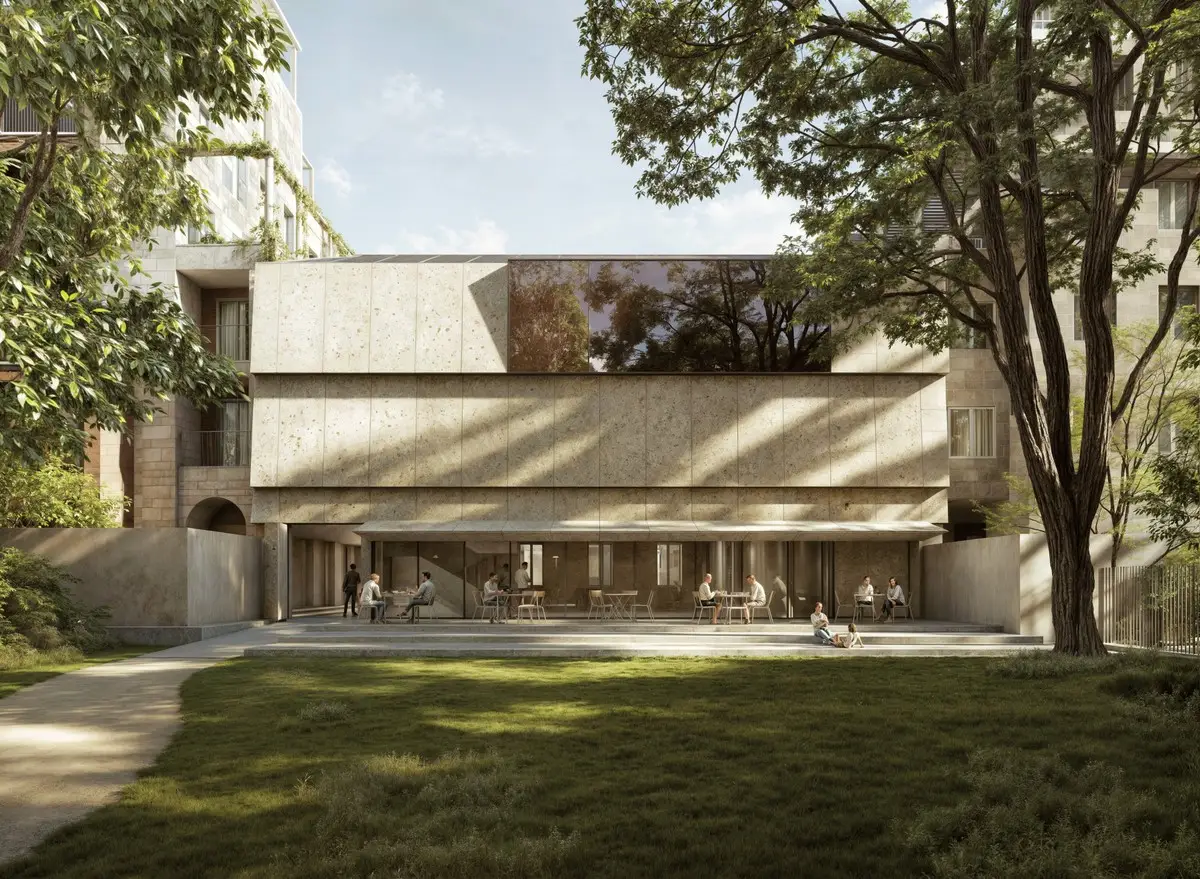
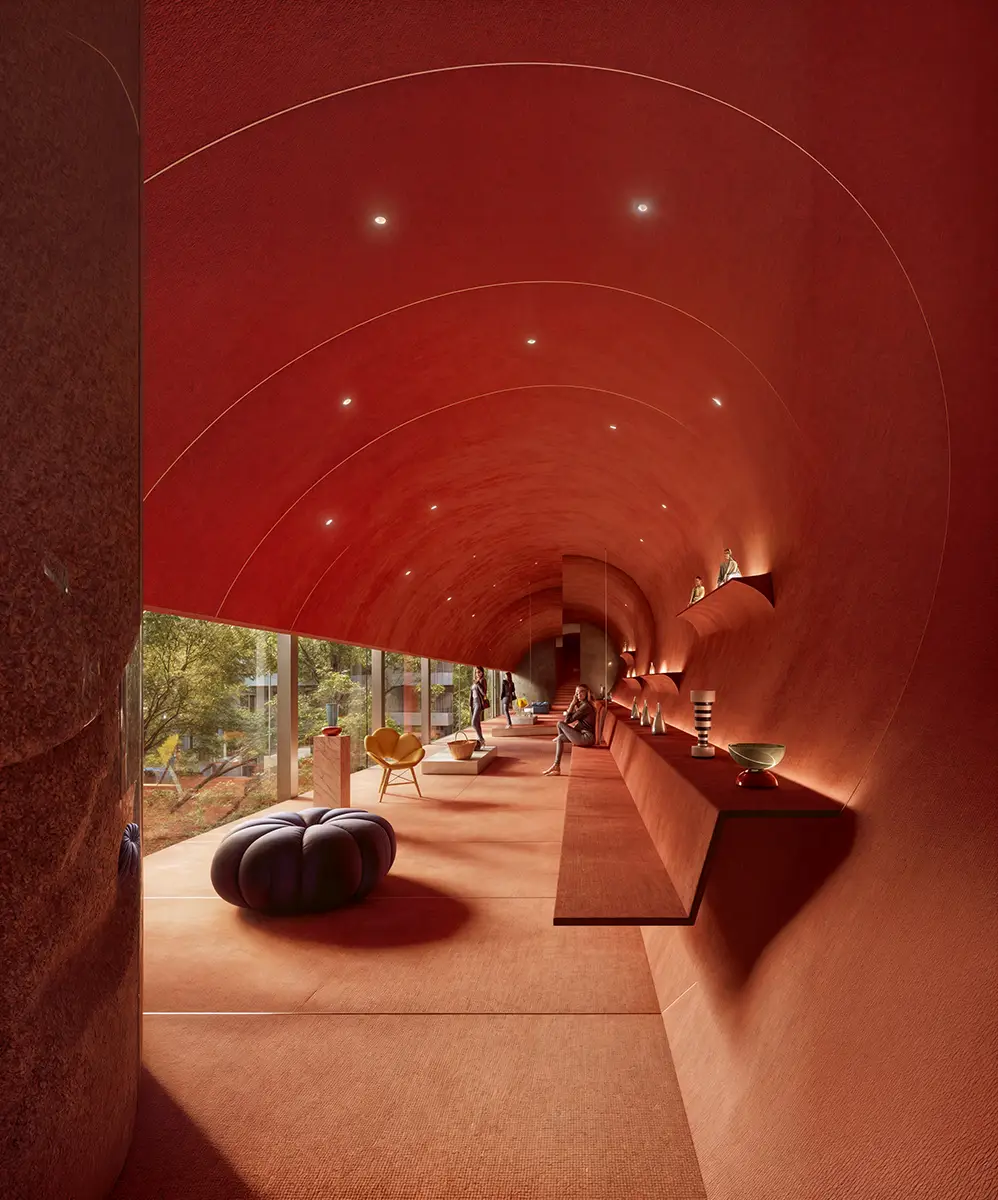
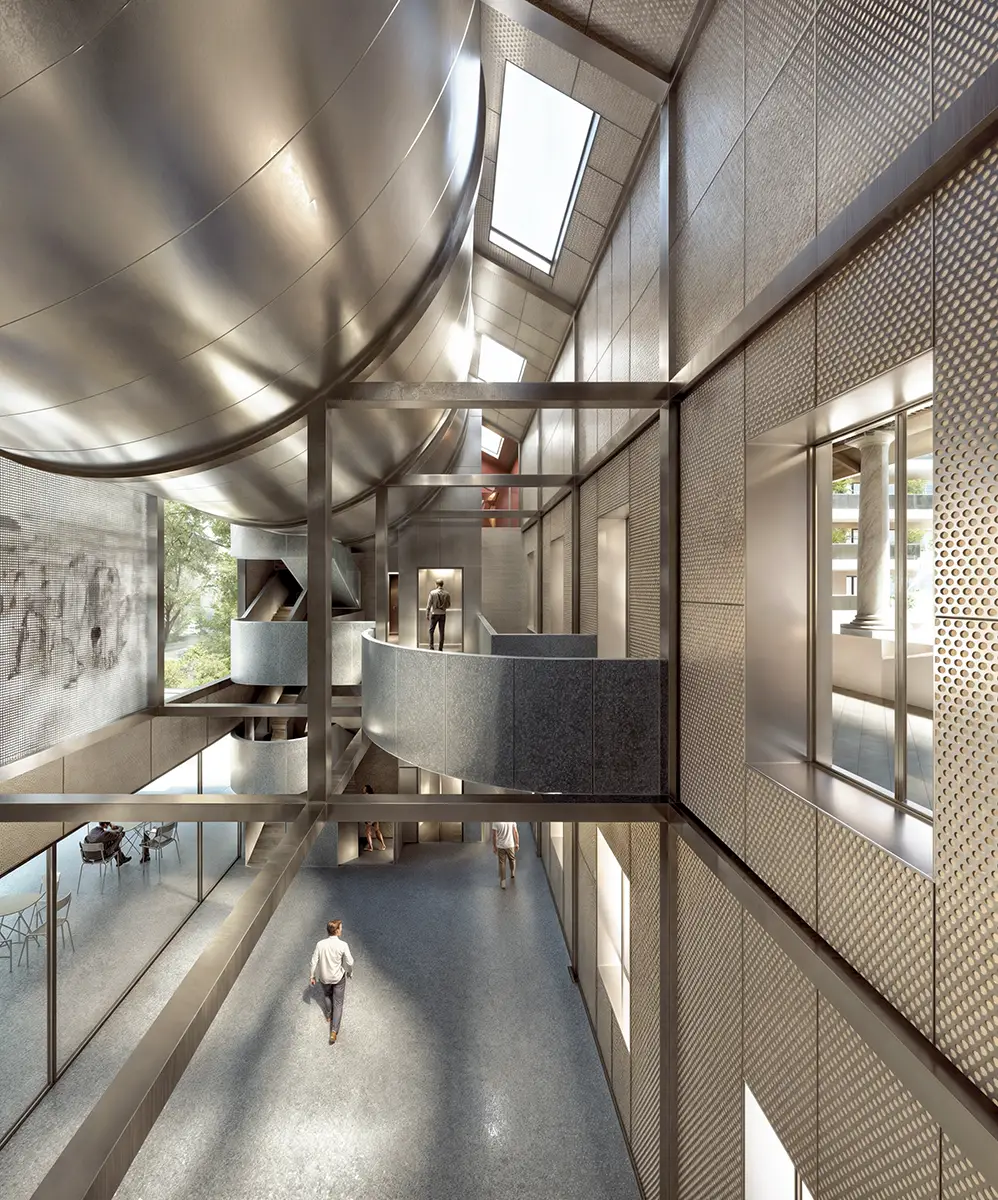
This project, currently in design, will transform Milan’s former Sant’Erasmo cloister, the adjacent piazza, and parts of the Perego Gardens into a new commercial destination with performance and event spaces. Images © DIMA, click to enlarge.
2
3
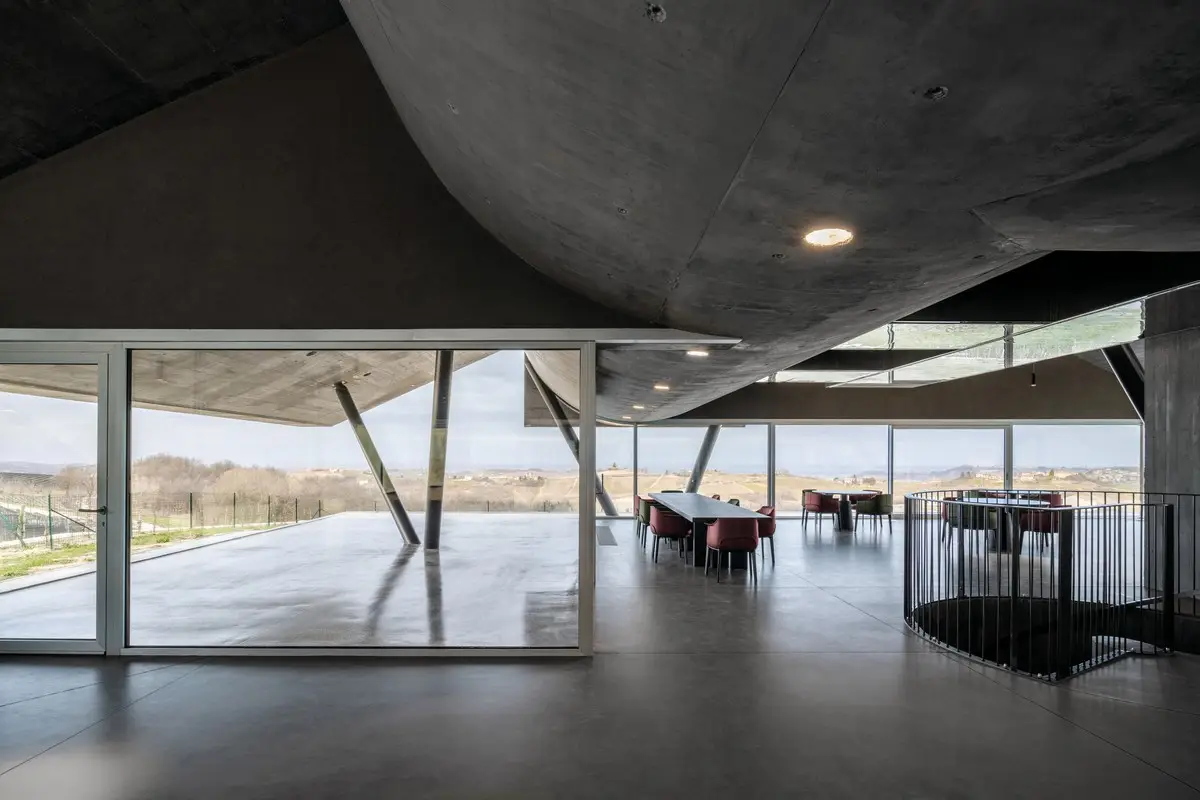
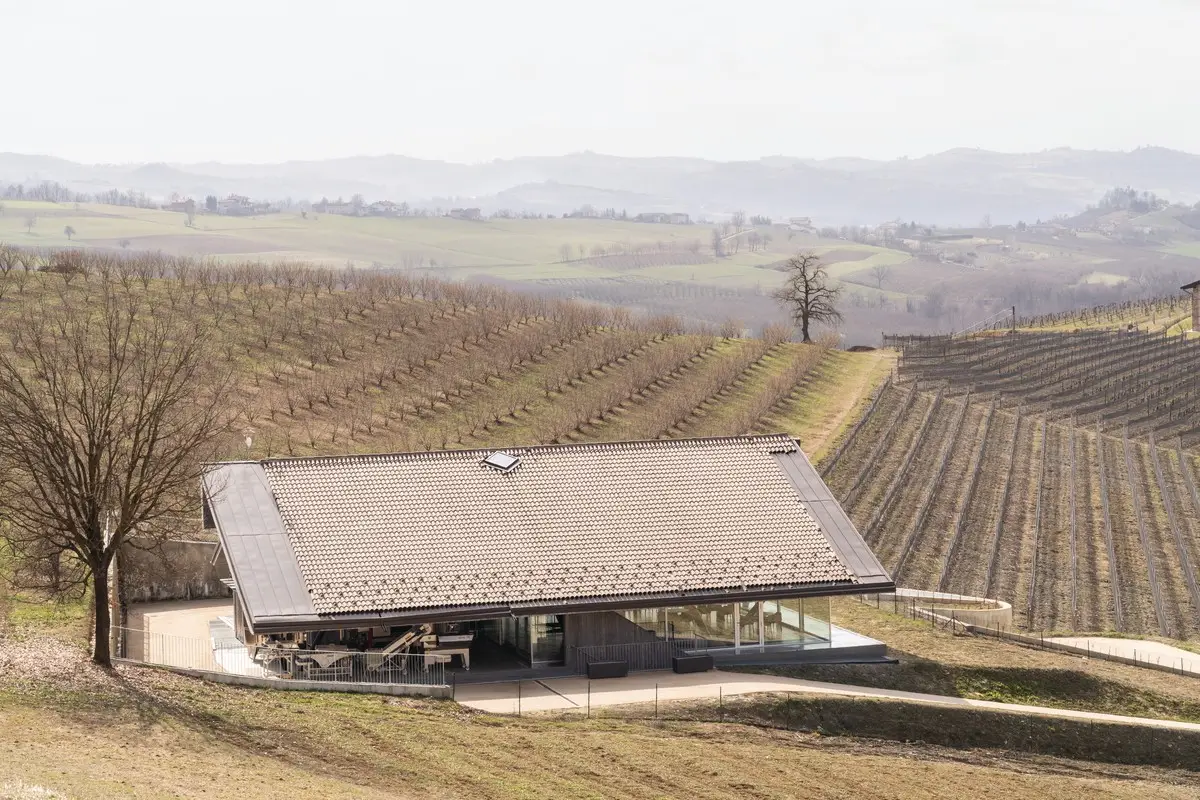
Francesca Beatrice Gagliardi and Federico Rossi, the founding partners, first met in Switzerland at the Mendrisio Academy of Architecture, established by Mario Botta (their professor), before parting ways and venturing across Europe. Federico, 37, who also studied in Stockholm, spent several years working with Christian Kerez in Zurich, before encouraging Francesca, 38, to join the team following stints in Lisbon at Aires Mateus and in Madrid at Ensamble Studio. Their partnership took shape in 2016, following an opportunity to design a winery together in Monforte d’Alba, Piedmont—famous for Barolo wine and as a UNESCO World Heritage Site. There, blending a traditional pitched roof with a striking assemblage of slanted columns and inverted vaults, they created a work of rare complexity, featuring themes—structure as a generative force, anti-classical balance, construction as a design driver, and, as Francesca puts it, “the collision of many layers that we ask to coexist”—later echoed in various villas built in Avola, Sicily, land of Nero wine.
4
Monforte d’Alba Winery (4 & 5)
In the Piedmont region of Italy, Fondamenta designed a winery that respects vernacular forms on its exterior while exploring new spatial strategies inside. Angled steel columns support a pitched roof floating above a glazed ground floor while intersecting concrete shells run throughout, their undersides visible. Photos © Marco Cappelletti
5
One might seek to spot references ranging from Italian masters (“We prefer Luigi Moretti to Aldo Rossi,” she notes) to deconstructivist and folding architecture, or from their Swiss and Iberian mentors to trace the roots of their designs’ distorted forms, pierced sections, Mediterranean sensibility, and juxtaposition of rough and polished materials. But that’s just the surface. The projects’ geometric complexity conceals a greater ambition: controlling—or what they call “designing the process”—as a means to transcend the architect’s often ancillary role and restore a primary one. Alongside a strong focus on software, data analysis, and AI, their pragmatic idealism has led them to view constraints—like Italy’s intricate regulatory system—as “a source of unexpected experimentation,” while also empowering local expertise. In Sicily, thanks to construction-site training using virtual reality and other technologies, “we actually worked better than in Switzerland,” Federico adds.
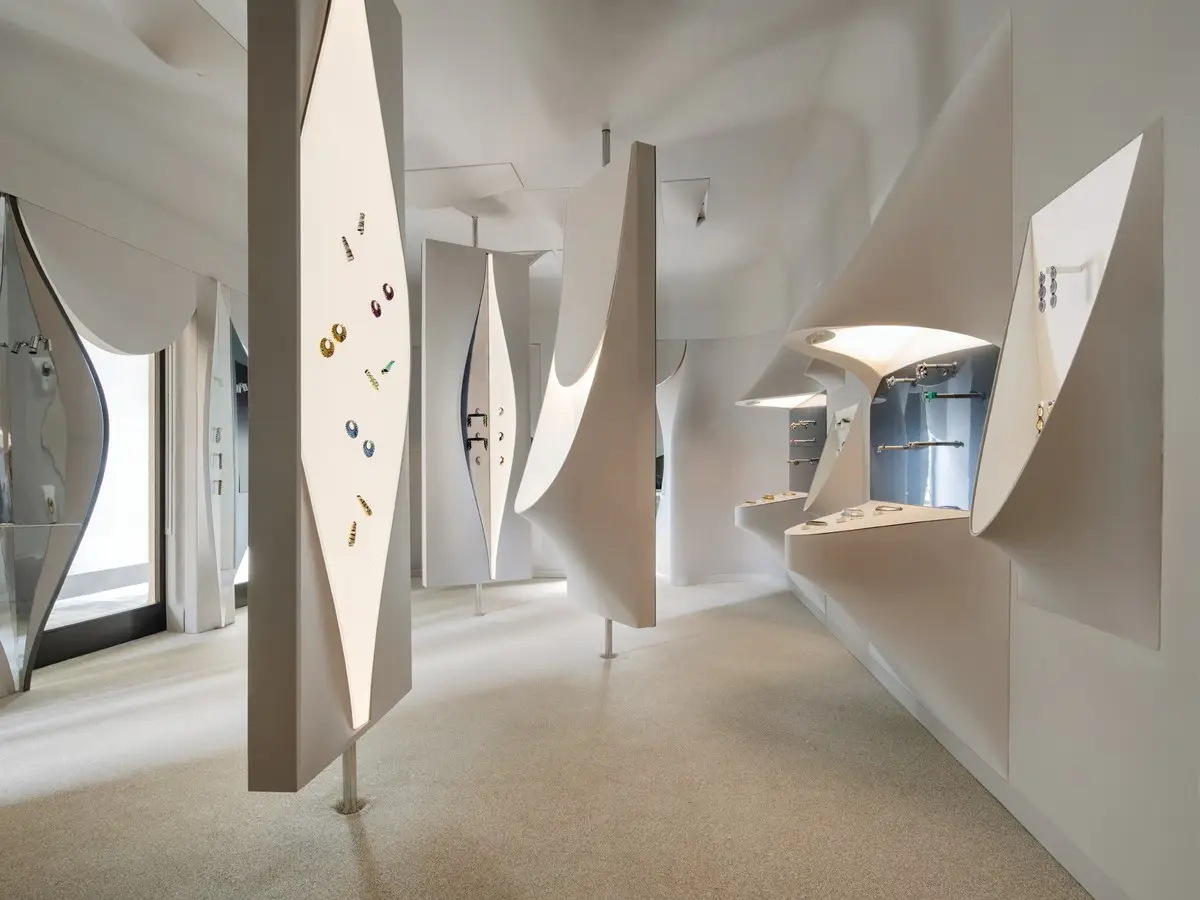
SO-LE Flagship Store
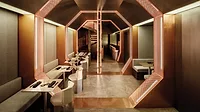
Fondamenta designed a womblike space inside a 17th-century building in Milan, wrapping it with an elastic-fiber membrane and then deforming it with cuts, folds, and warps. The result is a store with flowing spaces, no sharp corners, and an organic character that seems to evolve over time. Photo © Mikael Olsson
Their design philosophy is now embodied in an ongoing hospitality project in Val di Noto, a tourist complex situated in the Sicilian countryside. The settlement unfolds like a continuous ribbon—rising, dipping, curving, and twisting—to shelter dwellings while acting as a “thermodynamic machine” that generates more energy than it consumes. In terms of form, it seems to be a turning point: snakelike fluid surfaces, derived from systematic data analysis of topography and climate conditions, supersede the previously jagged and angular geometries. No matter the form, they state, “Architecture is an organism.”

6
Figura House (6 - 8)
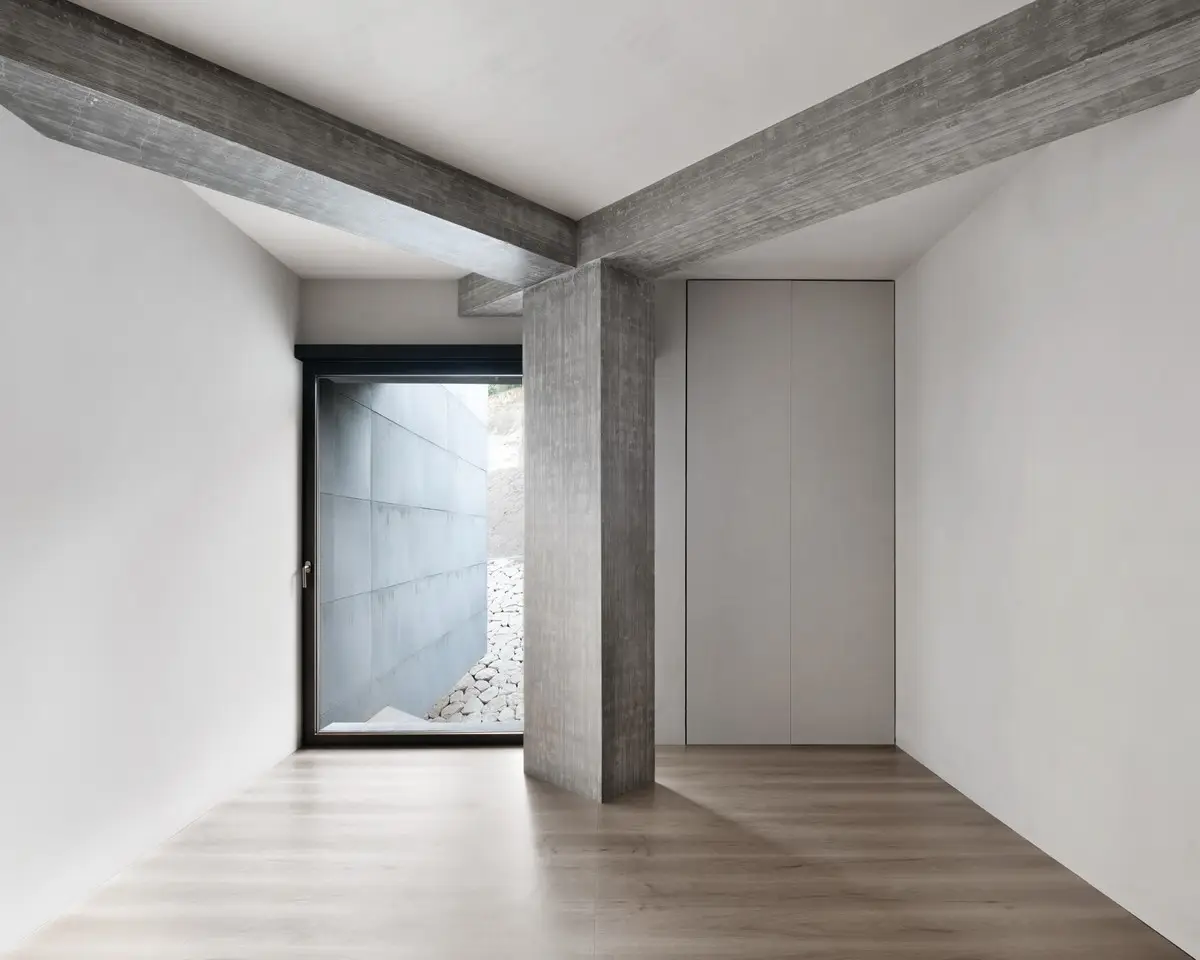
The architects stripped a nondescript house down to its concrete bones, then used them as the structural progenitor for a 3,500-square-foot house in the rugged hills of Sicily. The project’s concrete frame is exposed and serves as a visual and tactile foil for the metal panels that otherwise wrap the residence. Photos © Mikael Olsson

7
8
Next stop: Albania, where they have been commissioned to design new housing projects as part of the country’s exponential economic growth. Renderings of skewed towers with shifting loggias circulate through the studio. But for Federico and Francesca, the real challenge lies beyond aesthetics; it’s about rethinking the very logic that precedes the project itself, from the ground up, from the fondamenta—the foundation. And, soon, five windows may no longer be enough.

9

10
Villa-RP02 (9, 10, and top of page)
Nestled into a rocky outcropping in Avola, Sicily, this 3,700-square-foot house appears from the road as a single-story composition of fragmented elements, but emerges on the other side as a three-story structure formed by a curved concrete wall, a courtyard, and an underground garage. An enormous prestressed beam, clad in stone, runs from one side of the house to the other, hovering above it all. Photos © Mikael Olsson
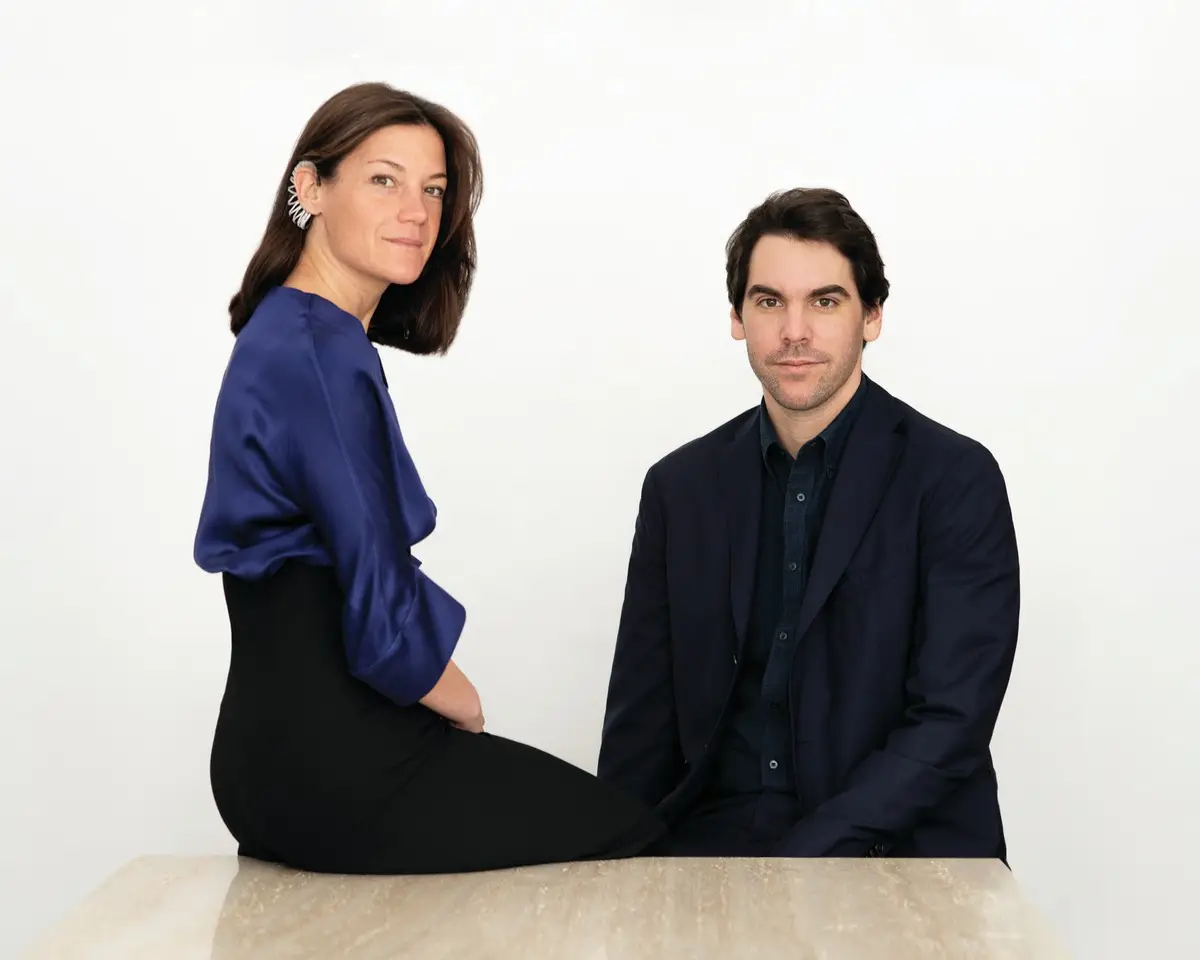
Francesca Beatrice Gagliardi and Federico Rossi. Photo © Mikael Olsson
FOUNDED: 2016
DESIGN STAFF: 12
PRINCIPALS: Francesca Beatrice Gagliardi, Federico Rossi
EDUCATION:
Gagliardi: Mendrisio Academy of Architecture, M.Arch., 2006–12
Rossi: Mendrisio Academy of Architecture, M.Arch., 2006–12; KTH Stockholm, 2009–10
WORK HISTORY:
Gagliardi: Christian Kerez, 2014; Ensamble Studio, 2013; Aires Mateus, 2007
Rossi: Christian Kerez, 2013–15
KEY COMPLETED PROJECTS: Figura House, 2023; Villa RP01, 2022; Villa RP02, 2022; House FO, 2022 (all in Avola, Italy); SO-LE Flagship Store, 2022, Milan; Winery, 2020, Monforte d’Alba, Italy
KEY CURRENT PROJECTS: Mixed-Use Building, Orikum; Mixed-Use Building, Radhime (both in Albania); Villa; Hospitality Project (both in Sicily, Italy); Residential Building, Milan
Looking for quick answers on architecture and design topics?
Try Ask RECORD, our new smart AI search tool.
Ask RECORD →
Looking for a reprint of this article?
From high-res PDFs to custom plaques, order your copy today!