The White House Issues ‘Make Federal Architecture Beautiful Again’ Executive Order
.webp?t=1756483260)
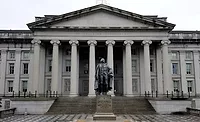
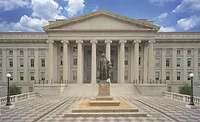
The U.S. General Services Administration Building at 1800 F Street NW in Washington, D.C. The Beaux-Arts structure was originally built in 1917 to house the Department of the Interior.
After issuing a memorandum in January that ordered Stephen Ehikian, then-acting head of the General Services Administration (GSA), to submit “recommendations to advance the policy that federal public buildings should be visually identifiable as civic buildings and respect regional, traditional, and classical architectural heritage,” the Trump White House yesterday doubled-down and issued a formal executive order mandating that the preferred architecture for “applicable federal public buildings” be of the classical or traditional style.
Projects that fall under the order include all U.S. courthouses and agency buildings, all buildings within Washington, D.C., and environs, and all other Federal public buildings that cost or are expected to cost more than $50 million to design, build, and finish. The “Make Federal Architecture Beautiful Again” order does not apply to land ports of entry or infrastructure projects.
This is the second time Trump has issued such a decree, the first coming at the tail-end of his first administration in 2020; it was squashed by President Joe Biden shortly after he assumed office. Like the first short-lived EO, this second iteration establishes classical architecture as the “preferred and default” style for federal buildings in D.C. while requiring a preference for classical or traditional architecture in the selection of new federal buildings elsewhere. The order details:
“Applicable federal public buildings should uplift and beautify public spaces, inspire the human spirit, ennoble the United States, and command respect from the general public. They should also be visually identifiable as civic buildings and, as appropriate, respect regional architectural heritage. Architecture—particularly traditional and classical architecture—that meets the criteria set forth in this subsection is the preferred architecture for applicable federal public buildings. In the District of Columbia, classical architecture shall be the preferred and default architecture for federal public buildings absent exceptional factors necessitating another kind of architecture.”
An “appalled” American Institute of Architects issued a formal statement in response to the January memo but has not done so addressing the new executive order as of the publication of this article. The order, as implemented, is likely to have a wide-reaching and damaging impact on the profession, particularly for firms competing for GSA contracts and those who have already been awarded them. Firms that specialize in neoclassical and traditional styles, however, stand to benefit.
As further detailed in the order, the GSA must “actively recruit” experienced, classical-leaning firms when launching design competitions for federal projects. The order also stipulates that multiple designs that adhere to the Trump administration’s preferred modes of architecture be “advanced to the final evaluation round” in competitions.
The White House’s move was celebrated by the National Civic Art Society, a D.C.-based nonprofit whose president, Justin Shubow, was a driving force behind the 2020 order as well as the most recent one. A 2020 survey commissioned by the National Civic Art Society found that roughly 72 percent of the 2,000 adults canvased preferred traditional over modern architecture for federal buildings.
Looking for quick answers on architecture and design topics?
Try Ask RECORD, our new smart AI search tool.
Ask RECORD →
In response to that survey the AIA wrote: “This is not a question about a stylistic preference for federal buildings or popular majorities. It’s about ensuring a process remains in place that allows for community input and the flexibility to ensure federal buildings reflect the culture and needs of the local area…the Guiding Principles for Federal Architecture established federal neutrality on design styles. They do not dictate any one style over any other. AIA opposes design mandates of any kind and those based upon the advancement of an ideological agenda.”
The new executive order does not hold back in admonishing the GSA’s Design Excellence Program, first established in 1994. It states that the program has failed in its objectives and often “selects designs by prominent architects with little regard for local input or regional aesthetic preferences. The resulting Federal architecture sometimes impresses the architectural elite, but not the American people who the buildings are meant to serve.”
The “Make Federal Architecture Beautiful Again” order comes several days after an order establishing the National Design Studio, led by Airbnb co-founder Joe Gebbia in the role of chief design officer. (Gebbia, a Rhode Island School of Design graduate, is also a backer of the Eames Institute and co-founder of prefab housing startup Samara). The main goal of the studio does not pertain to architecture but sets out to revamp and redesign the federal government’s digital interface.
Meanwhile, Trump’s gilded redo of the White House interiors and plans to build a colossal $200 million ballroom adjacent to the East Wing continue to elicit groans from preservationists.Looking for a reprint of this article?
From high-res PDFs to custom plaques, order your copy today!