Spotlight: Townhouse Renovations
Taylor and Miller Architecture Takes a Bold Yet Surgical Approach in Revamping a Park Slope Townhouse
Brooklyn, New York

Architects & Firms
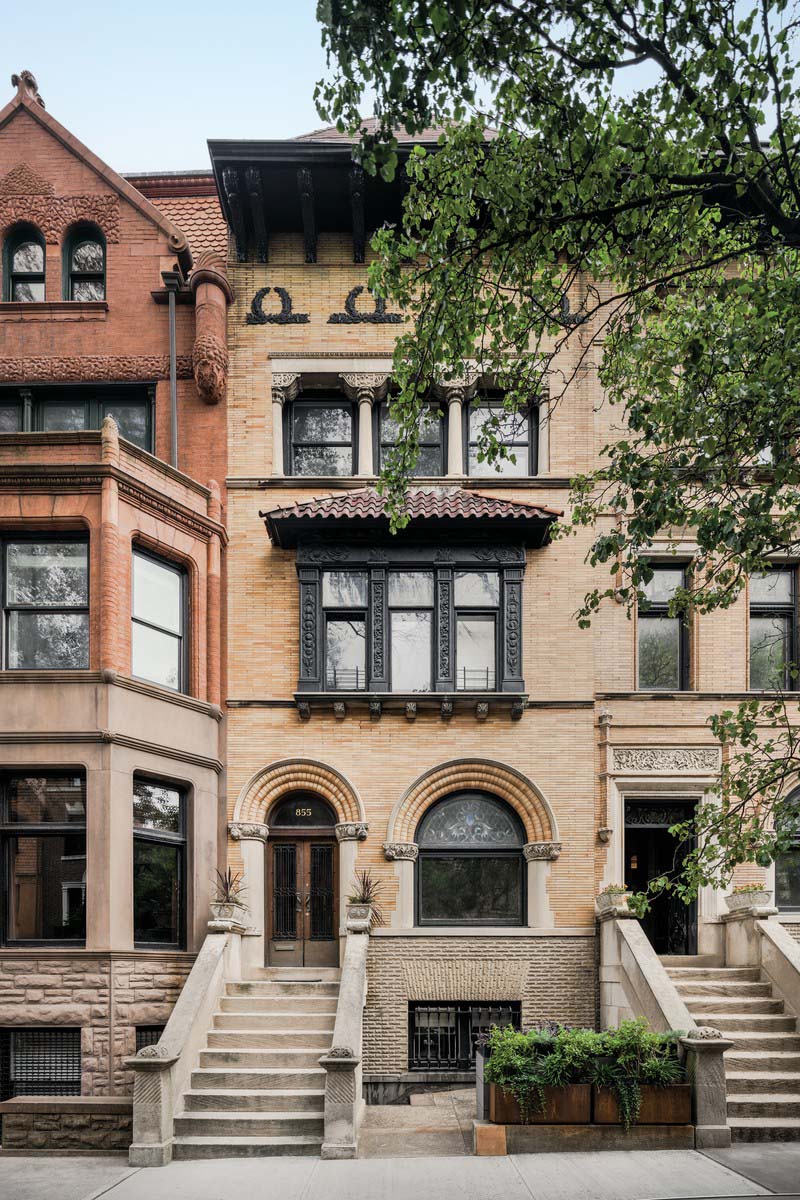
The Romanesque revival townhouse in the Brooklyn neighborhood of Park Slope already had a lot going for it when two attorneys, relocating from Los Angeles, bought it in May 2023. One of a quartet of contiguous golden brick rowhouses on a leafy block near Prospect Park, the four-story structure, built in 1892, had a dignified, well-preserved facade featuring arched windows, limestone pilasters, stained glass, and a gracious stair leading to the front door. The parlor floor within appealed as well: it was rich in late 19th-century details, including elaborate woodwork, tiled fireplaces with intricate mantels, and parquet floors.
1
2
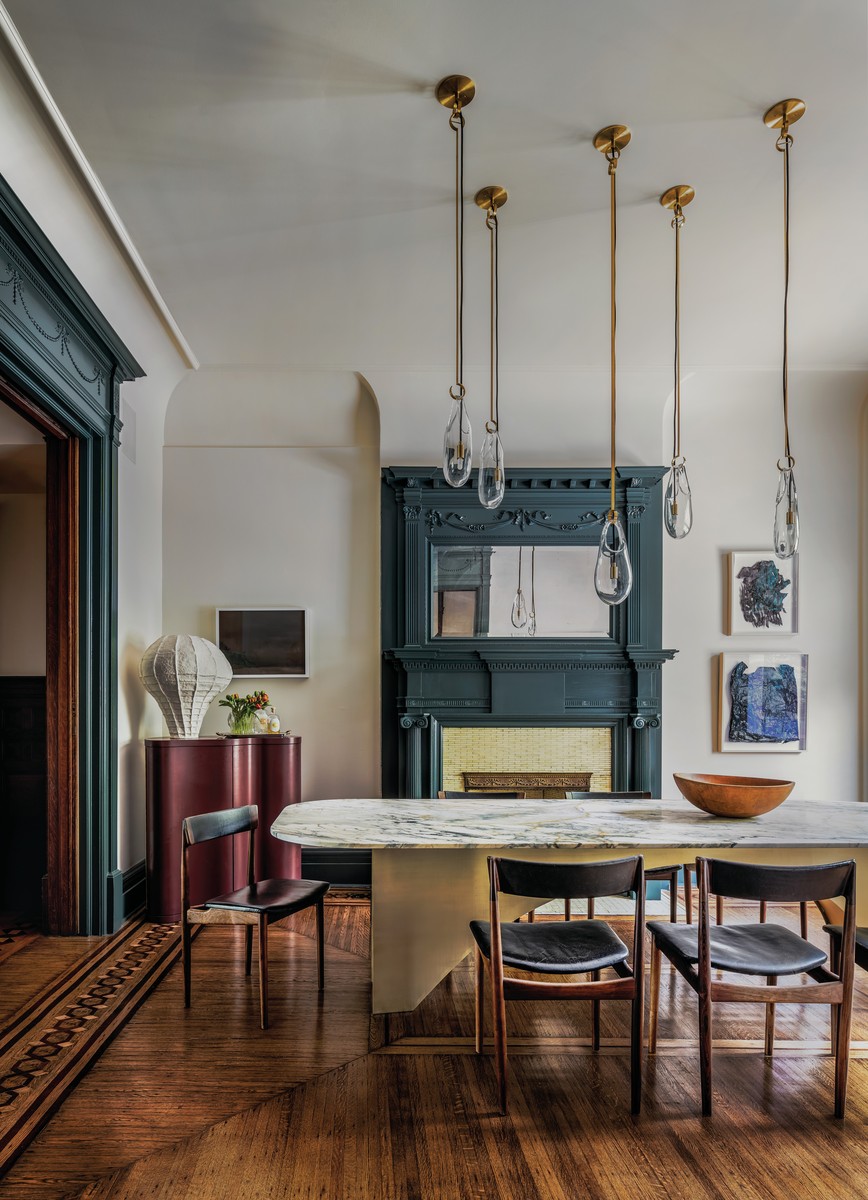
The Romanesque Revival townhouse (1) is rich in late 19th-century details, especially the parlor floor’s living (top of page) and dining (2) rooms. Photos © Alan Tansey, click to enlarge.
But despite its intact original elements, the 5,050-square-foot residence still needed some work before the couple and their three young children could move in. Among its notable deficiencies was an oddly configured garden floor, with a worn and dated kitchen, and a top-floor bedroom with an illegal multilevel loft that extended into an attic space. And there was no air-conditioning on the bottom two floors. In addition to these problems, the new owners wanted to make the house feel like their own, without overwhelming its historic character, says B. Alex Miller, cofounder of Taylor and Miller Architecture (TM).
After consulting with several other architects who recommended gutting the house, the couple was referred to TM, a 2009 Design Vanguard based in Manhattan and western Massachusetts. The firm, known for its expertise in fabrication and for its lighting-design consultancy, advocated a less invasive strategy—one that would target the ground and top levels for the most construction-intense renovations, yet wield a lighter hand on the two floors in between. The surgical approach proved sympathetic to the clients’ appreciation of the many period touches, but it was also a better fit with their compressed schedule: they hoped to move into their new home in September, within months after closing.
Many of TM’s additions are decidedly modern, even on the parlor floor—the level with the most original detail—but the architects kept the changes in dialogue with the historic elements, or made them nearly undetectable. For example, a roll-down screen has been cleverly hidden within the ceiling coffers in lieu of a TV. Within these coffers, and above the wainscoting in the entry vestibule, the architects judiciously placed wallpaper with a cloudlike motif in blues and silver. “It is contained by the architecture,” says TM partner Aoife O’Leary, whose remark also pertains to other parts of the house. “We had never done a project with so much wallpaper,” she adds.
The parlor floor also demonstrates TM’s expertise in both lighting and fabrication: for example, the firm ingeniously integrated an LED strip into the top edge of the living room’s wainscoting, where it washes the portion of the wall above, revealing the original rosettes in the plasterwork.
In the dining room, above a marble table on a sculptural brass base (designed and fabricated by TM), hangs a customized set of pendant fixtures with exposed wiring and bulbs visible within teardrop-shaped glass globes. “It is almost decorative, though ruthlessly contemporary,” says Miller.
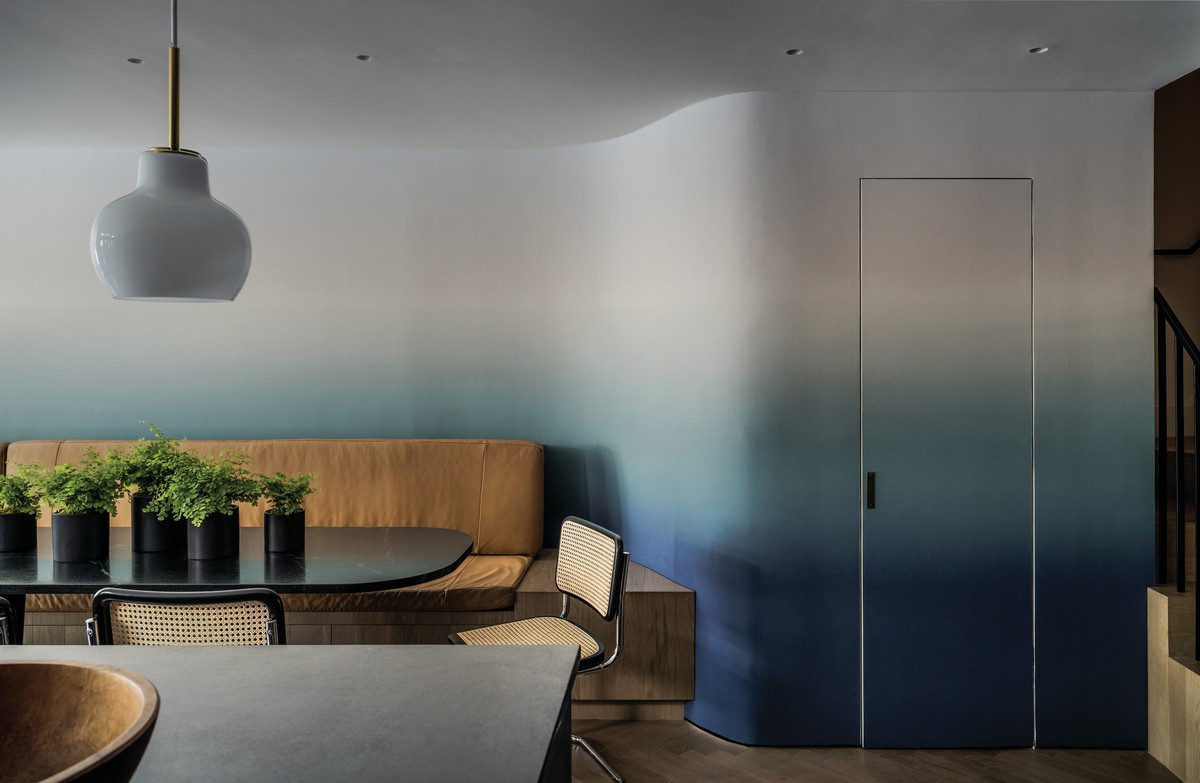
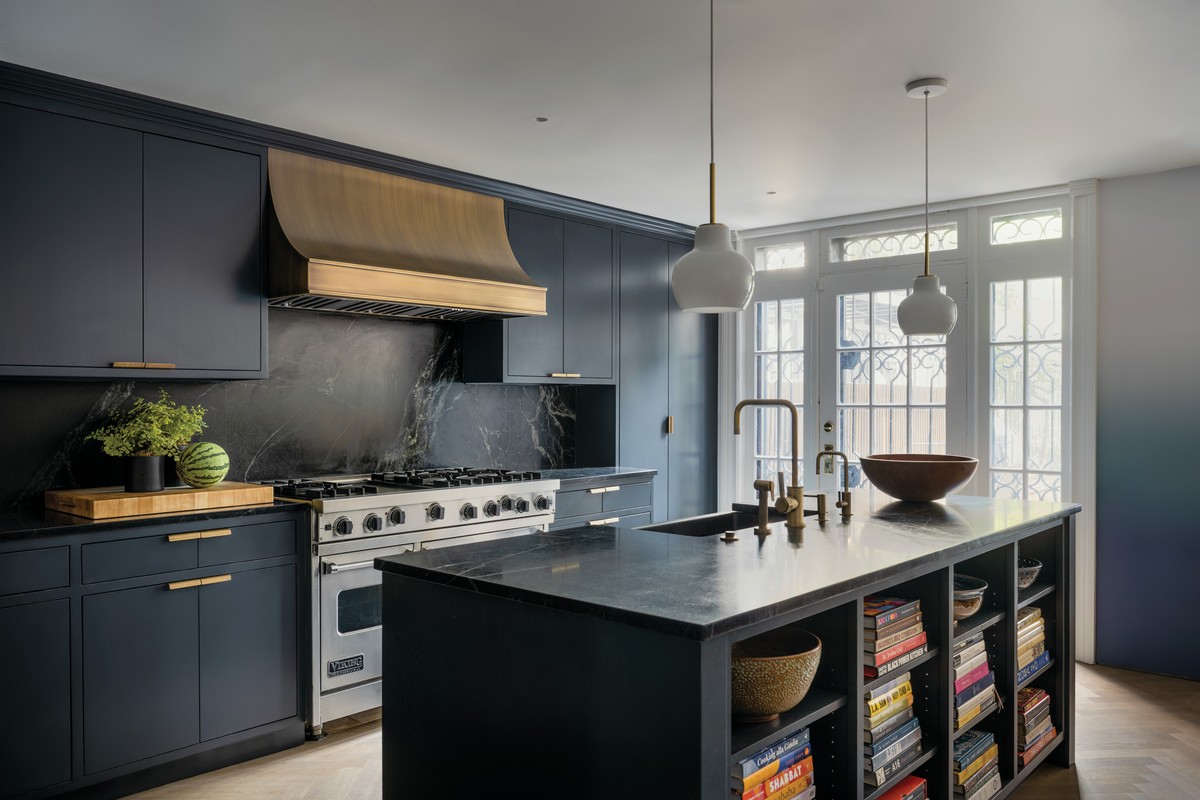
Although the architects created a more workable eating area by rejiggering the garden level to include a long banquette and curved storage wall, their scheme largely retained the configuration of the food-preparation zone. The revamped kitchen reuses the cabinet carcasses, but now, instead of an ordinary white, they are a deep green, with new doors, brass hardware, and a soapstone backsplash and counters.
Looking for quick answers on architecture and design topics?
Try Ask RECORD, our new smart AI search tool.
Ask RECORD →
3
The revamped kitchen includes a curved storage wall (3) and reuses the cabinet carcasses (4). Photos © Alan Tansey, click to enlarge.
4
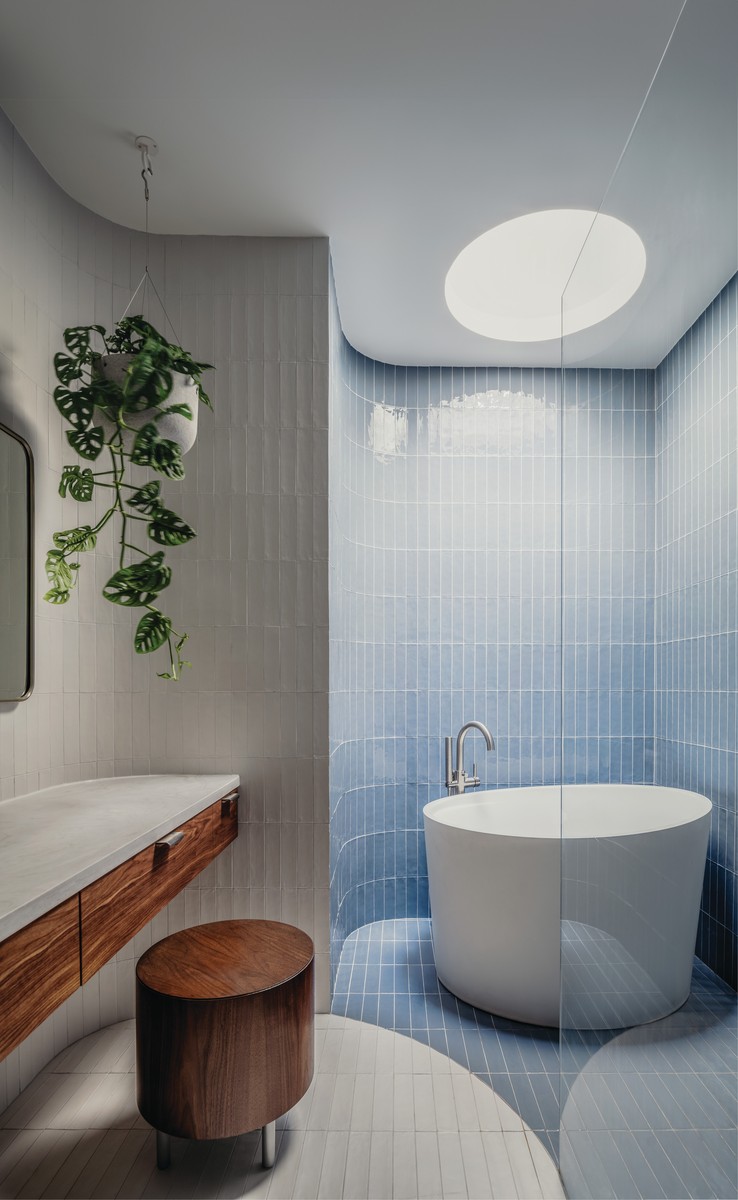
On the third floor, where there is a bedroom for the clients’ two boys and another for their daughter, the work was mostly “a refresh,” says O’Leary, and entailed repainting the woodwork and adding playful wallpaper. However, the uppermost level was more involved. Here, the architects eliminated the noncompliant lofted bedroom but took advantage of the extra amplitude to create a skylit study with 12-foot ceilings and full-height bookcases. TM also reconfigured the floor’s bathroom so that it now opens into the primary bedroom, rather than the hallway, and includes a circular soaking tub illuminated from above by a cylindrical skylight.
5
6
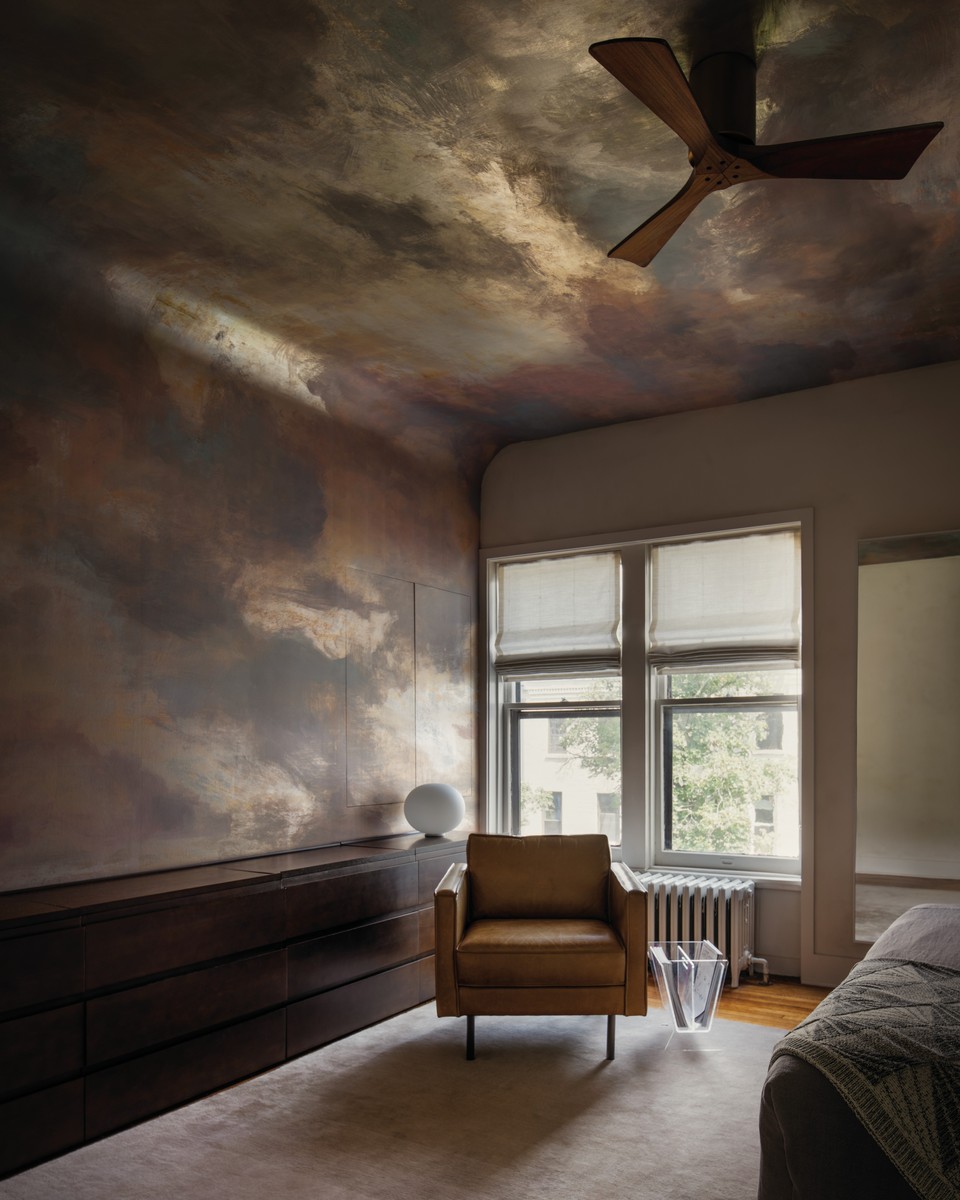
A skylit bath (5) adjoins the main bedroom (6). Photos © Alan Tansey, click to enlarge.
In the end, the couple didn’t quite make their ambitious September completion date, taking up residence in October while work was still ongoing. But they have the house they desired—one that reflects their personal style and contemporary needs, but lets the historic architecture shine.
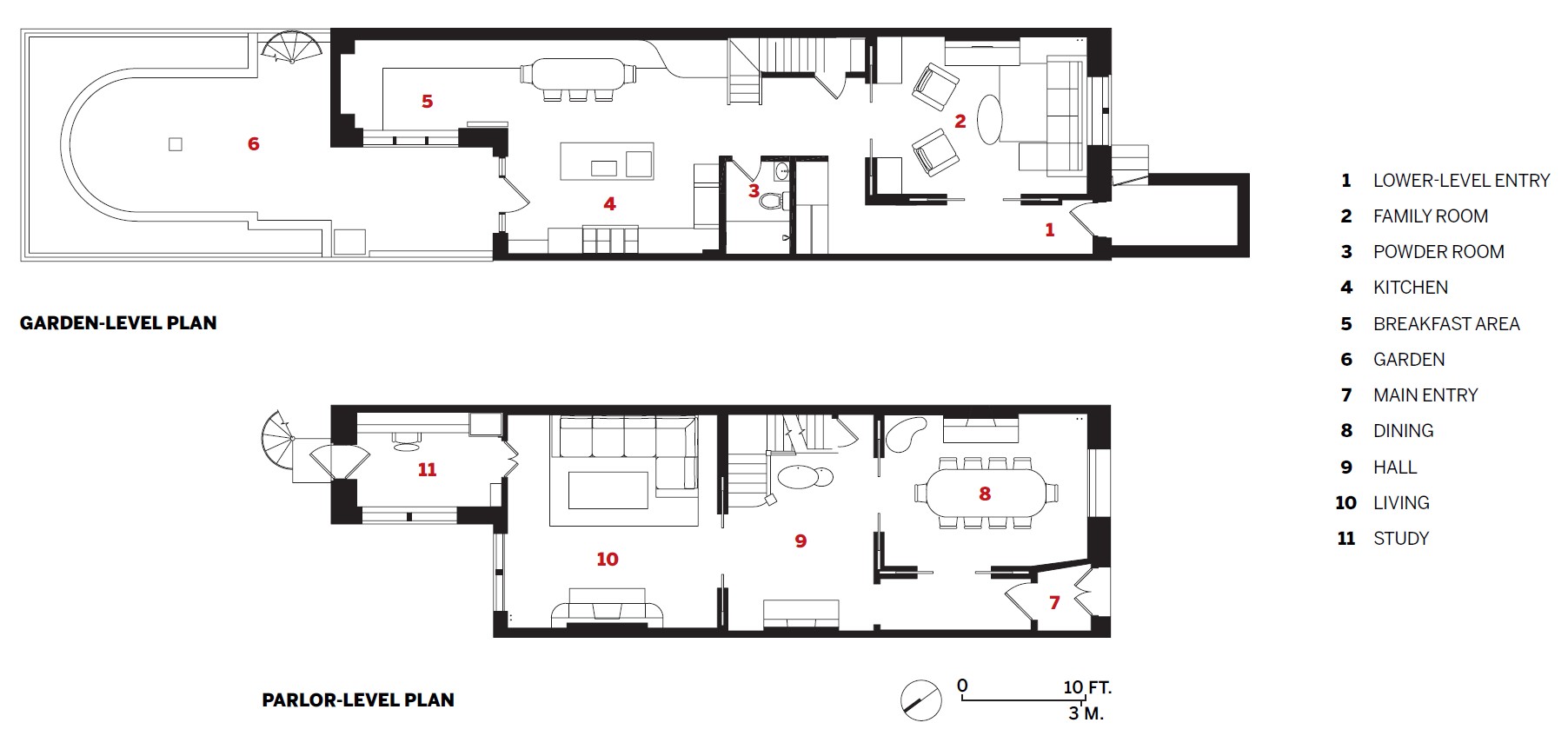
Courtesy Taylor and Miller Architecture, click to enlarge.
Read about other projects in our “Spotlight: Townhouse Renovations” series from the September 2025 issue.
Credits
Architect:
Taylor and Miller Architecture — B. Alex Miller, Aoife O’Leary, design leads
Engineer:
Celin Muñoz Consulting Engineer
General Contractor:
CNS Construction
Client:
Withheld
Size:
5,050 square feet
Cost:
Withheld
Completion Date:
December 2023
Sources
Wall Coverings:
Calico Wallpaper, Pierre Frey, Missoni Home
Paints and Stains:
Farrow & Ball, Benjamin Moore
Plumbing Fittings:
Kohler, Watermark Designs, Brizo
Lighting:
Flos, Arteriors, MM Lampadari, Visual Comfort, Oluce, Sazerac Stitches, Schoolhouse Electric, Modern Fan Company, Carpyen, SkLO Studio, Louis Poulsen, Lucifer Lighting
Looking for a reprint of this article?
From high-res PDFs to custom plaques, order your copy today!