Inside Look
The Grand Egyptian Museum: A Quarter Century in the Making
Cairo
Architects & Firms
With the completion of the Grand Egyptian Museum (GEM), there would conventionally be a storm of celebration, paired with substantial coverage in the media for what is ostensibly one of the most significant projects of its time. Adopting over 100,000 archeological artifacts from the Egyptian Museum in Cairo (designed by French architect Marcel Dourgnon in 1897), the proposed Grand Egyptian Museum was to offer a dignified home for these historical treasures, replete with the kind of environmental and museological protection they lacked in their 19th-century predecessor. Moreover, with a site located adjacent to the Giza complex, the new project would serve to mediate between the colossal monumentality of the pyramids and the conventional sprawl of contemporary Cairo, in effect a threshold between composed antiquities and unconstrained modernity.
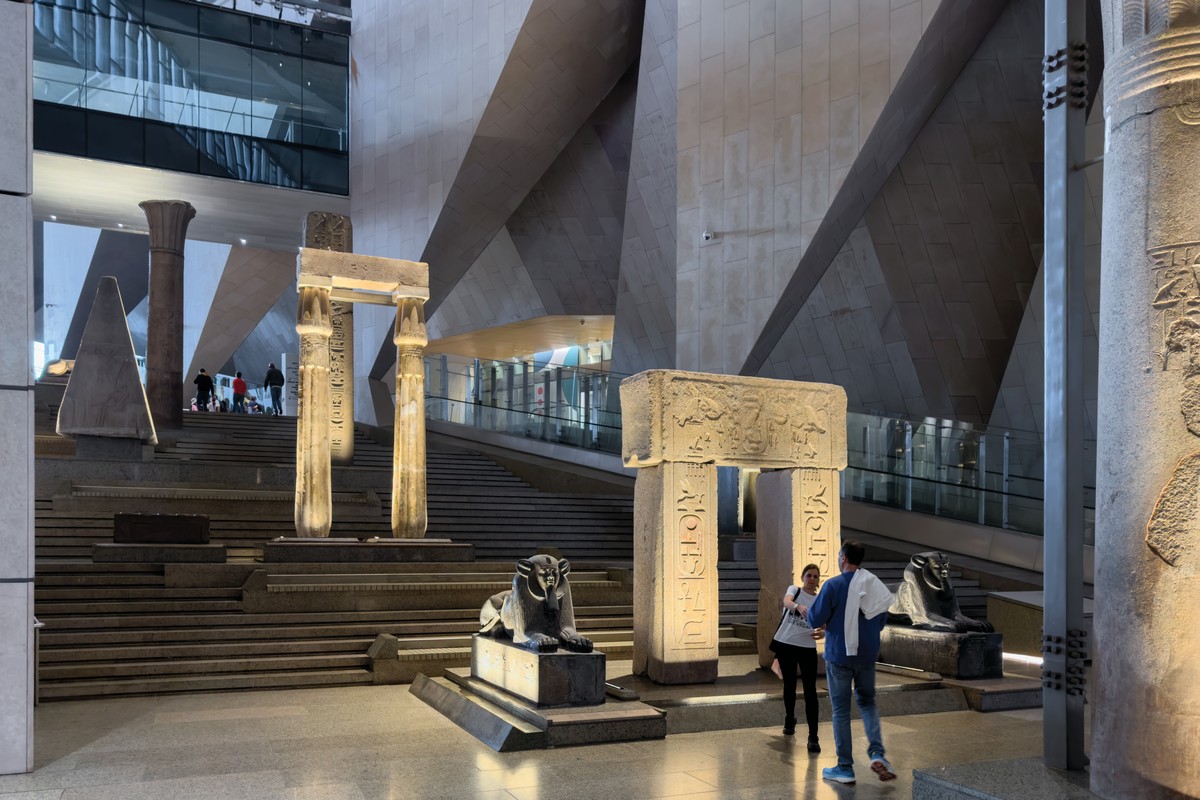
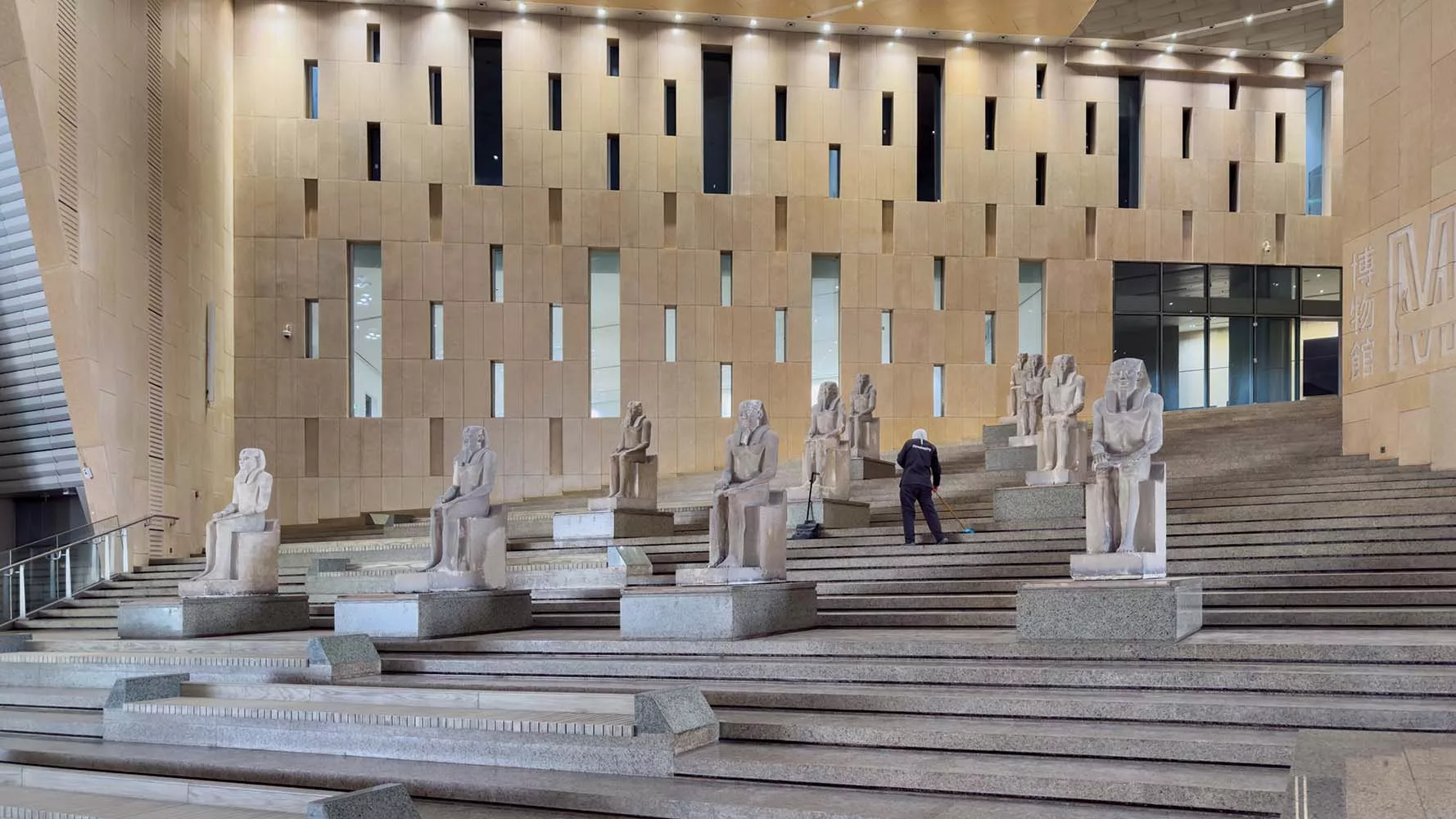
Photo © Iwan Baan, click to enlarge.
Won by then start-up architects Róisín Heneghan and Shih-Fu Peng, of Dublin-based Heneghan Peng Architects, the project has taken almost a quarter century to complete. Conceived in the era of Hosni Mubarak with a sense of pride about the country’s national treasures, the project has now weathered the sometimes turbulent transfer of power between a range of leaders, among them Omar Suleiman, Muhammad Hussein Tantawi, Mohamed Morsi, Adly Mansour, and, subsequently, Abdel Fattah El-Sisi, who has ruled since 2014. Accordingly, beyond attempting to assess the project’s design, what is worth evaluating on this occasion is how the delivery of architectural commissions thrive on, or survive, an institutional patronage that can oscillate between autocracy and democracy at any given moment—a lesson from which the United States may have a lot to learn as it navigates its own political evolutions.
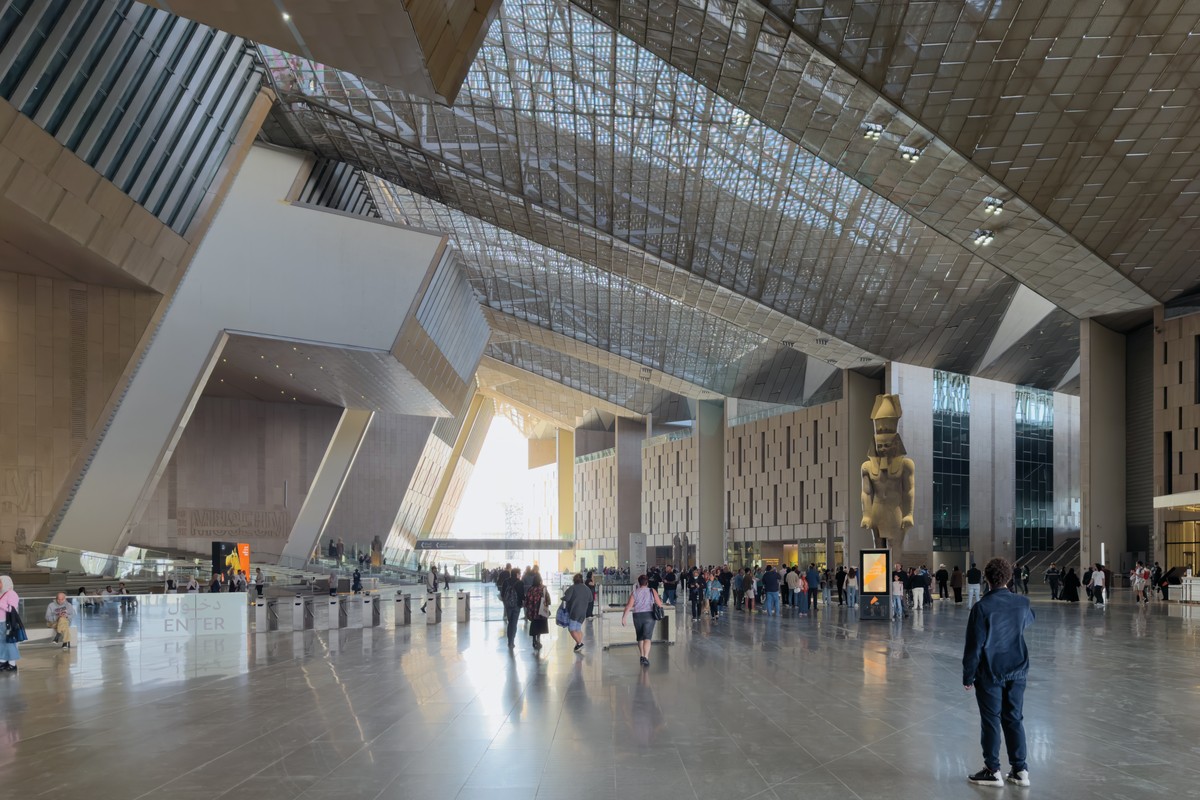
Photo © Iwan Baan
Commissioned by the Ministry of Culture and the Government of Egypt, the project was the result of a 2002 international competition that garnered over 1,500 entries from 82 countries. Competitions of this kind have a history of their own, requiring tacit guarantees of an international ethic whereby the results of the jury, standards of professional practice, and protocols of good faith are respected as essential ingredients of the process. Even with the rigorous guidelines documented by the Union of International Associations, it is sometimes difficult to translate its regulations into reality, and, thus, the actual construction of great buildings in the global sphere has remained elusive for decades, even after the completion of the Sydney Opera House, a project that one might describe as the canon of controversy of its day and age. For instance, the principle that protects the author’s intellectual property states that “no alterations may be made without the author’s consent,” and yet there are ample contractual loopholes that give organizers space for an interpretive bias that restricts architects’ rights. Because commissions are grounded not only in the hard mandates of legal protocols but also the dissemination of power through the soft persuasion of collective practices, many great buildings persist precisely because of the agency of institutional memory, when there is one, whose protagonists play a critical role in providing not only continuity in civic projects but checks and balances on the whims of centralized orders.
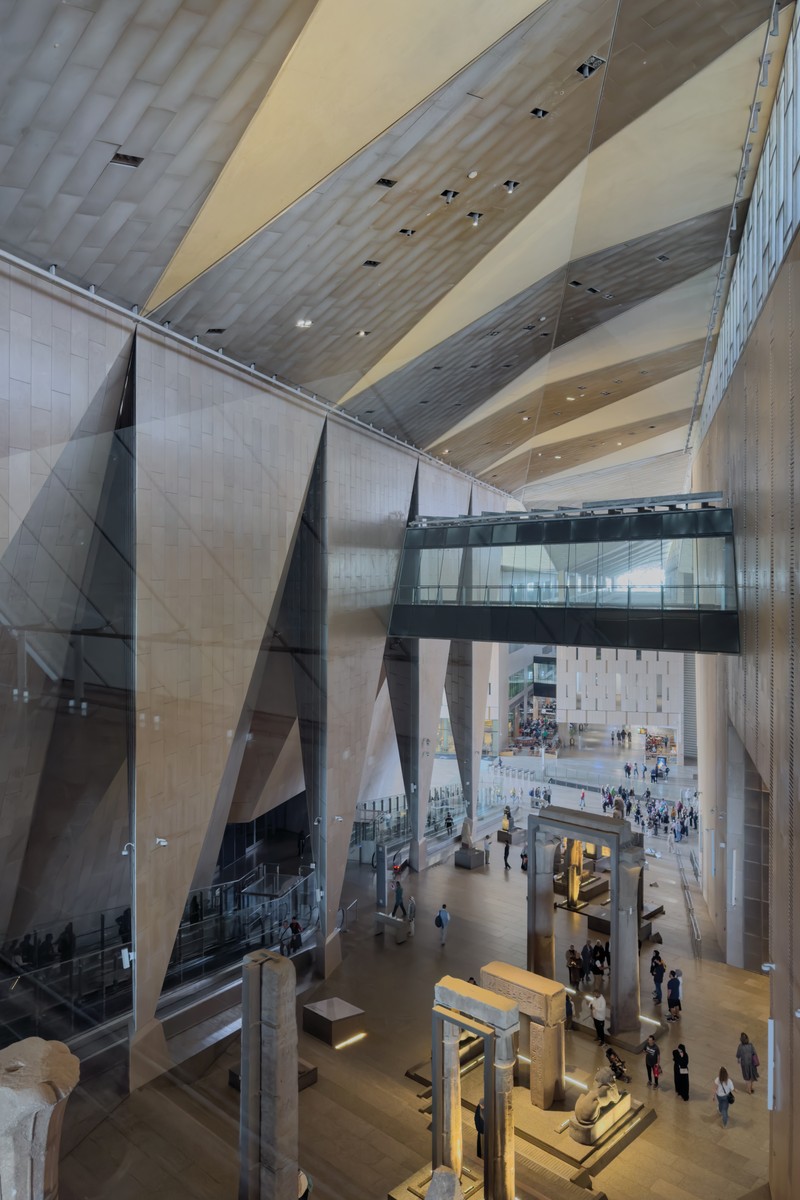
Photo © Iwan Baan
Here, it is important to recognize that even though the architects of the Grand Egyptian Museum were never dismissed, or their professionalism challenged, they nonetheless have been excluded from the formation of their project since 2014—the result of a political process that ricocheted outside their hands. Thus, even if an evaluation of the building would befit this moment, one must consider the degree to which a building maintains fidelity to the architect’s ideas to have authorship ascribed to the firm in the first place; in parallel with that, one might ask architects to consider how much deviation a building can tolerate as part of its idea before it no longer has a conceptual link with the design intent. These questions point to two divergent paradigms of architectural thinking that plague us as designers from the foundational moments of our architectural education, the first conceiving the work of architecture as a total work of art, or Gesamtkunstwerk, and the second, architecture merely as a framework for intelligent systems.
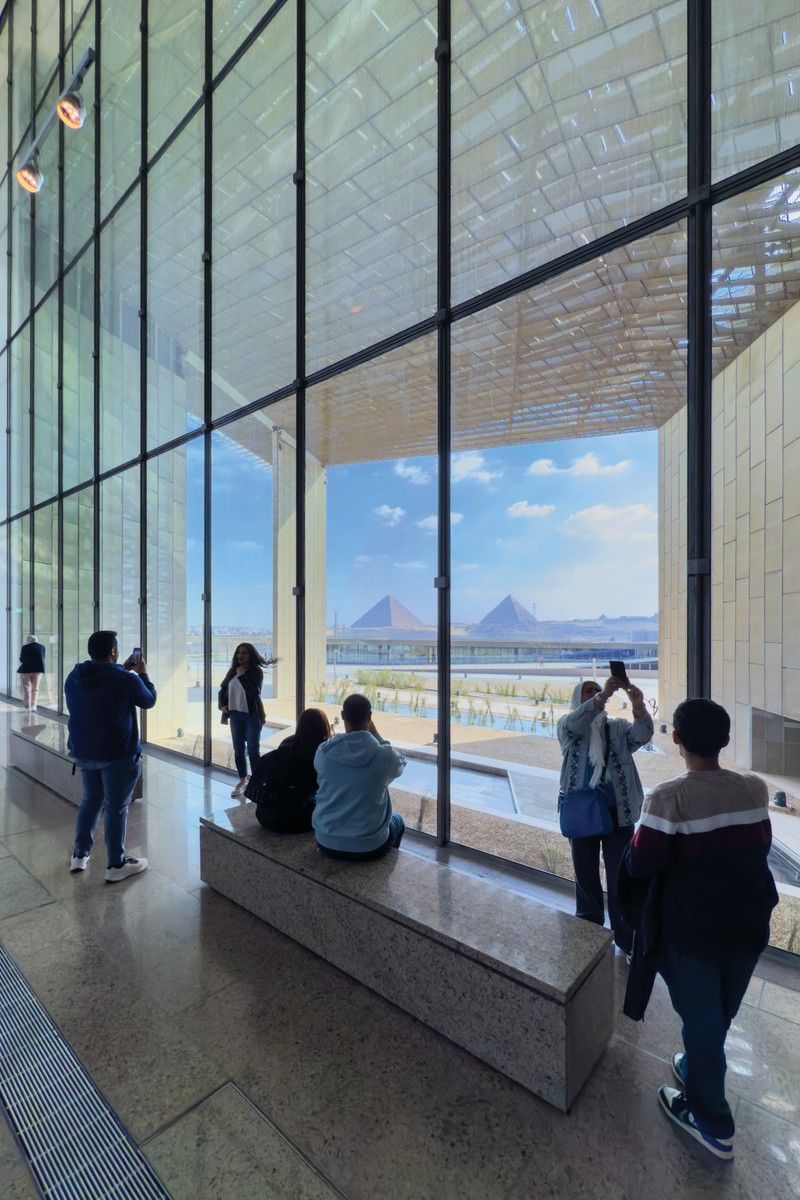
Photo © Iwan Baan
From a pedagogical perspective, architects are commonly taught to treat a cultural building as a total work of art—with the pressures of iconicity, the imperative of an immersive experience, and the scalar treatment of the project from its urbanism to bespoke details, all driving an architect’s vision toward a unique contribution to the field. Of course, this definition is ideological in its attempts to naturalize its criteria as foundational to the discipline. But the opposite has also produced extraordinary buildings that, nonetheless, have had the effect of a more discreet presence, all while their anatomy—structure and bones and infrastructure—are so salient that their intelligence is born out of the flexibility they produce, the tolerances they afford, and the changes they anticipate. Taking two examples of accomplished works, Frank Gehry’s Bilbao Museum and Renzo Piano’s Nasher Sculpture Center, the first supports the idea of the total work of art, while the second develops a smart framework that serves the building’s capacity to expand, transform, and evolve. Both are successful within their paradigm, but they also play different roles within the discipline.
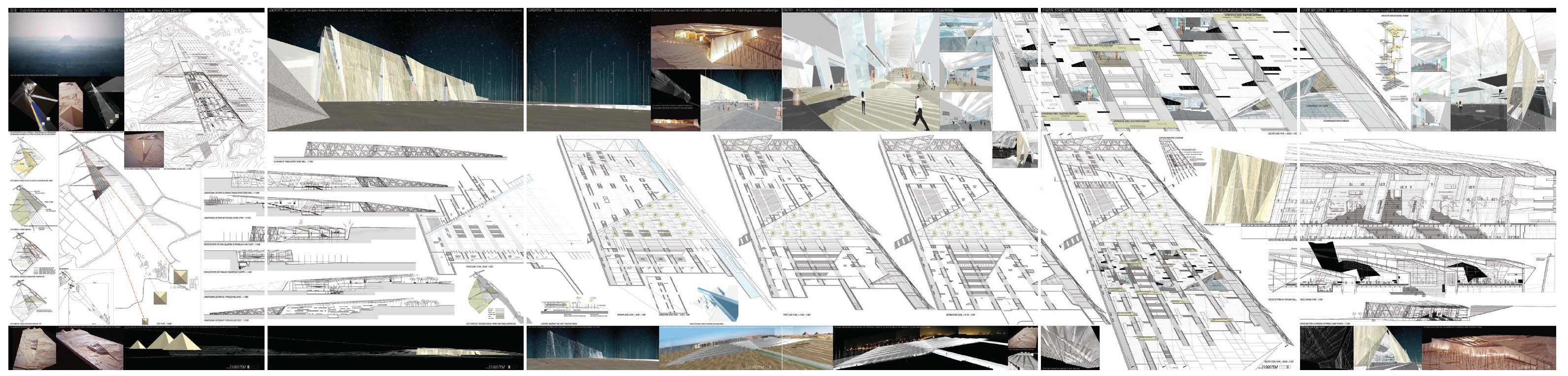
Though it was unanticipated by the architects, I suspect that their proposal falls at the intersection of these two models, with the exquisitely thorough drawings of their competition boards squarely forming a part-to-whole argument for the total work of architecture, but then falling into the latter model because of a contractual imperative that had them serve solely as “design advisors” from the moment they delivered the tender documents. Effectively, this seemingly bureaucratic detail alienates the architects from the very means and methods over which they would otherwise have agency to be able to take the project from its design intent to successful delivery. Imagine the Nasher Sculpture Center without Piano’s extended team as part of its oversight. Delayed for several years, the GEM project was impacted by a revolution in 2011 and a coup d’état in 2013—coinciding with Arab Spring, changes in leadership (at both governmental and project-management levels), and a substantive financial crisis with soaring inflation. With a time lapse that had not been calculated into the schedule, the government had made no accommodations for budget escalation as part of the process. To make matters more complicated, with a change of government, Major Atef Moftah of the Egyptian army was appointed as the general director of the Grand Egyptian Museum, taking the design under his own wing and delivering it in accordance with his architectural training. Herein lies another common trait of significant commissions benefiting from key protagonists who serve as patrons, project managers, technicians, or local support. Even if the project was conceived under Mubarak’s regime, its critical support had always come from Farouk Hosni, the minister of culture, and Suzanne Mubarak, the president’s wife, who served as patrons, promoting the integrity of the work. While Moftah might have inherited this role, no one could have anticipated his zealous drive to control its design, value engineering, or reconception. Thus, without the architects’ being directly engaged, the building now stands as evidence of a process, showing the marks of multiple authorships on its body. One of the key individuals the client continued to engage with was the structural engineer, Francis Archer, of Arup, whose technical authority was used not only to give continuity to the undertaking but also to help translate, mediate, and advance a project of substantial complexity. This is not an eventuality one would conventionally wish for any building: whether a total work of art or a building born out of a smart framework, each would require a dedicated architect who has the integrative faculties to bring all the disciplines into conversation, a luxury this project would never be afforded.
Competition boards. Courtesy Heneghan Peng Architects
With this extended introduction and qualification, it is important to recognize that in the two decades it has taken to complete this building, Heneghan Peng has achieved a substantial body of exemplary work that is a testament to what they had projected for GEM. Beyond technical prowess, their critical capacity for creating spatial experiences that merge landscape and building, explore inventive details, and produce environments that transcend client mandates has been demonstrated with meticulous attention elsewhere. For these reasons, one might think this is a moment to lament what might have been imagined for the Grand Egyptian Museum; however, I will try to argue from a different vantage point. Coming to terms with a contractual predicament that was clearly insurmountable, the critical question for this building is whether its original diagram was powerful enough to overcome the many, and inevitable, hurdles it would face.
Looking for quick answers on architecture and design topics?
Try Ask RECORD, our new smart AI search tool.
Ask RECORD →
Though on the fringes of one of the densest cities in the world, the site of the museum is barren, next to a highway interchange and opening up to the desert landscape on the southeast that constitutes the plateau on which the Giza complex is located. More than a building, the museum is a “landform” that stretches anamorphically across a terrain over 1,600 feet long. That does not even include the actual earth surrounding the edifice, which extends the structure’s logic up to 2,300 feet. Conceived as an optical device, the building is anchored by a station point at the highway interchange radiating out toward the three pyramids, forming a series of conical strands, with the building capturing an interior that frames the view of the Giza complex. The striated strands punctuate “served and servant” spaces, with circulation located within longitudinal slots and a monumental stair that offers curatorial platforms for archeological artifacts, marking the ascent from the lower to higher plateau. Accordingly, the conical splay of the plan is amplified by a sectional tilt that captures the cone of vision, forming the building’s interior void. Skylights, as originally conceived, use the sun to cast its rays onto historical artifacts that form part of the architectural promenade. The power of this diagram remains unscathed, with only a few programmatic changes that fall outside its footprint.

Photo © Iwan Baan
Some of those changes are not insignificant, and, had the architects been engaged, one could have imagined many ways in which their diagram might have absorbed necessary transformations. First, because the administrative functions of the museum were extracted outside of its original footprint, the design, as built, reveals them as service buildings to the northwest, compromising the idea of the desert plateau as a constructed landscape. By extension, the construction of the parking lot to the south of the museum fundamentally contradicts what Heneghan Peng and West 8, the collaborating landscape architect, had conceived of as a meaningful transition from a vehicular to pedestrian experience; the as-built condition places added car traffic within the framed view, between the museum and the pyramids. Beyond this, maybe the greatest victim of the design is its facade, whose intended diaphanous alabaster facets would have required the skill and critical faculties of these architects to oversee, a sad and significant loss. As a mat-building that stretches over the desert plateau, this facade was the only overt representational element, referencing not only the pyramids but also a transition from ancient monolithic to contemporary laminar construction—from mass to veneer and from darkness to light. With the elimination of its requisite details, there is also a loss of the intended sense of transcendence—a quality of thinness, ephemerality, and light that is a central part of its original vision.
Architecture has many dimensions, among them the rigors of formal disciplines, the staging of architectural promenades, and the agency of critical details in forming material experiences. In this project, that last category was somehow appropriated by the political process, even if this is another area in which the architect’s extraordinary talents would have been revealed. The support this building garnered during its design phase emerged from a form of governance that was less than democratic but that included key patrons, whose executive agency was intended to protect the integrity of collective design decisions. Ironically, the revolution whose aim was to democratize governance in the country transferred that patronage to a figure who abandoned the institutional process guaranteeing the collaborative intelligence of design development and who instead interpreted his mandate as being to centralize decisions.
The architects, Róisín Heneghan and Shih-Fu Peng, have not seen their building to date. If Jørn Utzon had the luxury of resigning after witnessing a process that eliminated his agency, these architects did not. But if history had anything to say about the transformational role of the Sydney Opera House on its city—and on the discipline—then the Australian government’s invitation to bring the architect back decades later did, allowing him to make critical adjustments to the building in his final years. The artifacts collected from the Egyptian plateau span thousands of years. If time is any measure of the necessary patience architecture requires, then Heneghan Peng will have to wait a bit longer to see if they can gain the same reversal of fortune as Utzon.
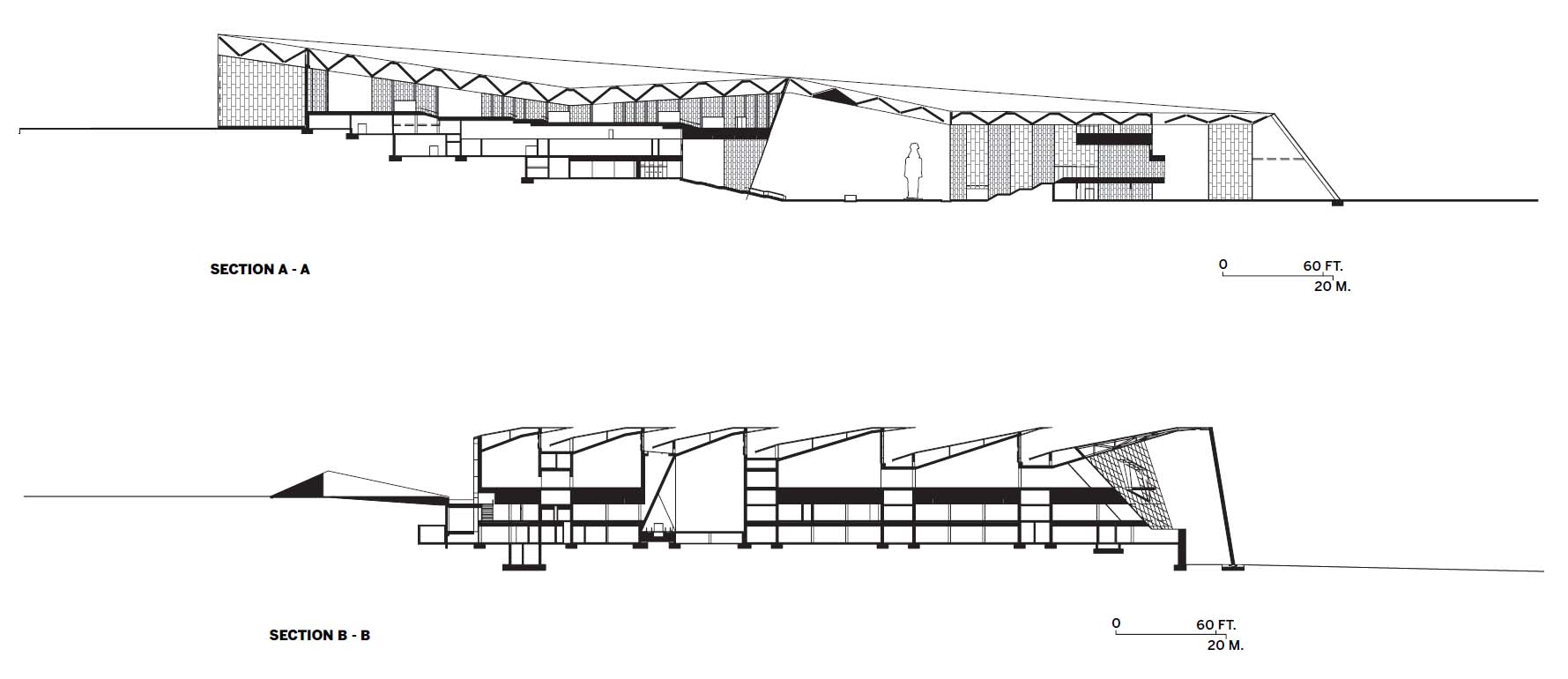
Courtesy Heneghan Peng Architects
Looking for a reprint of this article?
From high-res PDFs to custom plaques, order your copy today!