A School Complex in Suburban Bordeaux Incorporates the Comforts of Home
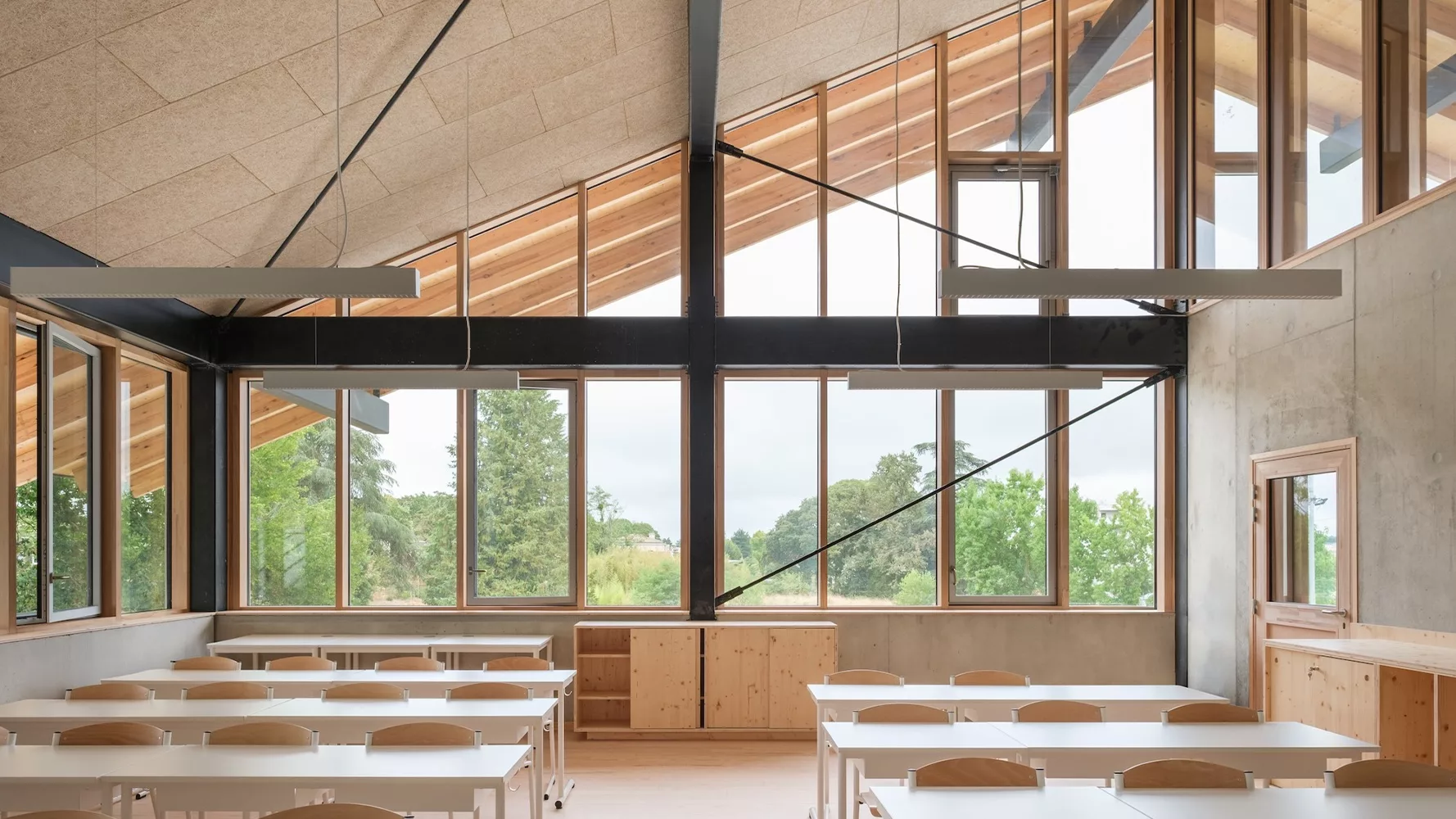
Groupe Scolaire Saint-Exupéry in Gradignan, France, by Fagart Fontana and Ateliers Mathieu Laporte.
“When you realize that kids spend more time at school than at home, you want to make a place where they feel good,” says Line Fontana, founder, alongside David Fagart, of the Paris-based architecture firm Fagart & Fontana. For the school in question, the Groupe Scolaire Saint-Exupéry in Gradignan, six miles south of Bordeaux, they teamed up with another Paris-based firm, Ateliers Mathieu Laporte. Part of a town-center redevelopment program that will densify Gradignan through the repurposing of already constructed sites, the new building takes the place of a rundown old people’s home in tree-filled parkland.
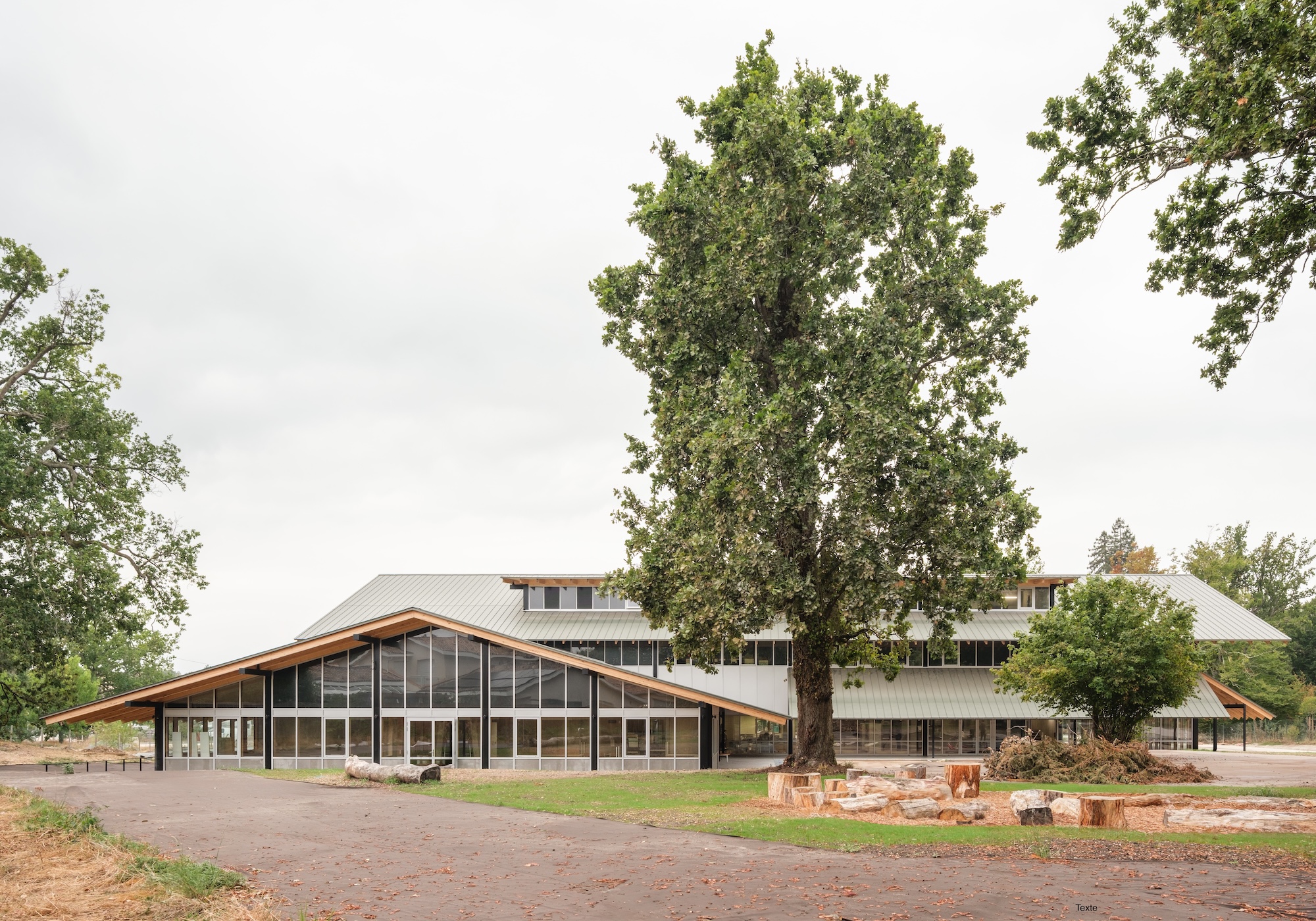
Photo © Dimitri Djuric
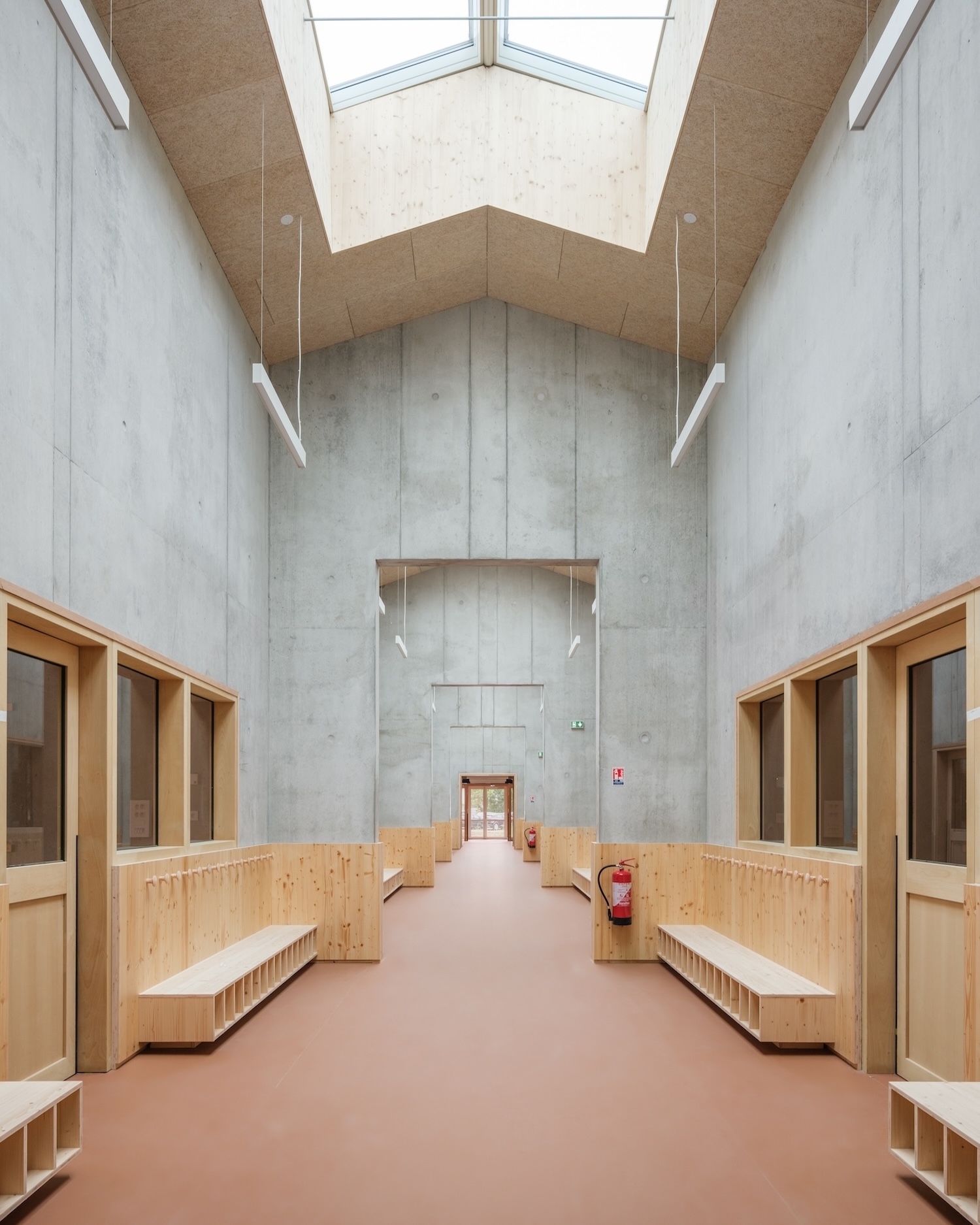
This is in fact two schools, a maternelle (ages three to six) and an élémentaire (ages six to 11), which intersect in a T-square plan. While the école maternelle enjoys a direct connection with its setting, spreading out in a single-story succession of classrooms lined up either side of a spinal corridor, the école élémentaire enjoys views through the foliage from its level-two and -three classrooms, which rise above the short arm of the T. On the ground floor, where the two meet, staff facilities and offices group together, as do the two lunchrooms, either side of a shared kitchen. Currently welcoming 428 pupils (of which 128 are élémentaire students), Saint-Exupéry is dimensioned to absorb up to 52 more as Gradignan’s population grows.
Photos © Dimitri Djuric
Approaching the building, visitors are immediately struck by its pagoda-like play of pale-green zinc roofs, a feature that derives from the municipality’s refusal of flat coverings. Taking the hint and running with it, the architects designed double-pitch pine- and steel-framed roofs of various gradients, with broad eaves that provide sun-shading for the abundant glazing. Also in pine, the facades are faced externally with aluminum cladding and fiber-cement panels. Restrained yet animated, the building appears part Japanese castle part Swiss chalet, and references the classic pitched-roof house that all children draw whatever type of dwelling they live in. To integrate Saint-Exupéry seamlessly into its setting, planted ditches separate it from the rest of the park.
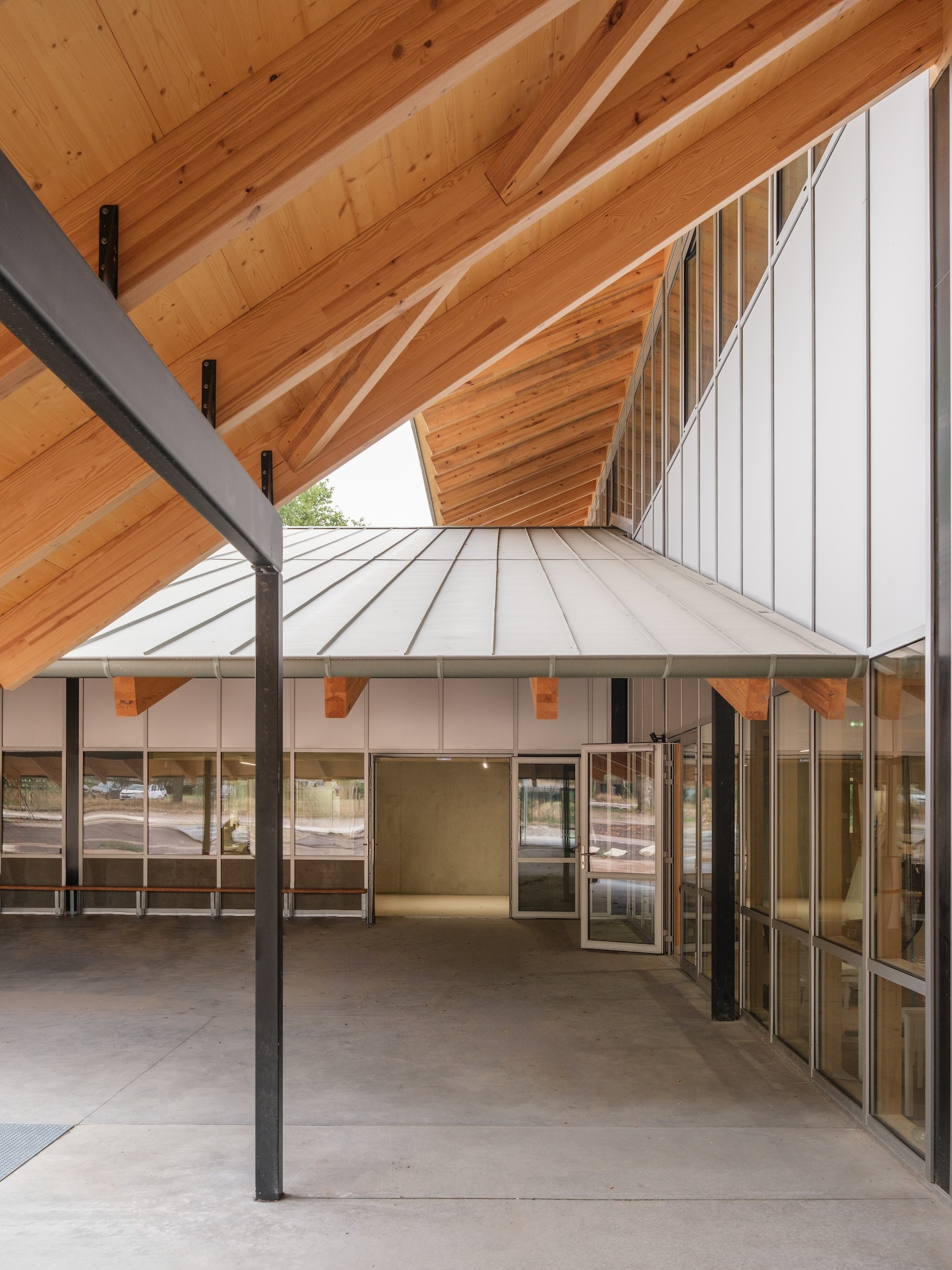
Photo © Dimitri Djuric
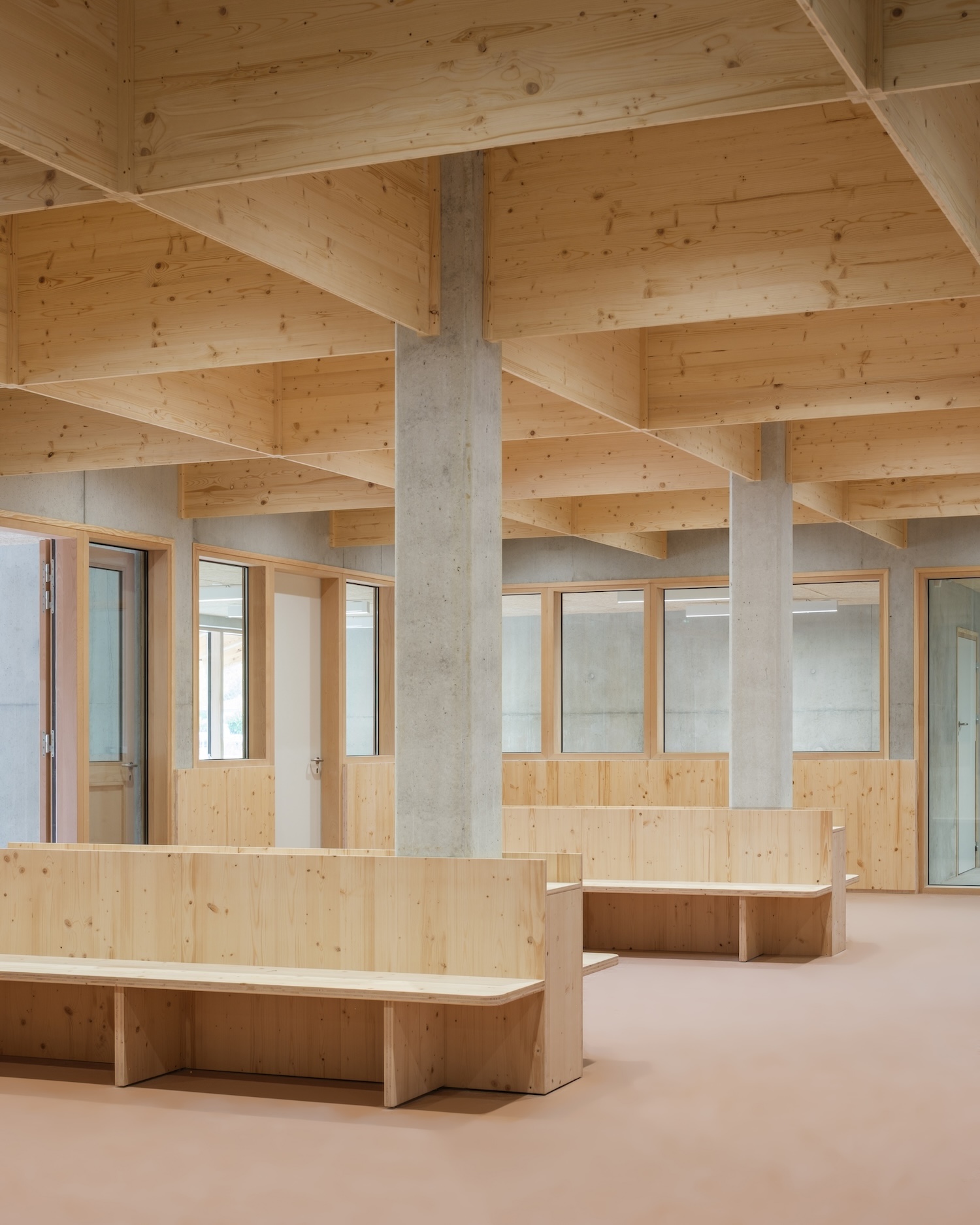
nside, daylight is everywhere, not only in classrooms but in stairs and corridors, too. Broad enough to accommodate spontaneous educational activities, the latter rise up into the attic in both the école maternelle (where skylights ensure maximum luminosity) and the top floor of the école élémentaire. To preserve the purity of the internal volumes, ducting is dissimulated in the closed parts of the attic, while wood-fiber ceiling panels help keep noise down. Again for acoustic reasons, the load-bearing walls separating the classrooms are in concrete, left raw inside except for pine wainscoting (one can only regret the contractor’s carelessness in the casting process). For the flooring, the architects specified warm-toned linoleum for the corridors and pine boards for the classrooms.
Unlike the disheartening labyrinths of carceral corridors that characterize many French schools, Saint-Exupéry’s simple, easy-to-navigate interiors provide a calm, bright, and reassuring environment for teachers and students alike. With its reduced palette of materials, all chosen for their intrinsic qualities, and its introduction of domestic codes into an institutional idiom, it elegantly fulfills the mayor’s request for a “chic and sober” building that will stand the test of time. On discovering their new classrooms, says the principal, pupils spontaneously took off their shoes, a sign of both respect and of feeling at home.
Looking for quick answers on architecture and design topics?
Try Ask RECORD, our new smart AI search tool.
Ask RECORD →
Looking for a reprint of this article?
From high-res PDFs to custom plaques, order your copy today!