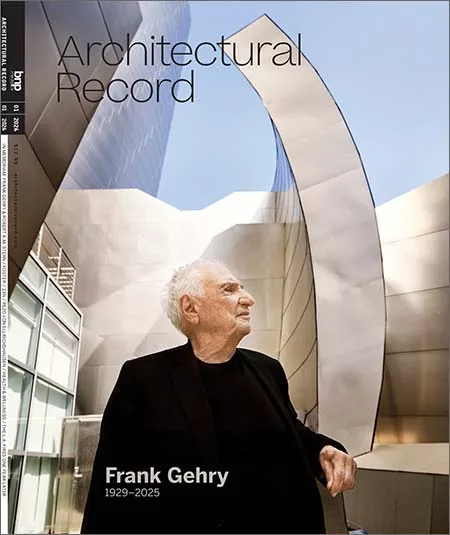
Frank Gehry Dies at 96
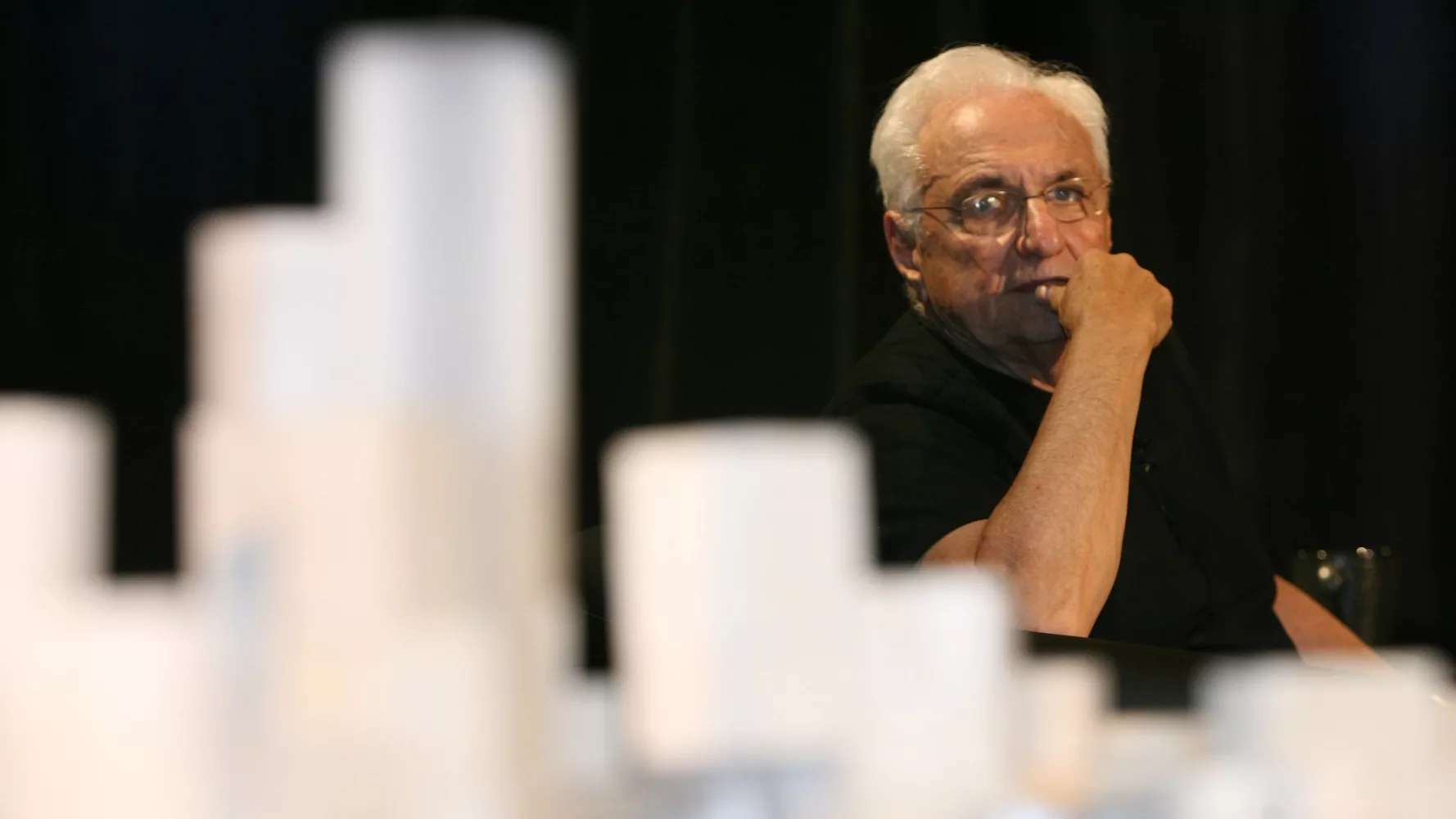
Frank Gehry
Frank O. Gehry, arguably the most acclaimed American architect since Frank Lloyd Wright, died on December 5, 2025, following a brief respiratory illness, at his Santa Monica home. He was 96 years old.
Educated at the University of Southern California in the 1950s and thrust into the international spotlight with the completion of a brash home for himself in Santa Monica in 1978, Gehry attained unmatched levels of architectural celebrity with his titanium-clad Guggenheim Museum in Bilbao, Spain, in 1997. His career spanned seven decades and comprised nearly 200 completed buildings that were celebrated and sometimes castigated for their novelty, iconoclasm, and, in the words of the jury that awarded him the 1989 Pritzker Prize, a “restless spirit” that made them “a unique expression of contemporary society and its ambivalent values.”
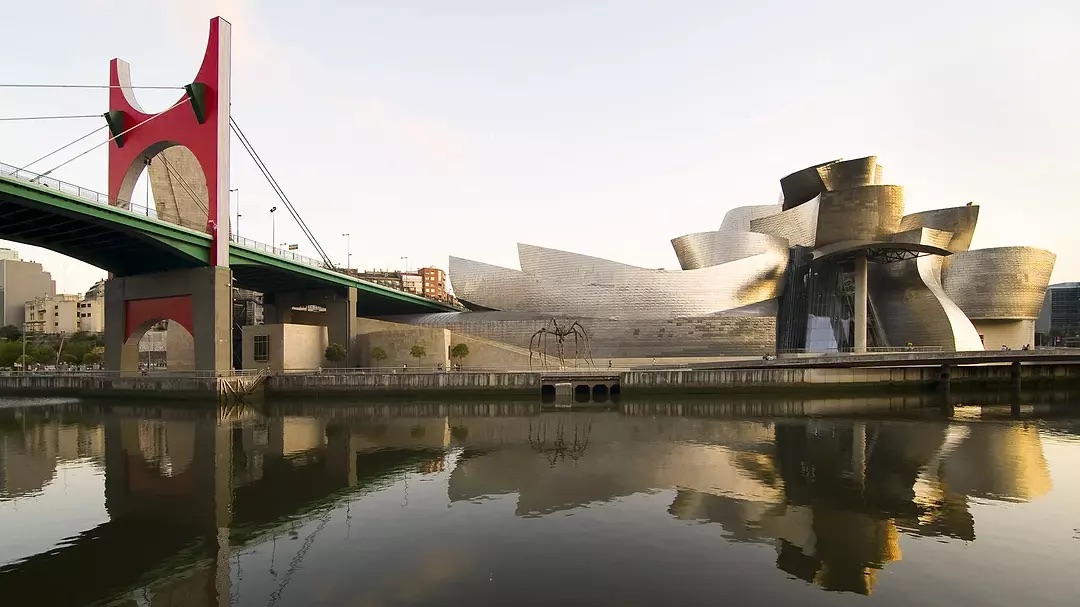
The Guggenheim Museum, Bilbao, Spain. Photo courtesy FMGB Guggenheim Bilbao Museoa
In early projects in California such as the studio he designed for painter Ron Davis in Malibu (1972) and the Gemini G.E.L. printmaking workshop on Melrose Boulevard (1976), Gehry drew inspiration from the gritty vernaculars of his adopted hometown of Los Angeles—and the artists he befriended there—to devise what he called a “cheapskate architecture” that refashioned the forms of midcentury modernism into bold compositions of galvanized metal, rough plywood, inexpensive stucco, and exposed wood framing.
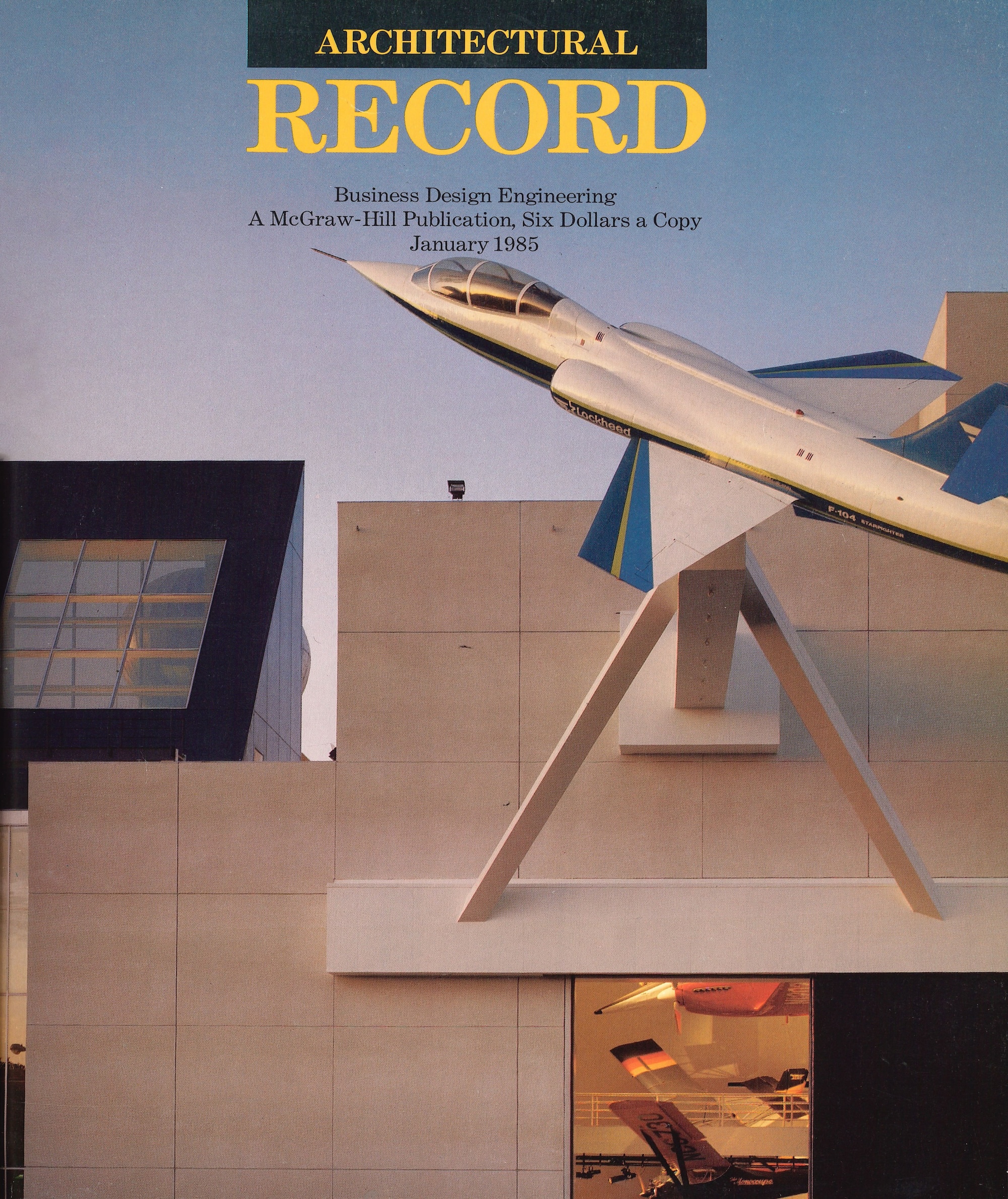
Later, he incorporated imagery into his designs: an airplane appended to the facade of the California Aerospace Museum in Los Angeles (1984), oversized binoculars (a contribution by the sculptors Claes Oldenburg and Coosje van Bruggen) as the entry to the Chiat/Day headquarters in Venice, California (1991), and the voluptuous fish forms he sketched incessantly and embraced as alternatives to what he saw as the superficial historicism of the postmodern 1980s.
1
2
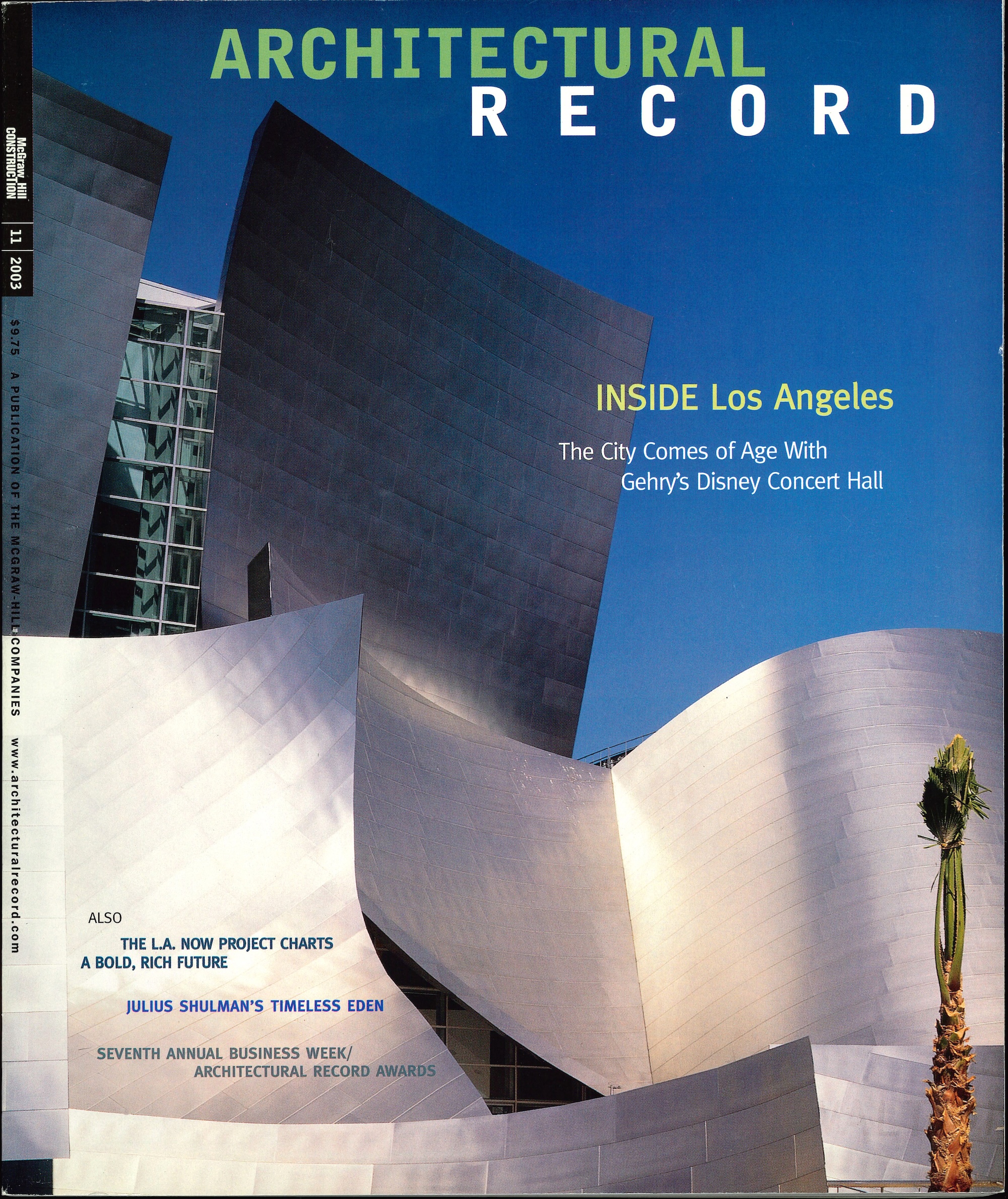
Two seminal Los Angeles projects by Gehry on the cover of RECORD: the California Aerospace Museum, January 1985 (1), and the Walt Disney Concert Hall, November 2003 (2); click to enlarge. Images © Architectural Record
By the turn of the century, the legibility of Gehry’s figures had dissolved into the graceful abstraction and billowing exuberance he delivered in Bilbao and in major commissions that followed including the Walt Disney Concert Hall in Los Angeles (2003), the Jay Pritzker Pavilion in Chicago (2004), and the Fondation Louis Vuitton in Paris (2014). In these and other works, what some dismissed as the personal vocabulary of a talented eccentric was revealed as a powerful vehicle for meaningful civic gestures that moved New York Times architectural critic Herbert Muschamp to wonder whether Gehry’s buildings had made it “possible, once again, to think of beauty as a form of truth.”
Born Frank Owen Goldberg on February 28, 1929, Gehry was raised in a working-class Jewish household in Toronto, where he enjoyed spending time in his grandfather’s hardware store, and later in Timmins, Ontario, where he found his lifelong passion for hockey.
In 1947, he moved with his family to Los Angeles and soon began taking courses at the University of Southern California, where he studied architecture with midcentury luminaries such as Gregory Ain, William Pereira (who served as his thesis advisor), and the landscape architect Garrett Eckbo. His earliest influences included the modernist work of his USC instructors and the everyday urbanity of the Los Angeles basin, which he got to know behind the wheel of a delivery truck. Like his friend, USC classmate, and longtime collaborator C. Gregory Walsh, he nurtured a passion for Japanese architecture and spent a summer working in the office of the Viennese modernist Victor Gruen.
Gehry became a U.S. citizen in 1950 and two years later married Anita Snyder, who, wary of antisemitism, convinced him to change his surname from Goldberg to Gehry. He graduated from USC in 1954, was drafted into the U.S. Army the following year, and spent a year after that studying urban planning at Harvard. He returned to Los Angeles in 1957, where, after a brief stint in Pereira’s office, another with Gruen, and six eye-opening months in Paris, he and Walsh launched their independent practice in 1962.
The pair had an early breakthrough with a small live-work studio in Los Angeles for the graphic designer Louis Danziger (1964). An elegant riff on L.A.’s ubiquitous “stucco boxes,” this spare composition of rectilinear forms drew attention from the historian Reyner Banham, who praised the work’s “deft authority” in his famous 1971 study, Los Angeles: The Architecture of Four Ecologies. More important, the project brought Gehry into contact with a generation of Los Angeles artists, including Charles Arnoldi, Ed Moses, Kenneth Price, and Billy Al Bengston, who became lifelong friends and served as important sources of inspiration. “They became my support group, because the architects didn’t like what I was doing,” Gehry explained in a 1991 interview. Through Moses, he also found another important source of support—the group therapy sessions led by psychoanalyst Milton Wexler, who counseled the architect through the dissolution of his marriage and worked with him through personal and professional issues for more than 35 years.
Gehry’s first brush with fame came with Easy Edges, a laminated-cardboard furniture line he devised in the early 1970s. These low-cost pieces, which he developed with the artist Robert Irwin, reflected the architect’s playful insouciance, casual demeanor, and desire to make his designs accessible to an everyday clientele. He arranged to sell the line through Bloomingdale’s, but then abruptly canceled the endeavor out of fear its success would overshadow his work as an architect.
Looking for quick answers on architecture and design topics?
Try Ask RECORD, our new smart AI search tool.
Ask RECORD →
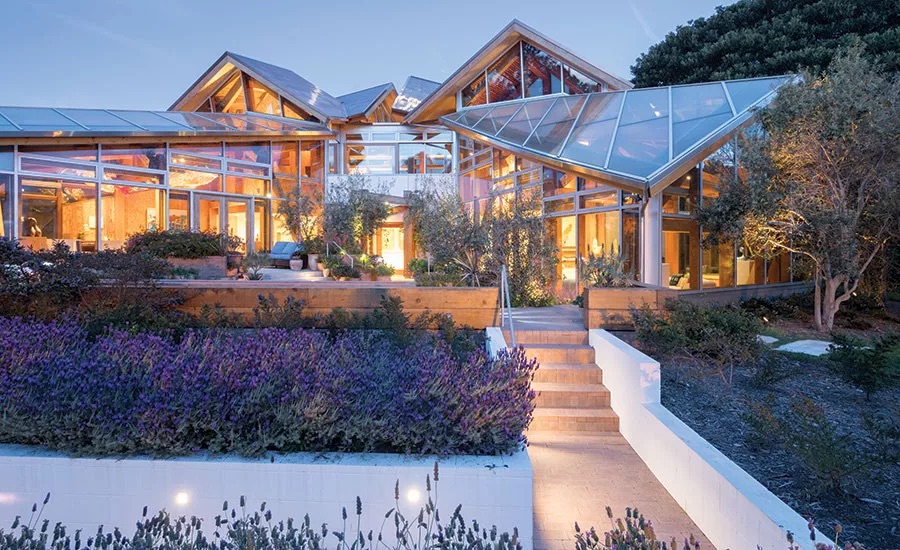
Gehry's 2019 home in Santa Monica, designed with his son Sam. The project has some similiarities with his daring 1977 renovation of a modest Dutch Colonial in the coastal city. Photo © Iwan Baan
Fame clung more tenaciously after Gehry completed his home in Santa Monica, which he undertook at the urging of his second wife, Berta. Treating the project as a laboratory for his evolving design experiments, he wrapped an unremarkable Dutch Colonial in a dramatic composition of corrugated metal, wired glass, exposed 2-by-4 framing, and chain-link fencing. Within, he stripped out interior finishes, punched unlikely openings, and poured an asphalt floor for a new kitchen. Gehry’s interventions celebrated the casual comfort of suburban attics, garages, and driveways while playfully blurring distinctions between rough accident and polished intention.
The house brought Gehry international acclaim and made him the de facto leader of a loose band of ambitious young architects—including Craig Hodgetts, Thom Mayne, and Eric Owen Moss—who came of age in the 1970s and, by the mid-1980s, were known as the L.A. School. In fact, their relationships involved a degree of sometimes contentious give-and-take, with Gehry drawing inspiration from his younger colleagues as they found a role model in him.
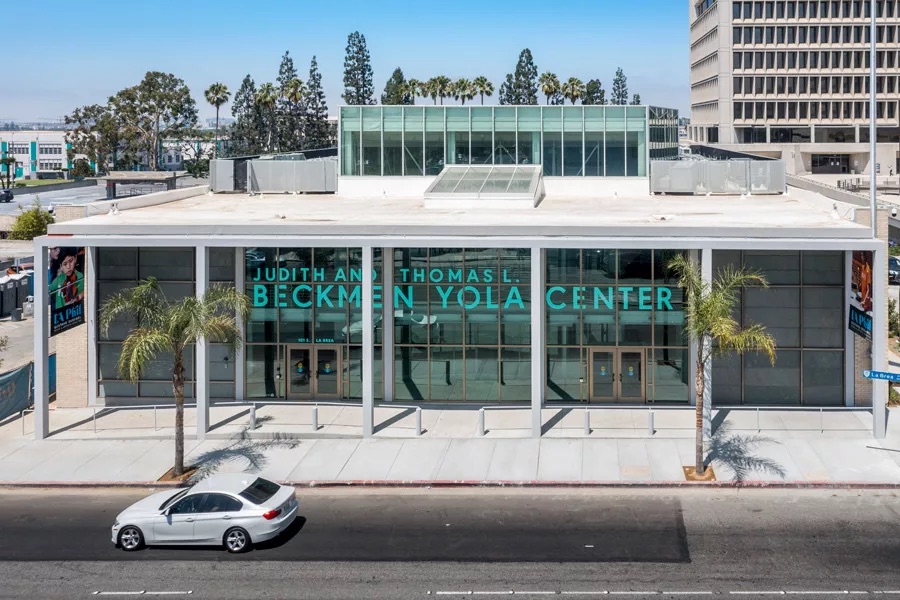
The Judith and Thomas L. Beckmen YOLA Center in Inglewood, California, as featured by RECORD in August, 2021. Photo © Charles White
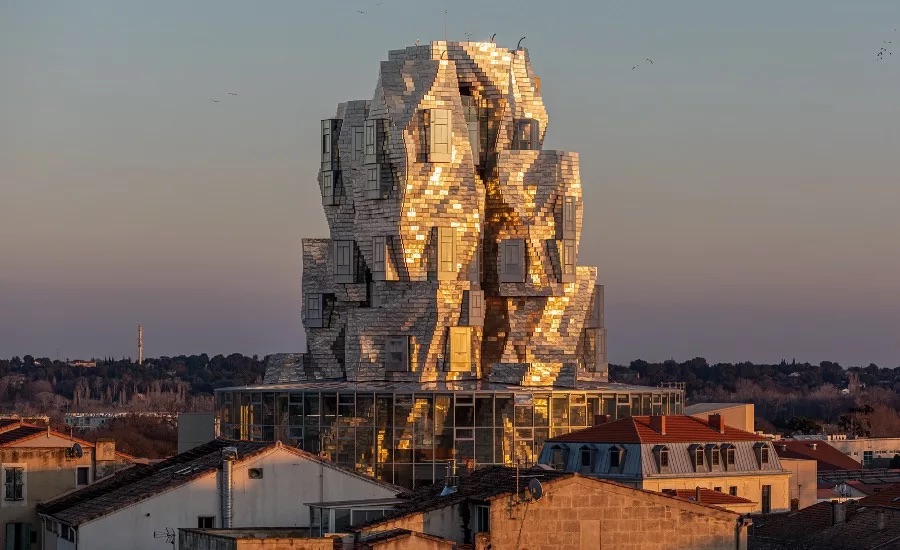
The LUMA Arles Tower in France, as featured by RECORD in June, 2021. Photo © Adrian Deweerdt
Throughout his career, Gehry reimagined an array of conventional building types. His early expertise with performance-venue acoustics served him in later renovations of the Hollywood Bowl (1970–82) and the design of the Disney Concert Hall. The facility with retail design he developed in Gruen’s office reached its zenith at Santa Monica Place, the shopping center he famously skinned in chain-link supergraphics in 1980. He conceived private houses and university buildings as quasi villages of single-room pavilions and was an early experimenter with the sort of informal office interiors that transformed American workplaces during the dot-com boom of the 1990s. With the Temporary Contemporary gallery (now the Geffen Contemporary) for the Museum of Contemporary Art in Los Angeles (1983), he pioneered the now-ubiquitous use of former industrial facilities for the display of contemporary art, and with the Guggenheim Museum in Bilbao, he introduced the oft-imitated but rarely reproduced notion that a single building could revitalize an entire city.
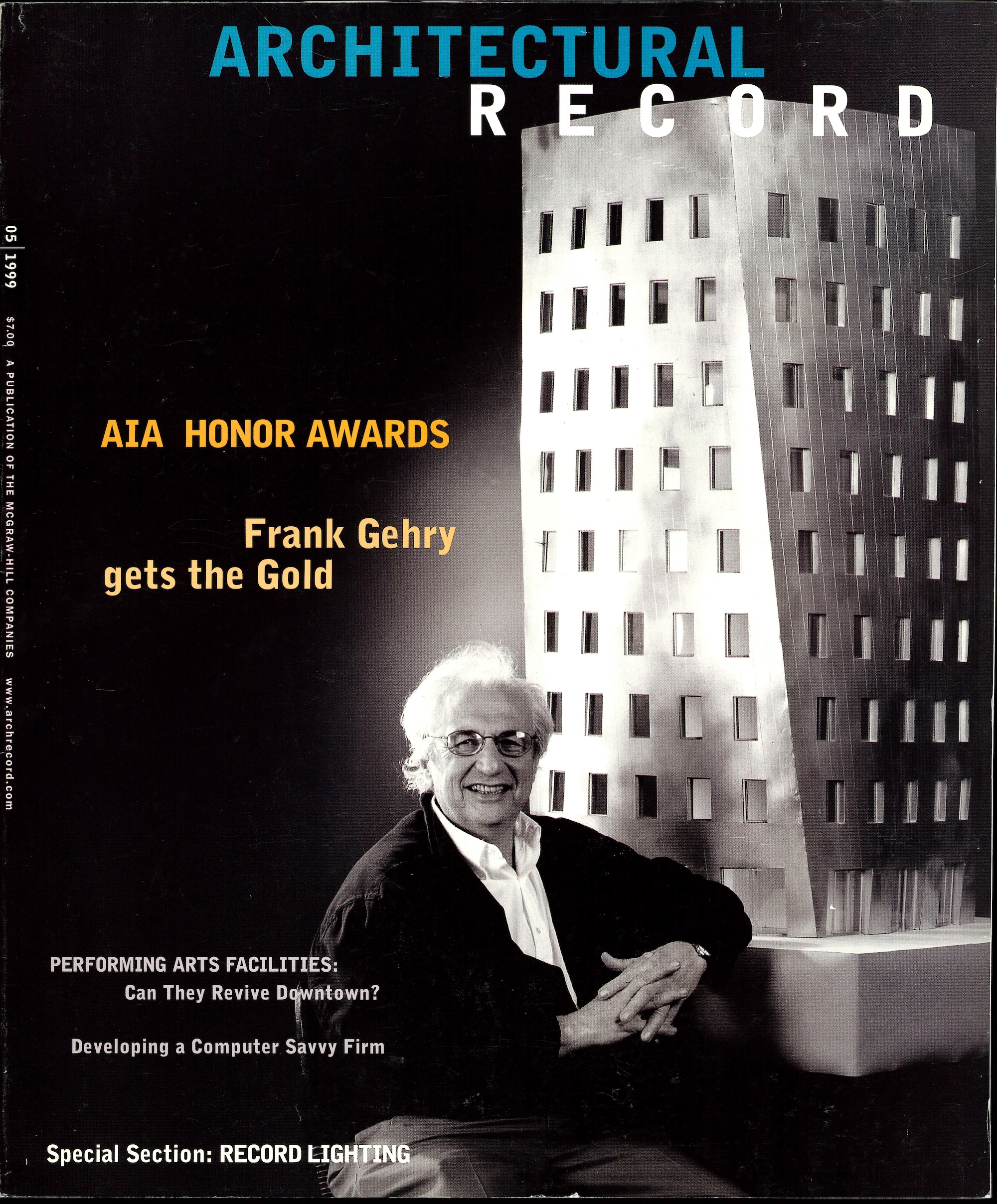
Gehry on the May 1999 cover of RECORD following his AIA Gold Medal win. Image © Architectural Record
The museum in Bilbao gathered lines of investigation Gehry had pursued for decades, including cruciform-plan diagrams, the suggestion of implied movement in curvilinear surfaces, the use of unconventional materials, and the clustering of disparate elements to suggest new models of civic unity. It also required Gehry, who favored freehand sketches to develop his designs, to position himself at the forefront of digital design. To realize the building’s complex curvature, his office became an incubator for new 3D-modeling software and project-delivery methods borrowed from the aerospace and automotive industries, which eventually led to the formation of Gehry Technologies, an independent company he launched in 2002.
The success of the Guggenheim Museum led to major commissions around the globe and to nearly every professional accolade available to architects, including, in addition to the Pritzker Prize, the AIA Gold Medal (1999), the American Academy of Arts and Letters Gold Medal for Architecture (2002), and the Presidential Medal of Freedom (2016). As important to Gehry, the building rekindled interest in his 1988 proposal for the Disney Concert Hall, which he completed to widespread acclaim in 2003.
Gehry’s exuberant forms and unconventional materials sometimes led critics to consider him more of an artist than an architect and to suggest that he traded in little more than formal indulgence and spectacle. Gehry chafed at these characterizations and his responses, which included, at a 2014 press conference in Oviedo, Spain, a middle finger raised at a journalist and a declaration that 98 percent of contemporary buildings were “pure shit,” sometimes revealed a cantankerousness that could overshadow his normally soft-spoken and avuncular demeanor.
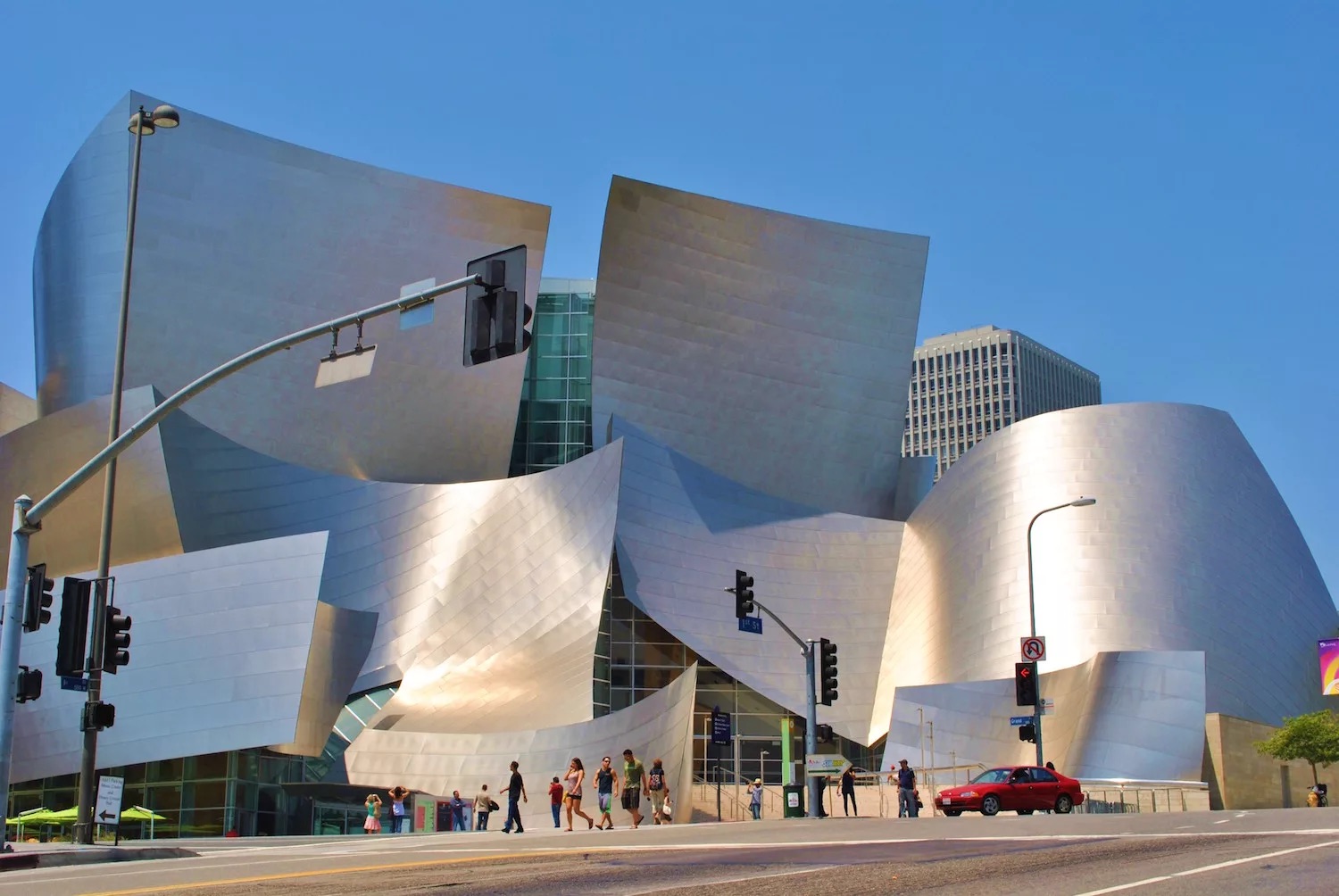
Walt Disney Concert Hall, Los Angeles. Photo by Sebastianstepper, Wikimedia Commons
Even as his celebrity had him designing luxury goods for Alessi, Louis Vuitton, Tiffany & Co., and Vitra, Gehry insisted that he remained an “old lefty” at heart, committed to the idea that architecture could be a catalyst for social good. A generous philanthropist, he was a longtime supporter of Wexler’s Hereditary Disease Foundation and often provided discounted or pro bono design services to endeavors that included Camp Good Times in Malibu (1984), an unrealized facility for childhood cancer patients; Maggie’s cancer care centers in Dundee, Scotland (2003), and Hong Kong (2013); the Barenboim-Said Akademie in Berlin (2015), which fosters collaboration between Arab and Israeli musicians; the Children’s Institute, a community center in the Watts neighborhood of Los Angeles (2022); and a low-cost housing development on the Veterans Affairs campus in West Los Angeles (2025). In 2011, Gehry and Malissa Shriver cofounded Turnaround Arts: California, a nonprofit organization that works to integrate the arts into under-resourced public schools. Of Gehry’s philanthropy, Shriver noted, “there’s no grand plan or formal announcement. Gehry has simply given to causes that resonate with him, and, over time, in parallel with his career, the scope of his involvement has mushroomed.”
Gehry spoke openly—and with refreshing straightforwardness—about his motivations and design ideas in public lectures and interviews but was reluctant to elaborate on his work in print. He never produced the sort of elaborate theories that accompanied the work of more academically minded contemporaries. Though he never held a full-time university appointment, he was an influential educator and often served as a visiting studio instructor at Harvard University; the Southern California Institute of Architecture; the University of California, Los Angeles; the University of Southern California; and Yale University, where he taught a recurring spring-semester studio from the mid-1980s until 2022. Gehry’s office became something of a finishing school, boasting such notable alumni as the Los Angeles–based architects Kevin Daly, Frederick Fisher, and Michael Maltzan.
In recent years, Gehry continued to play a leading role at Gehry Partners and remained an active presence in his Los Angeles studio until the final weeks of his life. Of his achievements and legacy, Mayne wrote: “Frank was unequivocal on the importance of creativity and making in a world filled with uncertainties and anxieties. He made the impossible possible, always challenging limits, redefining how we understand architecture and its capacity for human agency. His interest wasn’t mere form making but shaping behavior, shaping the world itself. There is something profoundly hopeful about this stubborn human insistence on bringing new things into existence, especially when we cannot predict what tomorrow will demand of us.”
Gehry is survived by his wife; their children, Alejandro and Sam; a daughter, Brina, from his first marriage; two granddaughters, and a sister, Doreen Gehry Nelson. Another daughter from his first marriage, Leslie Gehry Brenner, died in 2008. Gehry Partners, which employs a staff of over 100 in Playa Vista, California, will continue to operate, completing some of his final projects, which include an expansion of the Colburn School of the Performing Arts and the Guggenheim Abu Dhabi.
Looking for a reprint of this article?
From high-res PDFs to custom plaques, order your copy today!