Lever Architecture’s Albina One Housing Complex Begins to Restore a Fragmented Portland Community

Architects & Firms
The postwar history of Lower Albina will be familiar to any student of urban renewal. This district of neighborhoods in the northern section of Portland, Oregon, was the thriving home to four out of five Black Portlanders when it was declared blighted in the mid-20th century. After much of the area was razed to make way for Interstate 5, Veterans Memorial Coliseum, and a Portland Public Schools facility, only 66 units of housing remained along the roughly 100-acre stretch of the Willamette River.
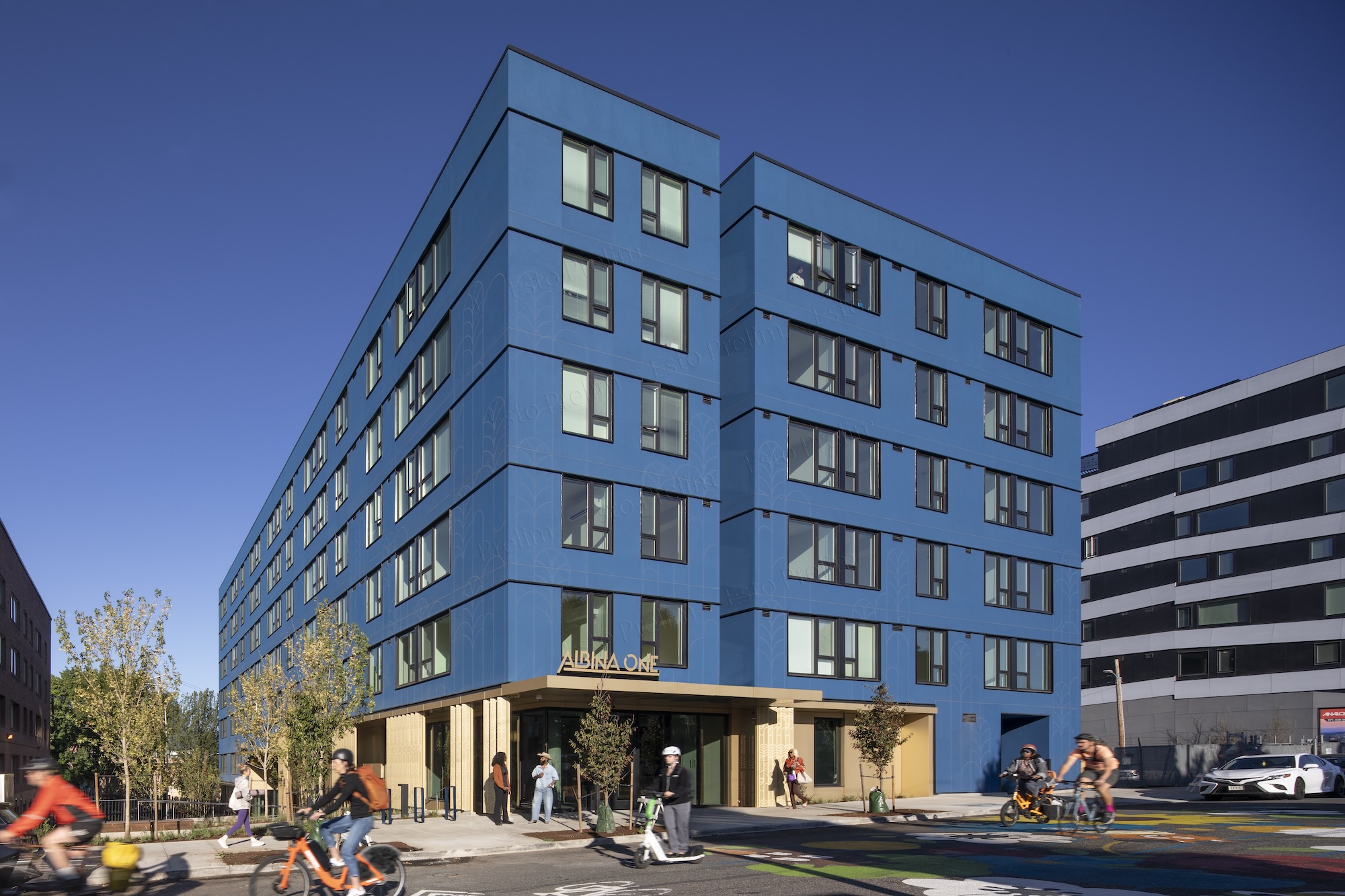
Photo © Lara Swimmer/Esto
While the gutting of Lower Albina was emblematic of American city planning through the mid-1970s, its current re-entrification, as the concept is known, is poised to become a different kind of national model. Since 2018, the nonprofit Albina Vision Trust (AVT) has been spearheading a restorative redevelopment of Lower Albina, in which people who have historical ties to the community will be granted priority to the projects within the organization’s investment plan. With this past summer’s completion of Albina One, an affordable housing complex designed by local firm Lever Architecture, AVT has begun realizing its vision.
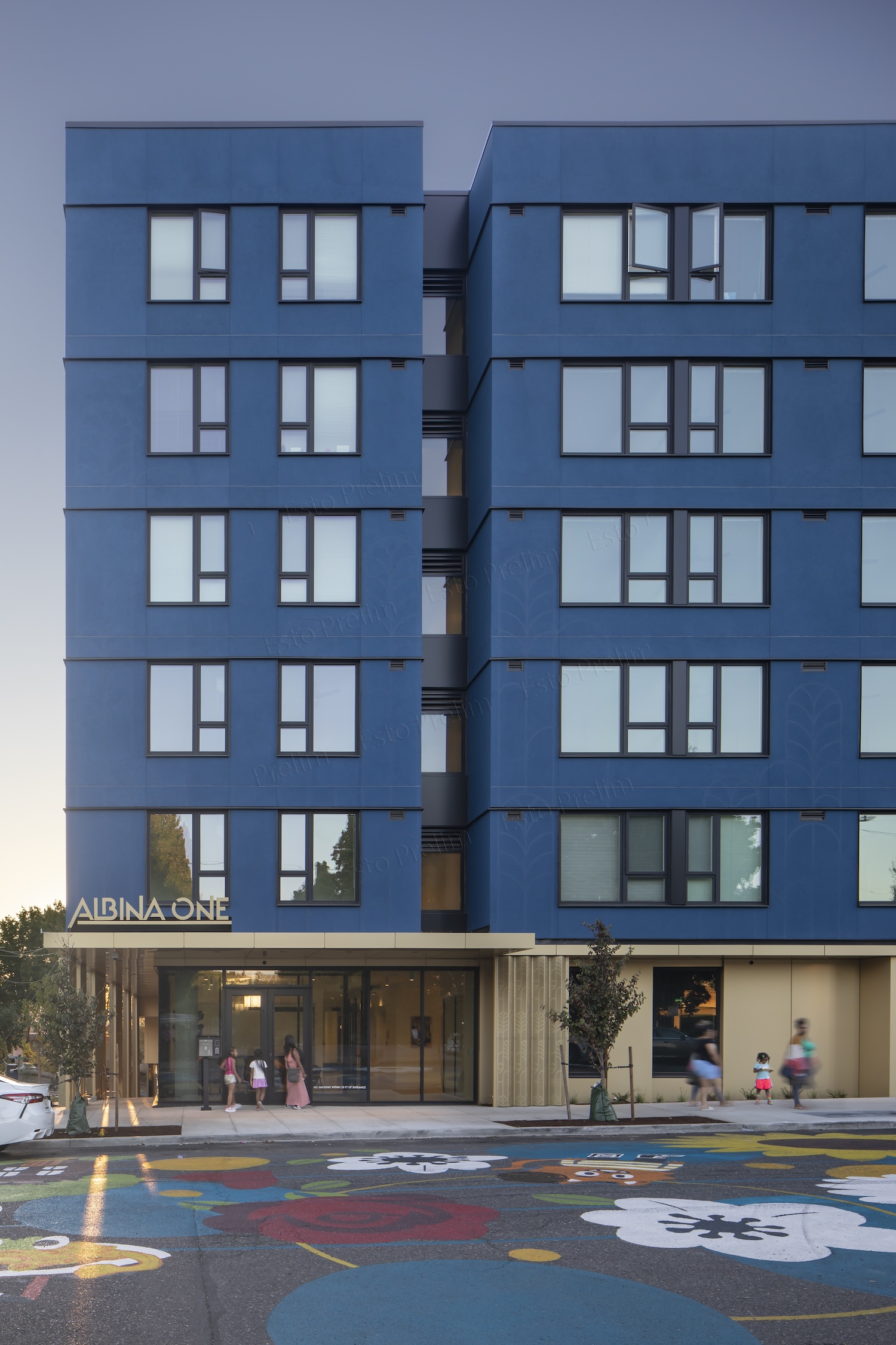
Photo © Lara Swimmer/Esto
Albina One includes 94 units of one- to three-bedroom housing nestled into a sloped site directly north of the Paramount Apartments—the sole residential building in Lower Albina that survived eminent domain. The juxtaposition was deliberate, according to Lever principal Chandra Robinson. The Paramount had been “surrounded by surface parking and medical offices,” she explains, “so you weren’t just making a building but starting a community.” In addition to supplying a critical mass of residents, the new 93,500-square-foot building supports their sense of belonging: along its long southern face, Lever conceived a landscaped plaza that traverses the grade change and coheres Albina One and the Paramount into a proto-neighborhood.
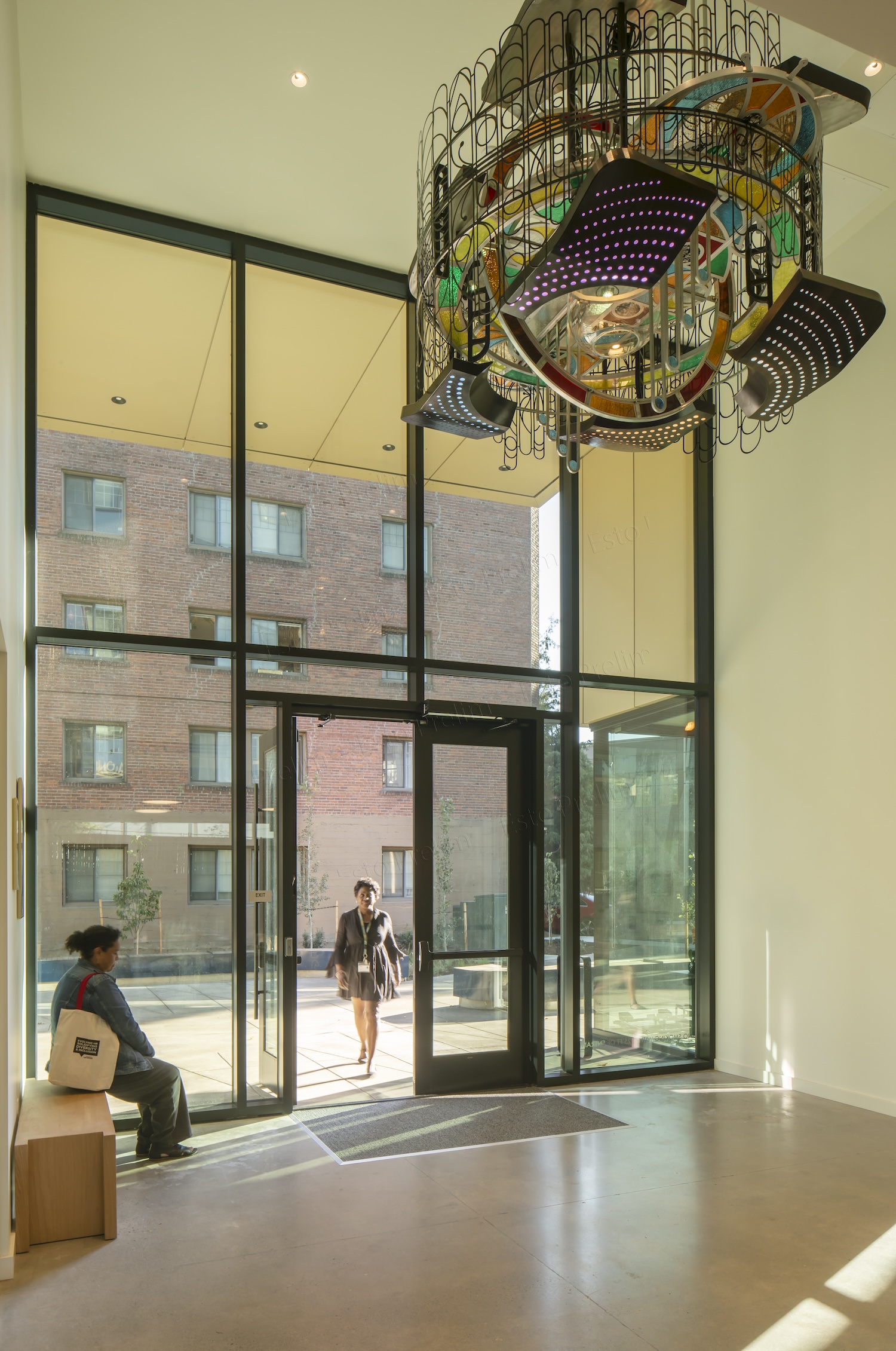
Entering Albina One from the plaza reveals more community building at work. The building’s slightly submerged ground level features a double-height conference room and combined kitchen-lounge that are accessible to renters and neighbors alike. The Portland Opportunities Industrialization Center, which oversees on-site resident services, uses these spaces for programming such as career training and wellness workshops. Experienced in tandem with the new public plaza, “[AVT] has a place that invites people to be part of the regeneration,” Robinson says.
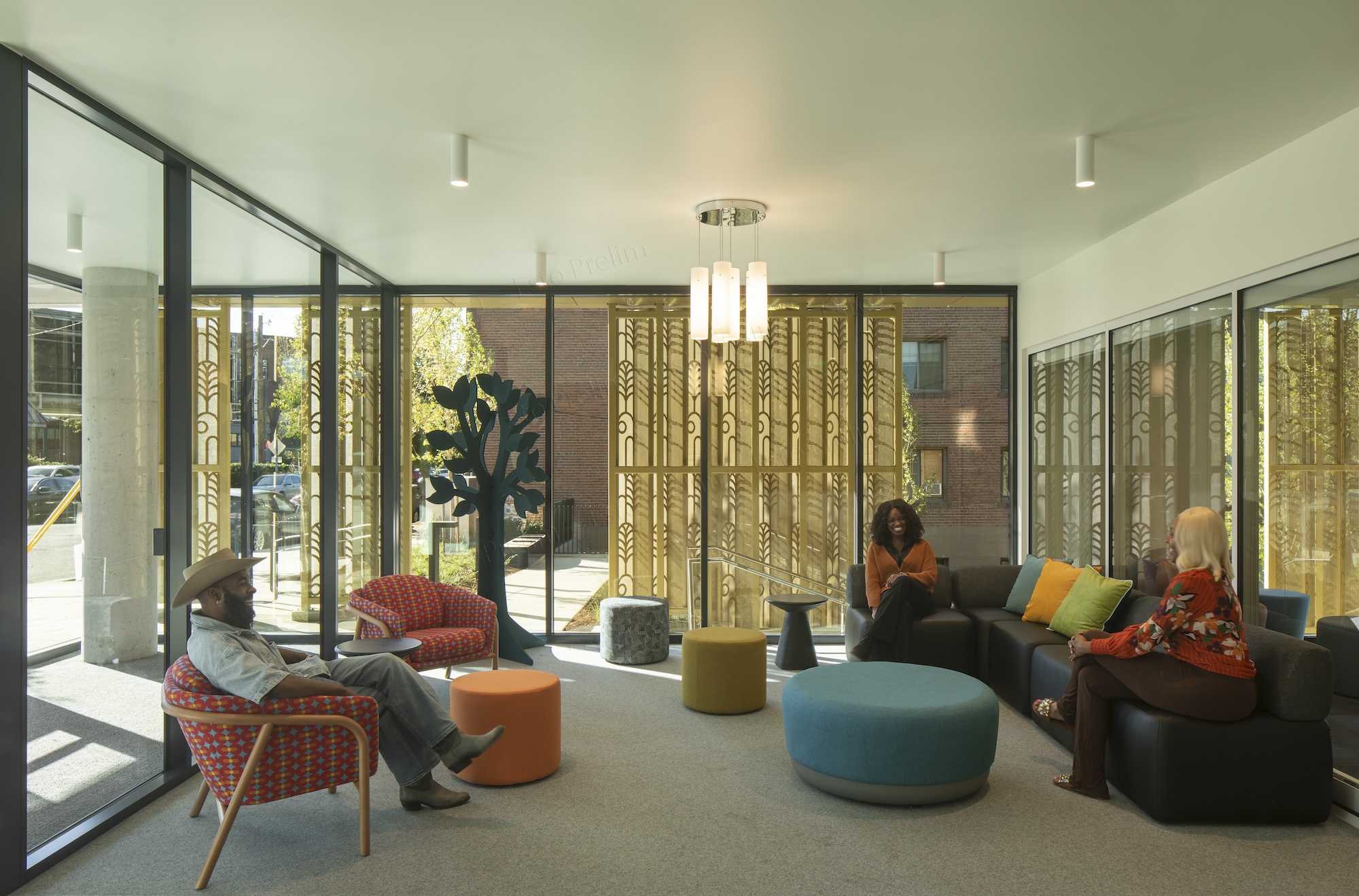
Photo © Lara Swimmer/Esto
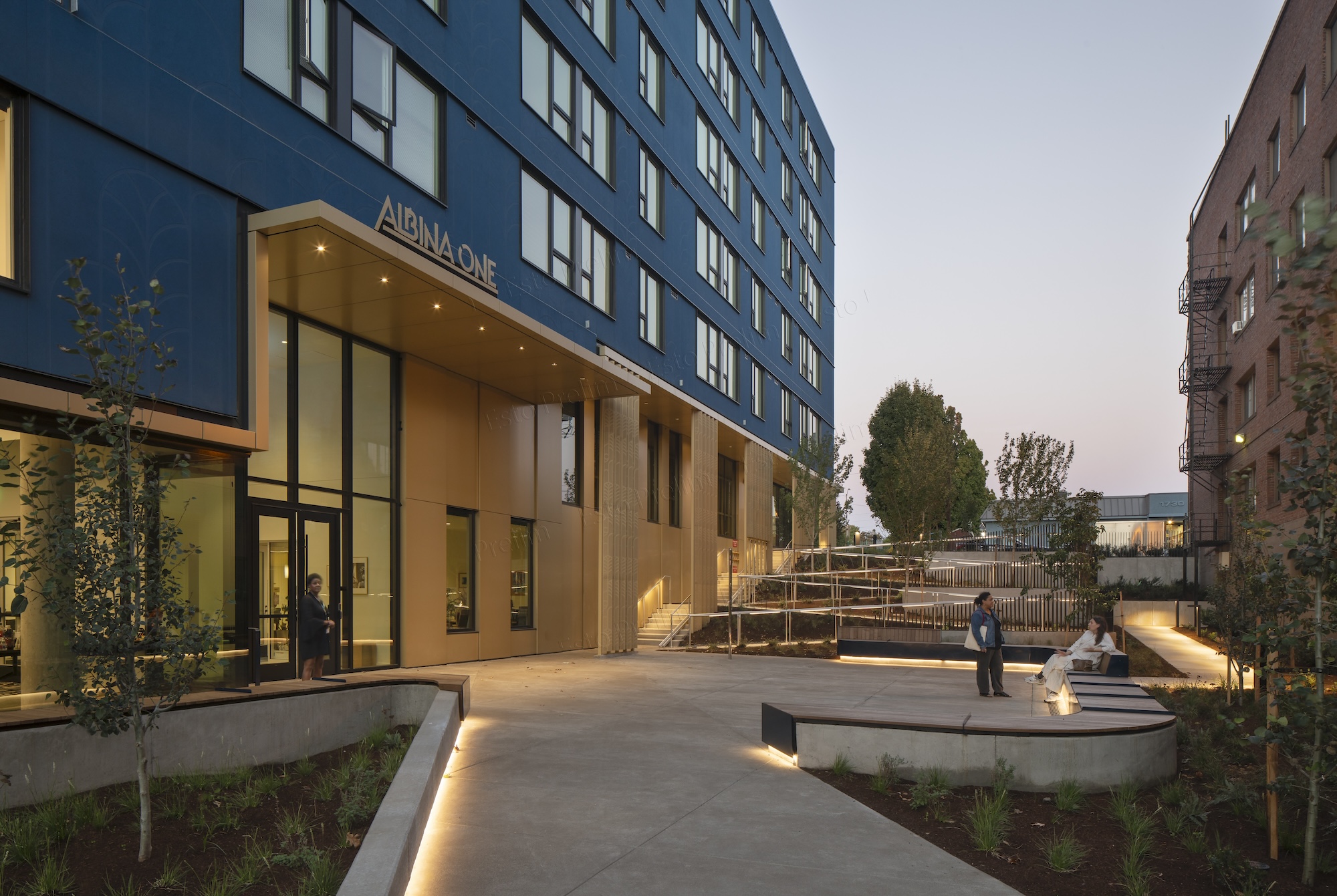
Photo © Lara Swimmer/Esto
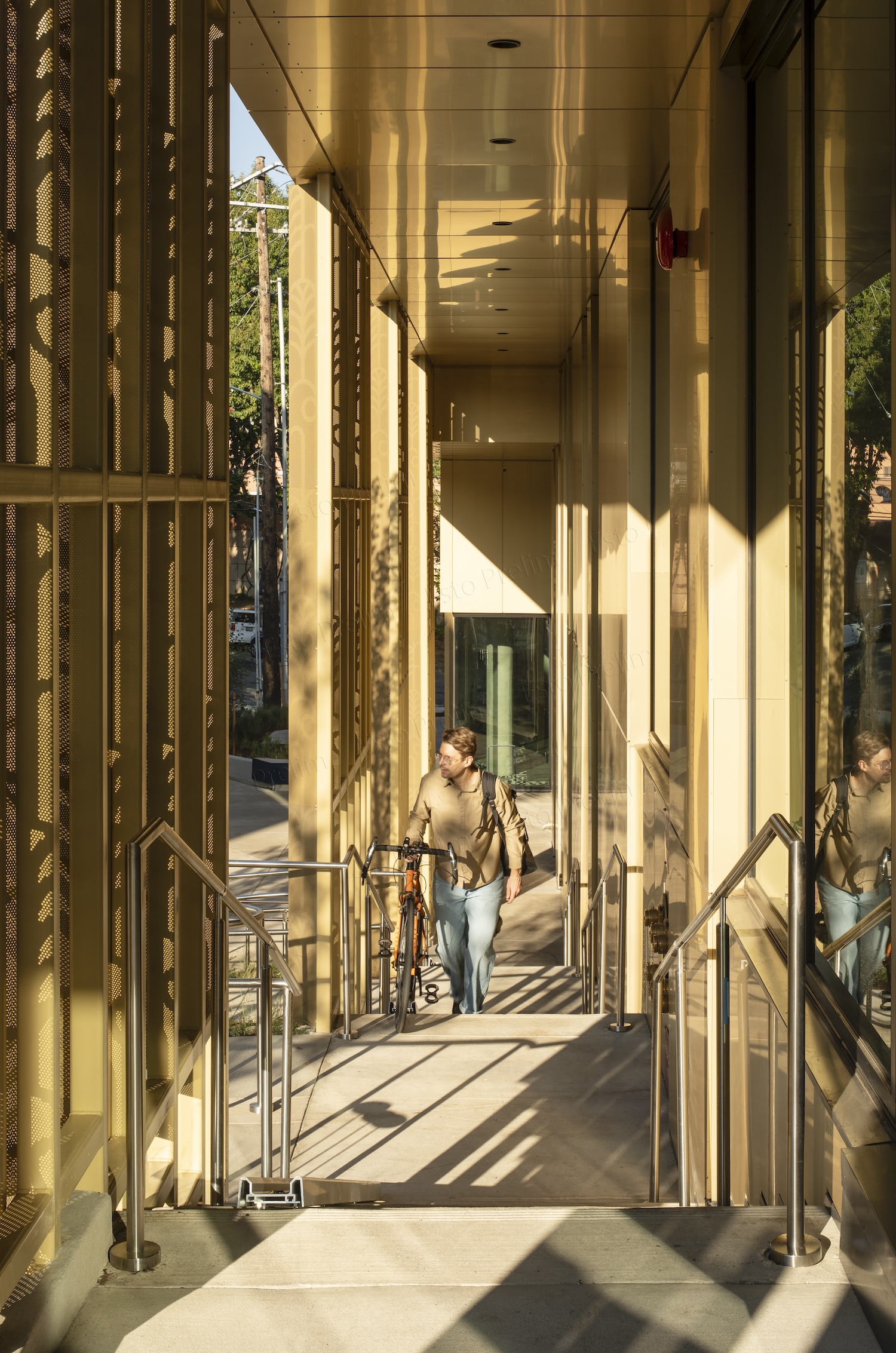
The architect adds that the design had to announce that wholesale transformation was underway—“to let people look across the skyline and see that something is happening.” In response, Lever, collaborating with the local artists Cleo Davis and Kayin Talton Davis, coated Albina One in blue and gold. “We thought it would be powerful to represent Black Excellence, and the idea of abundant prosperity,” Robinson notes of the “royal” colors. The team also created an abstract floral pattern inspired by Yoruban and Art Deco–era furniture, which is stamped into the exterior stucco and adorns perforated folded screens at the ground and second levels.
Photos © Lara Swimmer/Esto
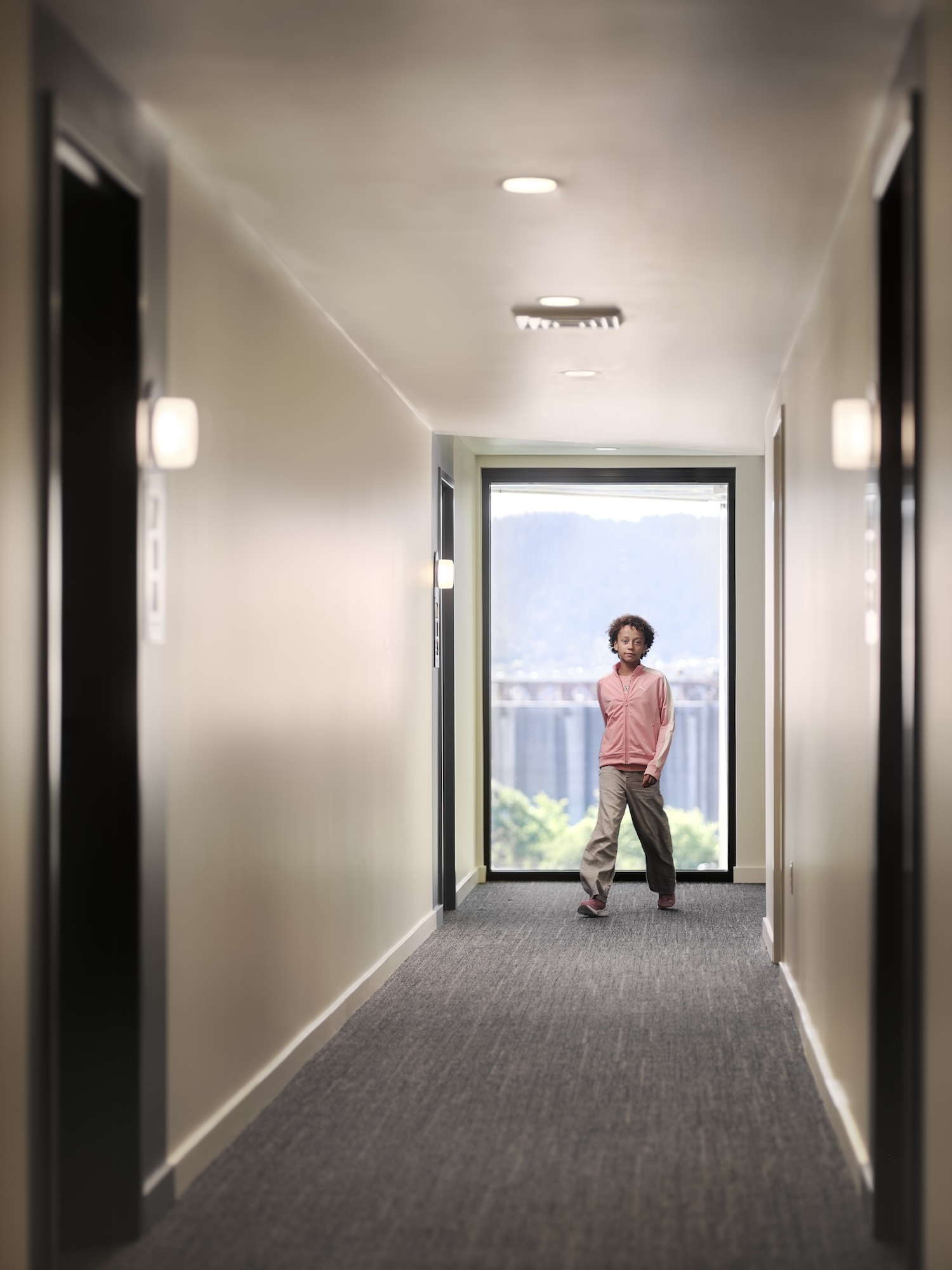
Seen from above, Albina One rises from its plaza in a “J” that is rotated to the east–west primary axis. “We didn’t want to spend money making the building complicated, because our number-one priority was making something that looks beautiful and market-rate,” Robinson says of the footprint. “Kinking the edges” of a bar volume, then, “created more apartments with million-dollar views toward downtown Portland” without sacrificing constructability. The upper floors reconcile a double-loaded corridor with daylight penetration in individual apartments, and the overall J shape wraps around a resident-only courtyard.
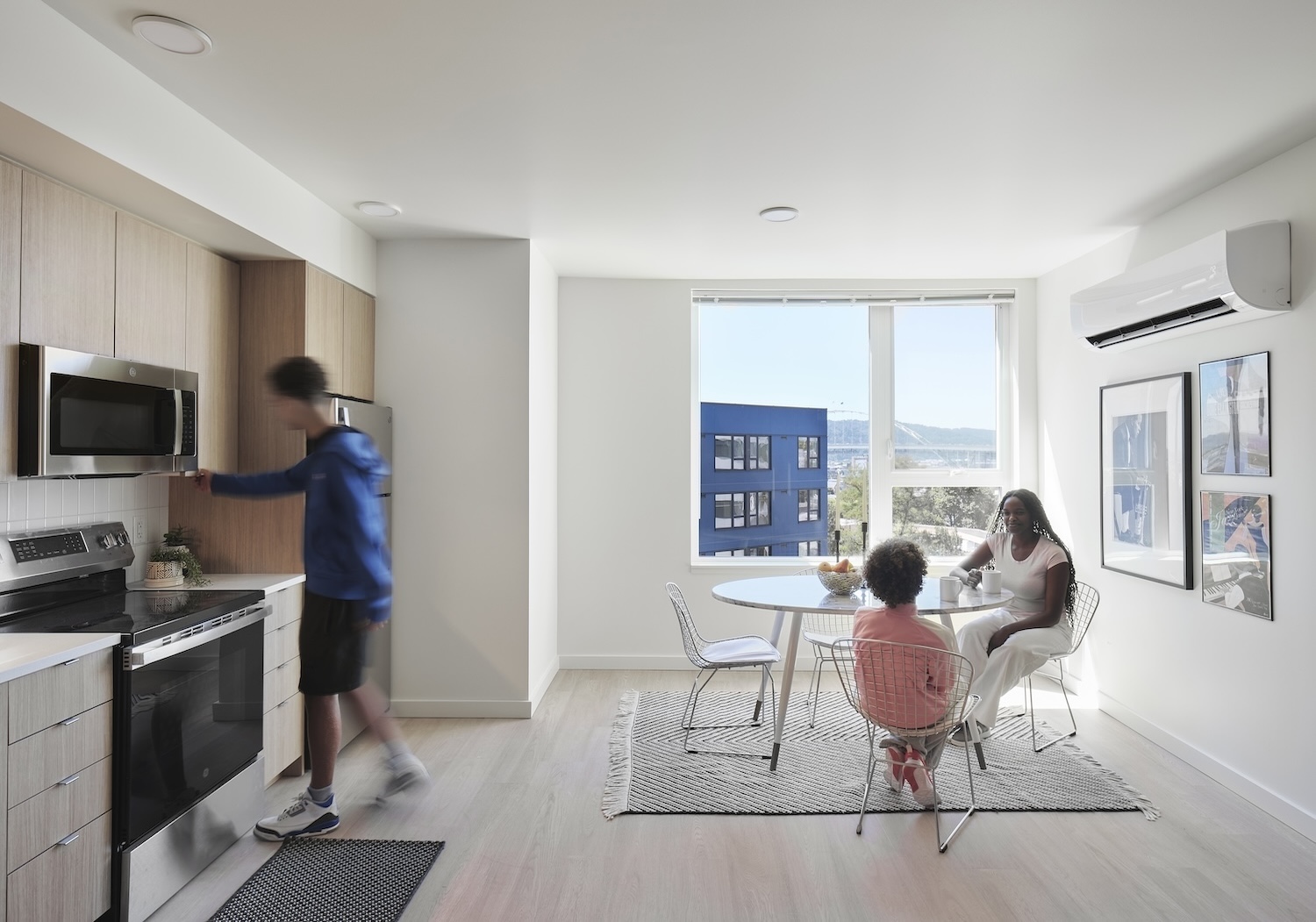
Photo © Justin Cordova
Photos © Justin Cordova
Occupants whose units overlook that courtyard can also soak in the views, by way of double-height terraces located in Albina One’s southwest-facing elbow. For skyline observers, the generous recesses lend relief and rhythm to a statement-making envelope. For residents, the terraces are places to foster connection, and to imagine community growing outward from this core.
More change is one the way as AVT is proceeding with the next phase of its Lower Albina plan. The nonprofit is purchasing the Portland Public Schools property for redevelopment into a mix of uses, which includes additional housing that will also preference descendants of displaced Portlanders.
Looking for quick answers on architecture and design topics?
Try Ask RECORD, our new smart AI search tool.
Ask RECORD →
Looking for a reprint of this article?
From high-res PDFs to custom plaques, order your copy today!