Renovation, Restoration & Adaptive Reuse: 2026
Burckhardt Architektur Tops a Brutalist Swiss School with a Concrete-Clad Timber Addition
Geneva
Architects & Firms
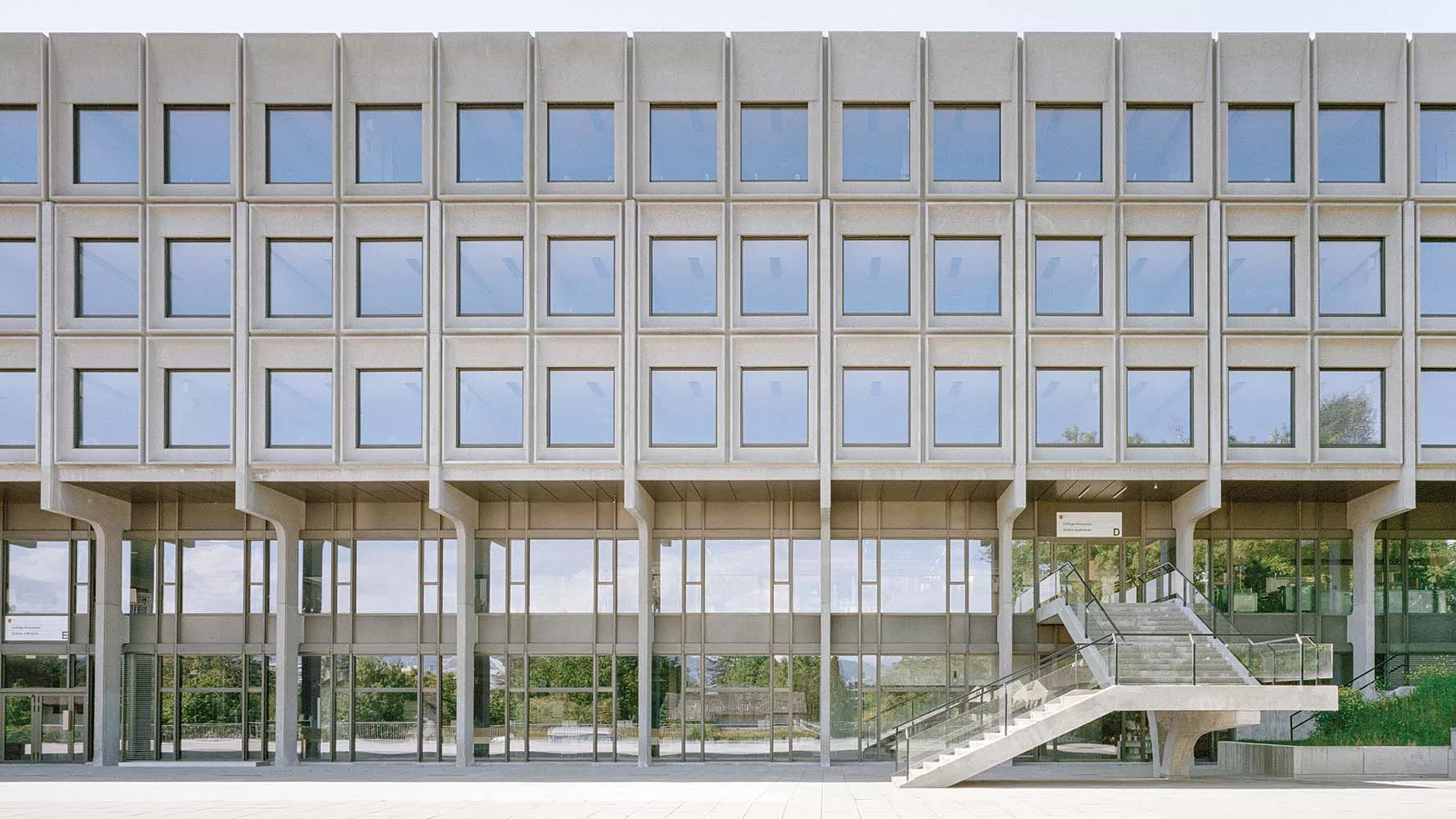
“Architects don’t always have to show off,” says Nicolas Vaucher, a partner in the Geneva office of Swiss studio Burckhardt Architektur. “There is poetry in disappearance.” He is discussing the firm’s work on the Collège Rousseau, a junior high school in the city’s western suburbs. Completed in 1969 by local architect Alain Ritter, the landmarked building occupies a steeply sloping site overlooking Lake Geneva. A handsome example of prefabricated brutalism, the structure combines a plan of great clarity with a refined articulation of raw concrete parts. In 2018, on the eve of the school’s 50th birthday, the Canton of Geneva launched a design competition with a double objective: on the one hand, the authorities sought to restore and upgrade the obsolescing structure and, on the other—in response to demographic pressure—to increase classroom space by a third.
“There weren’t many places to put the new classrooms,” recalls Vaucher, especially since the brief also stipulated enlargement of the cafeteria and the library. Faced with height restrictions, Ritter had cleverly exploited the site’s eastward slope toward the lake, organizing his school above and below an artificial ground level. Rising from “grade,” a generous three-story quadrangle contained the main entrance, staff room, administration, and library on its glazed lower level, and classrooms on the two concrete-panel-clad floors above. Ritter located the school’s assembly hall beneath the quadrangle’s courtyard and placed the cafeteria under the library, looking out toward the Alps. At the center of the northern and southern wings, running alongside bush-hammered concrete bracing walls, broad open stairways ensured vertical circulation.
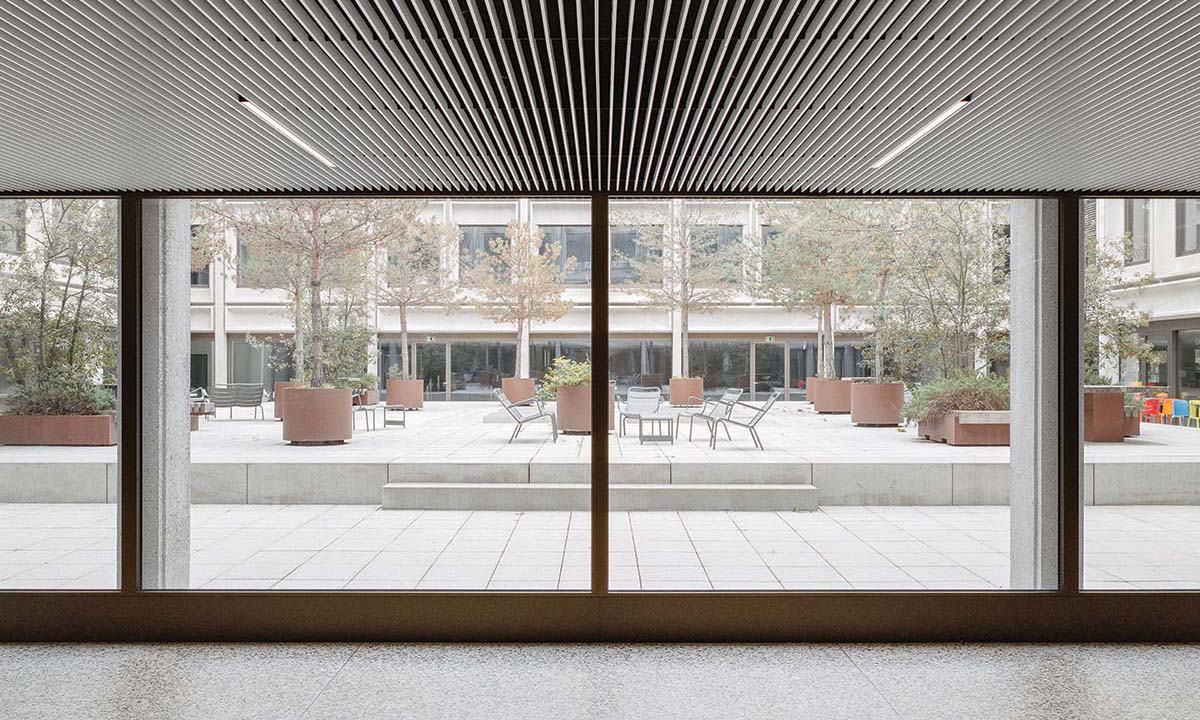
A courtyard with seating is placed at the building’s center. Photo © Olivier Di Giambattista
Like all the other competition entrants, Burckhardt used today’s more relaxed height limits to add another story of classrooms to the quadrangle. Where the firm’s proposal particularly stood out from competitors’ was in its swapping of the cafeteria and the library. As its holdings grew, the latter had filled up all the available space with bookshelves, disrupting the views through the entrance level and shutting off the eastern section of the cloister-like quadrangle circuit. In the new arrangement, the cafeteria, which has no need to be enclosed, can spread out on the entrance floor, while, downstairs, the library finds both quiet and more space on two levels, thanks to a service passage the architects enlarged into a full basement.
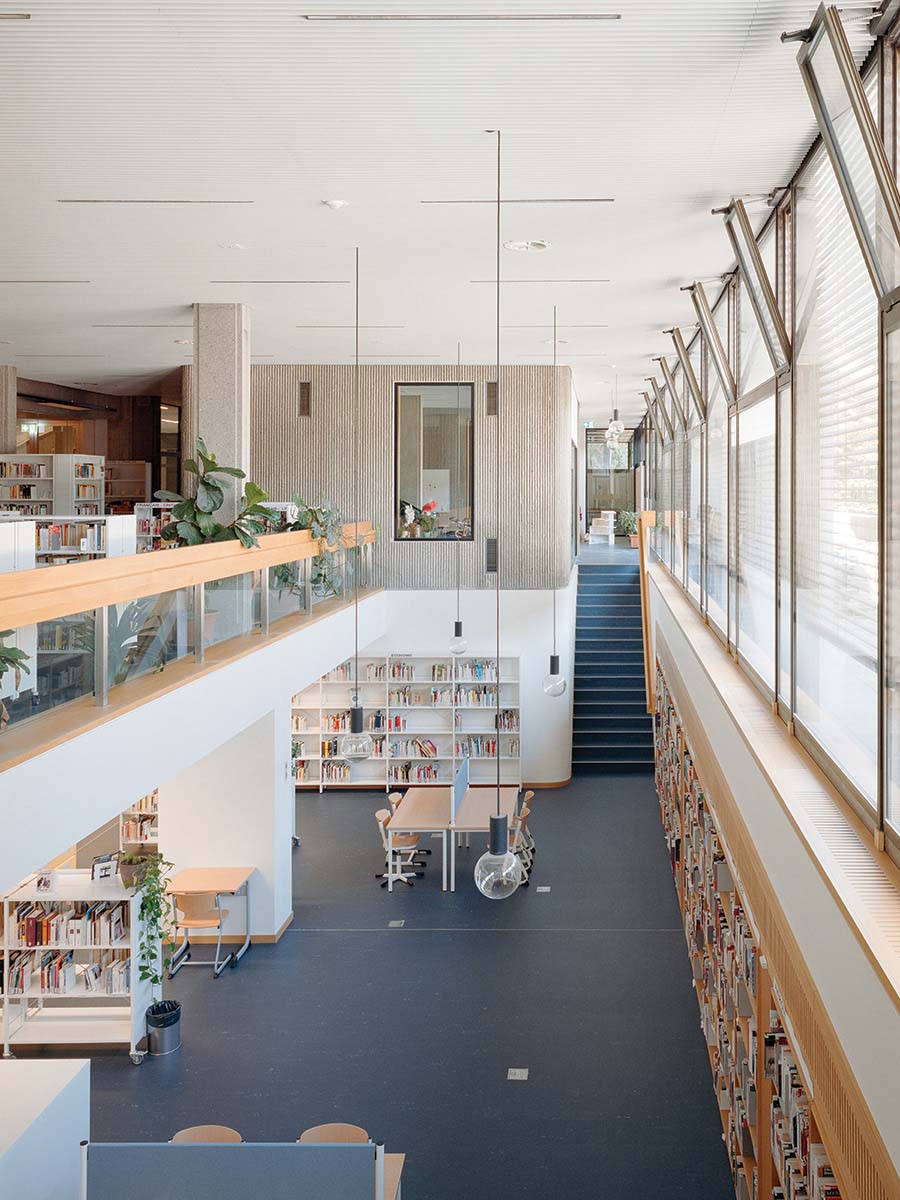
The library is partially located in the expanded basement. Photo © Olivier Di Giambattista
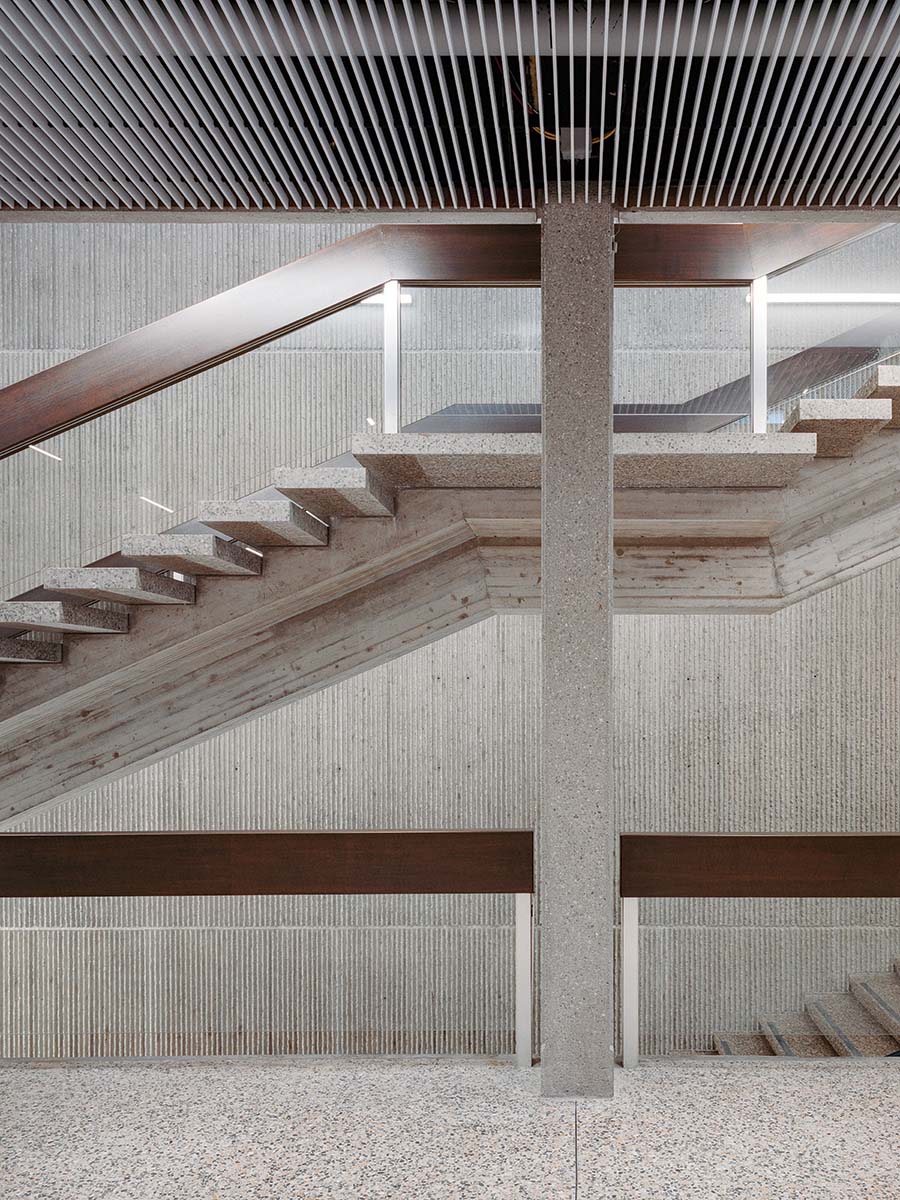
The original concrete structure was left exposed. Photo © Olivier Di Giambattista
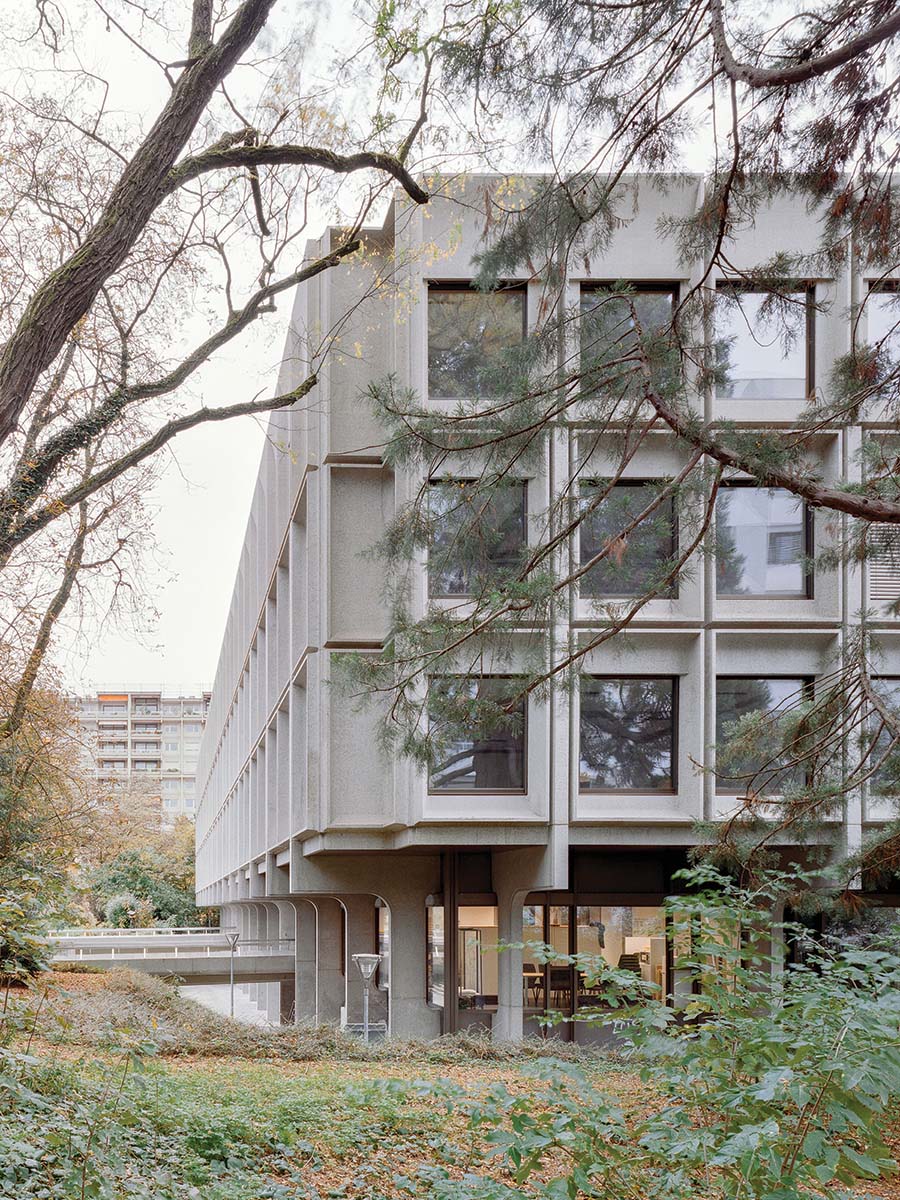
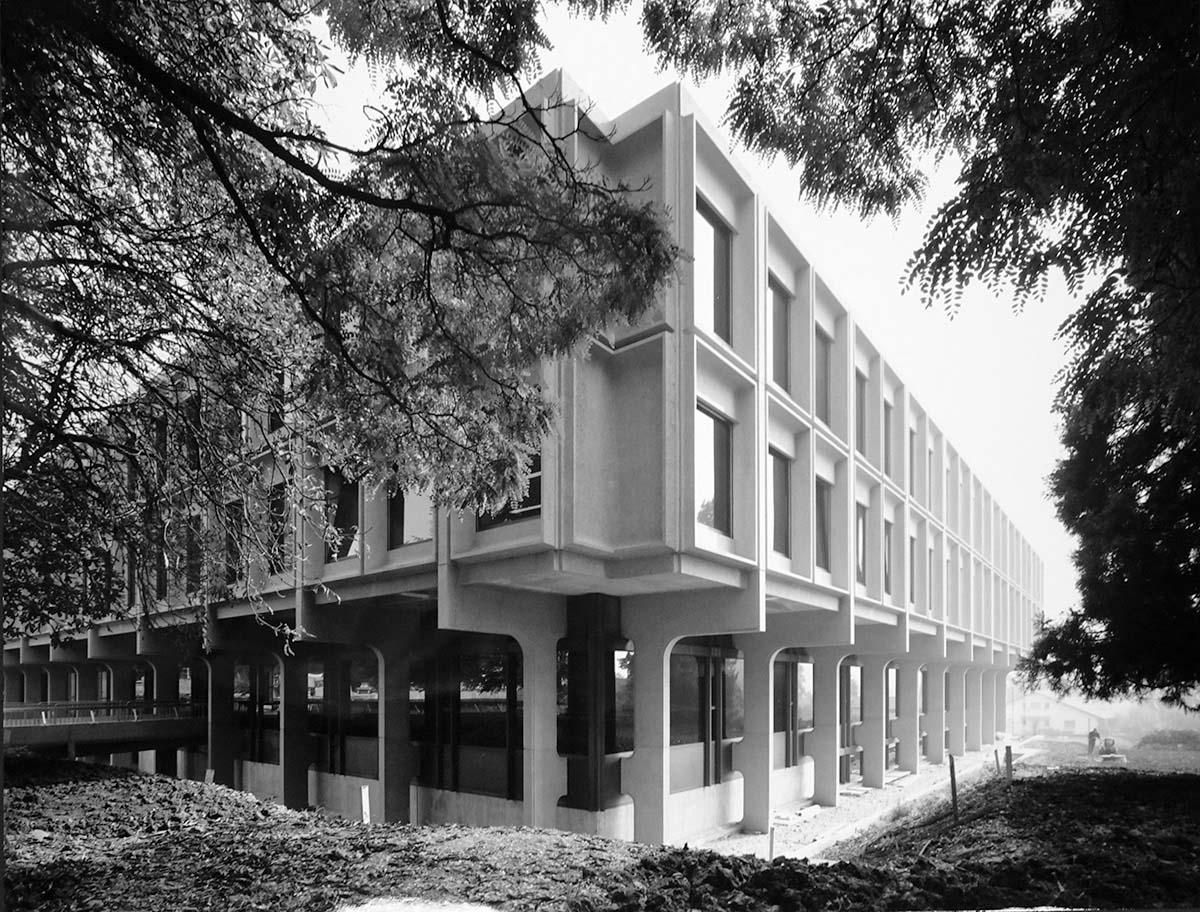
Burckhardt’s scheme was also among the most respectful toward the spirit of the original, particularly in the way it integrated the new story into Ritter’s building. To keep weight down, the firm designed a timber structure, but clad it outside in prefabricated-concrete panels similar to those on levels two and three. Where Ritter had expressed his slender concrete columns externally, Burckhardt took a different approach. “Today, the tendency is to insulate structural elements to avoid thermal bridges,” explains Vaucher. “The facade panels then cover that insulation.” As a result, they are slightly different from the 1969 model, since they widen asymmetrically to fill the space where the wood columns rise. In this way, the firm maintained continuity while subtly signaling that this is an addition. In order to achieve an exact color match, Burckhardt carried out an analysis of the 1960s concrete mix, which also allowed it to repair the original panels in situ, since many had been damaged by rebar corrosion. Similarly, the firm replaced all the classroom windows, many of which no longer opened. Like the originals, the new units feature anodized bronze-colored aluminum frames holding giant undivided panes that are now double-glazed, and they have been motorized to cope with the extra weight.
1
2
Newly installed precast concrete panels (1) nearly match those of the original structure (2). Photos © Olivier Di Giambattista (1), State Archives Geneva (2)
Inside, countless similar restoration decisions awaited, from the walnut-wood lockers Burckhardt reproduced (since the originals were too damaged to retain) to the white ceiling slats it replaced with a denser, more slender version, suspended a little higher to reveal further structure. As well as removing asbestos from the internal partitions and adjusting their position with respect to certain classrooms, the firm took out those opposite the stairheads on levels two and three, to create informal study areas that allow light to flood into the hallways and the gaze to travel out toward the Alps. Again at the head of the stairs, in response to the safety issue posed by the new top floor, Burckhardt installed gargantuan fire partitions that sit flush against the walls, closing only when the alarm sounds. The costly solution was justified since the system preserves Ritter’s spatiality while avoiding the need to introduce a separate emergency egress.
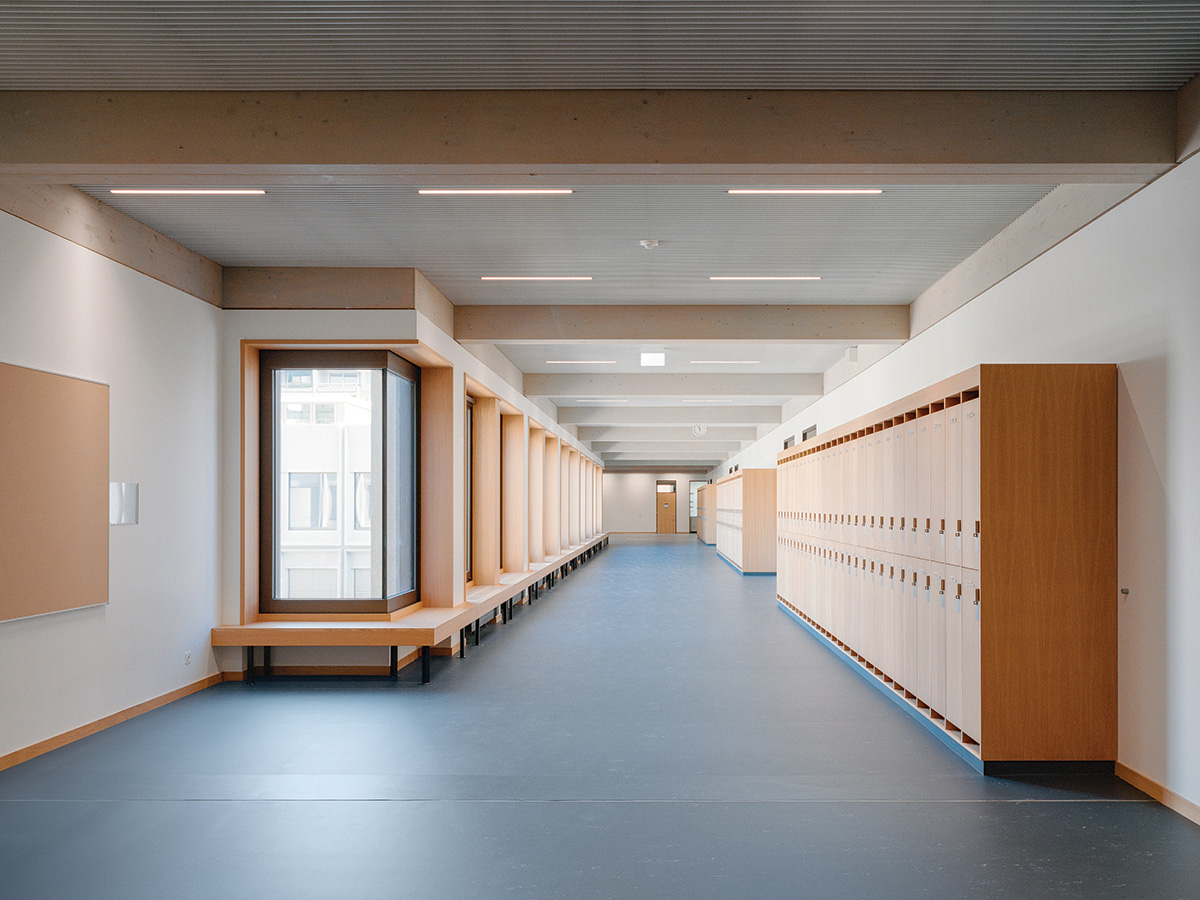
Walnut and oak millwork is found throughout the building. Photo © Olivier Di Giambattista
On the new top floor, where the science classes have now moved, Burckhardt took its cues from Ritter, but with a contemporary touch: lighter and airier, the addition swaps walnut finishes for oak, and features higher ceilings that facilitate installation of the extra ducting needed for fume cupboards and other lab equipment. Exposed, like their concrete counterparts below, the glulam timber beams are finished with a gray wash to give them a similar hue, while the two new flights of stairs continue and mimic the old, except in being narrower, allowing daylight from glazed roof lanterns above to flow in at the sides and descend to the lower floors.
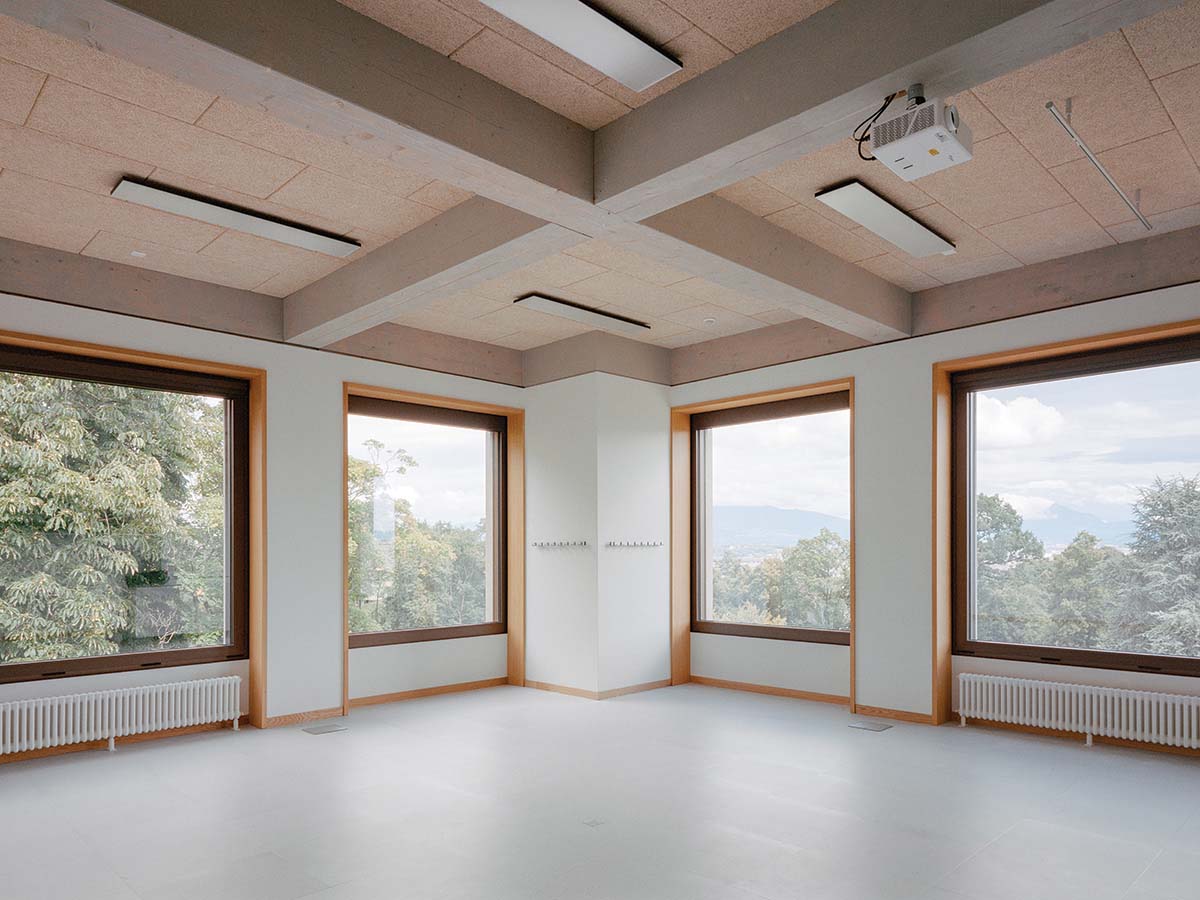
Timber beams are stained to resemble concrete. Photo © Olivier Di Giambattista
Since closing the school was impossible, Burckhardt organized construction into two phases, either side of an east–west central expansion joint that allowed noise propagation to be minimized. According to chemistry teacher Alexandre Coullery, many students have now—just 18 months after the second phase completed—forgotten the building was once a story shorter. This, surely, is the ultimate homage to Burckhardt’s poetics of disappearance.
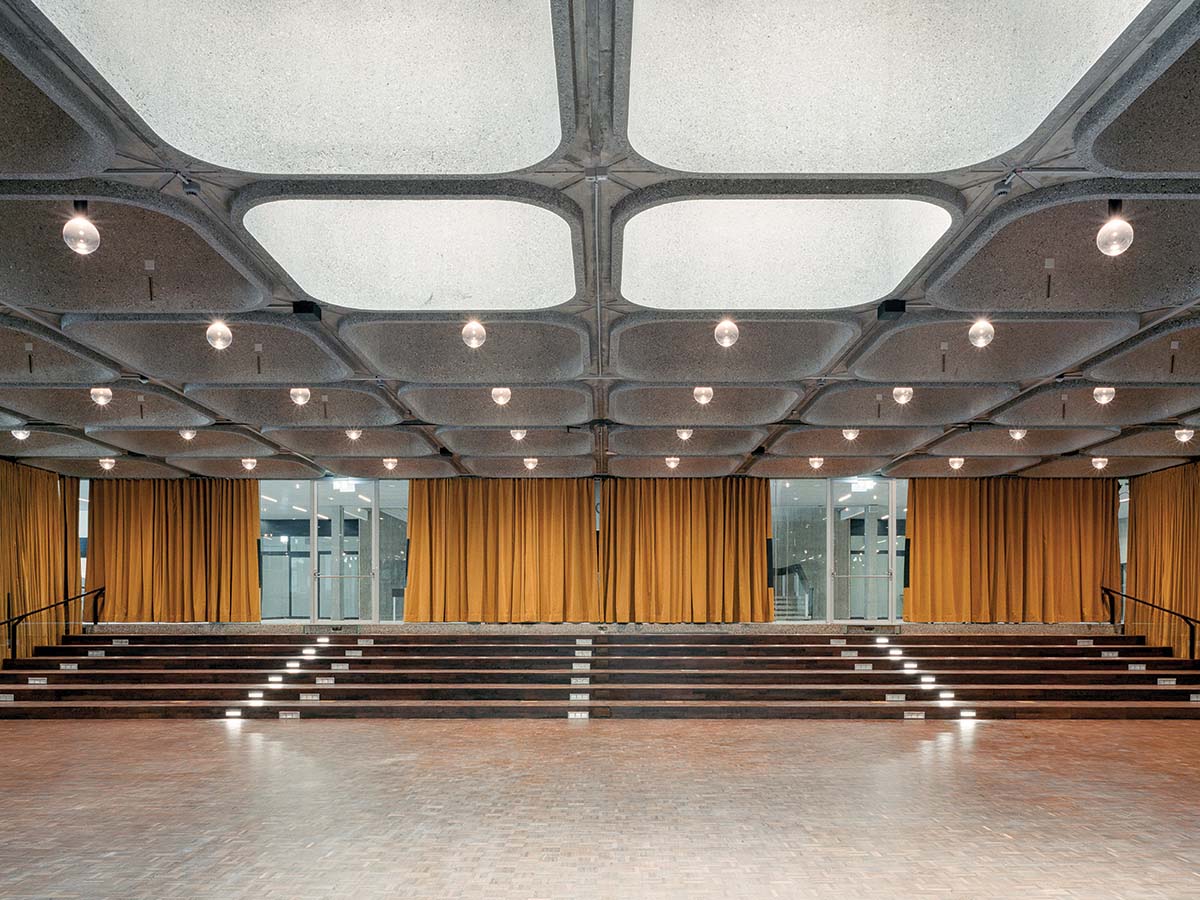
Below the courtyard, an auditorium with a coffered ceiling and wood flooring greets students and faculty Photo © Olivier Di Giambattista
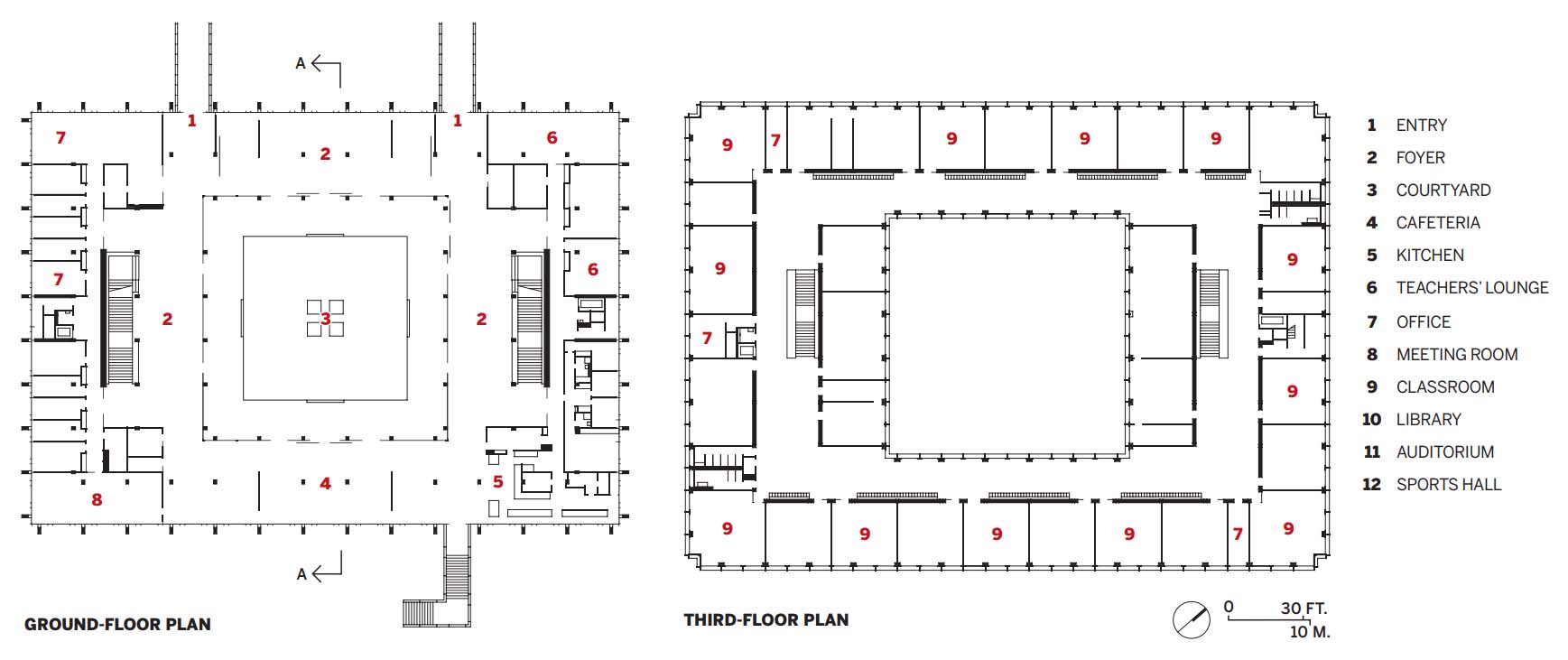
Image courtesy Burckhardt Architektur
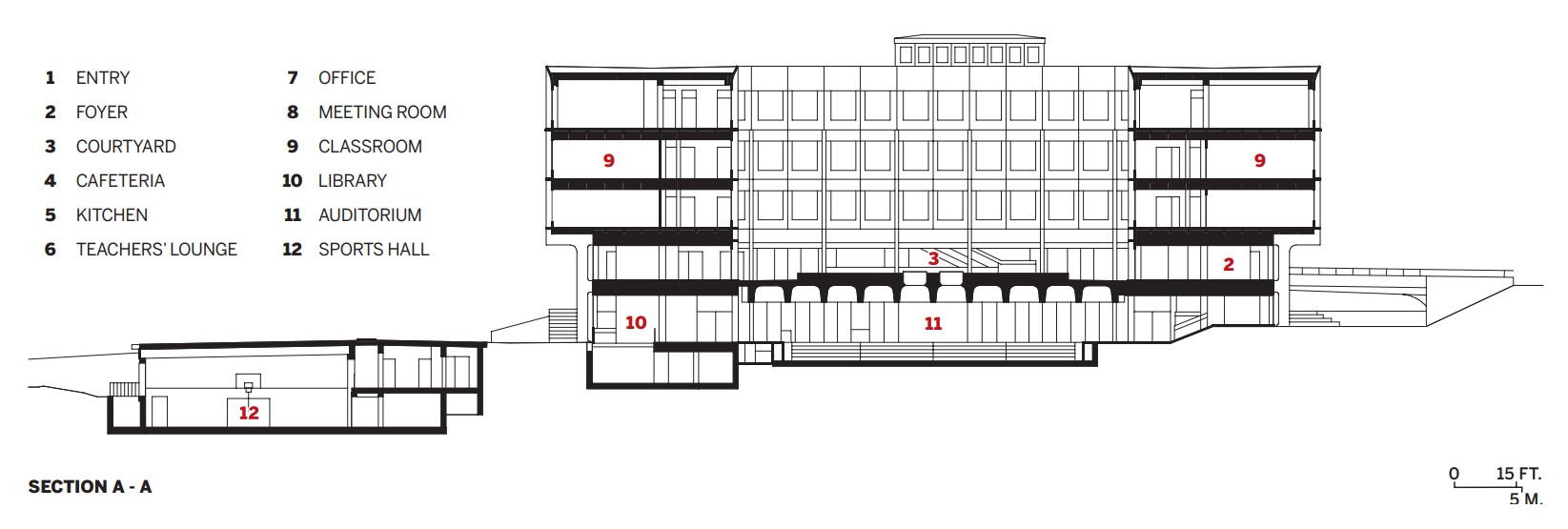
Image courtesy Burckhardt Architektur
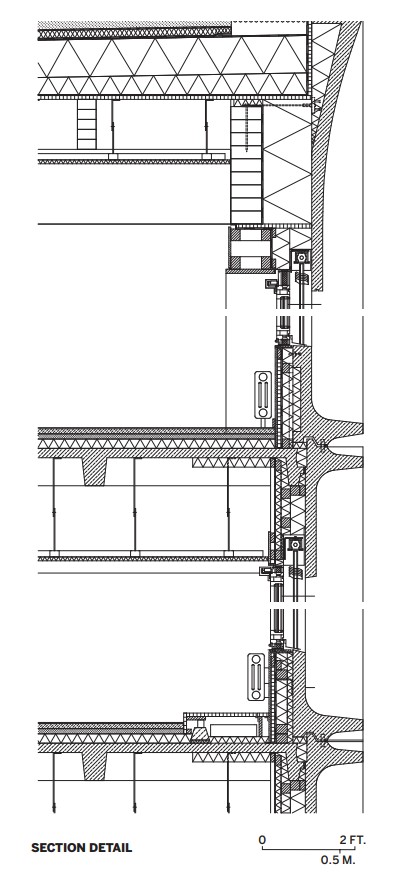
Image courtesy Burckhardt Architektur
Credits
Architect and Construction Manager:
Burckhardt Architektur — Nicolas Vaucher, head of project; Alexandre Gilberto, project manager; Marcos Negreira, Antje Bittorf, architects; Abilio Rui Luis e Silva, Lou Boudias, construction managers; Philippe Noverraz, senior draftsman; José Alves, BIM manager
Engineers:
Thomas Jundt Ingénieurs Civils (structural); Enpleo Sàrl (building physics); Xmade (facade); Betelec (electrical); Chammartin & Spicher (services)
Consultants:
Christian Bischoff (heritage); Consortium Maulini Orllati (mason)
Client:
Canton of Geneva, Cantonal Buildings Office
Size:
235,000 square feet
Project Cost:
$92 million
Completion:
August 2024
Sources
Precast Concrete:
MFP Préfabrication
Wood:
Volet, MFP Charpente
Curtain Wall:
Constructeurs Métalliques Associés
Acoustical Ceilings:
Haufe Deckensysteme
Wallcoverings:
Belloni, André
Lighting:
Zumtobel (interior ambient); Perfolux (tasklighting)
Looking for quick answers on architecture and design topics?
Try Ask RECORD, our new smart AI search tool.
Ask RECORD →
Looking for a reprint of this article?
From high-res PDFs to custom plaques, order your copy today!