A New Exhibition at the Noguchi Museum Brings the Artist’s Unrealized Works in the Public Realm to Life
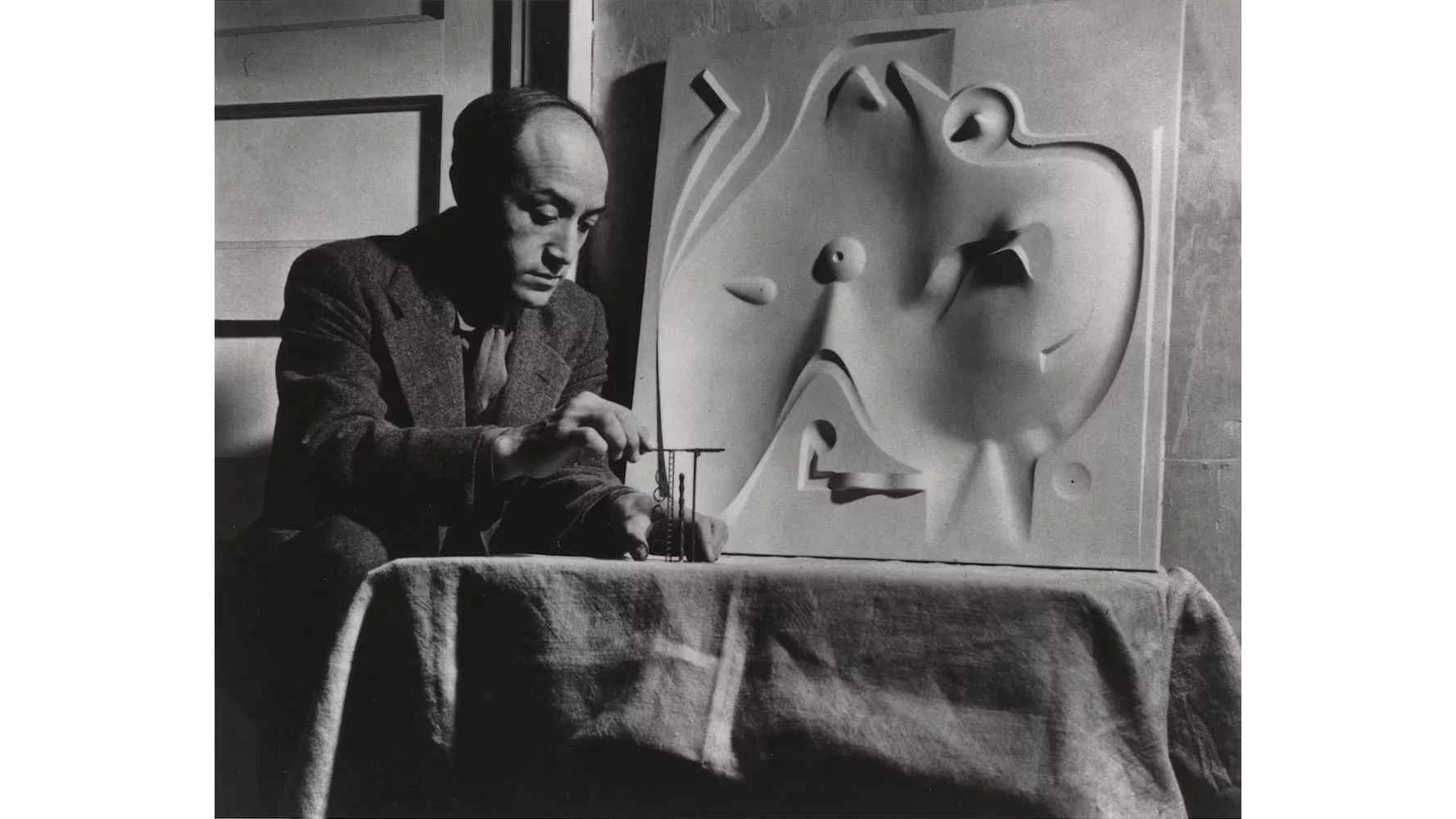
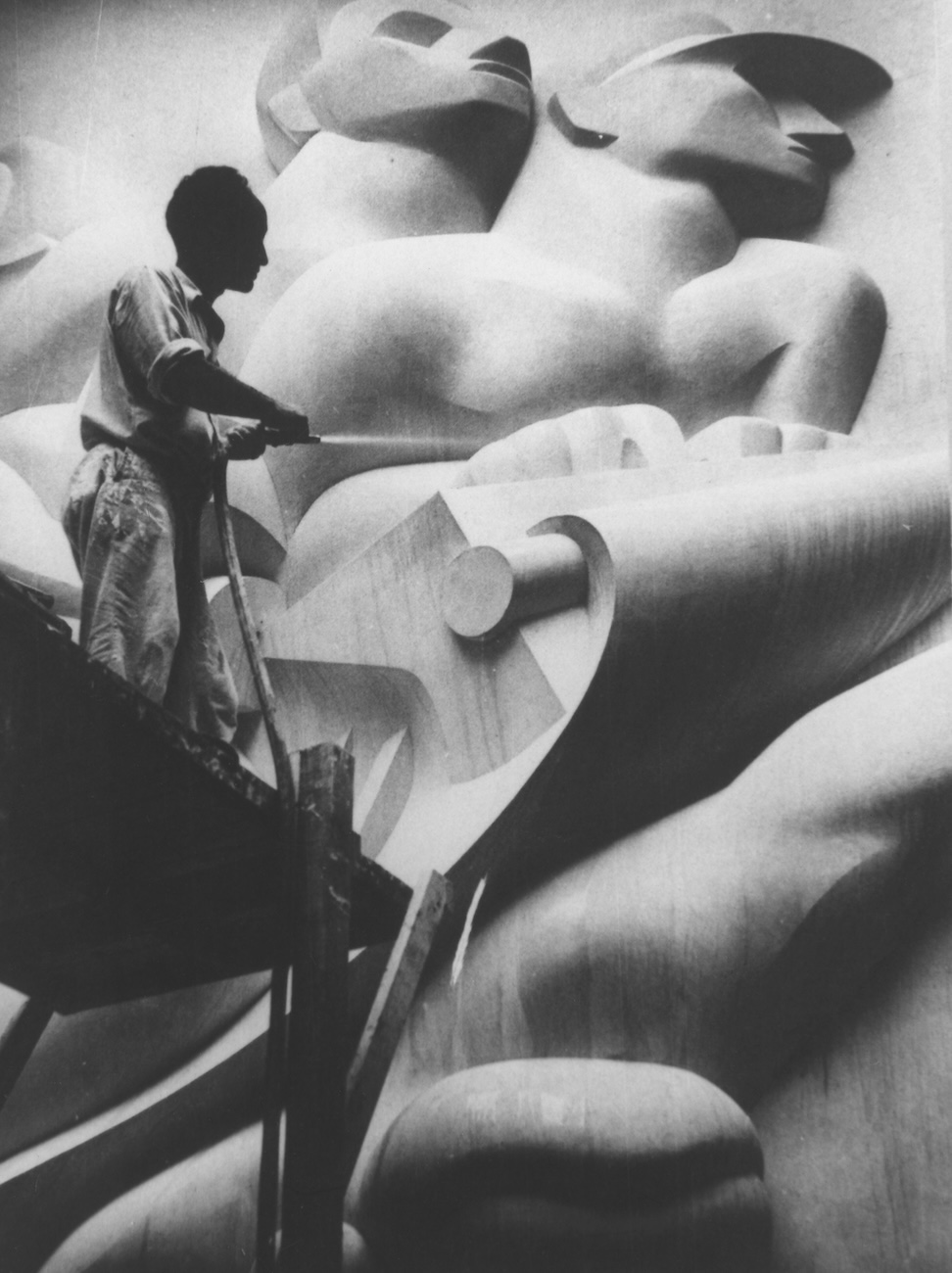
Isamu Noguchi working on News (1938-40), 1939. The Noguchi Museum Archives, 03750. Photo © The Isamu Noguchi Foundation and Garden Museum, New York / Artists Rights Society (ARS)
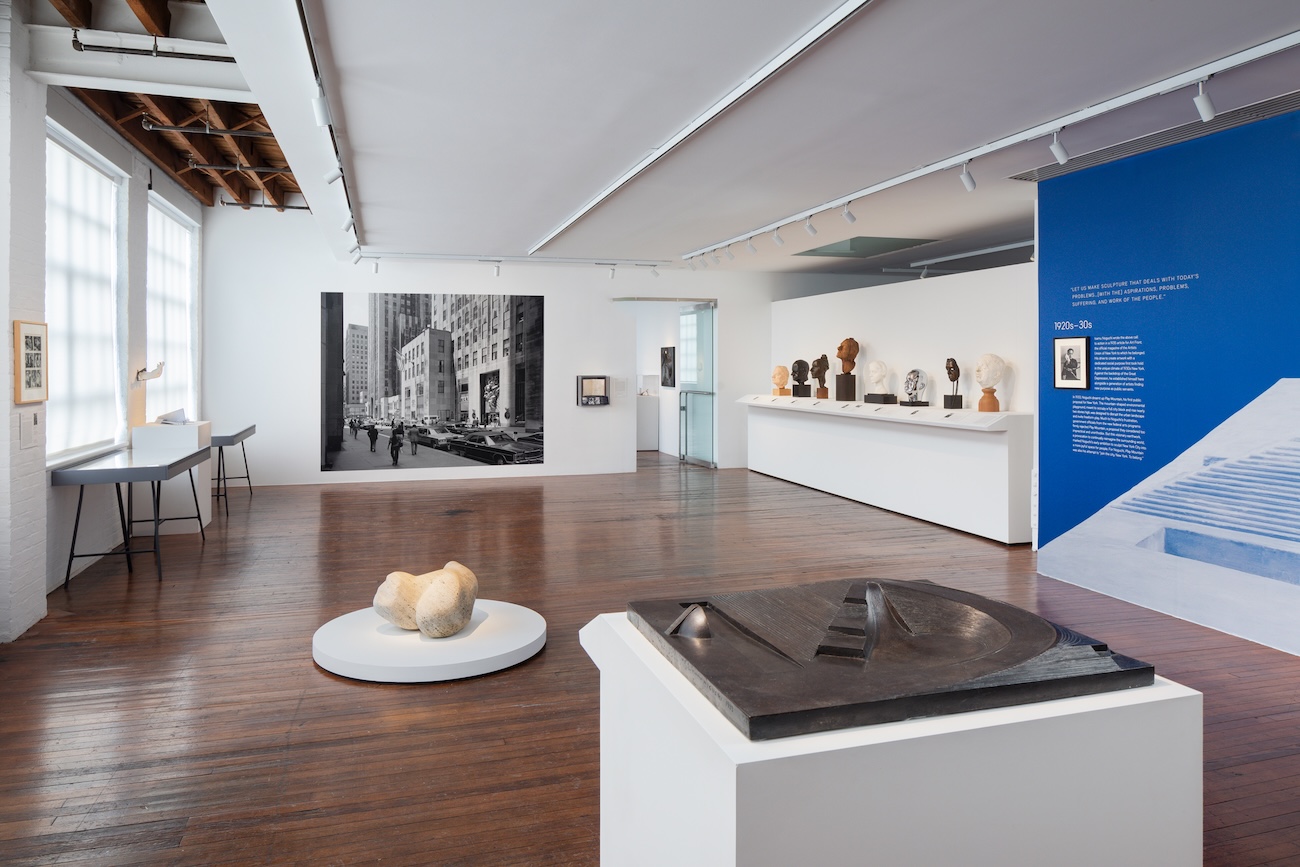
Installation view. Photo © Nicholas Knight
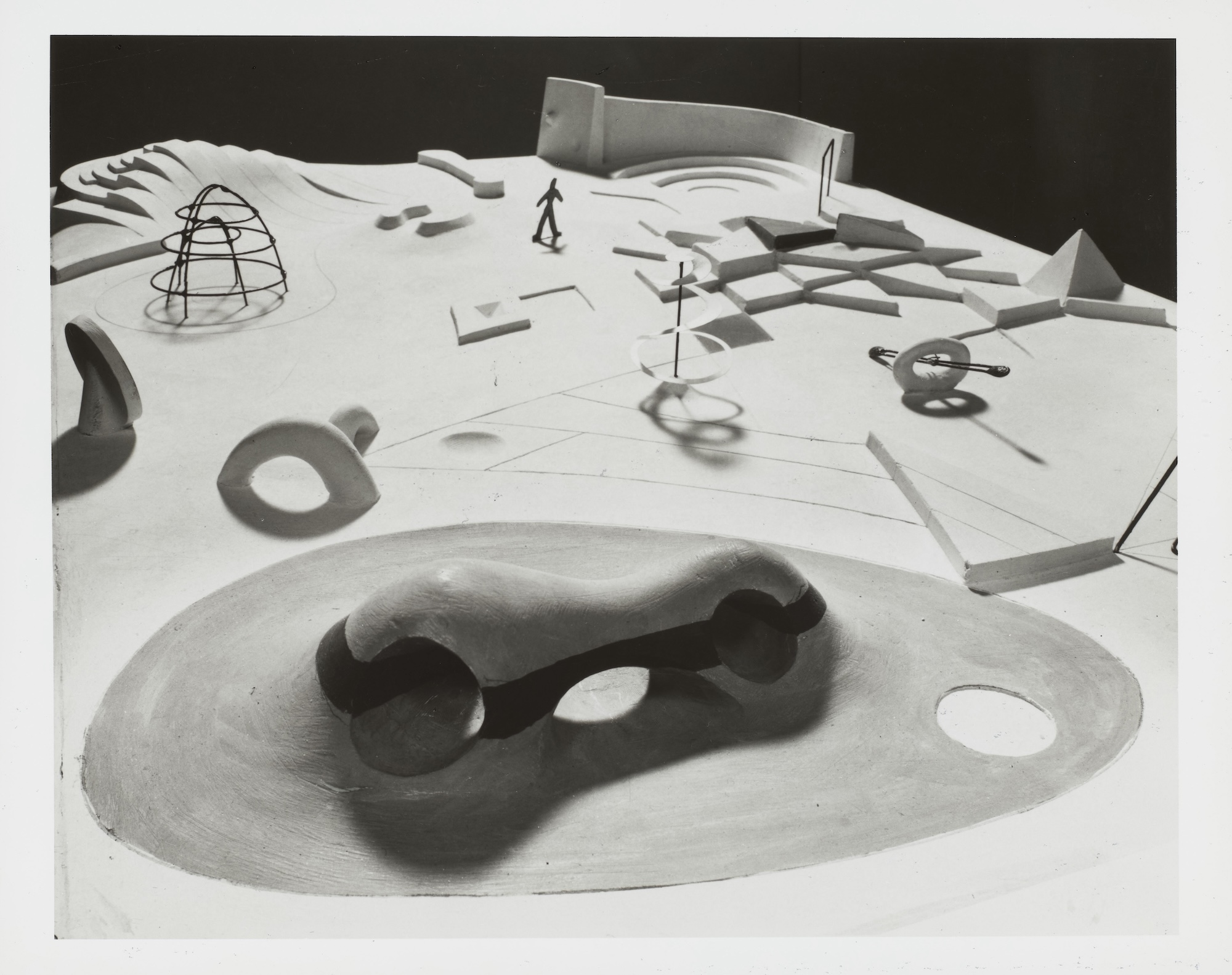
Isamu Noguchi, Model for United Nations Playground, 1952. The Noguchi Museum Archives, 152041. Photo © The Isamu Noguchi Foundation and Garden Museum, New York / Artists Rights Society (ARS)
Models of his unrealized proposals for the New York City Department of Parks & Recreation assume a central role in the exhibition. Play Mountain (1933), Noguchi’s first scheme for the city, was to take up an entire city block in Manhattan. The sloping structure was swiftly rejected by then-parks commissioner Robert Moses, who would go on to foil many more of Noguchi’s plans. Less than a decade later, Noguchi would pitch the Parks Department play structures—perhaps the most conventional of his submissions—which were spurned on the grounds of them being unsafe for children. In a defiant move, Noguchi followed up with Contour Playground (1941), as there was no part of it a child could fall off. In the early 1950s, Noguchi submitted another curious plaza for the United Nations playground competition. Moses’s animosity toward the design was so great that he threatened to order the Parks Department not to maintain it if it was eventually built.
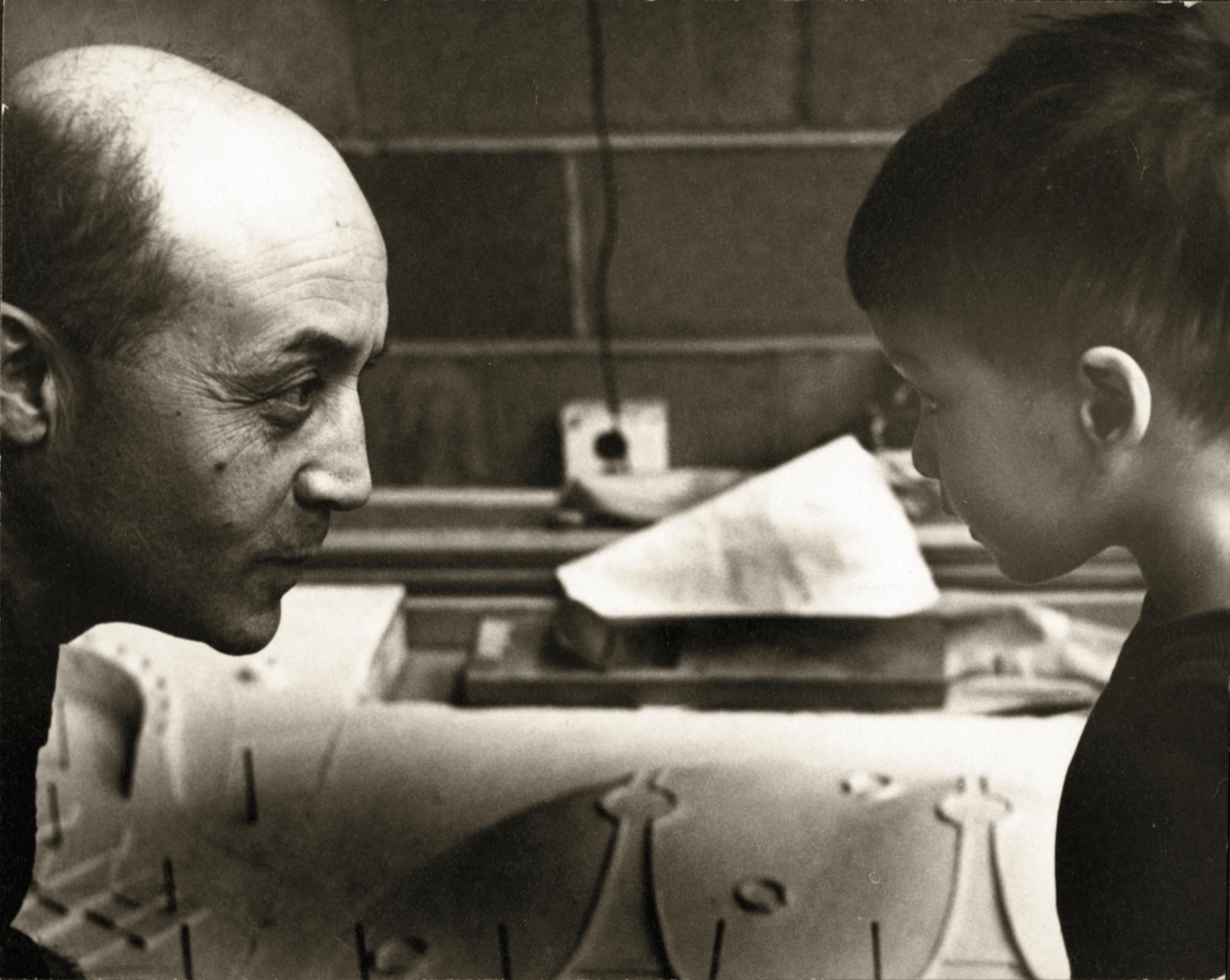
Isamu Noguchi and a child with Riverside Park playground model, 1961. Photo by Ruiko Yoshida. The Noguchi Museum Archives, 06284. © The Isamu Noguchi Foundation and Garden Museum, New York / Artists Rights Society (ARS)
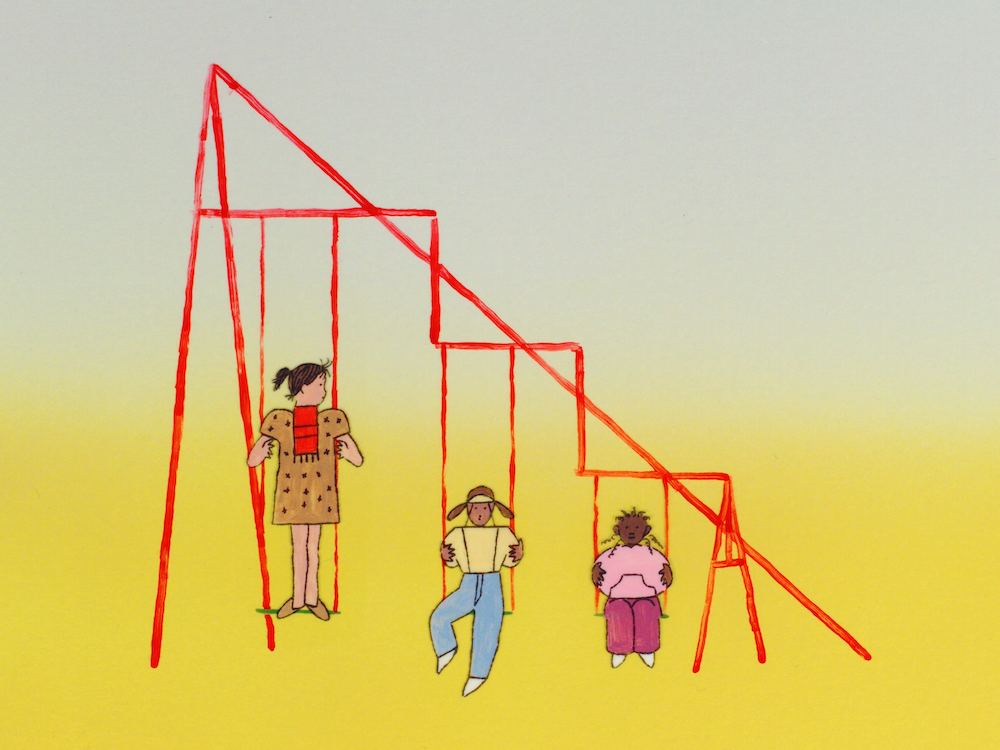
Still from animated film inspired by Noguchi’s playground equipment, directed by Nicolas Ménard & Jack Cunningham, Eastend Western. Courtesy the Noguchi Museum
“Like a lot of New Yorkers, I was one of those bitten by some kind of an idealism,” reads a Noguchi quote displayed on a wall near the exhibition’s entry. His idealism pulsates through the retrospective. Rejected time and time again by the city, Noguchi still worked to bring his fertile imagination to its streets. New York City may never get to host his sublime playscapes, but one hopes we can carry forth his optimism.
Looking for a reprint of this article?
From high-res PDFs to custom plaques, order your copy today!