Continuing Education: Newhouse Replacement Building
Olympia, Washington
Architects & Firms
The Washington State Capitol complex in Olympia has a spectacular and uniquely Pacific Northwest setting. Situated on a bluff above downtown, and with distant views of Mount Rainier and the Olympic Mountains as a backdrop, it overlooks a man-made lake at the southern base of Puget Sound. The campus’s historic western half, built starting in the 1920s, has mostly neoclassical structures, with a master plan designed by architects Wilder and White and the Olmsted Brothers. The buildings and the grounds were conceived to work together, to establish axial views, expansive lawns, and diagonal roadways, with more naturalistic wooded edges.
Within this sensitive context, the Miller Hull Partnership has recently completed the nearly 60,000-square-foot Irving R. Newhouse Building, the first structure added to this part of the campus, a National Historic District, in nearly 70 years. The new LEED Platinum building, which houses the offices of the state senate, is crisply modern but sympathetic to its more traditional neighbors, while delivering exceptional environmental performance. “We were very focused on making sure the building was the best one for this time and place,” says Nick Clesi, Miller Hull project architect.
The structure replaces a 1934 edifice also called the Irving R. Newhouse Building (both were named after the state legislator and farmer who died in 2001). The original, a brick- and sandstone-clad concrete structure, suffered from chronic water intrusion and mold, had outdated systems, tight column spacing, and, at 25,000 square feet—less than half the size of the new building—was too small for current needs. Notably, the old Newhouse Building was also seismically inadequate, lacking what Tony Mason, a principal at Lund Opsahl, the project’s structural engineer, calls an “intentional lateral system.” The team explored the possibility of renovating and expanding the then nearly 90-year-old structure, but, given its deficiencies, they ultimately determined that replacement was the best option.
The new building is part of a multiphased and ongoing modernization of the historic western campus intended to address overcrowding and life-safety issues, while enhancing sustainability. The project includes the renovation and expansion of the midcentury modern Joel M. Pritchard Building and upgrades to the 1940 John L. O’Brien Building, both of which provide office space for the state House of Representatives and other legislative-support groups, and are expected to be completed this year. Still in the early planning phases is the replacement of the complex’s antiquated natural gas–fired central plant and its steam-distribution network with an all-electric, heat pump–based system that will capture and share waste heat between buildings.
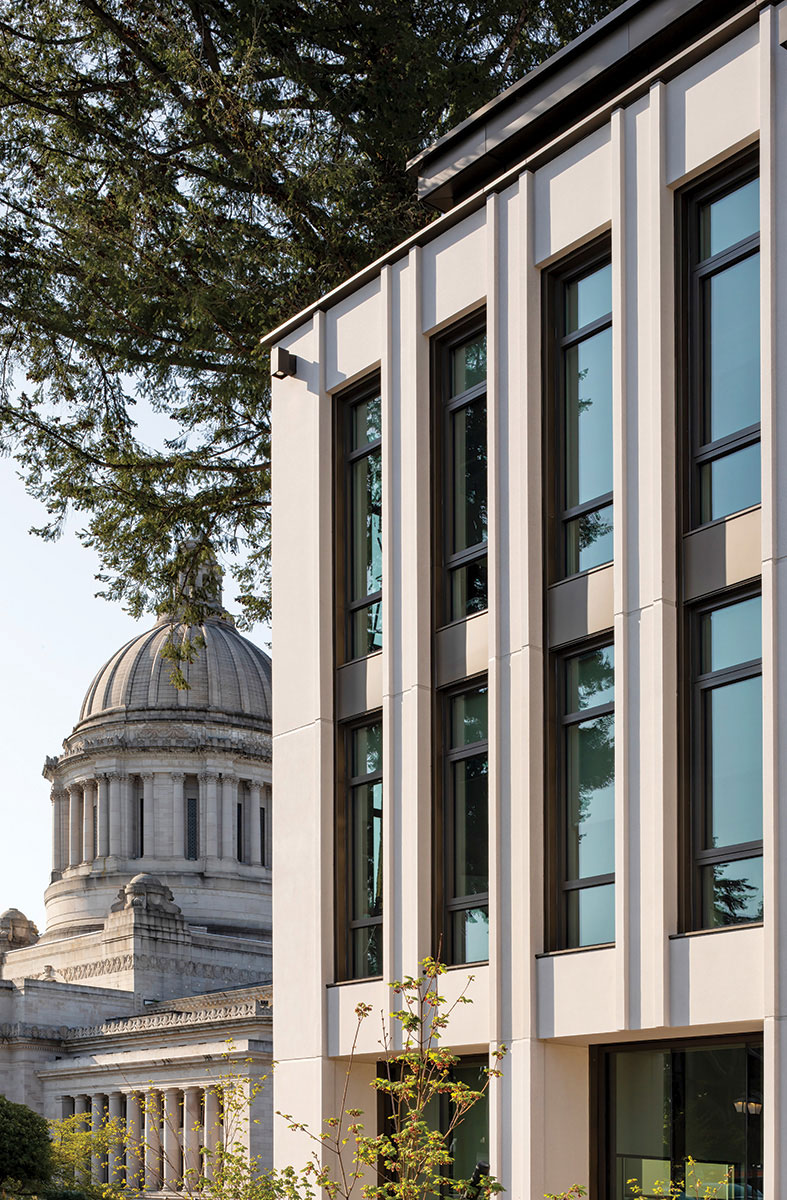
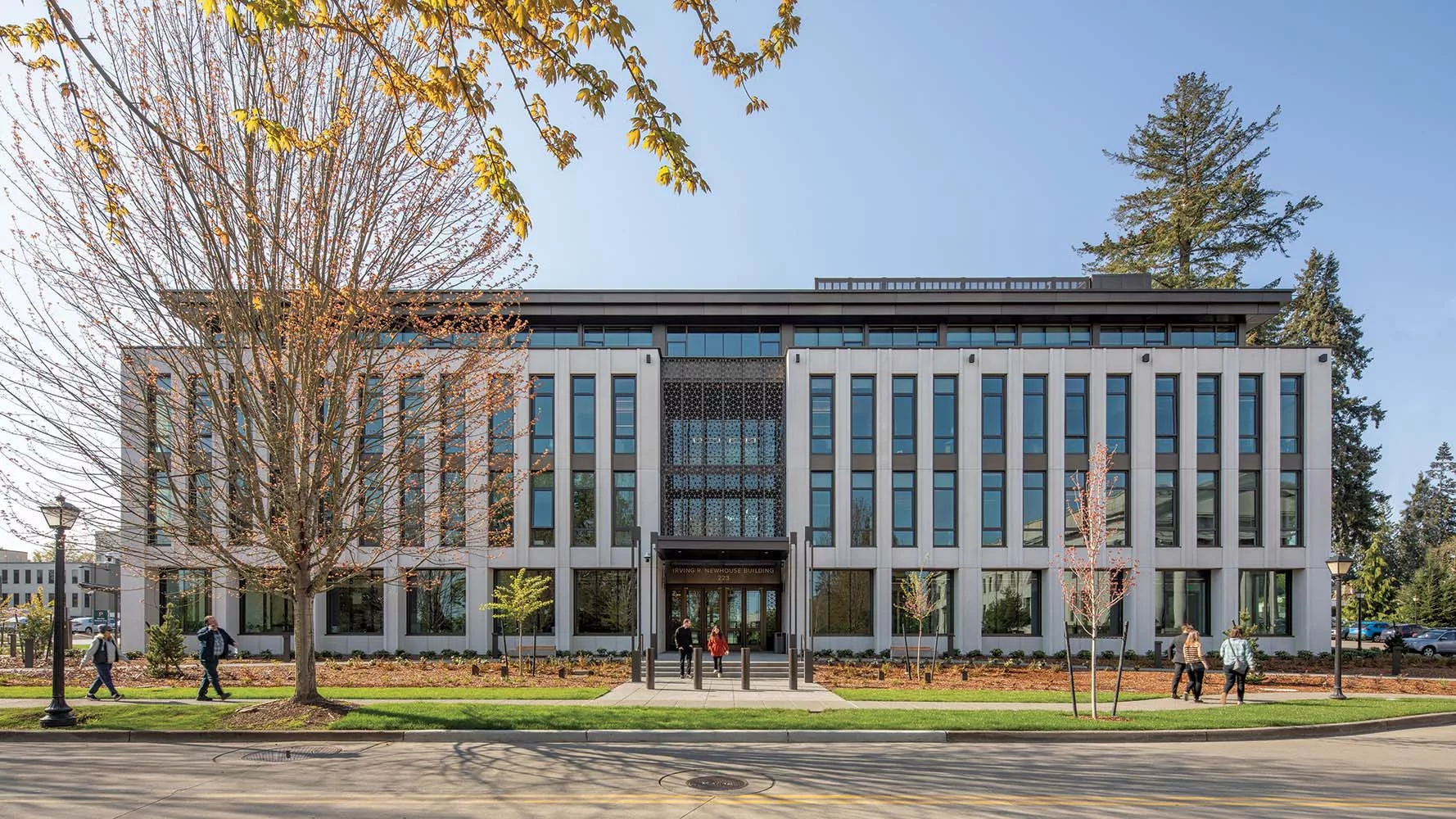
Newhouse (top of page), which has a symmetrical form and central entry, takes its cues from the historic structures on campus, including the Legislative Building (above, at right in background). Photo © Lara Swimmer / Esto, click to enlarge.
Many of the goals for the Newhouse project were spelled out by legislative statute, including those pertaining to aesthetics. The 2021 bill called for “a building facade similar to the American neoclassical style . . . expressed in modern construction methods . . . so that it will fit with existing legislative buildings.” Though the architects’ response is decidedly contemporary, with a flat roof and careful minimalist detailing, it clearly is the result of close study of its neighbors. The new four-story structure is highly symmetrical, with a rectangular footprint and a central entry. It is clad in vertical precast panels whose color, proportions, and rhythms take their cues from the historic colonnaded facades nearby. But, at the same time, by omitting such features as an elevated podium and providing generous glazed openings at ground level, Miller Hull has made its building welcoming and transparent.
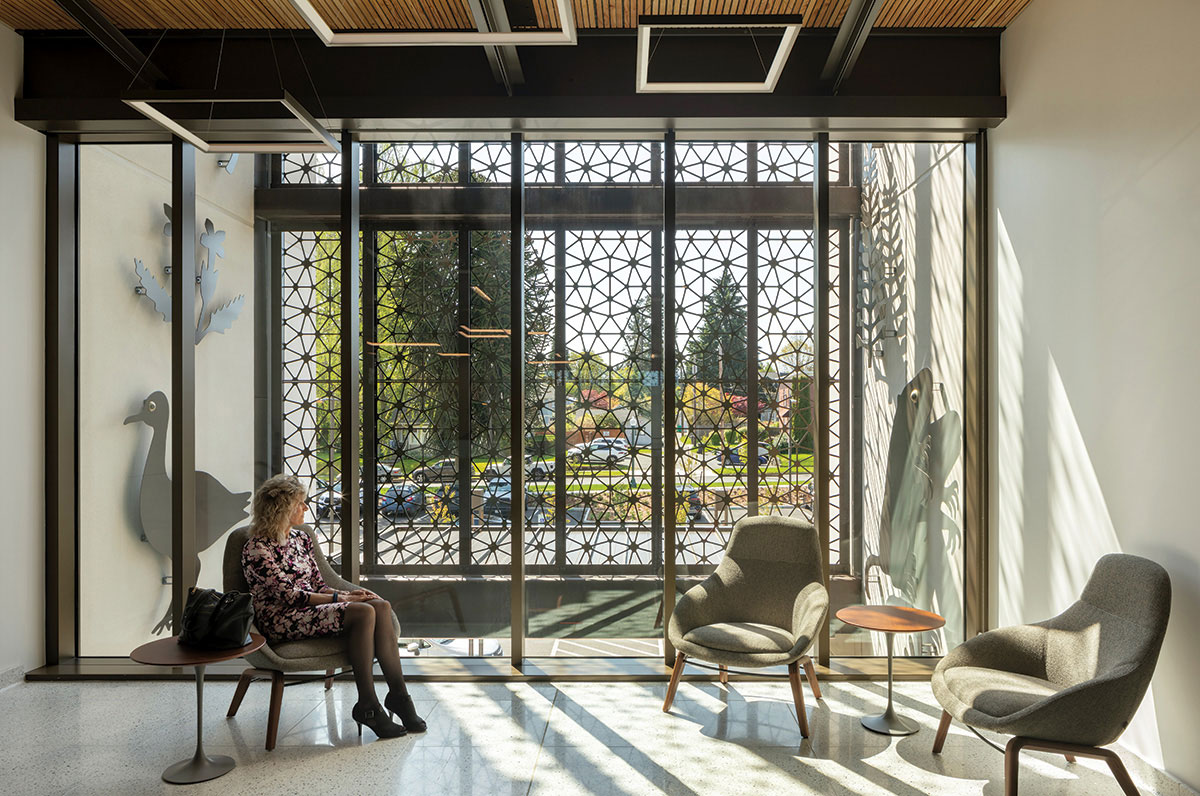
Within, senate suites, caucus offices, public meeting rooms, and gathering areas are organized around the “mixing chamber”—a dramatic skylit stair and adjacent lobbies intended to foster spontaneous interaction and informal collaboration.
1
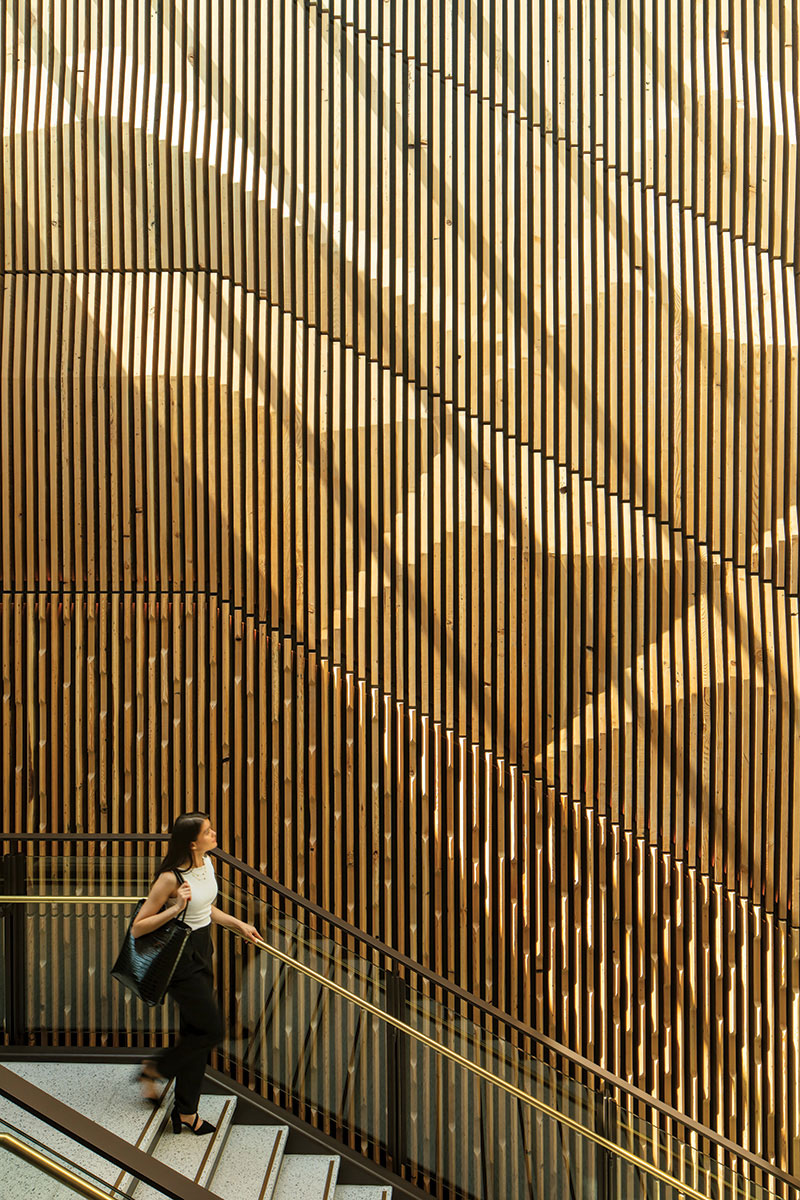
The mixing chamber includes informal collaboration spaces (1) and a sculptural wall made of lumber reclaimed from two buildings formerly on the site (2). Photos © Lara Swimmer / Esto
2
To support this spatial configuration, the designers first explored the possibility of an all mass-timber structure, drawn to the material for its environmental attributes and because such a scheme would showcase an important regional industry. However, engineers soon determined that complying with the client’s blast-resistance requirements and protecting against progressive collapse would entail reinforcing some elements. The first-floor columns and the second-floor beams at the perimeter would have needed to be encased in a more robust material, explains Mason. Going that route would mean “additional cost without programmatic or architectural gain,” he says.
Looking for quick answers on architecture and design topics?
Try Ask RECORD, our new smart AI search tool.
Ask RECORD →
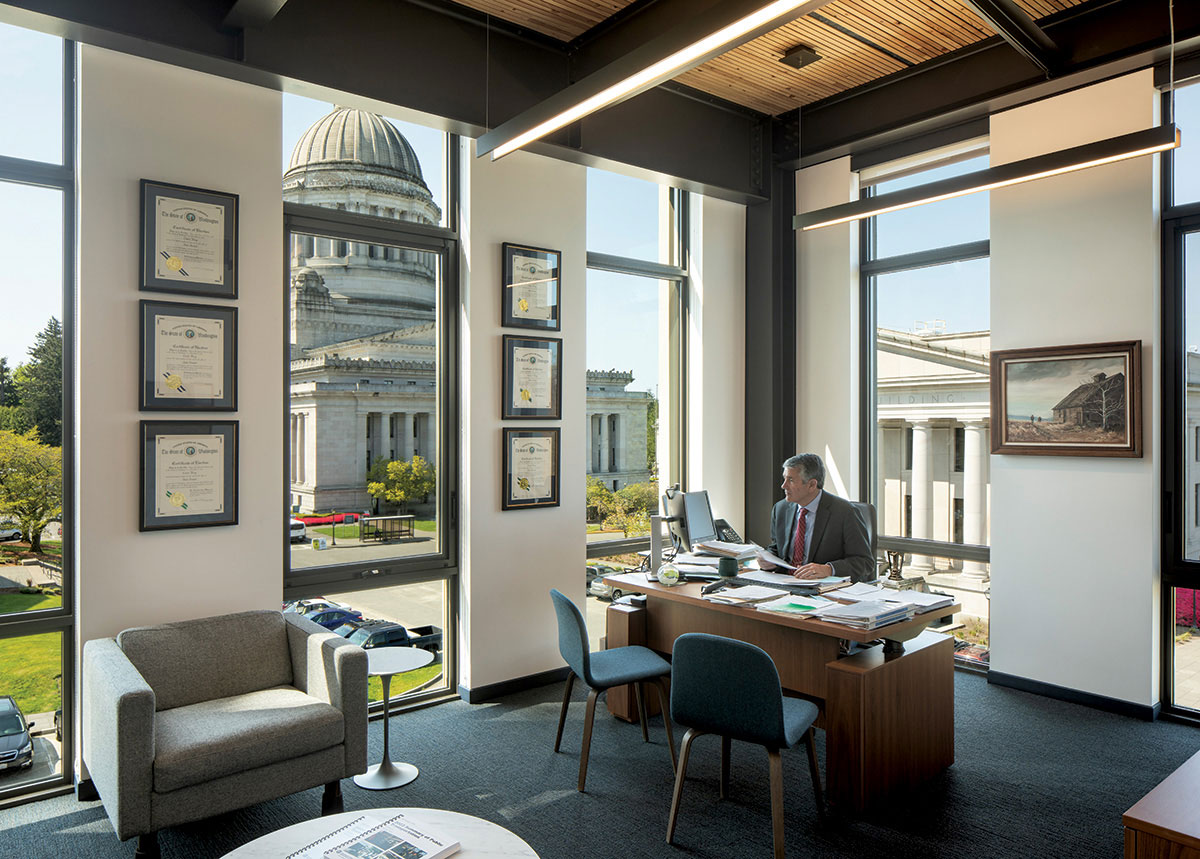
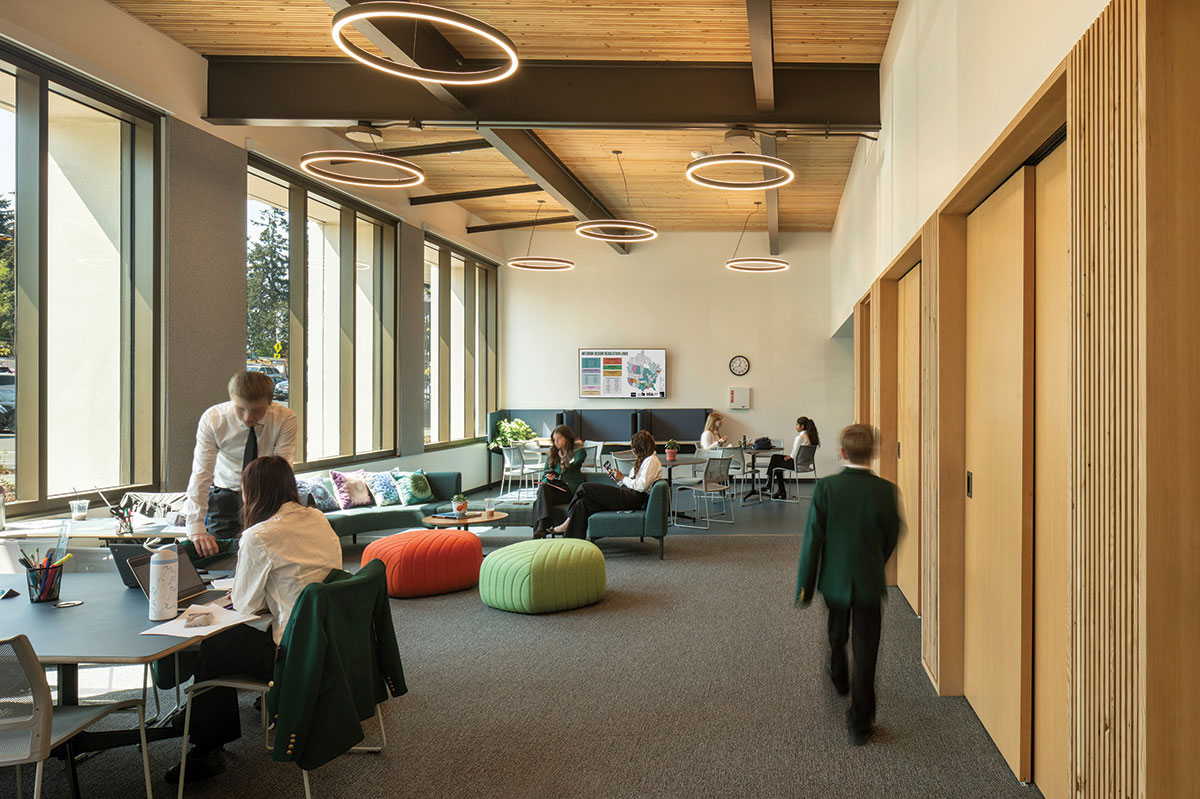
Instead, the team opted for a structural system that combines dowel-laminated timber (DLT) floor slabs (a glue-free panel assembly made by stacking dimensional lumber and friction fitting it together with hardwood dowels) and steel columns and beams, with buckling-restrained braces providing seismic reinforcement. The hybrid solution results in lower embodied carbon than a typical concrete or steel structure, while the exposed timber ceilings lend the interiors a material warmth.
3
The DLT is exposed in much of the building, including offices (3) and a space for student pages (4). Photos © Lara Swimmer / Esto
4
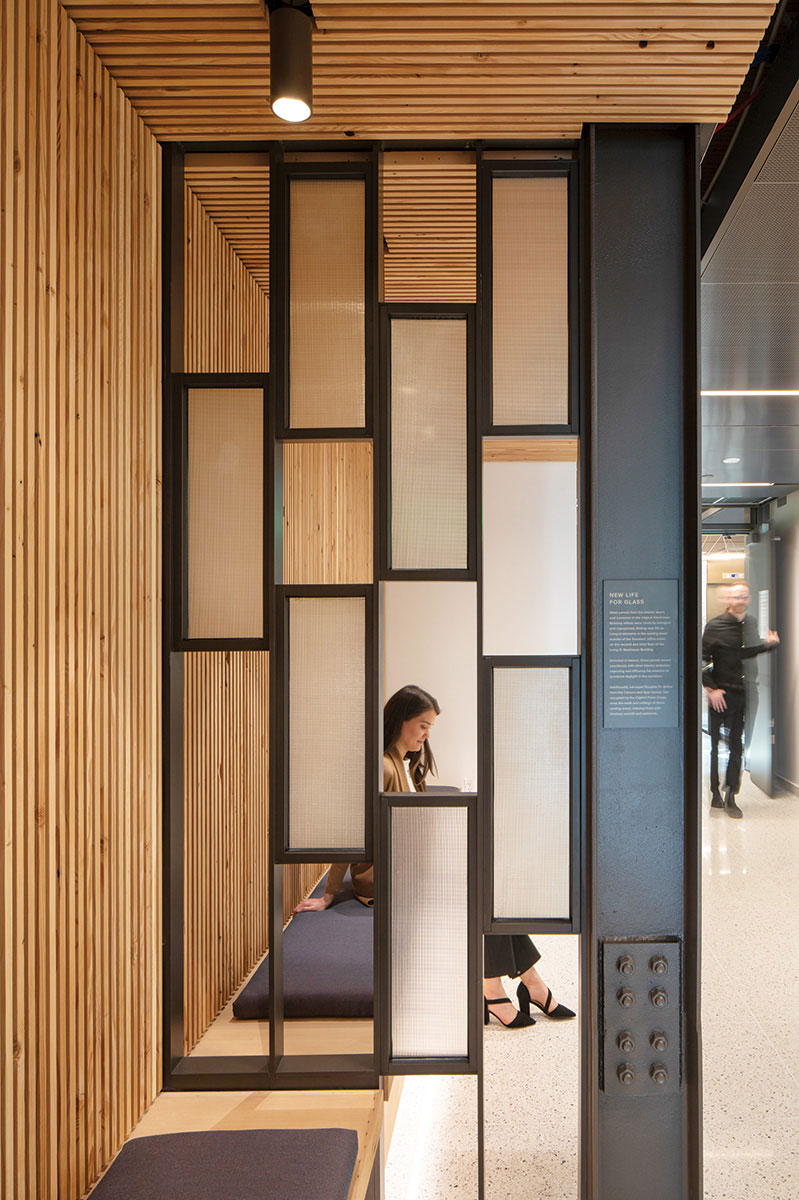
Glass salvaged from the old Newhouse is used in waiting-area partitions. Photo © Lara Swimmer / Esto
Other strategies for reducing embodied carbon include the reuse of materials recovered from the demolition of the original Newhouse and from two wood-framed buildings—once home to the capitol press corps—removed to make way for the project. Textured glass salvaged from the old Newhouse’s interior transoms and doors has been incorporated into waiting-area partitions outside senators’ offices, while the old-growth Douglas fir reclaimed from the press corps buildings was used to create a striking feature wall in the mixing chamber that extends the full height of the building. The lumber was milled into undulant strips and assembled to create sculptural panels inspired by the state’s varied topography. As occupants ascend through the space, the installation’s patterns—highlighted by the skylight above—shift and transform. Also salvaged from the first Newhouse Building was its Wilkeson sandstone cladding. The Washington State–sourced material, which is no longer actively quarried, has been stockpiled for future repairs to those historic structures.
New materials were also specified with an eye toward minimizing their environmental footprints. For instance, the global warming potential (a measure of a product’s greenhouse gas emissions over its life cycle) of the facade’s precast-concrete panels is 20 percent lower than that of standard precast, says Clesi. The reduction is due in part to the particular combination of admixtures in the concrete, including fly ash (a by-product of coal combustion), but also to the panels’ thinness, he says. Each panel is 4 inches thick—a dimension deemed the minimum for stability and durability and determined, in collaboration with the manufacturer, after an extensive research and mock-up process.
Carbon reduction was not the only materials-selection criterion. As it does on all its projects, Miller Hull also vetted building components for Red List chemicals—those that are considered harmful to human health or the environment but are commonplace in building products. Of note is the building’s DLT floor panels, which feature sound-absorbing insulation between their laminations. Typically, this insulation is made of fiberglass that contains formaldehyde. But the architects worked with the panels’ supplier to find an alternative, ultimately opting for inserts of formaldehyde-free recycled polyester.
Operating energy was another important focus, with performance thresholds established by the same law that mandated stylistic compatibility with the existing campus. The legislation called for a “net-zero-ready” building with an energy use intensity (EUI) not to exceed 35 kBtu per square foot per year. (Net zero–ready generally refers to an exceptionally efficient structure designed to such high performance standards that it would be able, with the future addition of renewables, to produce as much energy as it consumes). Newhouse, an all-electric building, achieves an impressive EUI of 24—significantly lower than required by statute and a reduction of 75 percent compared to a baseline building (a standard office building of similar size and program in this region). The design team accomplished this with such integrated strategies as air-source heat pumps with hydronic distribution and heat recovery, a building orientation that optimizes daylighting, and an ultra-insulated and tight envelope with an air-infiltration rate of only 0.053 cfm/ft2 @ 75 pascal—exceeding Passive House standards. The strategy allows for downsized systems and has the added benefit of helping to keep the exposed mass-timber ceilings free of the clutter of ductwork, points out David Mead, head of the regenerative-design group at PAE, the project’s mechanical engineer.
The project already features a 90kW rooftop photovoltaic (PV) array, which supplies 20 percent of energy demand. Including the PVs in the efficiency calculus brings the EUI down further, to 19. If an additional array were installed over an adjacent surface parking lot, the building could readily operate at net zero. The design team has oversized the electrical room to prepare for that eventuality, says Clesi. Infrastructure is also in place, should the client decide in favor of it, to connect Newhouse to the new central plant at some point in the future.
Given the significance of the capitol complex’s Olmsted Brothers–designed grounds, the landscape surrounding the new building was critical to the success of the project. Contractors saved a stately Douglas fir immediately to the west of Newhouse that predates the Olmsted Brothers plan, carefully protecting its root system, and monitoring its health throughout construction. To the east of the building, the project’s landscape architect, Murase, added an edible garden, including species that attract birds and other pollinators. The firm coordinated with civil engineers to create bioswales planted with native vegetation to treat and infiltrate stormwater runoff. The designers also extended low-lying native ground cover—including sword ferns, salal, Mahonia, and snowberries, already growing below an existing stand of trees at the site’s northeast corner—throughout the project’s landscape. The idea, says Mark Tilbe, Murase principal in charge, was to maintain sightlines and make the building welcoming, to legislators as well as visitors.
The sense of openness and generosity that Tilbe highlights is what most people will notice about the project. While the Newhouse Building addresses critical environmental issues, delivering remarkable performance, the integrated features that made it possible, and the care and effort behind them, will be invisible to most. This—paradoxically perhaps—is the project’s true achievement. “The building is highly efficient and decarbonized, but you wouldn’t really know,” says PAE’s Mead. “It’s just good design.”
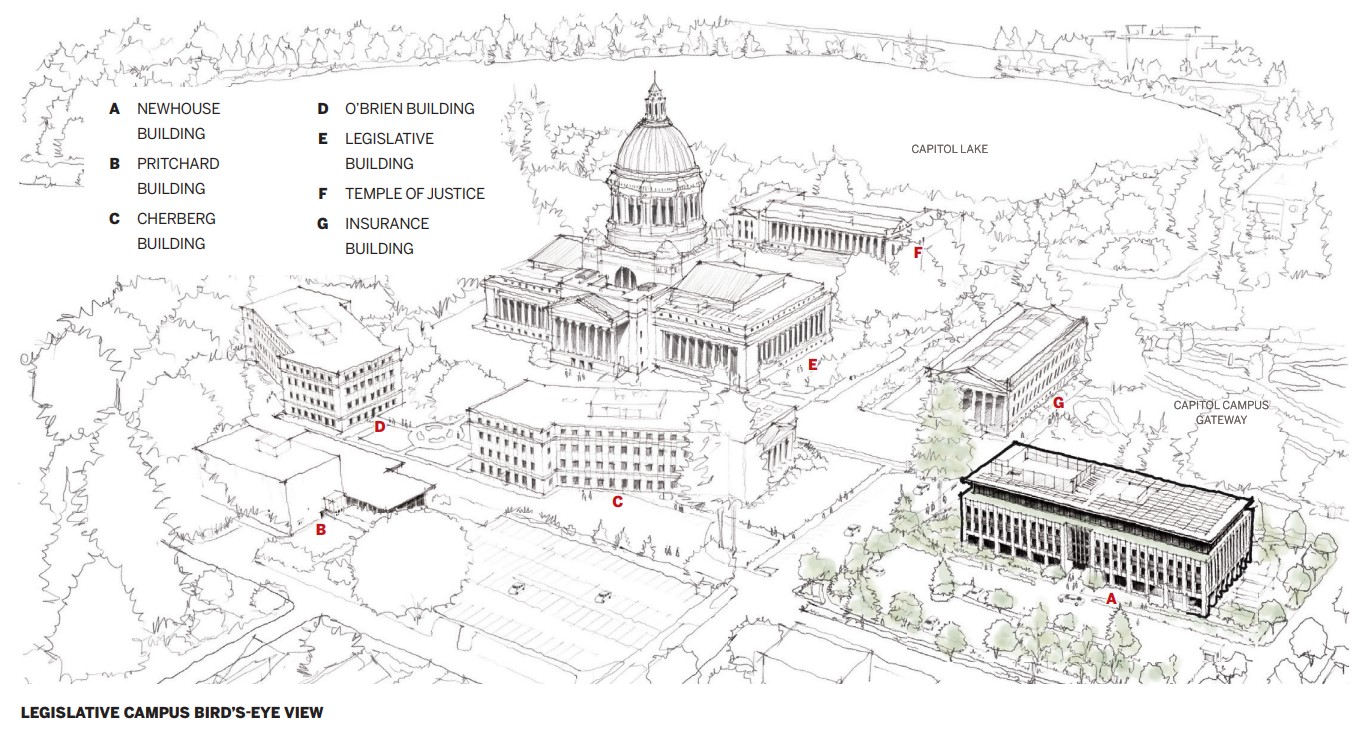
Image courtesy Miller Hull Partnership
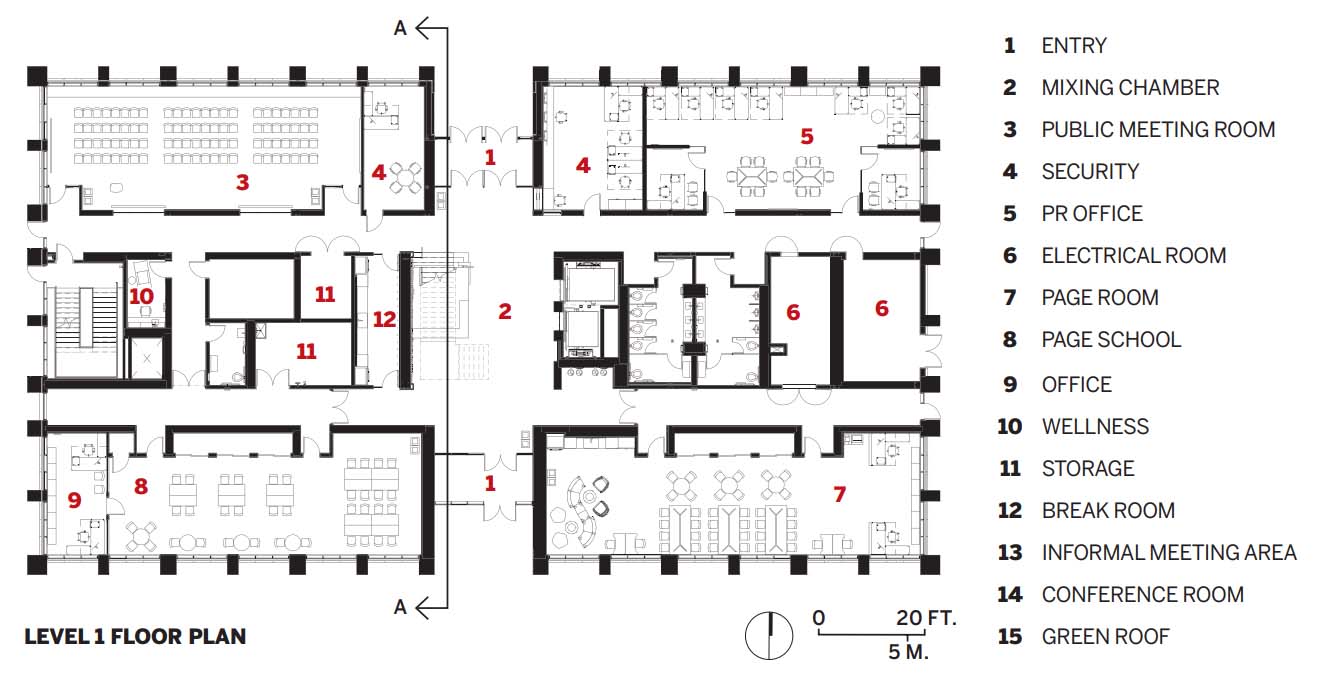
Image courtesy Miller Hull Partnership
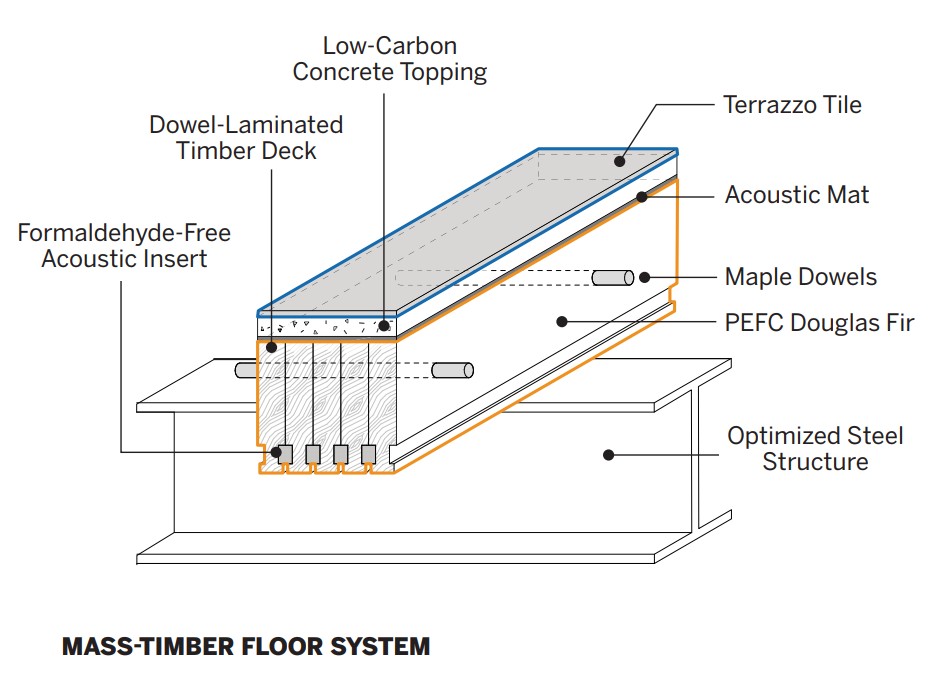
Image courtesy Miller Hull Partnership
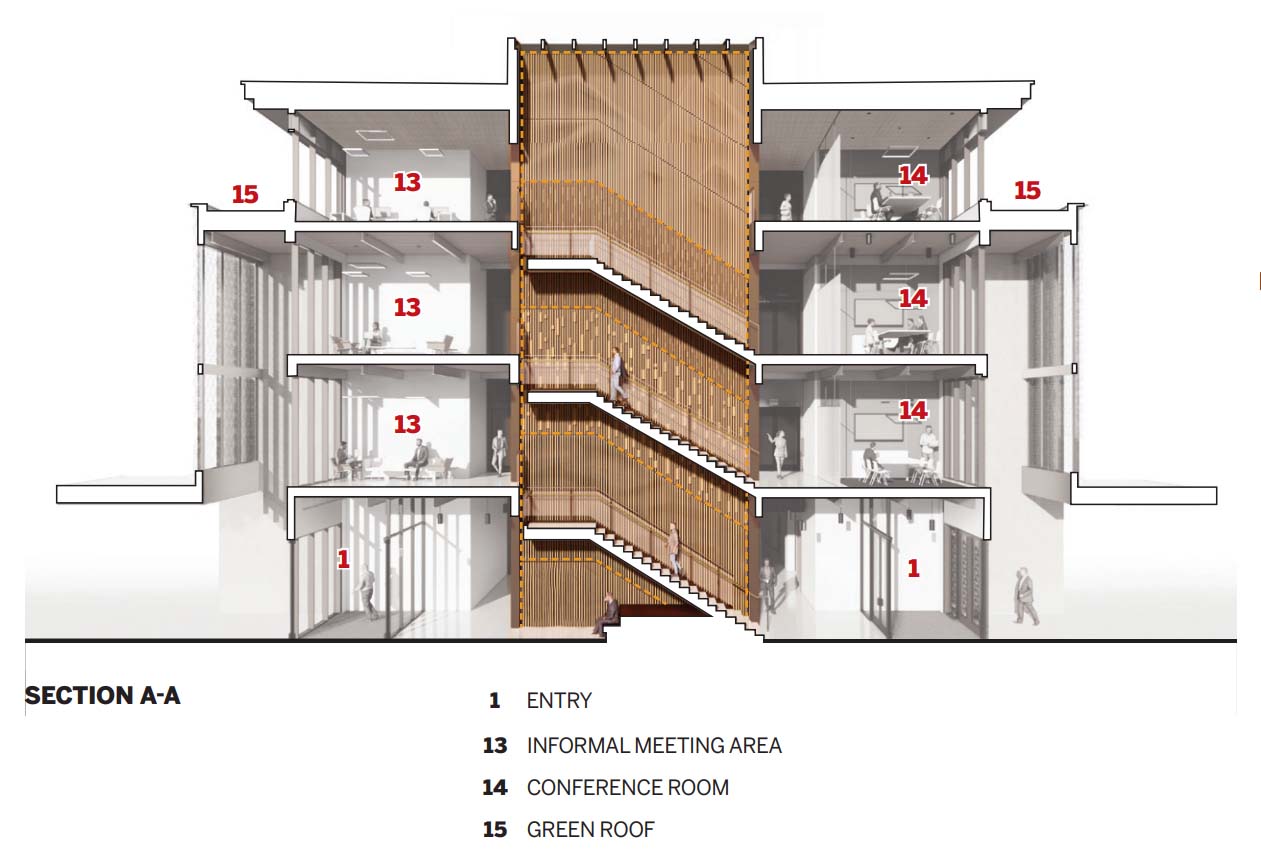
Image courtesy Miller Hull Partnership
Credits
Architect:
Miller Hull Partnership — Ron Rochon, Sian Roberts, Ruth Baleiko, Nick Clesi, Cristine Traber, Japneet Pahwa, Alex Dallas, Claire Fontaine, Tahmina Arjona, Jennifer Stormont, Tania Martinez, Steve Doubs, Marjorie Anderson, Chris Hellstern, Wojtek Szczerba, Rio Namiki, Alex Wolfrum, Chris Grammens, Mat Albores, Olivia Backer
Consultants:
Lund Opsahl (structural); Reid Middleton (civil); PAE Consulting Engineers (MEP); Murase Associates (landscape); 4EA Building Science (envelope); Darklight Design (lighting); BRC Acoustics (acoustical); BuildingWork (historic preservation)
General Contractor:
Hoffman Construction
Client:
Department of Enterprise Services
Size:
59,010 square feet
Cost:
$80.4 million (construction)
Completion:
December 2024
Sources
Dowel-Laminated Timber:
DowelLam
Structural Steel:
McClean Iron Works
Later Bracing:
CoreBrace
Metal Panels:
Keith Panel System
Curtain Wall:
Kawneer
Precast Concrete:
Northwest Concrete
Moisture Barrier:
Soprema
Utility Fence:
Bōk Modern
Vegetated Roof:
Carlisle
Windows:
Cascadia
Skylights:
DeaMor
Doors:
Oregon Door, Modernus
Hardware:
Assa Abloy, Allegion, Dormakaba, Bosch, Pelco, 2N, Genetec, Nabco, Horton
Acoustical Ceilings:
9Wood, Armstrong
Wallcoverings:
FSorb
Plumbing Fixtures:
Kohler, Sloan, Elkay
Continuing Education

To earn one AIA learning unit (LU), including one hour of health, safety, and welfare (HSW) credit, read the article above and watch the three videos below. Then complete the quiz.
Upon passing the quiz, you will receive a certificate of completion, and your credit will be automatically reported to the AIA. Additional information regarding credit-reporting and continuing-education requirements can be found at continuingeducation.bnpmedia.com.
Learning Objectives
- Define terminology relevant to low-carbon design, including “net-zero-ready” and “GWP.”
- Discuss the considerations that led the Newhouse Building design team to opt for a hybrid structural system.
- Describe the strategies for the salvage and reuse of materials deployed on the project.
- Outline the process for evaluating products and components relative to their impact on carbon emissions and human health deployed on the project.
AIA/CES Course #K2603A
Looking for a reprint of this article?
From high-res PDFs to custom plaques, order your copy today!