Tall Buildings 2026
Building with a Twist: UNS Adds a Sleek Silhouette to Dubai
Dubai
Architects & Firms
Dubai doesn’t need another showstopping skyscraper. Between overinflated Big Ben knockoffs, kitschy retro-futuristic supertalls, and the Burj Khalifa—the world’s tallest tower (for now)—the skyline isn’t short on spectacle. What it lacks is discipline: tall buildings that do more than compete for attention. The 995-foot-tall Wasl Tower approaches that challenge with restraint, pairing a streamlined silhouette with higher building performance, material efficiency, and a calibrated approach to vertical living.
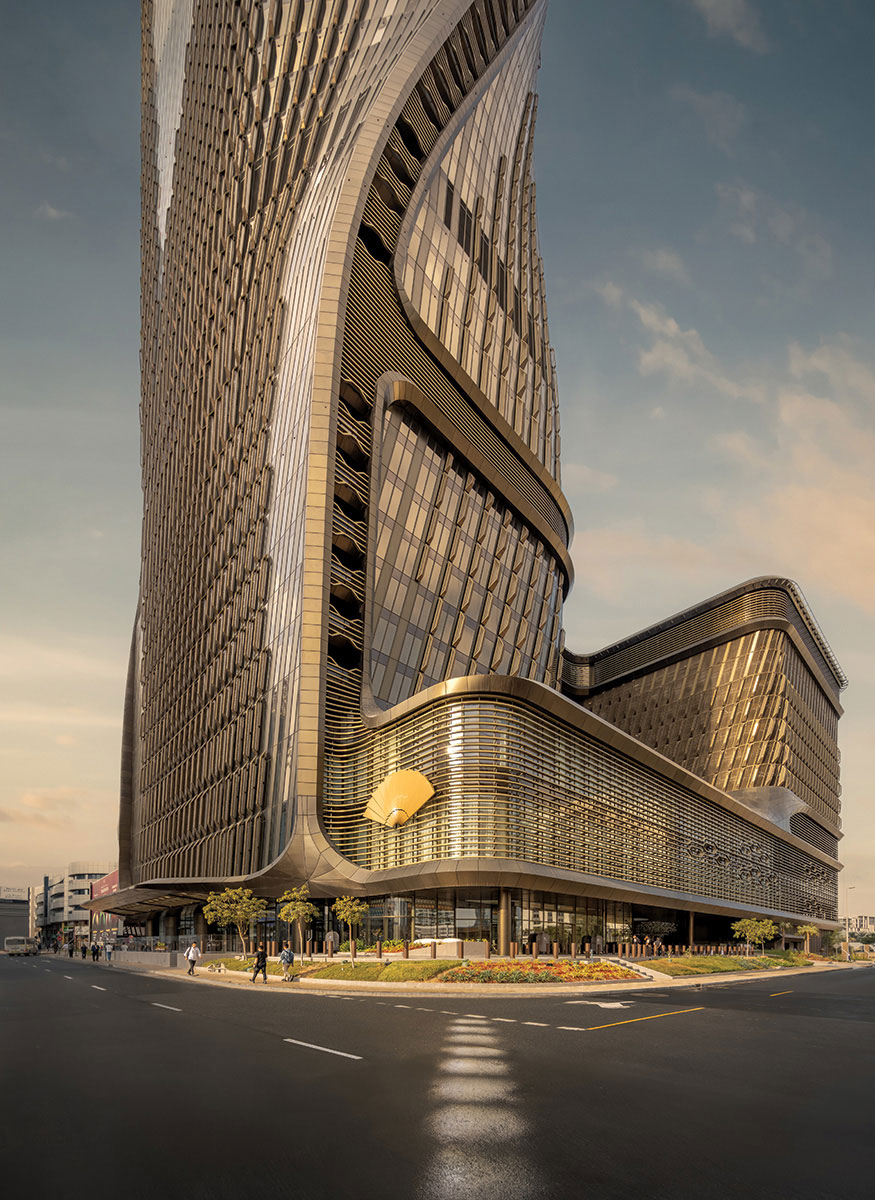
The high-rise’s form turns, its surface shifts, and its logic reveals itself gradually—less a one-liner than an edifice with what Ben van Berkel of UNS (formerly UNStudio) calls “1,001 facades.”
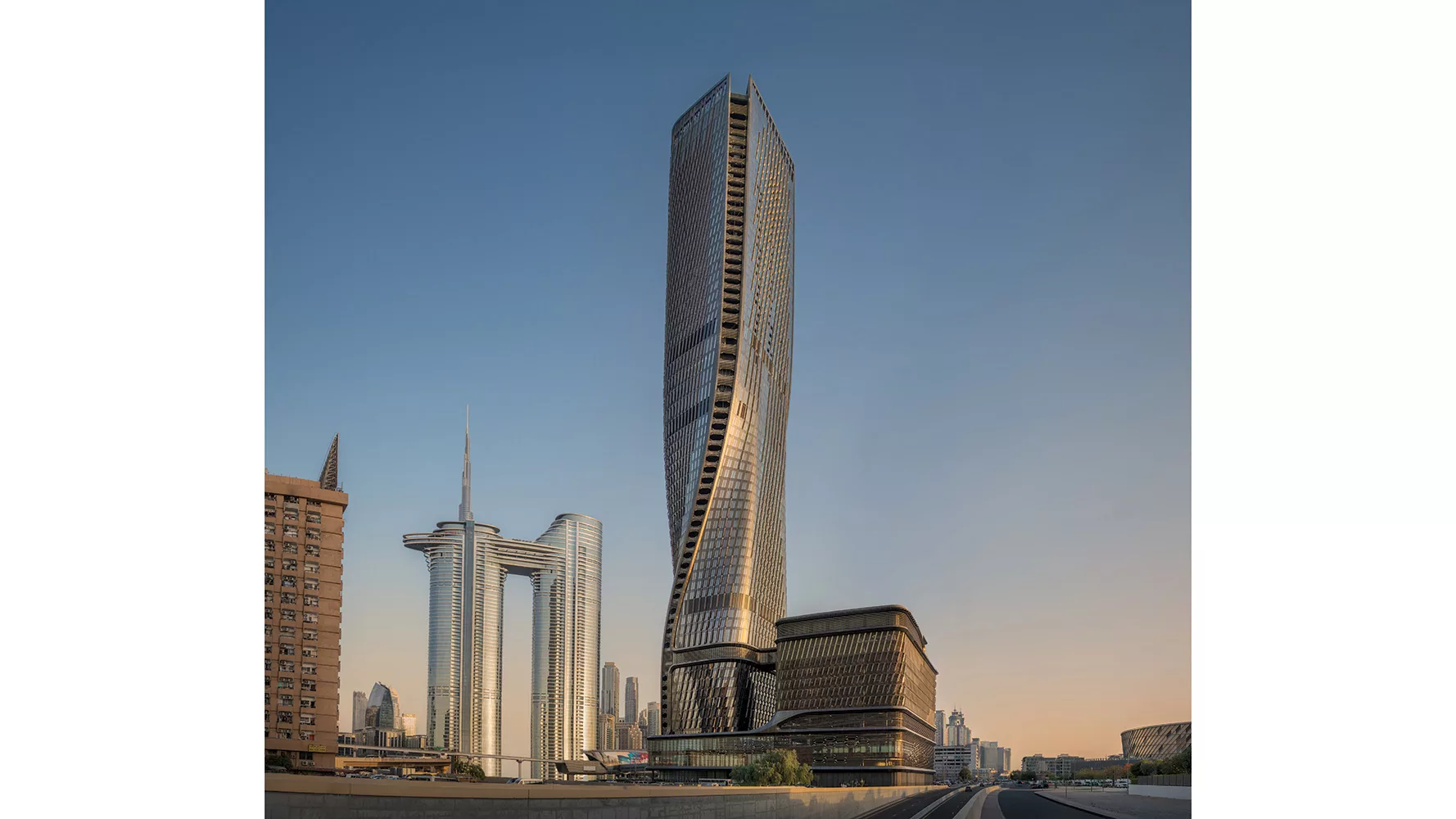
Wasl Tower, designed by UNS, shares the Dubai skyline with the world’s tallest tower, SOM’s Burj Khalifa. Photo © Ahmad Alnaji, click to enlarge.
At first glance, the building reads as a torsional volume—“a building with a twist,” in van Berkel’s words—its geometry driven by computational modeling developed in collaboration with German engineer Werner Sobek, who joined the project in 2013 before a final architectural concept had been established. Tasked with defining the technical framework and assembling the design team, Sobek brought van Berkel into the project.
Refined through solar and wind studies, the form reduces wind loads by approximately 20 percent, allowing a leaner structural frame and lower material use. The tower replaces conventional shear walls with a central core, 10 perimeter columns, and four outrigger trusses, with several columns inclined to follow the facade geometry. The result is a non-repetitive floor plate.
The building’s mixed-use program spans roughly 1.16 million square feet, combining 216 residential units, 259 hotel rooms, office space, and retail within a single vertical stack. Van Berkel organizes this density into distinct program bands: wellness facilities at lower levels, a sky bar for hotel guests, and a restaurant with panoramic views. “We are creating communities in the sky,” he says.
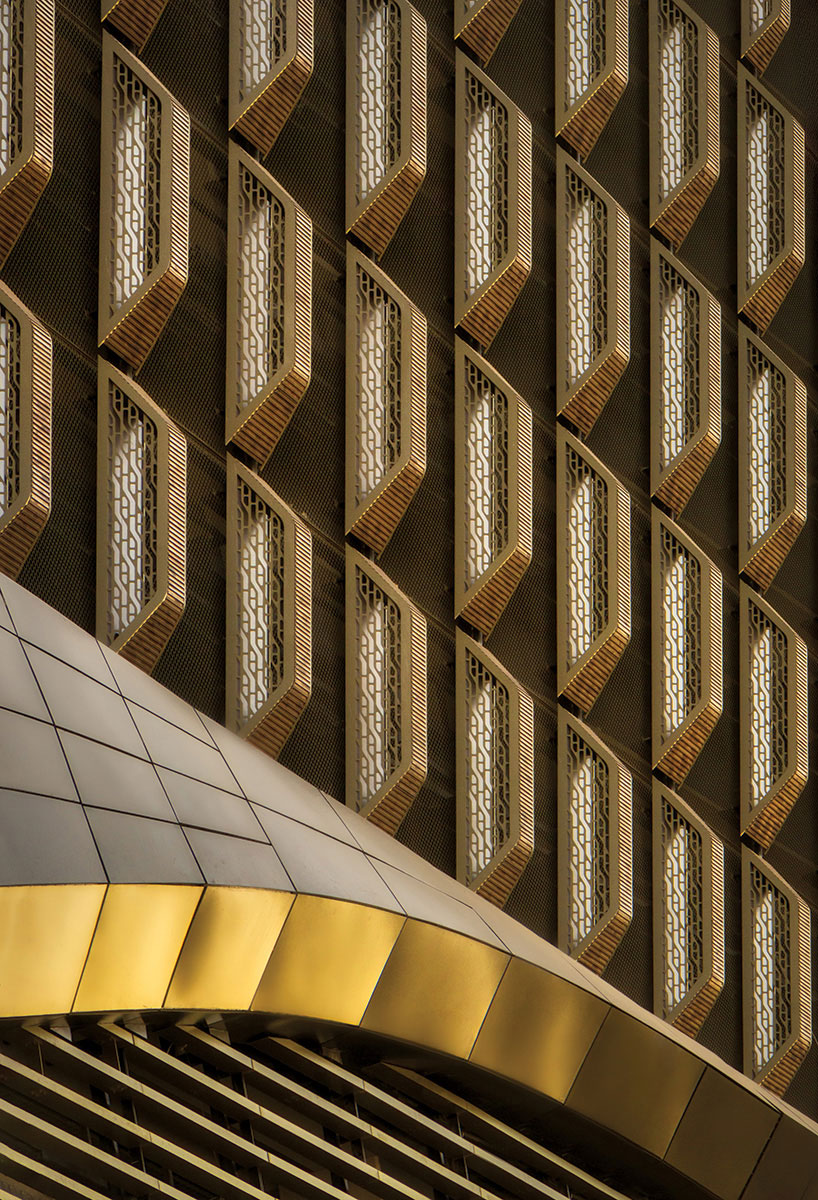
Inset balconies wrapped in a weblike lattice of steel trace the tower’s curved spine, while thousands of vertically oriented ceramic fins—ranging from approximately 13 to over 20 feet in length—articulate the facade. Parametrically tuned, the fins vary in orientation to limit solar exposure, reducing heat gain by roughly 40 percent while maintaining daylight penetration. “We wanted to have light transmission but avoid solar energy transmittance,” Sobek says.
1
2
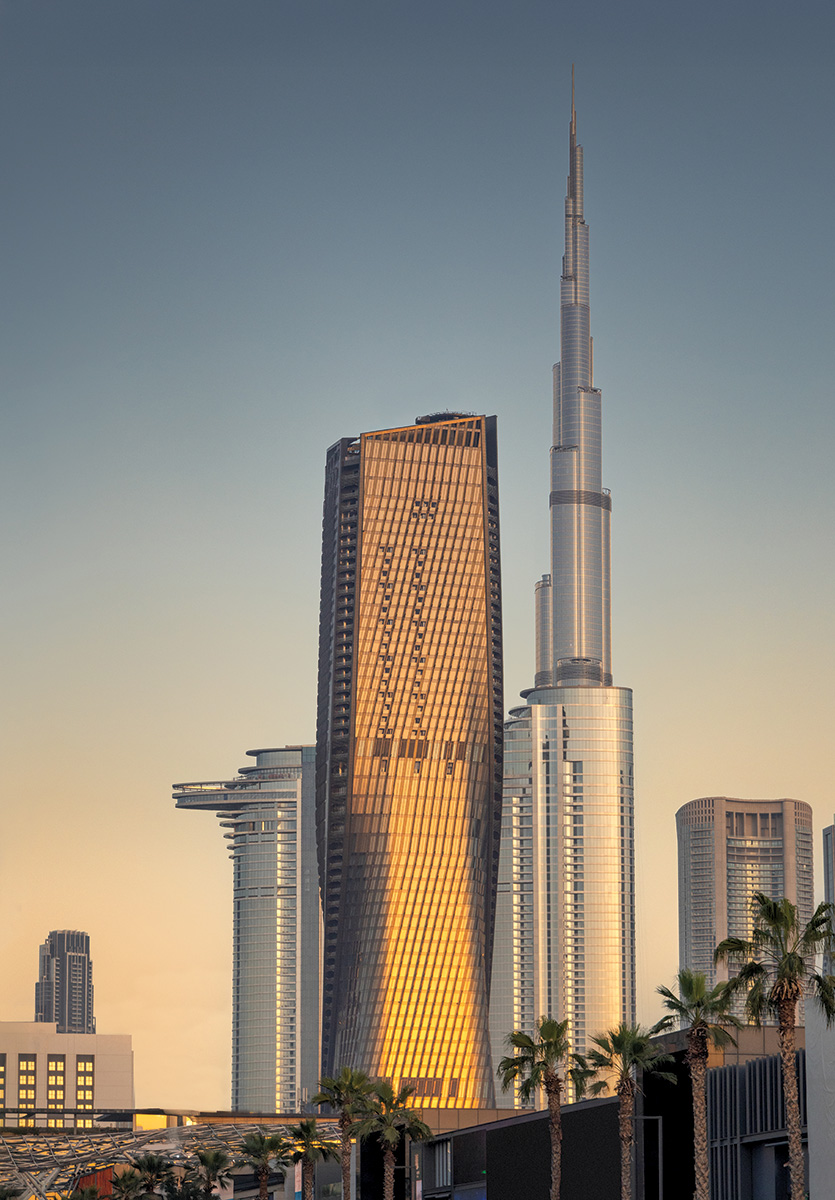
Thousands of fins (1) dot Wasl Tower’s facade, which twists from its base (2) toward the sky (top of page). Photos © Ahmad Alnaji
Grille-like slots in the fins allow air to move through the outer layer, supporting passive cooling. Combined with reflective bronze glazing calibrated to avoid color distortion, the facade reduces cooling loads in a climate dominated by air-conditioning demand.
Looking for quick answers on architecture and design topics?
Try Ask RECORD, our new smart AI search tool.
Ask RECORD →
At grade, service functions are relocated underground, freeing the perimeter and the space between the tower and its adjacent parking structure for a landscaped garden. The parking structure operates as an extension of the program, housing a 16,000-square-foot ballroom, meeting and prefunction spaces, and back-of-house areas on its lower levels. A pool deck atop the garage is bridged to the tower’s spa levels on floors 11 and 12. Stacked elevator systems—17 in total—compress the core footprint and increase usable floor area.
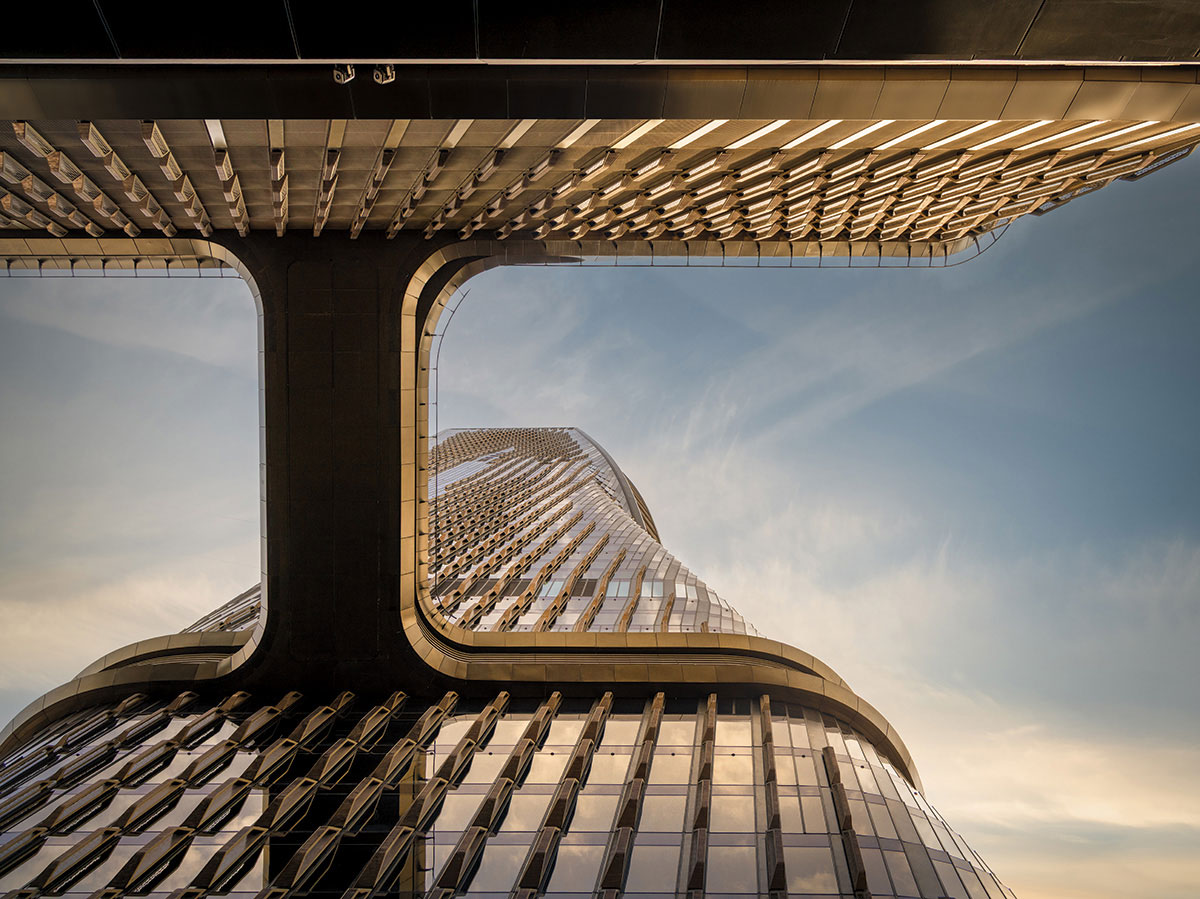
A bridge connects a lower volume to the main tower. Photo © Ahmad Alnaji
Material selection reinforces both performance and durability. The ceramic fins are coated to produce an iridescent finish that shifts throughout the day, referencing both Dubai’s pearl-diving history and the shimmering effect of oil on water. “Ceramic is a relatively simple material which can be recycled easily,” Sobek says. At Wasl, these elements eschew composites that would render future recycling more difficult.
Mechanical systems extend the environmental strategy. Heat pumps, energy-recovery systems, and CO₂-based demand control—adjusting ventilation rates based on occupancy levels—operate alongside photovoltaic and solar thermal panels integrated into the roof and mechanical floors, reducing operational-energy consumption while supporting domestic hot-water generation.
To reduce weight and embodied carbon, the design team adjusted construction methods. Drywall partitions—used throughout, including installation in residential units—replace heavier masonry, cutting floor-slab thickness by approximately 1½ inches. Across roughly 60 floors, this reduces concrete use by more than 3,900 cubic yards, equivalent to approximately 300 fewer truck deliveries.
Acoustic performance was treated as a core design parameter. Floating floors, decoupled assemblies, high-performance doors, and sound-absorbing materials—some derived from recycled PET plastic—reduce airborne and structure-borne noise, supporting a high level of acoustic comfort across residential and hospitality spaces.
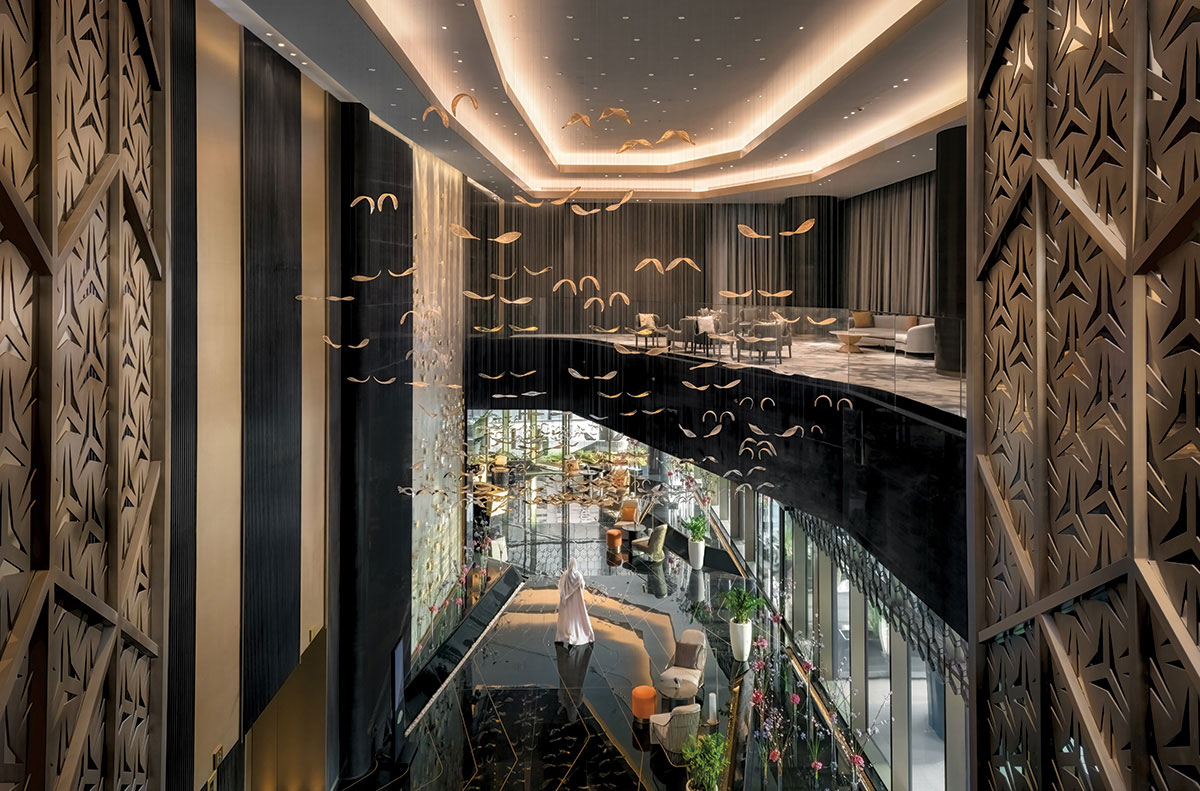
A bridge connects a lower volume to the main tower. Photo © Ahmad Alnaji
Lighting completes the envelope strategy. Arup developed the external-lighting design, including indirect facade illumination integrated within the ceramic fins and a media facade at the upper levels. In collaboration with UNS, the team created a series of programmable lighting scenarios that shift in tone and intensity, allowing the envelope to operate as both environmental system by day and responsive urban presence by night. Wasl Tower isn’t trying to outshout its neighbors, but this is Dubai, after all.
Taken together, the building’s performance gains are cumulative: reduced wind loads lower structural demand; facade shading and ventilation strategies reduce cooling energy; daylighting cuts lighting loads; and lightweight construction lowers embodied carbon.
The approach reflects Sobek and van Berkel’s ambition to build a high-rise where performance and form are not competing priorities but mutually reinforcing systems. “There’s a lot of work required to have an integrated solution where material minimization and energy reduction go hand in hand with an elegant appearance,” Sobek says. A composed addition to Dubai’s skyline, the tower—likened by van Berkel to a large-scale Brancusi sculpture—points toward a more measured approach to high-rise design in the region. “A lot of elements came together for us in this project,” he says. “I see it as a manifesto for the future of skyscrapers.”
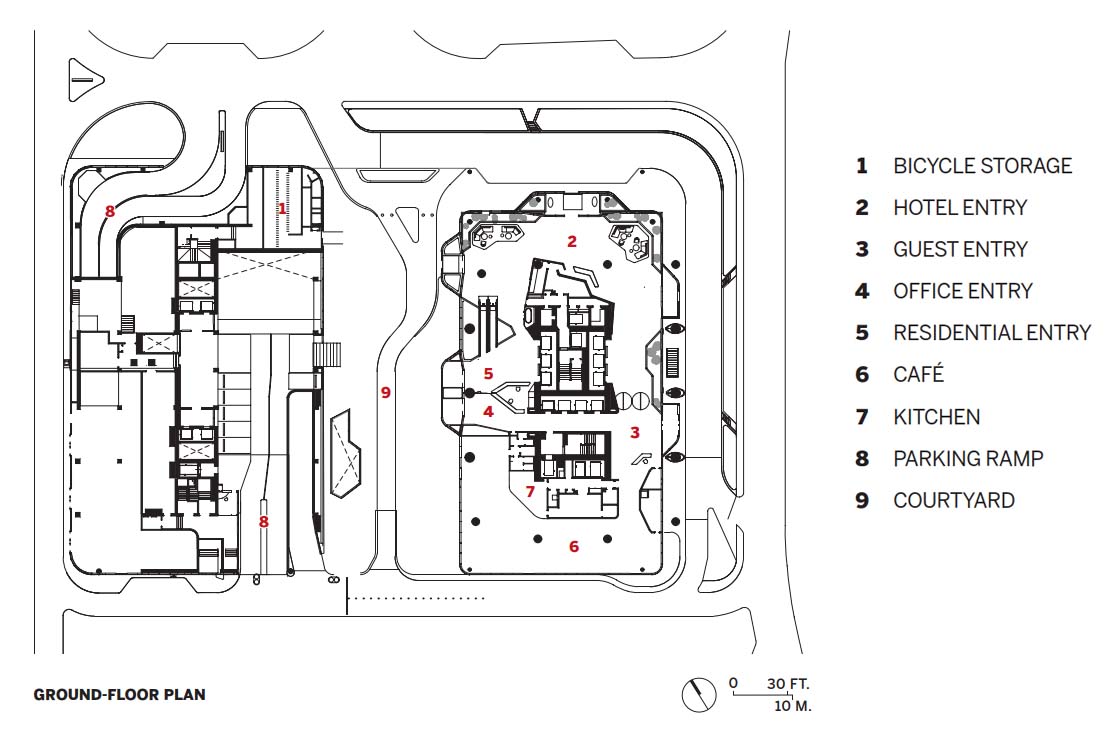
Image courtesy UNS
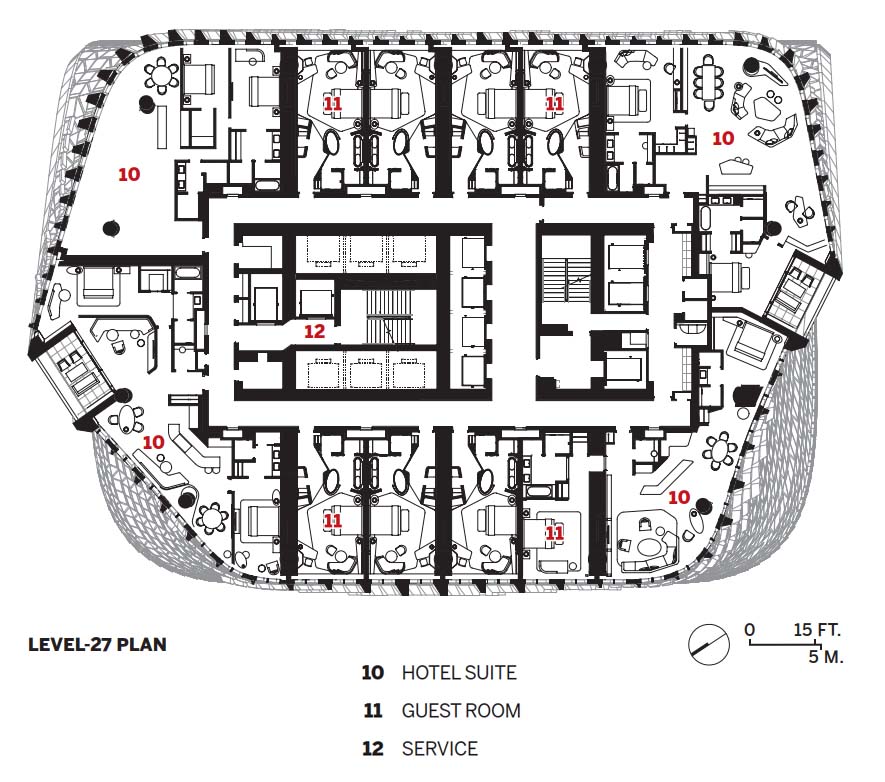
Image courtesy UNS
Credits
Architect:
UNS — Ben van Berkel, Gerard Loozekoot, partners; Frans van Vuure, managing director; Nick Marks, project manager; Harlen Miller, Crystal Tang, associate design directors
Architect of Record:
U+A Architects
Engineer:
Werner Sobek AG (structural, facade, MEP, sustainability, general planning)
Consultants:
Arup (facade lighting); Wacker (wind); DeSimone (structural); Seed (MEP)
General Contractors:
Arabtec, Saleh Bin Lahej
Client:
Wasl Group
Size:
1.16 million square feet
Cost:
Withheld
Completion:
March 2026
Sources
Structure:
Eversendai, IMS Steel
Terra-Cotta:
CN Architectural Terracotta
Curtain Wall:
TGAC, Guardian Glass
Roofing:
Helipad, Catobo, BMU, XSPlatforms
Fcade Lighting:
Saco
Looking for a reprint of this article?
From high-res PDFs to custom plaques, order your copy today!