Architectural Record
search
cart
facebook twitter linkedin youtube
  • Sign In
  • Subscribe
  • Sign Out
  • My Account
Architectural Record
  • NEWS
    • Latest News
    • Awards
    • Interviews
    • Obituaries
    • Podcasts
      • Design:Ed Podcast
      • Sponsored Podcasts
  • OPINION
    • Book Reviews / Excerpts
    • Exhibition Reviews
    • Forum
  • EXCLUSIVES
    • Videos
    • Design Vanguard
    • Top 300 Firms
    • Sponsored Content
    • Sponsored eBooks
    • From the Archives
  • CONTINUING ED
    • Editorial Continuing Ed
    • CE Center
    • CE Academies
  • PROJECTS
    • Buildings By Type
    • Reuse & Renovation
    • Museums & Arts Centers
    • Colleges & Universities
    • Multifamily Housing
    • Interiors
    • Lighting
    • Kitchen & Bath
  • HOUSES
    • Record Houses
    • House of the Month
    • Featured Houses
  • PRODUCTS
    • Products by Category
    • Record Products of the Year
    • Latest Products
  • EVENTS
    • Dates & Events
    • Record on the Road
    • Innovation Conference
    • Sustainability in Practice
    • Women In Architecture
    • Webinars
    • Ad Excellence Awards
    • Submit an Event
  • CONNECT
    • Ask RECORD AI
    • Newsletters
    • Contact
    • Advertise
    • Editorial Calendar
    • Store
    • Customer Service
  • SUBMIT
    • Submission Guidelines
    • RECORD Competitions
  • MAGAZINE
    • Subscribe
    • My Account
    • Digital Edition
    • Current Issue
    • Firm Pass
    • Historic Archive
Architecture NewsForumOpinion

Forum

Don’t Let the Mesa Laboratory Die
By Emily Orzechowski
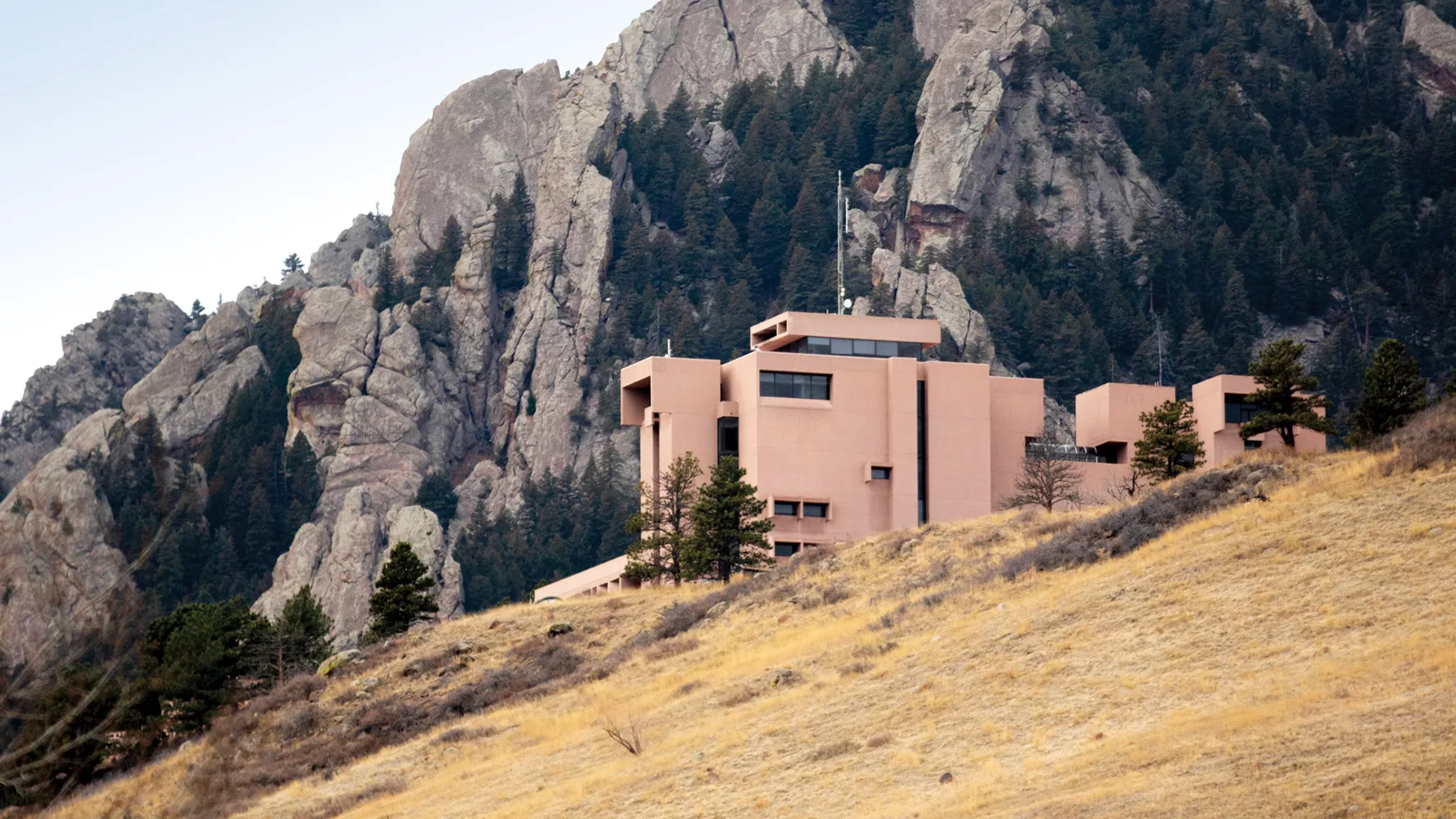
I.M. Pei’s design for Mesa Lab
Photo © Kevin J. Beaty/Denverite
I.M. Pei's Mesa Laboratory in Boulder, Colorado.
June 9, 2026
✕
Image in modal.
Architecture becomes powerful when exquisite form and consequential function are not merely joined but lived out every day. In my world—the earth and atmospheric sciences—that power is embodied in the Mesa Laboratory, headquarters of the National Center for Atmospheric Research (NCAR) in Boulder, Colorado.

A work of brilliance, I.M. Pei’s style-defying research center, built in 1966 and dramatically set against the foothills of the Flatirons, brought him widespread acclaim and helped establish his reputation for design acumen. From 2023 to 2025, I worked for the nonprofit operator of Mesa Lab, and I can tell you that, even today, it is difficult to capture this place’s emotional hold in words. Pei himself described his experience designing the Mesa Lab as “religious.” Which is why it was all the more devastating when news broke in December that the Trump Administration’s plans to dismantle NCAR might leave the building vacant and its future uncertain.

The oft-told story is that Pei drew design inspiration from the mountainside setting, prompting memories of his own experiences visiting mountaintop Buddhist retreats as a child, and leading him to reflect on architectural practices found in the American Southwest. This account is true, but it’s also incomplete. As Jonathan Barnett wrote in his review, Mesa Lab was “a direct response not only to the character of the site but to the basic nature of the program as well.”

What was that nature? Put plainly, the building was to serve as America’s laboratory for studying the atmosphere and the planet. Again in Barnett’s words: “It was a place to think, and the thinking would be done in abstruse realms along the fringes of human knowledge. Thus the forms that expressed the function must needs be philosophical as well.” Put more plainly, to encounter Mesa Lab is to encounter earth and atmospheric sciences.

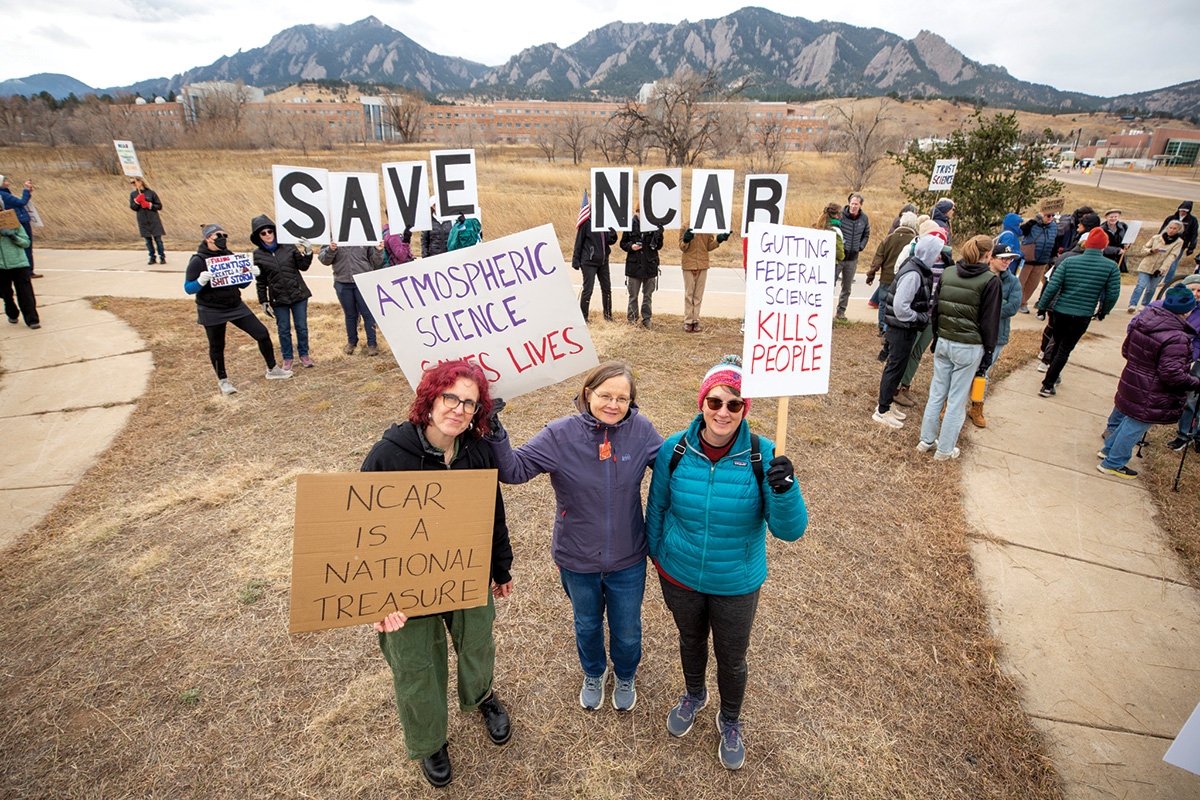
Protest supporting NCAR and Mesa Laboratory

A December 20, 2025, protest decried plans to dismantle the National Center for Atmospheric Research that would leave Mesa Lab vacant and its future uncertain. Photo © Kevin J. Beaty/Denverite

Long, winding, and indirect, the road ascending to Mesa Lab runs parallel to the sweeping yet inescapably discursive cadence of an intellectual endeavor that attempts to broach the limits of understanding. On the lab’s grounds, the buildings take on a beguiling quality as natural light moves across surfaces, deep recesses, and unexpectedly recurring arches and curves, giving the lab a gracefully idiosyncratic rhythm that evokes the layered planes, flowing channels, and shifting boundaries of the Earth. While its architecture is clearly inspired by natural forms, Mesa Lab stands boldly apart from them. So, too, is the very nature of its science. It is a science with a dual purpose: to serve as a substrate that faithfully captures the functions and complexities of Earth’s systems and as an engine for technological breakthroughs that enable us to harness and navigate their power.

Over the last six decades, Mesa Lab has advanced science beyond its limits at the lab’s founding, contributed world-changing scientific technologies, and continued to be lauded in America’s architectural community. It has helped transform how we predict weather and floods and given scientists new ways to observe the atmosphere, including means to do so from within major storms. Mesa Lab is now seen as a landmark whose status and, crucially, its continual use for nationally significant scientific research render it worthy of historic preservation status. Yet Mesa Lab is exceptional not only for the enduring power of its architectural and scientific symbiosis but also because the relationship it embodies has only grown more consequential with time.

Today, both architecture and the atmospheric and earth sciences carry greater societal importance as our nation faces mounting challenges stemming from rising energy and natural resource demand, environmental degradation, technological change, and the need to adapt to changing climate conditions and worsening severe weather. Mesa Lab is currently advancing research on the coupled hazards of heat, drought, wildfire smoke, flooding, and severe weather that increasingly shape how and where we build.

But it is now, when the need for Mesa Lab is growing more urgent, that its fate is being threatened. While scientists continue to work at the lab today, they do so under deep uncertainty. The National Science Foundation, its federal steward, is currently pursuing a restructuring of the NCAR that could detach Mesa Lab from its research mission and place it in other hands, potentially including private ones. The imminent danger is not only that a landmark work of architecture might be mishandled in the course of this restructuring but that its long association with a nationally consequential public scientific enterprise—part of the core of its historic meaning—could be severed, leaving the building preserved, perhaps, as image but emptied of its fundamental scientific and civic purpose.

For this reason, the fate of Mesa Lab cannot be treated as a matter for the earth and atmospheric sciences alone. It is also a matter for architects, critics, preservationists, and stewards of the built environment. The questions before us are not merely administrative matters for the sciences. They are architectural, ethical, and civic. What does it mean to detach a nationally significant building from the public mission it was designed to embody? What obligations attend the transfer, lease, or repurposing of a work whose significance has long been carried by its continued and high-impact institutional life? What does preservation mean when the shell may survive but the animating logic of the work is stripped away? I ask those in architecture to join those of us in the sciences in naming what is at stake—and in asking the questions that only you can. Just as you joined us in bringing Mesa Lab to life, you will be vital in saving it.

A shared jewel of our two professions is at stake. Mesa Lab—America’s living icon for the study of the atmosphere and our Earth—must not die.

KEYWORDS: Colorado historic preservation I. M. Pei

Share This Story

Looking for a reprint of this article?
From high-res PDFs to custom plaques, order your copy today!

Emily Orzechowski is an earth scientist and director of geoscience policy and external relations at the Geological Society of America. She previously worked for the University Corporation for Atmospheric Research, NCAR’s nonprofit operator

Post a comment to this article

Report Abusive Comment

Subscription Center
  • Create an Account
  • Start a Subscription
  • Manage My Account
  • Sign Up for Newsletters
  • Visit Customer Service
  • Update Preferences

More Videos

Sponsored Content

Sponsored Content is a special paid section where industry companies provide high quality, objective, non-commercial content around topics of interest to the Architectural Record audience. All Sponsored Content is supplied by the advertising company and any opinions expressed in this article are those of the author and not necessarily reflect the views of Architectural Record or its parent company, BNP Media. Interested in participating in our Sponsored Content section? Contact your local rep!

close
  • TAMLYN XtremeTrim Exterior Trim
    Sponsored byTamlyn

    Designing Cleaner Panel Facades: Why Exterior Trim Details Matter

  • Building with Vapor Barriers
    Sponsored byReef Industries, Inc.

    Vapor Barriers Help Control Moisture in Tighter Building Designs

  • Duct Interior with Prodeq System
    Sponsored byHenry, a Carlisle Company

    Designing Resilient Water Containment Systems

DESIGN:ED Podcast
Listen to Architectural Record’s DESIGN:ED Podcast

Events

June 16, 2026

Focus on the Façade: Exploring Steel, Timber & Fire-Rated Curtain Walls and Channel Glass Systems

Credits: 1 AIA LU/HSW; 1 AIBD P-CE; 0.1 ICC CEU

Explore modern façade and glazing systems that enhance daylighting, fire safety, and thermal performance while expanding architectural design possibilities.

June 18, 2026

Rebooting the Aging Office Building

Credits: 1 AIA LU/HSW; 1 AIBD P-CE; 0.1 ICC CEU; 1 PDH

Explore façade retrofit strategies and award-winning design concepts that can transform aging office buildings into healthier, higher-performing workplaces for today’s hybrid workforce.

View All Submit An Event

Products

2026 Architect's Square Foot Costbook

2026 Architect's Square Foot Costbook

See More Products

Popular Stories

Coronado Bridge

The Architect’s Guide to San Diego

SanDiegoAirport

Top 300 Architecture Firms of 2026

Crane Cove, ONO

Design Vanguard 2026 Winners

House on a Hill

Design Vanguard 2026: Forma

House A on a Hill

Design Vanguard 2026: Santiago Valdivieso

Focus on the Facade - Free Webinar - June 16, 2026

Related Articles

  • Let the Sunshine In: Manhattan Advisory Board Calls for Moratorium on Skyscrapers

    See More
  • In-the-Cause-of-Architecture-Frank-Lloyd-Wright-1914-05.jpg

    In the Cause of Architecture, II: “Style, therefore, will be the man, it is his. Let his forms alone.”

    See More
  • Metrograph

    (Don't) Roll Credits: In Defense of the Cinema

    See More

Related Products

See More Products
  • AR June 2026 Issue

    Architectural Record June 2026 Issue

See More Products
×

The latest news and information

#1 Source for Architectural Design, News and Products

SUBSCRIBE
  • RESOURCES
    • Advertise
    • Contact Us
    • Submit
    • Store
  • ACCOUNT CENTER
    • Create an Account
    • Start a Subscription
    • Manage My Account
    • Sign Up for Newsletters
    • Visit Customer Service
    • Update Preferences
  • PRIVACY
    • PRIVACY POLICY
    • TERMS & CONDITIONS
    • DO NOT SELL MY PERSONAL INFORMATION
    • PRIVACY REQUEST
    • ACCESSIBILITY
  • SERVICES
    • Marketing Services
    • Reprints
    • Market Research
    • List Rental
    • Survey/Respondent Access
  • STAY CONNECTED
    • Linkedin
    • Facebook
    • Instagram
    • YouTube
    • X (Twitter)

Copyright ©2026. All Rights Reserved BNP Media, Inc. and BNP Media II, LLC.

Design, CMS, Hosting & Web Development :: ePublishing