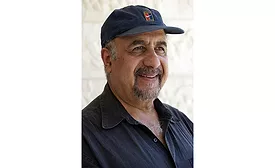
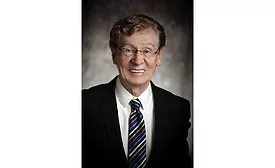
The Boston Redevelopment Authority (BRA), the agency responsible for planning and economic development in Boston, is presiding over a major urban transformation. Despite the economic slowdown, cranes dot the city’s skyline with roughly 65 large projects under construction and dozens more in the pipeline. Also moving forward is the integration of the Rose Kennedy Greenway—a mile-long stretch of parks and civic amenities taking shape along the route of the old elevated Interstate 93—with surrounding city blocks. Photo courtesy Boston Redevelopment Authority John Palmieri, director of the Boston Redevelopment Authority (left). Kairos Shen, Boston’s chief city planner and BRA director of
TSB: What’s the status of the proposal to move City Hall? Image courtesy Massachusetts Turnpike Authority The Big Dig became the longest and most expensive construction highway project in U.S. history, totaling nearly $15 billion. Following its completion in 2003, the old elevated highway was razed and, in its place, The Rose Fitzgerald Greenway network of parks was constructed View images of threatened historic buildings in Boston. View images of the "Big Dig" and the Rose Kennedy Greenway. KS: There are several components to it. The first one is an evaluation of the entire portfolio of municipal buildings. There are
This Jordan-based architect is monitoring the ISIS-led destruction of historic sites and spearheading efforts to stop it. In a video that provoked outrage as it made its way across the Internet in February, men in military clothing ransacked Iraq’s Mosul Museum, toppling statues of ancient rulers from their pedestals before pounding the figures—some replicas but others original—with sledge- hammers.
The Driehaus Prize founder talks bad architecture, foiling Frank Gehry's Eisenhower Memorial, and the "Hershey's Kiss" Lucas Museum. Richard Driehaus is best known in architecture circles as the founder of the Driehaus Prize, a $200,000 award given each year “to a living architect whose work embodies the highest ideals of traditional and classical architecture.”
Someone’s got to do it, if New York City is to have well-maintained parks beyond destination showplaces like Central Park and the High Line—and his name is Geoffrey Croft. Crain’s called him “an army of one.”
At the National September 11 Memorial & Museum at the World Trade Center site, beneath the fountains conceived by Michael Arad and an entry pavilion by Snøhetta, Manhattan architects Davis Brody Bond created a series of inspiring spaces, set between the slurry wall of the original World Trade Center and equally powerful elements of their own devising.
Olajumoke Adenowo has been practicing architecture in Nigeria for more than a quarter of a century. Still, she became significantly better known when CNN named her “Africa’s star architect” in December, as part of a report on her Lagos-based practice, AD Consulting.
An exhibition at the Yale School of Architecture explores the early uses of digital tools in architecture. Greg Lynn No single tool has become more critical to architectural practice than the computer. In fewer than 30 years, CAD software and related products have become an entire industry by catering to the needs of designers. But the early years of architects’ use of digital tools are little known. Greg Lynn, founder of Greg Lynn FORM and a professor at UCLA, has curated exhibitions that explore this early architectural experimentation. The exhibition, the second of three on this theme, Archaeology of the
 RSS
RSS