This website requires certain cookies to work and uses other cookies to help you have the best experience. By visiting this website, certain cookies have already been set, which you may delete and block. By closing this message or continuing to use our site, you agree to the use of cookies. Visit our updated privacy and cookie policy to learn more.
This Website Uses Cookies By closing this message or continuing to use our site, you agree to our cookie policy. Learn MoreThis website requires certain cookies to work and uses other cookies to help you have the best experience. By visiting this website, certain cookies have already been set, which you may delete and block. By closing this message or continuing to use our site, you agree to the use of cookies. Visit our updated privacy and cookie policy to learn more.
Architects spend a great deal of time making sure their buildings stay put. But the whims of nature and real-estate development can uproot the best of plans and make relocating an important structure the only way to save it.
The ambitious environmental agenda of a new elementary school by Skidmore, Owings & Merrill (SOM) on Staten Island, New York, is obvious from the first encounter: almost 1,600 photovoltaic (PV) panels cloak the 68,000-sqare-foot, two-story structure, covering the south facade, extending over its roof, and cantilevering out to float above a playing field.
Across North America, buildings account for hundreds of millions of bird deaths annually—perhaps more, according to the nonprofit group the American Bird Conservancy.
Post-occupancy evaluation, or POE, is a diverse practice that can feed back data into the design process on everything from energy and water consumption to workplace satisfaction and even occupants' sleep cycles.
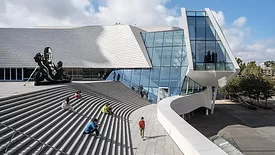
Flirting with Disaster: Two recent art museums with prime waterfront sites protect their buildings and collections from severe weather and rising water levels.
The move of the Whitney Museum of American Art from its Marcel Breuer'designed quarters on Manhattan's Upper East Side to the city's Meatpacking District presented a host of challenges, flooding among them.