Architectural Record
search
cart
facebook twitter linkedin youtube
  • Sign In
  • Subscribe
  • Sign Out
  • My Account
Architectural Record
  • NEWS
    • Latest News
    • Awards
    • Interviews
    • Obituaries
    • Podcasts
      • Design:Ed Podcast
      • Sponsored Podcasts
  • OPINION
    • Book Reviews / Excerpts
    • Exhibition Reviews
    • Forum
  • EXCLUSIVES
    • Videos
    • Design Vanguard
    • Top 300 Firms
    • Sponsored Content
    • Sponsored eBooks
    • From the Archives
  • CONTINUING ED
    • Editorial Continuing Ed
    • CE Center
    • CE Academies
  • PROJECTS
    • Buildings By Type
    • Reuse & Renovation
    • Museums & Arts Centers
    • Colleges & Universities
    • Multifamily Housing
    • Interiors
    • Lighting
    • Kitchen & Bath
  • HOUSES
    • Record Houses
    • House of the Month
    • Featured Houses
  • PRODUCTS
    • Products by Category
    • Record Products of the Year
    • Latest Products
  • EVENTS
    • Dates & Events
    • Record on the Road
    • Innovation Conference
    • Sustainability in Practice
    • Women In Architecture
    • Webinars
    • Ad Excellence Awards
    • Submit an Event
  • CONNECT
    • Ask RECORD AI
    • Newsletters
    • Contact
    • Advertise
    • Editorial Calendar
    • Store
    • Customer Service
  • SUBMIT
    • Submission Guidelines
    • RECORD Competitions
  • MAGAZINE
    • Subscribe
    • My Account
    • Digital Edition
    • Current Issue
    • Firm Pass
    • Historic Archive
Design Vanguard

IwamotoScott

A husband-wife team finds ways of merging the virtual with the actual, while creating compelling visions of an architecture for the future.
By Eva Hagberg
IwamotoScott
Obscura Digital
San Francisco, California
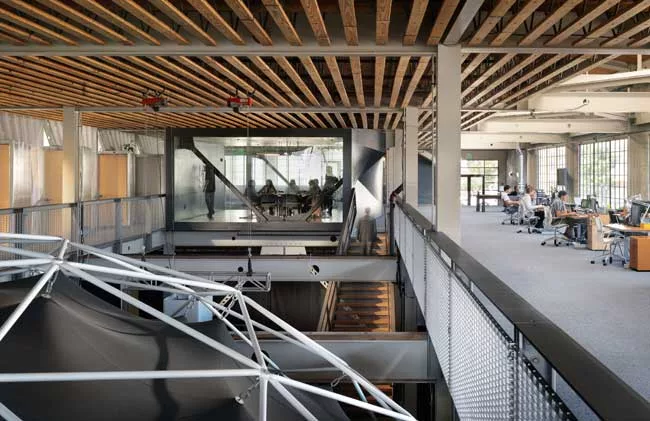
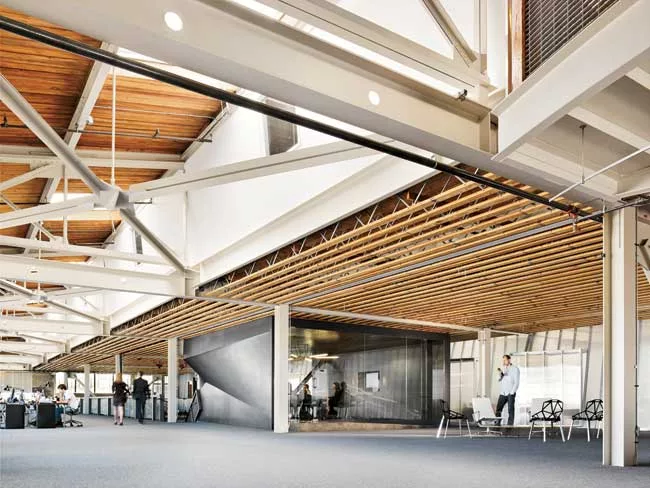
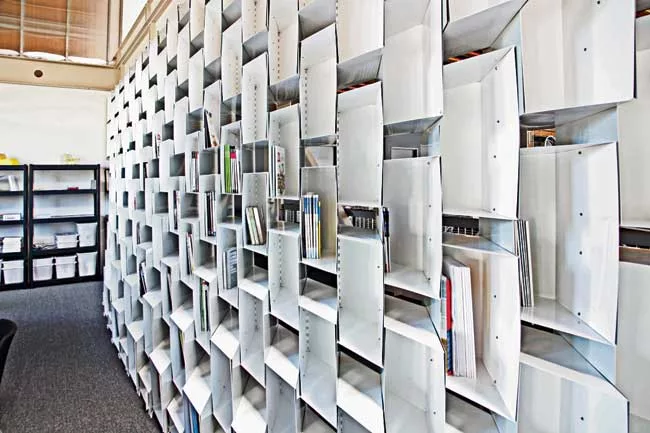
Iwamoto and Scott renovated a 1940s warehouse in San Francisco and reused it as a digital media company's headquarters, as well as home base for their own firm. The 36,000-square-foot project encompasses two stories (including a double-height first floor) and was left mostly open. It features a multifunction divider that the architects call the BookCaseScreenWall, made from laser-cut and powder-coated sheet metal to look like a hallucinatory cross between a pile of pixels and a skewed bookshelf. A jewel box of a conference room, sheathed in black bamboo, overlooks the first floor and provides a well lit, straightforward counterpoint to the BookCaseScreenWall's complexity and contradiction.
 
Image courtesy IwamotoScott
IwamotoScott
Obscura Digital
San Francisco, California
Iwamoto and Scott renovated a 1940s warehouse in San Francisco and reused it as a digital media company's headquarters, as well as home base for their own firm. The 36,000-square-foot project encompasses two stories (including a double-height first floor) and was left mostly open. It features a multifunction divider that the architects call the BookCaseScreenWall, made from laser-cut and powder-coated sheet metal to look like a hallucinatory cross between a pile of pixels and a skewed bookshelf. A jewel box of a conference room, sheathed in black bamboo, overlooks the first floor and provides a well lit, straightforward counterpoint to the BookCaseScreenWall's complexity and contradiction.
 
Image courtesy IwamotoScott
IwamotoScott
Obscura Digital
San Francisco, California
Iwamoto and Scott renovated a 1940s warehouse in San Francisco and reused it as a digital media company's headquarters, as well as home base for their own firm. The 36,000-square-foot project encompasses two stories (including a double-height first floor) and was left mostly open. It features a multifunction divider that the architects call the BookCaseScreenWall, made from laser-cut and powder-coated sheet metal to look like a hallucinatory cross between a pile of pixels and a skewed bookshelf. A jewel box of a conference room, sheathed in black bamboo, overlooks the first floor and provides a well lit, straightforward counterpoint to the BookCaseScreenWall's complexity and contradiction.
 
Image courtesy IwamotoScott
IwamotoScott
Voussoir Cloud
San Francisco, California
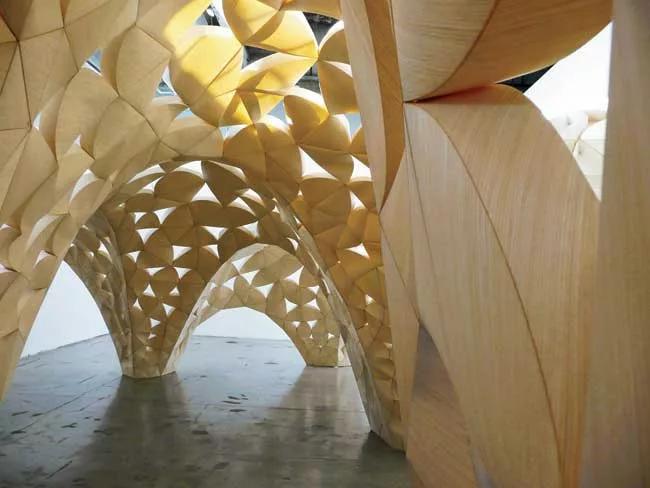
Part student project, part emerging technology experiment, part historical adaptation, the Voussoir Cloud was exhibited at the SCI-Arc gallery for a month and a half in 2008. Inspired by the voussoir'a wedge-shaped block forming part of the structure of an arch'IwamotoScott and their collaborators (including SCI-Arc students and Buro Happold) built a series of laminated-wood modules folded along curved seams. These three-dimensional blocks were then inserted onto and over each other, and held in place by a combination of internal surface tension and their placement between gallery walls.
 
Image courtesy IwamotoScott
IwamotoScott
Voussoir Cloud
San Francisco, California
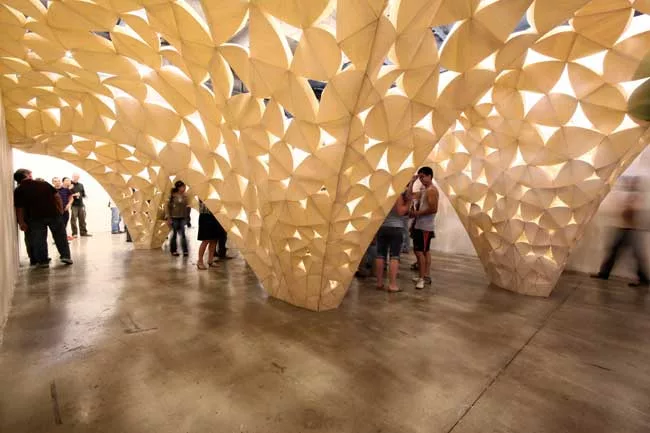
Part student project, part emerging technology experiment, part historical adaptation, the Voussoir Cloud was exhibited at the SCI-Arc gallery for a month and a half in 2008. Inspired by the voussoir'a wedge-shaped block forming part of the structure of an arch'IwamotoScott and their collaborators (including SCI-Arc students and Buro Happold) built a series of laminated-wood modules folded along curved seams. These three-dimensional blocks were then inserted onto and over each other, and held in place by a combination of internal surface tension and their placement between gallery walls.
 
Image courtesy IwamotoScott
IwamotoScott
Voussoir Cloud
San Francisco, California
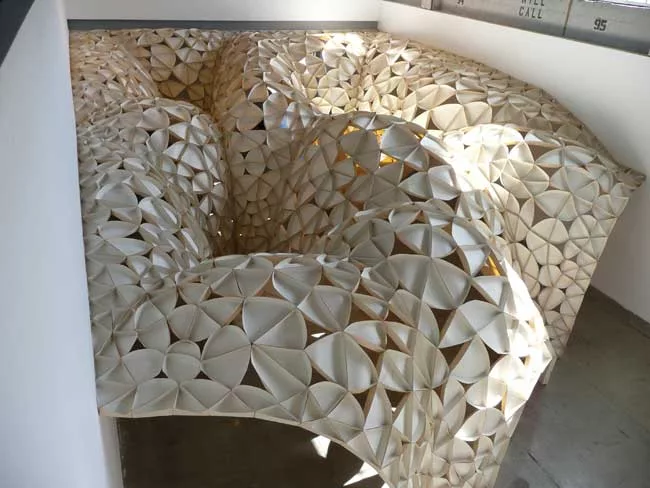
Part student project, part emerging technology experiment, part historical adaptation, the Voussoir Cloud was exhibited at the SCI-Arc gallery for a month and a half in 2008. Inspired by the voussoir'a wedge-shaped block forming part of the structure of an arch'IwamotoScott and their collaborators (including SCI-Arc students and Buro Happold) built a series of laminated-wood modules folded along curved seams. These three-dimensional blocks were then inserted onto and over each other, and held in place by a combination of internal surface tension and their placement between gallery walls.
 
Image courtesy IwamotoScott
IwamotoScott
Lightfold
San Francisco, California
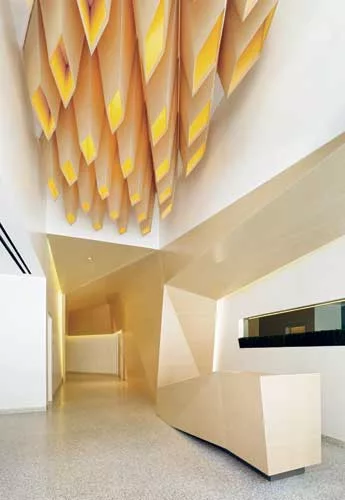
Built in a San Francisco commercial development's lobby and funded by a One Percent for Art Program, Lightfold operates as both architecture and public art. The architects created a folded wooden chandelier by using a software that stretched, pushed, and pulled what would otherwise have been traditional ceiling coffers (common elements in early-20th-century Bay Area buildings). A planar reception desk provides an angular counterpoint to the womblike warmth of the reimagined coffers' glow.
 
Image courtesy IwamotoScott
IwamotoScott
SF 2108: Hydro-Net
San Francisco, California
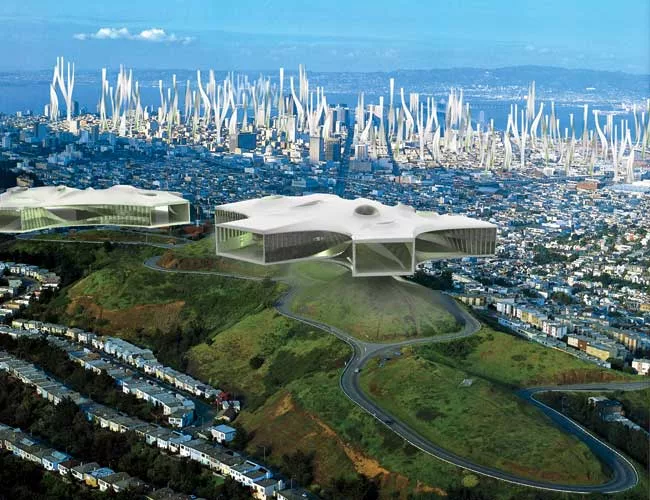
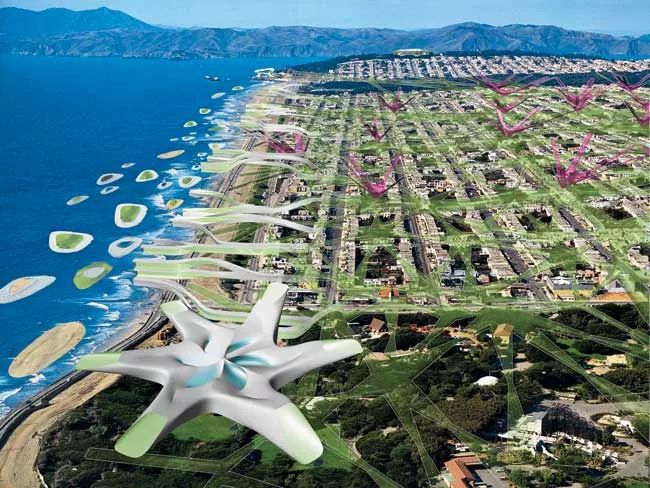
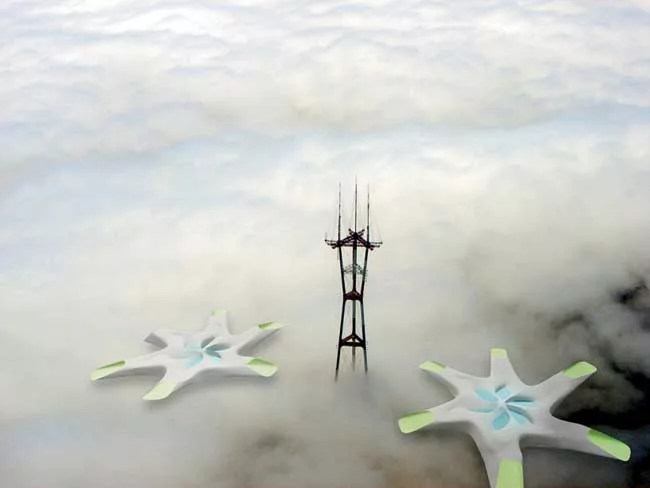
San Francisco's grand-prize winner for the History Channel's City of the Future competition held in 2008, Hydro-Net posits a speculative solution to the incipient problems of an increase in people and a simultaneous decrease in resources. Described by the architects as 'symbiotic and multi-scalar,' the project is conceived as both infrastructural and architectural'as an organizational framework that controls the flow of people and resources, and as a freshwater-, energy-, and fuel-collecting system. Underground circulation (for hydrogen-fueled hover cars) complements a series of aboveground housing structures and 'urban caves, reeds, and outcroppings.'
 
Image courtesy IwamotoScott
IwamotoScott
SF 2108: Hydro-Net
San Francisco, California
San Francisco's grand-prize winner for the History Channel's City of the Future competition held in 2008, Hydro-Net posits a speculative solution to the incipient problems of an increase in people and a simultaneous decrease in resources. Described by the architects as 'symbiotic and multi-scalar,' the project is conceived as both infrastructural and architectural'as an organizational framework that controls the flow of people and resources, and as a freshwater-, energy-, and fuel-collecting system. Underground circulation (for hydrogen-fueled hover cars) complements a series of aboveground housing structures and 'urban caves, reeds, and outcroppings.'
 
Image courtesy IwamotoScott
IwamotoScott
SF 2108: Hydro-Net
San Francisco, California
San Francisco's grand-prize winner for the History Channel's City of the Future competition held in 2008, Hydro-Net posits a speculative solution to the incipient problems of an increase in people and a simultaneous decrease in resources. Described by the architects as 'symbiotic and multi-scalar,' the project is conceived as both infrastructural and architectural'as an organizational framework that controls the flow of people and resources, and as a freshwater-, energy-, and fuel-collecting system. Underground circulation (for hydrogen-fueled hover cars) complements a series of aboveground housing structures and 'urban caves, reeds, and outcroppings.'
 
Image courtesy IwamotoScott
IwamotoScott
Edgar Street Towers
New York, New York
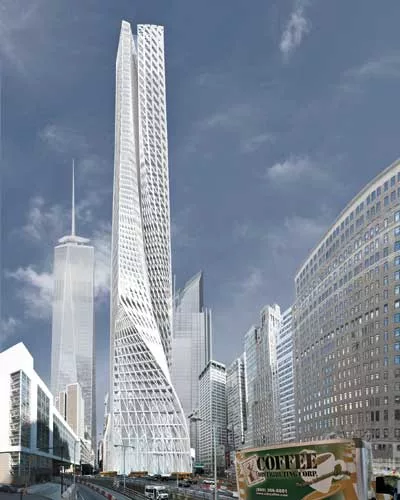
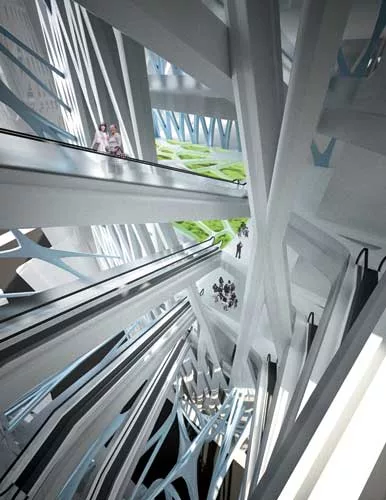
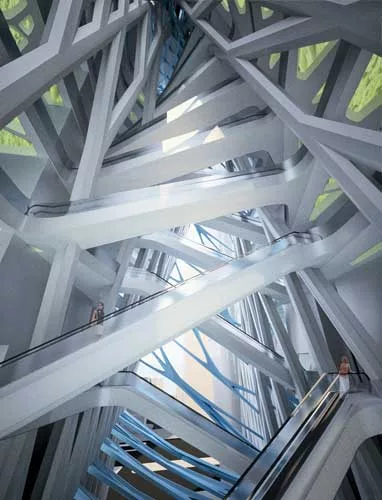
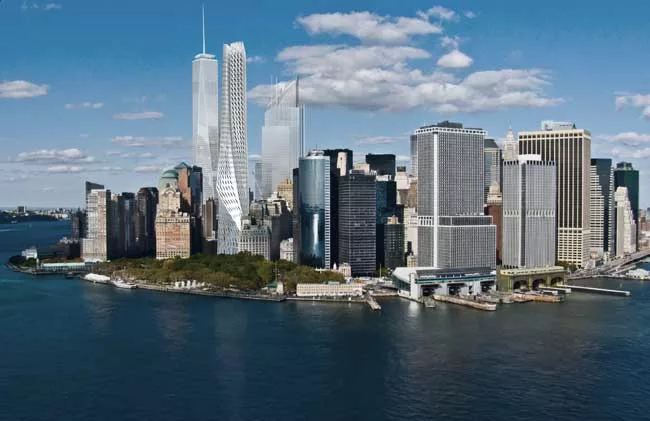
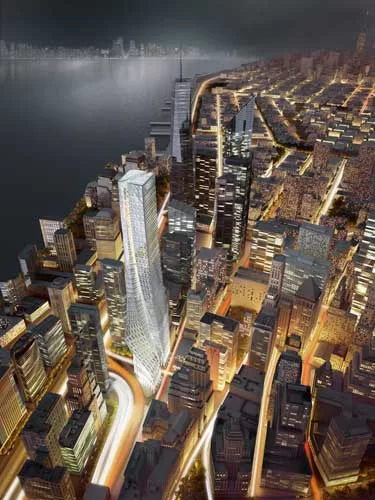
Part of the Greenwich South design study commissioned by New York City's Downtown Alliance, this plan for a pair of Manhattan towers brings IwamotoScott's interest in digital fabrication and its formal sensitivity to a grand scale. An open passageway at the base reconnects Greenwich and Washington Streets in Lower Manhattan, while the interior structure winds together the towers' two feet (which straddle the street) to create a central atrium lit by a fiber-optic array. A program that includes space for living, working, art, performance, retail, and a public library is proposed as a way of bringing vibrant new life to downtown New York.
 
Image courtesy IwamotoScott
IwamotoScott
Edgar Street Towers
IwamotoScott
New York, New York
Part of the Greenwich South design study commissioned by New York City's Downtown Alliance, this plan for a pair of Manhattan towers brings IwamotoScott's interest in digital fabrication and its formal sensitivity to a grand scale. An open passageway at the base reconnects Greenwich and Washington Streets in Lower Manhattan, while the interior structure winds together the towers' two feet (which straddle the street) to create a central atrium lit by a fiber-optic array. A program that includes space for living, working, art, performance, retail, and a public library is proposed as a way of bringing vibrant new life to downtown New York.
Image courtesy IwamotoScott
IwamotoScott
Edgar Street Towers
New York, New York
Part of the Greenwich South design study commissioned by New York City's Downtown Alliance, this plan for a pair of Manhattan towers brings IwamotoScott's interest in digital fabrication and its formal sensitivity to a grand scale. An open passageway at the base reconnects Greenwich and Washington Streets in Lower Manhattan, while the interior structure winds together the towers' two feet (which straddle the street) to create a central atrium lit by a fiber-optic array. A program that includes space for living, working, art, performance, retail, and a public library is proposed as a way of bringing vibrant new life to downtown New York.
 
Image courtesy IwamotoScott
IwamotoScott
Edgar Street Towers
New York, New York
Part of the Greenwich South design study commissioned by New York City's Downtown Alliance, this plan for a pair of Manhattan towers brings IwamotoScott's interest in digital fabrication and its formal sensitivity to a grand scale. An open passageway at the base reconnects Greenwich and Washington Streets in Lower Manhattan, while the interior structure winds together the towers' two feet (which straddle the street) to create a central atrium lit by a fiber-optic array. A program that includes space for living, working, art, performance, retail, and a public library is proposed as a way of bringing vibrant new life to downtown New York.
 
Image courtesy IwamotoScott
IwamotoScott
Edgar Street Towers
New York, New York
Part of the Greenwich South design study commissioned by New York City's Downtown Alliance, this plan for a pair of Manhattan towers brings IwamotoScott's interest in digital fabrication and its formal sensitivity to a grand scale. An open passageway at the base reconnects Greenwich and Washington Streets in Lower Manhattan, while the interior structure winds together the towers' two feet (which straddle the street) to create a central atrium lit by a fiber-optic array. A program that includes space for living, working, art, performance, retail, and a public library is proposed as a way of bringing vibrant new life to downtown New York.
 
Image courtesy IwamotoScott
IwamotoScott
IwamotoScott
IwamotoScott
IwamotoScott
IwamotoScott
IwamotoScott
IwamotoScott
IwamotoScott
IwamotoScott
IwamotoScott
IwamotoScott
IwamotoScott
IwamotoScott
IwamotoScott
IwamotoScott
December 16, 2011

San Francisco, California

"One thing that describes our firm is that we're caught between generations,” says Lisa Iwamoto. She's on speakerphone with her partner—in work and life—Craig Scott, and the two are tag-teaming a conversation, trying to figure out how to explain their practice. They're both professors—she at UC Berkeley (disclosure: where this writer is pursuing her PhD) and he at California College of the Arts. Both graduated from Harvard's Graduate School of Design in the early 1990s. Most important, they were trained in non-computational architecture: Iwamoto with Rafael Moneo and Mohsen Mostafavi and Scott with Rem Koolhaas. That education, under what she describes as “professors who were very building-oriented,” might seem to be irrelevant given their current work, which relies heavily on the computer. But Iwamoto and Scott see their background—as well as her training as a civil engineer—as elements that strengthen their creative positions.

While Iwamoto's specialty at Berkeley is digital fabrication, she sees her teaching as intimately intertwined with her firm's design work. “Teaching keeps it fresh,” Iwamoto explains. “We're constantly pushing students to think about how to be innovative, or coming up with project types for coursework that blurs the boundaries of a discipline.” Challenging students in the studio helps the two challenge each other in the office.

Scott's focus at CCA is more “on space-making strategies and emergent technologies.” But both partners are interested in what new technology can bring to the design table. It's that focus on making space, even when they're designing a temporary installation, that brings the firm's work out of an ephemeral paper realm and down to the real world of dirt and drywall.

The partners have known each other for 20 years, having met at Berkeley between undergraduate and graduate studies. Scott then took a Los Angeles detour to work with Thom Mayne, whose inventive formalism shines through the pair's focus on spatial relationships. “We were a couple before we were a practice,” Iwamoto says. Before starting their firm in 2000, the pair worked together on projects such as the unbuilt Marin County hilltop Fog House and a faculty resource room at the University of Michigan, where they both taught.

“We're really happy we're getting our stuff built now,” Iwamoto says. In the process, they are connecting the three strands of their practice—the pedagogical, theoretical, and practical—in projects like a twisted coffered ceiling for a San Francisco office building and a Hawaii guesthouse that dodges and weaves its way around a hillside. “Some of the ideas and strategies from one project make their way across into the others,” Scott says. From reclaiming a typically Classical architectural move—like the coffer—for the digital age to folding a house in and over itself, the two usually deal with multiple possibilities at one time. In their most ambitious project, “SF 2108: Hydro-Net,” they envision an urban and infrastructural landscape that brings together algae-rich, aquaculture-inspired towers, hover cars, and fog-collecting “flowers.” The project, which won a History Channel competition, weaves together research and civil-engineering know-how with flashes of science fiction to create a compelling vision of the city's future.

IwamotoScott

LOCATION: San Fransisco

FOUNDED: 2000

DESIGN STAFF: 5

PRINCIPALS: Lisa Iwamoto, Craig Scott

EDUCATION: Iwamoto – Harvard GSD, M. Arch., 1993; University of Colorado, B.S. Engineering, 1986. Scott – Harvard GSD, M. Arch., 1994; Syracuse University, B.Arch., 1986

WORK HISTORY: Iwamoto – Schwartz/Silver Architects, 1994–95; Thompson and Rose Architects, 1993–94; RoTo Architects, 1992; Morphosis, 1991; Scott – Brian Healy Architects, 1995–97; RoTo Architects, 1991–92; Morphosis, 1990–91

KEY COMPLETED PROJECTS:  Kauai House, Hawaii, 2011; Obscura Digital Headquarters, San Francisco, 2010; Lightfold at One Kearny Lobby, San Francisco, 2010; PS House, San Francisco, 2010

KEY CURRENT PROJECTS: SourceBits US Offices, San Francisco, 2011; Monaco Loft, San Francisco, 2012; Mobile Immersive Performance Venue, 2012

WEB SITE: WWW.IWAMOTOSCOTT.COM


Share This Story

Looking for a reprint of this article?
From high-res PDFs to custom plaques, order your copy today!
Post a comment to this article

Report Abusive Comment

Subscription Center
  • Create an Account
  • Start a Subscription
  • Manage My Account
  • Sign Up for Newsletters
  • Visit Customer Service
  • Update Preferences

More Videos

Sponsored Content

Sponsored Content is a special paid section where industry companies provide high quality, objective, non-commercial content around topics of interest to the Architectural Record audience. All Sponsored Content is supplied by the advertising company and any opinions expressed in this article are those of the author and not necessarily reflect the views of Architectural Record or its parent company, BNP Media. Interested in participating in our Sponsored Content section? Contact your local rep!

close
  • cold storage facility
    Sponsored byCarlisle SynTec Systems

    How Architects Can Design More Continuous Cold Storage Envelopes

  • TAMLYN XtremeTrim Exterior Trim
    Sponsored byTamlyn

    Designing Cleaner Panel Facades: Why Exterior Trim Details Matter

  • Building with Vapor Barriers
    Sponsored byReef Industries, Inc.

    Vapor Barriers Help Control Moisture in Tighter Building Designs

DESIGN:ED Podcast
Listen to Architectural Record’s DESIGN:ED Podcast

Events

June 18, 2026

Rebooting the Aging Office Building

Credits: 1 AIA LU/HSW; 1 AIBD P-CE; 0.1 ICC CEU; 1 PDH

Explore façade retrofit strategies and award-winning design concepts that can transform aging office buildings into healthier, higher-performing workplaces for today’s hybrid workforce.

June 23, 2026

Enhancing Fire Resistance with Advanced PVC Solutions

Credits: 1 AIA LU/HSW; 1 AIBD P-CE; 0.1 ICC CEU; 1 IIBEC CEH

Evaluate advanced PVC solutions that improve fire resistance, support WUI compliance, and enhance resilience in residential and commercial building design.

View All Submit An Event

Products

2026 Architect's Square Foot Costbook

2026 Architect's Square Foot Costbook

See More Products

Popular Stories

SanDiegoAirport

Top 300 Architecture Firms of 2026

Coronado Bridge

The Architect’s Guide to San Diego

Lorcan O' Herilhy

California Architect Lorcan O’Herlihy Has Died, Age 66

CCA, Studio Gang

The Winners of the AIA’s 2026 Architecture Award Range from Collegiate Rowing Hubs to Housing for the Homeless

Dusk House

Design Vanguard 2026: ONO

Rebooting the Aging Office Building - Free Webinar - June 18, 2026

Related Articles

  • Geode ADU

    IwamotoScott's Geode ADU Quietly Complements a Midcentury Modern Californian Residence

    See More
  • Goto House

    Goto House by IwamotoScott Architecture

    See More
  • Jellyfish House

    See More
×

The latest news and information

#1 Source for Architectural Design, News and Products

SUBSCRIBE
  • RESOURCES
    • Advertise
    • Contact Us
    • Submit
    • Store
  • ACCOUNT CENTER
    • Create an Account
    • Start a Subscription
    • Manage My Account
    • Sign Up for Newsletters
    • Visit Customer Service
    • Update Preferences
  • PRIVACY
    • PRIVACY POLICY
    • TERMS & CONDITIONS
    • DO NOT SELL MY PERSONAL INFORMATION
    • PRIVACY REQUEST
    • ACCESSIBILITY
  • SERVICES
    • Marketing Services
    • Reprints
    • Market Research
    • List Rental
    • Survey/Respondent Access
  • STAY CONNECTED
    • Linkedin
    • Facebook
    • Instagram
    • YouTube
    • X (Twitter)

Copyright ©2026. All Rights Reserved BNP Media, Inc. and BNP Media II, LLC.

Design, CMS, Hosting & Web Development :: ePublishing