World Monuments Fund Announces 2010 Watch List
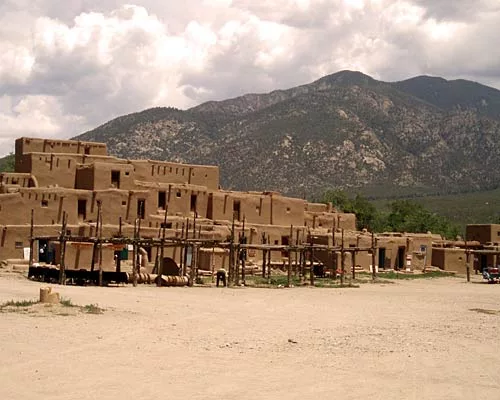
Location: Taos, New Mexico, Taos Pueblo.
Says WMF: “This remarkable adobe ensemble consists of ceremonial structures and individual homes, built side-by-side and in layers through the use of common walls, and has retained its traditional forms up to the present day. Designated a UNESCO World Heritage Site in 1992, Taos Pueblo has seen increasing visitor traffic and public curiosity about its history and practices. Growth of the nearby modern town of Taos has brought added development pressures.”
Photo courtesy World Monuments Fund
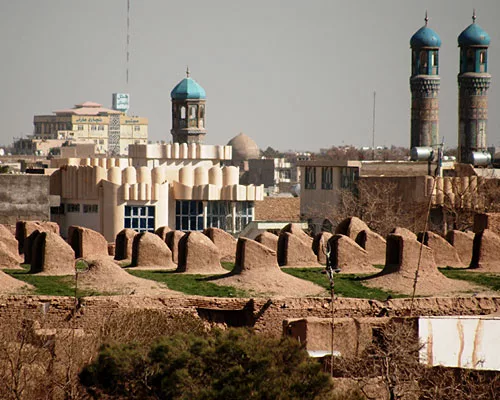
Location: Afghanistan, Old City of Herat
Says WMF: “Herat’s historic area is an exemplar of Islamic urban planning, comprising residential, religious, and commercial structures in a dense, rectilinear plan. Having largely survived conflict and related neglect, the most significant challenge now facing the Old City of Herat is unchecked development.”
Photo courtesy World Monuments Fund
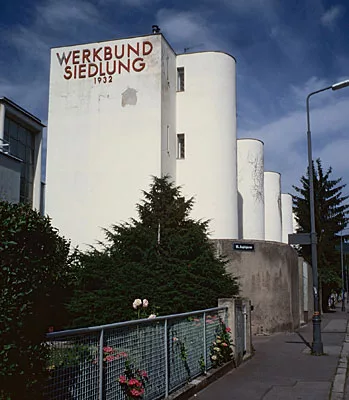
Location: Vienna, Austria, Wiener Werkbundseidlung
Says WMF: Vienna’s Werkbundsiedlung, a workers’ association housing complex, is one of the few Werkbund ensembles from the 1920s and 1930s that remains intact. A participatory planning process that includes the city of Vienna, the private residents, and local and international stakeholders, is sought to ensure the preservation and sustainability of the estate.”
Photo courtesy World Monuments Fund
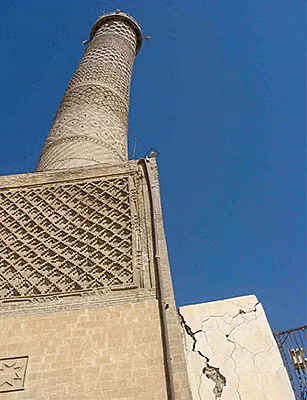
Location:Mosul, Iraq, Al-Habda’ Minaret
Says WMF: “Known by locals as al-Hadba’, or “the hunchback,” because of its precarious slant, the minaret of the Great Nur al-Din Mosque was, at the time of its 1172 completion, 150 feet (45 meters) high, with seven ornamental bands of brickwork at different levels around its cylindrical shaft. The minaret’s tilt has long been a source of concern. Despite efforts in the 1970s to stabilize the structures, cracks have proliferated along the minaret’s base.”
Photo courtesy World Monuments Fund
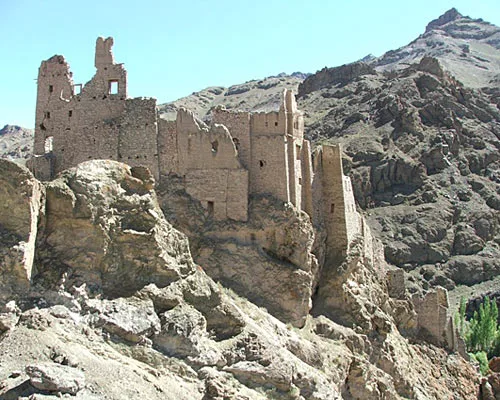
Location: Kargil, India, Chiktan Castle
Says WMF: “Built in the 16th century by Balti (Pakistani) craftsmen, the castle served as a royal residence for centuries despite shifts in rulers as the region was amalgamated with neighboring kingdoms. Neglect and natural elements have left the castle in an advanced state of decay.”
Photo courtesy World Monuments Fund
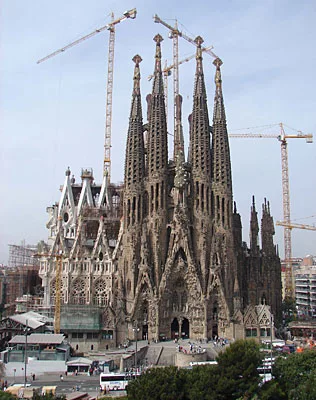
Location: Barcelona, Spain, Temple Expiatori de la Sagrada Familia.
Says WMF: “The still-to-be-completed Glory façade is the concern of a heated controversy regarding the Sants-Sagrera stretch of the Madrid-Zaragoza-Barcelona-French border high-speed train line. The underground train tunnel will pass along this façade, with a protective screen of pylons planned just six feet (two meters) from the Glory foundations. Given the proximity of the pylons, the tremendous weight of this portion of the church, the future structural settlement of the completed façade, and the vibrations caused by the train and its construction, there are concerns about whether Sagrada Família will be adequately protected from potential damage.”
Photo courtesy World Monuments Fund
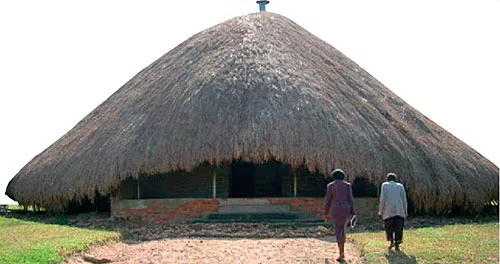
Location: Nansana, Wakiso District, Uganda, Wamala King’s Tombs.
Says WMF: “The Wamala King’s tombs, including the shrine of Kabaka Suuna II, are one of only two tomb complexes remaining in Uganda. Wamala remains a very important site for traditional religious practices hosted by the royal family, a place where the Kabaka and his representatives frequently carry out important rituals allowing them to communicate with their ancestors. Watch listing this highly significant heritage site could help revitalize community engagement in its stewardship.”
Photo courtesy World Monuments Fund
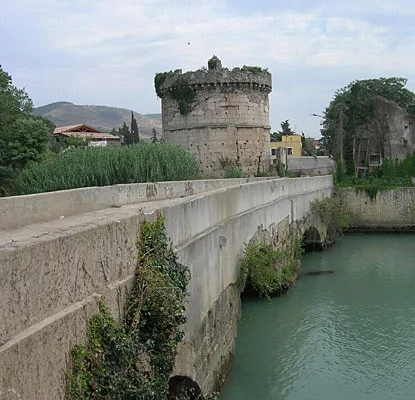
Location: Tivoli, Italy, Ponte Lucano.
Says WMF: “Dating from the 1st century B.C. and extending the ancient consular road of Via Tiburtina, Ponte Lucano served the road from Tivoli to Rome until the mid-20th century and remained in use for car traffic until just a few years ago. The bridge is part of an archaeological landscape that includes remains of the mausoleum of Plautii (1st century B.C.) and a 16th-century public inn, and acts as a gateway to the Villa Adrianna World Heritage Site. However, recent development pressures and management issues along the Anio waterway have dramatically altered its enduring character.”
Photo courtesy World Monuments Fund
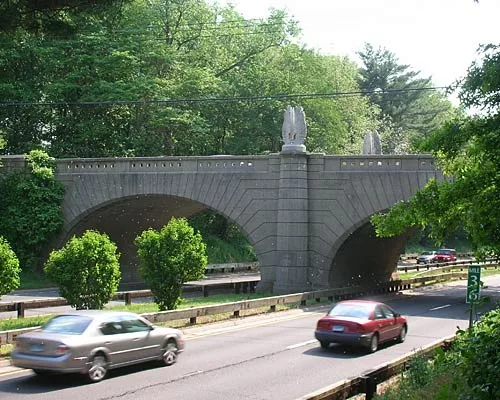
Location: Connecticut, United States, Bridges of the Merritt Parkway.
Says WMF: “Completed in 1940, the parkway stretches 37.5 miles and was conceived in the 1920s to relieve congestion on Post Road, which hosted almost 24,000 vehicles a day. Originally, the Merritt was designed with 68 bridges ranging in design from French Renaissance and neoclassic to art deco and rustic. Today, 36 bridges, both contemporary and dating to the initial completion of the road, divide the scenic drive. The preservation of these many distinct bridges may be at risk due to necessary infrastructure work required to maintain the Merritt as a major thoroughfare.”
Photo courtesy World Monuments Fund
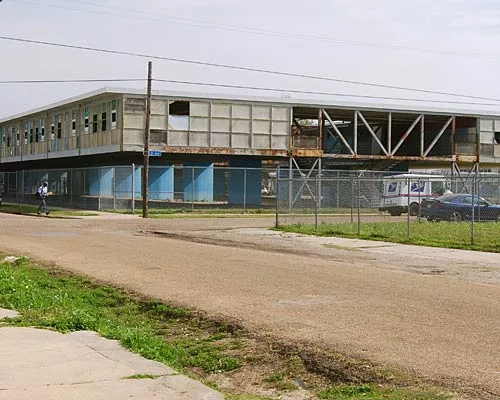
Location: New Orleans, Louisiana, Phillis Wheatley Elementary School.
Says WMF: “In 1954, the architect Charles Colbert constructed an elevated cantilevered steel truss structure to provide an expansive shaded playground area, protecting the schoolchildren from the tropical climate. More than 50 years later, the elevated form proved highly effective in protecting the Phillis Wheatley Elementary School from the floods of Hurricane Katrina. Since the hurricane, the Orleans Parish School Board has shuttered the building, and decay and vandalism have taken their toll on this striking statement of modern design. Demolition of the edifice to construct a new school has been proposed, and Docomomo-Louisiana has countered this proposal by suggesting an adaptive reuse of the building as a community center.”
Photo courtesy World Monuments Fund
The World Monuments Fund (WMF) has announced its biannual list of “watch sites”—buildings and landscapes of significant cultural value that, according to the organization, require urgent attention. The WMF states that the sites are selected based on four criteria: “significance, urgency of the situation, viability of proposed actions, and relevance of the issues to the heritage field at large.”
The 2010 list consists of 93 sites located in 47 countries. Of those, 11 are in Africa and the Middle East, 38 in North and South America (with nine in the U.S.), 18 in Asia, and 26 in Europe. Sites represent a range of concerns and scales, from well-known landmarks—Macchu Picchu in Peru or Frank Lloyd Wright’s Taliesin in Wisconsin and Taliesin West in Arizona—to more unusual places, like the rural Chiktan Castle in India, a rammed-earth structure dating from the 16th century. Other sites have political and cultural turmoil in their regions. For instance, the Old City of Herat in Afghanistan, on the list for the second time, is under threat from unchecked development in the area. The Iraqi Al-Habda’ Minaret is in need of structural improvement for its distinctive “hunchback” form.
During a press event at the organization’s New York City headquarters, WMF President Bonnie Burnham spoke of the value of the watch list. It generates publicity for the sites, she said, and often spurs community or government action. Additionally, the WMF assists in fundraising or fund-matching whenever possible, and has raised $50 million for endangered sites since the watch list program began in 1996.
A complete listing of the sites and more information can be found at the organization’s Web site, wmf.org.
Looking for a reprint of this article?
From high-res PDFs to custom plaques, order your copy today!