Museum of Brutalist Architecture to Open at London’s Acland Burghley School
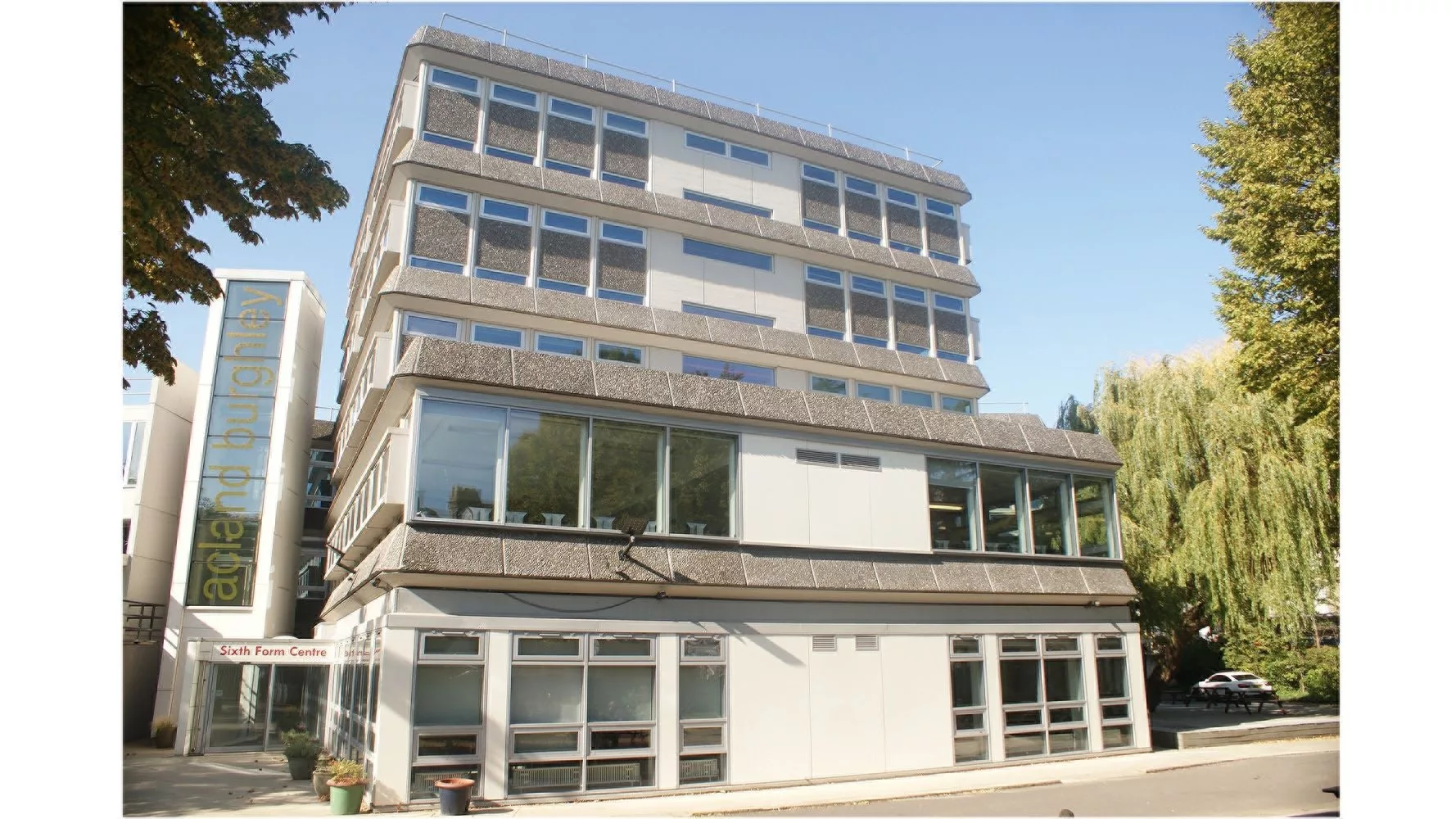
The Acland Burghley School in Tufnell Park, Camden, London. The future Museum of Brutalist Architecture will be located within the school's rehabilitated assembly hall.
The world’s first museum devoted entirely to Brutalist architecture has been announced and is set to open in a secondary school in North London in 2027.
The Acland Burghley School, designed by Howell Killick Partridge & Amis and completed in 1968, was chosen for the Museum of Brutalist Architecture (MoBA), in part, because it is one of the last remaining Brutalist school buildings in the United Kingdom. The 1,000-student school, characterized by its expressive use of raw materials and its rigorous volumes that produce a clear structural image, received Grade II protection in 2016. The announced renovation of the school’s hexagonal assembly hall, which will house the museum, will be funded by a roughly $1.3 million grant from the National Lottery Heritage Fund, awarded in 2022.
Reed Watts Architects, founded in London in 2015, will lead the renovation and adaptation, which will include a restoration of the assembly hall and its double-ended concrete and wood-lined auditorium. According to the architects, “a number of insensitive alterations have compromised the integrity of the space and its usability. We are working with the school, its staff and students, to undo this harm and to reinvigorate the building, reinstating access for the community and bringing facilities up to modern standards.” In addition to accommodating the museum, the renovation plans include a new underground earth tube passive ventilation system, improved accessibility, upgrades to the auditorium’s front- and back-of-house facilities, and new staging and seating that will accommodate up to 300 people. The museum, which will be located in the entrance lobby of the assembly hall, will feature permanent displays and a digital archive. Urban Learners, a U.K. nonprofit focused on creating heritage and cultural opportunities for students, is developing the museum, and some of the digital archive is already available on the museum’s website.
The school is not just a fitting location for a museum about Brutalism because it is an exemplification of the style but because the New Brutalist movement got its start with British architects Alison and Peter Smithson’s competition-winning Hunstanton School in 1953. Pulling its name from Le Corbusier’s béton brut, or raw concrete, and with Hunstanton as a point of reference, the Smithsons and British critic Reyner Banham, most famously with his 1955 essay “The New Brutalism,” defined the postwar movement as an uncompromising “bloody-mindedness” toward material and structural honesty that pulled a “rough poetry” out of everyday life.

The school is a notable work by prolific post-war British firm Howell Killick Partridge & Amis. Photo by Jim Osley, Wikimedia Commons
In recent years, however, Brutalism has found itself at the center of culture wars and political debate. Rather than the Smithsons’ ethic of material and structural honesty, the term brutalist is more often conflated with austere and imposing government offices—such as the J. Edgar Hoover Building in Washington D.C.—or dystopian visions of Soviet bloc housing. In 2024, American political commentator Tucker Carlson claimed that the message of Brutalist architecture is that “you mean nothing, you are replaceable, you are a widget in a bin awaiting assembly.” For Carlson, Brutalism is about brutality not béton brut. In the United States, this sentiment has fueled efforts during both the first and second Trump administrations to “make architecture great again.” But at the same time, social media is filled with striking images of Brutalist architecture, and in 2024, the popular Instagram account @BrutalistPlants published a monograph of the same name. Since 2017, the organization #SOSBrutalism has collected a database of over 2,000 structures in their effort to “save Brutalist buildings,” and they have staged exhibitions in Austria, Germany, the U.S., and Taiwan. Earlier this year, in response to what it called “intense media and public interest,” the National Building Museum extended the run of its Capital Brutalism exhibition by several months.
Amid such contentious and divergent views toward Brutalism today, there is clearly a need for MoBA to, as the website claims, “stimulate awareness of Brutalist architecture to amplify its cultural and heritage value.”
Looking for quick answers on architecture and design topics?
Try Ask RECORD, our new smart AI search tool.
Ask RECORD →
Looking for a reprint of this article?
From high-res PDFs to custom plaques, order your copy today!