Spotlight: Townhouse Renovations
Quebecois Architect Jérôme Lapierre Deftly Balances Old and New in Renovating a 1920s-Era Duplex
Quebec City
Architects & Firms
Above the storefront office of Jérôme Lapierre Architecte, in the Montcalm neighborhood of francophone Quebec City, hangs a sign saying “Célébrer l’ordinaire,” or celebrate the ordinary. It’s a core principle for the talented 37-year-old, whose work is characterized by a modest, vernacular elegance.
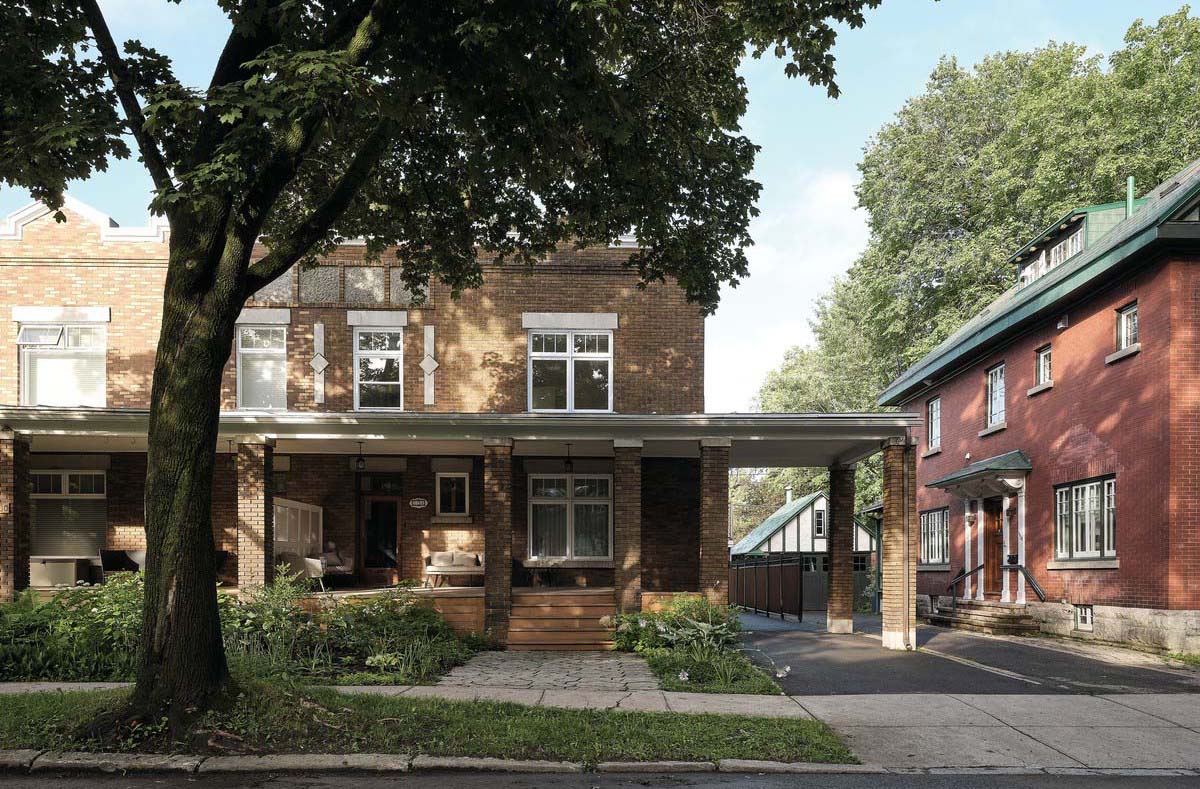
Pascale Trépanier, a physician who passed by the sign regularly on her way to and from work, was charmed by its sentiment. She and her husband, Pierre-Luc Gosselin, an economist, needed larger quarters for their growing family. They were determined to stay in Montcalm, whose attractions include walkable tree-lined streets filled with an eclectic mix of architecture, the Musée national des beaux-arts du Québec, and the Plains of Abraham, a historic park overlooking the St. Lawrence River.
On a quiet street close to the park, the couple found a small brick building dating from 1921. They wanted to buy one of its two mirror-image duplex units, but it had drawbacks, including a layout that didn’t entirely suit a life with two young children. Their wish list included a family-friendly kitchen on the main floor plus an additional bathroom upstairs. But the problem that worried them most was a lugubriously low light level. “It was almost pitch-dark in the staircase and main living areas,” Trépanier recalls.
1
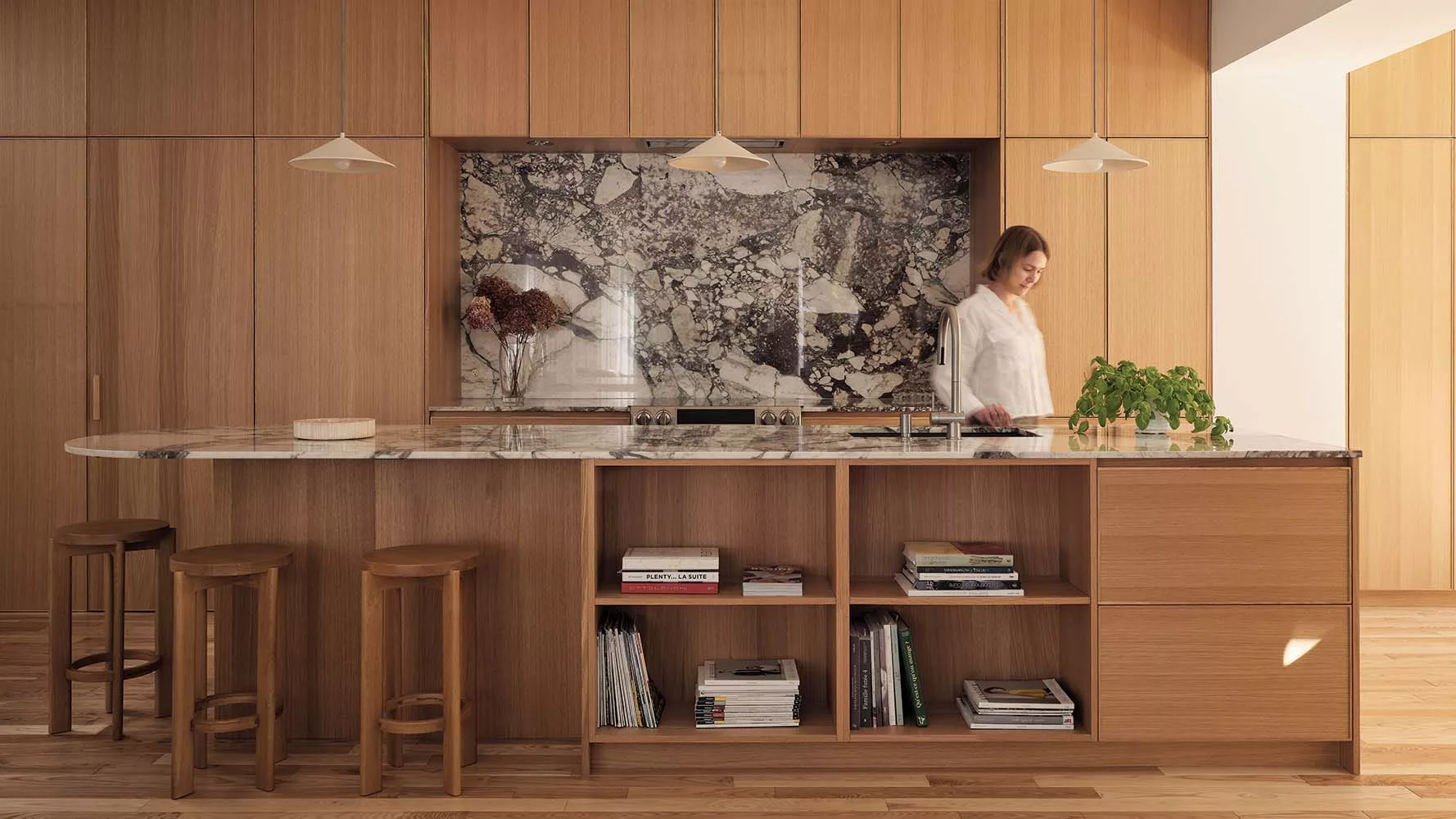
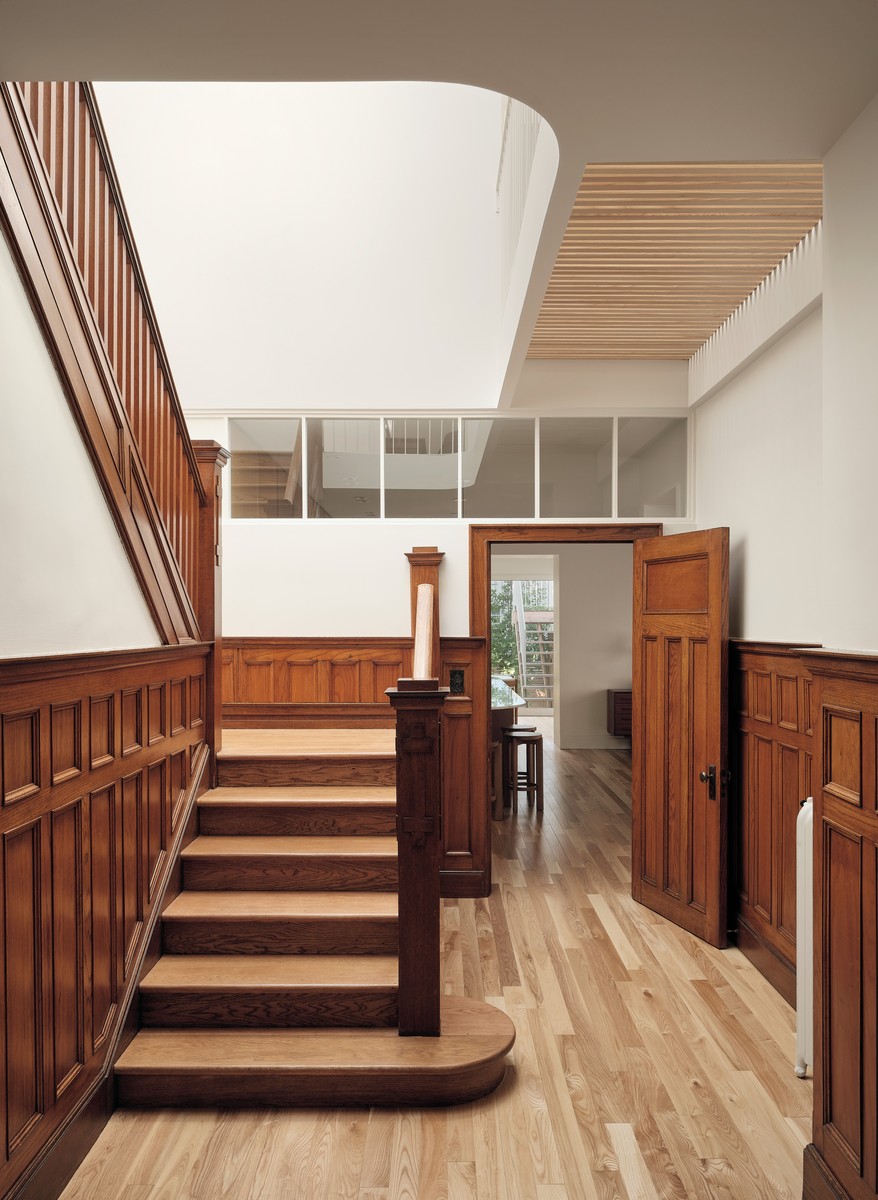
The house (1) includes a renovated stair hall (2) that leads to an updated kitchen (top of page). Photos © Maxime Brouillet, click to enlarge.
2
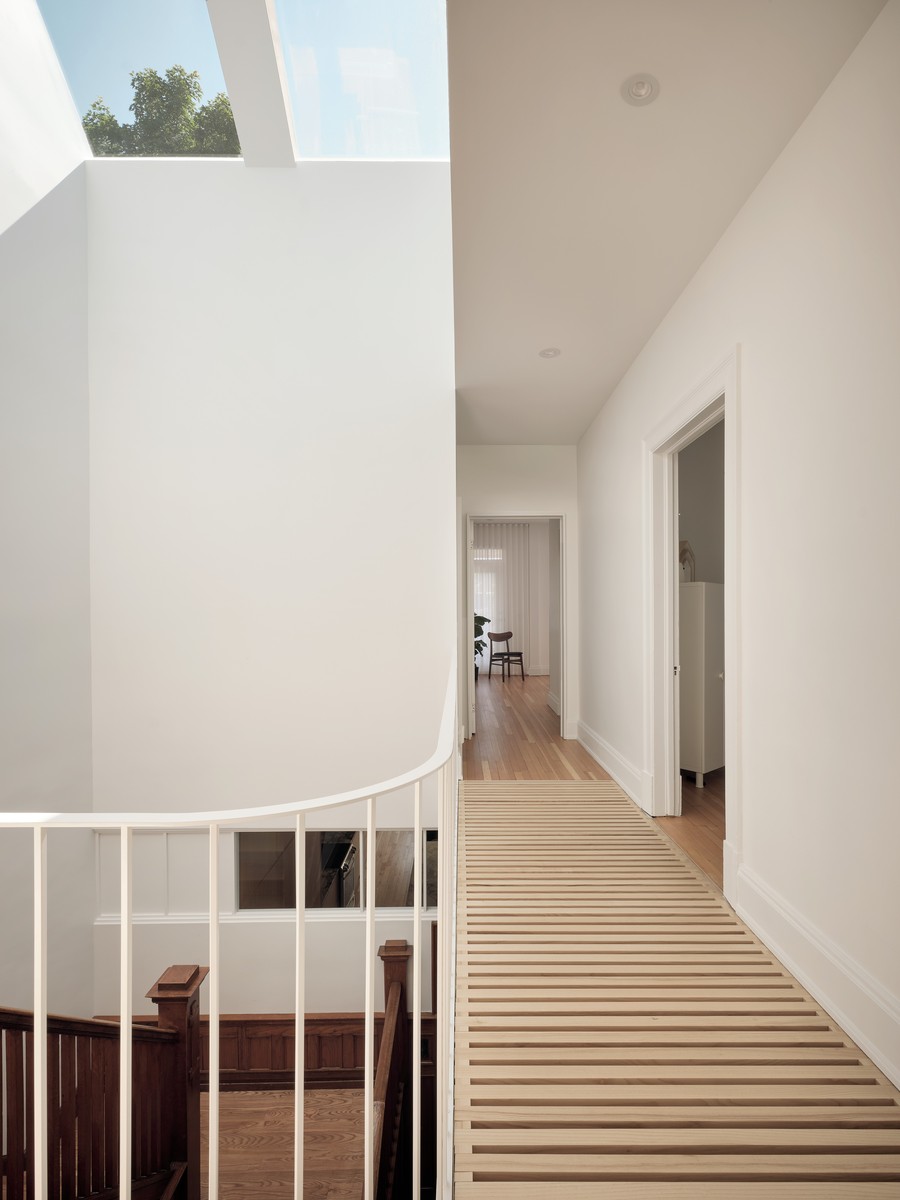
Lapierre, who also lives in Montcalm, saw the gloomy interior stair as an opportunity to create a luminous vertical void by adding a boldly scaled but simply shaped gabled skylight on the roof above. “Though invisible from the street,” he explains, “it has transformed the central space by creating moments of dancing light that celebrate the changing moods of the day.” To expand the scope of the illumination, he added a divided-lite clerestory to the wall shared with the kitchen. He also rebuilt a narrow stretch of the second floor adjacent to the stair as a slatted wood bridge. The result below is a dynamic play of brightness and shadow that highlights the dark woodwork of the entry hall.
3
4
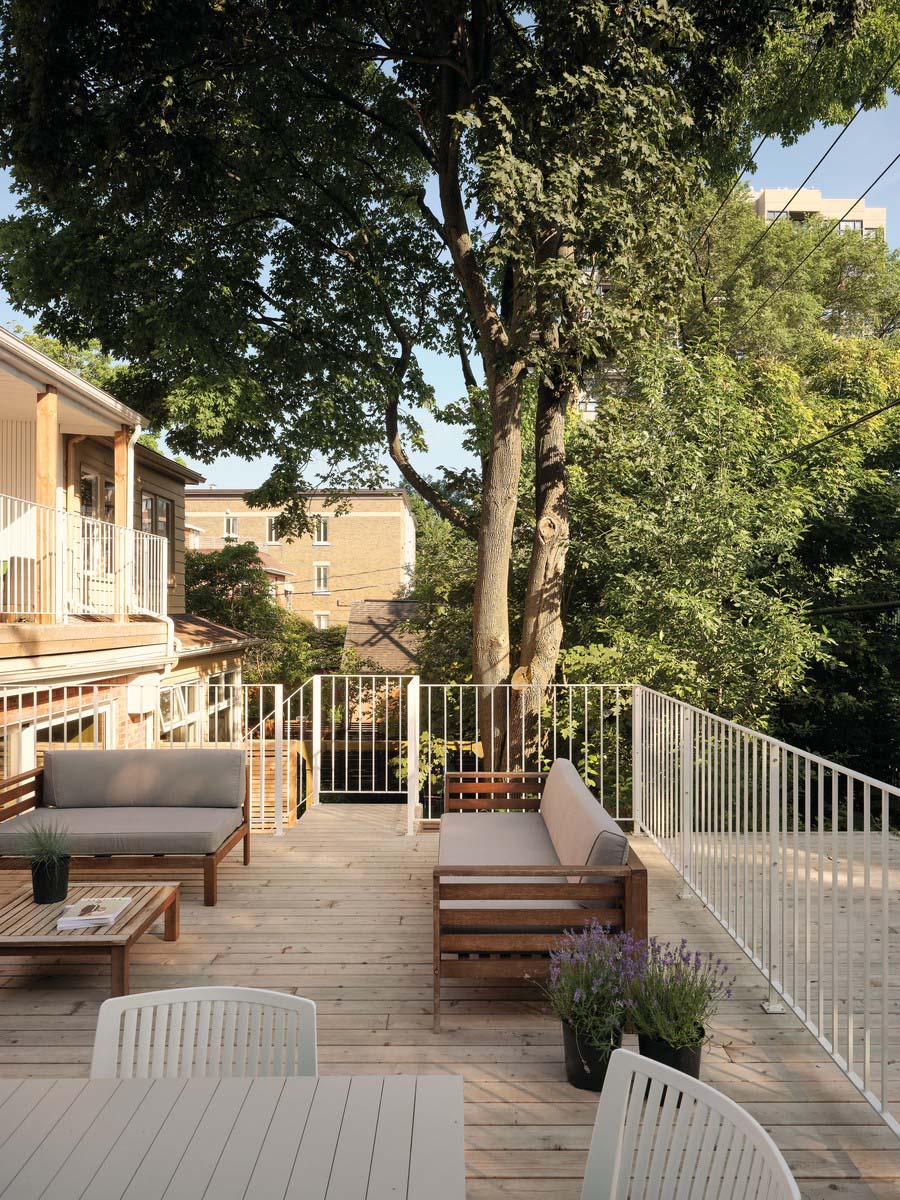
The stair hall’s slatted bridge (3) leads to a terrace (4) and a bedroom (5). Photos © Maxime Brouillet
5
There are no big, jazzy moves in plan, just clear and clever problem-solving. Lapierre and his team have mostly left the gracious arrangement of discrete rooms intact, modifying it only slightly to create a more workable kitchen with adjacent spaces for lounging, playing, and eating, plus a primary suite with its own bathroom on the floor above. The small garden behind the house has been linked by stairs to two rooftop terraces, including one over the garage, forming an airy sequence of outdoor spaces.
Successful renovations require a well-considered attitude toward mixing old and new. Lapierre’s approach was informed by clear thinking and a deft hand with materials and details. “In the context of existing architecture, particularly with a heritage house like this one, clarity is essential,” he explains. “We aimed to create a bold contrast with the old, affirming the presence of our own time.” Examples include the new kitchen, which takes its cues from the vintage paneling of the stair hall and sets up a continuum of wood from front to back. It would have been easy, if predictable, to articulate its rift-cut white oak millwork as flush panels, but the architect chose instead to add the refinement of thin frames with integral finger pulls.
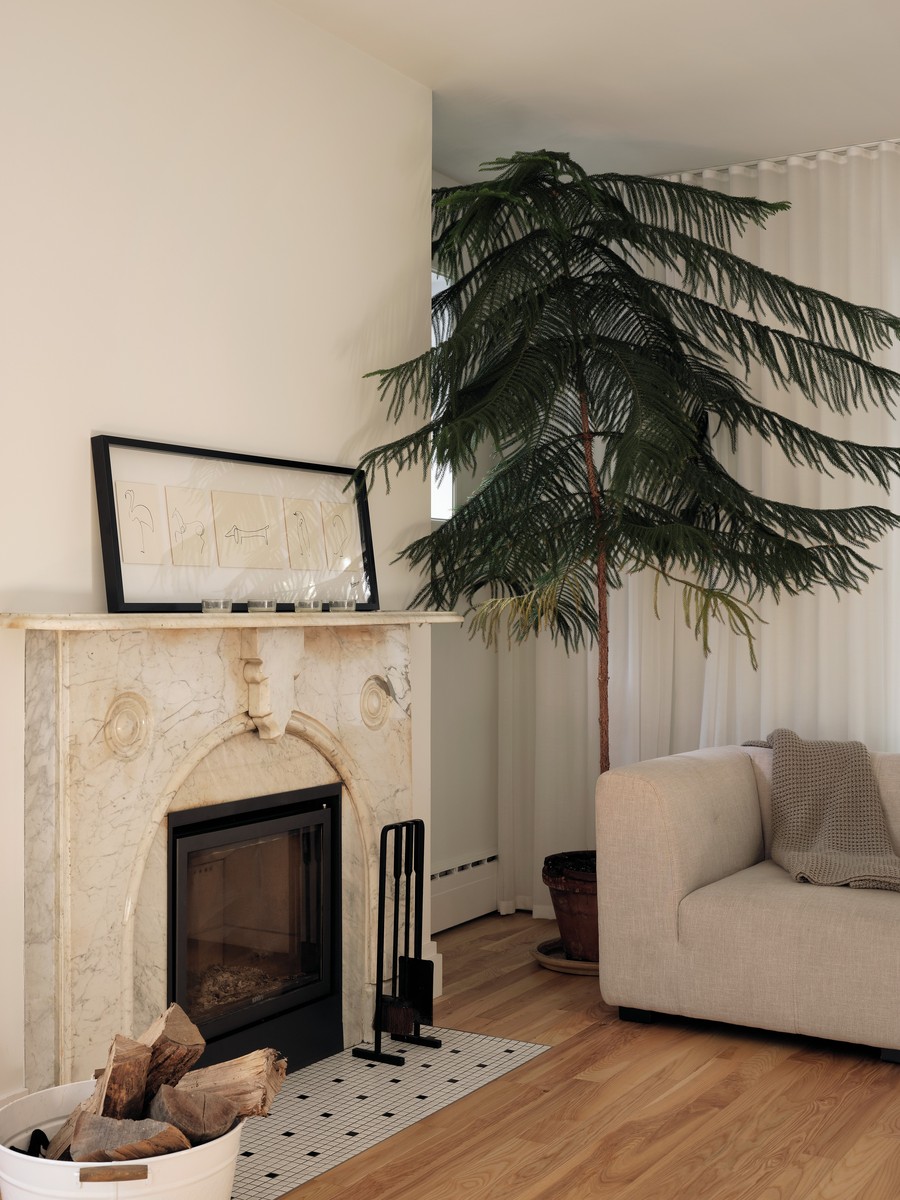
6
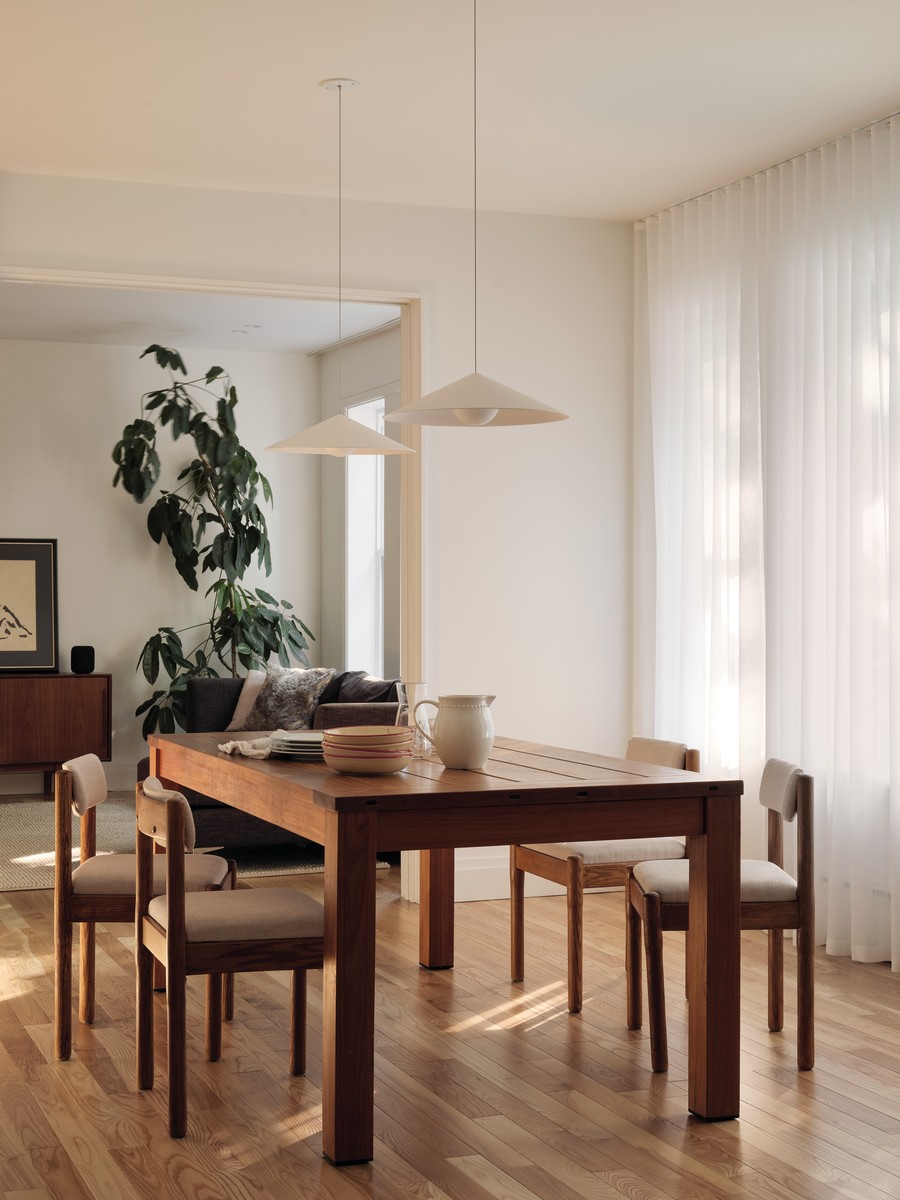
7
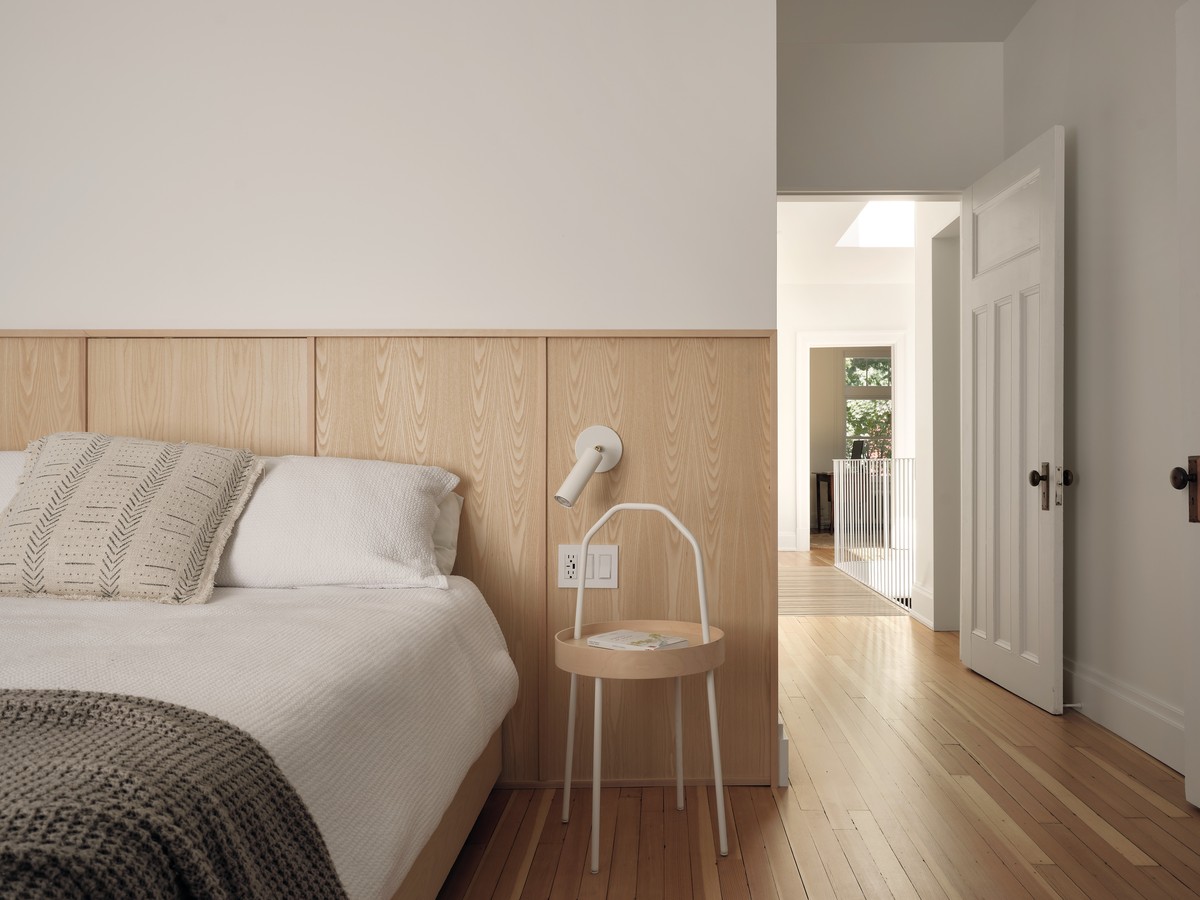
The interior palette is calm and muted (6 & 7). Photos © Maxime Brouillet
This thoughtful attention to detail continues throughout and includes new baseboards and door surrounds subtly abstracted from originals elsewhere in the house. A second-floor stair rail of slender steel rods painted white asserts itself as a contemporary counterpoint to the bulkier balustrade of dark oak below. “We draw inspiration from archetypes, says Lapierre. “Then we reinterpret, revisit proportions, and transpose them into a new language.” He may have intended to celebrate the ordinary, but he has achieved results that are extraordinary.
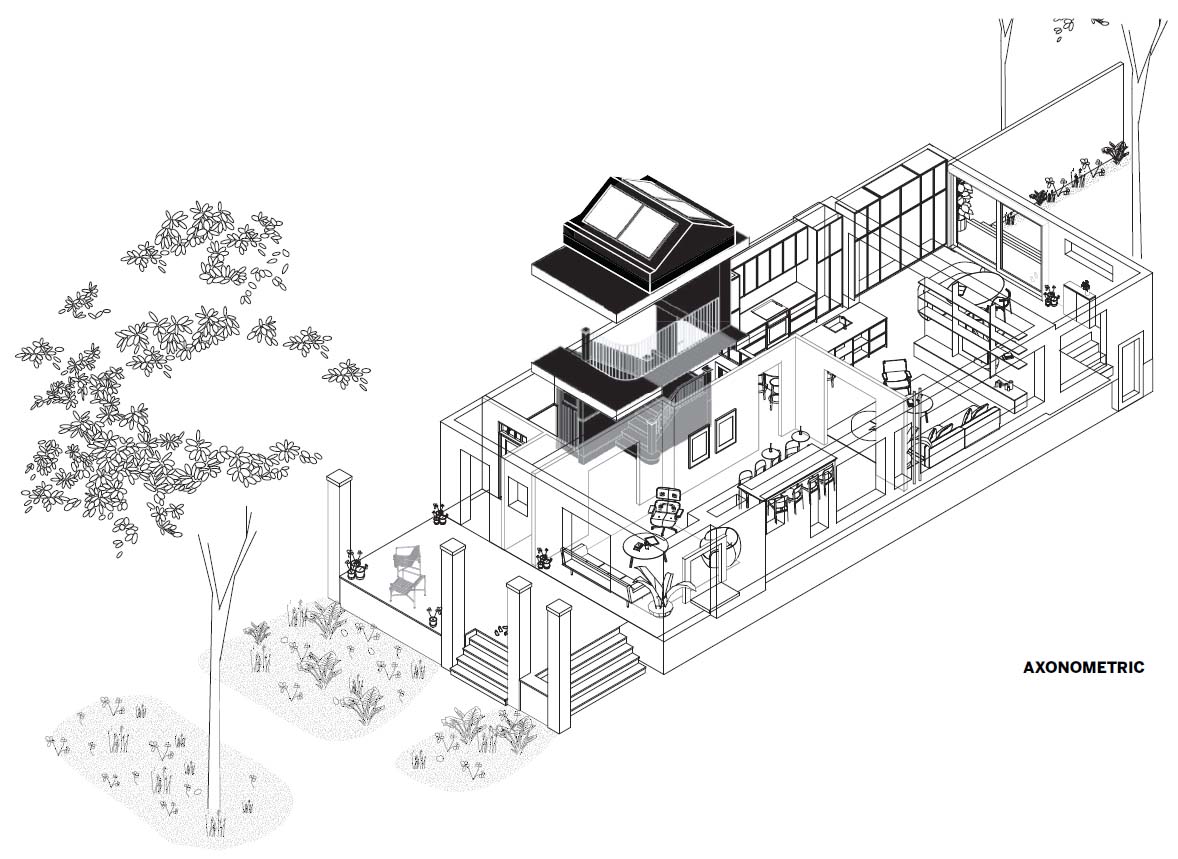
Courtesy Jérôme Lapierre Architecte, click to enlarge.
Read about other projects in our “Spotlight: Townhouse Renovations” series from the September 2025 issue.
Credits
Architect:
Jérôme Lapierre Architecte — Jérôme Lapierre, Florence Bouchard-Bédard, project leads
Engineer:
MA-TH (structural)
General Contractor:
Sequoia Construction
Client:
Pascale Trépanier, Pierre-Luc Gosselin
Size:
2,630 square feet
Cost:
$436,600 (construction)
Completion Date:
June 2024
Sources
Windows:
Shalwin Contemporain
Skylights:
Velux
Hardware:
Manital, Polare, Bocci
Cabinetry:
Cuisiconcept
Lighting:
Transit Luminaires, Anony
Looking for quick answers on architecture and design topics?
Try Ask RECORD, our new smart AI search tool.
Ask RECORD →
Looking for a reprint of this article?
From high-res PDFs to custom plaques, order your copy today!