South of Paris, Hemaa Builds a Children’s Recreation Center from Rammed Earth
Architects & Firms
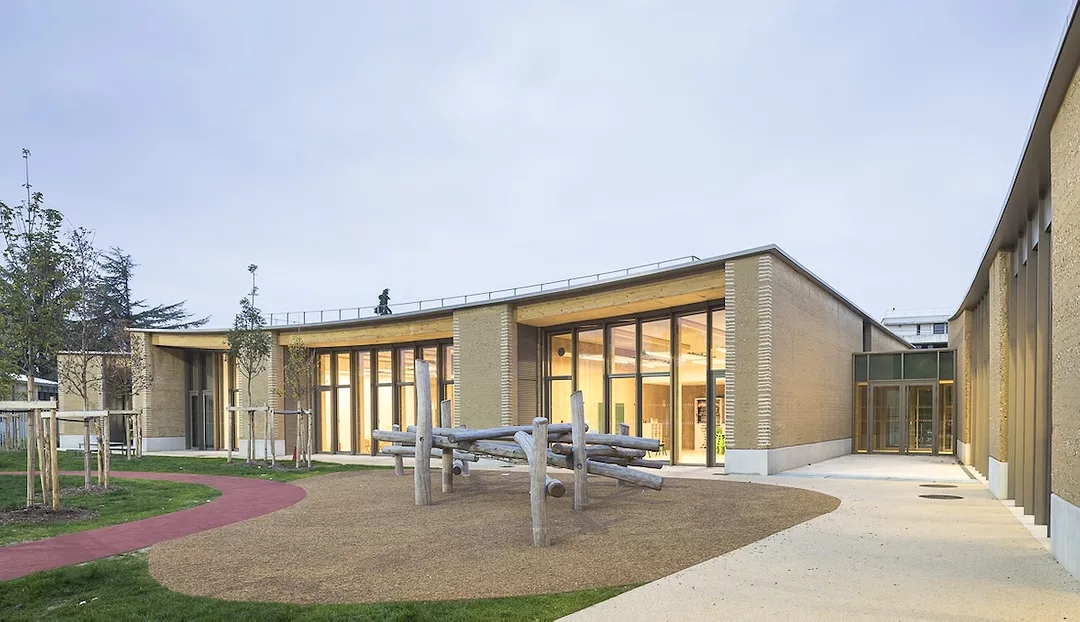
“One of our guiding principles on this site was to break with the all-concrete image of a 1970s new town,” says Pierre Martin-Saint-Étienne, founder, alongside Charles Hesters, of the young French architecture firm Hemaa. The project in question, a recreation center for children aged three to 11, is located 20 miles south of Paris in Évry-Courcouronnes, one of five satellite villes nouvelles planned by General De Gaulle’s government in the 1960s. Approaching the building, which stands on the northeastern edge of the Parc des Loges (one of several large green open spaces that aerate Évry’s loose urban fabric), two characteristics immediately stand out. First, it is built from load-bearing rammed earth, a construction method unthinkable during the cement-driven building surge of 1970s France. Second, the parkland on which it stands rises a good 7 feet above the otherwise flat landscape. As it turns out, these two features are intimately linked.
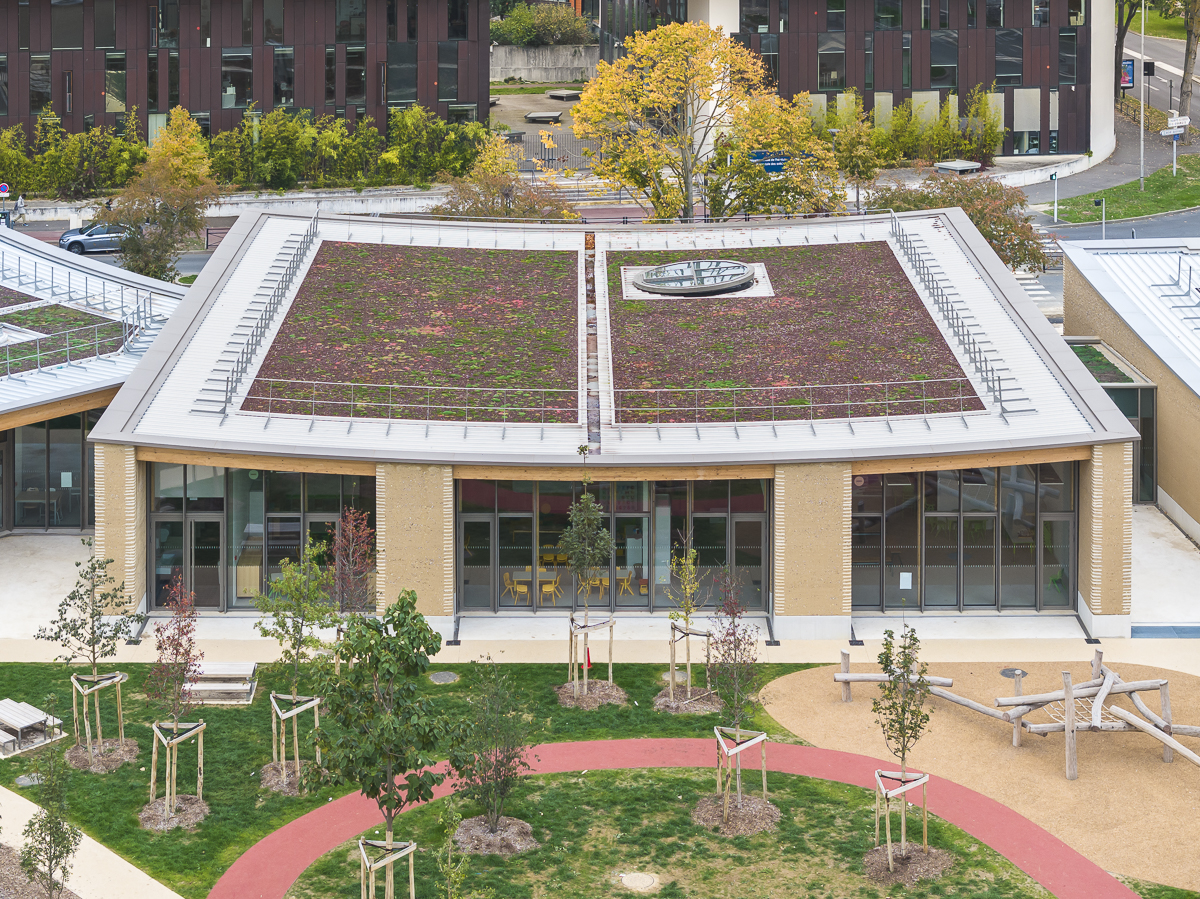
Photo © Sergio Grazia
“The competition brief required squeezing both the recreation center and a car park for 50 vehicles into the 80,000-square-foot site,” explains Hesters. “We thought it would be a far better idea to put the cars underground and let the center spread out at its ease across the whole plot.” Given the need to burrow, the architects immediately imagined using the earth excavated on site—especially since, it turned out, the park had been planted on top of debris from the notorious trou des Halles, the giant hole dug to contain Paris’s Les Halles train and Métro interchange in the 1970s. What no one knew, however, was that the soil at the Parc des Loges was polluted with asbestos from pipes laid down during its creation. Cycle Terre, a compressed-earth-block factory, came to the rescue, taking the soil away for treatment and supplying fresh earth from the tunnels being dug for Paris’s new orbital metro lines.
Photos © Sergio Grazia
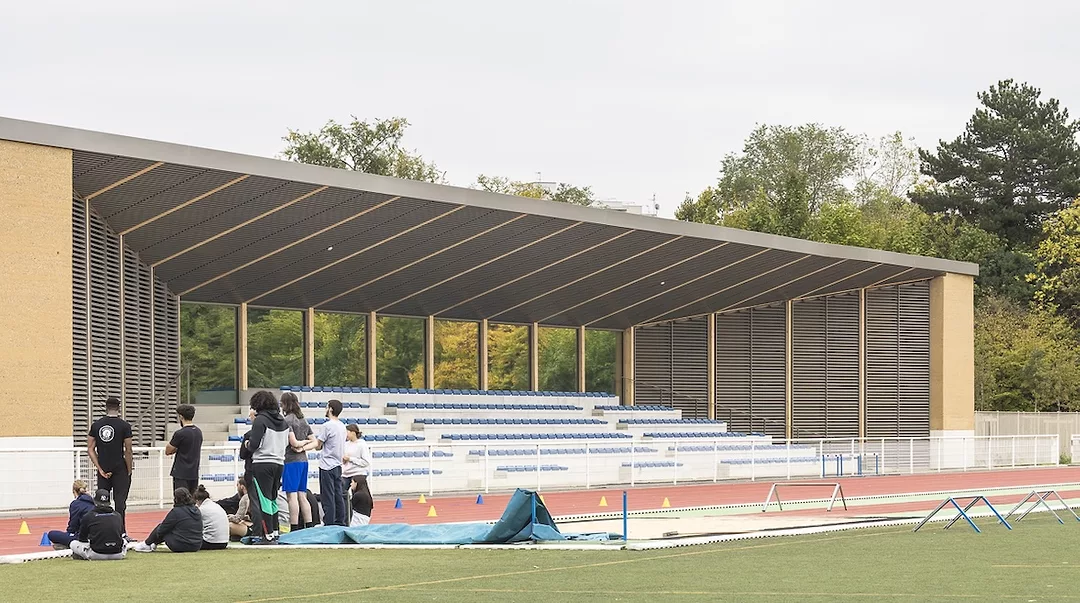
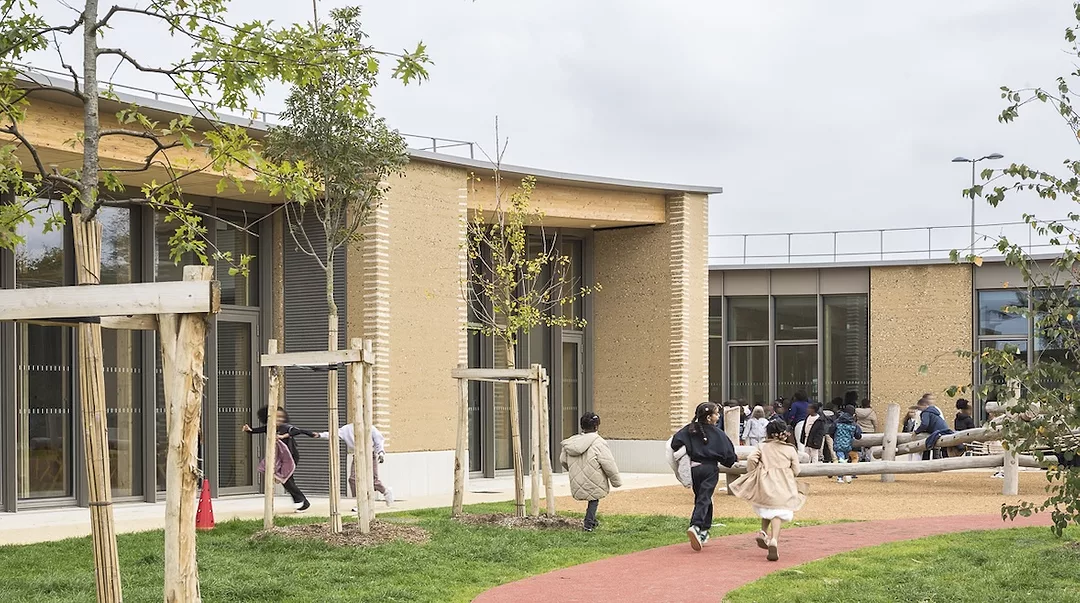
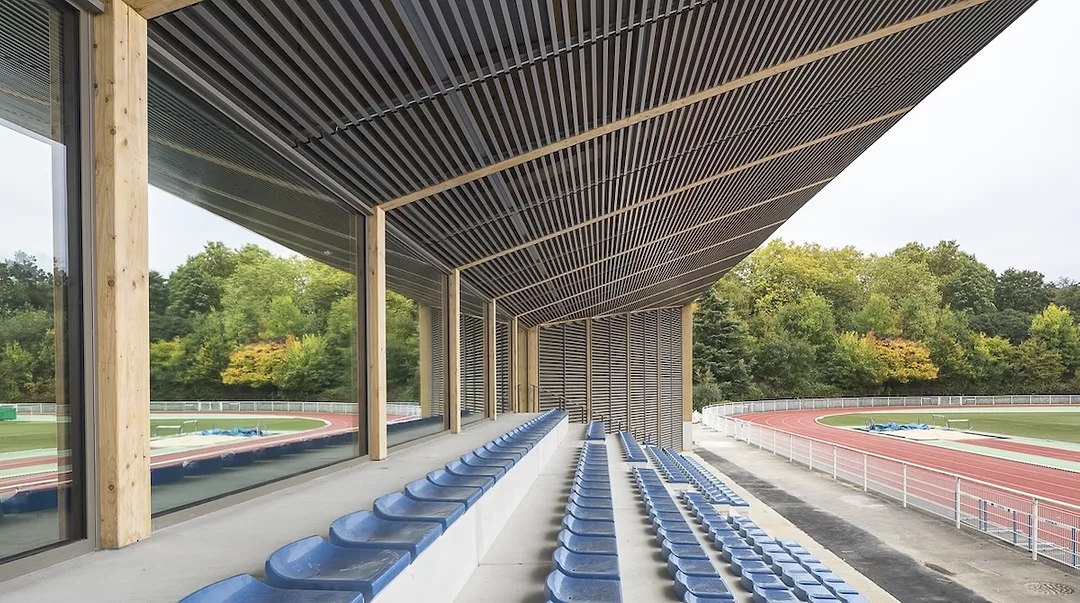
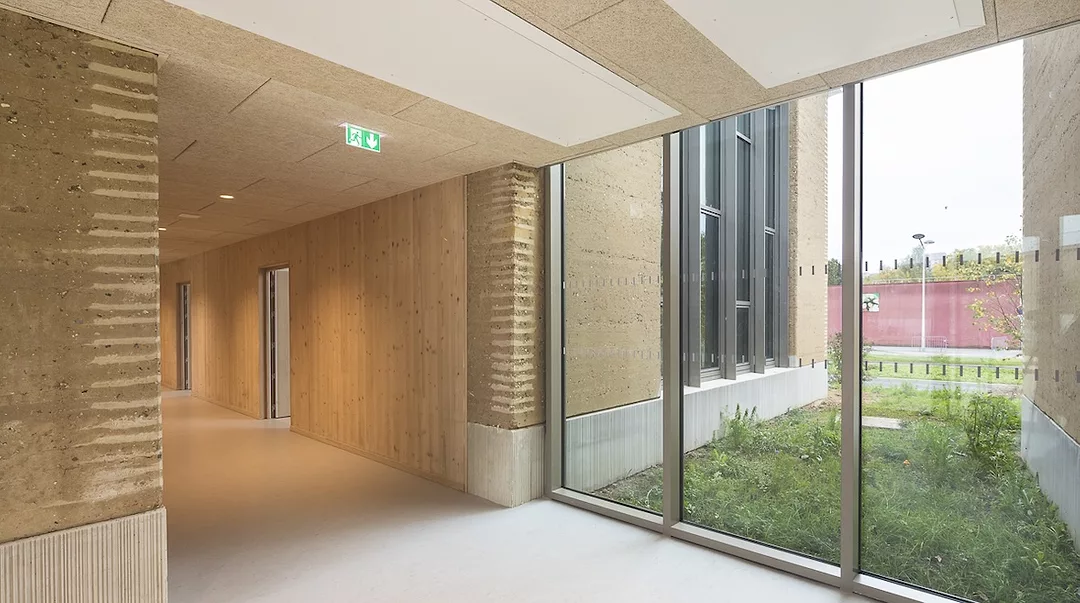
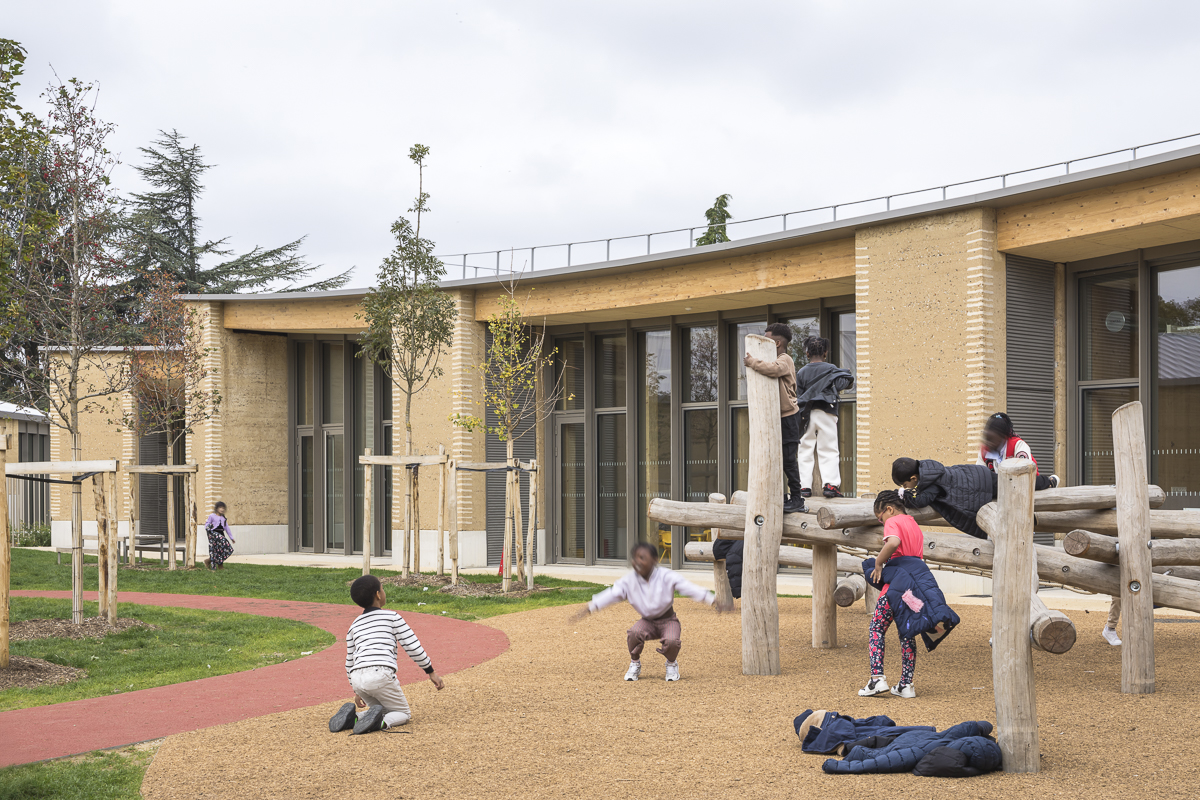
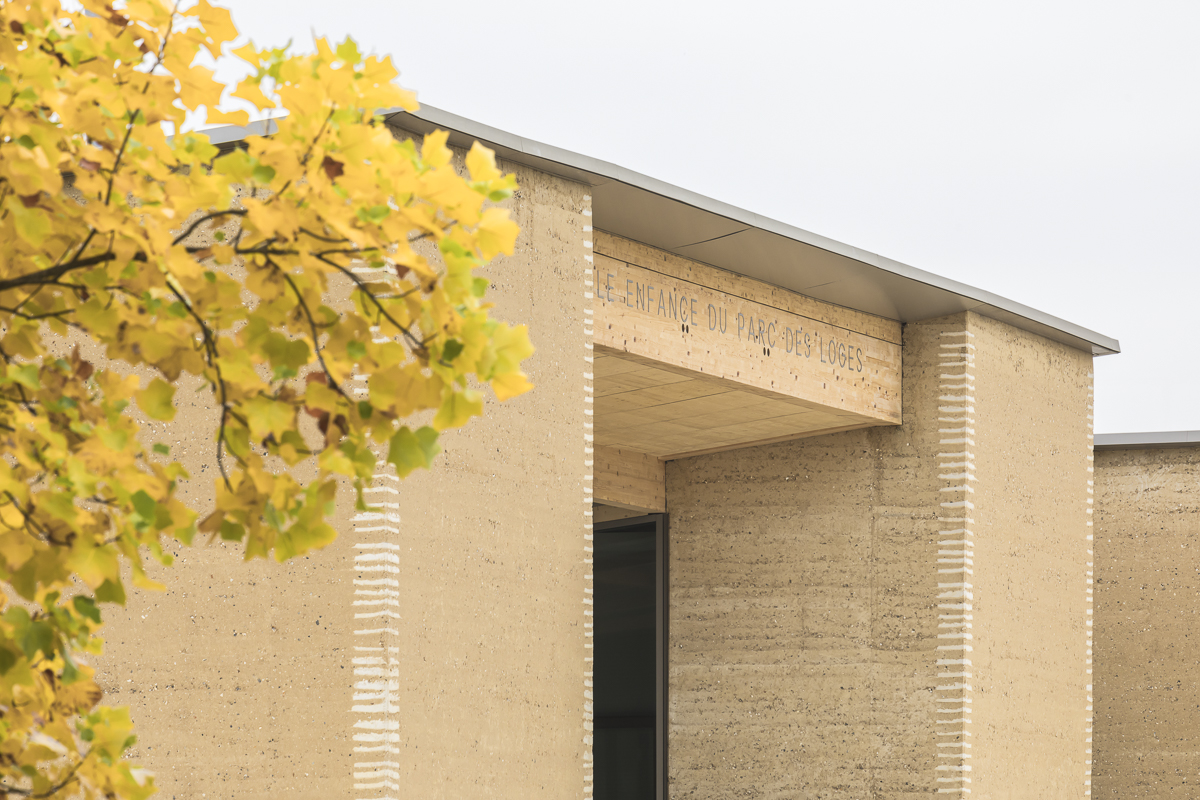
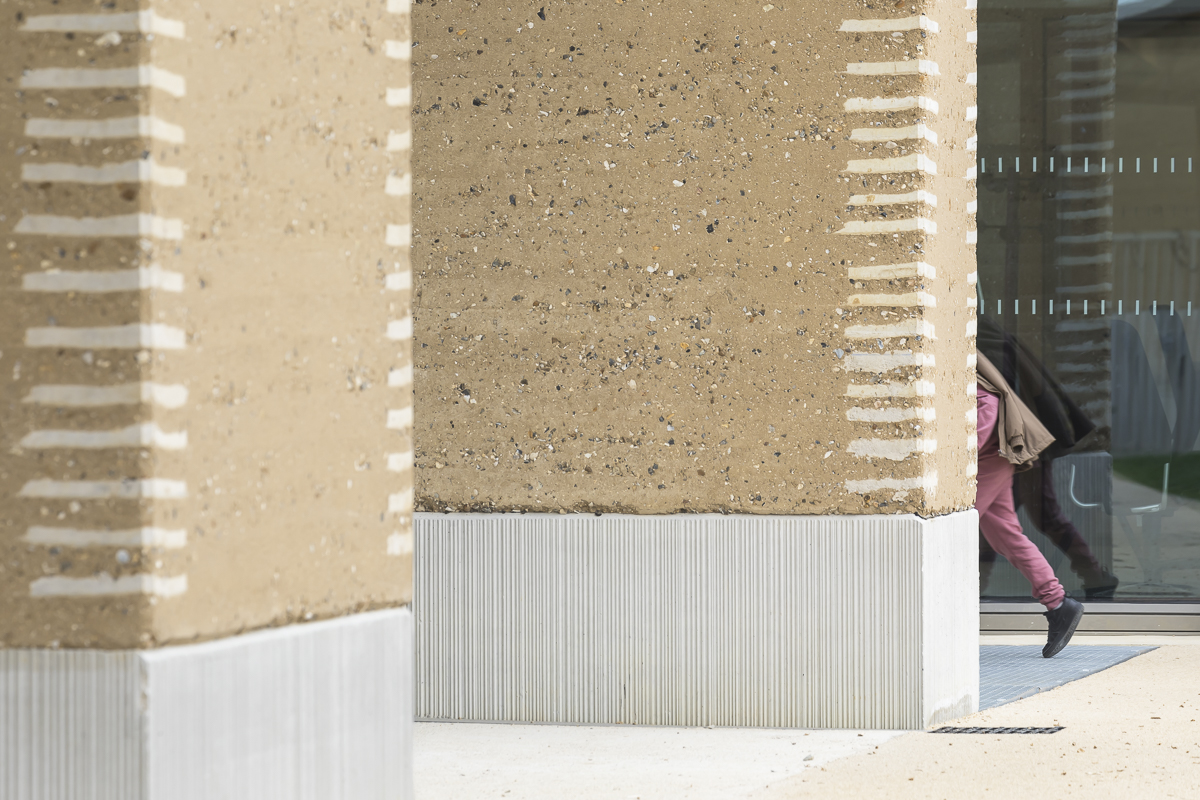
Thanks to the underground parking garage—constructed, like the foundations, from reduced-carbon concrete in which blast-furnace slag replaces cement—the recreation center comprises four single-story pavilions loosely and irregularly disposed along the site’s northern and eastern edges. On the southwestern side, a rammed-earth bleacher stand provides 300 seats for the neighboring athletics track, as well as enclosing the recreation center’s landscaped courtyard, which is full of trees, shrubs, water games, and other play facilities. Untreated externally, the 20-inch-thick earth walls bear all the traces of their making, and are striated at their corners with layers of lime, added for reinforcement. Structurally, they need only be 17 inches deep, but include an erosion margin of just over an inch.
Photos © Sergio Grazia
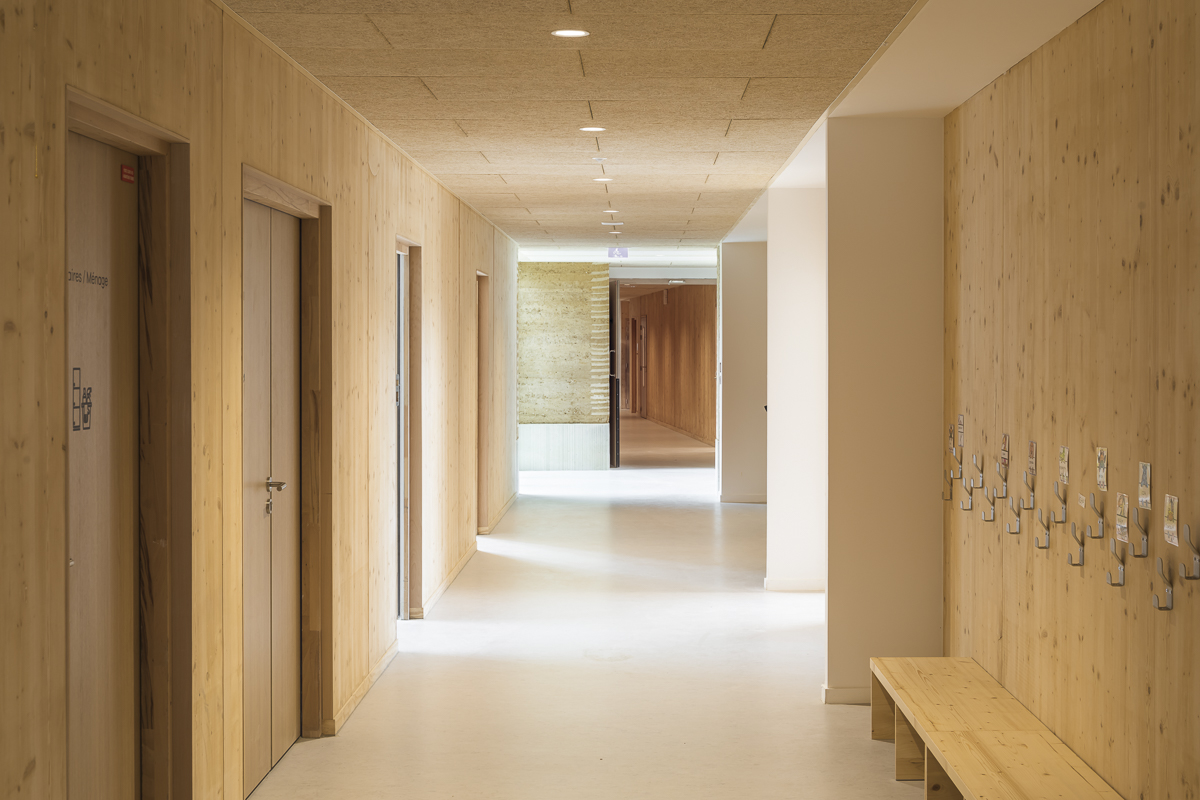
Slotted into lime pockets, the timber roof frames are heavily cross-braced to prevent the abrading effect of torsion on the earth walls. Softening the building’s presence in its leafy environment, the roofs’ concave profiles “swoop up toward the trees,” as Martin-Saint-Étienne puts it. Furthermore, like the courtyard, they are green. Inside the building, timber is exposed, and daylight floods into the playrooms thanks to generous skylights and large expanses of glazing that open onto the courtyard. As the architects explain, Évry’s recreation centers are frequently attached to schools, meaning that children whose parents cannot afford vacations spend the entire year in the same building. Here they experience a contrasting environment, where they glimpse the possibilities of an alternative future.
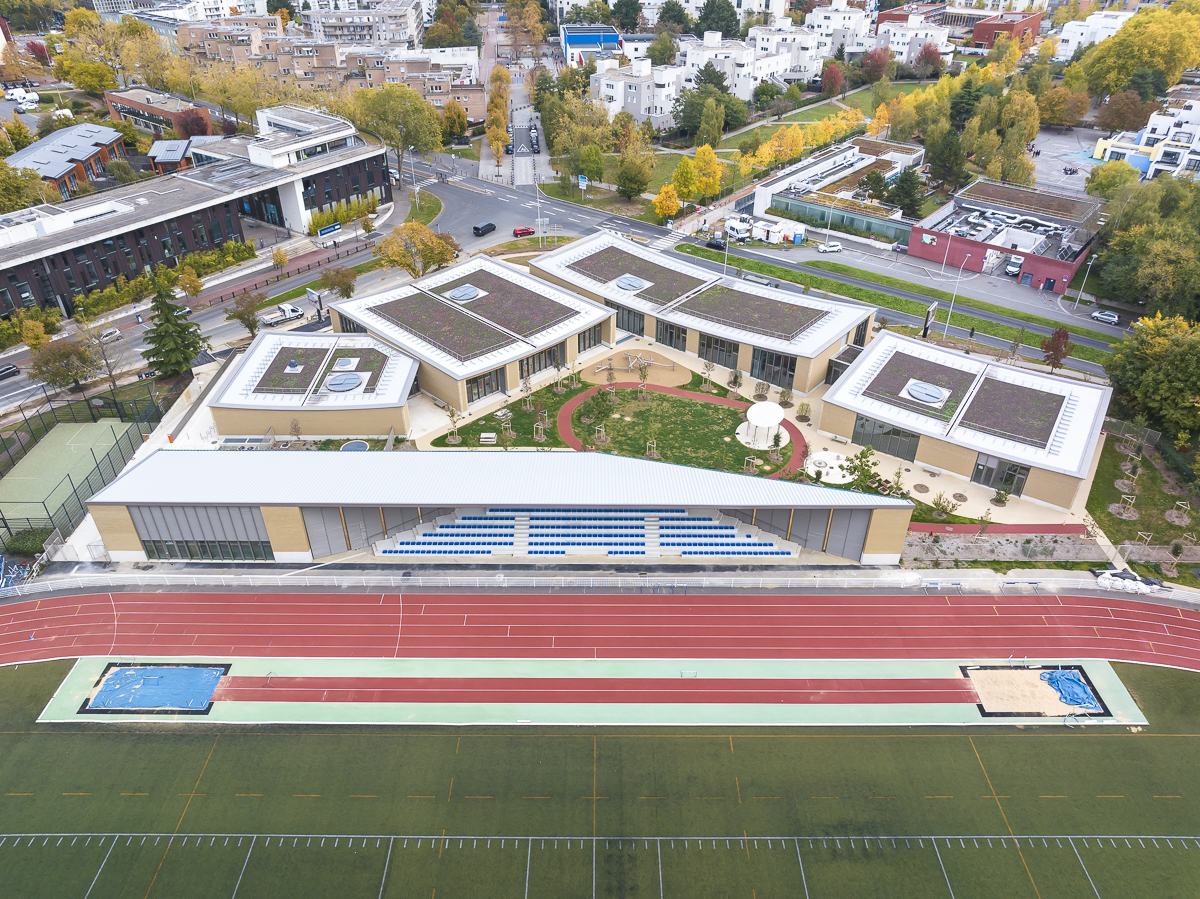
Photo © Sergio Grazia
Looking for quick answers on architecture and design topics?
Try Ask RECORD, our new smart AI search tool.
Ask RECORD →
Looking for a reprint of this article?
From high-res PDFs to custom plaques, order your copy today!