Health & Wellness
Biophilic Design and Adaptive Reuse Converge at Princeton’s Frist Health Center
Princeton, New Jersey
Architects & Firms
American college campuses are rife with unusual rites, rituals, and activities. Perhaps the most curious of all is happening now on the campus of Princeton University, where students are hanging out at a new health clinic without being ill.
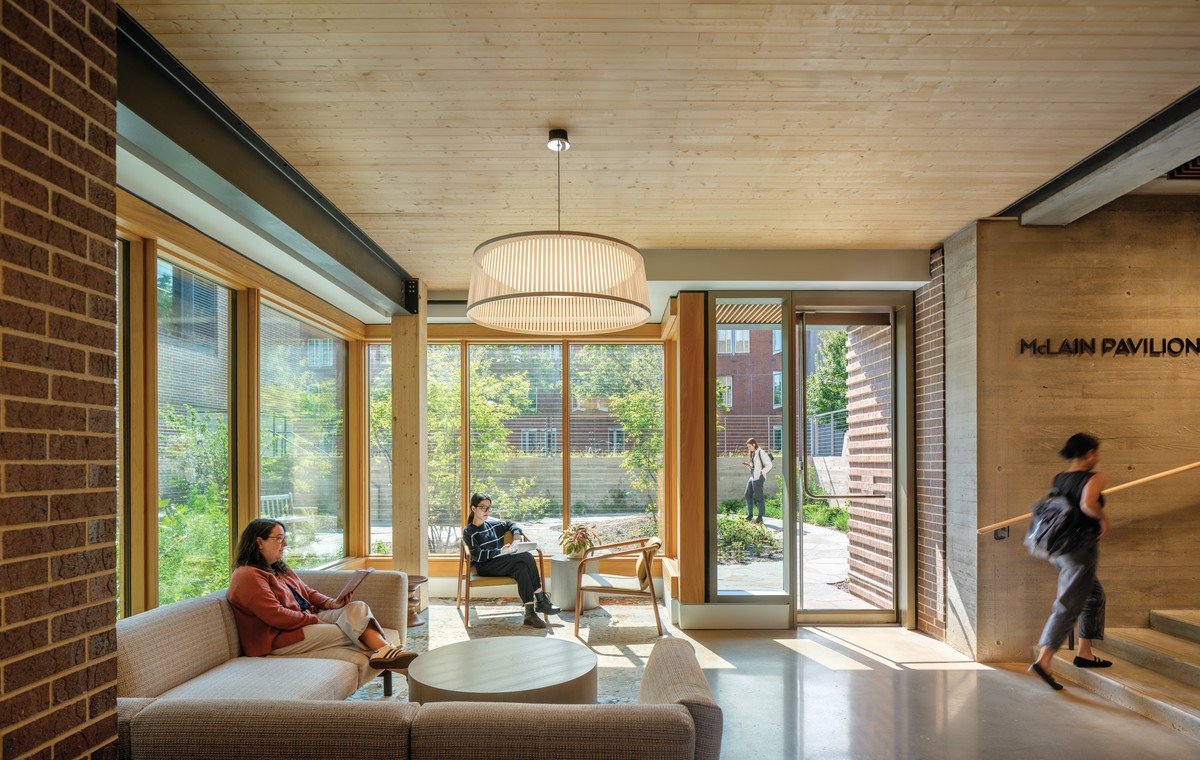
“This tells me that, at some level, the building is working,” says Mitch Fine, partner and leader of the higher-education practice at WRNS Studio. The San Francisco–rooted architecture firm’s New York City office is behind the Frist Health Center, an appealing and highly approachable new addition to the Princeton campus, where this atypical behavior is taking place thanks to a strong—but never overbearing—emphasis on biophilia (exposed wood, direct visual connections to the outdoors, and greenery abound) and a porous three entrances that make it a welcoming place to congregate.
“We approached this project holistically and, in doing so, considered how to deinstitutionalize the clinical feel of a typical health-care environment,” says Fine. “We were thinking about the whole student and how we can treat them physically and mentally, along with the whole student body—those coming to the building who aren’t even sick.”
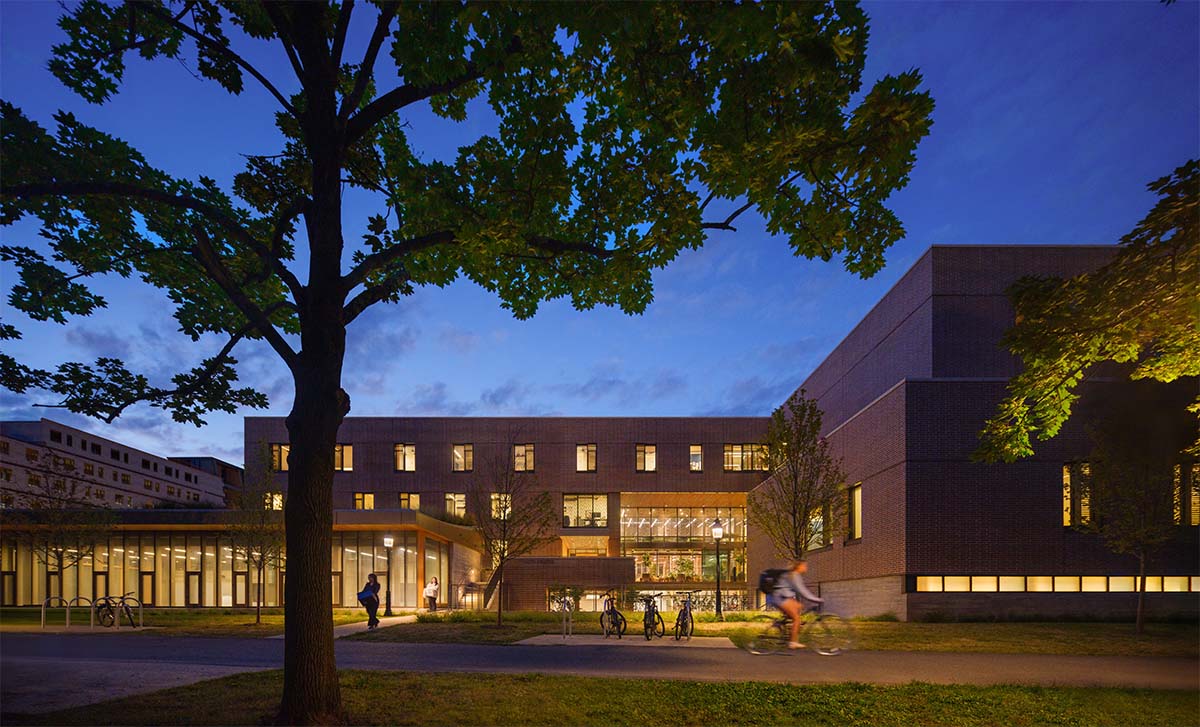
Nighttime view of the Frist from Goheen Walk, a busy campus thoroughfare. Photos © Jason O’Rear, click to enlarge.
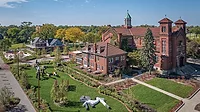
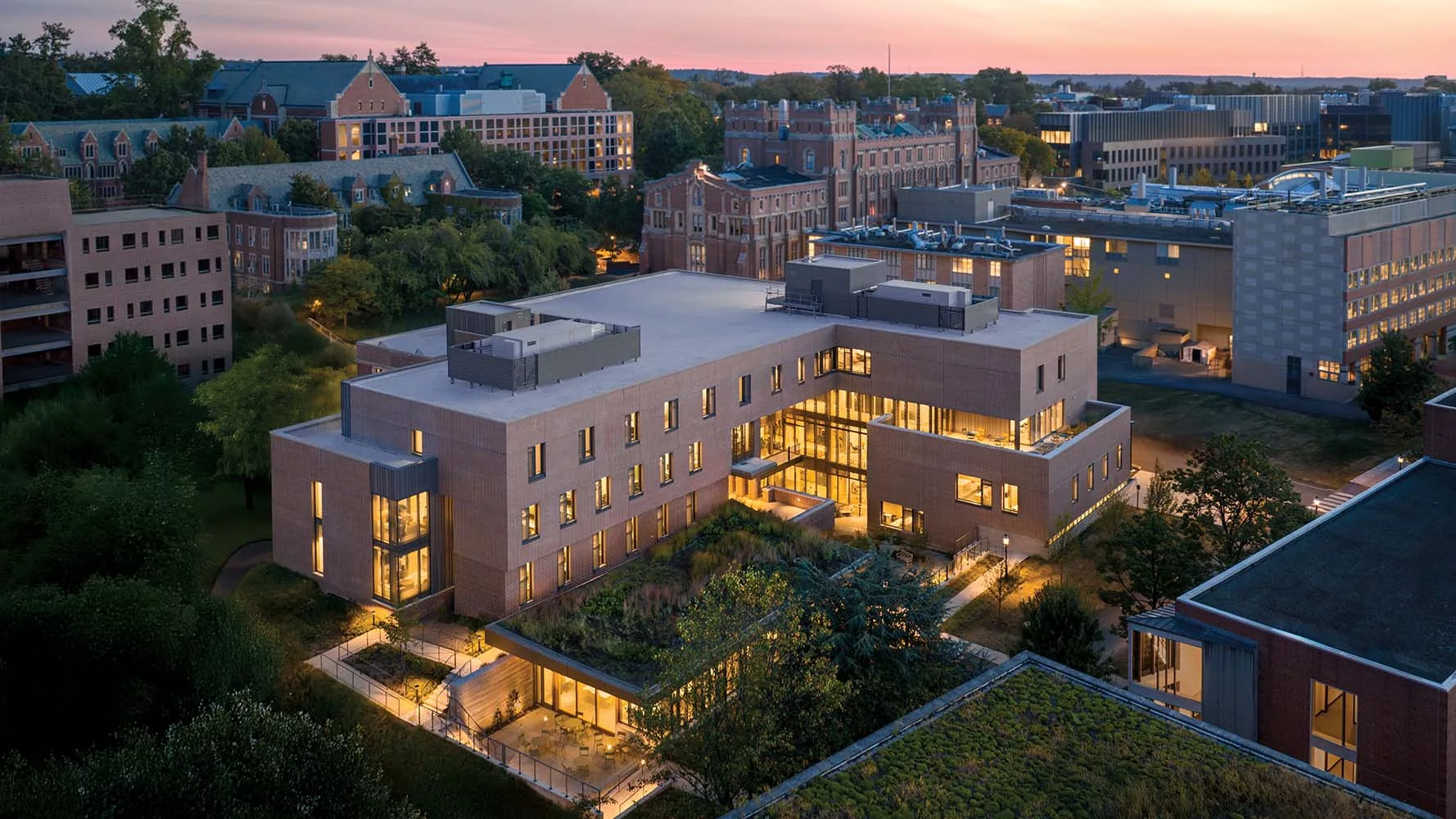
Facing busy Goheen Walk and flanked to the east and southeast by a pair of lab buildings designed by Princeton alumnus Robert Venturi and to the west by the future Hobson College, the Frist is a 76,500- square-foot structure dedicated to the culture of wellness, where the comfort students feel in socializing, studying, or just hanging out is deliberate. The informal spaces where this gathering happens—a lush winter garden that opens to a south-facing “back porch” terrace, and clusters of inviting nooks that resemble downscaled, handsomely appointed hotel lobbies—are joined by the four-story center’s core program: two wings, both constructed with a mix of mass timber and steel, that house clinics and support spaces for medical, psychological, and occupational health services; the sexual harassment and assault advising office; and other resources. With the opening of the center, these components of University Health Services are brought together in the same location on campus for the first time.
1
2
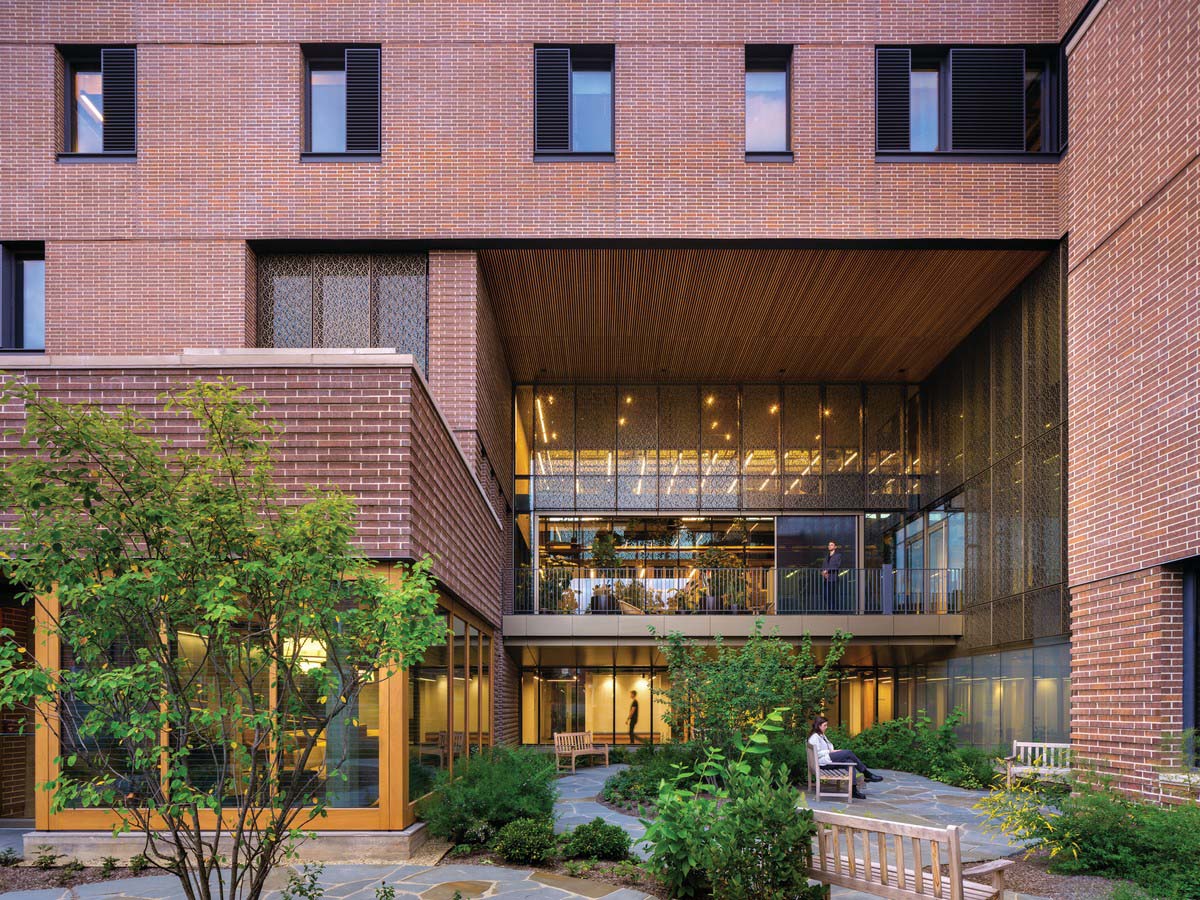
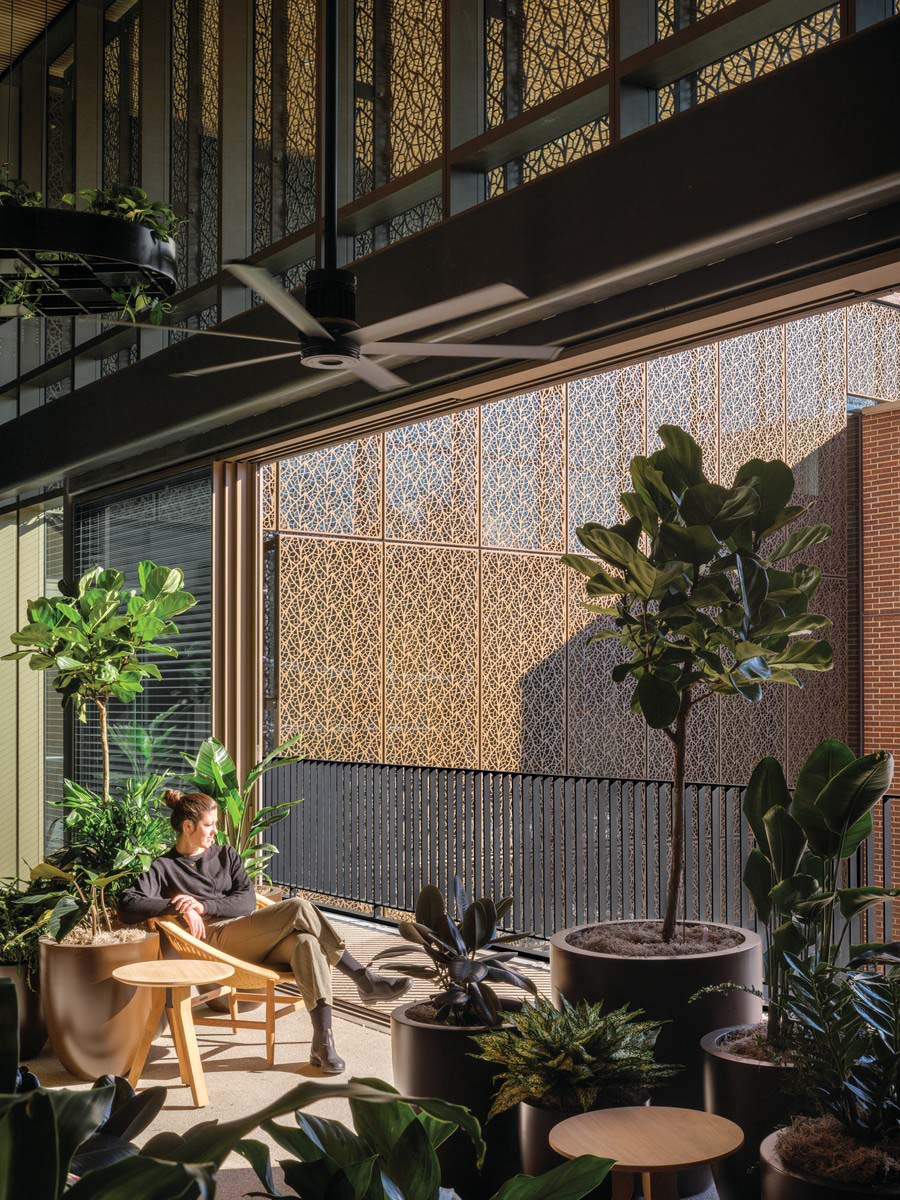
Located in the core campus (top of page), the inviting center has gardens both indoors and out (1 & 2), and comfortable shared waiting areas (3). Photos © Jason O’Rear, click to enlarge.
3
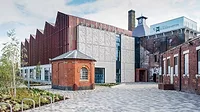
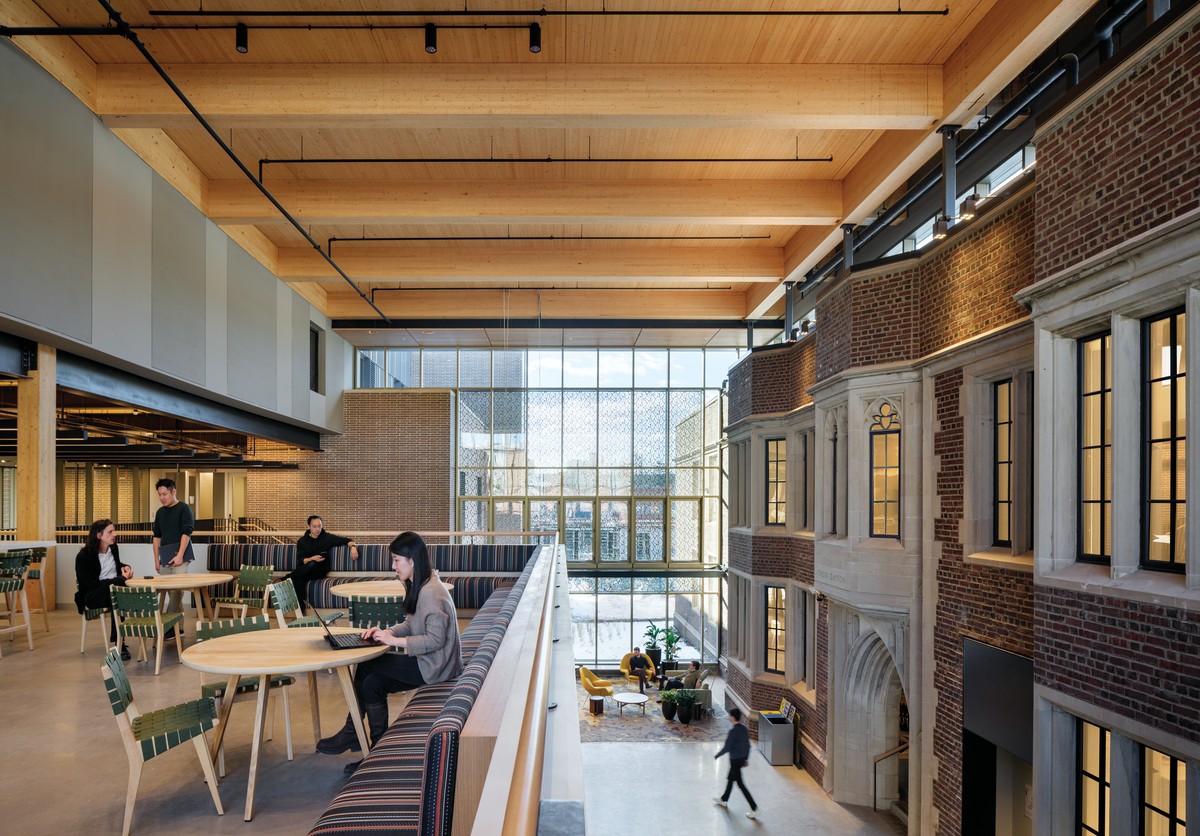
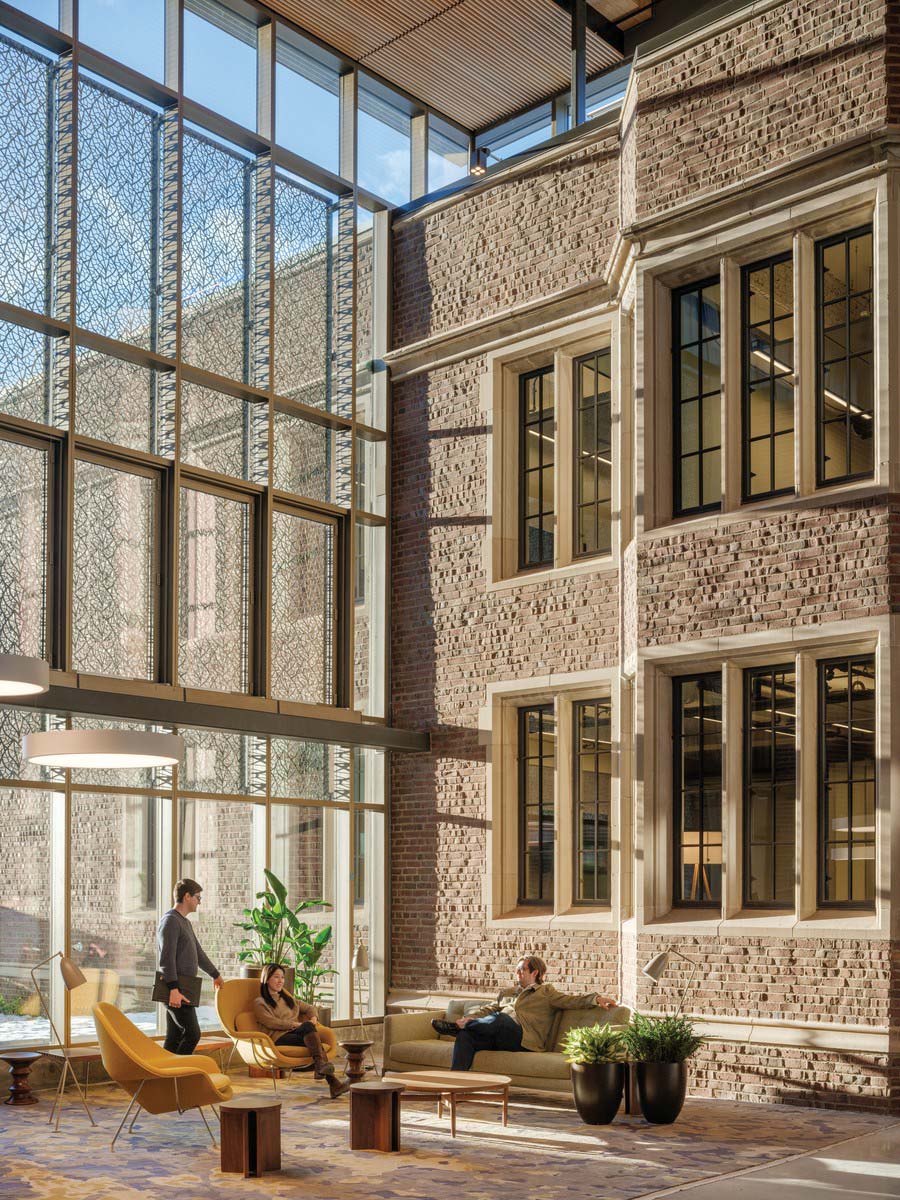
Joining these boxy, brick-faced new structures is Eno Hall, a collegiate-Gothic building that opened in 1924 to house Princeton’s then-fledgling department of psychology. In more recent decades, it was used by the department of biology. Following a gut renovation that revealed previously covered skylights, the century-old building has been adapted to become a modern workplace and house the health center’s administrative and office spaces. Connecting these three volumes is a triple-height central atrium that acts as the heart of the facility. Topped with a cross-laminated-timber “lid,” the soaring atrium integrates the historic brick facade of the existing building in a dramatic meeting of old and new. Preserved within the atrium above the south portal to Eno Hall is the inscription gnothi seauton. A maxim—Greek for “know thyself,” famous for being displayed at the entrance to the Temple of Apollo at Delphi—it is fitting for a former academic building dedicated to psychology and that has been, decades later, incorporated into a larger student-wellness hub.
The preserved facade of Eno Hall is incorporated into the center’s soaring atrium. Video by Pierce Harrison
5
6
7
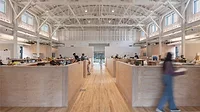
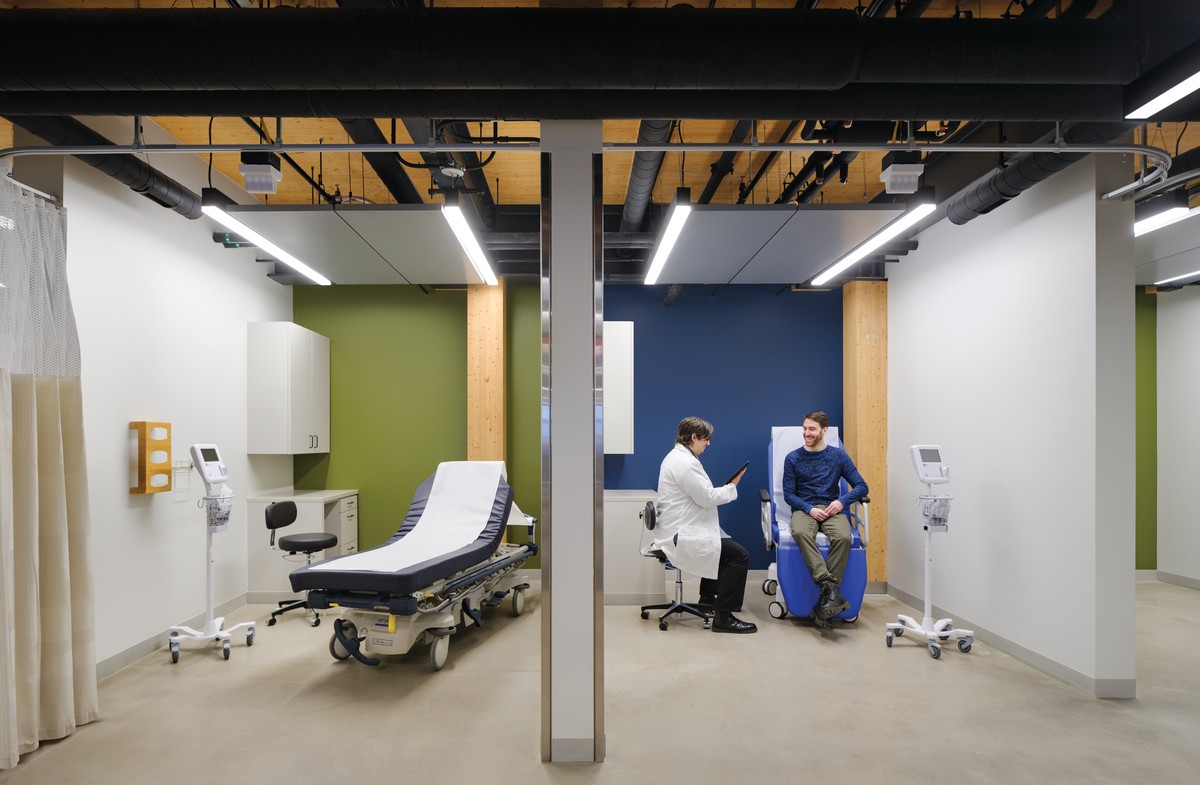
A spacious staff lounge (5) overlooks the atrium, which provides access to clinical spaces (6) and features social nooks (7). Photos © Jason O’Rear
Wrapping around large expanses of glazing on three sides of the building are champagne anodized metal brises-soleils. The intricate, nature-inspired design of the fixed screens casts dappled shadow patterns into the atrium while mitigating solar-heat gain.
Sunken into the landscape on the southwest side of the center is the McLain Pavilion for Well-Being. At first glance appearing as a standalone structure, this spacious, reservable multipurpose room for seminars, workshops, and other campus events is capped by a green roof visible from other spaces throughout the Frist; it features its own terrace and pre-function space. To the east of the pavilion is the cloister garden, with winding pathways and seating, which serves as the center’s anchoring outdoor green space.
Looking for quick answers on architecture and design topics?
Try Ask RECORD, our new smart AI search tool.
Ask RECORD →
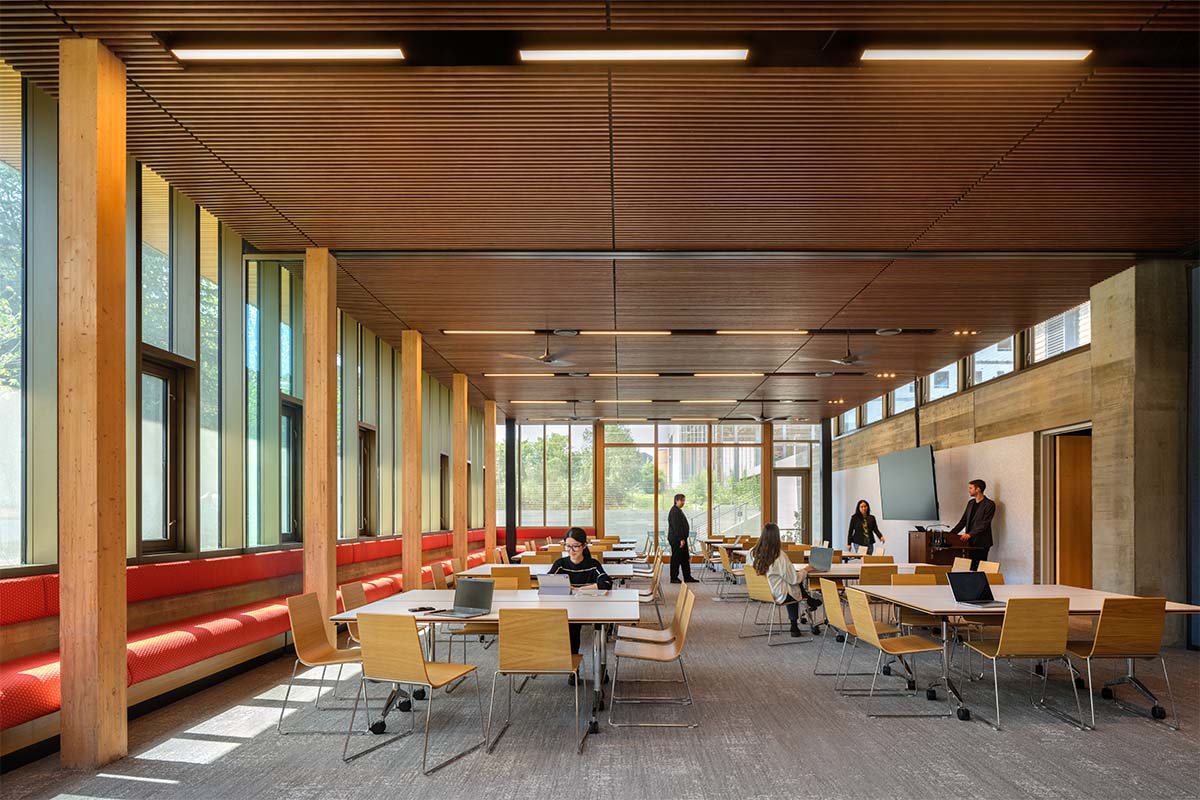
Sunken into the surrounding landscape, the McLain Pavilion for Well-Being features a sought-after campus amenityflexible event space. Photo © Jason O’Rear
The Frist’s melding of adaptive reuse and new construction was one of the three conceptual options for the central-campus development site conceived by WRNS during the proposal phase. One scenario had Eno Hall entirely demolished and replaced it with a new structure, while another left it standing but unincorporated into the new center. A committee, comprising officials from Princeton’s Office of Capital Projects and University Health Services, near-unanimously opted for the one that involved reimagining Eno Hall. “One of the most sustainable things we can do is not demolish,” says Fine. “There was also a campus affection for this building that we wanted to respect.”
Defined by its openness, unusual and striking for a medical facility, Frist is described by WRNS as a “fabric” building in that it’s quietly integrated into the campus context through its materials, massing, and plan organization, explains project architect Kayleen Kulesza.
Although it champions transparency to beckon students who might be reluctant to seek care, the design also ensures seclusion where needed. Located in the eastern wing on a subgrade level is the center’s outpatient-medicine facility, where a suite of exam rooms have clerestory windows with obscured glass to allow daylight while maintaining privacy. Adjacent on this level are diagnostic services and the occupational-health department. Ambulance access is similarly discreet, tucked along the east side of the center, down a sloping drive. At a farther remove from the public areas, the center’s fourth floor is dedicated to a 12-bed, 24/7 infirmary—somewhat of a rarity on university campuses. The infirmary’s patient rooms are designed and furnished to accommodate three different durations of patient stays: one day or less, two or three days, or around a week for students in quarantine or recovering. Separated from the patient rooms by a waiting area and nurse’s station are a pair of overnight guest rooms for visiting parents and loved ones, offering the comforts of a hotel. Throughout the clinical areas is nary a drop ceiling but, instead, a bounty of exposed timber that offsets the medical equipment by introducing a color palette that has “warmth,” says Kulesza.
For a building that deftly melds with the Princeton campus, the Student Health Center still stands out, without making too big a fuss. It is a smart and sustainable building that—whether or not they have figured themselves out—knows its users and successfully embraces them, sniffles or not.
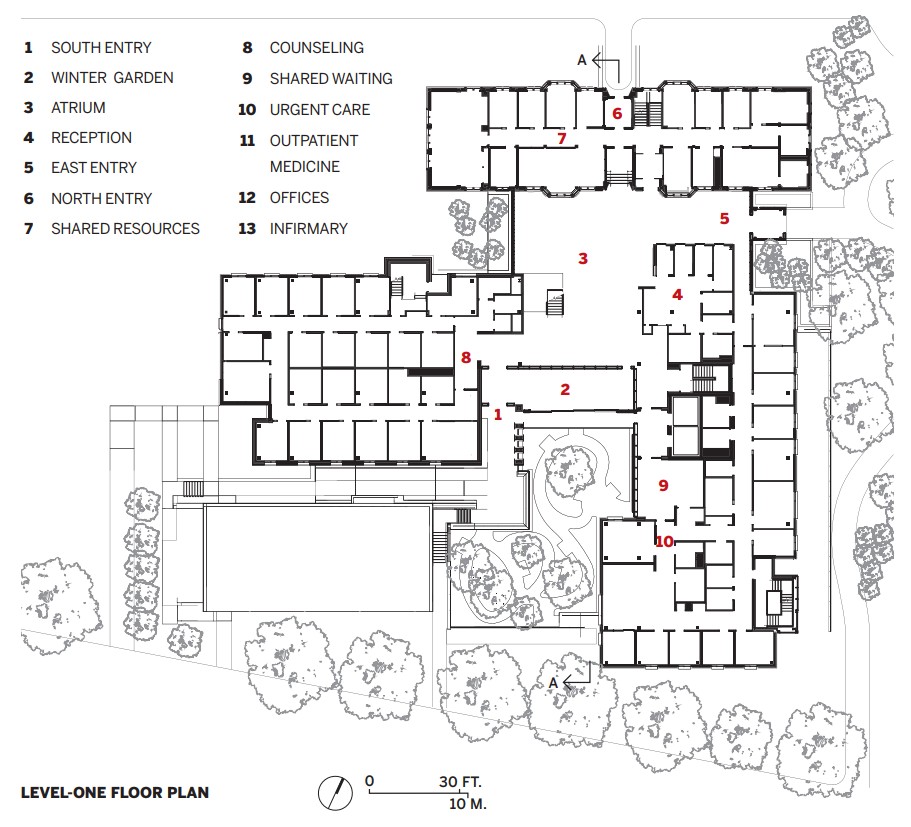
Image courtesy WRNS Studio
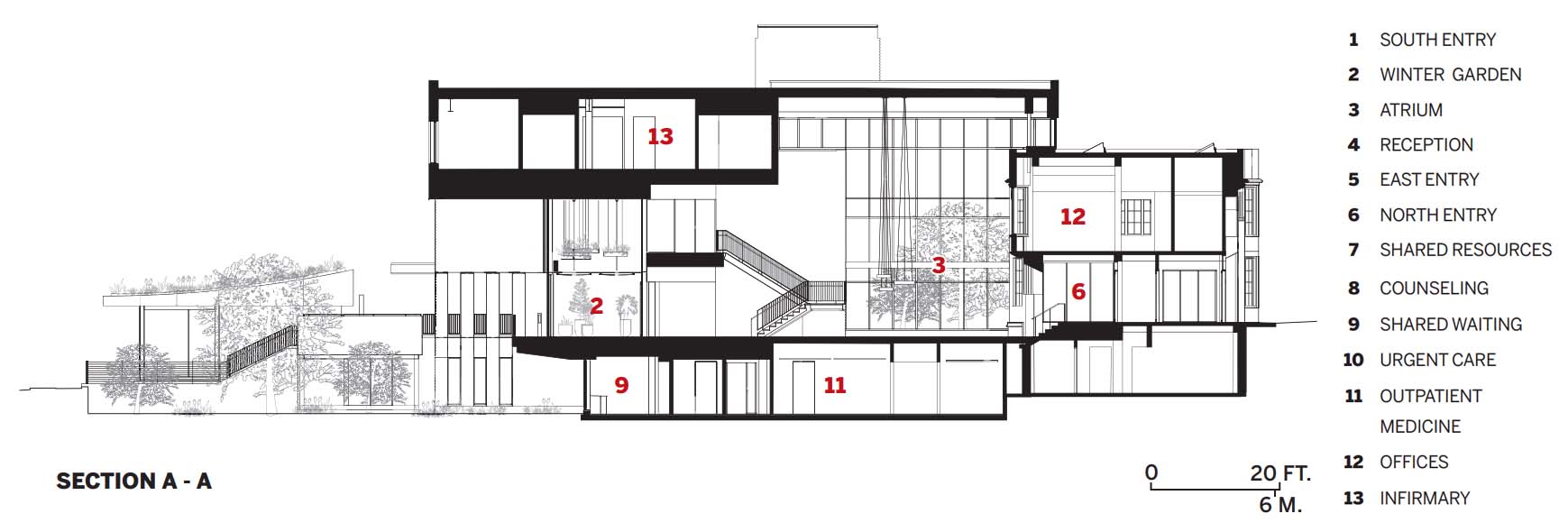
Image courtesy WRNS Studio
Read about other Health & Wellness projects from our January 2026 issue.
Credits
Architect:
WRNS Studio – Mitch Fine, John Ruffo, Bryan Shiles, partners; Pauline Souza, partner, director of sustainability; John McGill, project manager; Ninoshka Henriques, Stephen Kelley, Kayleen Kulesza, Demetra Manolas, Daniel Sakai, James Quick, project designers/architects; Jeremy Shiman; building performance specialist; Debbi Waters, programmer; Jenny Huang, environmental graphic designer; Stefany Amasifuen, Daniel Barrio, Yuqi Cui, Bijan Thornycroft, Lerena Zhao, design team
Engineers:
Thornton Tomasetti (structural, envelope); VHB (civil); Interface Engineering (MEP); Nitsch Engineering (stormwater); SM&W (acoustics)
Consultants:
Field Operations (landscape); HB & Associates (medical equipment); Transsolar Klima Engineering (performance)
General Contractor:
HSC Builders and Construction Managers
Owner:
Princeton University
Size:
76,500 square feet
Cost:
Withheld
Completion Date:
January 2025
Sources
Exterior Cladding:
Glen-Gery (masonry); Morin (metal panels); Wausau (curtain wall); 9Wood (wood); Landmark Facade Solutions (sunscreen)
Built-Up Roofing:
Tremco
Sliding Doors:
SkyFrame
Interior Finishes:
Benjamin Moore (paints and stains); Corian, Caesarstone (solid surfacing); Nemo Tile, Daltile (floor and wall tile)
Office and Reception Furniture:
MillerKnoll
Lighting:
Hayworth, Solis (interior ambient lighting), Lumenwerx, WAC (downlights); Lutron (lighting controls)
Looking for a reprint of this article?
From high-res PDFs to custom plaques, order your copy today!