A Bold Red Community Center Rises on Richmond’s South Side
Architects & Firms
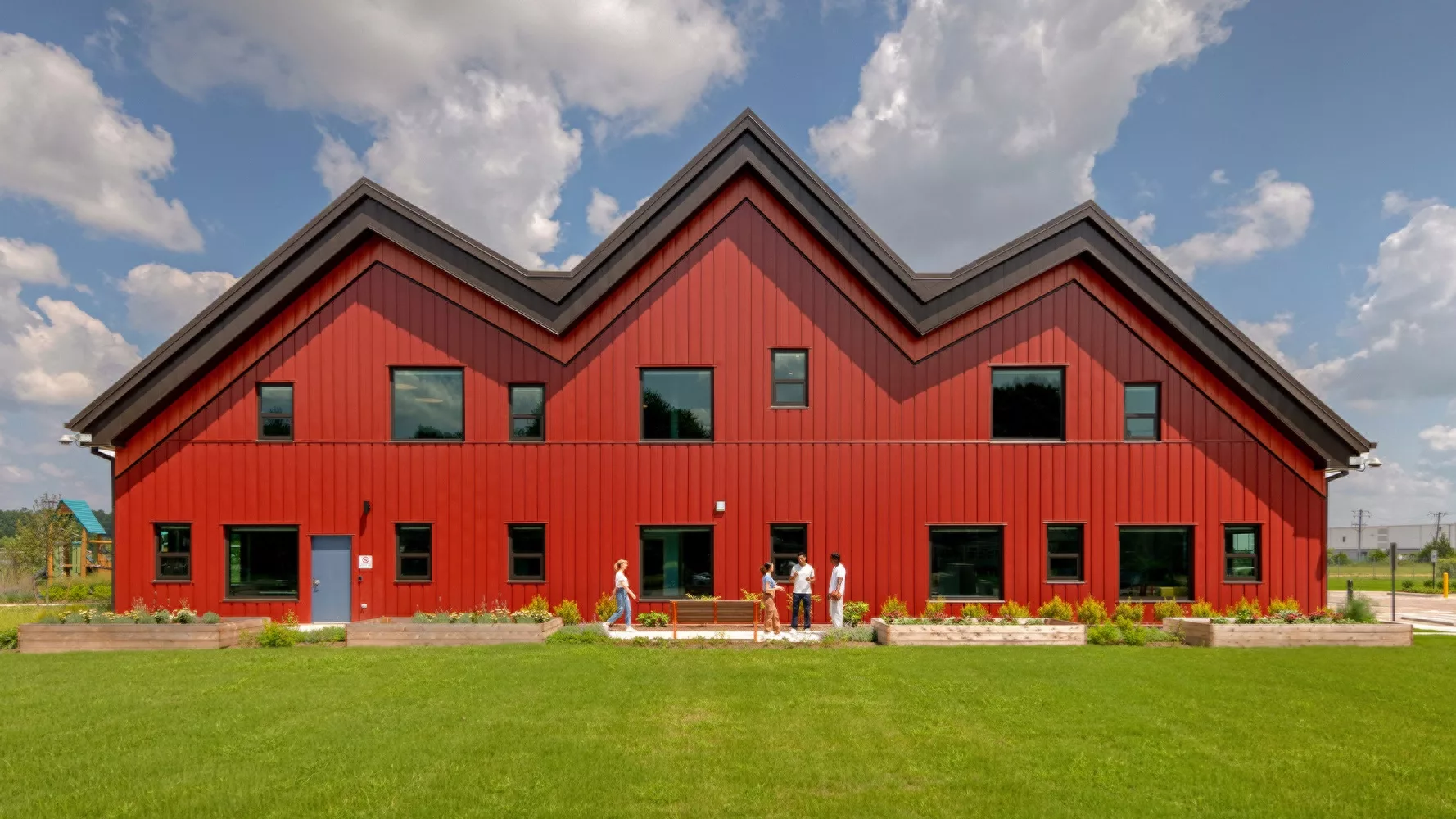
Nurturing a healthy community was the driving force behind the planning for the new T.B. Smith Community Center in Richmond, Virginia, and it was the primary focus of the team effort to program, design, and construct the building. The facility—an all-red two-story structure on an 8-acre site—was important, but the neighborhood’s people were paramount.
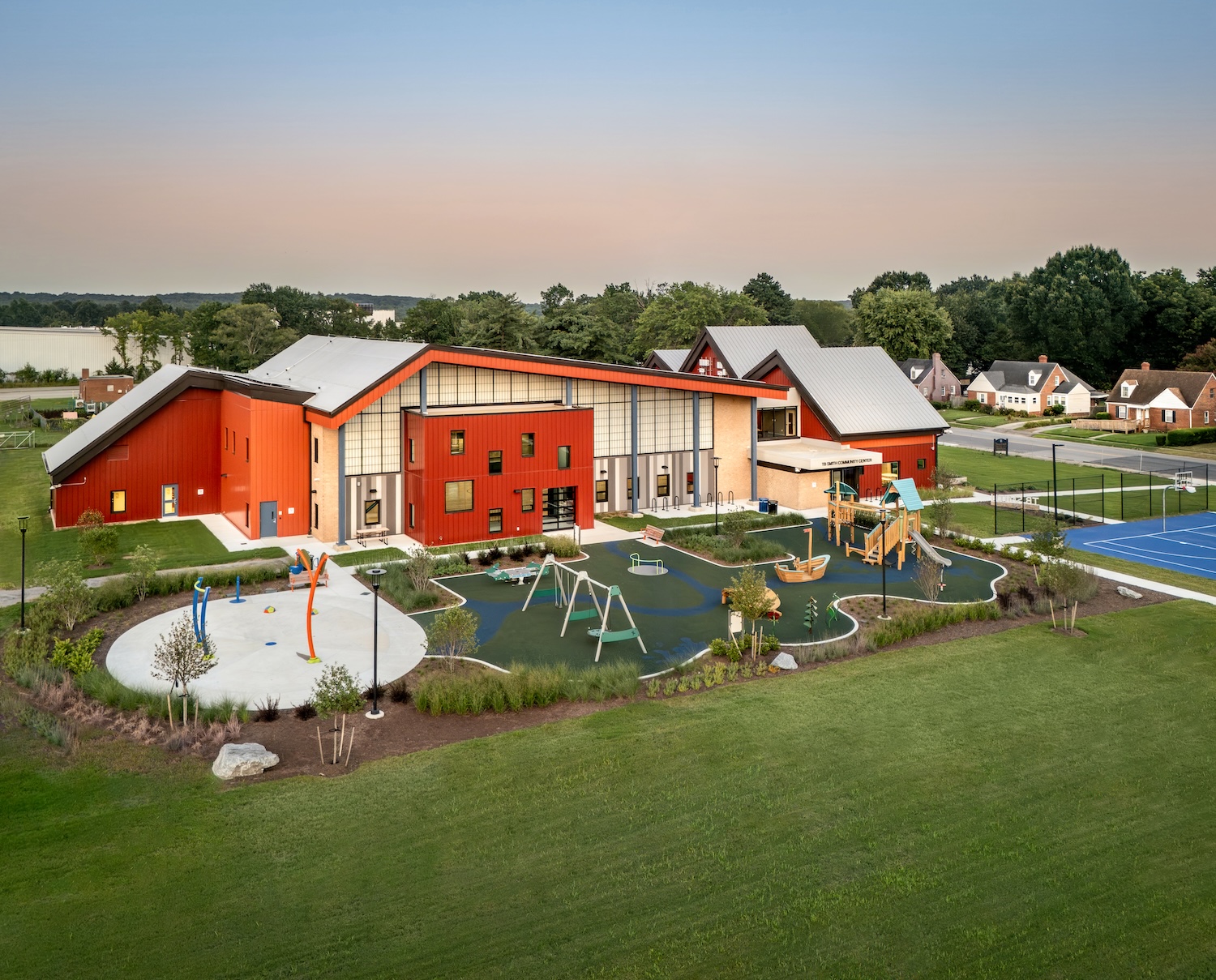
Photo © Sam Kittner
Situated among an assortment of industrial warehouses and a neighborhood of tidy brick houses in Richmond’s South Side, the 30,000-square-foot center provides communal space born from a city initiative to deliver essential resources, recreation, and resilience where they are needed most.
The project began with rigorous public engagement in which surveys, neighborhood meetings, and presentations were combined to solicit ideas from the people who would ultimately use the center. “Civic design means being connected to the community,” says Anca Lipan, a principal at Richmond-based architecture firm Baskervill. “It means being ingrained in the community and understanding their challenges—understanding what they’re all about and where they want to go.”
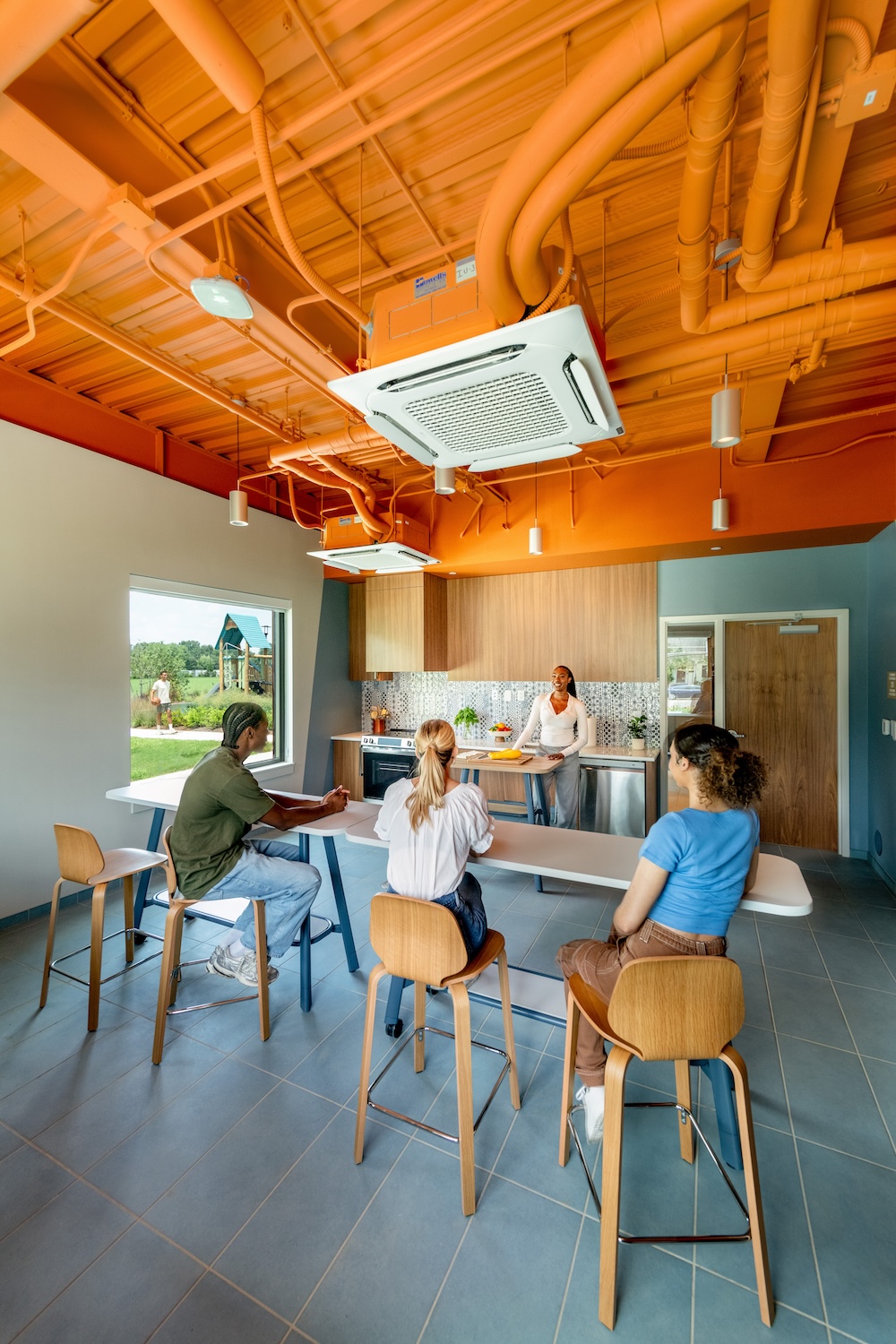
Photo © Sam Kittner
In this case, residents made a strong case for a building that would bring people together, empower them, and support health and wellness. The daily programming is decidedly multigenerational, with multipurpose rooms for senior exercise classes complemented by teen-focused spaces with media technology and playfully patterned, overstuffed chairs.
On the first floor, a teaching kitchen—stocked by plants grown in the community garden—acts as a classroom for health, cooking, and nutrition. A suite of rooms dedicated to “city hall” provides a place for constituents to meet with their city councilperson or other civic leaders. And a space dedicated to public health is equipped for use as a vaccine clinic or for other types of medical assistance. Upstairs is a collection of multipurpose rooms for workshops, art classes, bingo night, or town hall meetings.
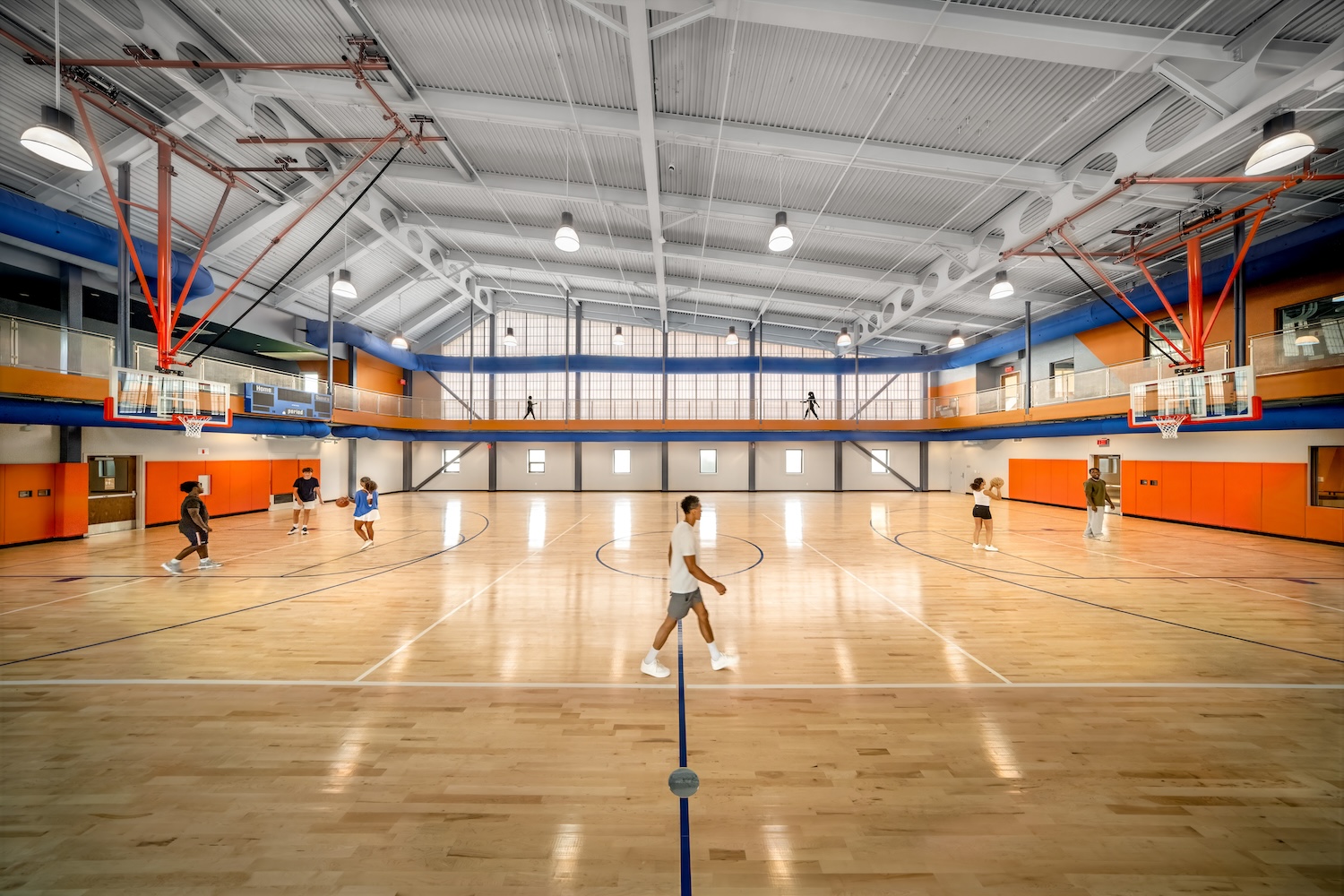
Photo © Sam Kittner
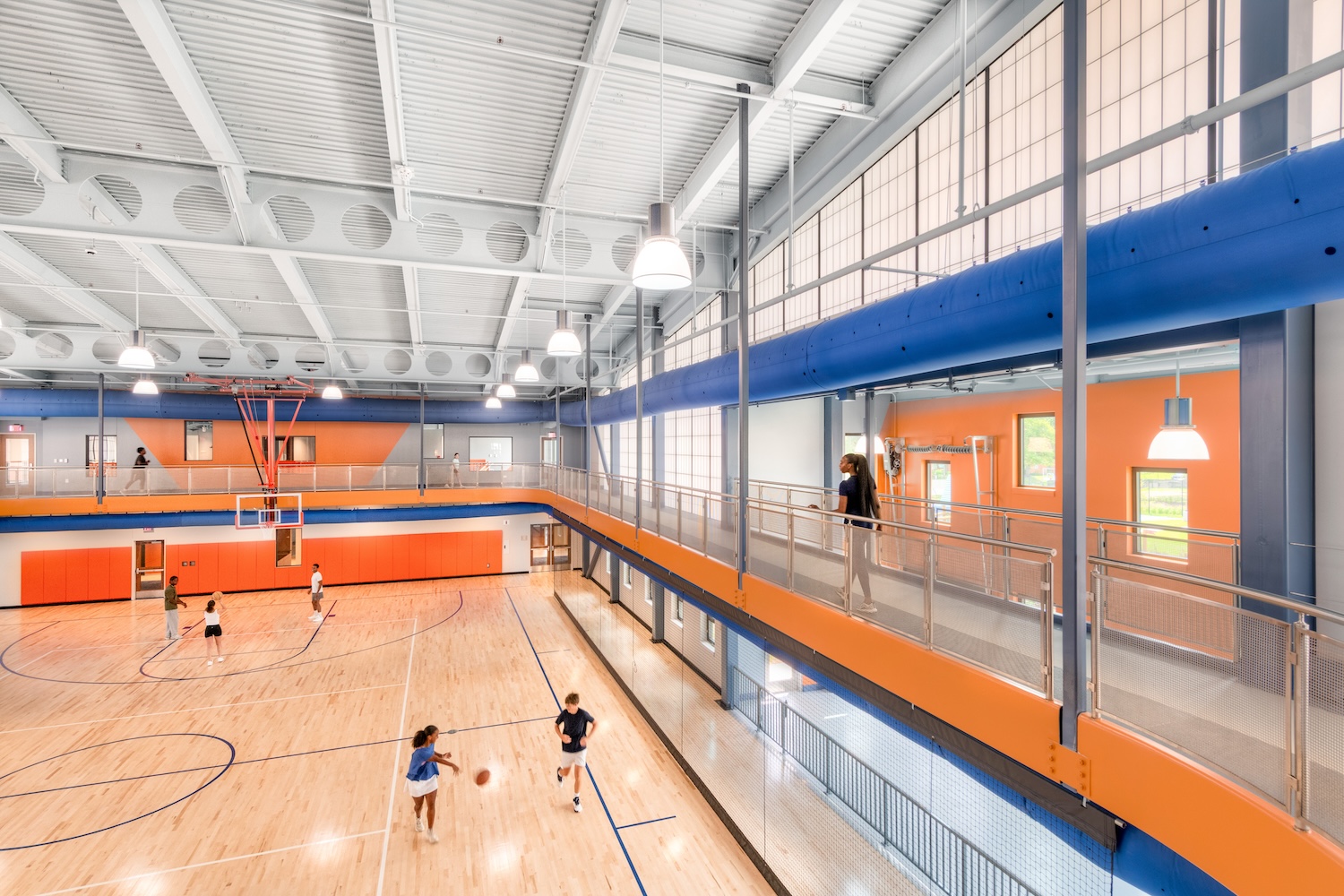
Photo © Sam Kittner
Behind the rectangular block containing the activity rooms—and separated by a double-height passageway with a reception desk and stairs—is the shed-roofed gymnasium. It’s a bright and cheery space, trimmed in vibrant orange and blue and illuminated by expanses of translucent fiberglass panels. The whole family is welcome: adults on both the ground-level court and the walking/jogging track above have clear views of the kids’ play area located in a bump-out on the west side of the building.
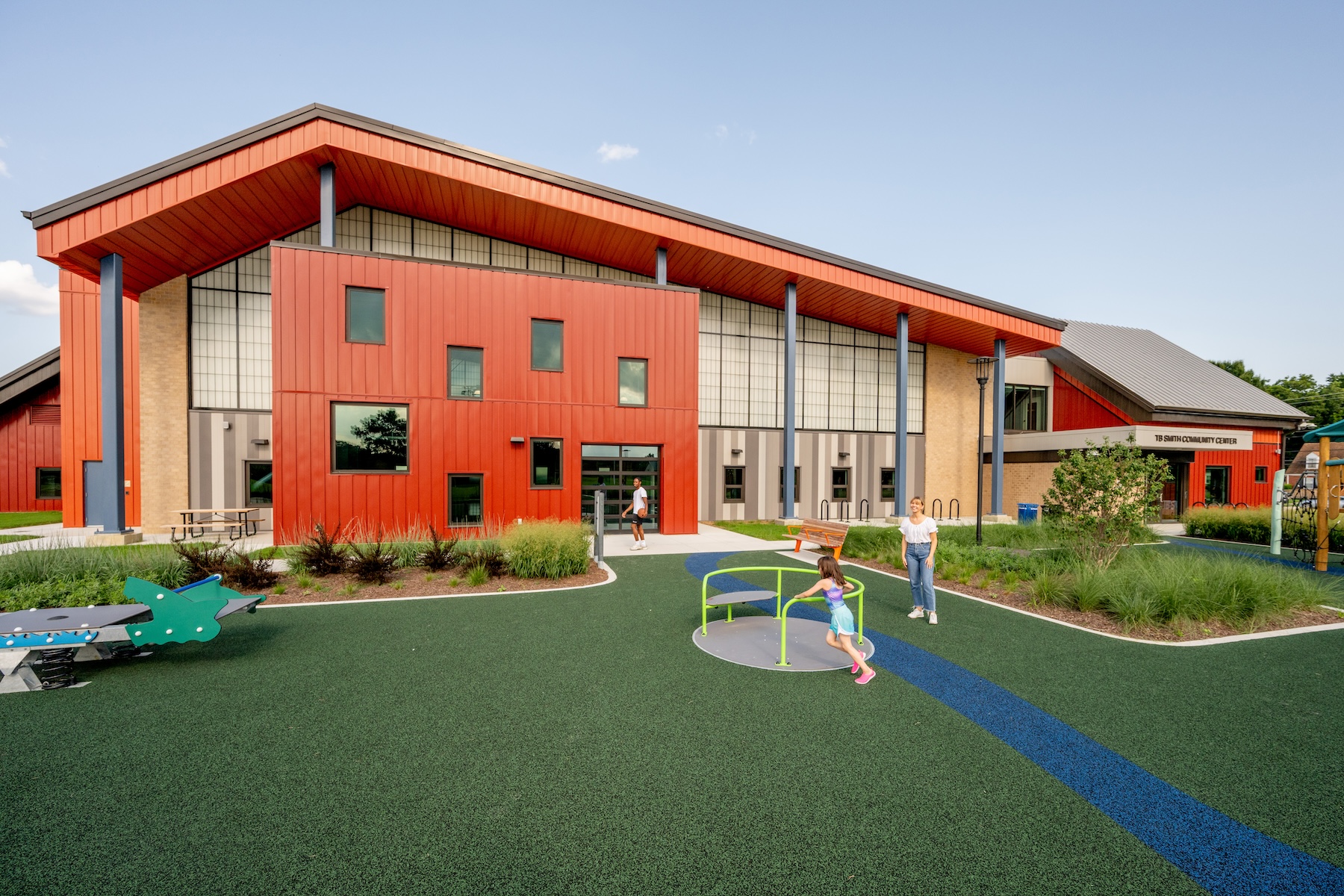
Photo © Sam Kittner
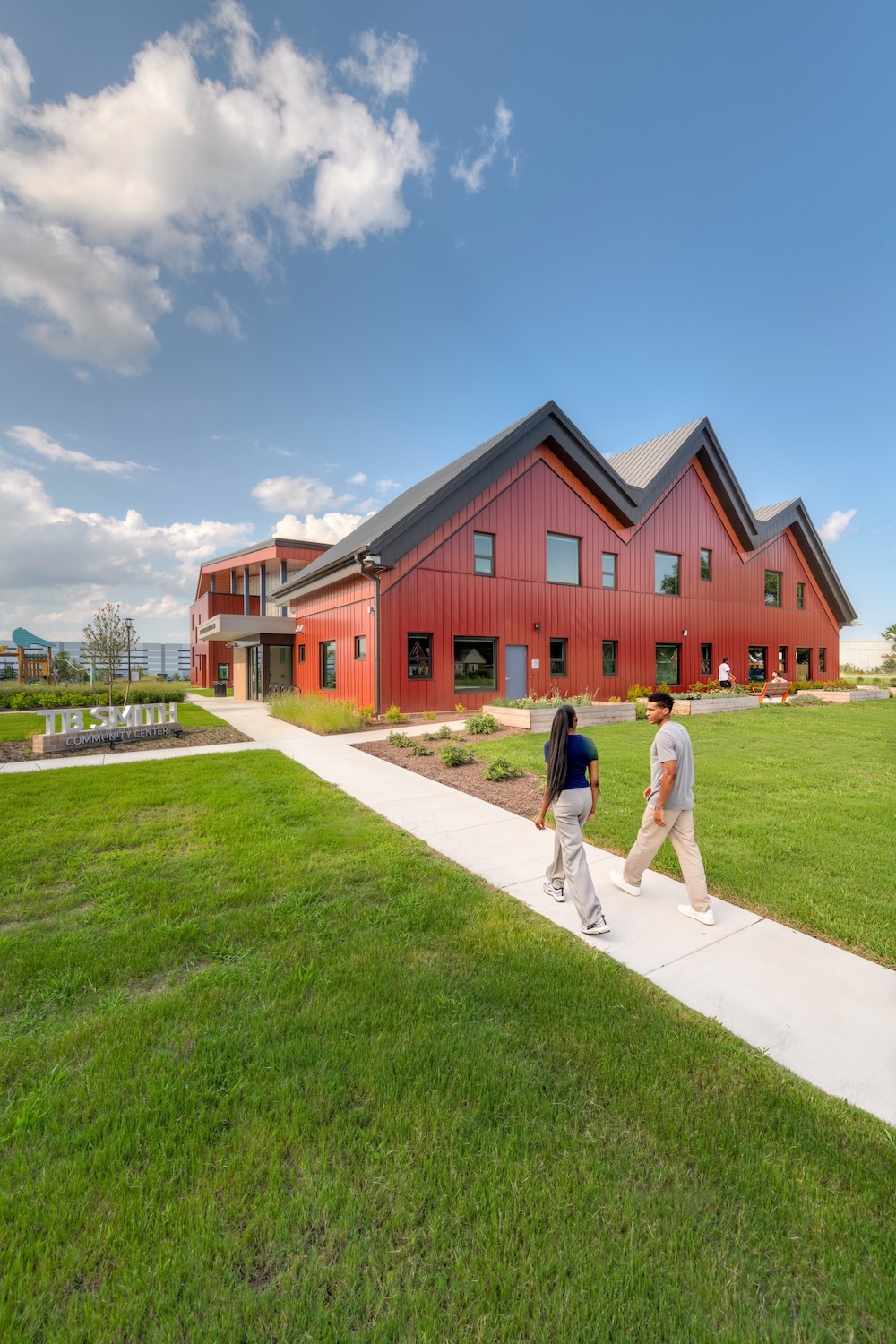
Photo © Sam Kittner
From the outside, the building form mimics the gable ends of the one-and-a-half story houses that make up Richmond’s Davee Gardens neighborhood. The materials palette—featuring red metal panels, tan-colored brick, and low-E glass—balances durability with cost containment. The roof, for example, is designed to resemble a standing-seam metal roof. Yet, to meet a stringent budget, the design team specified a more affordable single-ply membrane with vertical ribs attached.
Looking for quick answers on architecture and design topics?
Try Ask RECORD, our new smart AI search tool.
Ask RECORD →
The landscape around the building functions much like a park. A basketball court, multipurpose field, splash pad, and accessible playgrounds extend outward toward the neighborhood, while the community garden—neatly arranged in raised beds in front of the building—greets visitors who approach by foot or by car.
The community center also is equipped for emergency situations. In times of crisis, it can be repurposed as a resiliency center with sleeping quarters, showers, and meals, with needed medical support provided by public health partners.
But in normal times, the center has quickly become a popular resource for the neighborhood—with morning classes attracting an older cohort and afternoon activities filling it with scores of kids who come for after-school programs. Seven months after its opening, it appears the center has already become a hub of the community with the power to help strengthen the neighborhood and foster a sense of pride and belonging.
Looking for a reprint of this article?
From high-res PDFs to custom plaques, order your copy today!