This website requires certain cookies to work and uses other cookies to help you have the best experience. By visiting this website, certain cookies have already been set, which you may delete and block. By closing this message or continuing to use our site, you agree to the use of cookies. Visit our updated privacy and cookie policy to learn more.
This Website Uses Cookies By closing this message or continuing to use our site, you agree to our cookie policy. Learn MoreThis website requires certain cookies to work and uses other cookies to help you have the best experience. By visiting this website, certain cookies have already been set, which you may delete and block. By closing this message or continuing to use our site, you agree to the use of cookies. Visit our updated privacy and cookie policy to learn more.
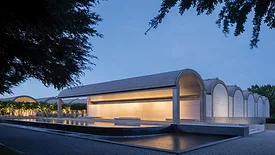
Walking through Louis Kahn’s Center for British Art—where sunlight streams in from skylights, and concrete, wood, metal, and stone combine in precise yet monumental ways—leaves one yearning for the days when museums, quite honestly, weren’t so sterile.
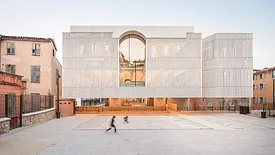
Rumor has it that the quaint town inspired the architecture in Disney’s animated film Beauty and the Beast. But in a recent renovation of the city’s Musée Unterlinden, Herzog & de Meuron made a conscious effort to avoid the preciousness of a Disney film.
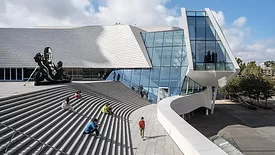
When it was founded in 1935, the San Francisco Museum of Modern Art (SFMOMA) occupied one, then two floors of the War Memorial Veterans Building in the Hayes Valley neighborhood before moving into its purposebuilt, Mario Botta–designed home in nearby SoMa in 1995.
The Singapore government funded the $370 million museum complex, which opened in November 2015 as a highlight of the island-nation’s 50th anniversary as an independent republic.
The Whitworth Gallery, in England’s booming second city, Manchester, is a cultural institution that took a walk in the park back in 1889—it was the first English art museum to adopt a parkland rather than urban setting.