English Architect Terry Farrell Dies at 87

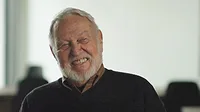
Terry Farrell, a pioneering British Postmodernist who rose to fame during the late 1980s and ‘90s with a slew of high-profile commissions that ranged from award-winning aquariums to major urban transit hubs, has died at the age of 87. The passing of Farrell, who formally retired in 2023, comes just two weeks after the death of Nicholas Grimshaw, his friend and partner in practice from the early 1960s through 1980.

The SIS Building or M16 Building at Vauxhall Cross, London. Photo by Richard Cooke, Wikimedia Commons
A statement from Farrel’s namesake firm reads: “Terry was frequently called a maverick, radical, and a non-conformist, which he relished. He was an architect who was never quite part of the ‘architecture club,’ often going against the architectural establishment. Terry constantly argued for a more responsive, responsible approach to large scale projects with adaption and conversion as a creative and viable option to wholesale demolition and rebuild.”
Born in Greater Manchester, Farrell earned a degree in architecture from the Newcastle University School of Architecture, Planning and Landscape (formerly a part of Durham University) in 1961; he then relocated to Philadelphia, receiving a Masters in Urban Planning from the University of Pennsylvania. His stateside stint didn’t last long. In 1965, he returned to England and partnered with Grimshaw to form Farrell/Grimshaw Partnership; in its early years, their budding firm famously shared a London office with Archigram. Together, the duo emerged as leading proponents of High-Tech architecture and ran a prolific practice that focused largely—but not exclusively—on housing. One of the more significant works to result from the partnership was the Herman Miller Factory in Bath (1976). In 1980, Grimshaw exited to start his own firm and Farrell subsequently followed suit, establishing Farrell & Partners (later rebranded as Farrells).

The Breakfast Television Centre, formerly TV-am Studios, London. Photo by Oxyman, Wikimedia Commons

The Deep aquarium and marine research center, Hull, England. Photo by Hullian111, Wikimedia Commons
In the years after striking out on his own, Farrell became one of the UK’s giants of Postmodernism, producing ambitious, attention-grabbing work that entailed both new construction and the adaption of derelict buildings. He also worked extensively with urban renewal schemes across London and beyond. Signature projects from this era include TV-am Studios, now known as the Breakfast Television Centre, or, simply the Egg Cup House (1983); Embankment Place at Charing Cross Station (1990); 125 London Wall, also known as Alban Gate (1992); and, perhaps most notably, the SIS Building at Vauxhall Cross (1994), a polarizing—and multi-nicknamed—edifice that houses the UK’s Secret Intelligence Service. It is arguably the most pop culture–famous of Farrell’s built works having appeared in numerous James Bond films.
.jpg "The Peak Tower, Hong Kong")
The Peak Tower, Hong Kong. Photo by Николай Максимович, Wikimedia Commons
Outside of London, major Farrells commissions include the Edinburgh International Conference Centre (1993) and The Deep aquarium and marine research center in Hull (2002). After setting up a Hong Kong office in 1991 (incorporated as TFP Farrells), the firm took on a significant number of large-scale transit projects and record-setting skyscrapers across Asia, including in Seoul, Singapore, and in mainland Chinese cities such as Beijing, Shanghai, and Shenzhen. More recently, Farrells served as executive architect of Herzog & de Meuron’s M+ in Hong Kong.
Farrell and his firm have received numerous awards and accolades over the decades, including multiple Civic Trust Awards and several regional, national, and international prizes from RIBA. He was awarded a CBE in 1996. His Farrell Centre, an admission-free exhibition and event space focused on architecture and urban planning, opened in 2023 at Newcastle University. “Every city needs a place where can come together to debate its future,” said Farrell of the center’s mission.
Farrell is survived by his wife of 18 years, five children, and a stepson.
Looking for quick answers on architecture and design topics?
Try Ask RECORD, our new smart AI search tool.
Ask RECORD →
Looking for a reprint of this article?
From high-res PDFs to custom plaques, order your copy today!