Architectural Record
search
cart
facebook twitter linkedin youtube
  • Sign In
  • Subscribe
  • Sign Out
  • My Account
Architectural Record
  • NEWS
    • Latest News
    • Awards
    • Interviews
    • Obituaries
    • Podcasts
      • Design:Ed Podcast
      • Sponsored Podcasts
  • OPINION
    • Book Reviews / Excerpts
    • Exhibition Reviews
    • Forum
  • EXCLUSIVES
    • Videos
    • Design Vanguard
    • Top 300 Firms
    • Sponsored Content
    • Sponsored eBooks
    • From the Archives
  • CONTINUING ED
    • Editorial Continuing Ed
    • CE Center
    • CE Academies
  • PROJECTS
    • Buildings By Type
    • Reuse & Renovation
    • Museums & Arts Centers
    • Colleges & Universities
    • Multifamily Housing
    • Interiors
    • Lighting
    • Kitchen & Bath
  • HOUSES
    • Record Houses
    • House of the Month
    • Featured Houses
  • PRODUCTS
    • Products by Category
    • Record Products of the Year
    • Latest Products
  • EVENTS
    • Dates & Events
    • Record on the Road
    • Innovation Conference
    • Sustainability in Practice
    • Women In Architecture
    • Webinars
    • Ad Excellence Awards
    • Submit an Event
  • CONNECT
    • Ask RECORD AI
    • Newsletters
    • Contact
    • Advertise
    • Editorial Calendar
    • Store
    • Customer Service
  • SUBMIT
    • Submission Guidelines
    • RECORD Competitions
  • MAGAZINE
    • Subscribe
    • My Account
    • Digital Edition
    • Current Issue
    • Firm Pass
    • Historic Archive
Architecture NewsCommentary & Criticism

Books

In a New Book, Béatrice Grenier Ponders the Evolving Role of Cultural Infrastructure

‘Architecture for Culture: Rethinking Museums’ by Béatrice Grenier
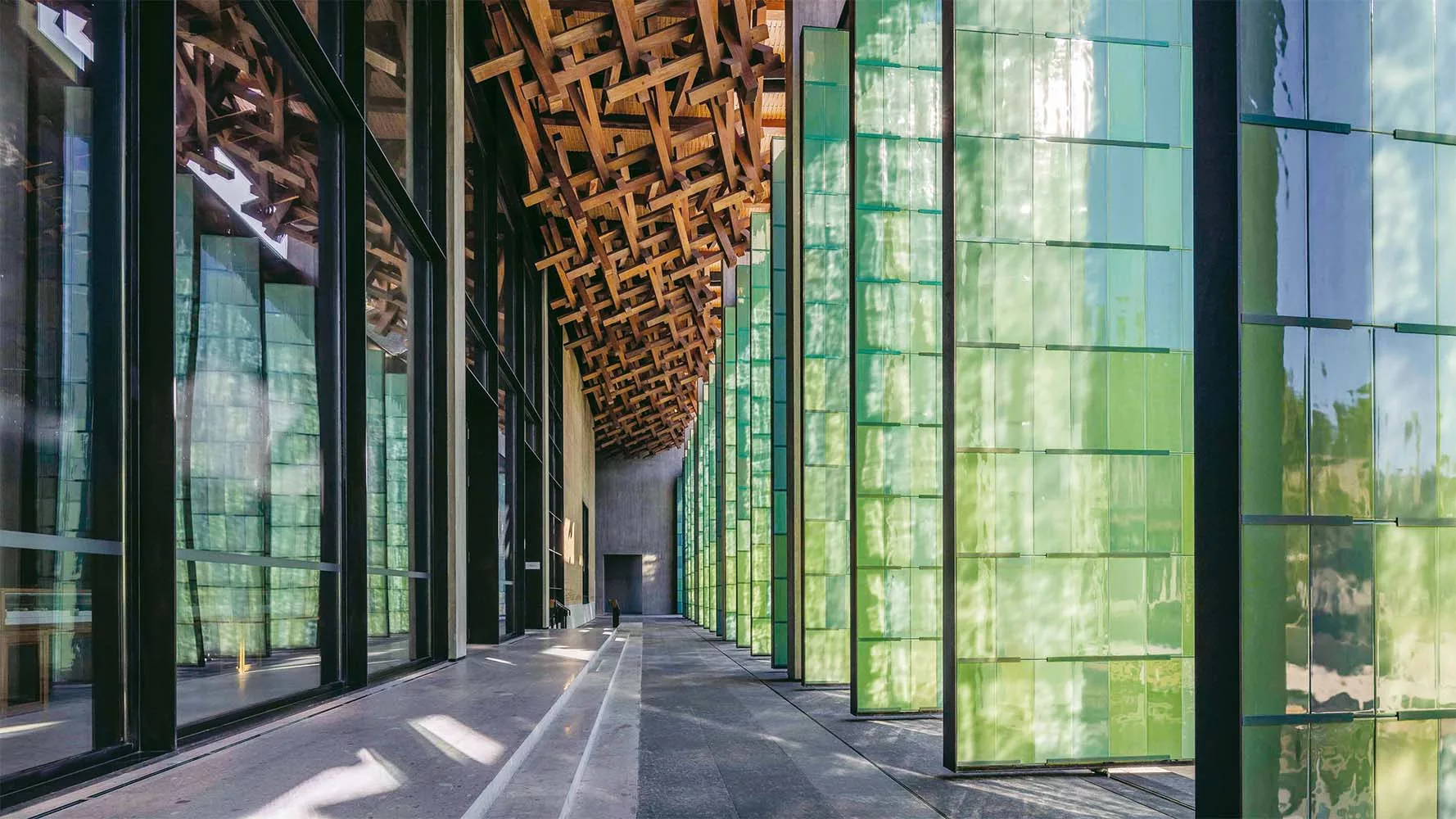
National Archives in Hangzhou, China
Photo © Ji Yun
Amateur Architecture Studio’s National Archives in Hangzhou, China, uses historical architectural principles and traditional techniques.
October 13, 2025
✕
Image in modal.

“We no longer need to go to the museum,” writes curator Béatrice Grenier; “we can hold the museum in the palm of our hands.” Yet, as this issue of RECORD shows, there is no shortage of new museum construction, renovation, or expansion. In Architecture for Culture, Grenier, the director of curatorial affairs at Fondation Cartier in Paris—an institution that itself is opening a new location this month across the street from the Louvre, renovated by Jean Nouvel—attempts to answer this seemingly paradoxical question: why, when our ever-expanding archives are ubiquitously digital, are cultural institutions flourishing? Her answer: the architecture of museums is a proving ground for a rapid redefinition of what cultural infrastructure can be today, from a local meeting space for shared public life to a collective curatorial project at a global scale. The following is an excerpt from the first chapter, “The Museum is Scroll Painting.”

Architecture-for-Culture

Architecture for Culture: Rethinking Museums, by Béatrice Grenier. Rizzoli, 256 pages, $55. Courtesy the publisher, click to enlarge.


In the European history of museums, since the time of Vivant Denon, the first director of the Musée Napoléon (now the Musée du Louvre), museums have mostly metamorphosed from a library-like form—exhibiting fragments of the past without a linear narrative—into spaces where history is materialized through chronological display organized by national schools of art history. China’s National Archives lie somewhere between a museum and a library, focusing on the experience of reading, due to the nature of their collections and the unique status of Chinese painting as a potential record of Chinese history. In the Louvre, visitors move through galleries, viewing paintings alongside texts written by the museum’s curatorial staff. In contrast, the National Archives exhibit texts, books, and objects related to the written word as works of art, displayed in a way that allows their content to be read—they serve as both objects and evidence, records, and repositories of culture.

The “viewer-reader” is invited to participate in “performing” the “record of heritage” through the act of reading. At China’s National Archives, the new museum experience fosters a form of participation centered on readership; in an almost ritualistic sense, visitors interact with objects that possess an eternal potential to be read, voicing the histories they record and embody in the present. The Centre Pompidou’s program was not entirely unlike that of the National Archives, but the latter has the potential—due to its display methods and collections and the specific status of writing in Chinese culture—to encourage an almost ritualistic dimension of the museum space as a site of historical reenactment. Its “viewer-readers” partake of the performed prolongation of ancient Chinese civilizations, subsuming the iconoclastic break of 20th-century Maoist China. Both modernity and tradition have always been located in the past, just as they are simultaneously located in the future. The performative dimension of the building itself—the blueprint being Li Cheng’s masterpiece—represents an architectural reenactment of history, where all periods from the past find themselves on the same plane as contemporaneity. This historicity of time, which makes the past and present simultaneous, aligns with what André Malraux proposed in his 1947 concept Le Musée imaginaire (Museum Without Walls), published 19 years before Mao launched the Great Proletarian Cultural Revolution. For Malraux, photography allowed for the joining of artifacts from any civilization into a kind of supramuseum that would place any artwork from any culture on the same level of importance. But of course this could only be possible in the form of a book or, today, in a digital museum. Wang Shu and Lu Wenyu’s National Archives of Publications and Culture actualize the hypothesis of the Museum Without Walls, both as architecture and as a spatial and material experience of history. Did Malraux simply underestimate architecture’s potential performative power? Was he unconvinced by the attempts during his lifetime to rewrite the terms of the museum, such as Ludwig Mies van der Rohe’s “universal space,” Le Corbusier’s ramps, or Frank Lloyd Wright’s spiral? He did not live to see the architectural interpretation of his own idea of the Maison de la Culture, for—as Renzo Piano, Richard Rogers, and Gianfranco Franchini’s early description of the initial inspiration for the Centre Pompidou makes clear—it owed a big debt to Malraux’s concept.

The history of 20th-century art is a complex superimposition of time lines representing an extraordinary hybridization of cultures. Today the Chinese government is actively trying to rearticulate this history in continuity with its ancient past. In writing his definition of the museum, Malraux did not think that this cross-temporal and cross-cultural juxtaposition was possible in physical space. Indeed, the museum archetypes he had in mind were the Renaissance palaces or their modern equivalents, such as New York’s Metropolitan Museum of Art or Washington’s National Gallery, characterized by their enfilades of classically proportioned galleries—architecture that mandates a linear trajectory within the museum. For Malraux, the museum had to transcend its physical confines to surpass its accepted meaning, one in which art history and display function together as tools for remembering the past. Yet Amateur Architecture Studio’s Hangzhou project for the National Archives suggests that the answer may lie in architectural form.

Looking for quick answers on architecture and design topics?
Try Ask RECORD, our new smart AI search tool.
Ask RECORD →

KEYWORDS: Book Reviews / Excerpts

Share This Story

Looking for a reprint of this article?
From high-res PDFs to custom plaques, order your copy today!

Post a comment to this article

Report Abusive Comment

Subscription Center
  • Create an Account
  • Start a Subscription
  • Manage My Account
  • Sign Up for Newsletters
  • Visit Customer Service
  • Update Preferences

More Videos

Sponsored Content

Sponsored Content is a special paid section where industry companies provide high quality, objective, non-commercial content around topics of interest to the Architectural Record audience. All Sponsored Content is supplied by the advertising company and any opinions expressed in this article are those of the author and not necessarily reflect the views of Architectural Record or its parent company, BNP Media. Interested in participating in our Sponsored Content section? Contact your local rep!

close
  • TAMLYN XtremeTrim Exterior Trim
    Sponsored byTamlyn

    Designing Cleaner Panel Facades: Why Exterior Trim Details Matter

  • Building with Vapor Barriers
    Sponsored byReef Industries, Inc.

    Vapor Barriers Help Control Moisture in Tighter Building Designs

  • Duct Interior with Prodeq System
    Sponsored byHenry, a Carlisle Company

    Designing Resilient Water Containment Systems

DESIGN:ED Podcast
Listen to Architectural Record’s DESIGN:ED Podcast

Events

June 16, 2026

Focus on the Façade: Exploring Steel, Timber & Fire-Rated Curtain Walls and Channel Glass Systems

Credits: 1 AIA LU/HSW; 1 AIBD P-CE; 0.1 ICC CEU

Explore modern façade and glazing systems that enhance daylighting, fire safety, and thermal performance while expanding architectural design possibilities.

June 18, 2026

Rebooting the Aging Office Building

Credits: 1 AIA LU/HSW; 1 AIBD P-CE; 0.1 ICC CEU; 1 PDH

Explore façade retrofit strategies and award-winning design concepts that can transform aging office buildings into healthier, higher-performing workplaces for today’s hybrid workforce.

View All Submit An Event

Products

2026 Architect's Square Foot Costbook

2026 Architect's Square Foot Costbook

See More Products

Popular Stories

SanDiegoAirport

Top 300 Architecture Firms of 2026

Coronado Bridge

The Architect’s Guide to San Diego

House A on a Hill

Design Vanguard 2026: Santiago Valdivieso

Dusk House

Design Vanguard 2026: ONO

Crystal Bridges Museum of American Art expansion

Safdie Architects Returns to the Crystal Bridges Museum of American Art for Major Expansion

Focus on the Facade - Free Webinar - June 16, 2026

Related Articles

  • The Belgian Friendship Building

    A New Book Chronicles the Strange Saga of Belgium’s Contribution to the 1939 New York World’s Fair

    See More
  • Alan Dunn - The Cartoonist as Architectural Critic Book Cover

    A New Book Charts the Career of Architectural Cartoonist Alan Dunn

    See More
  • Mannerist Phase cover 2

    A New Book Theorizes Mannerism as an Inescapable Stage in the Creative Process

    See More

Related Products

See More Products
  • image7.jpg

    Contemporary Architecture in China Towards A Critical Pragmatism

  • arch concept.jpg

    The Architecture Concept Book

See More Products

Events

View AllSubmit An Event
  • April 23, 2026

    Propane and the Evolving Energy Landscape

    NOW ON DEMANDCredits: 1 AIA LU/HSW; 1 AIBD P-CE; 0.1 ICC CEUDiscover how propane systems can deliver flexible, resilient, and energy-independent solutions that support high-performance, cost-effective commercial building design.
View AllSubmit An Event
×

The latest news and information

#1 Source for Architectural Design, News and Products

SUBSCRIBE
  • RESOURCES
    • Advertise
    • Contact Us
    • Submit
    • Store
  • ACCOUNT CENTER
    • Create an Account
    • Start a Subscription
    • Manage My Account
    • Sign Up for Newsletters
    • Visit Customer Service
    • Update Preferences
  • PRIVACY
    • PRIVACY POLICY
    • TERMS & CONDITIONS
    • DO NOT SELL MY PERSONAL INFORMATION
    • PRIVACY REQUEST
    • ACCESSIBILITY
  • SERVICES
    • Marketing Services
    • Reprints
    • Market Research
    • List Rental
    • Survey/Respondent Access
  • STAY CONNECTED
    • Linkedin
    • Facebook
    • Instagram
    • YouTube
    • X (Twitter)

Copyright ©2026. All Rights Reserved BNP Media, Inc. and BNP Media II, LLC.

Design, CMS, Hosting & Web Development :: ePublishing