Books
A New Book Argues for the Poetic Potential of Reusing Architectural Waste
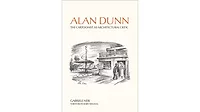
‘Reuse of Architectural Components’ by Bailey Bestul

As architecture’s outsize impacts on climate change become ever more apparent, extreme calls to “just stop building” collide with an industry where demolition and new construction go hand in hand. In the Reuse of Architectural Components, architect Bailey Bestul proposes a circular construction industry in which the reuse of waste materials could provide new aesthetic and symbolic value. Organized into nine themes, Bestul not only offers a range of reuse design strategies but also theorizes them by retroactively reading these approaches into historical architectural and artistic precedents of spolia and assemblage. The following is an excerpt from chapter two, “Carlo Scarpa and Architectural Kintsugi.”
The Japanese kintsugi (“to patch with gold”) artist uses lacquer and powdered gold to repair and ornament cracks in broken pottery, thereby celebrating, rather than attempting to hide, the location of a break. The practice likely originated in the 15th century when the shogun Ashikaga Yoshimasa turned to golden lacquer as a repair technique after getting his tea bowl clumsily repaired with large staples and disliking the result. The technique became so popular that people would destroy their ceramics on purpose just to receive a gilded repair. Today’s kintsugi artists innovate the method, layering repairs, adding appendages and delaminating solids.
This practice becomes architectural in the work of the Italian modernist architect Carlo Scarpa, whose work translates this lacquer from the bowl to the building element. Famous, in particular, for his work in and around the city of Venice, Scarpa was among the first of the modernists to adaptively reuse historic structures so prolifically. While most of the materials Scarpa sourced for his designs were new, this chapter intentionally misreads many of them as salvaged and reemployed. This thought experiment suggests a kintsugi approach to building component repair and reuse that extends from the scale of the individual material to that of an entire building—and that contemporary architects continue to rely upon.
Scarpa’s simplest kintsugi takes place on planar surfaces, where he fills imagined breaks and puzzles together theoretically found elements in delicate compositions that are synergistic in their combination. Perhaps Scarpa’s most visited work is his Olivetti showroom, spread over two floors on Piazza San Marco and designed as a shop for the Olivetti typewriter company. The architecture is both precious and mechanical, reflective of the typewriters that sit inside, and creates ample opportunities for Scarpa to create and fill gaps. The prime example of kintsugi here occurs before one even walks through the door. Along the wall at the entrance, Scarpa joins four stone slabs—three smooth, one rough—with golden seams that extend from a similarly golden Olivetti logo at the composition’s center. One can imagine these slabs as the pieces of a larger chunk of broken stone that has been reunited with golden joinery, therefore preventing this no longer marketable material from ending in the dumpster. The rough‑hewn stone on the bottom left of the composition suggests this same technique on a smaller scale. Rather than a golden joint, this piece receives a golden patch—perhaps for a similar crack, or at the location of a leftover bolt hole. Far from being simply a repair to a supposedly broken slab, the resulting golden joint is the generator, acting not as a response to material conditions but as the basis for them, a partis made from empty space. The joint is the point.
Nearby is the Fondazione Querini Stampalia, a former palazzo that Scarpa restored into a cultural center. Again, Scarpa’s interventions employ new materials but suggest an approach for working with reclaimed ones. Scarpa fills gaps in the concrete garden walls with gray, blue, and gold mosaic tiles, a technique architects might consider for salvaged concrete slabs that may need patching due to degradation. This strategy occurs again on the ground. While individual pavers fill much of the garden space, Scarpa also creates entirely impermeable surfaces by joining concrete slabs with floor tiles in geometric patterns. It’s not challenging to imagine these patterns being dictated in future reuse projects not by the architect’s imagination but by the cracks that might need filling in a salvaged concrete element. Just as at the entrance to the Olivetti showroom, small patches serve as an effective way to fill more localized gaps. An elevated concrete slab made with a coarse aggregate receives a contrasting smooth infill on its corner under Scarpa’s hand. Again, the effect is one of preciousness and serves to elevate these standard paving elements to high‑design status, just as kintsugi artists elevate a simple pot.
Despite much of his work’s visual complexity, Scarpa’s material palette is relatively simple. Thick slabs of monolithic stone or concrete are common in his designs. At Querini Stampalia, Scarpa refurbishes an existing stone staircase by covering it with new, unornamented stone slabs—one for each riser, one for each tread—that extend only the width needed for circulation, therefore revealing the original steps underneath. Back at the Olivetti showroom, another dramatic staircase anchors the space using slabs of varying widths that echo the lines on a typed page. A wider slab—the carriage return—seems almost to suggest that these materials were in fact found elements and their idiosyncrasies—varying widths, for instance—have been maintained. This emphasis on the planar is used by Scarpa for aesthetic effect but is also useful for circular architecture. A plane is easier to repair with a patch or seam than a more complex form (never mind the curving surfaces of a ceramic pot) and, given the nature of most building assemblies, is relatively easier to source. If a staircase can be reduced to a series of planes, then the materials available for its construction increase greatly; any planar building component with enough structural integrity, including those with cracks and holes, may now be repaired and used.
Looking for quick answers on architecture and design topics?
Try Ask RECORD, our new smart AI search tool.
Ask RECORD →
Looking for a reprint of this article?
From high-res PDFs to custom plaques, order your copy today!