A slew of airportment improvements—some controversial—are headed for New York City over the next several years. Image courtesy Beyer Blinder Belle The only rendering of the proposed TWA Flight Center Hotel, designed by Beyer Blinder Belle, shows very little of the future structure except two six-story volumes behind Saarinen’s winglike forms. New York will see a slew of airport improvements in the next few years and, surprisingly, the only one not causing controversy is a $48 million terminal for animals known as the Ark. The same can’t be said for the other two projects—a $4 billion reconstruction of LaGuardia Airport
With the selection of five finalists for its memorial competition, the United States World War I Centennial Commission seems to be moving closer to a showdown with preservation groups.
A design proposal called Remembrance and Reflection. The rules of an architecture competition can affect which design wins and even how it is received. That’s why opponents of the controversial Dwight D. Eisenhower Memorial fault not just Frank Gehry’s design but the format of the competition that led to its selection.
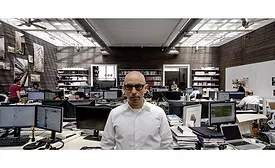
David Adjaye and Moshe Safdie remember the Indian architect, who died at the age of 84 Tuesday. The architect pictured here in 2012. His black round eyeglasses, in the style associated with Le Corbusier, were a nod to western architectural ideas. But Charles Correa, who died June 16 at the age of 84, reportedly of cancer, was deeply committed to the culture of his native India, which gained independence in 1947. His buildings, completed over nearly 60 years, were the “the physical manifestation of the idea of Indian nationhood, modernity and progress,” says architect David Adjaye, who designed an exhibition
Open since May 1, this tightly packed world's fair of architectural hits and misses runs through October 31. UK Pavilion by Tristan Simmonds in collaboration with BDP and Stage One. The first world exposition, held in London in 1851, occupied Joseph Paxton's Crystal Palace. But during the last century, expos (also called world's fairs) evolved into collections of national pavilions that competed for attention with novel and grandiose building designs. The Shanghai Expo in 2010 kicked off the “Asian century” with a show of architectural pyrotechnics that reportedly attracted 73 million visitors. The theme of Expo 2015 in Milan is
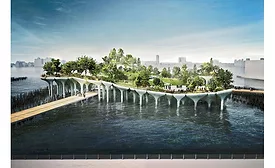
The billionaire chats with RECORD about his Thomas Heatherwick-designed island, disagreeing with Frank Gehry, and why he hates Jean Nouvel's 100 Eleventh Avenue.
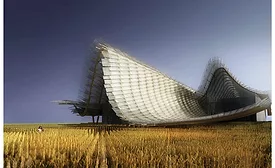
The New York-based architect chats about his design for China's pavilion at the Milan World Expo. Renderings for the Chinese pavilion at the World Expo in Milan, set to open May 1.